 YardMate
Burkwood Osmanthus
Osmanthus x burkwoodii
Easy · Beginner friendlyAbout Burkwood Osmanthus
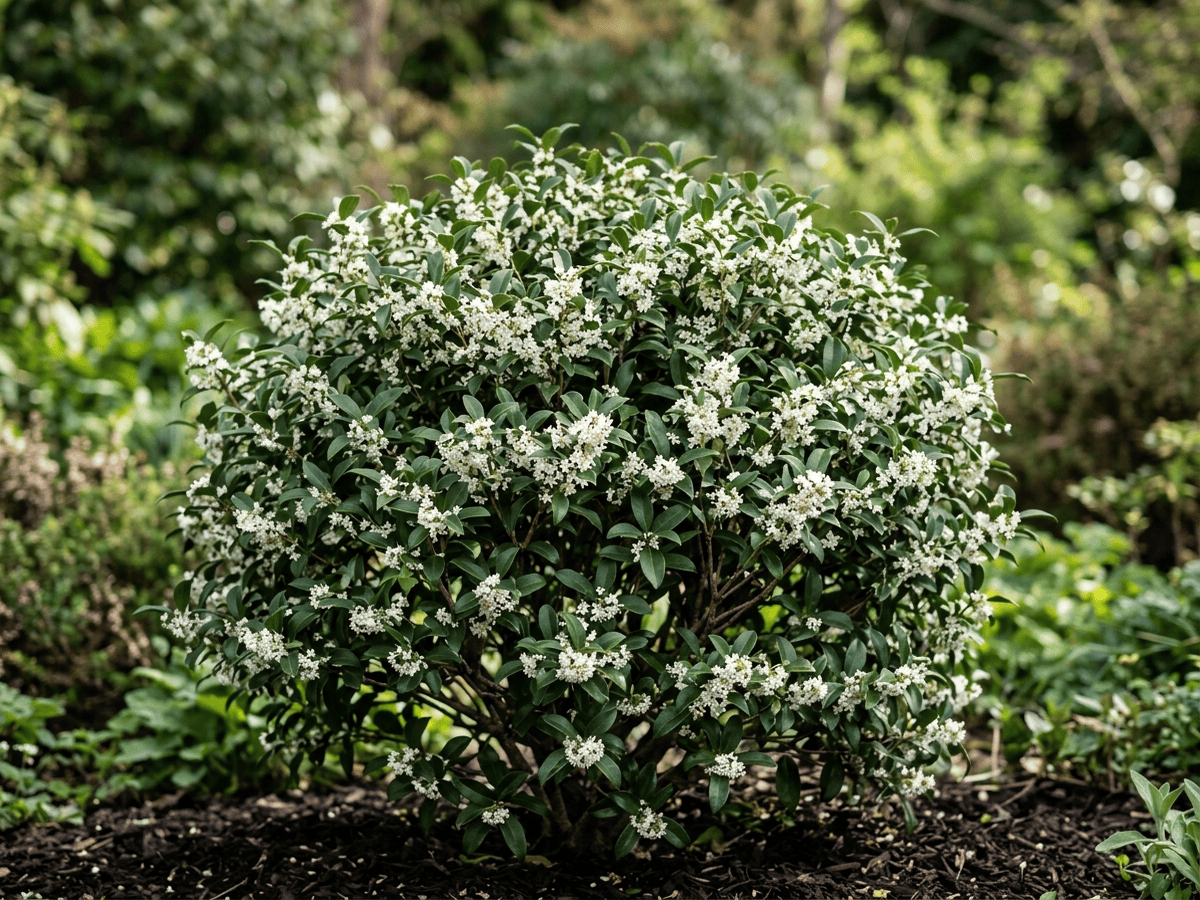
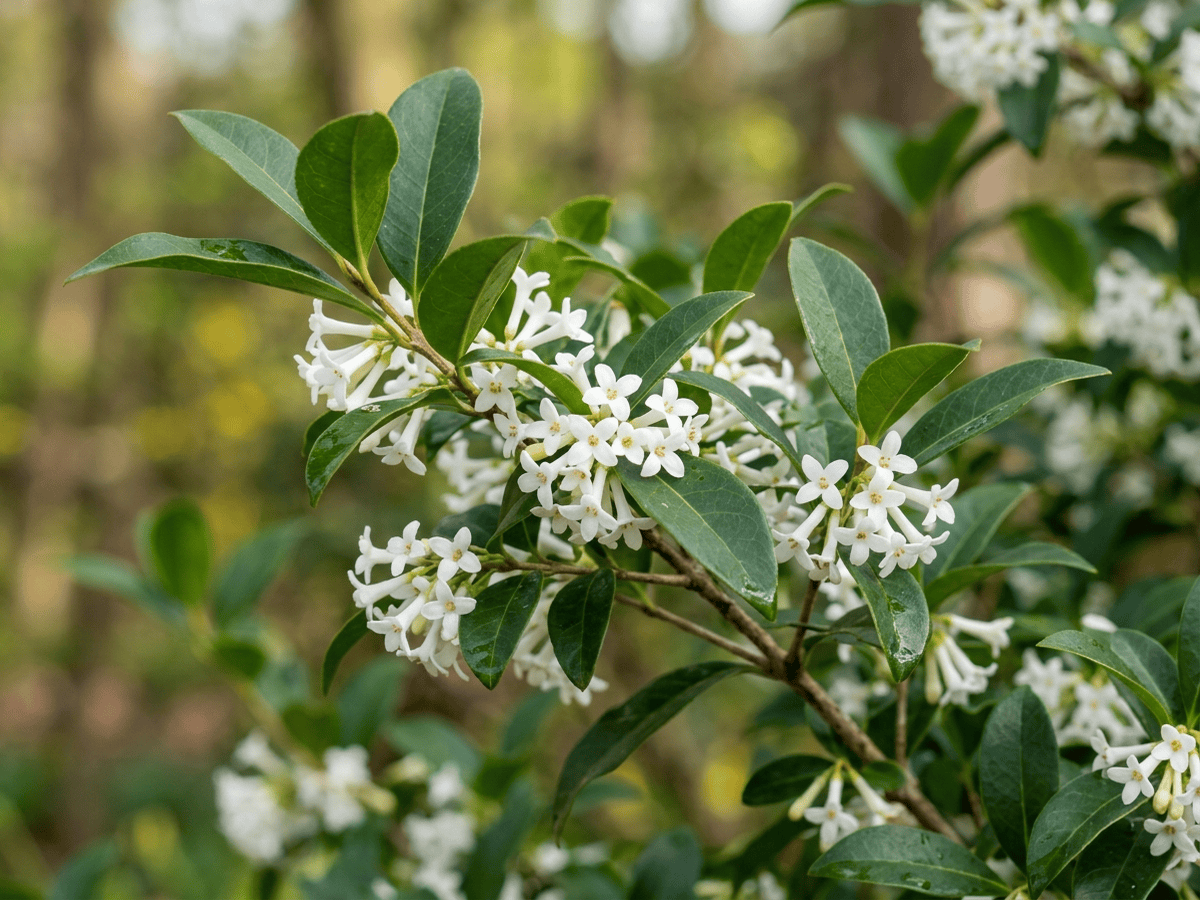
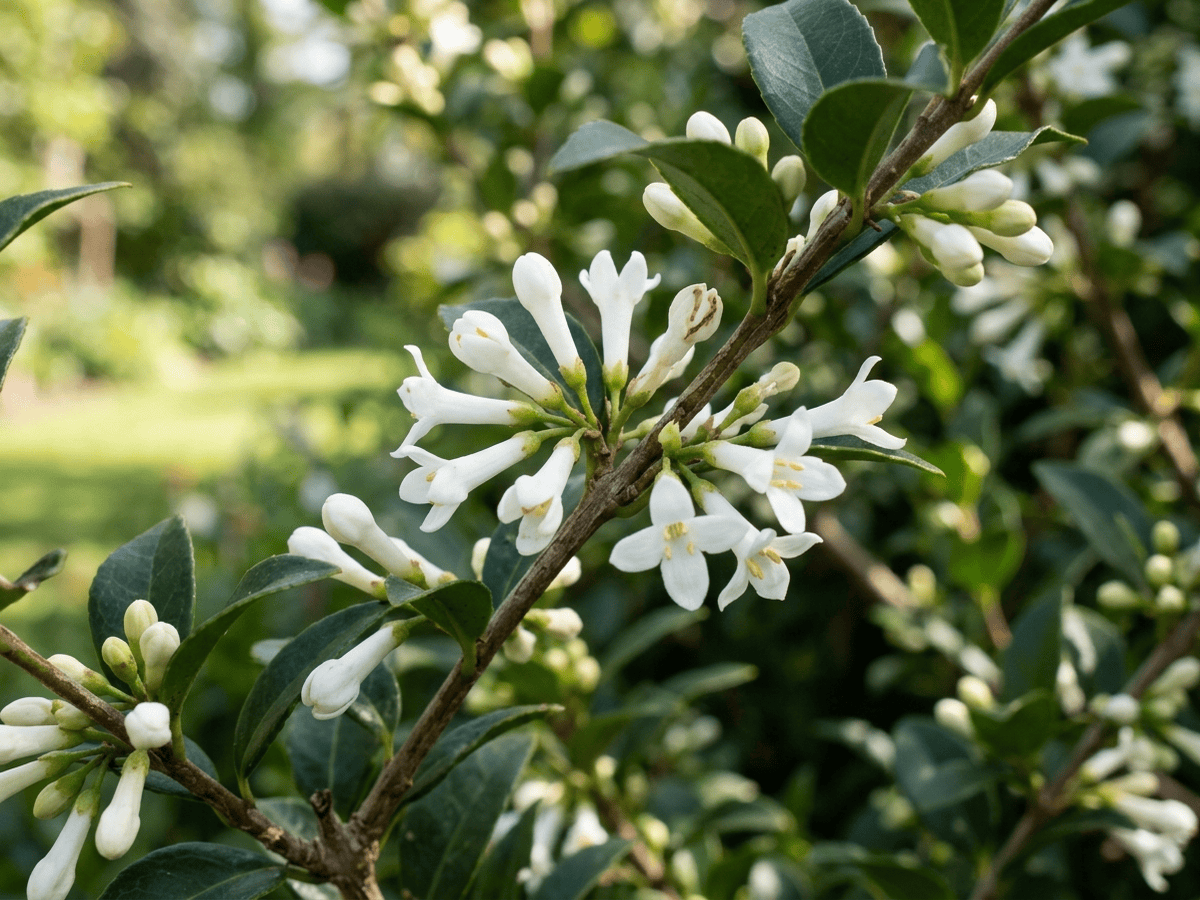
Burkwood Osmanthus is a compact dense evergreen shrub growing 6-10 feet tall, a hybrid between O. delavayi and O. decorus. In mid-spring it produces clusters of small but powerfully fragrant white tubular flowers. The dark green glossy leaves are smaller and more refined than most osmanthus species. Its moderate size, dense habit, and reliable flowering make it one of the best fragrant evergreen hedging plants for American gardens. Hardy to Zone 6 with excellent disease resistance.
- Fragrant
- Disease-resistant
- Cold-hardy
- Evergreen
How to care for Burkwood Osmanthus
Watering
- Springevery 7 days
- Summerevery 5 days
- Fallevery 10 days
- Winterevery 21 days
Soil · Well-draining
- Top dressingPine bark mulch10%
- Main mixPotting soil + perlite 2:170%
- DrainageLECA / gravel20%
Never skip the drainage layer — standing water is the top cause of root rot.
FERTILIZER
Balanced Feed 14-14-14
An even feed covers all three needs at once, keeping leaves, roots and blooms moving together with nothing pushed out of balance.
- Nitrogen · Leaves
- Phosphorus · Roots + Blooms
- Potassium · Strength
- Springevery 30 days
At a Glance
- Height8–15 ft (2.4–4.6 m)
- Spread8–12 ft (2.4–3.7 m)
- Flower colorWhite
- Foliage colorDark-green, Green
- Fruit colorBlue, Black
- SoilWell-drained, Loamy, Neutral
- LocationsYard
Bloom time
BLOOM CYCLE
Peak bloom
Apr–May
Clusters of powerfully fragrant white flowers April to May
Fragrance
STRONG FRAGRANCE
Sweet jasmine-gardenia fragrance in spring bloom.
Toxicity
No toxicity has been reported for this plant. Still, it is wise to keep pets from chewing on any houseplant.
Educational information, not medical or veterinary advice. If exposure is suspected, contact a doctor or veterinarian.
History
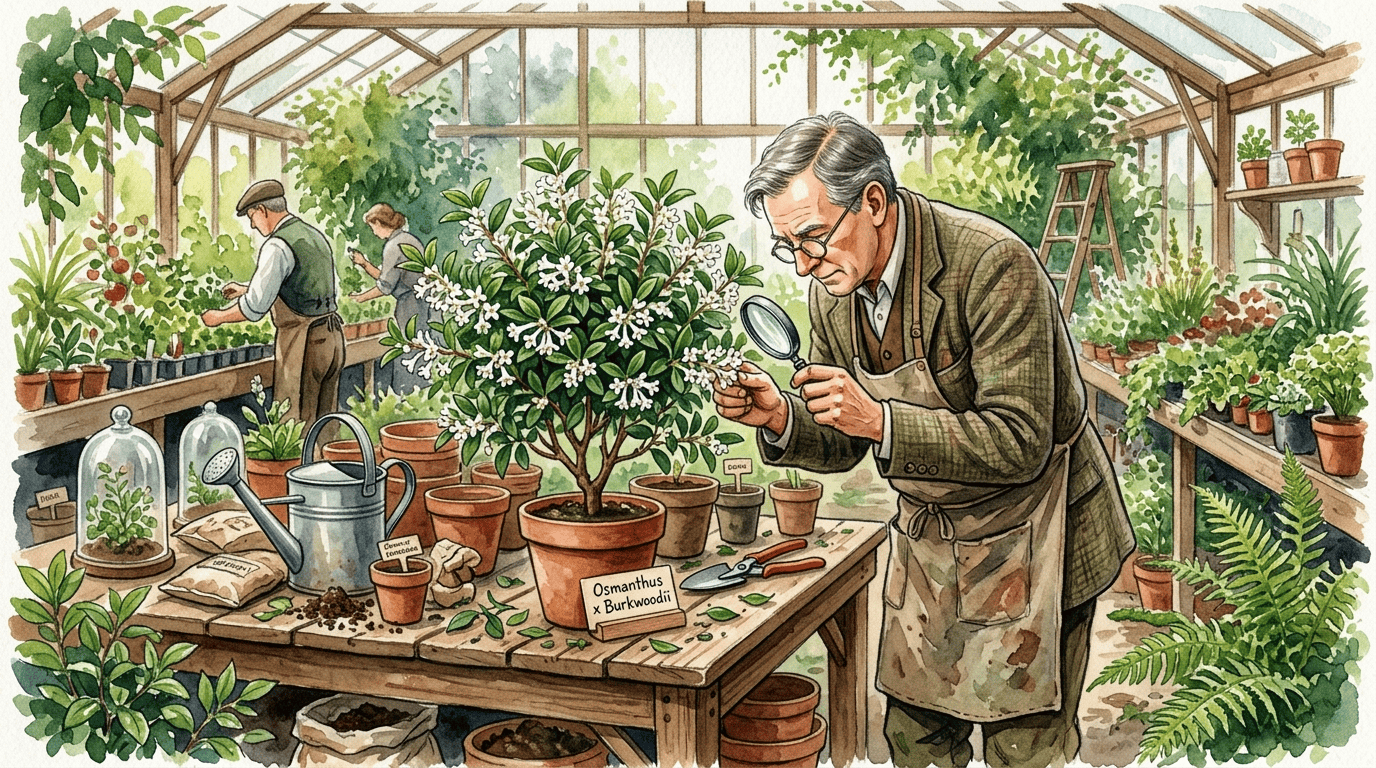
Osmanthus x burkwoodii (sometimes listed as xOsmarea burkwoodii from a time when it was believed to be an intergeneric hybrid) is a cross of O. delavayi (from Yunnan, China) and O. decorus (from the Caucasus and northern Turkey, formerly classified in Phillyrea). It was raised at Burkwood & Skipwith nursery in Kingston, Surrey, England, by Albert Burkwood around 1930—the same firm that produced the celebrated Viburnum x burkwoodii in the same period. The hybrid combines the compact rounded habit and small glossy dark green leaves of O. delavayi with the greater cold hardiness and slightly larger flowers of O. decorus.
In mid-spring (April-May) it covers itself in clusters of small tubular white flowers with a powerful sweet jasmine-gardenia-like fragrance that carries for many meters. The 3-meter rounded shrub tolerates shade, shearing, and lime soils, making it one of the most versatile evergreen fragrant shrubs for temperate gardens.
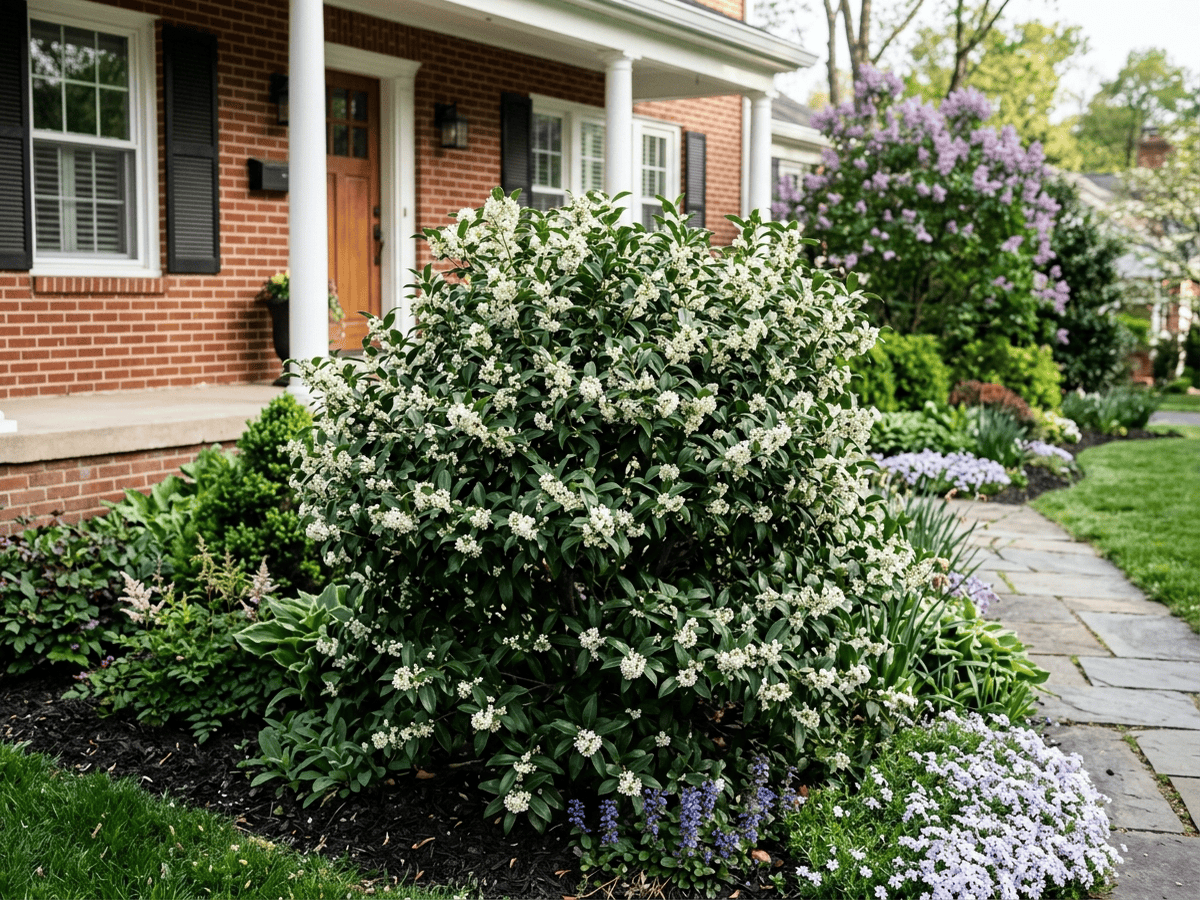
Received the RHS Award of Garden Merit. Named after Albert Burkwood and his brother Arthur, English nurserymen who created this hybrid around 1930. In American gardens, it excels in the mid-Atlantic and Pacific Northwest, where it is prized as a fragrant alternative to boxwood or privet hedging.
Symbolism & meaning
What It Symbolizes
Osmanthus Delavayi expresses Sincerity — a generous fragrance freely offered to anyone who walks past, with no need for bright color to announce itself. Its Refinement lies in compact form and small white flowers whose perfume far outweighs their size. A shrub whose honesty is measured in scent rather than display.
- Sincerity — generous fragrance freely shared with all who pass
- Refinement — compact, tidy form with powerful spring scent
Where the Name Comes From
'Burkwoodii' honors Albert Burkwood (1890–1951) and his brother Arthur, English nurserymen who bred this and other popular garden hybrids.
Uses & Fun Facts
- Tiny white spring flowers carry intense apricot perfume
- Dense glossy evergreen foliage clips into formal screens
- Refined shrub for entryways and seating areas
Related plants
More Osmanthus plants
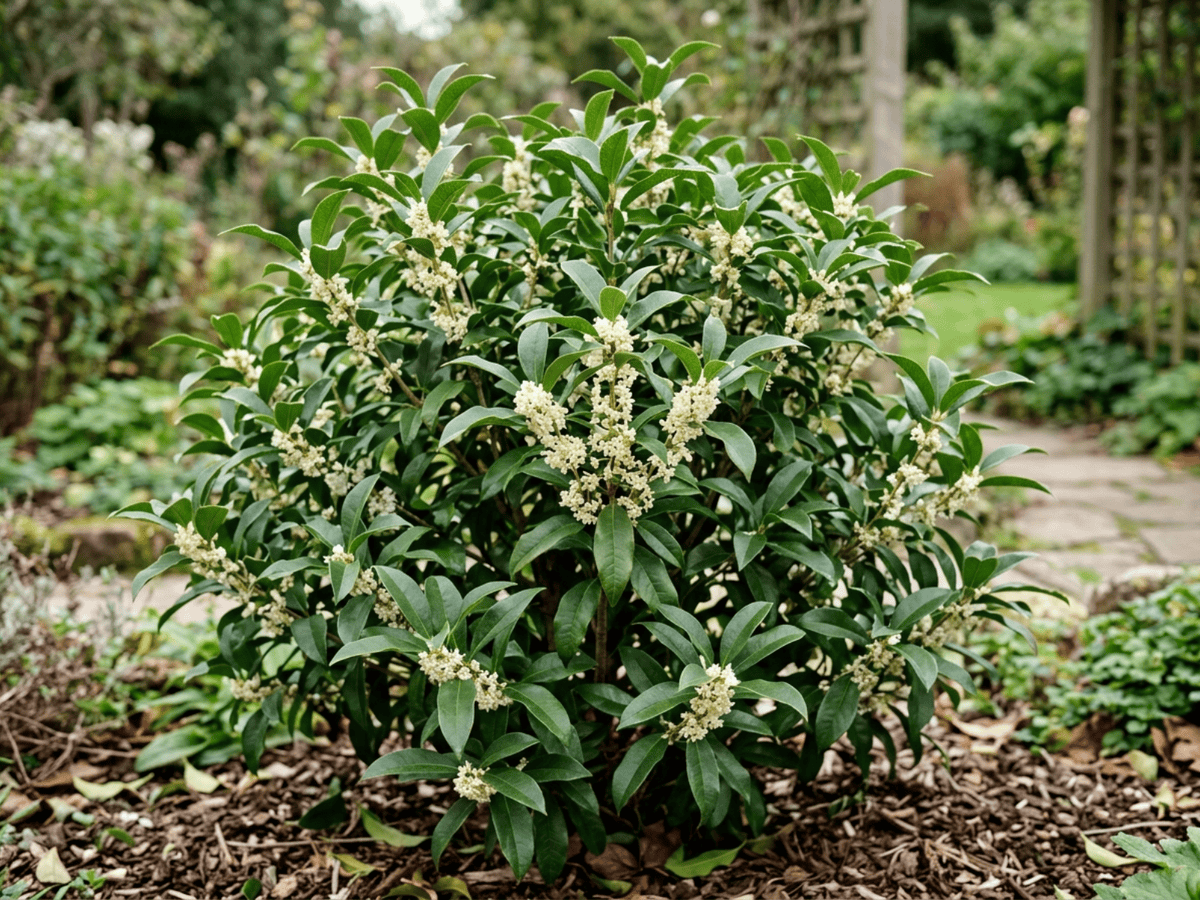
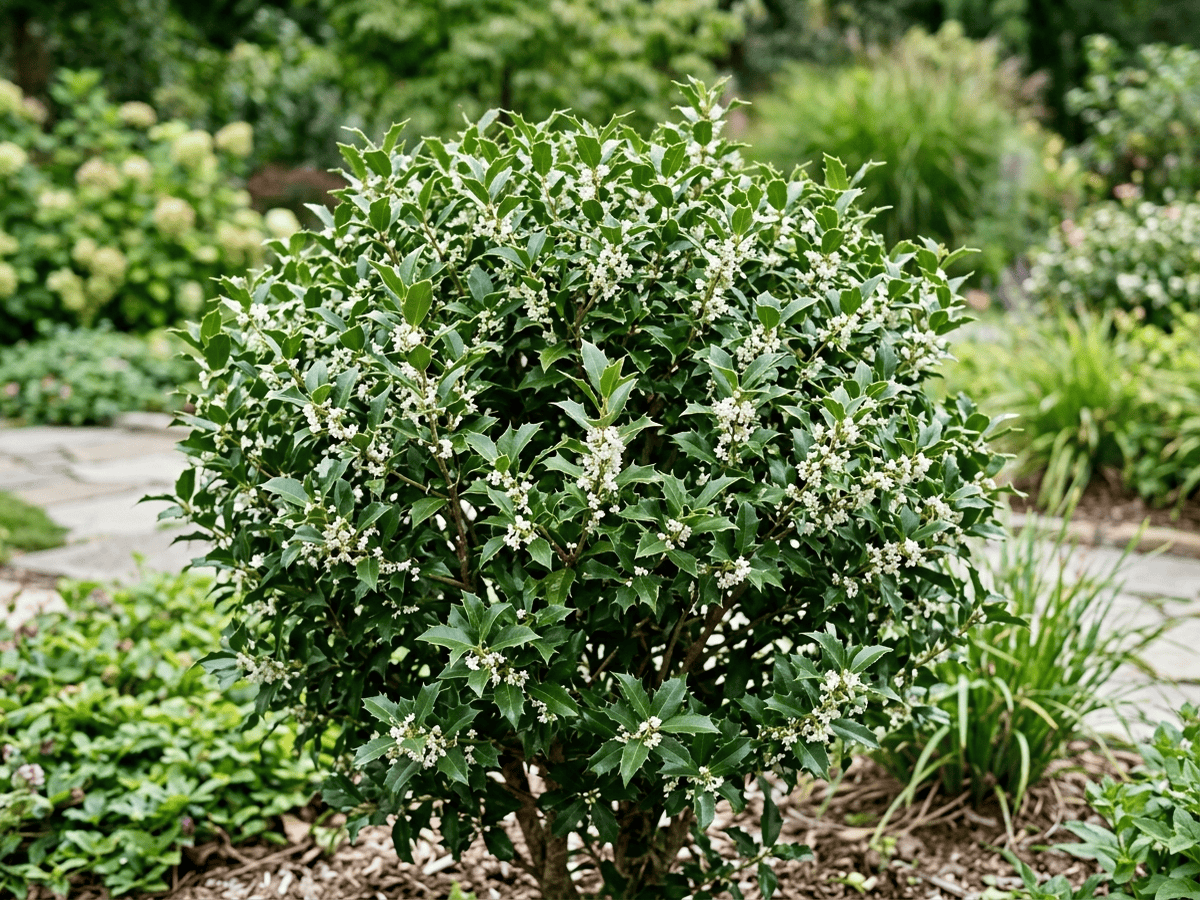
Plants with similar care
 Chinese AbeliaAbelia chinensis
 Fragrant AbeliaAbelia mosanensis
 Large-Flowered AbeliaAbelia uniflora
 Glossy AbeliaAbelia x grandiflora
Frequently asked questions
How often should I water Burkwood Osmanthus?
In summer, water about every 5 days; in winter, about every 21 days. Adjust for heat, pot size and drainage.
How much light does Burkwood Osmanthus need?
Full sun: 6+ hrs direct. Watch the leaves — scorching or stretching means the light needs adjusting.
Is Burkwood Osmanthus toxic to cats or dogs?
No toxicity has been reported for this plant. Still, it is wise to keep pets from chewing on any houseplant. Educational information, not medical or veterinary advice. If exposure is suspected, contact a doctor or veterinarian.
Is Burkwood Osmanthus easy to grow?
Yes — it is considered an easy, beginner-friendly plant.
When does Burkwood Osmanthus bloom?
It typically blooms Apr–May in the Northern Hemisphere.
YardMate
Identify any plant in seconds
Snap a photo — YardMate names the plant, diagnoses problems, and reminds you when to water.
Download on the App Store