 YardMate


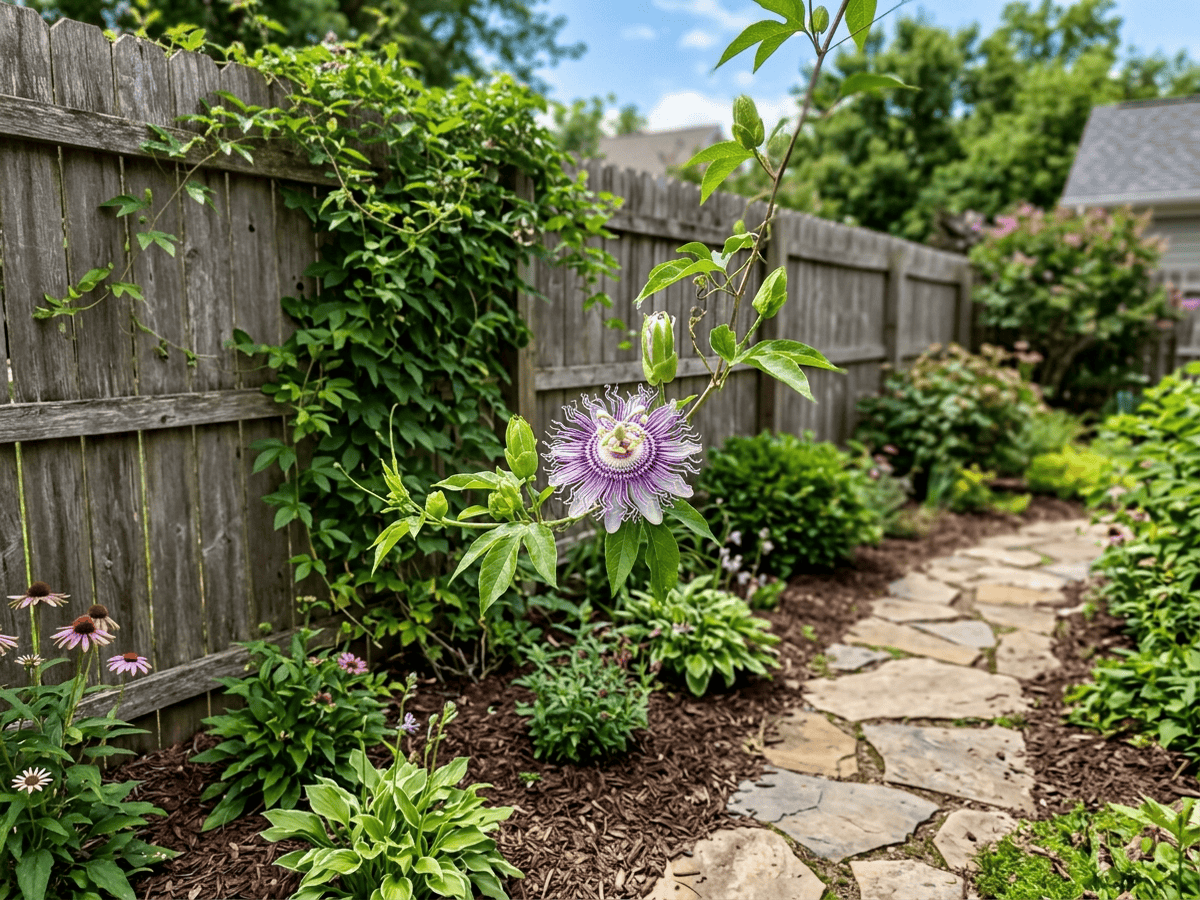
Purple Passionflower
Passiflora incarnata
Easy · Beginner friendlyAbout Purple Passionflower
Purple Passionflower or Maypop is a Southeastern US native herbaceous climber reaching 10-20 feet in a season, producing extraordinarily intricate lavender-purple flowers with frilled coronas — among the most complex flowers in the plant kingdom. Edible yellow fruits called maypops follow the bloom. Native from Maryland to Texas, it is the larval host for Gulf Fritillary and Zebra Longwing butterflies and a pollinator showpiece.
- Edible
- Climbing
- Native
- Pollinator-friendly
How to care for Purple Passionflower
Watering
- Springevery 7 days
- Summerevery 5 days
- Fallevery 10 days
- Winterevery 21 days
Soil · Well-draining
- Top dressingPine bark mulch10%
- Main mixPotting soil + perlite 2:170%
- DrainageLECA / gravel20%
Never skip the drainage layer — standing water is the top cause of root rot.
FERTILIZER
Balanced Feed 14-14-14
An even feed covers all three needs at once, keeping leaves, roots and blooms moving together with nothing pushed out of balance.
- Nitrogen · Leaves
- Phosphorus · Roots + Blooms
- Potassium · Strength
- Springevery 30 days
- Summerevery 45 days
At a Glance
- NativeNorth America
- Height15–25 ft (4.6–7.6 m)
- Spread3–6 ft (0.9–1.8 m)
- Flower colorPurple, White, Blue
- Foliage colorGreen, Yellow
- Fruit colorYellow, Green
- SoilLoamy, Well-drained, Sandy
- LocationsYard
Bloom time
BLOOM CYCLE
Peak bloom
Jun–Sep
Lavender fringed flowers June to September
Fragrance
MODERATE FRAGRANCE
The flowers have a sweet exotic tropical fragrance.
Toxicity
Pets Slight
chrysin and harman alkaloids (trace)
Not reported
EXPOSURE No exposure route is reported.
EFFECT No toxic effect is reported.
NOTE No toxicity is reported for humans in this catalog; this is not evidence that the plant is edible or harmless.
Slight
- Leaf
- Stem
- Ingestion
EXPOSURE Eating leaves and stems.
EFFECT Possible sedation at high doses.
NOTE Ripe fruit pulp is edible. Leaves used medicinally as mild sedative. Unripe fruits contain cyanogenic glycosides.
Slight
- Leaf
- Stem
- Ingestion
EXPOSURE Eating leaves and stems.
EFFECT Possible sedation.
NOTE Ripe fruit pulp is edible. Leaves used medicinally as mild sedative. Unripe fruits contain cyanogenic glycosides.
Educational information, not medical or veterinary advice. If exposure is suspected, contact a doctor or veterinarian.
DISTRIBUTION


- Native
- Introduced
- North America
History

Passiflora incarnata is native to the southeastern United States from Virginia and Maryland south through Florida and west to eastern Texas and Oklahoma, typically in open woodlands, old fields, and roadsides. Linnaeus described the species in Species Plantarum (1753). The name passionflower originated with 17th-century Spanish Catholic missionaries in Latin America who saw in the flower's distinctive anatomy an allegorical depiction of the Passion of Christ: the 10 petaloid parts (5 sepals + 5 petals) representing the 10 faithful apostles (excluding Peter and Judas), the corona filaments (the crown of thorns), the three stigmas (the three nails), the five anthers (the five wounds), the tendrils (the whips), and the lobed leaves (the spear).
The 6-10 meter vigorous perennial vine produces 7-9 cm spectacular lavender-and-white flowers from June through September, followed by yellow-green egg-shaped fruits (maypops) with sweet tart edible pulp. The species is the host plant for Gulf Fritillary, Variegated Fritillary, and zebra longwing butterfly caterpillars.
Herbalists have used P. incarnata for centuries as a mild sedative and anxiolytic; modern research supports calming effects from flavonoids and chrysin. Used medicinally by Native Americans as a calming herbal tea. Official state wildflower of Tennessee.
Symbolism & meaning
What It Symbolizes
The Purple Passionflower has carried the meaning of faith since early Spanish missionaries read its strange anatomy as a living catechism, the corona standing for the crown of thorns and the three styles for the nails. Another layer is wild spirit, for it is the Tennessee state wildflower, climbing fence rows and old fields with native exuberance. Few plants have bridged Christian symbolism and southern roadside ecology so completely, a vine equally comfortable in sermons and in summer pastures.
- Faith — Christian symbolism in flower anatomy
- Wild spirit — Tennessee state wildflower
Where the Name Comes From
The common name highlights its purple coloring. 'Passiflora' means passion flower; 'incarnata' means flesh-colored, referring to flower tones.
Uses & Fun Facts
- Maypop fruits eaten fresh and used in jellies
- Intricate purple flowers attract carpenter bees
- Native vine quickly covers trellis or fence
Related plants
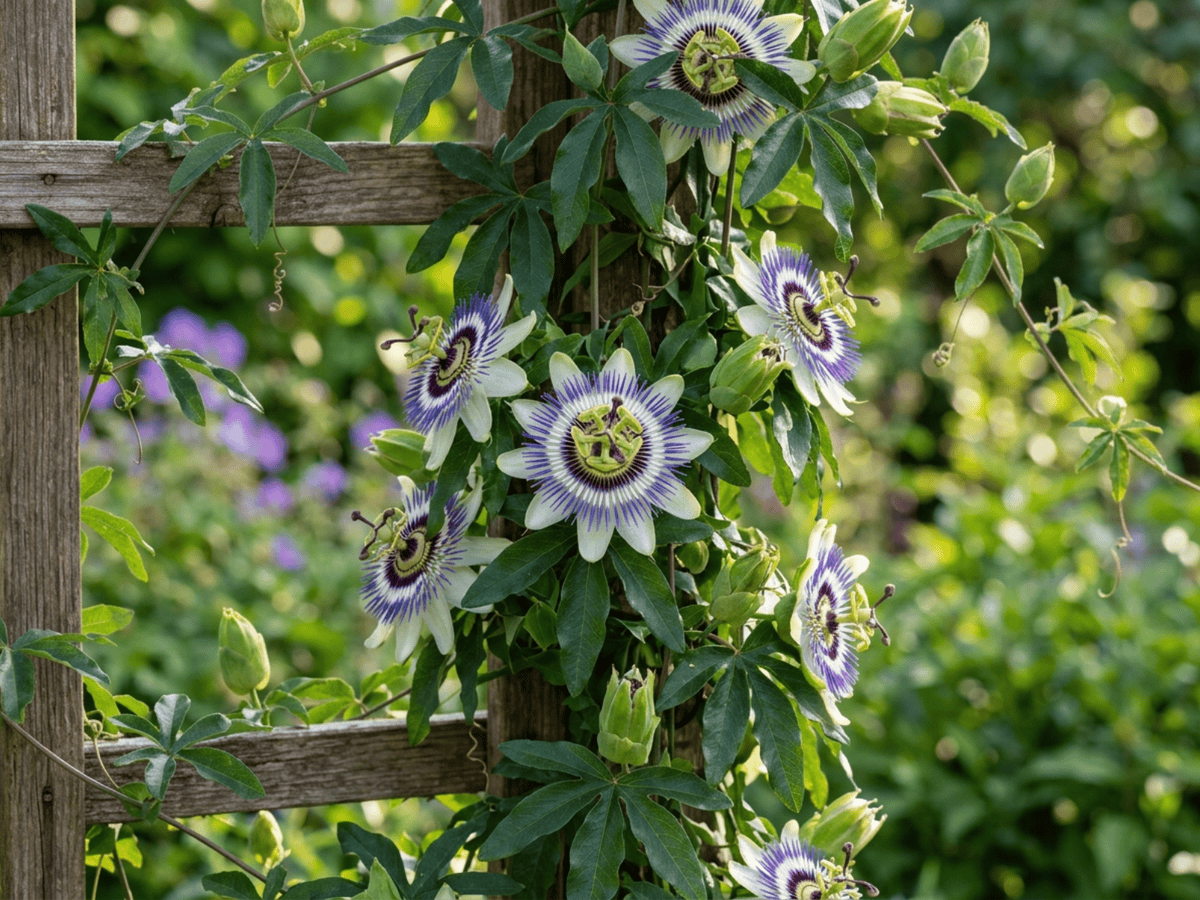
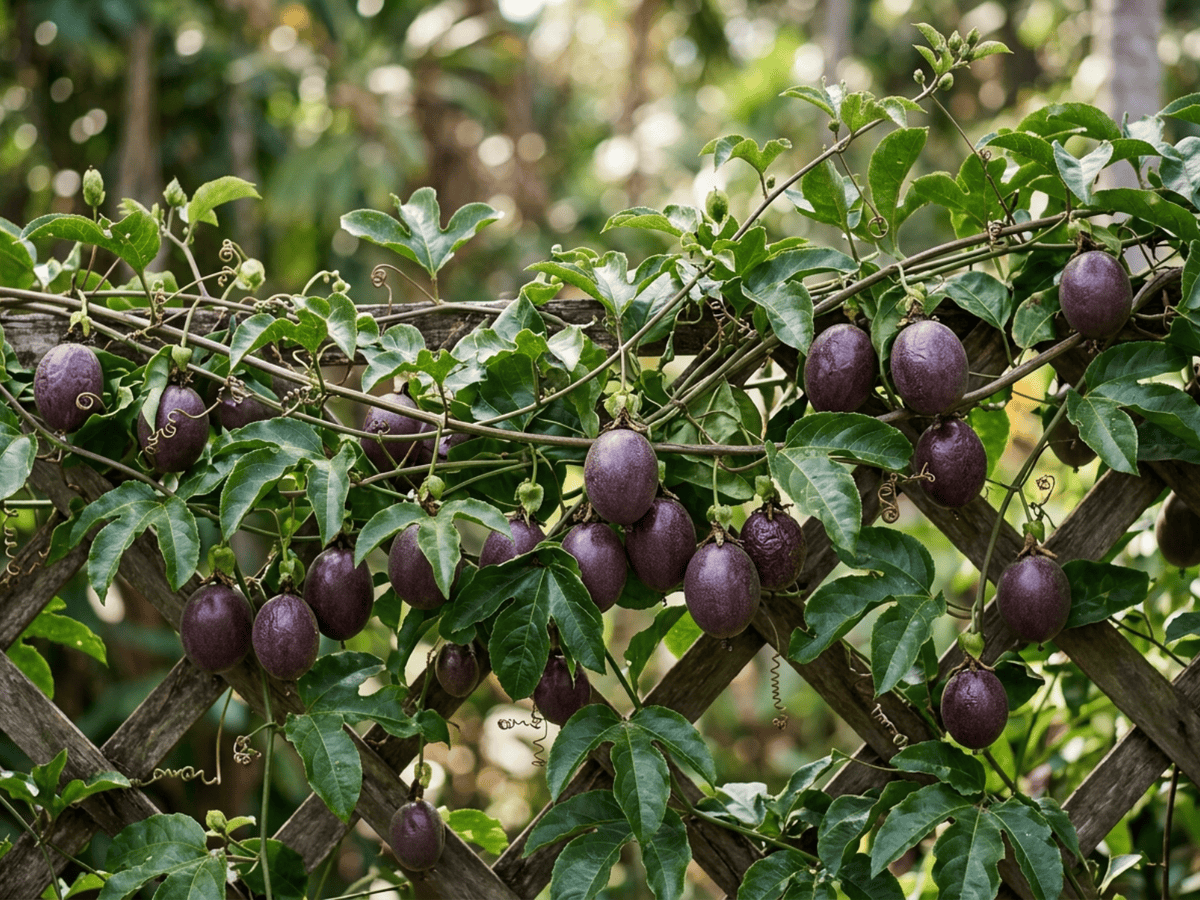
More Passiflora plants
Plants with similar care
 Chinese AbeliaAbelia chinensis
 Fragrant AbeliaAbelia mosanensis
 Large-Flowered AbeliaAbelia uniflora
 Glossy AbeliaAbelia x grandiflora
Frequently asked questions
How often should I water Purple Passionflower?
In summer, water about every 5 days; in winter, about every 21 days. Adjust for heat, pot size and drainage.
How much light does Purple Passionflower need?
Full sun: 6+ hrs direct. Watch the leaves — scorching or stretching means the light needs adjusting.
Is Purple Passionflower toxic to cats or dogs?
Pets Slight (Dogs Slight · Cats Slight) Educational information, not medical or veterinary advice. If exposure is suspected, contact a doctor or veterinarian.
Is Purple Passionflower easy to grow?
Yes — it is considered an easy, beginner-friendly plant.
When does Purple Passionflower bloom?
It typically blooms Jun–Sep in the Northern Hemisphere.
YardMate
Identify any plant in seconds
Snap a photo — YardMate names the plant, diagnoses problems, and reminds you when to water.
Download on the App Store