 YardMate

Bluecrown Passionflower
Passiflora caerulea
Medium · Some experienceAbout Bluecrown Passionflower
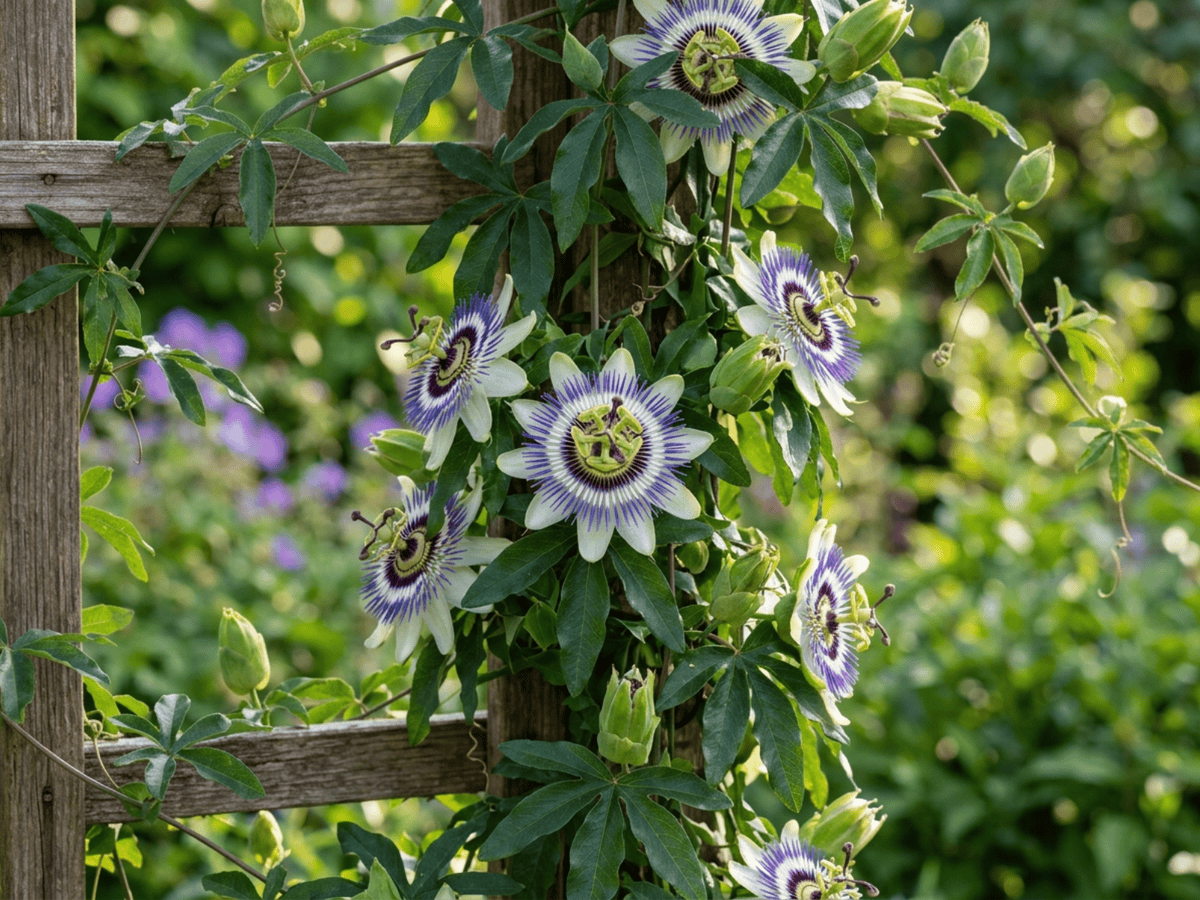
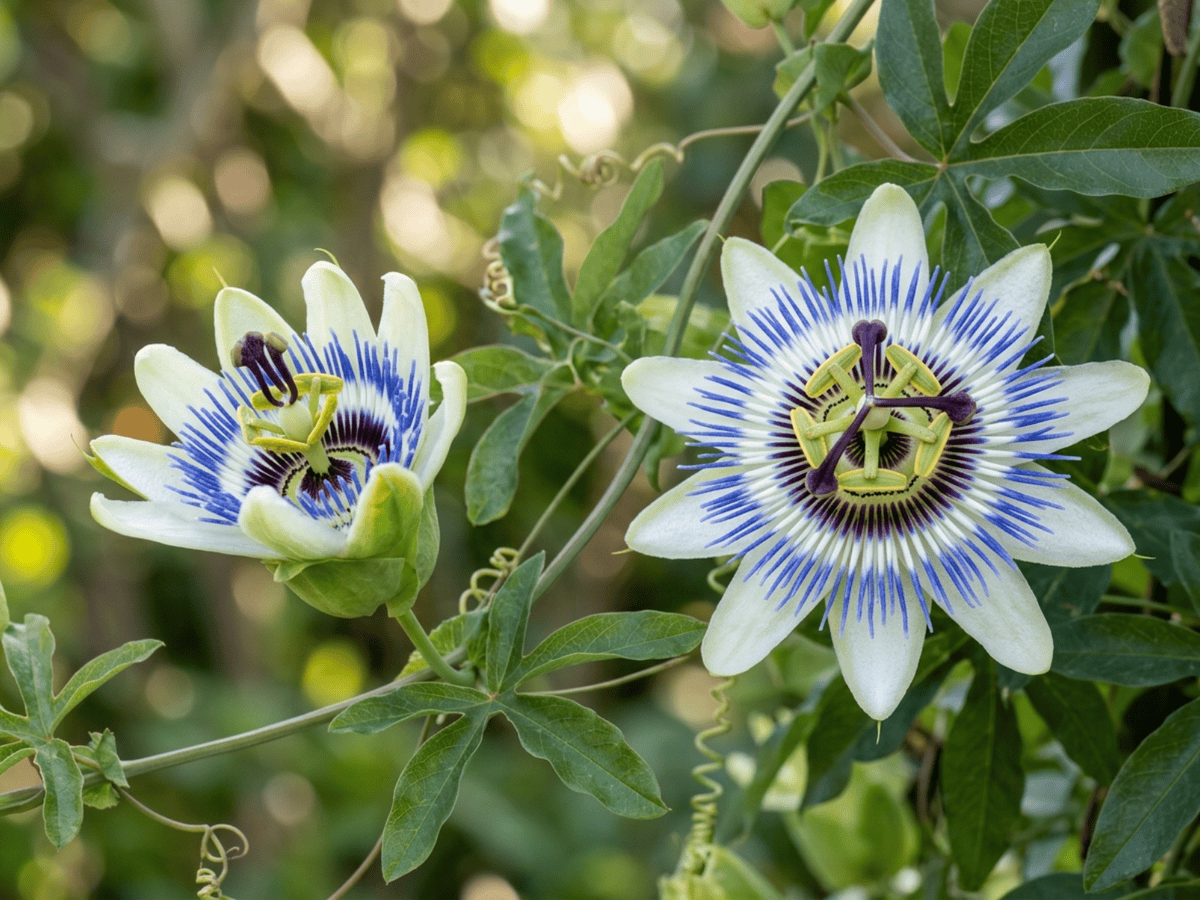
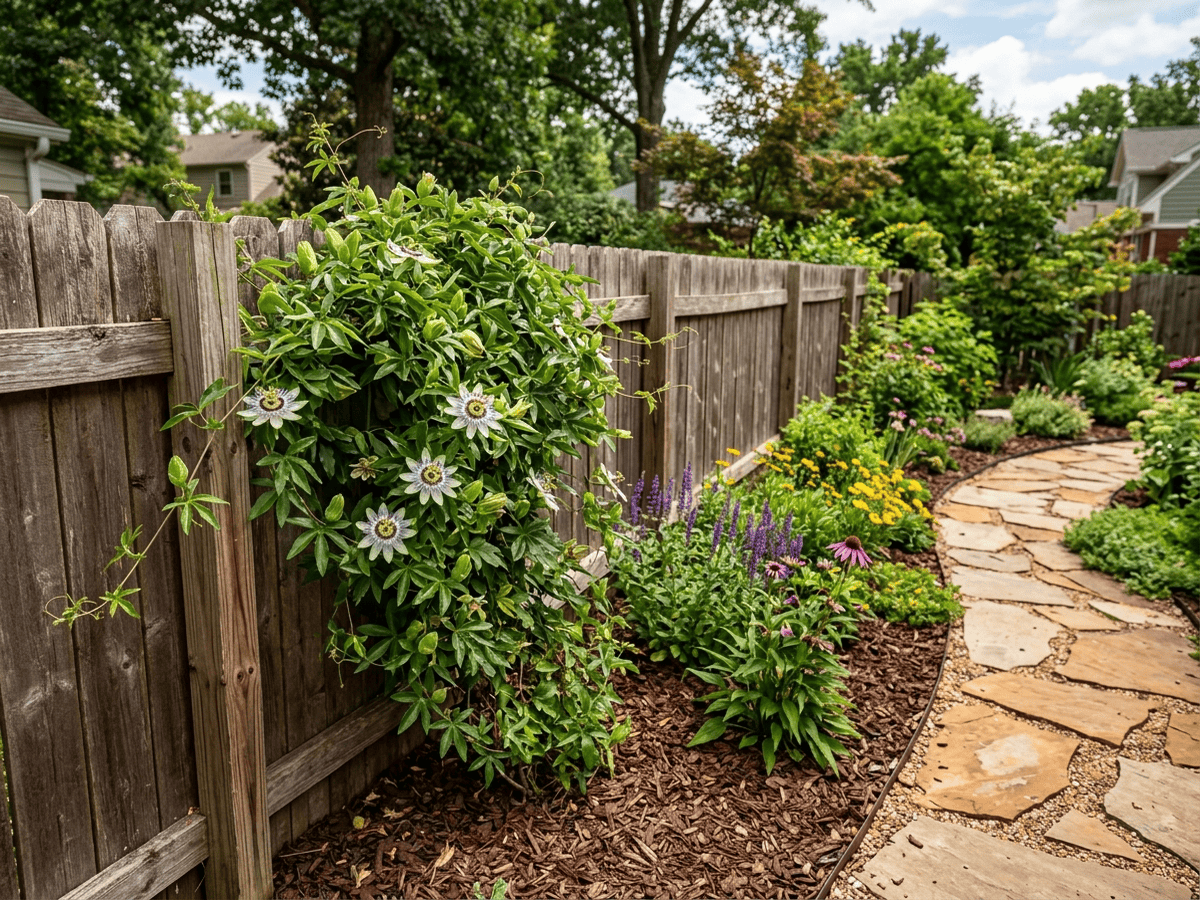
Passiflora caerulea, the blue passionflower, is a vigorous semi-evergreen climbing vine native to South America, from Brazil and Argentina to Paraguay. It produces some of the most intricate flowers in the plant kingdom — each bloom features a ring of blue-and-white filaments (the corona) surrounding the central reproductive structures, creating a mesmerizing geometric pattern up to 10 centimeters across. The flowers open in succession from early summer to fall, and each lasts only about a day. After flowering, it produces orange, egg-shaped fruits that are edible but bland compared to the commercial passionfruit (P. edulis). The deeply lobed, hand-shaped leaves are semi-evergreen, persisting through mild winters. It climbs by tendrils and can reach 10 meters, making it excellent for covering trellises and fences. Among the hardiest passionflowers, it tolerates temperatures down to minus 10 degrees Celsius when mulched at the base, making it viable in many temperate gardens.
- Climbing
- Evergreen
- Pollinator-friendly
How to care for Bluecrown Passionflower
Watering
- Springevery 5 days
- Summerevery 3 days
- Fallevery 10 days
- Winterevery 30 days
Soil · Well-draining
- Top dressingPine bark mulch10%
- Main mixPotting soil + perlite 2:170%
- DrainageLECA / gravel20%
Never skip the drainage layer — standing water is the top cause of root rot.
FERTILIZER
Balanced Feed 14-14-14
An even feed covers all three needs at once, keeping leaves, roots and blooms moving together with nothing pushed out of balance.
- Nitrogen · Leaves
- Phosphorus · Roots + Blooms
- Potassium · Strength
- Springevery 45 days
- Summerevery 45 days
At a Glance
- NativeSouth America
- Height20–30 ft (6.1–9.1 m)
- Spread6–10 ft (1.8–3 m)
- Flower colorBlue, White, Purple
- Foliage colorGreen
- SoilWell-drained, Loamy, Neutral
- LocationsYard · Balcony
Bloom time
BLOOM CYCLE
Peak bloom
Jun–Nov
Blue-white corona flowers summer to fall; each bloom lasts one day
Fragrance
LIGHT FRAGRANCE
The flowers have a light sweet scent.
Toxicity
Humans Slight · Pets Moderate
cyanogenic glycosides and harman alkaloids
Slight
- Leaf
- Stem
- Fruit
- Ingestion
EXPOSURE Eating leaves, stems, and fruit.
EFFECT Unripe fruit and vegetative parts contain cyanogenic glycosides and ripe orange fruits are edible.
NOTE Documented concern for humans: Unripe fruit and vegetative parts contain cyanogenic glycosides and ripe orange fruits are edible.
Moderate
- Leaf
- Stem
- Unripe fruit
- Ingestion
EXPOSURE Eating leaves, stems, and unripe fruit.
EFFECT Cyanogenic glycosides can cause GI upset, weakness, respiratory distress.
NOTE Not specifically listed by ASPCA. Vegetative parts contain cyanogenic compounds; ripe fruit edible but not flavorful.
Moderate
- Leaf
- Stem
- Unripe fruit
- Ingestion
EXPOSURE Eating leaves, stems, and unripe fruit.
EFFECT Same as dogs.
NOTE Not specifically listed by ASPCA. Vegetative parts contain cyanogenic compounds; ripe fruit edible but not flavorful.
Educational information, not medical or veterinary advice. If exposure is suspected, contact a doctor or veterinarian.
DISTRIBUTION


- Native
- Introduced
- South America
History
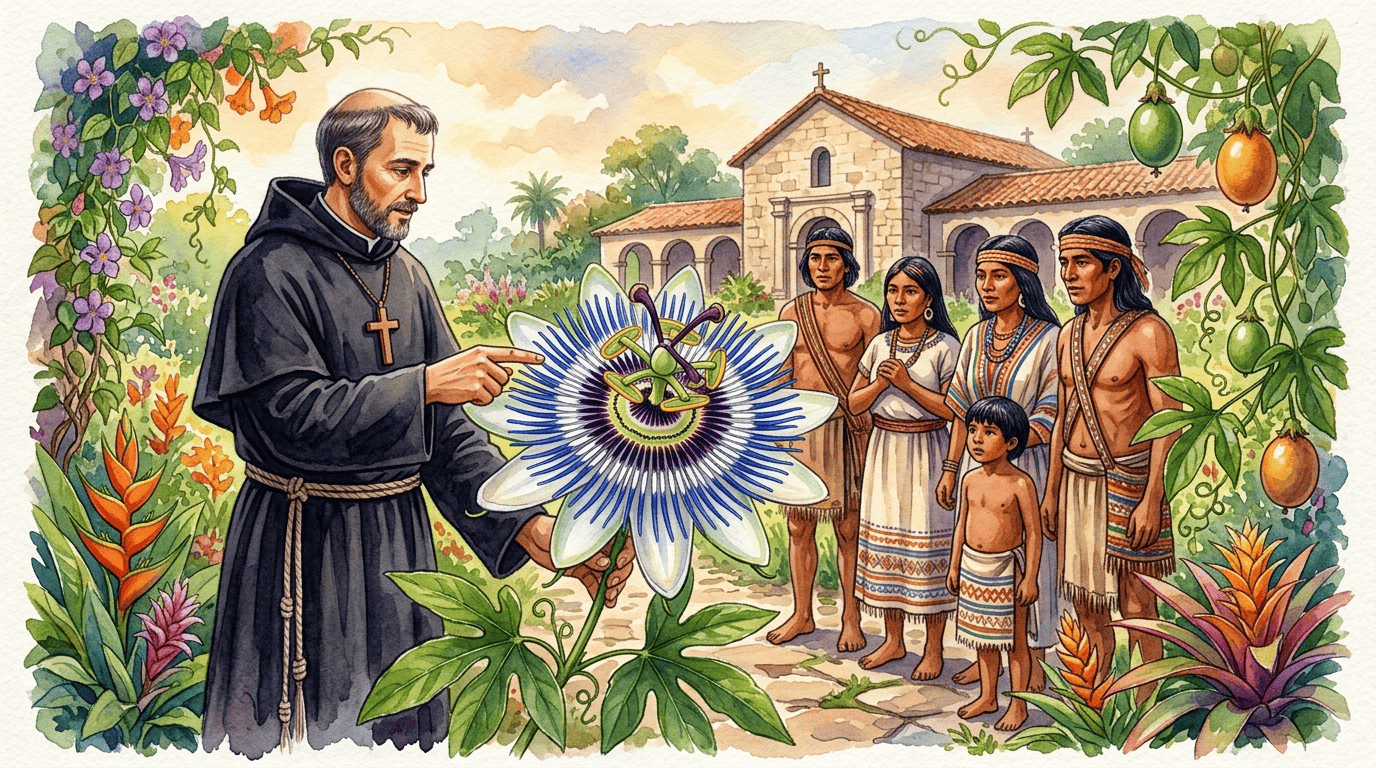
Passiflora caerulea is native to central and southern South America — Argentina, Uruguay, Paraguay, southern Brazil, and Bolivia. It reached European horticulture in the early 17th century via Spanish and Portuguese colonists. In 1610, Italian Jesuit scholar Giacomo Bosio wrote a tract titled "Trattato della Croce" (Treatise on the Cross) describing a detailed Christian symbolism read into the flower's anatomy by Spanish Jesuit missionaries working in South America: the ten petals and sepals represented the ten faithful apostles (excluding Judas and Peter); the crown of filaments (the corona) represented the crown of thorns; the five stamens represented the five wounds of Christ; the three stigmas represented the three nails of the crucifixion; the tendrils represented the whips; and the lobed leaves represented the hands of Christ's persecutors.
The symbolic reading was rapidly adopted across European Catholic horticulture, and gave both the common name "passion flower" and the scientific genus name Passiflora. The species is the most widely cultivated passionflower in temperate gardens, is the national flower of Paraguay, and produces small orange edible fruits (less flavorful than the commercial passion fruit, P. edulis).
This religious interpretation made it one of the first New World plants to be celebrated in Europe. Passiflora leaf extract has been used in traditional herbal medicine as a mild sedative and is approved in Germany as a treatment for nervous restlessness. Modern studies confirm its anxiolytic properties.
Symbolism & meaning
What It Symbolizes
The Bluecrown Passionflower carries Faith — Spanish missionaries in South America saw the Passion of Christ in its flower, reading the crown of thorns, the apostles, and the wounds in its intricate parts. Each bloom became a Spirituality in petal form, a small living catechism. Few wildflowers have been pressed so completely into theology.
- Faith — Named for the Passion of Christ; its complex flower was seen as a religious symbol
- Spirituality — The intricate bloom represents the mysteries of creation and devotion
Where the Name Comes From
The common name highlights its blue coloring. 'Passiflora' from Latin 'passio' (suffering/passion) and 'flos' (flower), referring to the Passion of Christ symbolism. 'Caerulea' means 'sky-blue' in Latin, describing the corona filaments.
Uses & Fun Facts
- Vigorous vine drapes fences with intricate blue-and-white blooms
- Otherworldly flower structure draws constant attention
- Large blooms attract carpenter bees and butterflies
- Orange fruits edible but bland compared to tropical species
Related plants
More Passiflora plants
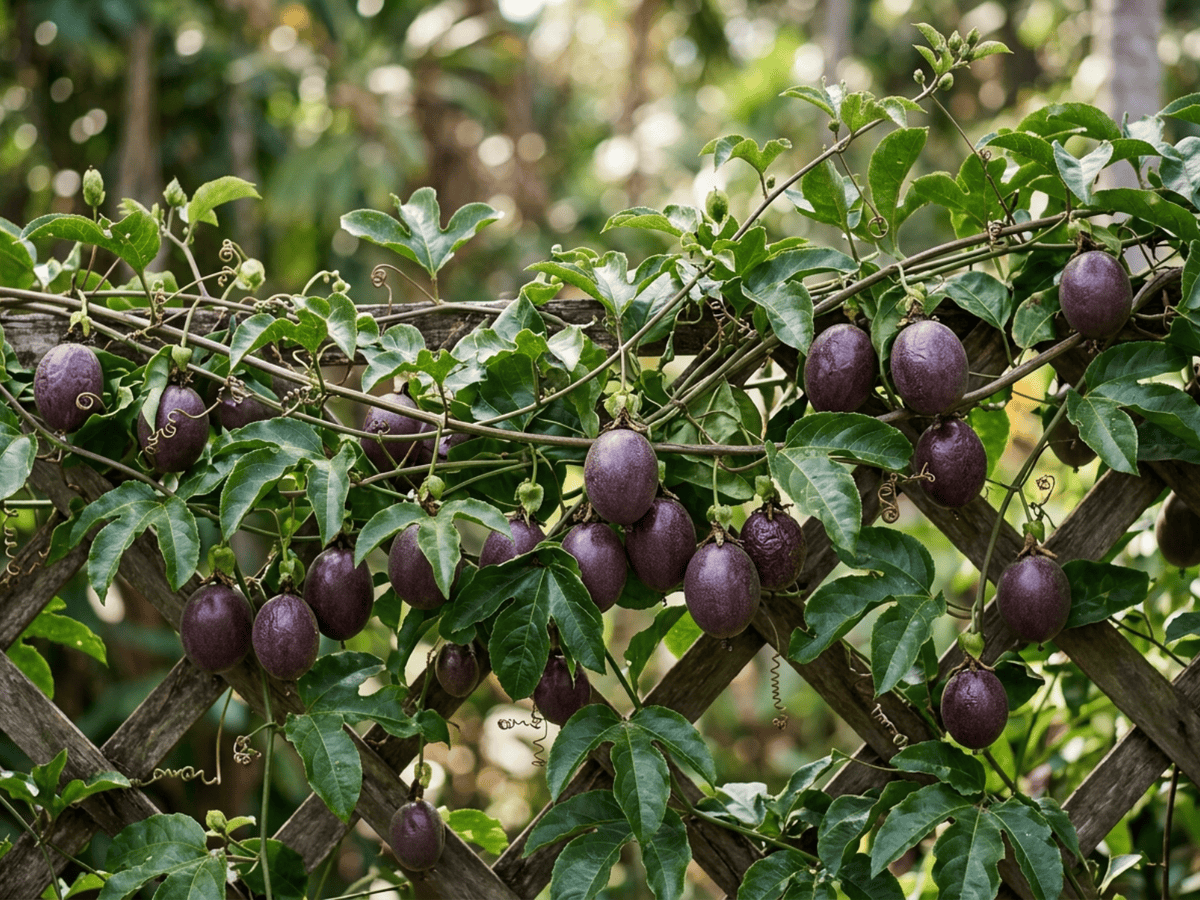

Plants with similar care
 Mexican AbeliaAbelia floribunda
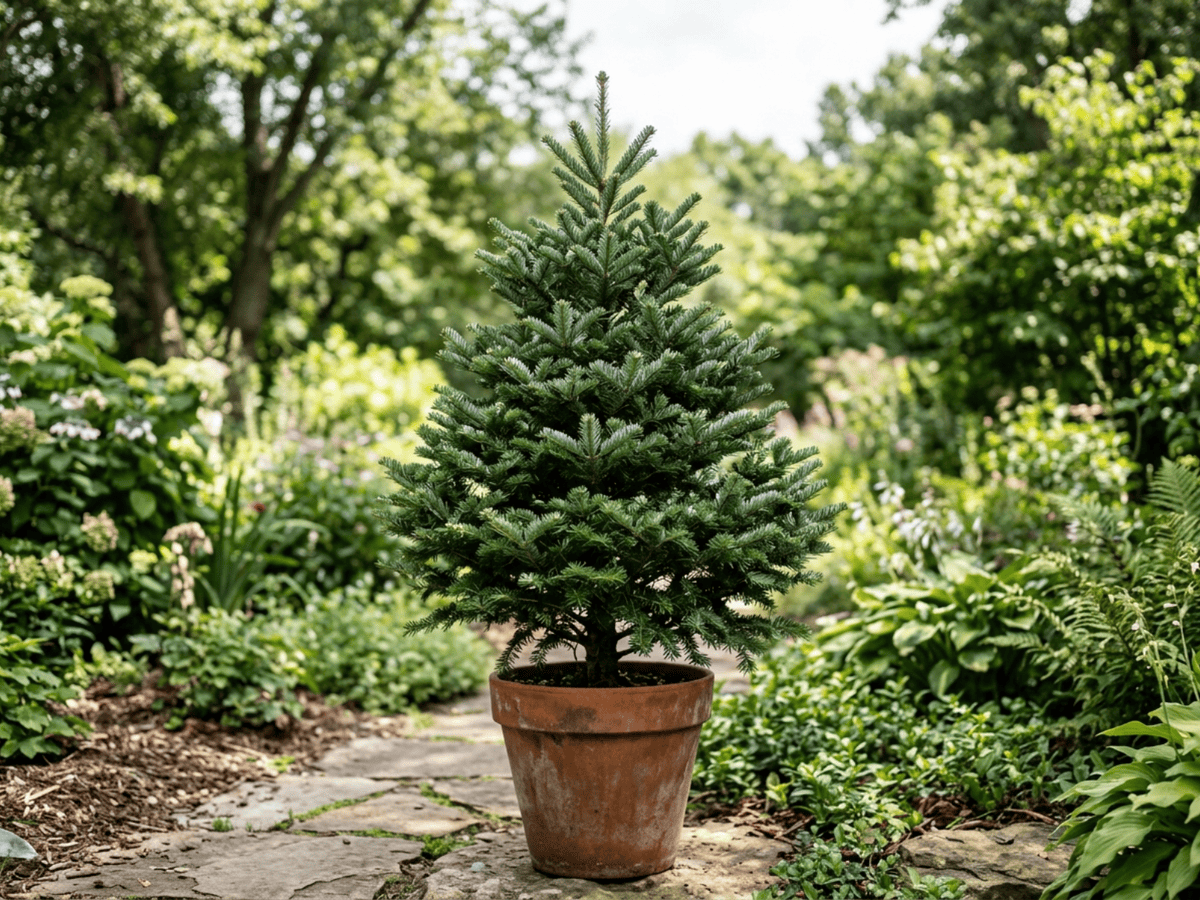 Fraser FirAbies fraseri
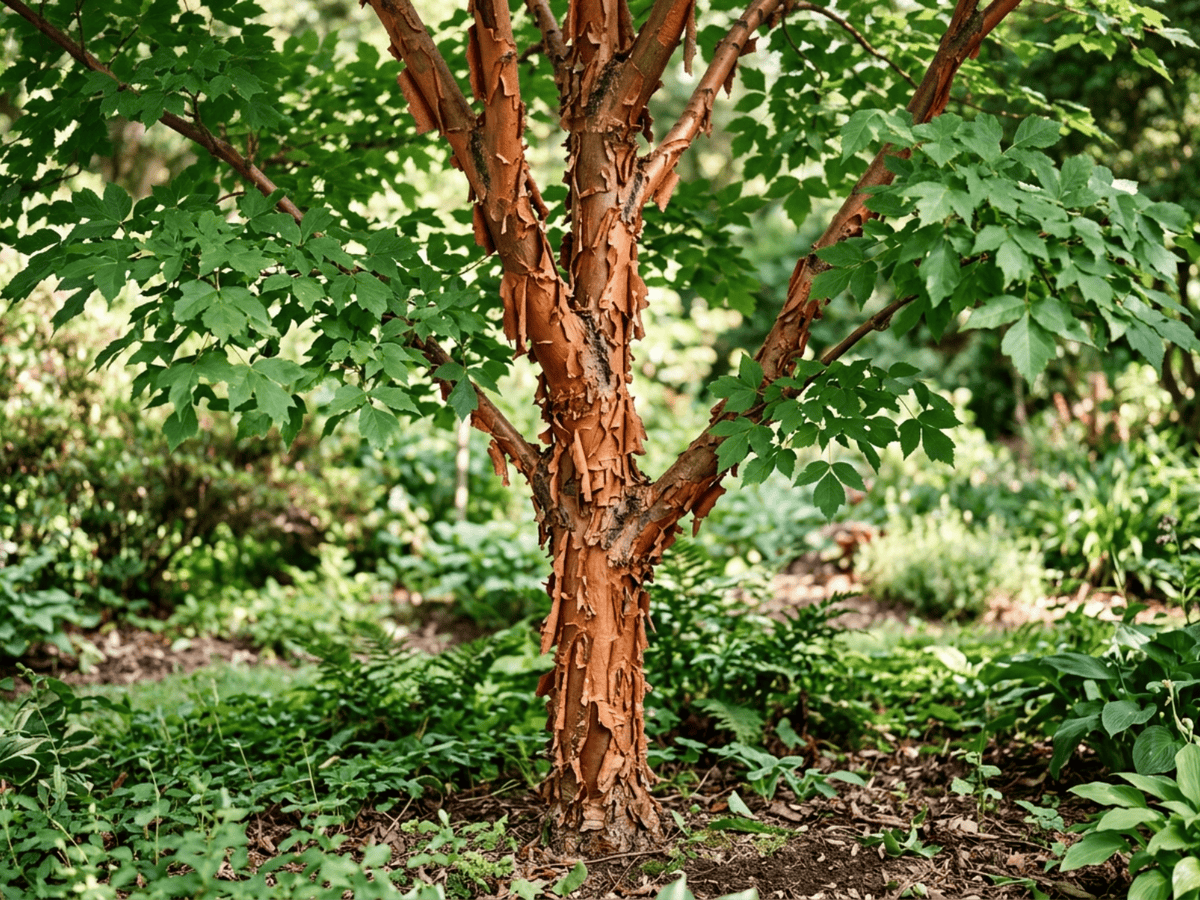 Paperbark MapleAcer griseum
 Sugar MapleAcer saccharum
Frequently asked questions
How often should I water Bluecrown Passionflower?
In summer, water about every 3 days; in winter, about every 30 days. Adjust for heat, pot size and drainage.
How much light does Bluecrown Passionflower need?
Full sun: 6+ hrs direct. Watch the leaves — scorching or stretching means the light needs adjusting.
Is Bluecrown Passionflower toxic to cats or dogs?
Pets Moderate (Dogs Moderate · Cats Moderate) Educational information, not medical or veterinary advice. If exposure is suspected, contact a doctor or veterinarian.
Is Bluecrown Passionflower easy to grow?
It is moderately demanding: a good choice once you have a little experience.
When does Bluecrown Passionflower bloom?
It typically blooms Jun–Nov in the Northern Hemisphere.
YardMate
Identify any plant in seconds
Snap a photo — YardMate names the plant, diagnoses problems, and reminds you when to water.
Download on the App Store