 YardMate


Common Passionfruit
Passiflora edulis
Medium · Some experienceAbout Common Passionfruit
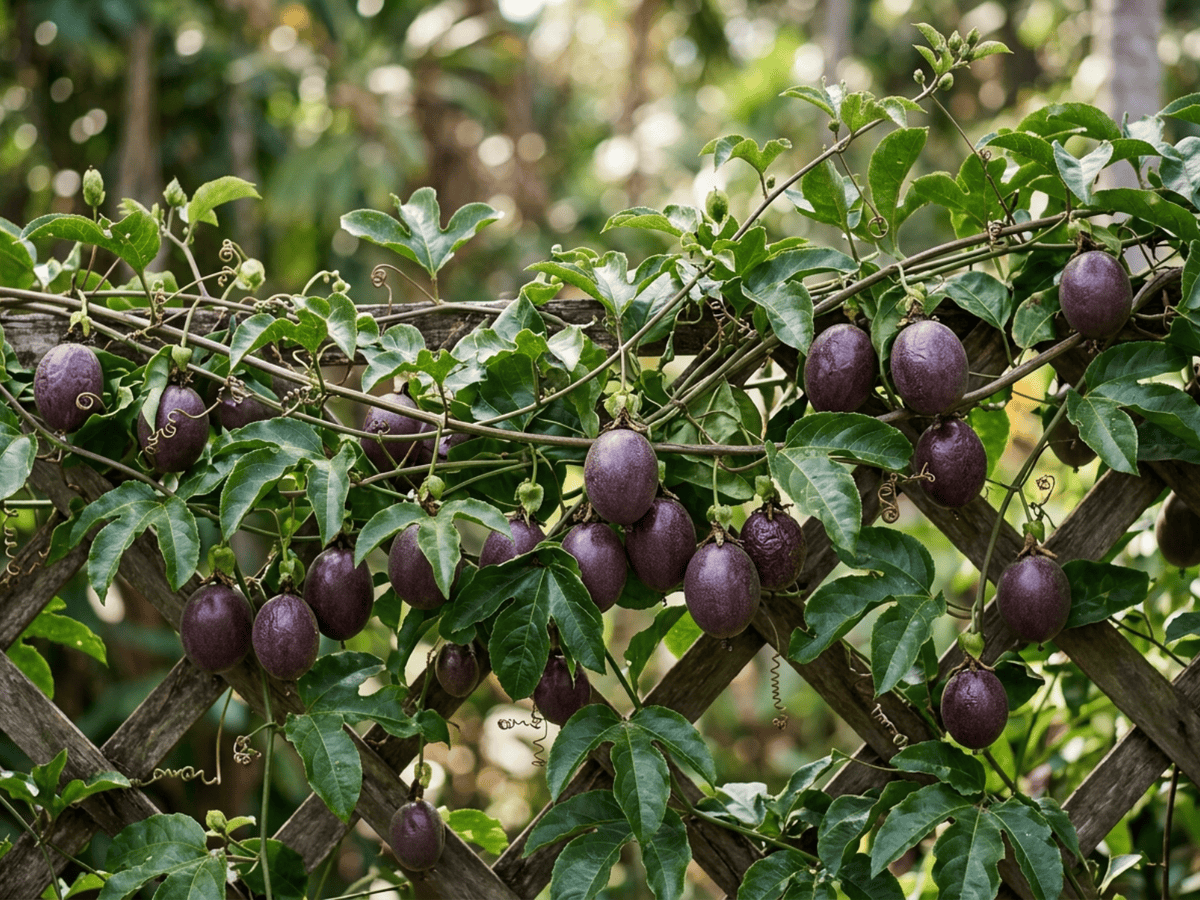
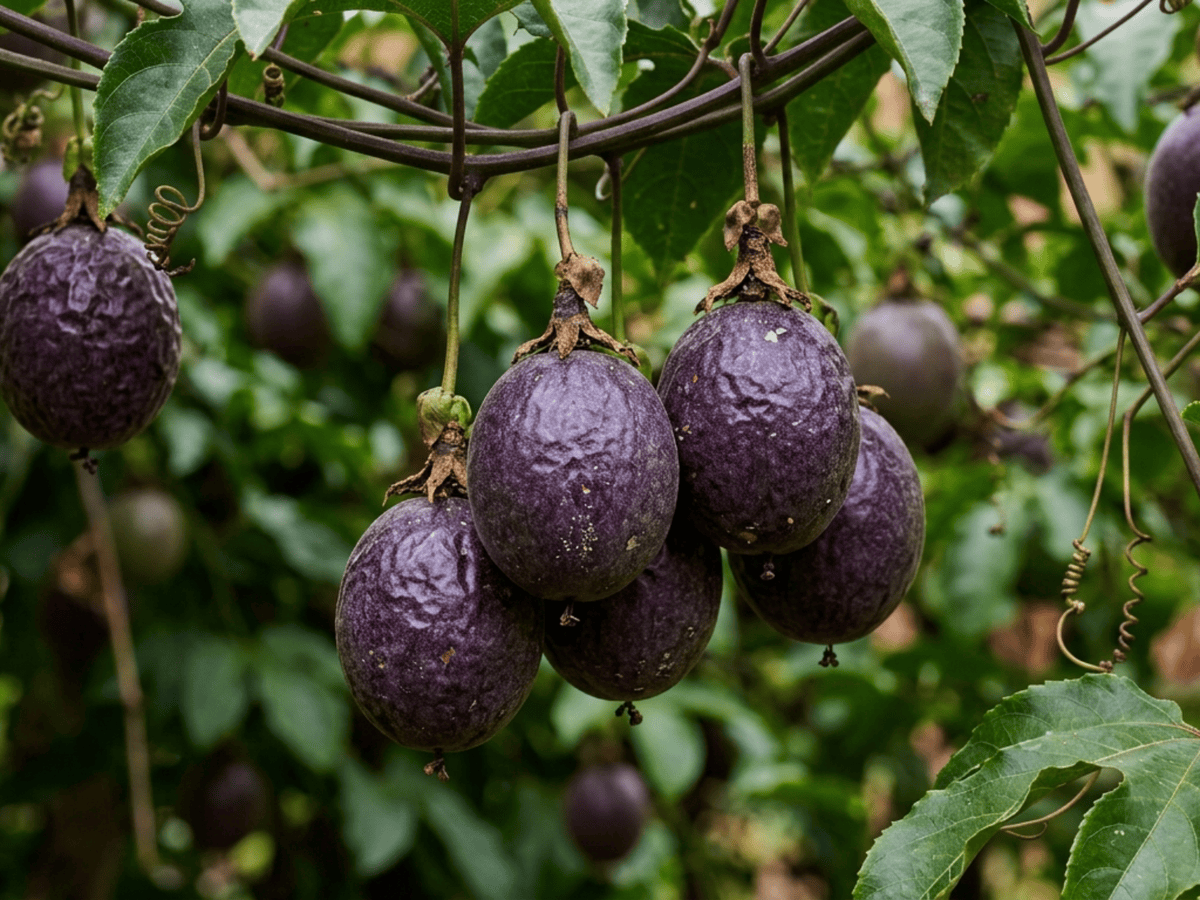
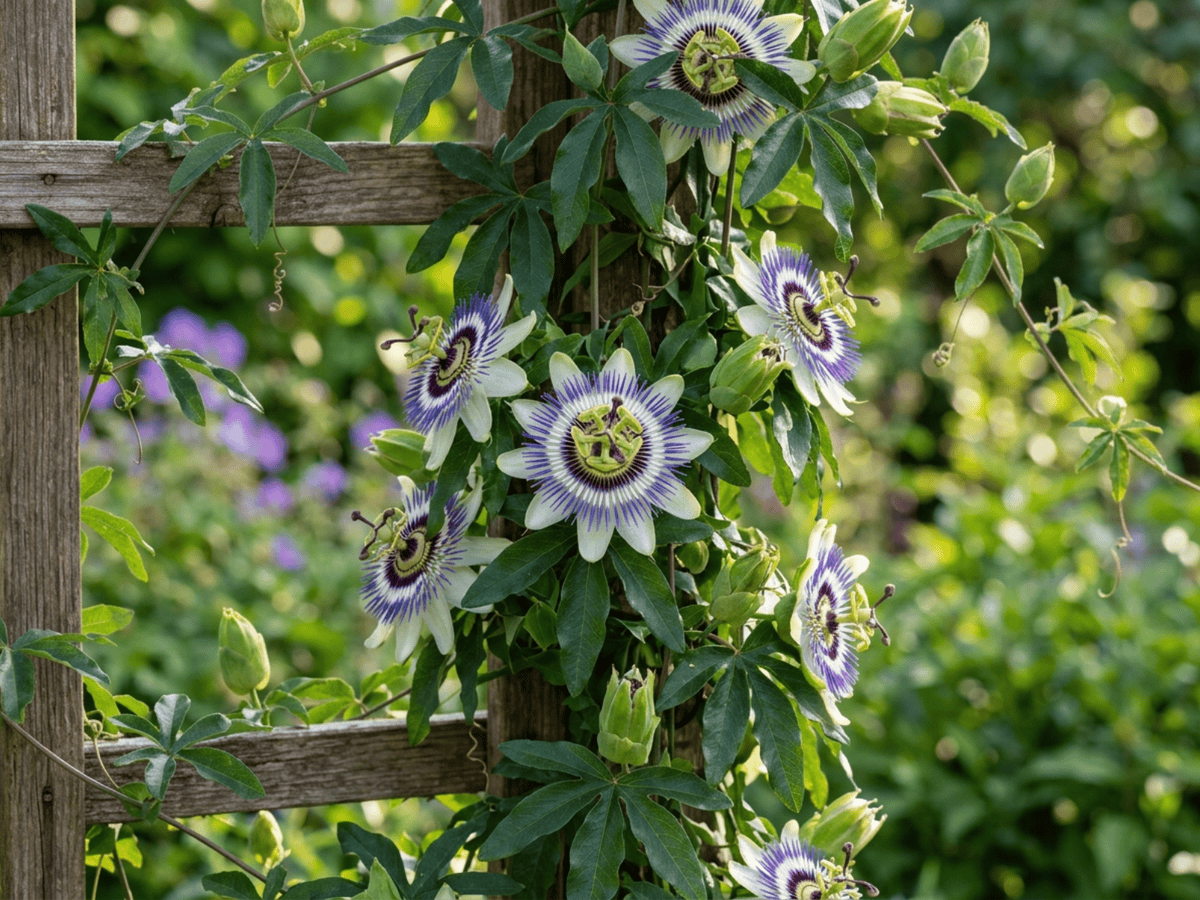
Passiflora edulis, the passion fruit, is a vigorous, tendril-climbing vine in the Passifloraceae family native to Brazil, Paraguay, and northern Argentina. The vine can grow 5–10 m per year, with glossy three-lobed leaves and extraordinarily complex flowers—the 'passion flower'—featuring a corona of colourful filaments. The round fruit (5–8 cm) has a tough purple or yellow rind enclosing aromatic, seed-filled pulp.
Passion fruit thrives in USDA zones 9b–11, requiring frost-free conditions, full sun, and a strong trellis. It needs well-drained, fertile soil and regular watering. The vine establishes quickly and can fruit within 12–18 months. Purple passion fruit (f. edulis) is more cold-tolerant; yellow (f. flavicarpa) is more vigorous and disease-resistant.
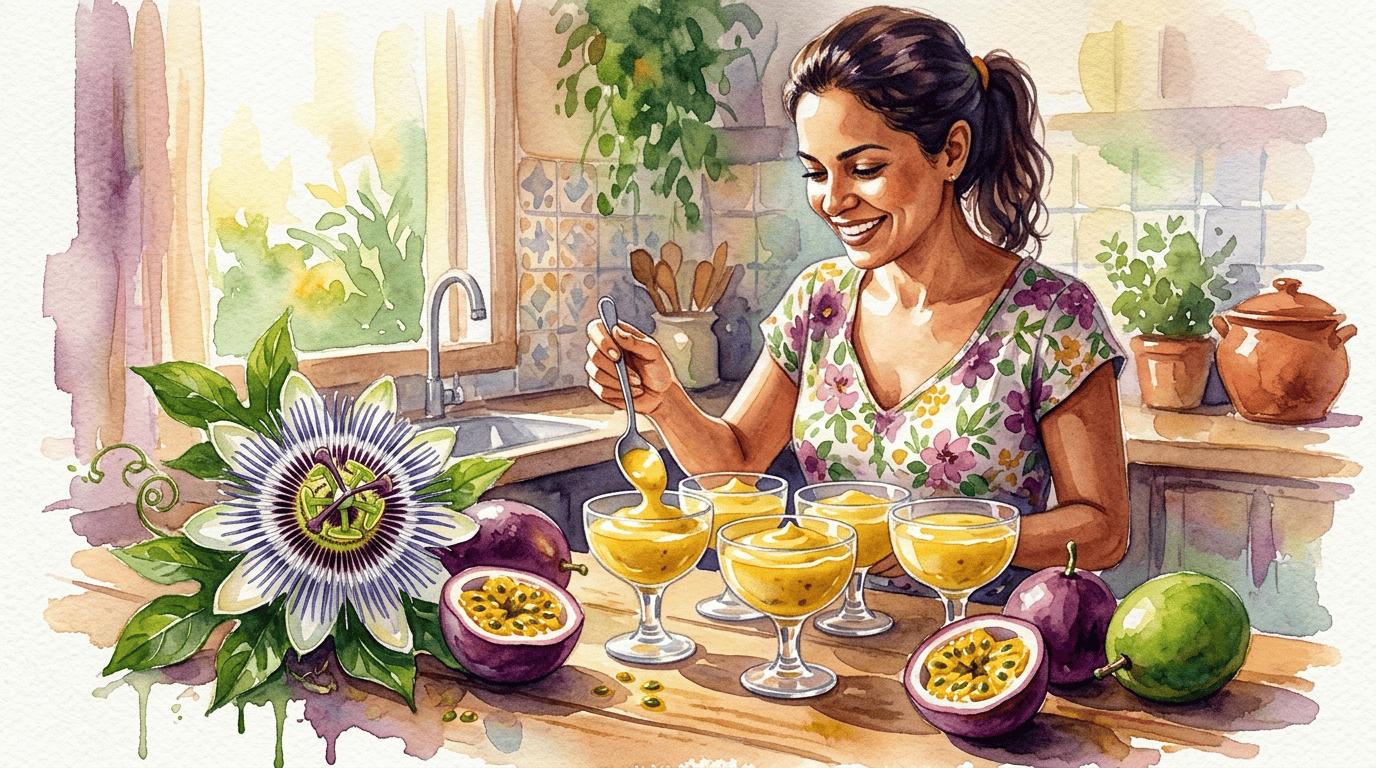
The flower's religious symbolism is remarkable: Spanish missionaries saw the Passion of Christ encoded in its structure—the corona as the crown of thorns, the five stamens as the five wounds, the three stigmas as the three nails. The fruit itself is one of the most intensely aromatic in the world; its juice concentrates into a perfumed, sweet-tart flavour used in drinks, desserts, sauces, and cocktails across Latin American and Southeast Asian cuisines. Passion fruit mousse is Brazil's national dessert.
- Edible
- Fast-growing
- Tropical
How to care for Common Passionfruit
Watering
- Springevery 3 days
- Summerevery 2 days
- Fallevery 4 days
- Winterevery 7 days
Soil · Rich & well-draining
- Top dressingCompost10%
- Main mixPotting soil + compost 3:180%
- DrainageGravel10%
Top up the compost layer each season.
FERTILIZER
Balanced Feed 14-14-14
An even feed covers all three needs at once, keeping leaves, roots and blooms moving together with nothing pushed out of balance.
- Nitrogen · Leaves
- Phosphorus · Roots + Blooms
- Potassium · Strength
- Springevery 21 days
- Summerevery 21 days
- Fallevery 30 days
At a Glance
- NativeSouth America
- Height15–20 ft (4.6–6.1 m)
- Spread6–10 ft (1.8–3 m)
- Flower colorWhite, Purple, Pink
- Foliage colorGreen
- Fruit colorPurple
- SoilLoamy, Well-drained, Rich
- LocationsYard · Indoor · Balcony
Bloom time
BLOOM CYCLE
Peak bloom
Jun–Aug
Exotic flowers are among the most complex in nature; some varieties are self-fertile, others need cross-pollination.
Fragrance
STRONG FRAGRANCE
Distinctive tropical aroma from thiol and ester compounds; complex, difficult-to-replicate.
Toxicity
Pets Slight
cyanogenic glycosides (unripe parts)
Not reported
EXPOSURE No exposure route is reported.
EFFECT Ripe fruit widely consumed and unripe fruit and foliage contain cyanogenic glycosides.
NOTE No toxicity is reported for humans in this catalog; this is not evidence that the plant is edible or harmless.
Slight
- Leaf
- Unripe fruit
- Ingestion
EXPOSURE Eating leaves and unripe fruit.
EFFECT Foliage cyanogenic and ripe flesh relatively safe.
NOTE Ripe fruit safe; avoid unripe fruit and foliage.
Slight
- Leaf
- Unripe fruit
- Ingestion
EXPOSURE Eating leaves and unripe fruit.
EFFECT Foliage cyanogenic.
NOTE Ripe fruit safe; avoid unripe fruit and foliage.
Educational information, not medical or veterinary advice. If exposure is suspected, contact a doctor or veterinarian.
DISTRIBUTION

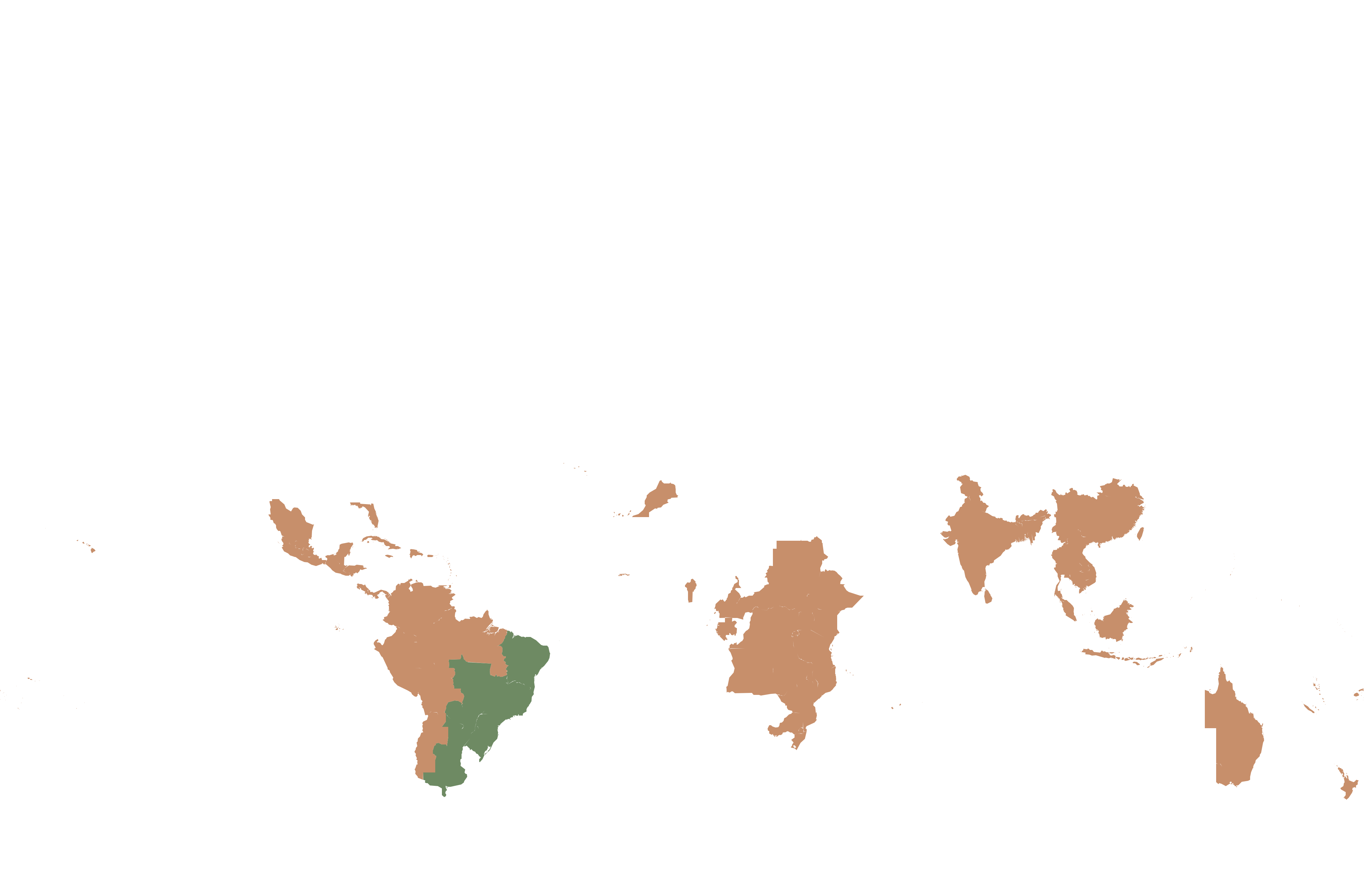
- Native
- Introduced
- South America
History
Passiflora edulis is native to subtropical South America — Paraguay, northern Argentina, and southern Brazil. The common name "passion flower" was coined by early 17th-century Spanish Jesuit missionaries in South America, who saw the elaborate flower structure as a divinely designed teaching tool about Christ's Passion. The 10 petals and sepals were interpreted as the 10 apostles present at the Crucifixion (Judas and Peter excluded), the radial corona filaments as the crown of thorns, the five stamens as the five wounds of Christ, the three stigmas as the three nails, and the tendrils as the whips used to scourge Christ. This interpretation, first published by Jacomo Bosio in 1609, shaped European reception of the plant.
Passionfruit spread rapidly through tropical cultivation worldwide from the 17th century onward. Brazil is now the largest global producer. Purple passionfruit (var. edulis) and yellow passionfruit (var. flavicarpa) are the two main commercial forms.
The flower is the national flower of Paraguay and Tennessee (US state, chosen by schoolchildren in 1919). Australian "passion fruit sauce" in baking and desserts represents one of the strongest cultural positions of the fruit. Spanish missionaries in South America saw Christ's Passion encoded in the flower's anatomy: the corona as crown of thorns, five anthers as five wounds, three stigmas as three nails. The fruit reached Europe by the 17th century. Hawaii and Australia became major producers. Passion fruit mousse (mousse de maracujá) is Brazil's most beloved dessert.
Symbolism & meaning
What It Symbolizes
The Common Passionfruit is faith carried on a vine, its complex flower read by Spanish missionaries as a living diagram of Christ's Passion — every part assigned to crown, nail, and apostle. That ornate symbolism shares space with a lush exoticism that has dazzled tropical gardeners for centuries. In each elaborate bloom, devotion and otherworldly beauty coil tightly together.
- Faith — The flower's anatomy was read as a symbol of Christ's Passion by missionaries, making it an emblem of religious devotion
- Exoticism — The complex, otherworldly flower represents tropical mystery and beauty
Where the Name Comes From
Passiflora from Latin 'passio' (suffering/passion) + 'flos' (flower), referencing the Passion of Christ; 'edulis' means edible.
Uses & Fun Facts
- Aromatic pulp used in juice, mousse, coulis, and ice cream
- Vigorous tendrilled vine covers arbors, fences, and trellises
- Intricate corona flowers add tropical drama to warm gardens
- Complex blooms attract carpenter bees and butterflies
Related plants
More Passiflora plants

Plants with similar care
 Mexican AbeliaAbelia floribunda
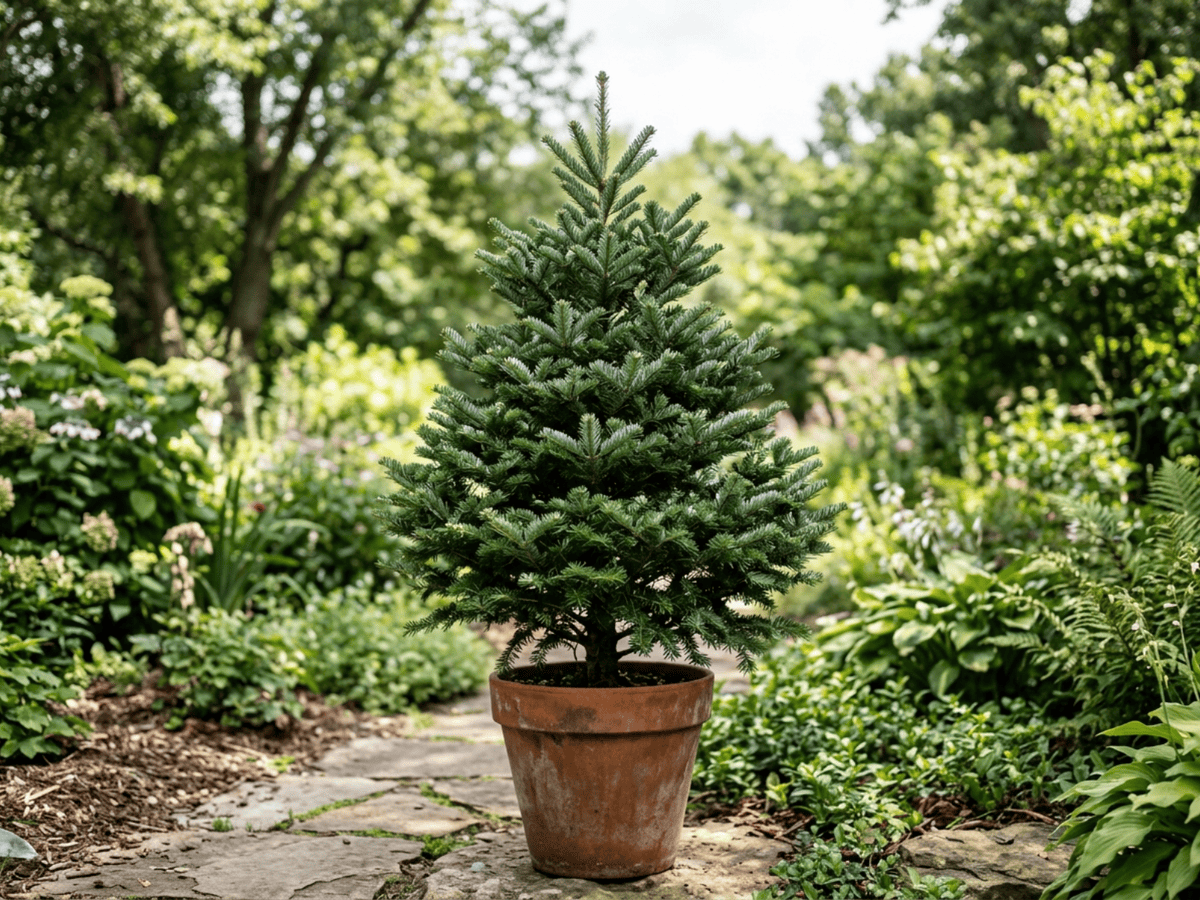 Fraser FirAbies fraseri
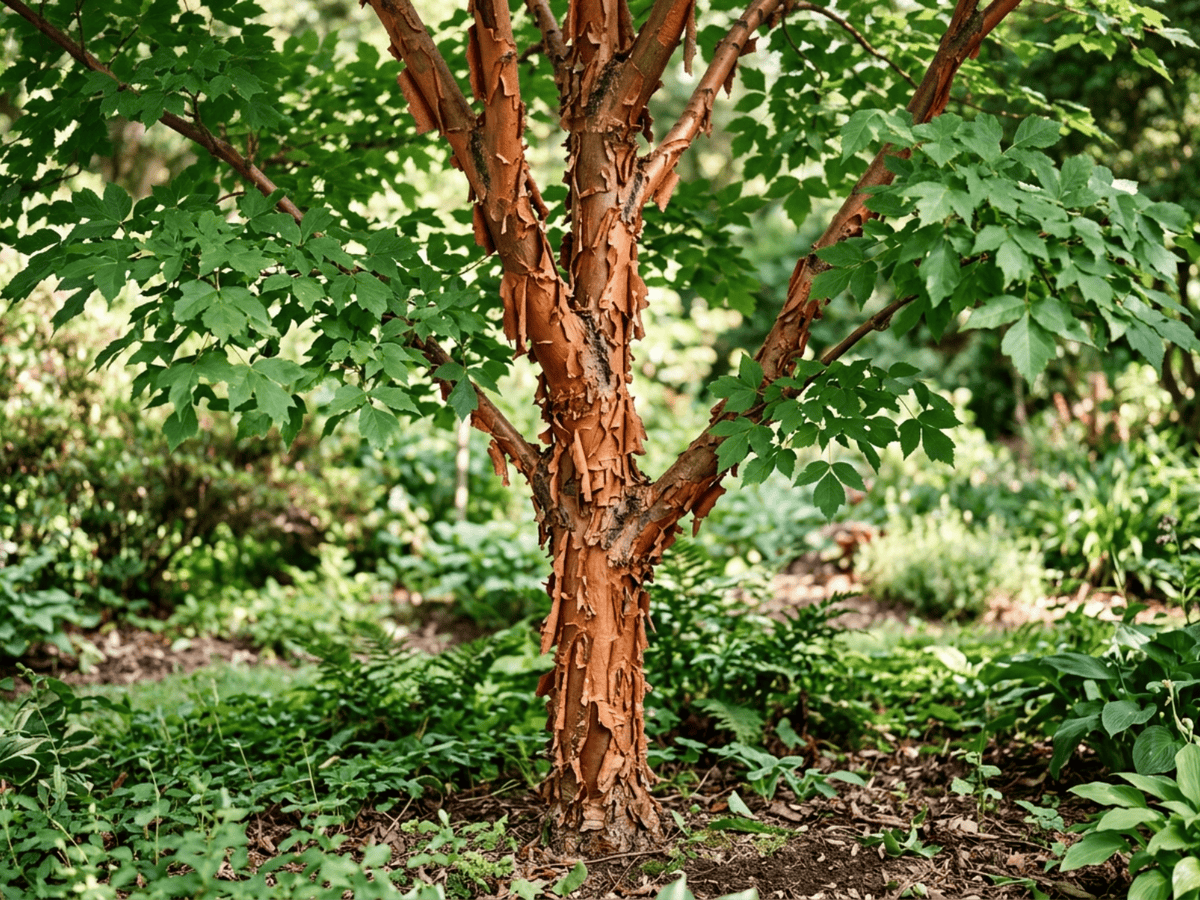 Paperbark MapleAcer griseum
 Sugar MapleAcer saccharum
Frequently asked questions
How often should I water Common Passionfruit?
In summer, water about every 2 days; in winter, about every 7 days. Adjust for heat, pot size and drainage.
How much light does Common Passionfruit need?
Full sun: 6+ hrs direct. Watch the leaves — scorching or stretching means the light needs adjusting.
Is Common Passionfruit toxic to cats or dogs?
Pets Slight (Dogs Slight · Cats Slight) Educational information, not medical or veterinary advice. If exposure is suspected, contact a doctor or veterinarian.
Is Common Passionfruit easy to grow?
It is moderately demanding: a good choice once you have a little experience.
Can Common Passionfruit be grown indoors?
Yes, it adapts well to indoor growing given the right light.
When does Common Passionfruit bloom?
It typically blooms Jun–Aug in the Northern Hemisphere.
YardMate
Identify any plant in seconds
Snap a photo — YardMate names the plant, diagnoses problems, and reminds you when to water.
Download on the App Store