 YardMate
Common Petunia
Petunia x atkinsiana
Hard · Experienced growersAbout Common Petunia
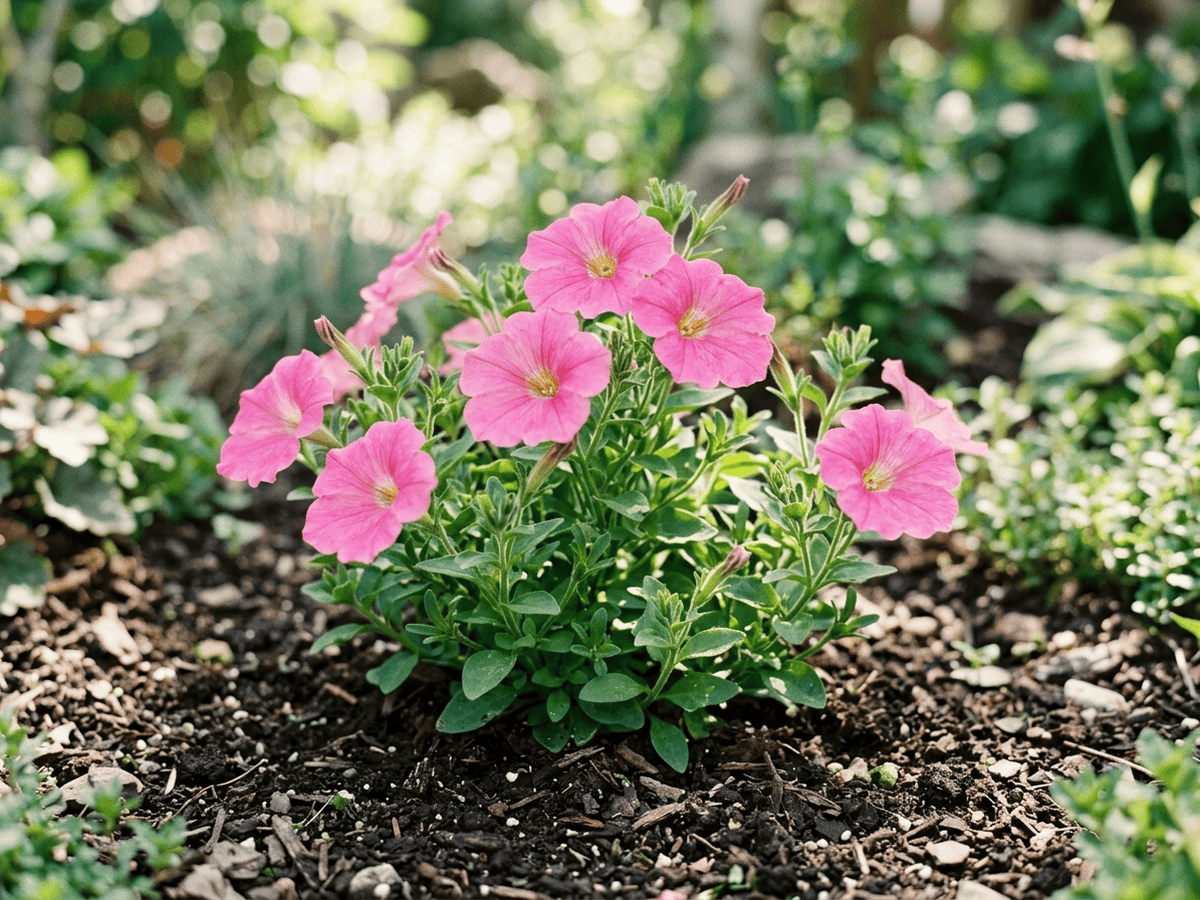
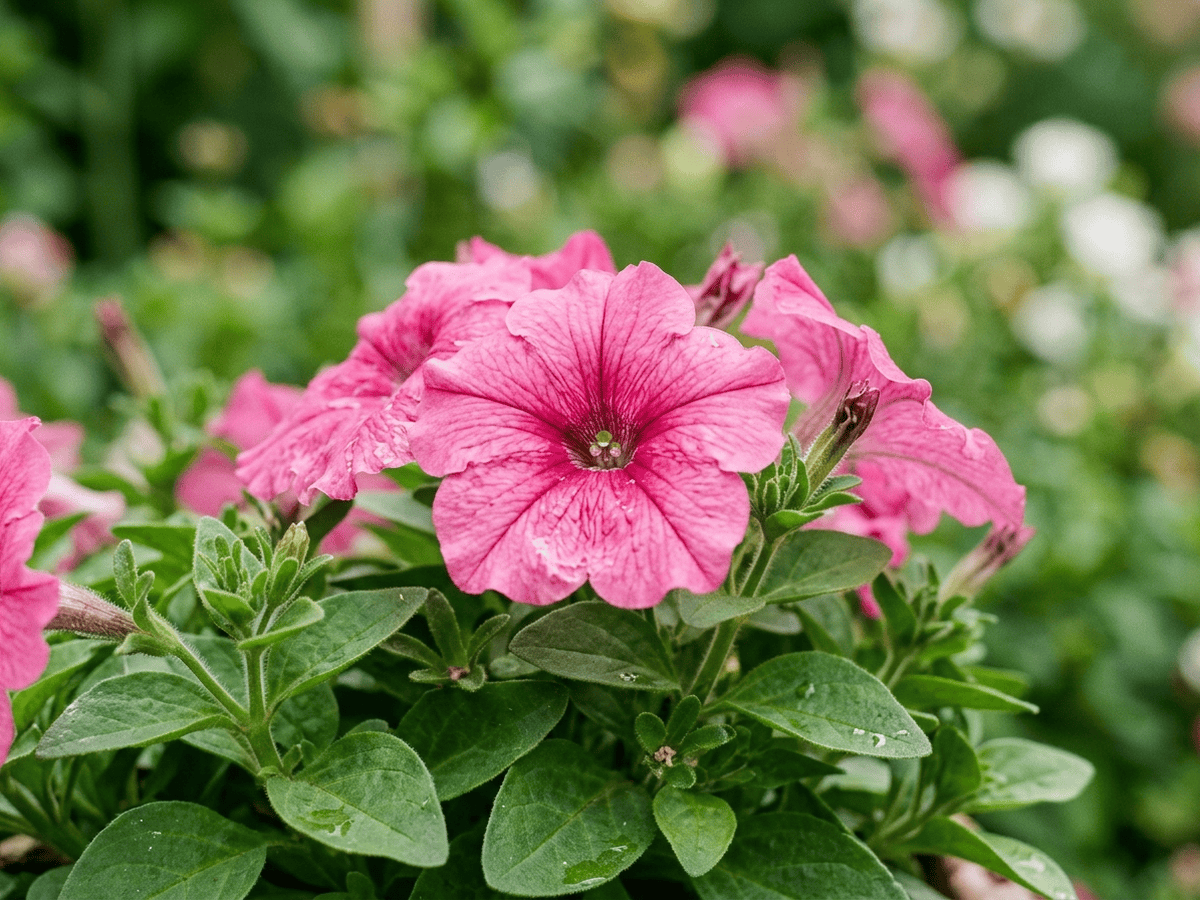
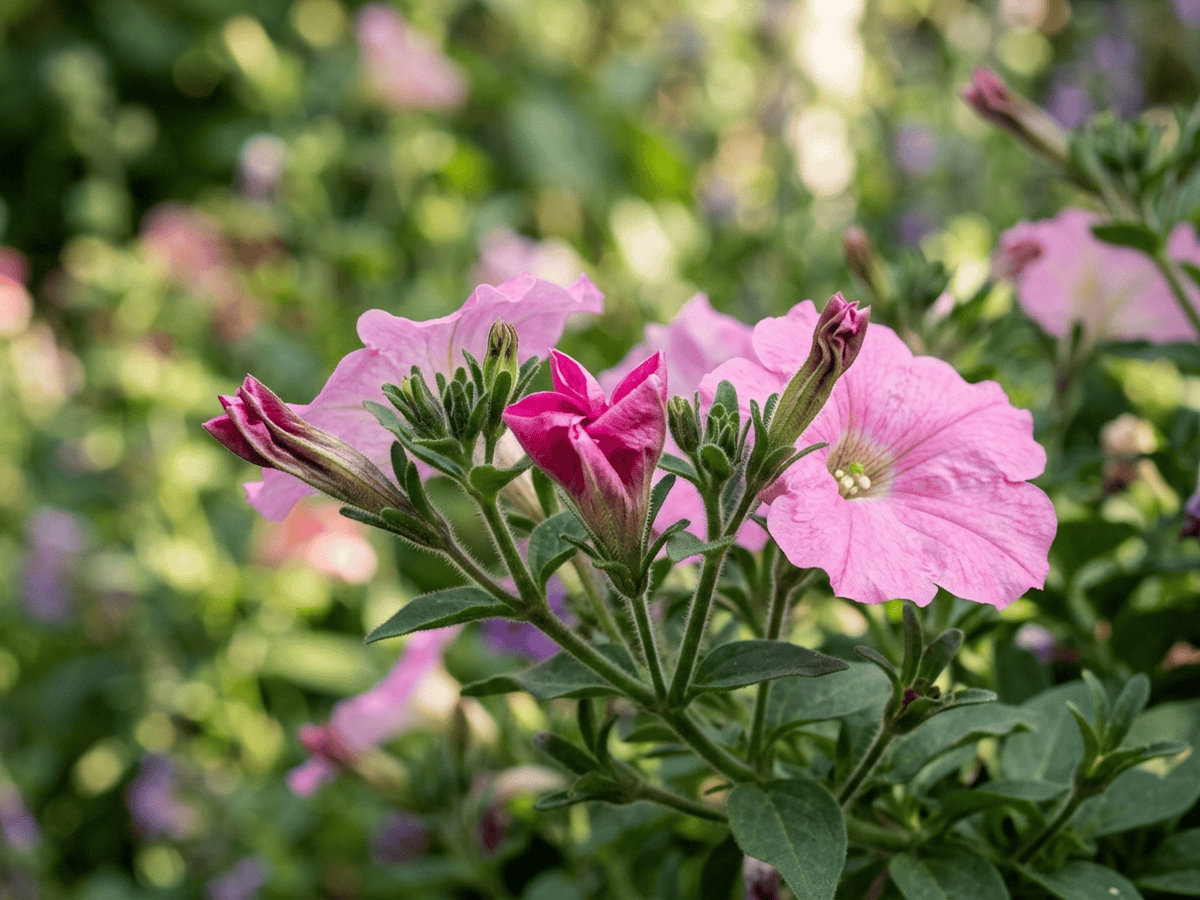
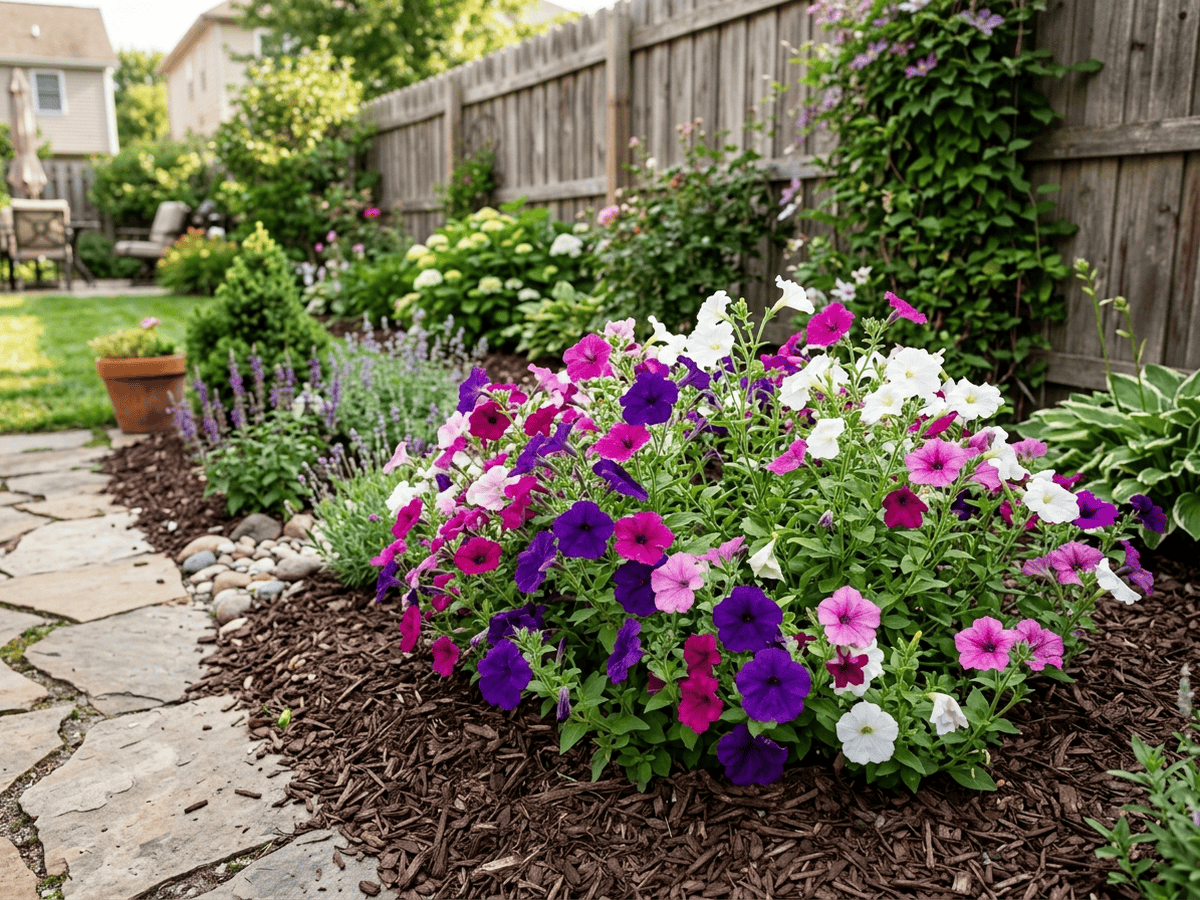
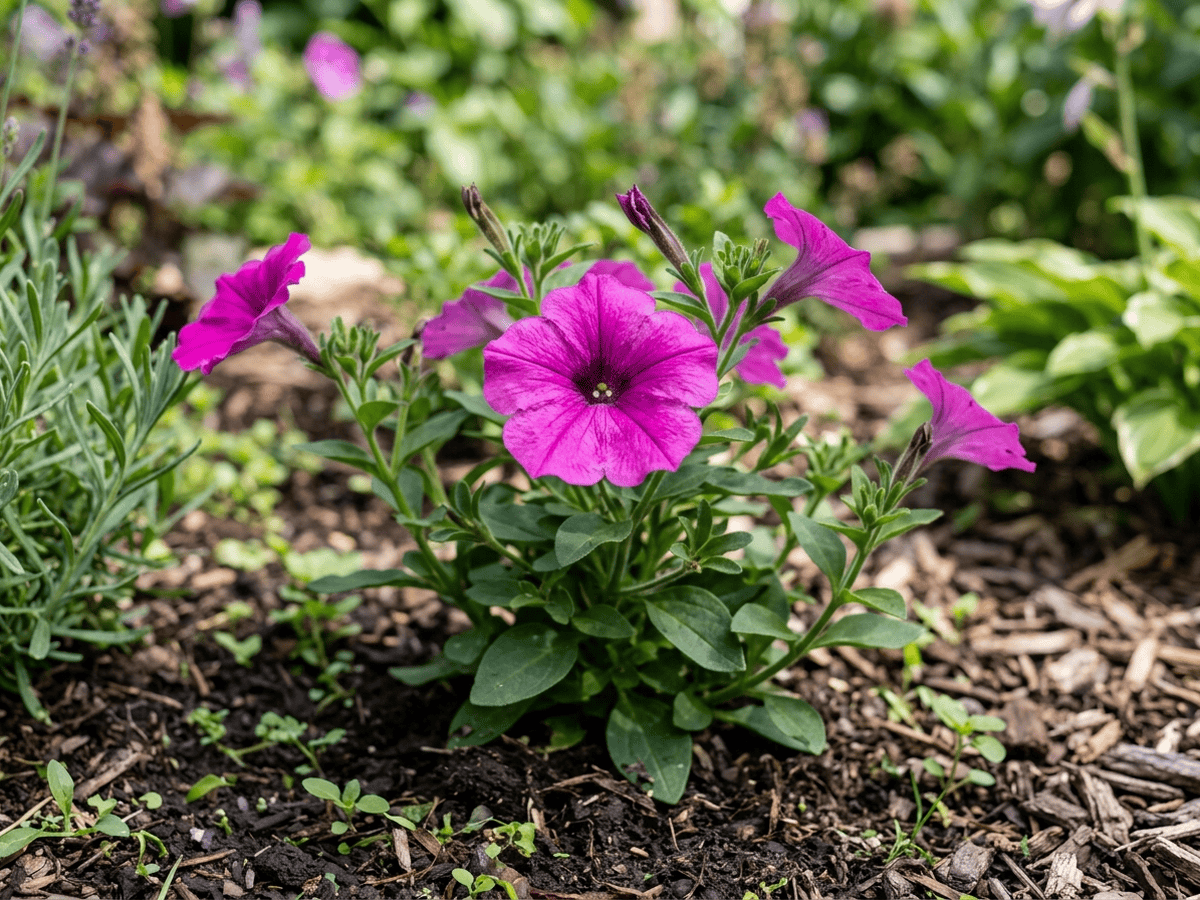
The Common Petunia (Petunia x atkinsiana) is one of the world's most popular flowering annuals, valued for trumpet-shaped blooms in shades from deep purple and magenta to soft pink, white, and yellow, many marked with dramatic veining or picotee edges. Bred from South American wild species in the 19th century, it flowers non-stop from late spring until first frost with minimal care. Compact and free-blooming, the Common Petunia cascades from hanging baskets and window boxes, fills garden borders, and thrives in patio containers, its nectar-rich flowers reliably drawing hummingbirds, bees, and moths.
- Pollinator-friendly
- Container-friendly
- Long-blooming
- Compact
- Fast-growing
How to care for Common Petunia
Watering
- Springevery 10 days
- Summerevery 7 days
- Fallevery 15 days
- Winterpause watering
Soil · Well-draining
- Top dressingPine bark mulch10%
- Main mixPotting soil + perlite 2:170%
- DrainageLECA / gravel20%
Never skip the drainage layer — standing water is the top cause of root rot.
FERTILIZER
Bloom Booster 10-52-10
A phosphorus-forward feed fuels abundant blooms, with just enough nitrogen and potassium to keep foliage and roots steady.
- Nitrogen · Leaves
- Phosphorus · Roots + Blooms
- Potassium · Strength
- Springevery 30 days
- Summerevery 30 days
At a Glance
- NativeSouth America
- Height0.5–1.5 ft (0.2–0.5 m)
- Spread1–2 ft (0.3–0.6 m)
- Flower colorPink, Blue, Purple, White
- Foliage colorGreen
- SoilLoamy, Well-drained
- LocationsYard · Patio · Greenhouse
Bloom time
BLOOM CYCLE
Peak bloom
May–Oct
This flower blooms from May to October, displaying vibrant colors.
Fragrance
LIGHT FRAGRANCE
Many petunias, especially white and pastel evening-blooming varieties, release a sweet, honey-like fragrance after dusk to attract night-flying moths.
Toxicity
Pets Safe
None reported
Not reported
EXPOSURE No exposure route is reported.
EFFECT No toxic effect is reported.
NOTE No toxicity is reported for humans in this catalog; this is not evidence that the plant is edible or harmless.
Safe
EXPOSURE No exposure route is reported.
EFFECT No toxic effect is reported.
NOTE Authoritative sources report this plant as non-toxic to dogs; this is not evidence that the plant is edible.
Safe
EXPOSURE No exposure route is reported.
EFFECT No toxic effect is reported.
NOTE Authoritative sources report this plant as non-toxic to cats; this is not evidence that the plant is edible.
Educational information, not medical or veterinary advice. If exposure is suspected, contact a doctor or veterinarian.
DISTRIBUTION


- Native
- South America
History
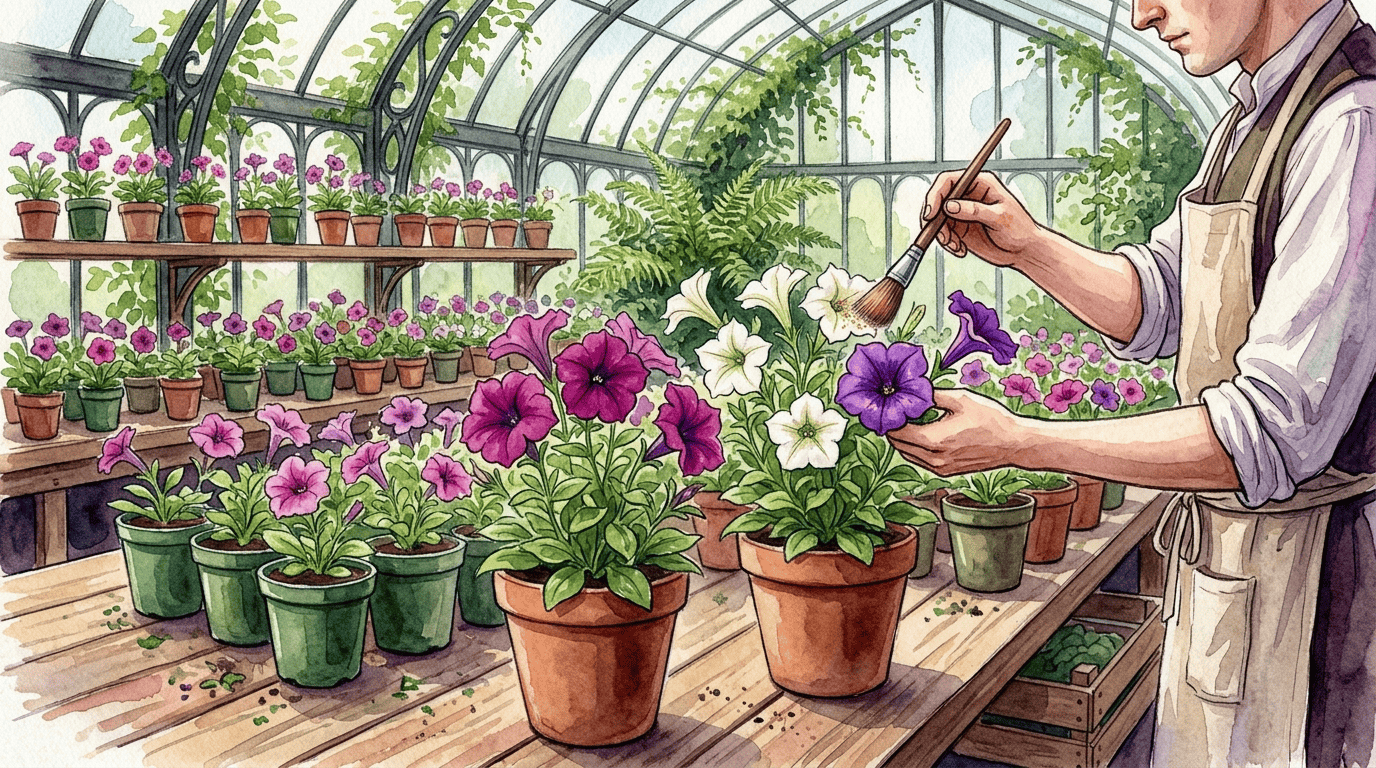
The story of the Common Petunia begins in South America, where two wild species set the stage for one of horticulture's great hybrid successes. In the early 1820s, French naturalists collecting near Buenos Aires and Montevideo described a night-fragrant, white-flowered plant they called Petunia axillaris, its name borrowed from "petun," the Tupi-Guarani word for tobacco, since botanists recognized it as a cousin of tobacco in the nightshade family. A few years later, Scottish plant collector James Tweedie sent seeds of a smaller, violet-purple wild petunia, Petunia integrifolia, from Argentina back to European nurseries eager for new bedding flowers.
By the 1830s and 1840s, nurserymen in England, Belgium, and Germany began deliberately crossing the fragrant white species with the vividly colored violet one. The resulting hybrid, later formalized as Petunia x atkinsiana (also called Petunia x hybrida), combined the parents' best traits: a much wider color range, larger flowers, and vigorous, free-flowering growth. Victorian gardeners embraced it immediately, and by the 1850s the Common Petunia was a fixture of formal bedding schemes across Europe and North America.
Breeders continued refining the hybrid for over a century, developing Grandiflora types with enormous ruffled blooms and Multiflora types bred for weather resistance and mass color. The most dramatic leap came in the 1990s, when Japanese breeders at Suntory introduced the Wave petunia, a low, spreading form that revolutionized hanging baskets and ground-cover plantings worldwide. Today's Common Petunia carries genes from those original Argentine and Uruguayan wildflowers into millions of gardens, patios, and window boxes every summer.
Symbolism & meaning
What It Symbolizes
Victorian gardeners loved sending coded messages through flowers, and the Common Petunia carried two contradictory meanings depending on its form. A single petunia tucked into a bouquet quietly signaled resentment or irritation with the recipient, while a double-flowered petunia meant the opposite: "your presence soothes me." A single stem could therefore carry a pointed rebuke, while its ruffled double cousin offered comfort, letting Victorian gift-givers say what etiquette alone would not allow.
- resentment — In Victorian flower language, the petunia commonly signified resentment or irritation, making it a coded way to express displeasure within a bouquet.
- comfort — Double-flowered petunia varieties carried a softer meaning, "your presence soothes me," offered as a message of reassurance to a loved one.
Where the Name Comes From
From the Tupi-Guarani word "petun," meaning tobacco. Early South American botanists placed the genus Petunia in the nightshade family alongside tobacco and borrowed its name for these newly described flowering plants.
Uses & Fun Facts
- A top choice for hanging baskets, window boxes, and border edging thanks to its non-stop, colorful bloom.
- Nectar-rich trumpet flowers draw hummingbirds, bees, and evening-flying moths.
- White and pastel varieties release a sweet fragrance after dusk.
- Provides season-long nectar for garden pollinators from spring through fall.
Related plants
More Petunia plants

Plants with similar care
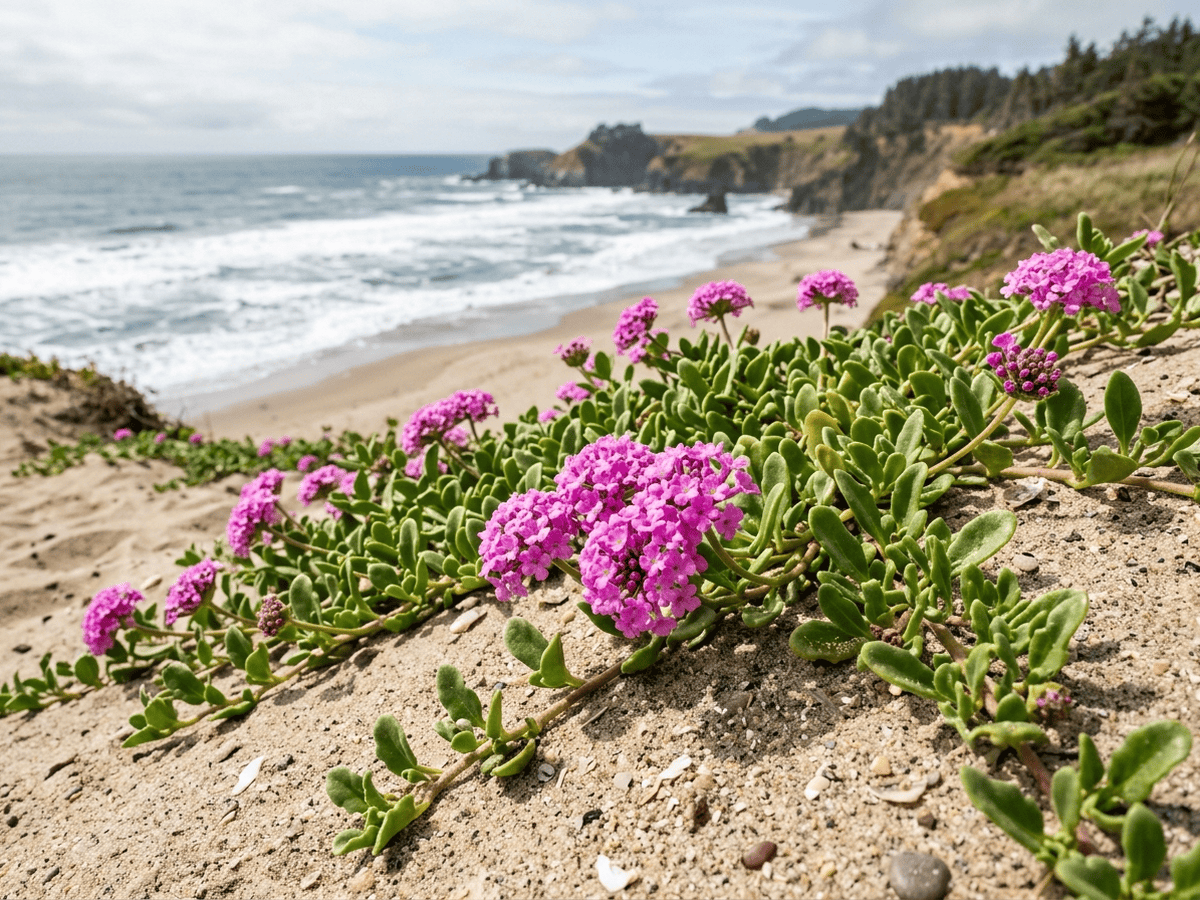 Pink Sand VerbenaAbronia umbellata
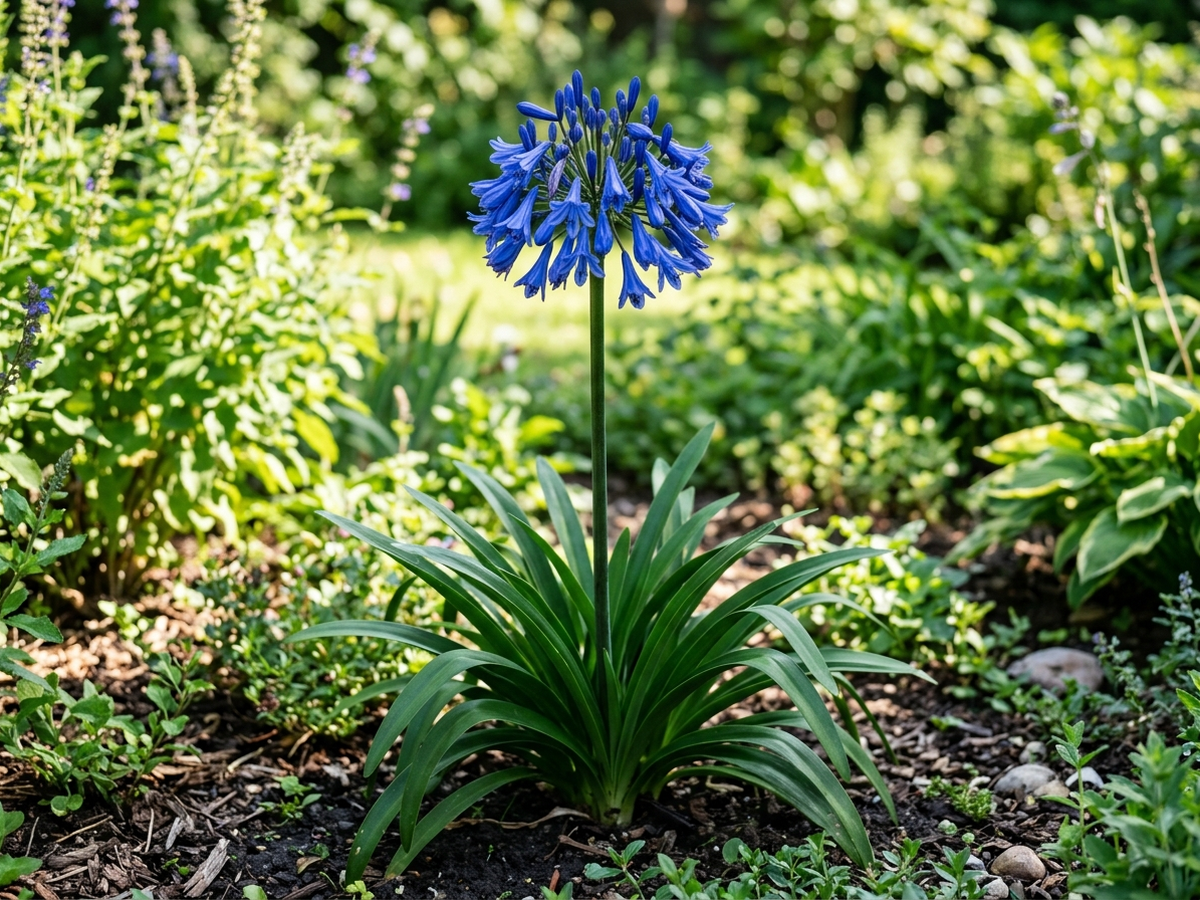 Drooping AgapanthusAgapanthus inapertus
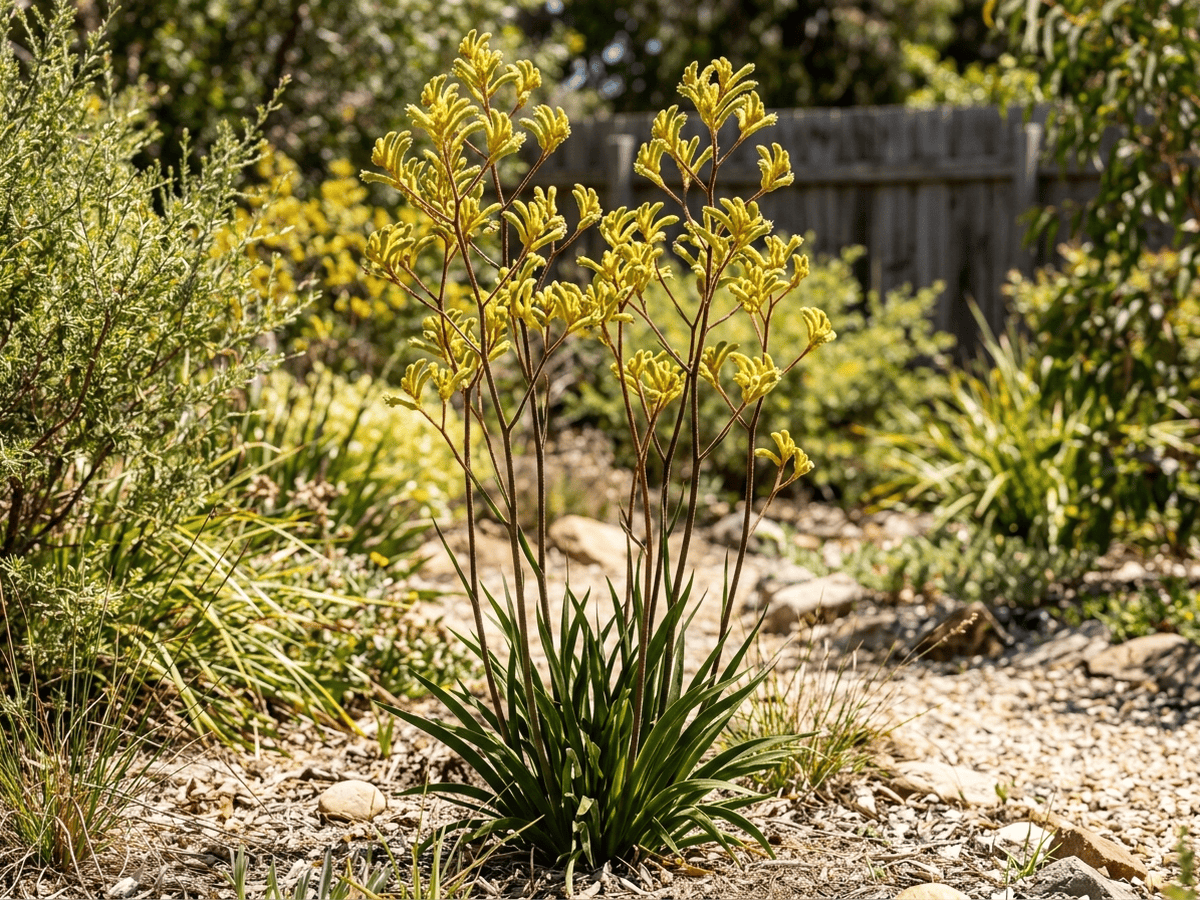 Tall Kangaroo PawAnigozanthos flavidus
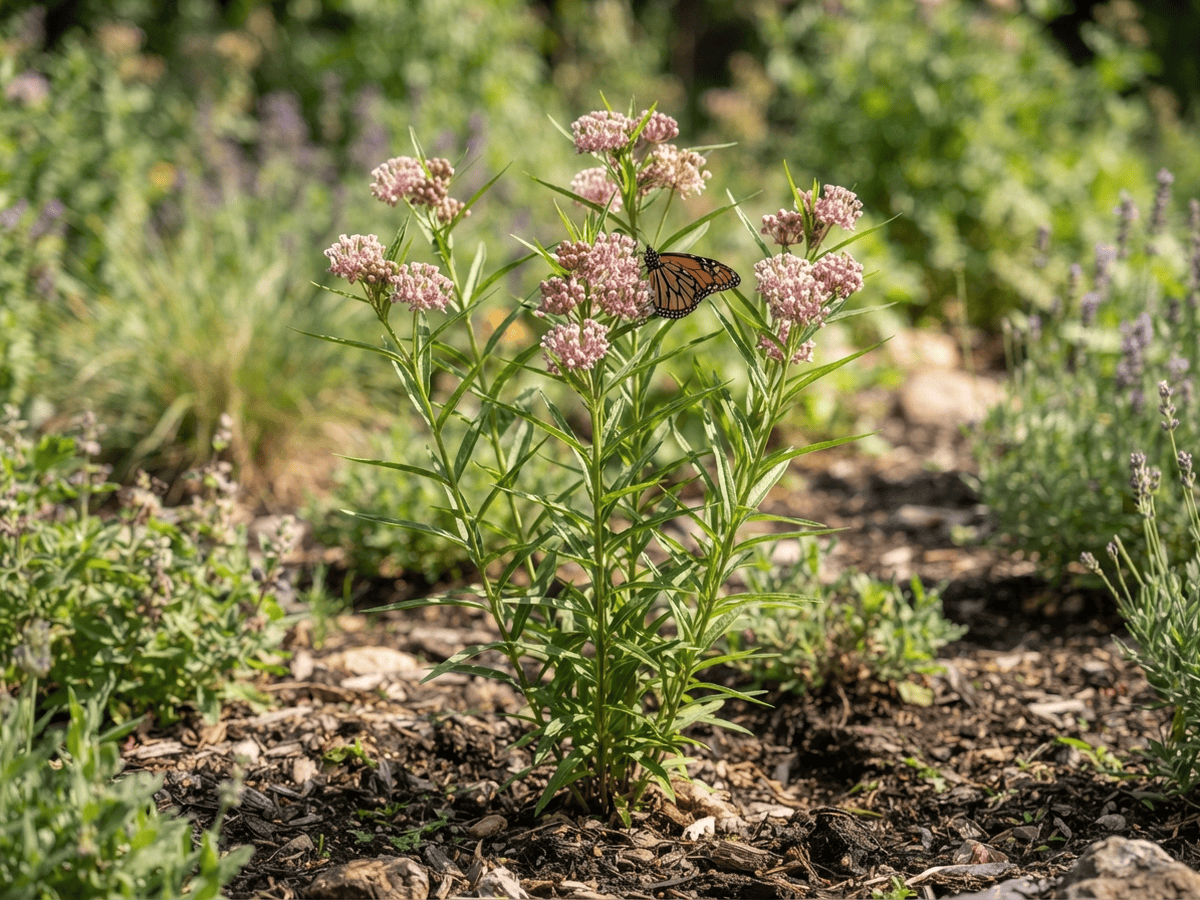 Narrowleaf MilkweedAsclepias fascicularis
Frequently asked questions
How often should I water Common Petunia?
Water about every 10 days during the growing season, and always let excess water drain away.
How much light does Common Petunia need?
Full sun: 6+ hrs direct. Watch the leaves — scorching or stretching means the light needs adjusting.
Is Common Petunia toxic to cats or dogs?
Pets Safe (Dogs Safe · Cats Safe) Educational information, not medical or veterinary advice. If exposure is suspected, contact a doctor or veterinarian.
Is Common Petunia easy to grow?
It is considered challenging and rewards experienced growers.
When does Common Petunia bloom?
It typically blooms May–Oct in the Northern Hemisphere.
YardMate
Identify any plant in seconds
Snap a photo — YardMate names the plant, diagnoses problems, and reminds you when to water.
Download on the App Store