 YardMate


Common Garden Petunia
Petunia x hybrida
Easy · Beginner friendlyAbout Common Garden Petunia
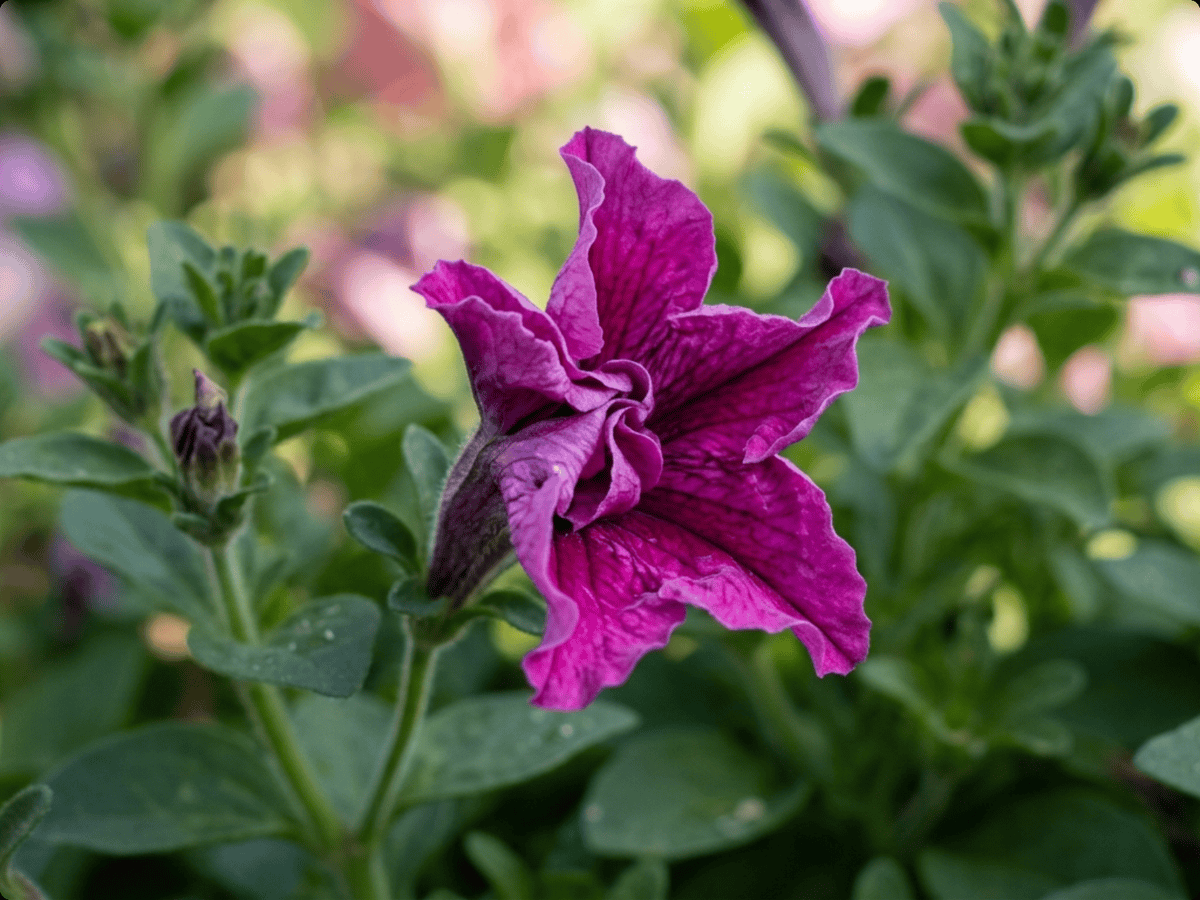
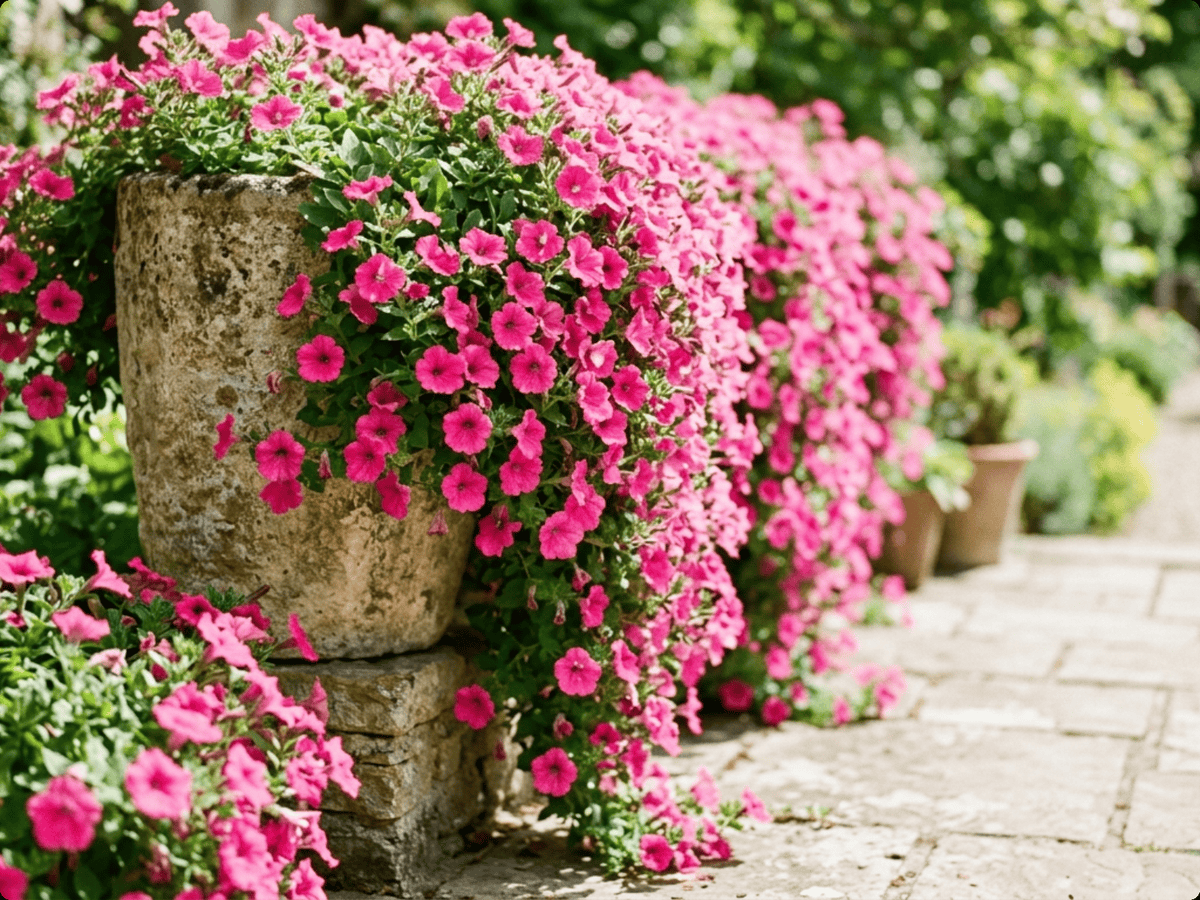
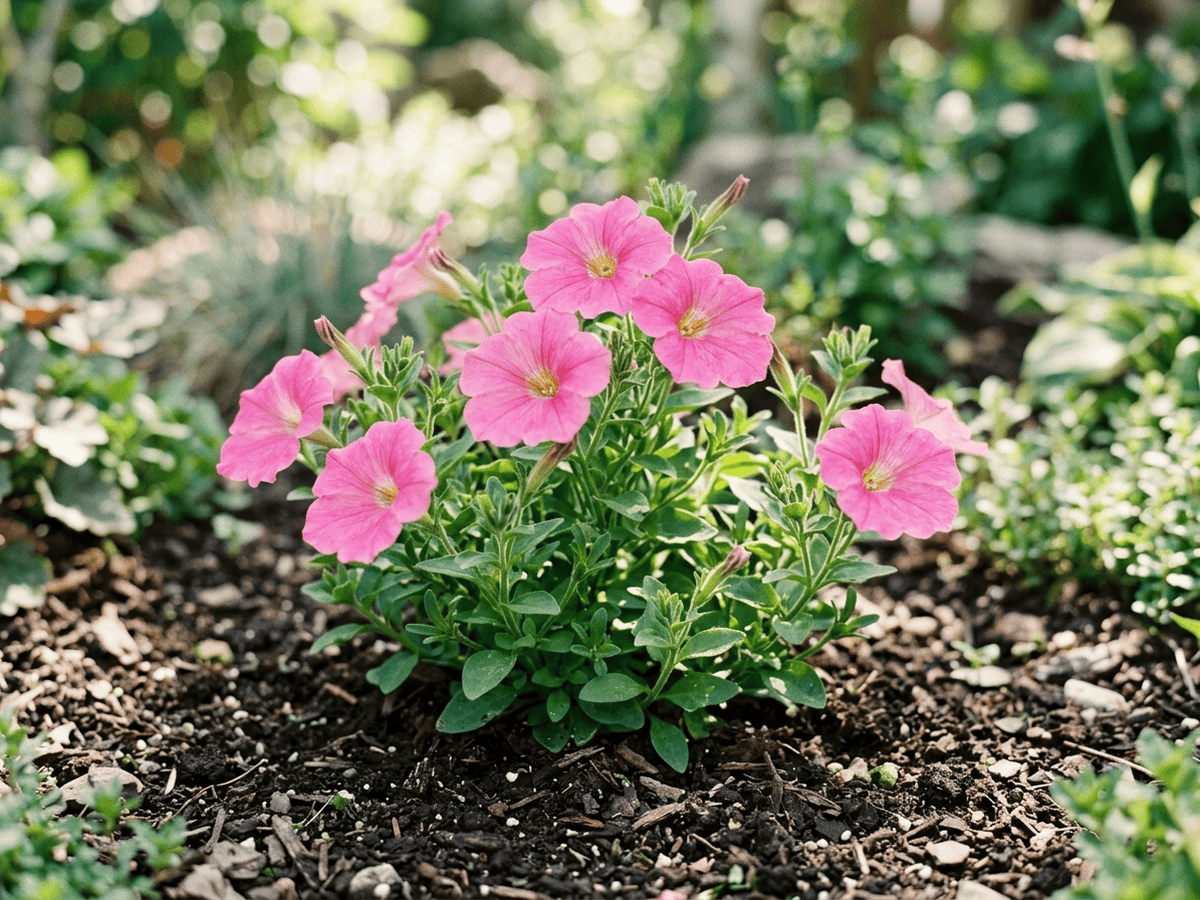
Petunia x hybrida, the garden petunia, is one of the world's most popular annual flowers, producing trumpet-shaped blooms in an enormous range of colors and patterns — solids, stripes, picotees, stars, and even black. Modern series like 'Supertunia' and 'Wave' have transformed petunias from old-fashioned bedding plants into cascading container superstars. Native parent species come from South America. Petunias prefer full sun and well-drained soil. Vegetatively propagated (cutting-grown) varieties outperform seed-grown types but cost more. They bloom continuously from late spring to frost.
- Fragrant
- Trailing
- Long-blooming
How to care for Common Garden Petunia
Watering
- Springevery 3 days
- Summerevery 2 days
- Fallevery 5 days
- Winterpause watering
Soil · Well-draining
- Top dressingPine bark mulch10%
- Main mixPotting soil + perlite 2:170%
- DrainageLECA / gravel20%
Never skip the drainage layer — standing water is the top cause of root rot.
FERTILIZER
Balanced Feed 14-14-14
An even feed covers all three needs at once, keeping leaves, roots and blooms moving together with nothing pushed out of balance.
- Nitrogen · Leaves
- Phosphorus · Roots + Blooms
- Potassium · Strength
- Springevery 14 days
- Summerevery 14 days
At a Glance
- NativeSouth America
- Height0.5–1.5 ft (0.2–0.5 m)
- Spread1–3 ft (0.3–0.9 m)
- Flower colorPink, Purple, Red, White
- Foliage colorGreen
- SoilLoamy, Well-drained
- LocationsBalcony · Yard
Bloom time
BLOOM CYCLE
Peak bloom
Jun–Aug
Feed heavily for best bloom; cut back leggy growth mid-season; self-cleaning varieties save deadheading
Fragrance
MODERATE FRAGRANCE
Sweet scent strongest at dusk, inherited from moth-pollinated P. axillaris parent.
Toxicity
Pets Safe
None reported
Not reported
EXPOSURE No exposure route is reported.
EFFECT No significant toxicity.
NOTE No human toxicity is reported in this catalog; avoid eating ornamental plants unless confirmed edible.
Safe
EXPOSURE No exposure route is reported.
EFFECT Not listed as toxic by ASPCA.
NOTE Listed as non-toxic for dogs; avoid eating ornamental plants unless confirmed edible.
Safe
EXPOSURE No exposure route is reported.
EFFECT Not listed as toxic by ASPCA.
NOTE Listed as non-toxic for cats; avoid eating ornamental plants unless confirmed edible.
Educational information, not medical or veterinary advice. If exposure is suspected, contact a doctor or veterinarian.
DISTRIBUTION


- Native
- South America
History
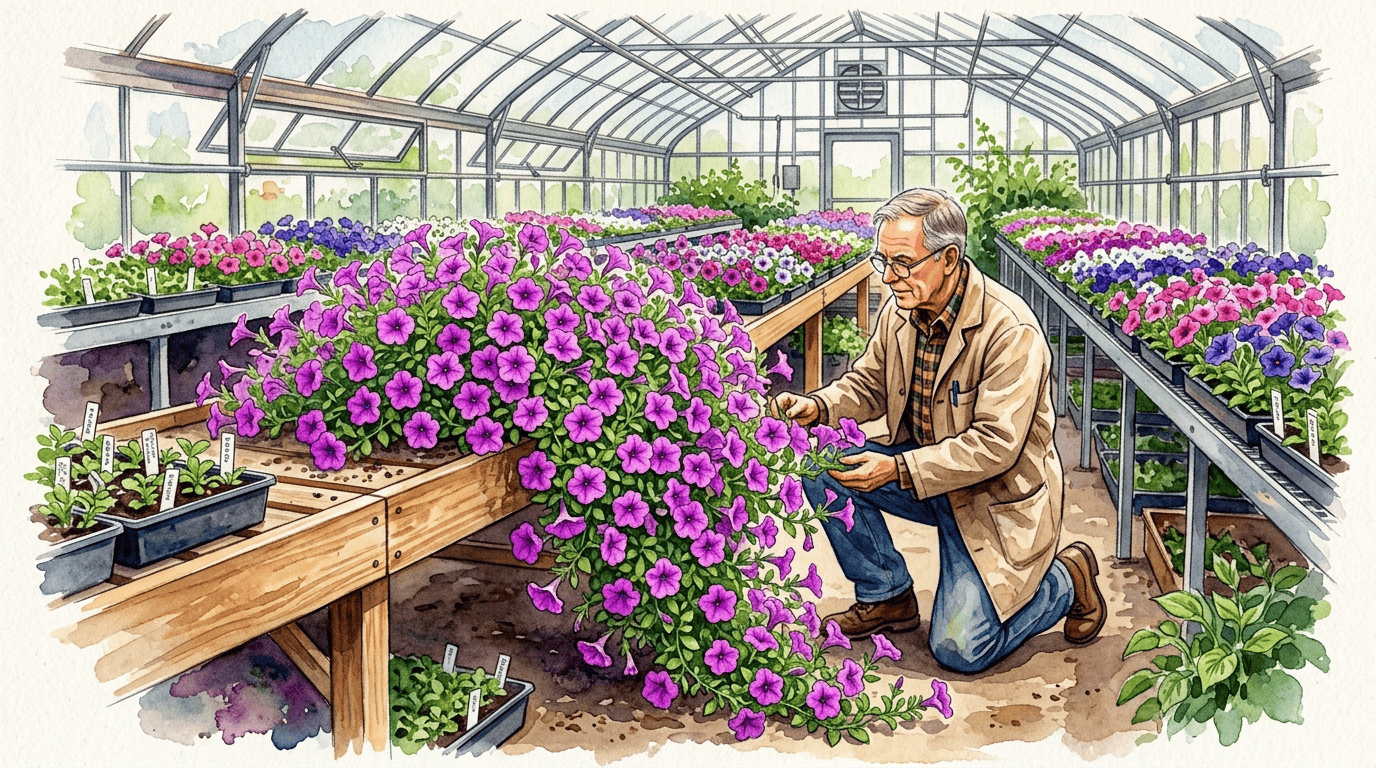
The garden petunia is an interspecific hybrid whose parent species — Petunia axillaris (white-flowered, moth-pollinated) and Petunia integrifolia (violet, bee-pollinated) — are native to the grasslands of Argentina, Uruguay, and southern Brazil. First crosses were recorded in European nursery trade in the 1830s, and throughout the 19th century breeders steadily widened the color palette. The decisive 20th-century leap came with F1 hybrid technology pioneered by Japanese seed houses including Sakata in the 1930s, producing uniform, vigorous grandiflora and multiflora cultivars. The 1995 introduction of the trailing "Wave" petunia by Ball/Kirin transformed hanging-basket horticulture and remains one of the best-selling bedding plant lines in history.
Petunia was also the first genus in which a plant transgene (chimeric, by Meyer and Saedler in 1987) produced a visible phenotype change, making it a foundational model for plant molecular biology. Petunias are named from a Tupi-Guarani indigenous word 'petun' meaning 'tobacco' — they are close relatives of tobacco (Nicotiana). The wild parent species were collected in Argentina and Brazil in the 1830s and hybridized by European breeders.
The 'Wave' petunia, introduced by Ball Seed in 1995, was the first truly spreading petunia and revolutionized container gardening — a single plant can cascade over a meter. The 'Supertunia Vista Bubblegum,' introduced by Proven Winners, became one of the best-selling ornamental plants of all time. Genetically engineered orange petunias were discovered in 2017 growing in gardens worldwide — they had escaped from a Finnish lab decades earlier.
Symbolism & meaning
What It Symbolizes
The Common Garden Petunia is comfort painted onto every American summer porch, its familiar blooms cascading from window boxes and hanging baskets in welcoming color. Few flowers carry the sense of home so reliably or in so many shades. In its abundant, easy bloom lies a small reassurance: that summer, comfort, and a friendly front step still belong together.
- Comfort — Its familiar, welcoming blooms on every porch represent the comfort of home
Where the Name Comes From
Petunia from Tupi-Guarani 'petun' (tobacco), as petunias and tobacco are closely related. Hybrida indicates hybrid origin.
Uses & Fun Facts
- Trailing blooms cascade from baskets, window boxes, and mixed pots
- Many cultivars release sweet evening perfume in summer
- Endless color range fills bedding and seasonal plantings
- Trumpet flowers attract hawkmoths and hummingbirds at dusk
Related plants
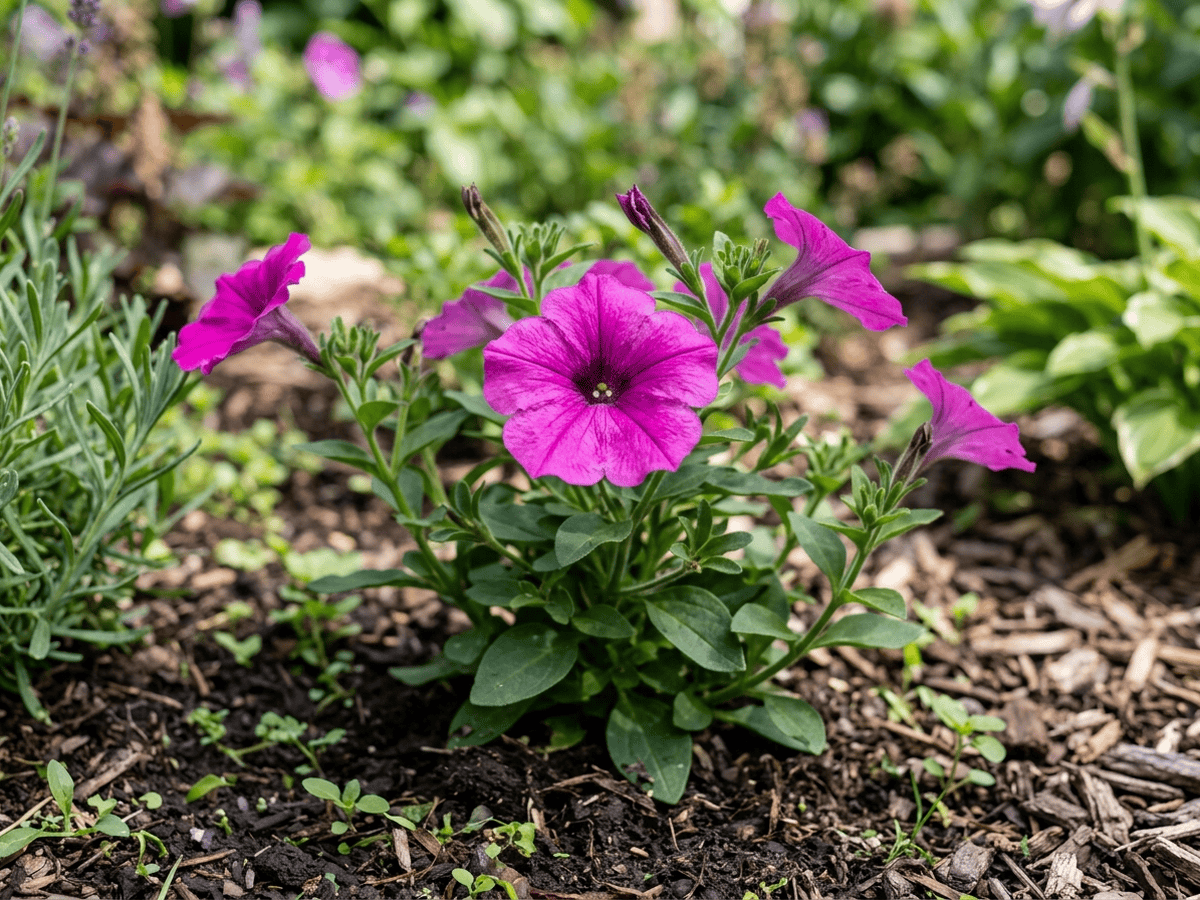
More Petunia plants
Plants with similar care
 Chinese AbeliaAbelia chinensis
 Fragrant AbeliaAbelia mosanensis
 Large-Flowered AbeliaAbelia uniflora
 Glossy AbeliaAbelia x grandiflora
Frequently asked questions
How often should I water Common Garden Petunia?
Water about every 3 days during the growing season, and always let excess water drain away.
How much light does Common Garden Petunia need?
Full sun: 6+ hrs direct. Watch the leaves — scorching or stretching means the light needs adjusting.
Is Common Garden Petunia toxic to cats or dogs?
Pets Safe (Dogs Safe · Cats Safe) Educational information, not medical or veterinary advice. If exposure is suspected, contact a doctor or veterinarian.
Is Common Garden Petunia easy to grow?
Yes — it is considered an easy, beginner-friendly plant.
When does Common Garden Petunia bloom?
It typically blooms Jun–Aug in the Northern Hemisphere.
YardMate
Identify any plant in seconds
Snap a photo — YardMate names the plant, diagnoses problems, and reminds you when to water.
Download on the App Store