 YardMate


Philodendron gloriosum
Philodendron gloriosum
Hard · Experienced growersAbout Philodendron gloriosum
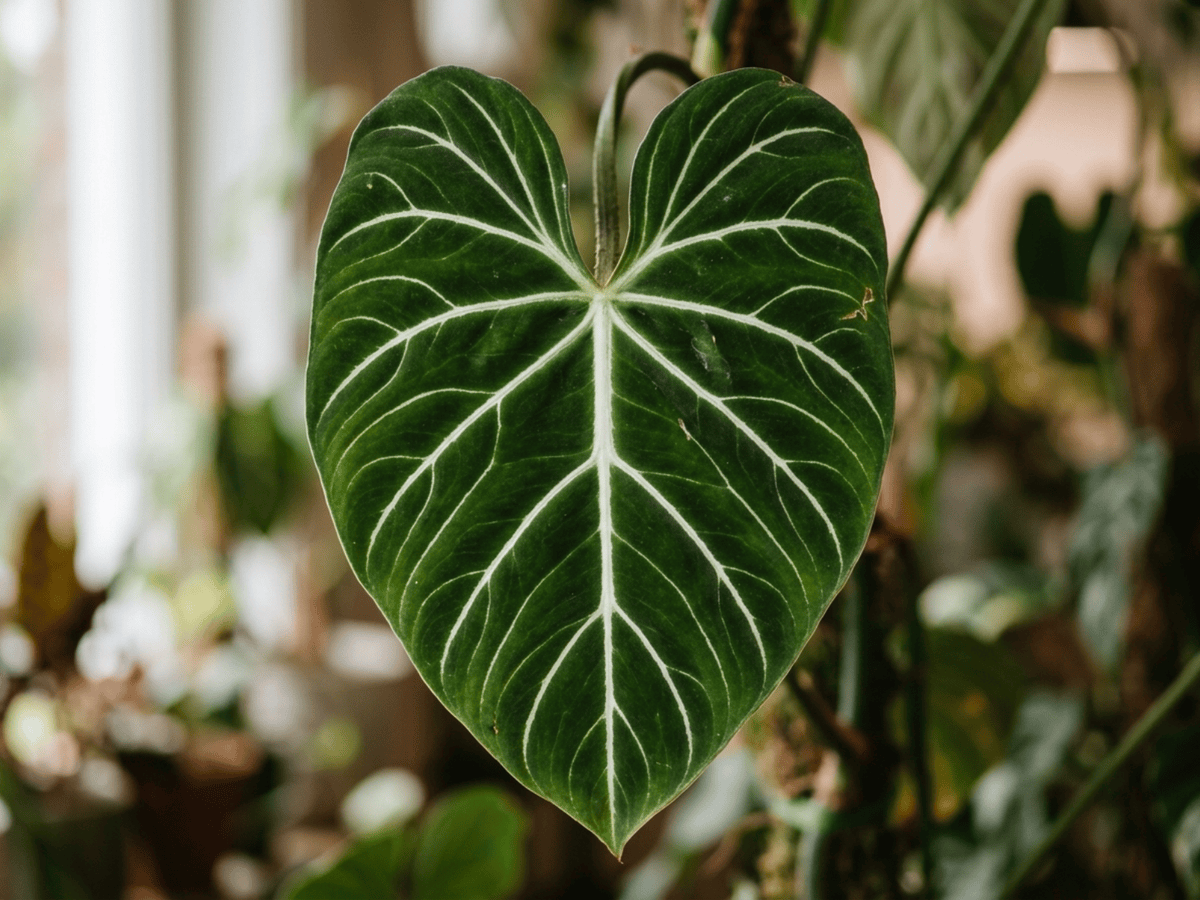
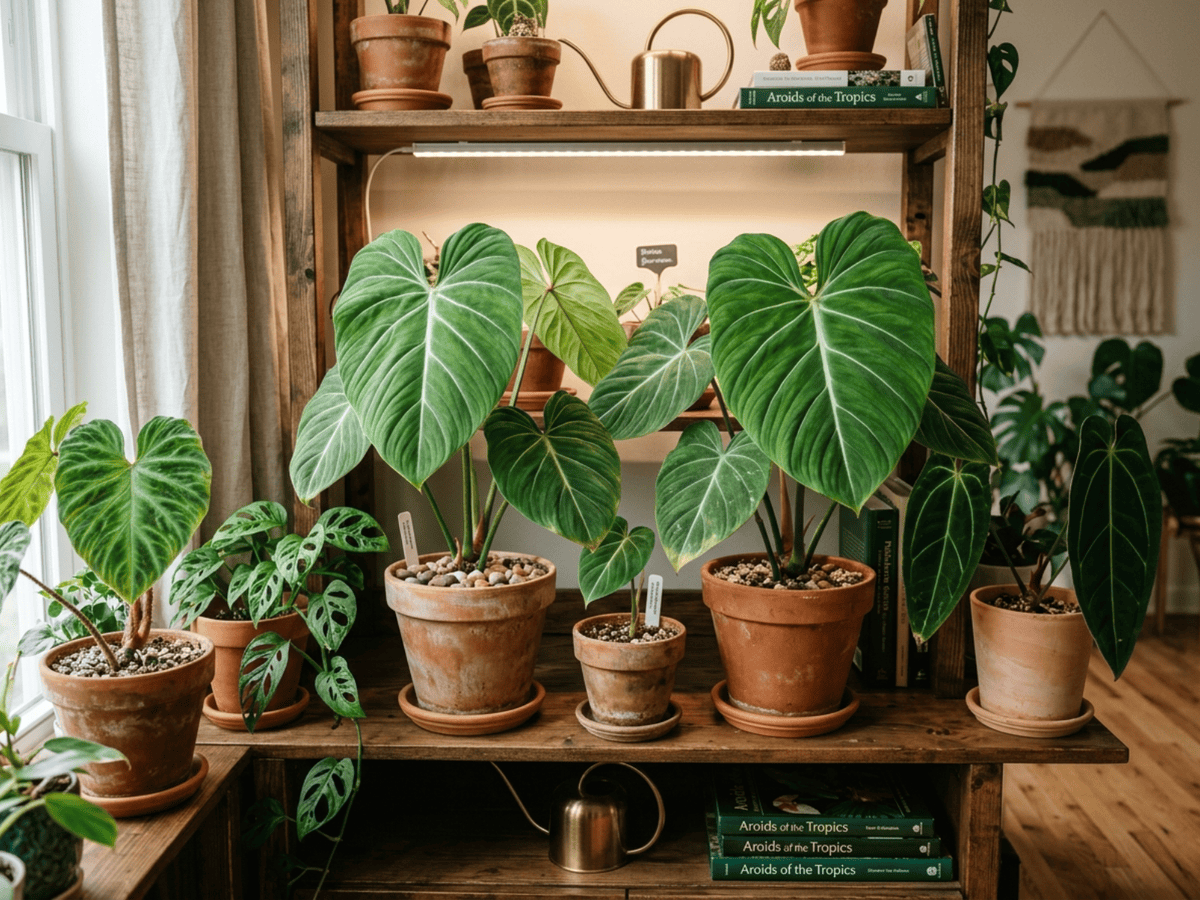
Philodendron gloriosum is a terrestrial (ground-crawling) philodendron native to the rainforest floors of Colombia, where it creeps along the ground rather than climbing trees. It is widely regarded as one of the most beautiful foliage plants in existence. The large, heart-shaped leaves are a deep velvety green with striking white to pale pink veins that create an almost painted appearance. New leaves emerge with a pink blush that gradually fades to green. Individual leaves can reach 2 feet across in optimal conditions. Unlike most philodendrons, it grows from a thick creeping rhizome rather than an upright stem, requiring a wide shallow pot rather than a tall one. It demands high humidity (60% or above), warm temperatures, and bright indirect light to thrive. The soil should be chunky and well-draining — a mix of orchid bark, perlite, and peat. It grows slowly compared to other philodendrons, making large specimens highly prized among collectors. This plant has become one of the most sought-after aroids in the indoor plant collecting community.
- Tropical
- Shade-tolerant
- Air-purifying
- Container-friendly
How to care for Philodendron gloriosum
Watering
- Springevery 7 days
- Summerevery 5 days
- Fallevery 10 days
- Winterevery 14 days
Soil · Chunky & airy
- Top dressingBark chips10%
- Main mixBark + potting soil + perlite 1:1:170%
- DrainageLECA20%
Chunky pieces hold air pockets open so thick roots don't suffocate.
FERTILIZER
Balanced Feed 14-14-14
An even feed covers all three needs at once, keeping leaves, roots and blooms moving together with nothing pushed out of balance.
- Nitrogen · Leaves
- Phosphorus · Roots + Blooms
- Potassium · Strength
- Springevery 30 days
- Summerevery 30 days
- Fallevery 30 days
- Winterevery 60 days
At a Glance
- NativeSouth America
- Height1–1.5 ft (0.3–0.5 m)
- Spread2–3 ft (0.6–0.9 m)
- Flower colorWhite, Cream
- Foliage colorGreen
- SoilLoamy, Moisture-retentive, Rich
- LocationsIndoor
Bloom time
BLOOM CYCLE
Peak bloom
Jun–Aug
Rarely blooms in cultivation; grown exclusively for its spectacular velvet foliage
Fragrance
NO FRAGRANCE
No notable fragrance.
Toxicity
Humans Moderate · Pets Moderate
insoluble calcium oxalate raphides
Moderate
- All
- Sap
- Ingestion
- Contact
EXPOSURE Eating any part of the plant and sap. Touching any part of the plant and sap.
EFFECT Oxalate oral irritation and sap can irritate sensitive skin.
NOTE Documented concern for humans: Oxalate oral irritation and sap can irritate sensitive skin.
Moderate
- Leaf
- Stem
- Ingestion
EXPOSURE Eating leaves and stems.
EFFECT Oral pain, drooling, vomiting, difficulty swallowing.
NOTE ASPCA lists philodendron as toxic to dogs, cats, and horses.
Moderate
- Leaf
- Stem
- Ingestion
EXPOSURE Eating leaves and stems.
EFFECT Same as dogs.
NOTE ASPCA lists philodendron as toxic to dogs, cats, and horses.
Educational information, not medical or veterinary advice. If exposure is suspected, contact a doctor or veterinarian.
DISTRIBUTION


- Native
- Introduced
- South America
History

Philodendron gloriosum is native to the humid rainforests of Colombia, and historically also reported from parts of the broader northern Andean region — its wild distribution is not fully characterized, though the center of genetic diversity appears to be Colombian. Unlike most commercially-important philodendrons, which are climbing (hemi-epiphytic) species, P. gloriosum is a "crawler" — it grows horizontally along the forest floor via a thick rhizome, producing large heart-shaped leaves that emerge individually from the rhizome rather than from an upright climbing vine. The species was described in 1876.
It gained niche interest among aroid collectors through the 1990s-2010s but exploded in mainstream popularity during the 2020-2022 COVID pandemic-era houseplant boom, when remote work, reduced travel, and social-media-driven rare-plant culture (particularly the Philippine and Indonesian Instagram aroid scene) drove extraordinary price spikes; individual mature specimens, cuttings with one node, and rare variegated forms sold for hundreds to thousands of dollars on online auction and secondary marketplaces. Prices have since partly normalized but P. gloriosum remains a recognized and persistently desirable collector philodendron.
Like all Philodendron species, it contains calcium oxalate and is toxic to pets. Philodendron gloriosum was first described in 1876 by the German botanist Eduard August von Regel.
Symbolism & meaning
What It Symbolizes
Philodendron gloriosum lives up to its name in pure splendor — heart-shaped velvet leaves veined in pale silver-white, growing along the soil rather than climbing, every leaf seemingly enameled by hand. It rewards patience above all; new leaves emerge slowly and each is larger than the last. To raise it is to learn a slow, magnificent kind of waiting.
- Splendor — the velvet leaves with glowing veins represent breathtaking natural beauty
- Patience — its slow growth rewards those who wait with increasing magnificence
Where the Name Comes From
'Philodendron' from Greek 'phileo' (to love) and 'dendron' (tree). 'Gloriosum' is Latin for glorious, perfectly describing its magnificent velvety leaves with luminous white veins.
Uses & Fun Facts
- Velvety silver-veined heart leaves grown as creeping indoor aroid
- Crawling rhizome philodendron prized as collector houseplant focal point
Related plants
More Philodendron plants
 Tree PhilodendronPhilodendron bipinnatifidum
 Silver Leaf PhilodendronPhilodendron brandtianum
 PhilodendronPhilodendron brasil
 Blushing PhilodendronPhilodendron erubescens
Plants with similar care
 Delta Maidenhair FernAdiantum raddianum
 African Mask PlantAlocasia amazonica
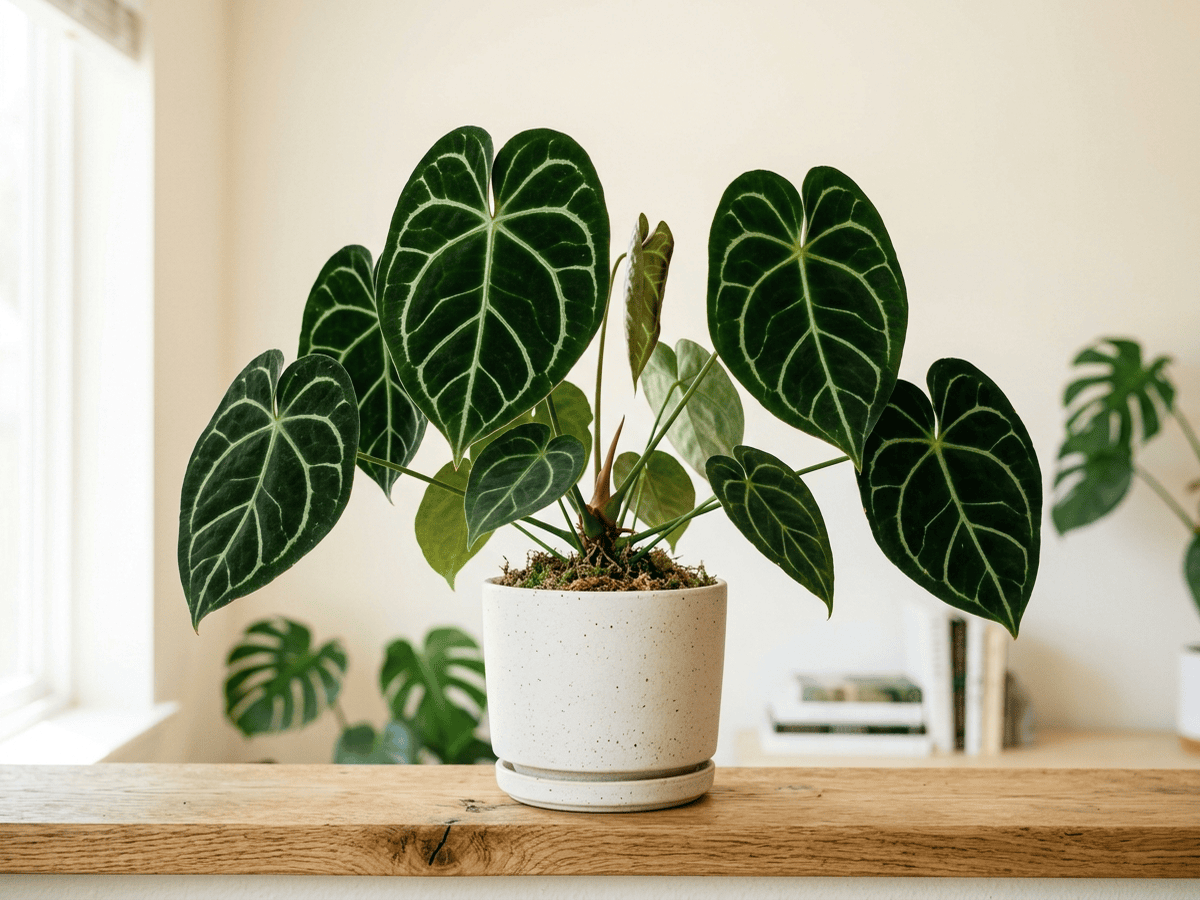 Anthurium clarinerviumAnthurium clarinervium
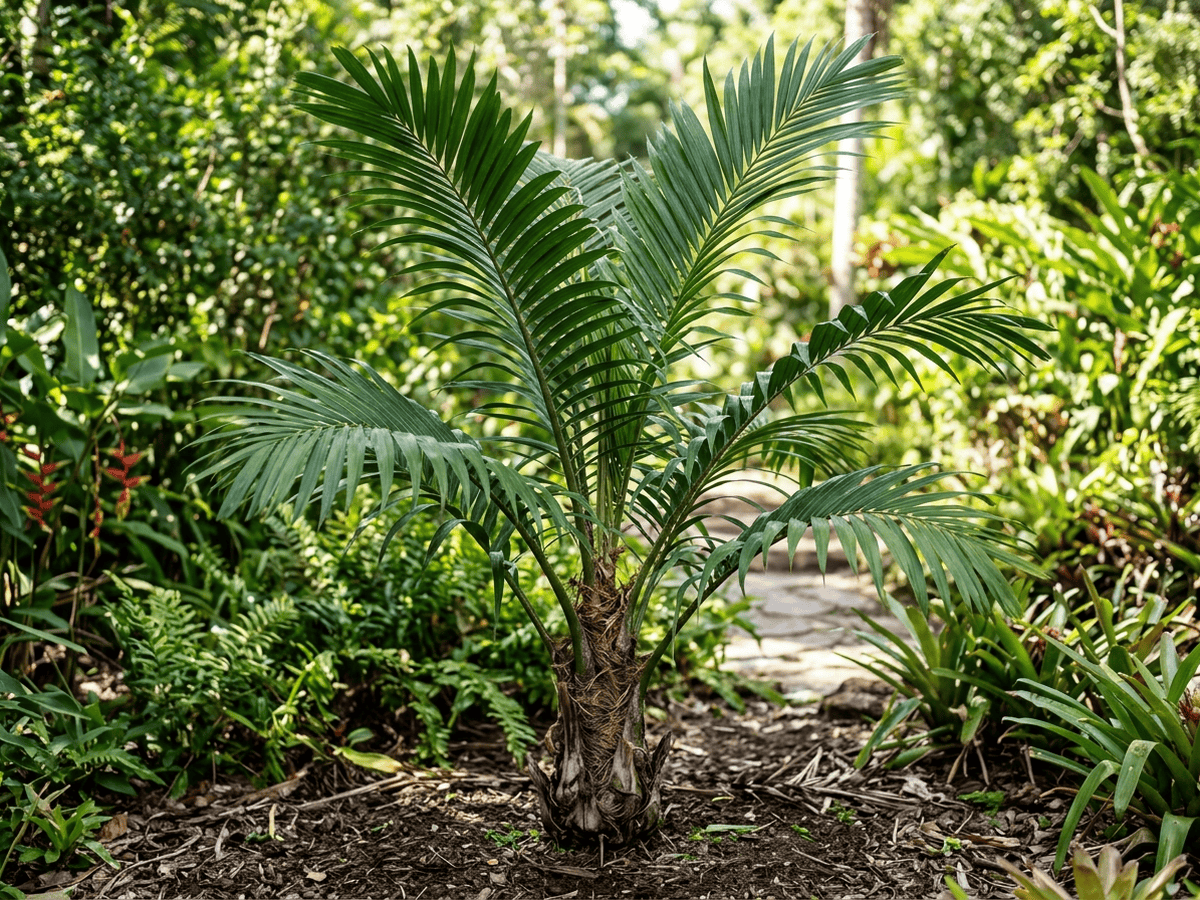 Formosa PalmArenga engleri
Frequently asked questions
How often should I water Philodendron gloriosum?
In summer, water about every 5 days; in winter, about every 14 days. Adjust for heat, pot size and drainage.
How much light does Philodendron gloriosum need?
Part shade: 2–4 hrs direct. Watch the leaves — scorching or stretching means the light needs adjusting.
Is Philodendron gloriosum toxic to cats or dogs?
Pets Moderate (Dogs Moderate · Cats Moderate) Educational information, not medical or veterinary advice. If exposure is suspected, contact a doctor or veterinarian.
Is Philodendron gloriosum easy to grow?
It is considered challenging and rewards experienced growers.
Can Philodendron gloriosum be grown indoors?
Yes, it adapts well to indoor growing given the right light.
When does Philodendron gloriosum bloom?
It typically blooms Jun–Aug in the Northern Hemisphere.
YardMate
Identify any plant in seconds
Snap a photo — YardMate names the plant, diagnoses problems, and reminds you when to water.
Download on the App Store