 YardMate


Velvet-Leaf Philodendron
Philodendron micans
Easy · Beginner friendlyAbout Velvet-Leaf Philodendron
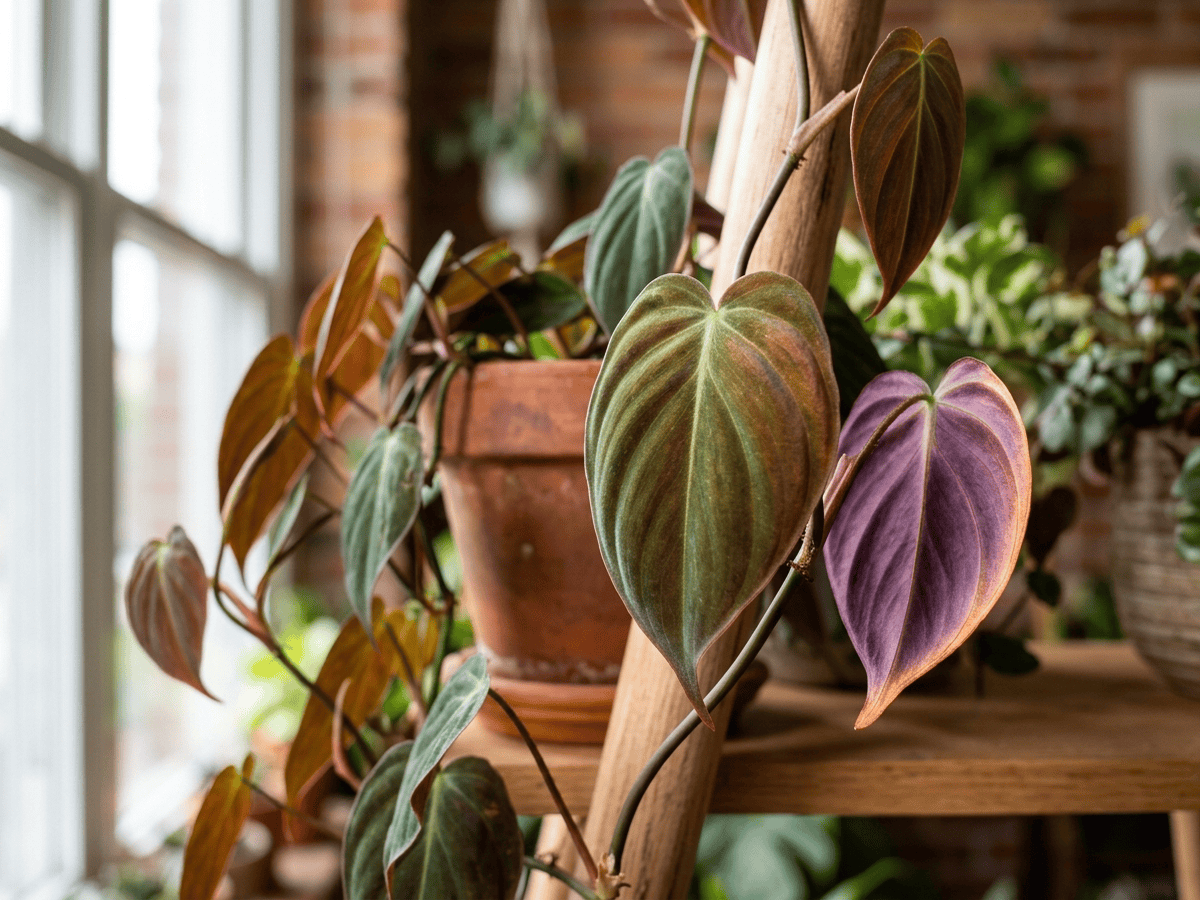
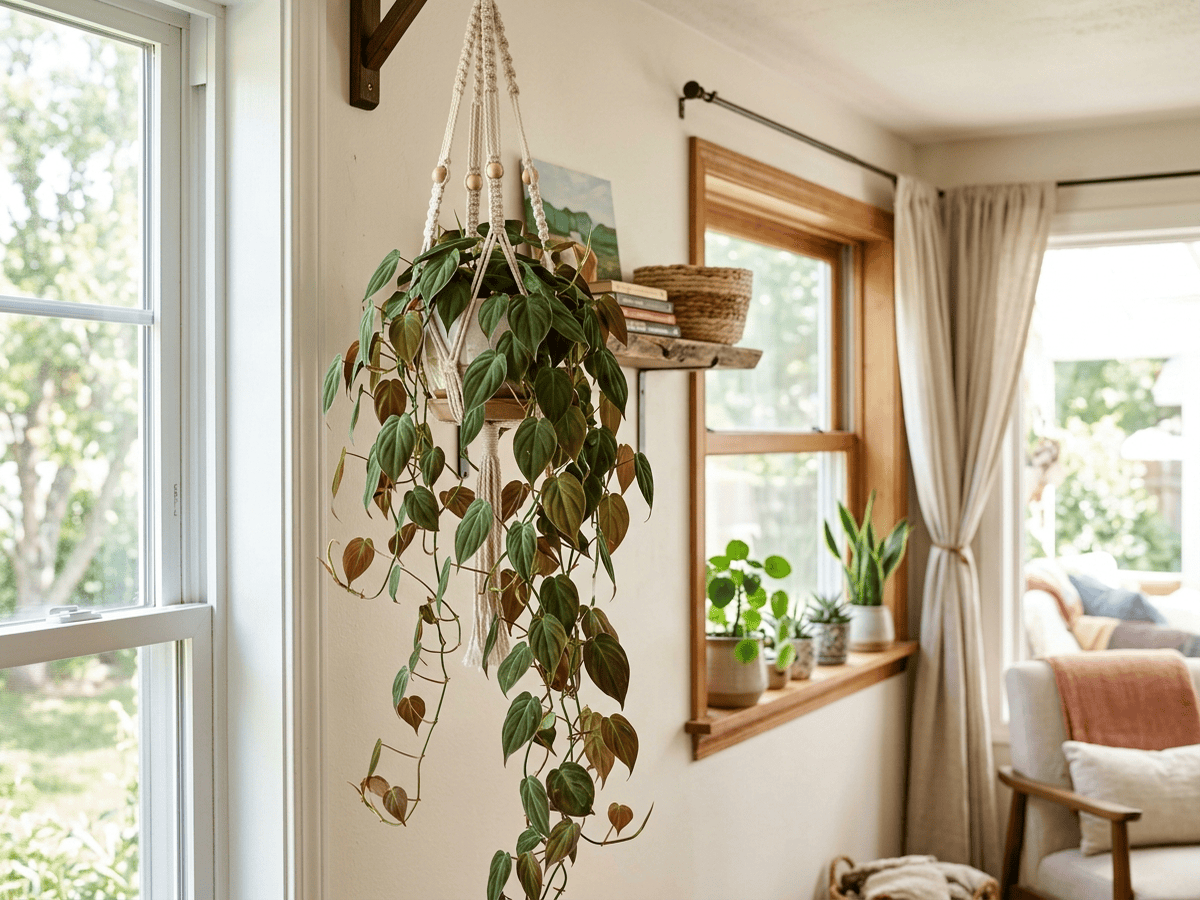
Velvet Leaf Philodendron is a tropical Central American climbing aroid with small heart-shaped leaves of iridescent velvety bronze-green that flash purple and copper in the light. Trailing or climbing to 4-6 feet, its luminous foliage makes it one of the most distinctive small-leaved philodendrons. Compact and easy to grow, it has become a sought-after plant in the modern American houseplant collector market.
- Trailing
- Compact
- Evergreen
How to care for Velvet-Leaf Philodendron
Watering
- Springevery 7 days
- Summerevery 7 days
- Fallevery 10 days
- Winterevery 14 days
Soil · Chunky & airy
- Top dressingBark chips10%
- Main mixBark + potting soil + perlite 1:1:170%
- DrainageLECA20%
Chunky pieces hold air pockets open so thick roots don't suffocate.
FERTILIZER
Balanced Feed 14-14-14
An even feed covers all three needs at once, keeping leaves, roots and blooms moving together with nothing pushed out of balance.
- Nitrogen · Leaves
- Phosphorus · Roots + Blooms
- Potassium · Strength
- Springevery 30 days
- Summerevery 30 days
- Fallevery 60 days
At a Glance
- NativeCentral America, North America
- Height2–6 ft (0.6–1.8 m)
- Spread1–2 ft (0.3–0.6 m)
- Foliage colorBronze, Purple
- SoilLoamy, Well-drained
- LocationsIndoor
Bloom time
BLOOM CYCLE
Peak bloom
Jun–Aug
Aroid flowers (rare indoors)
Toxicity
Humans Moderate · Pets Moderate
calcium oxalate raphides
Moderate
- Leaf
- Stem
- Ingestion
EXPOSURE Eating leaves and stems.
EFFECT Oral irritation and drooling.
NOTE Documented concern for humans: Oral irritation and drooling.
Moderate
- Leaf
- Stem
- Ingestion
EXPOSURE Eating leaves and stems.
EFFECT Oral irritation and vomiting.
NOTE ASPCA lists Philodendron as toxic.
Moderate
- Leaf
- Stem
- Ingestion
EXPOSURE Eating leaves and stems.
EFFECT Oral irritation and vomiting.
NOTE ASPCA lists Philodendron as toxic.
Educational information, not medical or veterinary advice. If exposure is suspected, contact a doctor or veterinarian.
DISTRIBUTION

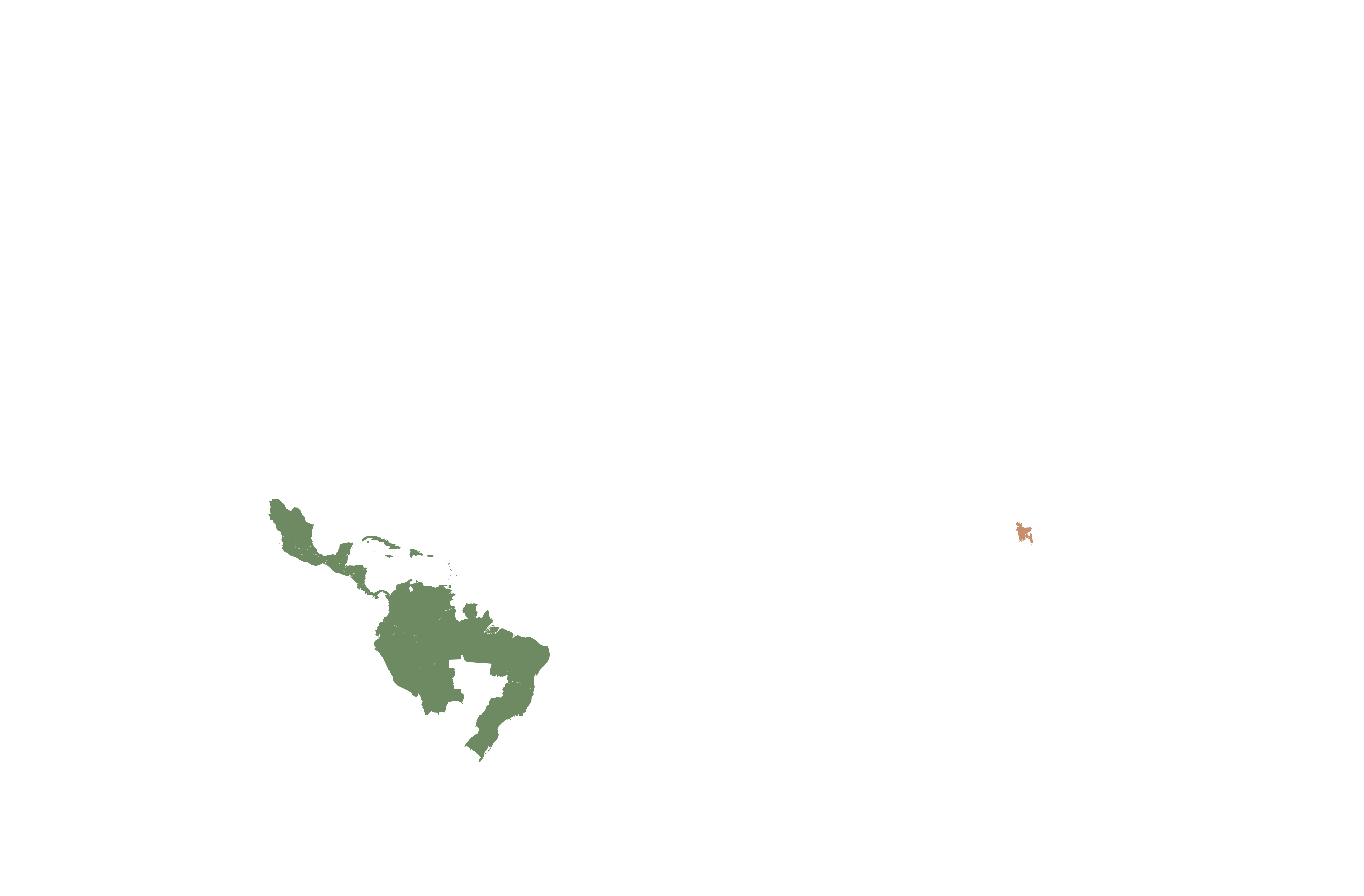
- Native
- Introduced
- Central America
- North America
History
Philodendron micans is a velvet-leaved creeping aroid now widely considered a natural form or variety of the variable Philodendron hederaceum (micans was described as a separate species by Karl Koch and Johann Augustin in 1854, but modern taxonomic treatments including Croat 1997 and Kew POWO synonymize it under P. hederaceum var. hederaceum). The form occurs naturally in southern Mexico, the Caribbean (especially Jamaica and Puerto Rico), and parts of Central America. The epithet micans means glittering or sparkling, referring to the distinctive iridescent texture of the foliage.
Unlike the smooth glossy typical form, 'Micans' leaves are smaller (5-10 cm), heart-shaped, and covered in fine soft velvet-like trichomes that give a bronze-green to purple-green sheen. New leaves emerge with strong bronze-pink tints that fade to deep green with age.
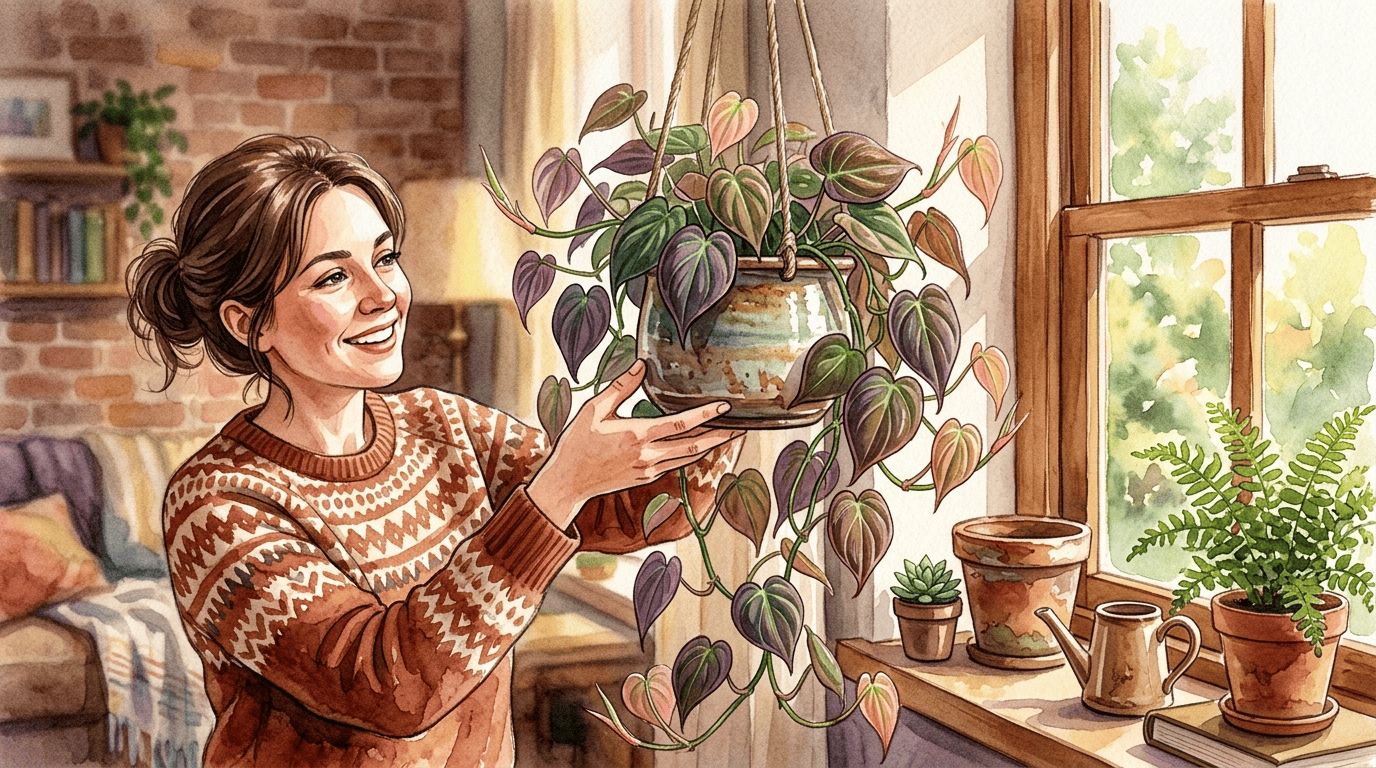
A beloved trailing or climbing houseplant particularly popular in terrariums, hanging baskets, and small spaces. Long known to specialty growers, it gained mainstream popularity in the 2010s-2020s American houseplant boom for its unique iridescent foliage texture. Carries calcium oxalate toxicity typical of Philodendron.
Symbolism & meaning
What It Symbolizes
Philodendron micans carries mystery in its iridescent foliage, leaves shifting from bronze to deep green to violet as the light moves across them. Paired with elegance, the velvet texture brings a quiet luxury to indoor displays — a houseplant that almost asks to be touched. It is a vine whose meaning lives in changing light, never quite the same plant twice.
- Mystery — iridescent foliage shifts color in changing light
- Elegance — velvet texture lends luxury to indoor displays
Where the Name Comes From
'Micans' from Latin meaning sparkling or glittering, referring to the iridescent leaves.
Uses & Fun Facts
- Velvety heart-leaved trailer prized for hanging baskets indoors
- Aerial roots cling to moss poles for vertical interior growth
- Bronze-shimmering velvet heart leaves on cascading stems
Related plants
More Philodendron plants
 Tree PhilodendronPhilodendron bipinnatifidum
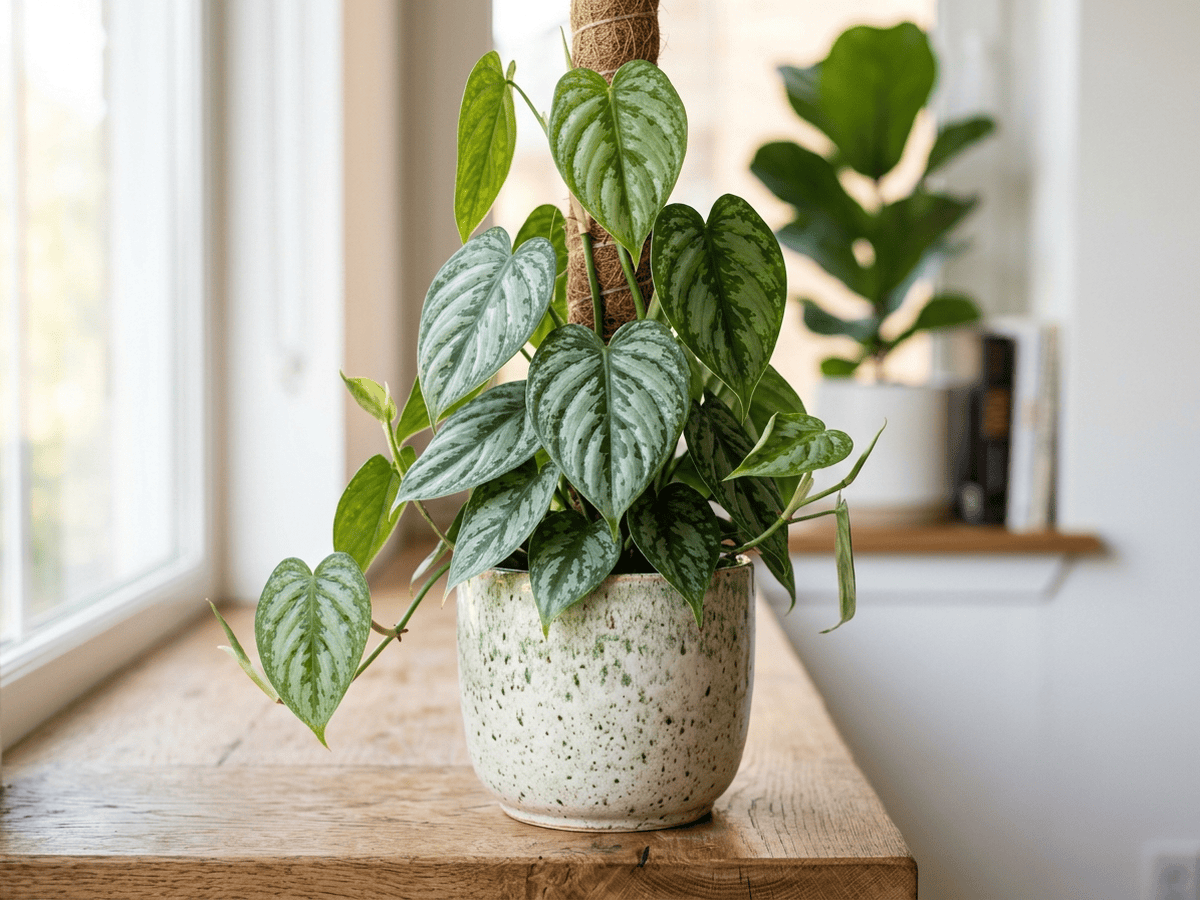 Silver Leaf PhilodendronPhilodendron brandtianum
 PhilodendronPhilodendron brasil
 Blushing PhilodendronPhilodendron erubescens
Plants with similar care
 Giant TaroAlocasia macrorrhizos
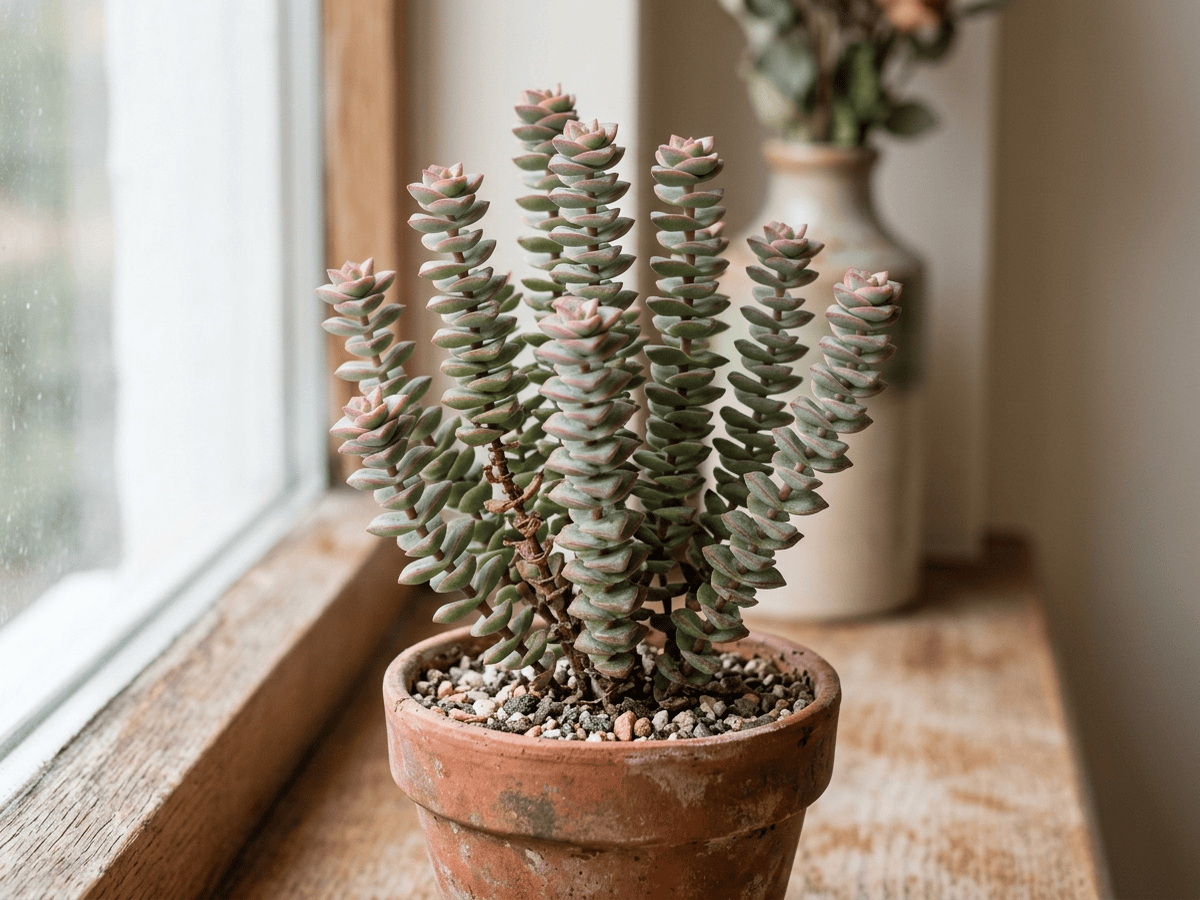 Concertina PlantCrassula perforata
 Song Of IndiaDracaena reflexa
 Snake PlantDracaena trifasciata
Frequently asked questions
How often should I water Velvet-Leaf Philodendron?
In summer, water about every 7 days; in winter, about every 14 days. Adjust for heat, pot size and drainage.
How much light does Velvet-Leaf Philodendron need?
Indirect: Filtered light. Watch the leaves — scorching or stretching means the light needs adjusting.
Is Velvet-Leaf Philodendron toxic to cats or dogs?
Pets Moderate (Dogs Moderate · Cats Moderate) Educational information, not medical or veterinary advice. If exposure is suspected, contact a doctor or veterinarian.
Is Velvet-Leaf Philodendron easy to grow?
Yes — it is considered an easy, beginner-friendly plant.
Can Velvet-Leaf Philodendron be grown indoors?
Yes, it adapts well to indoor growing given the right light.
When does Velvet-Leaf Philodendron bloom?
It typically blooms Jun–Aug in the Northern Hemisphere.
YardMate
Identify any plant in seconds
Snap a photo — YardMate names the plant, diagnoses problems, and reminds you when to water.
Download on the App Store