 YardMate

Ribwort Plantain
Plantago lanceolata
Easy · Beginner friendlyAbout Ribwort Plantain
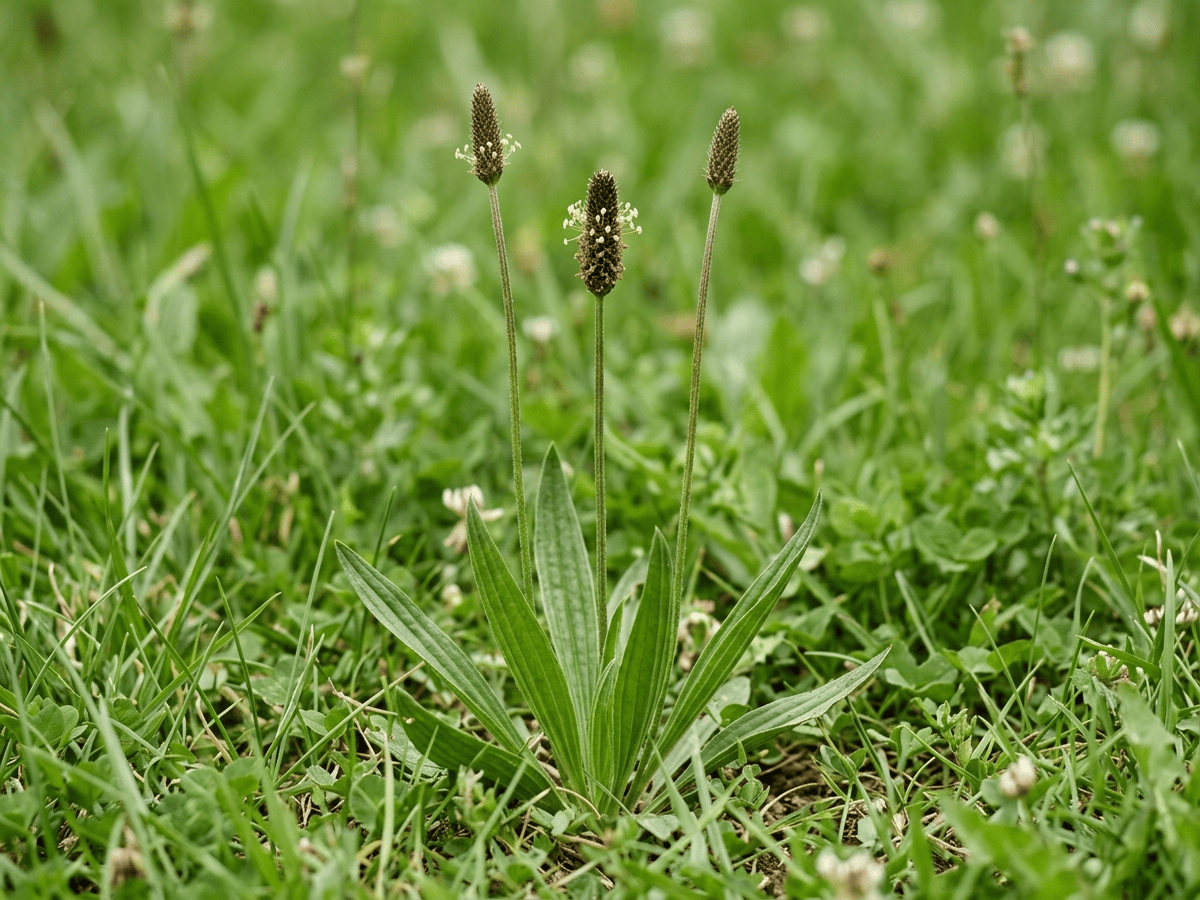
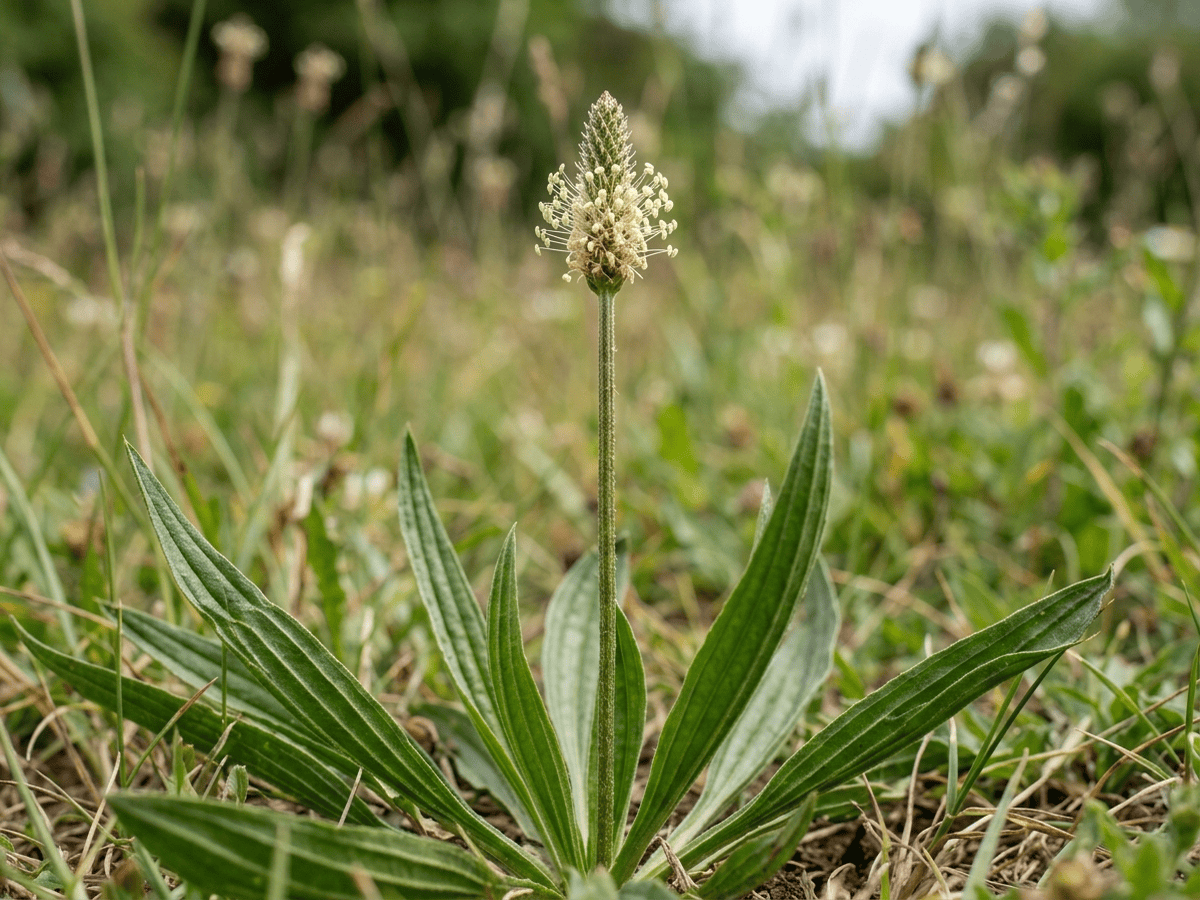
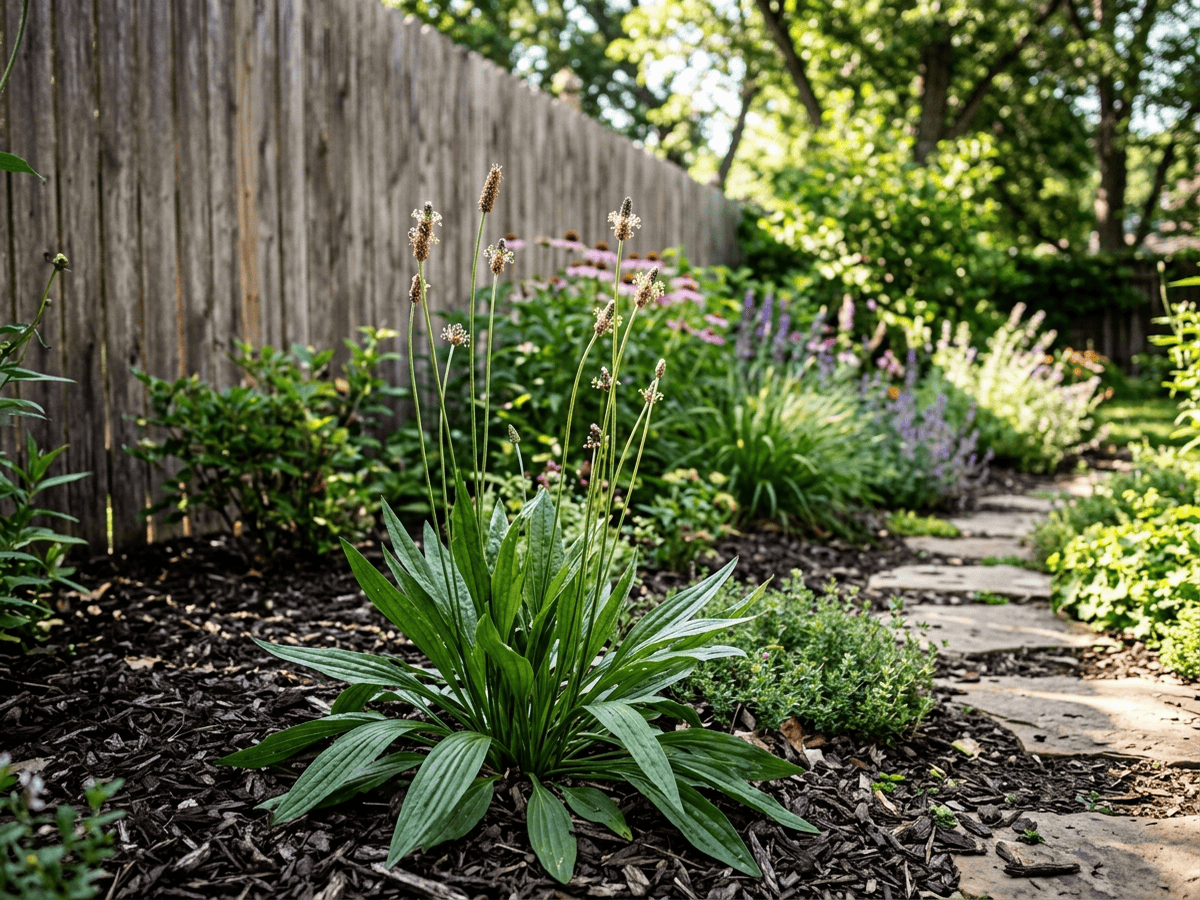
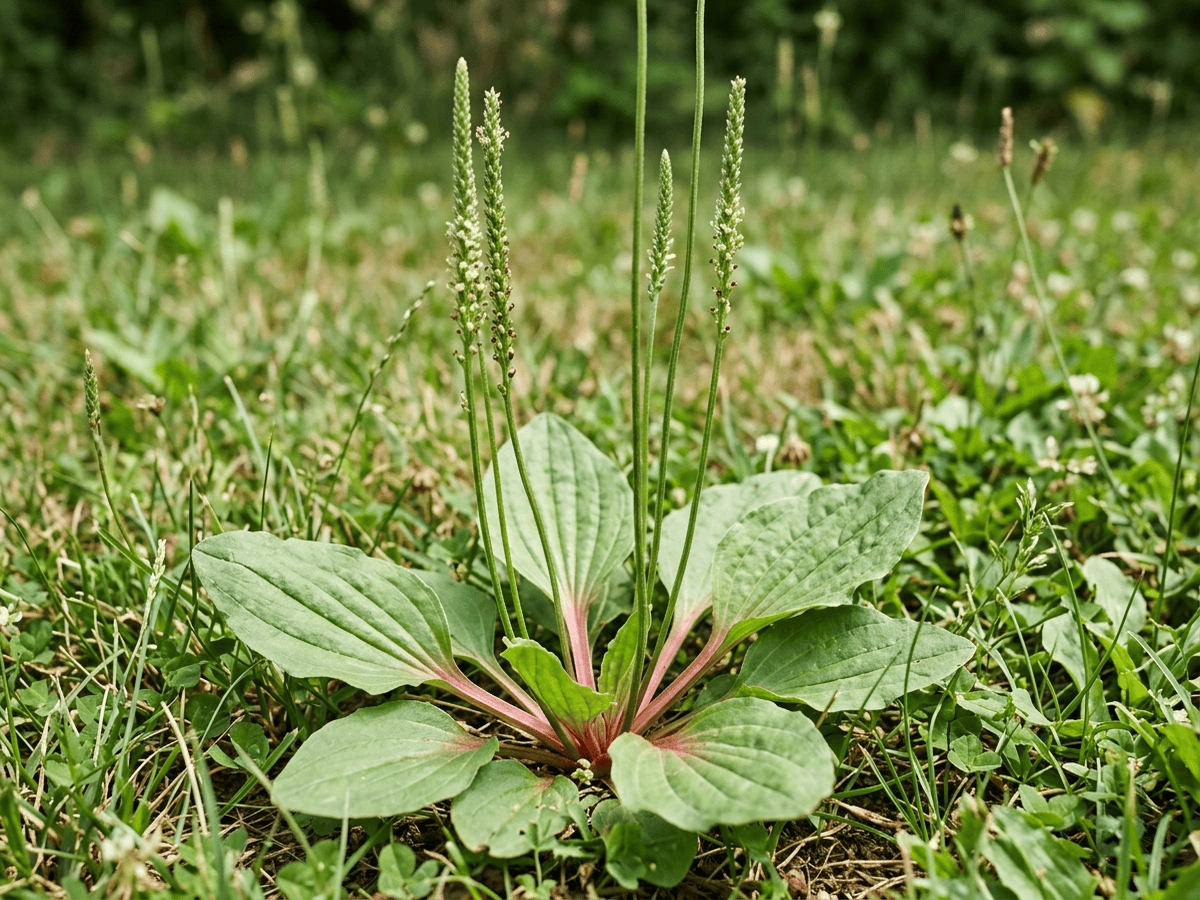
Narrowleaf Plantain or Ribwort is a European lawn and pasture weed naturalized throughout the US, forming rosettes of long narrow ribbed leaves and sending up 6 to 18 inch stems topped with short black cylindrical flower heads ringed in white stamens. Common in lawns, meadows, pastures, and roadsides nationwide. A major cause of hay fever and a significant allergen in US agricultural and urban environments.
- Edible
- Medicinal
How to care for Ribwort Plantain
Watering
- Springevery 7 days
- Summerevery 5 days
- Fallevery 10 days
- Winterevery 21 days
Soil · Rich & well-draining
- Top dressingCompost10%
- Main mixPotting soil + compost 3:180%
- DrainageGravel10%
Top up the compost layer each season.
FERTILIZER
This plant needs little to no feeding.
At a Glance
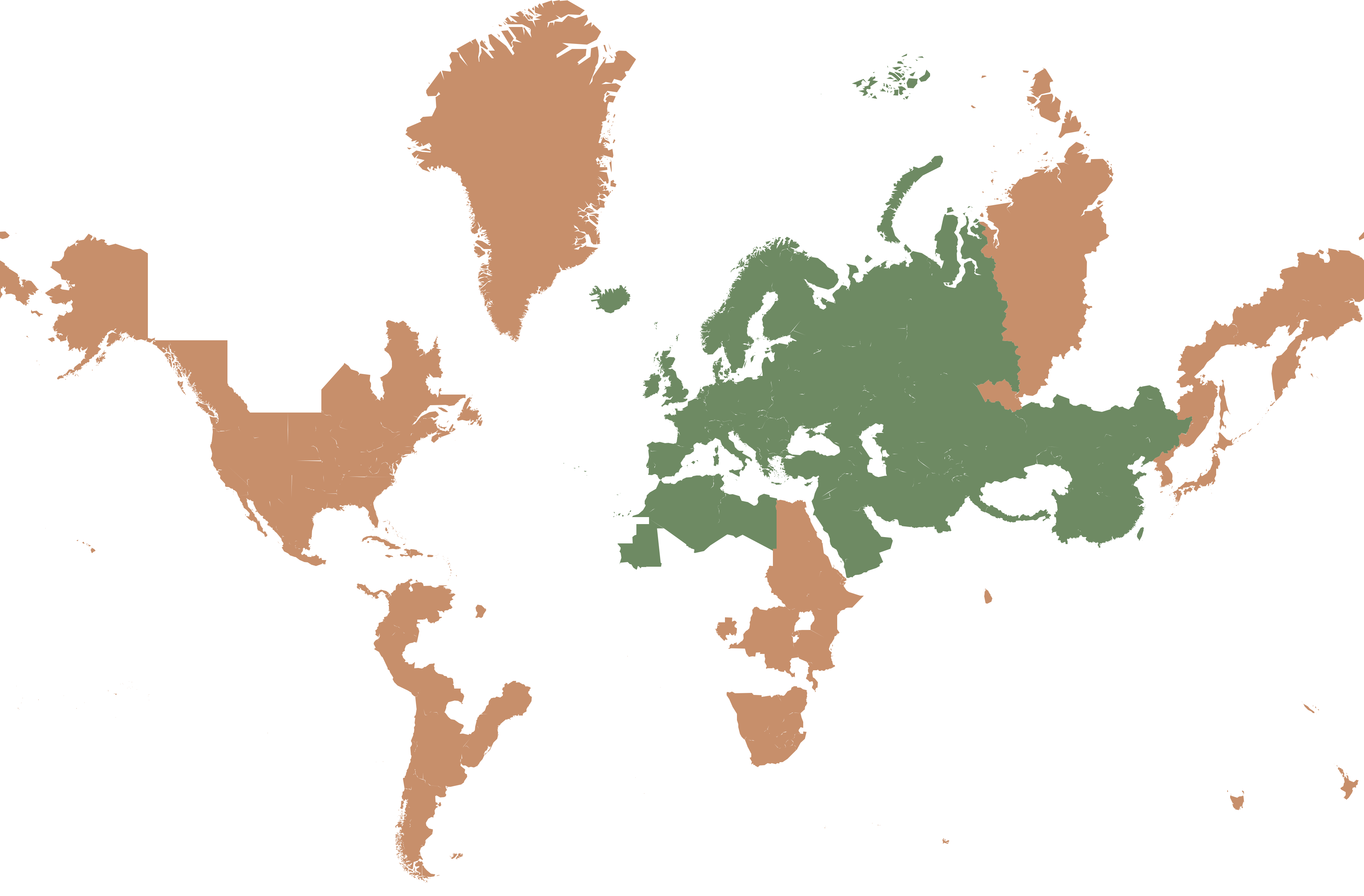
- NativeEurope, East Asia, Africa
- Height0.5–1.5 ft (0.2–0.5 m)
- Spread0.5–1 ft (0.2–0.3 m)
- Flower colorBurgundy, White, Cream
- Foliage colorGreen
- Fruit colorBrown
- SoilLoamy, Well-drained
- LocationsYard
Bloom time
BLOOM CYCLE
Peak bloom
May–Nov
Short black flower heads on tall stems late spring to fall
Toxicity
No toxicity has been reported for this plant. Still, it is wise to keep pets from chewing on any houseplant.
Educational information, not medical or veterinary advice. If exposure is suspected, contact a doctor or veterinarian.
DISTRIBUTION

- Native
- Introduced
- Europe
- East Asia
- Africa
History
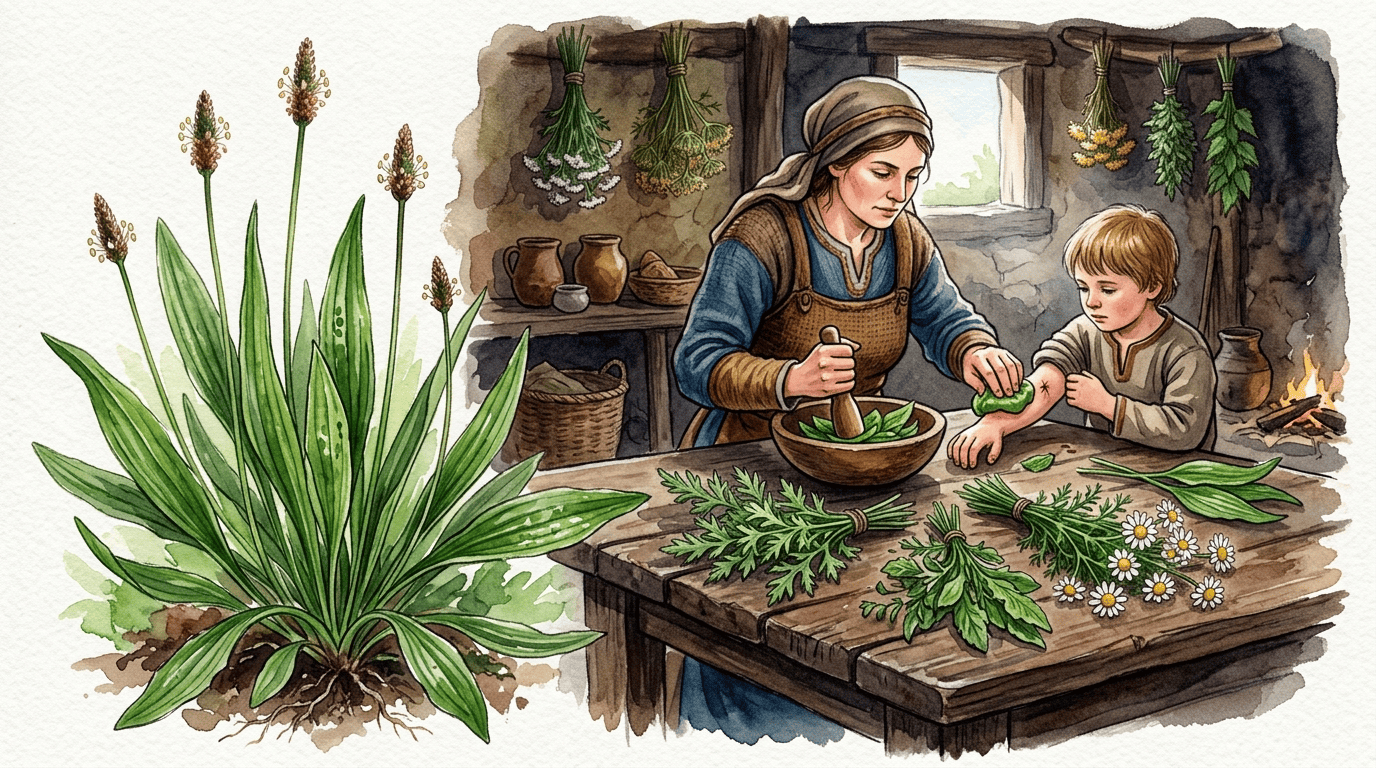
Plantago lanceolata grows natively across Europe, North Africa, and temperate Asia. Linnaeus described it in Species Plantarum (1753). Archaeobotanical evidence shows it spread with early Neolithic agriculture across Europe; grain pollen studies use its arrival as a proxy marker for the start of farming in a region.
It appears in the 10th-century Anglo-Saxon Nine Herbs Charm alongside mugwort and chamomile. Medieval and modern European herbalism uses leaf poultices for stings, wounds, and mouth ulcers, and leaf tea for coughs and bronchitis — modern studies support its demulcent action from aucubin and mucilage. Introduced to North America with colonial agriculture, it has become one of the most common pasture and lawn weeds worldwide.
Its seed pollen is a major hay-fever allergen in many regions. Now a universal lawn weed and hay crop contaminant across the US. Traditional European folk medicine still prepares leaf syrups for coughs and bronchial complaints, and the Plantaginaceae family is a significant source of hay fever pollen in American urban environments.
Symbolism & meaning
What It Symbolizes
Ribwort Plantain is humble usefulness pressed flat into the path. Narrow leaves and small brown flower spikes rarely ask for admiration, yet the plant has followed people, animals, and compacted ground across continents. Its symbolism is persistence close to the foot: overlooked, durable, and woven into ordinary survival.
- Resilience — thrives where grass gets mowed and trampled
- Folk medicine — traditional remedy for coughs and wounds
Where the Name Comes From
'lanceolata' from Latin means lance-shaped, accurately describing the narrow pointed leaves distinguishing this species from the broad-leaved P. major.
Uses & Fun Facts
- Leaves used in traditional cough syrups and wound poultices
- Young rosette leaves added to wild salads and stews
Related plants
More Plantago plants

Plants with similar care
 Chinese AbeliaAbelia chinensis
 Fragrant AbeliaAbelia mosanensis
 Large-Flowered AbeliaAbelia uniflora
 Glossy AbeliaAbelia x grandiflora
Frequently asked questions
How often should I water Ribwort Plantain?
In summer, water about every 5 days; in winter, about every 21 days. Adjust for heat, pot size and drainage.
How much light does Ribwort Plantain need?
Full sun: 6+ hrs direct. Watch the leaves — scorching or stretching means the light needs adjusting.
Is Ribwort Plantain toxic to cats or dogs?
No toxicity has been reported for this plant. Still, it is wise to keep pets from chewing on any houseplant. Educational information, not medical or veterinary advice. If exposure is suspected, contact a doctor or veterinarian.
Is Ribwort Plantain easy to grow?
Yes — it is considered an easy, beginner-friendly plant.
When does Ribwort Plantain bloom?
It typically blooms May–Nov in the Northern Hemisphere.
YardMate
Identify any plant in seconds
Snap a photo — YardMate names the plant, diagnoses problems, and reminds you when to water.
Download on the App Store