 YardMate


Moss Rose
Portulaca grandiflora
Easy · Beginner friendlyAbout Moss Rose
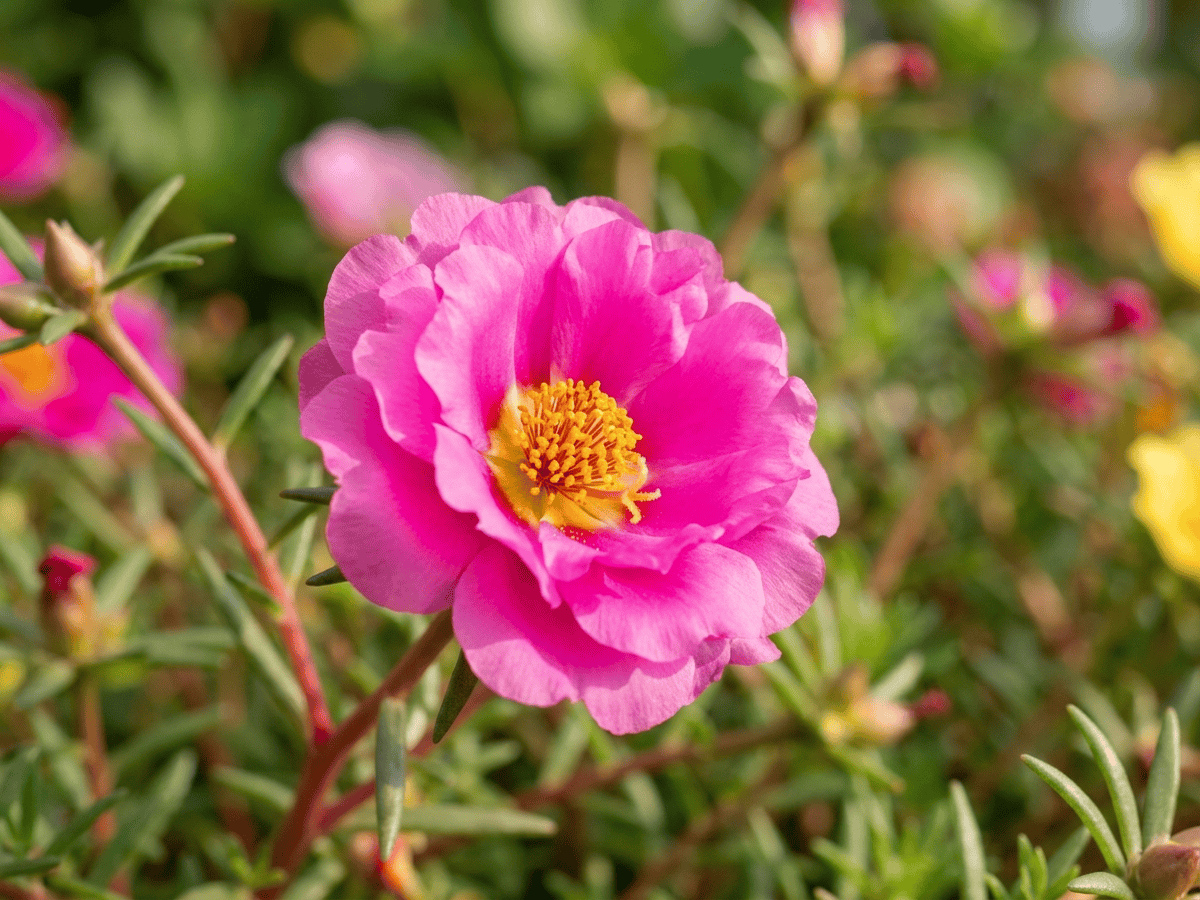
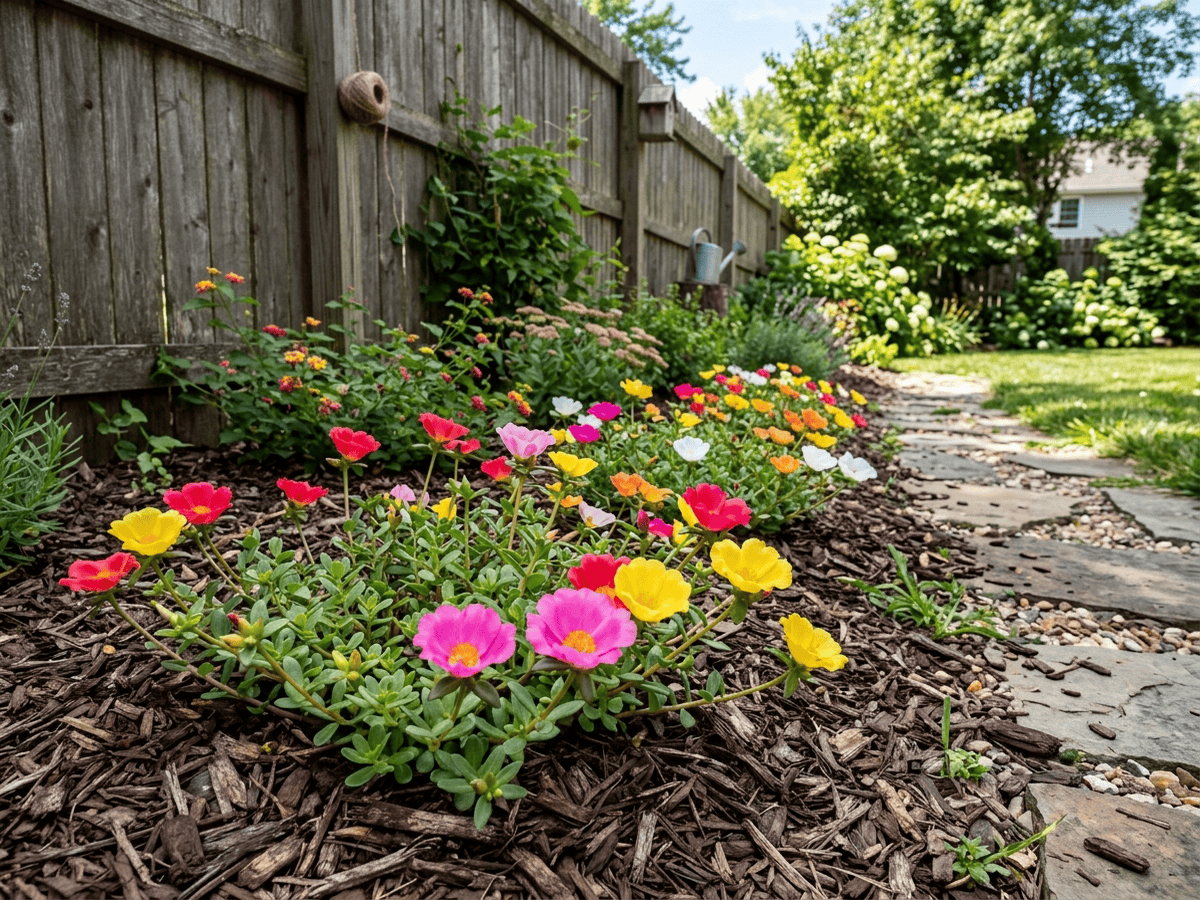
Moss Rose is a low-growing South American succulent annual beloved for its rose-like flowers in vibrant colors that bloom in the hottest, driest, sunniest spots where little else will grow. Reaching just 4 to 8 inches tall with needle-like fleshy leaves, it produces 1-inch ruffled flowers in every shade from hot magenta to white, yellow, orange, and bicolors. A classic American pavement and pot plant.
- Low-maintenance
- Drought-tolerant
- Heat-tolerant
- Pollinator-friendly
How to care for Moss Rose
Watering
- Springevery 7 days
- Summerevery 5 days
- Fallevery 10 days
- Winterpause watering
Soil · Fast-draining
- Main mixSand + pumice + soil 1:1:150%
- DrainagePumice / gravel50%
Keep grit at half the mix or more — this soil is meant to dry out fast.
FERTILIZER
- Springevery 30 days
- Summerevery 30 days
At a Glance
- NativeSouth America
- Height0.3–0.5 ft (0.1–0.2 m)
- Spread0.5–1 ft (0.2–0.3 m)
- Flower colorRed, Orange, Yellow, Pink
- Foliage colorGreen
- SoilSandy, Well-drained
- LocationsYard · Balcony
Bloom time
BLOOM CYCLE
Peak bloom
Jun–Nov
Rose-like flowers open in sun June to frost
Toxicity
Humans Slight · Pets Moderate
soluble oxalates
Slight
- Leaf
- Ingestion
EXPOSURE Eating leaves.
EFFECT Soluble oxalates may cause GI upset with large intake.
NOTE Documented concern for humans: Soluble oxalates may cause GI upset with large intake.
Moderate
- Leaf
- Stem
- Ingestion
EXPOSURE Eating leaves and stems.
EFFECT ASPCA-listed Portulaca: salivation, vomiting, weakness, tremors due to soluble oxalates.
NOTE ASPCA lists Portulaca as toxic to dogs and cats.
Moderate
- Leaf
- Stem
- Ingestion
EXPOSURE Eating leaves and stems.
EFFECT ASPCA-listed Portulaca: salivation, vomiting, weakness, tremors due to soluble oxalates.
NOTE ASPCA lists Portulaca as toxic to dogs and cats.
Educational information, not medical or veterinary advice. If exposure is suspected, contact a doctor or veterinarian.
DISTRIBUTION


- Native
- Introduced
- South America
History

Portulaca grandiflora, the moss rose, is a fleshy-leaved trailing annual native to the dry grasslands of Argentina, Uruguay, and southern Brazil. French explorers introduced it to European horticulture in the 1820s, and Scottish botanist William Jackson Hooker described it in 1829. Its brilliant jewel-toned flowers in magenta, scarlet, orange, yellow, pink, and white open only on sunny days atop succulent needle-like leaves, making it one of the classic hot-dry-spot annuals.
Victorian gardeners embraced it for mass bedding and rockeries. Modern double-flowered and continuous-bloom series such as Sundial, Happy Hour, and ProvenWinners' Mojave dominate the bedding trade.
The plant self-seeds freely in warm climates and is cultivated worldwide from Mediterranean gardens to Japanese balconies. Native to Argentina and southern Brazil, introduced to North American gardens in the 1820s. Became a classic American grandmother's plant for front walkways and porch containers due to its cheerful tolerance of total neglect in the harshest summer conditions.
Symbolism & meaning
What It Symbolizes
Moss Rose is spontaneous joy that opens only when the sun is fully out, its silken flowers refusing to perform on cloudy days. With cheerful tenacity it blooms in the hottest, driest, most forgotten corners — paving cracks, beach planters, and dust-baked pots. In its insistence on shining only when invited, it makes every sunny afternoon feel like a small celebration.
- Sun joy — flowers open only in full sunshine
- Cheerful tenacity — blooms happily in hottest, driest spots
Where the Name Comes From
The name Moss Rose describes its rose-like blooms. 'Portulaca' from Latin 'portula' meaning little gate, for the seed capsule lid that opens; 'grandiflora' means large-flowered.
Uses & Fun Facts
- Heat-loving succulent annual fills hot dry pavement cracks
- Trailing succulent thrives in roof gardens and shallow pots
- Bright rose-like flowers attract small native bees
- Vivid colors blanket xeric beds in blistering summer sun
Related plants
More Portulaca plants

Plants with similar care
 Chinese AbeliaAbelia chinensis
 Fragrant AbeliaAbelia mosanensis
 Large-Flowered AbeliaAbelia uniflora
 Glossy AbeliaAbelia x grandiflora
Frequently asked questions
How often should I water Moss Rose?
Water about every 7 days during the growing season, and always let excess water drain away.
How much light does Moss Rose need?
Full sun: 6+ hrs direct. Watch the leaves — scorching or stretching means the light needs adjusting.
Is Moss Rose toxic to cats or dogs?
Pets Moderate (Dogs Moderate · Cats Moderate) Educational information, not medical or veterinary advice. If exposure is suspected, contact a doctor or veterinarian.
Is Moss Rose easy to grow?
Yes — it is considered an easy, beginner-friendly plant.
When does Moss Rose bloom?
It typically blooms Jun–Nov in the Northern Hemisphere.
YardMate
Identify any plant in seconds
Snap a photo — YardMate names the plant, diagnoses problems, and reminds you when to water.
Download on the App Store