 YardMate


Wingpod Purslane
Portulaca umbraticola
Easy · Beginner friendlyAbout Wingpod Purslane
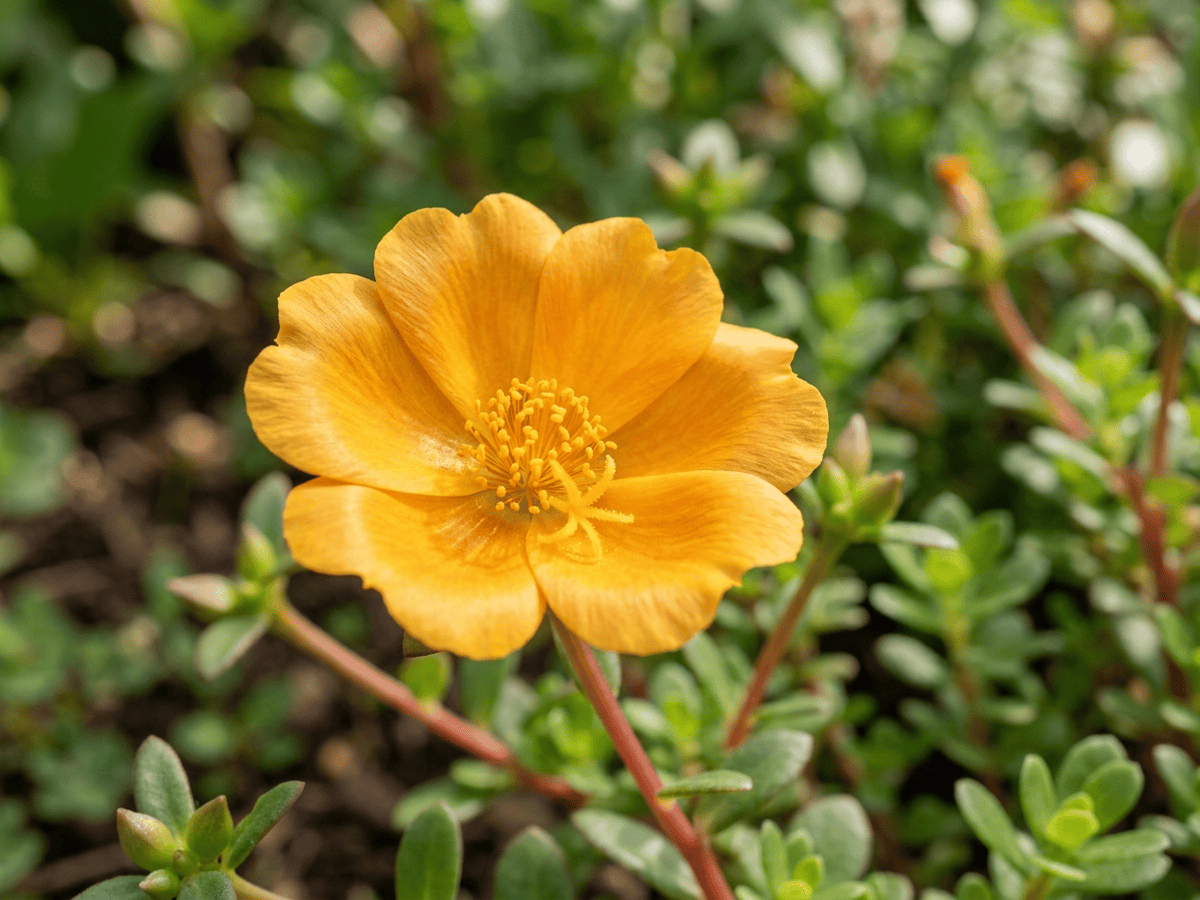
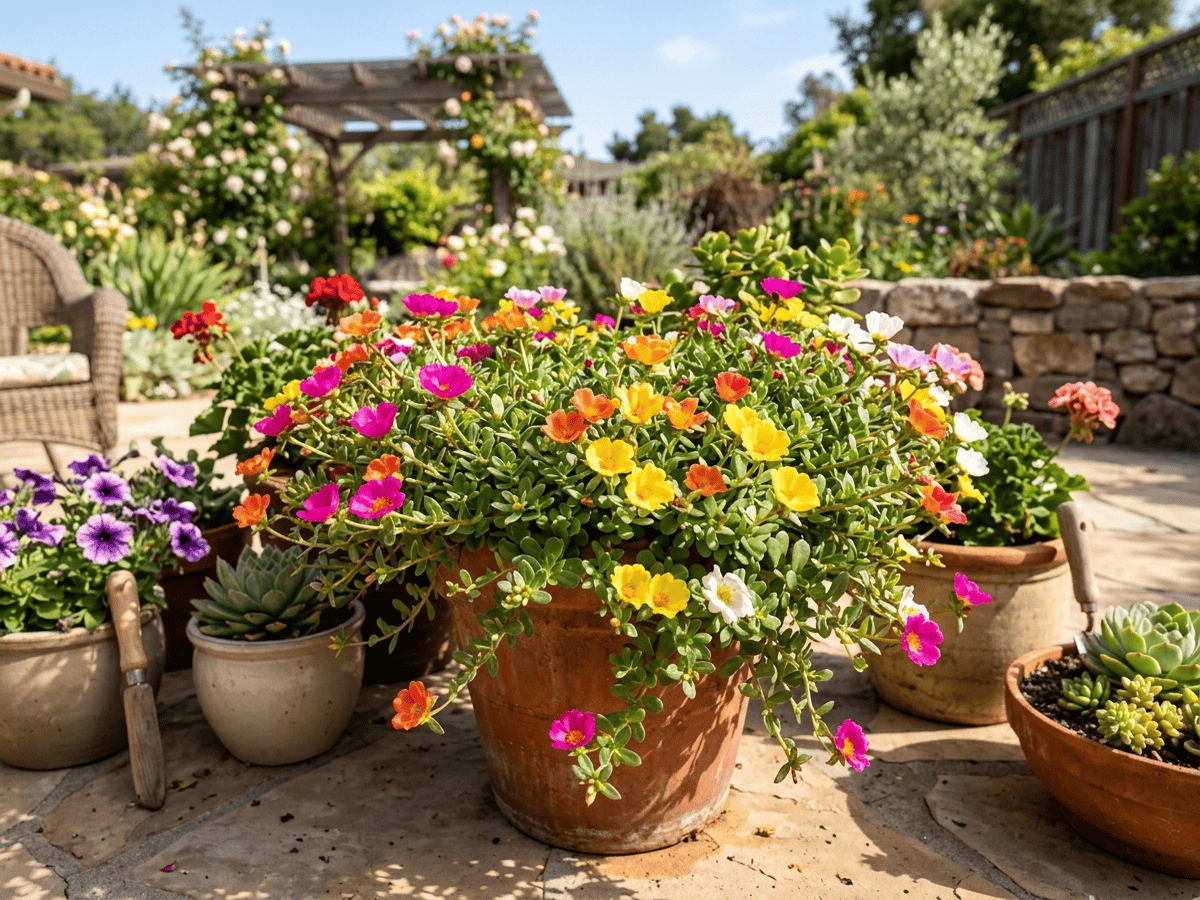
Wingpod Purslane is a modern hybrid-like purslane popularized for American hanging baskets, a vigorous trailing succulent annual with larger flowers than moss rose and better heat tolerance. Growing 6 to 8 inches tall and trailing 18 inches or more, it produces 2-inch rose-like flowers in vibrant fluorescent colors from summer through frost, staying open longer in cloudy weather than traditional Portulaca grandiflora.
- Drought-tolerant
- Heat-tolerant
- Trailing
- Container-friendly
How to care for Wingpod Purslane
Watering
- Springevery 5 days
- Summerevery 3 days
- Fallevery 7 days
- Winterpause watering
Soil · Fast-draining
- Main mixSand + pumice + soil 1:1:150%
- DrainagePumice / gravel50%
Keep grit at half the mix or more — this soil is meant to dry out fast.
FERTILIZER
Balanced Feed 14-14-14
An even feed covers all three needs at once, keeping leaves, roots and blooms moving together with nothing pushed out of balance.
- Nitrogen · Leaves
- Phosphorus · Roots + Blooms
- Potassium · Strength
- Springevery 30 days
- Summerevery 30 days
At a Glance
- NativeNorth America, Central America, South America
- Height0.3–0.5 ft (0.1–0.2 m)
- Spread1–1.5 ft (0.3–0.5 m)
- Flower colorYellow, Pink, Red, Orange
- Foliage colorGreen
- SoilSandy, Well-drained
- LocationsBalcony · Yard
Bloom time
BLOOM CYCLE
Peak bloom
Jun–Aug
Large fluorescent flowers stay open longer than moss rose
Toxicity
Humans Slight · Pets Moderate
soluble oxalates
Slight
- Leaf
- Ingestion
EXPOSURE Eating leaves.
EFFECT Soluble oxalates may cause GI upset with large intake.
NOTE Documented concern for humans: Soluble oxalates may cause GI upset with large intake.
Moderate
- Leaf
- Stem
- Ingestion
EXPOSURE Eating leaves and stems.
EFFECT ASPCA-listed Portulaca: salivation, vomiting, weakness, tremors due to soluble oxalates.
NOTE ASPCA lists Portulaca as toxic to dogs and cats.
Moderate
- Leaf
- Stem
- Ingestion
EXPOSURE Eating leaves and stems.
EFFECT ASPCA-listed Portulaca: salivation, vomiting, weakness, tremors due to soluble oxalates.
NOTE ASPCA lists Portulaca as toxic to dogs and cats.
Educational information, not medical or veterinary advice. If exposure is suspected, contact a doctor or veterinarian.
DISTRIBUTION


- Native
- Introduced
- North America
- Central America
- South America
History

Portulaca umbraticola, commonly called wingpod purslane or broadleaf purslane, is a fleshy-leaved succulent annual native to the Americas from the southern United States through Central and South America. Kunth described it in 1823. Unlike its cousin Portulaca grandiflora with needle-like foliage, P. umbraticola has broader flat leaves that tolerate partial shade and more humidity, making it a better performer in the US Southeast and Gulf Coast.
Its bright open flowers come in yellow, pink, red, and bicolor shades, opening more reliably on overcast days than moss rose. Breeding programs at Proven Winners, Suntory, and Japanese firms have released cultivars marketed as Rio Grande, Fairytales, Pazzaz, and Mojave Hybrids.
It has become a go-to container and ground-cover annual for heat-tolerant summer color. Native to South America, rarely cultivated until the 1990s when breeders used it to create the ColorBlast and Mojave series of improved purslanes that dominate modern American container plantings. Now one of the top-selling heat-tolerant trailing annuals at US garden centers.
Symbolism & meaning
What It Symbolizes
Wingpod purslane is sun radiance compressed into a low spreading mat — its glossy flowers blaze in hot summer light precisely when other annuals retreat. As a modern classic of plant breeding it has been refined for container performance, holding its color through heat that would crisp lesser bedding plants. A small green sun-lover, made to thrive on the patio bench in August.
- Sun radiance — flowers glow in hot summer sun
- Modern classic — bred for improved container performance
Where the Name Comes From
'umbraticola' from Latin means shade-loving, though paradoxically it thrives in full sun; refers to original habitat beneath sparse tree cover.
Uses & Fun Facts
- Trailing succulent stems carpet hot dry sunny edges and slopes
- Heat-loving annual ideal for sunny patio pots and hanging baskets
- Bright papery flowers in pinks, oranges, and yellows all summer
Related plants
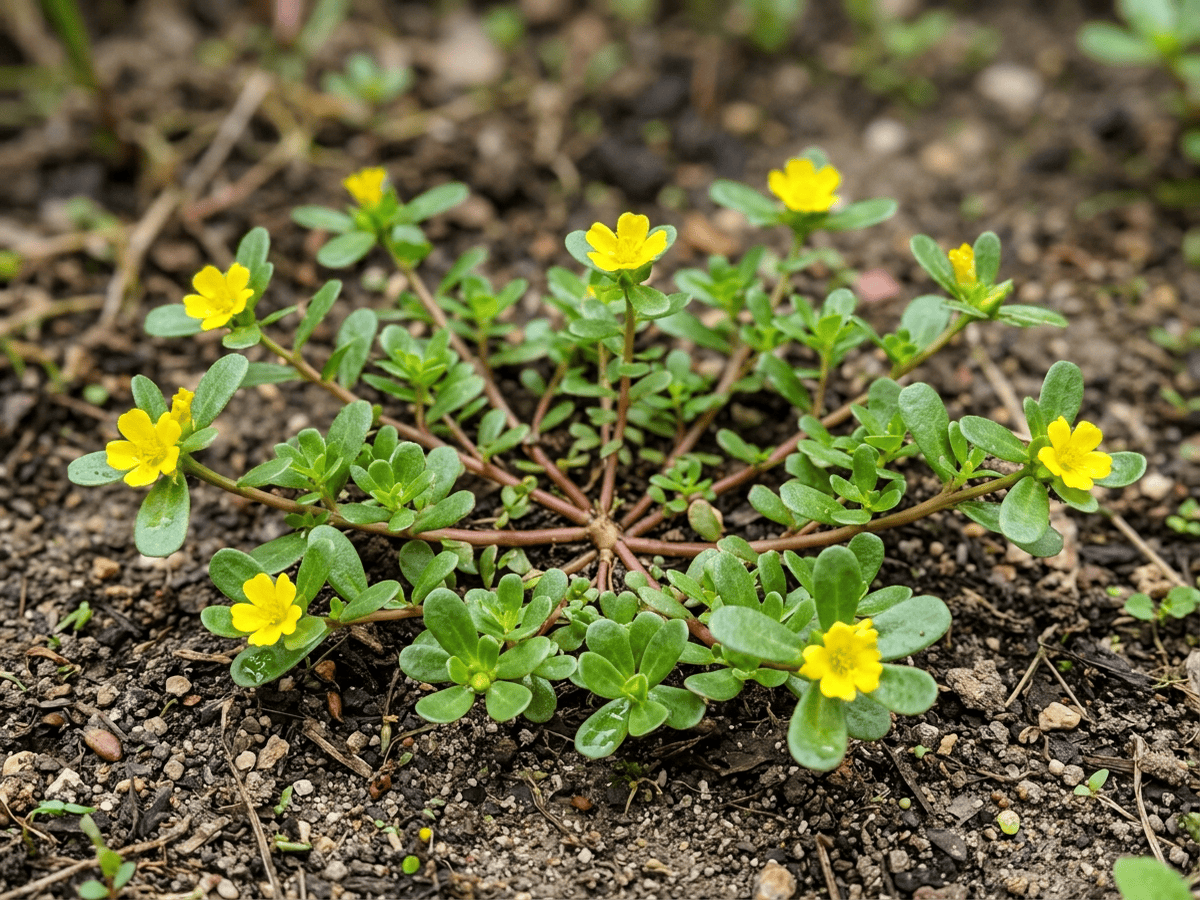
More Portulaca plants

Plants with similar care
 Chinese AbeliaAbelia chinensis
 Fragrant AbeliaAbelia mosanensis
 Large-Flowered AbeliaAbelia uniflora
 Glossy AbeliaAbelia x grandiflora
Frequently asked questions
How often should I water Wingpod Purslane?
Water about every 5 days during the growing season, and always let excess water drain away.
How much light does Wingpod Purslane need?
Full sun: 6+ hrs direct. Watch the leaves — scorching or stretching means the light needs adjusting.
Is Wingpod Purslane toxic to cats or dogs?
Pets Moderate (Dogs Moderate · Cats Moderate) Educational information, not medical or veterinary advice. If exposure is suspected, contact a doctor or veterinarian.
Is Wingpod Purslane easy to grow?
Yes — it is considered an easy, beginner-friendly plant.
When does Wingpod Purslane bloom?
It typically blooms Jun–Aug in the Northern Hemisphere.
YardMate
Identify any plant in seconds
Snap a photo — YardMate names the plant, diagnoses problems, and reminds you when to water.
Download on the App Store