 YardMate


Common Purslane
Portulaca oleracea
Easy · Beginner friendlyAbout Common Purslane
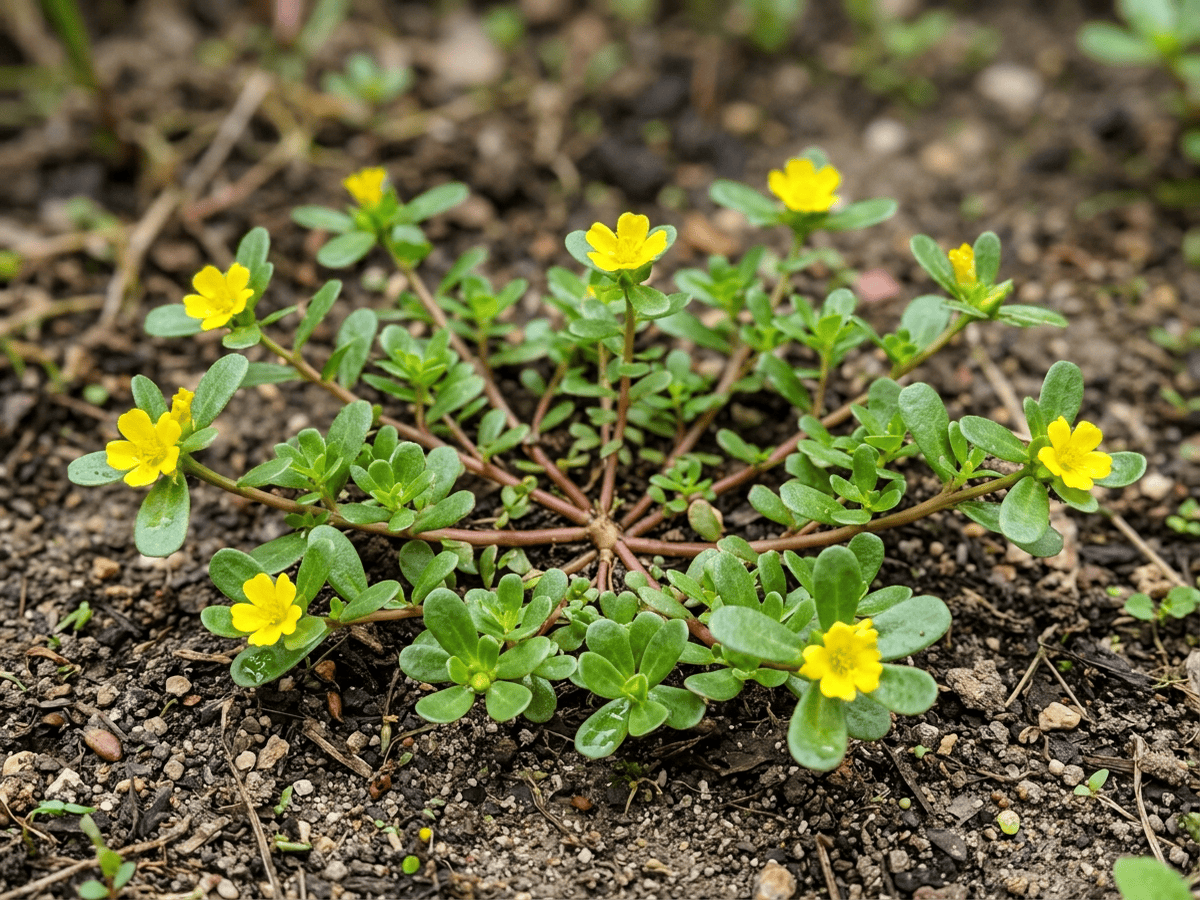
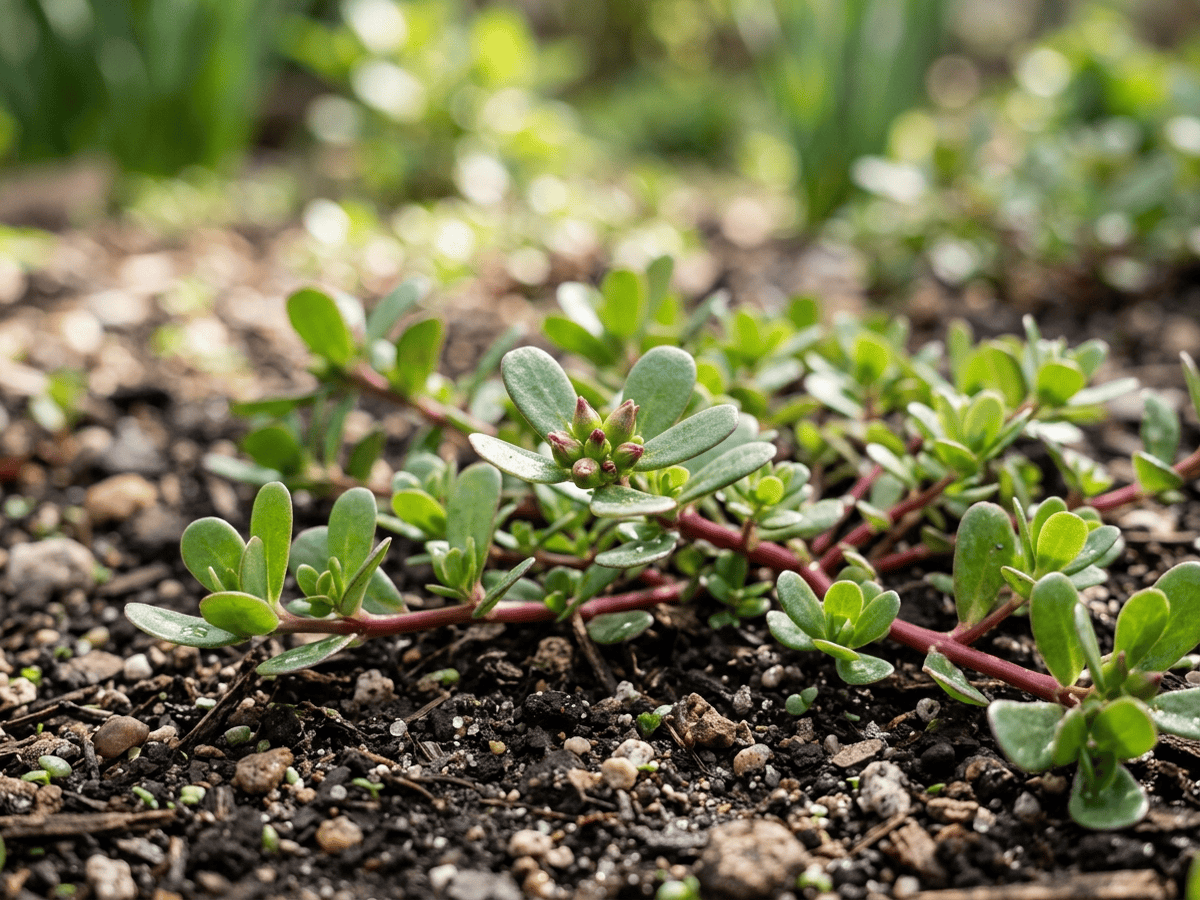
Common Purslane is a succulent warm-season annual of uncertain (likely Eurasian) origin naturalized worldwide and in every American garden. Forms sprawling mats of fleshy red-tinged stems and paddle-shaped succulent leaves with tiny yellow flowers. One of the world's most persistent garden weeds and simultaneously one of the most nutritious wild greens on Earth, exceptionally rich in omega-3 fatty acids and traditionally eaten globally.
- Edible
- Drought-tolerant
How to care for Common Purslane
Watering
- Springevery 14 days
- Summerevery 7 days
- Fallevery 14 days
- Winterpause watering
Soil · Fast-draining
- Main mixSand + pumice + soil 1:1:150%
- DrainagePumice / gravel50%
Keep grit at half the mix or more — this soil is meant to dry out fast.
FERTILIZER
This plant needs little to no feeding.
At a Glance
- NativeAfrica, Western Asia
- Height0.3–0.8 ft (0.1–0.2 m)
- Spread1–1.5 ft (0.3–0.5 m)
- Flower colorYellow
- Foliage colorGreen, Red
- Fruit colorBlack
- SoilSandy, Well-drained
- LocationsYard
Bloom time
BLOOM CYCLE
Peak bloom
Jun–Nov
Tiny yellow flowers open midday summer to frost
Toxicity
Humans Slight · Pets Slight
oxalic acid and omega-3 fatty acids
Slight
- All
- Ingestion
EXPOSURE Eating any part of the plant.
EFFECT High oxalate content; moderate consumption only for those with kidney issues.
NOTE Widely eaten as a leafy vegetable globally. High oxalate content means large regular consumption is inadvisable for kidney stone sufferers.
Slight
- All
- Ingestion
EXPOSURE Eating any part of the plant.
EFFECT GI upset in large amounts.
NOTE Widely eaten as a leafy vegetable globally. High oxalate content means large regular consumption is inadvisable for kidney stone sufferers.
Slight
- All
- Ingestion
EXPOSURE Eating any part of the plant.
EFFECT GI upset in large amounts.
NOTE Widely eaten as a leafy vegetable globally. High oxalate content means large regular consumption is inadvisable for kidney stone sufferers.
Educational information, not medical or veterinary advice. If exposure is suspected, contact a doctor or veterinarian.
DISTRIBUTION

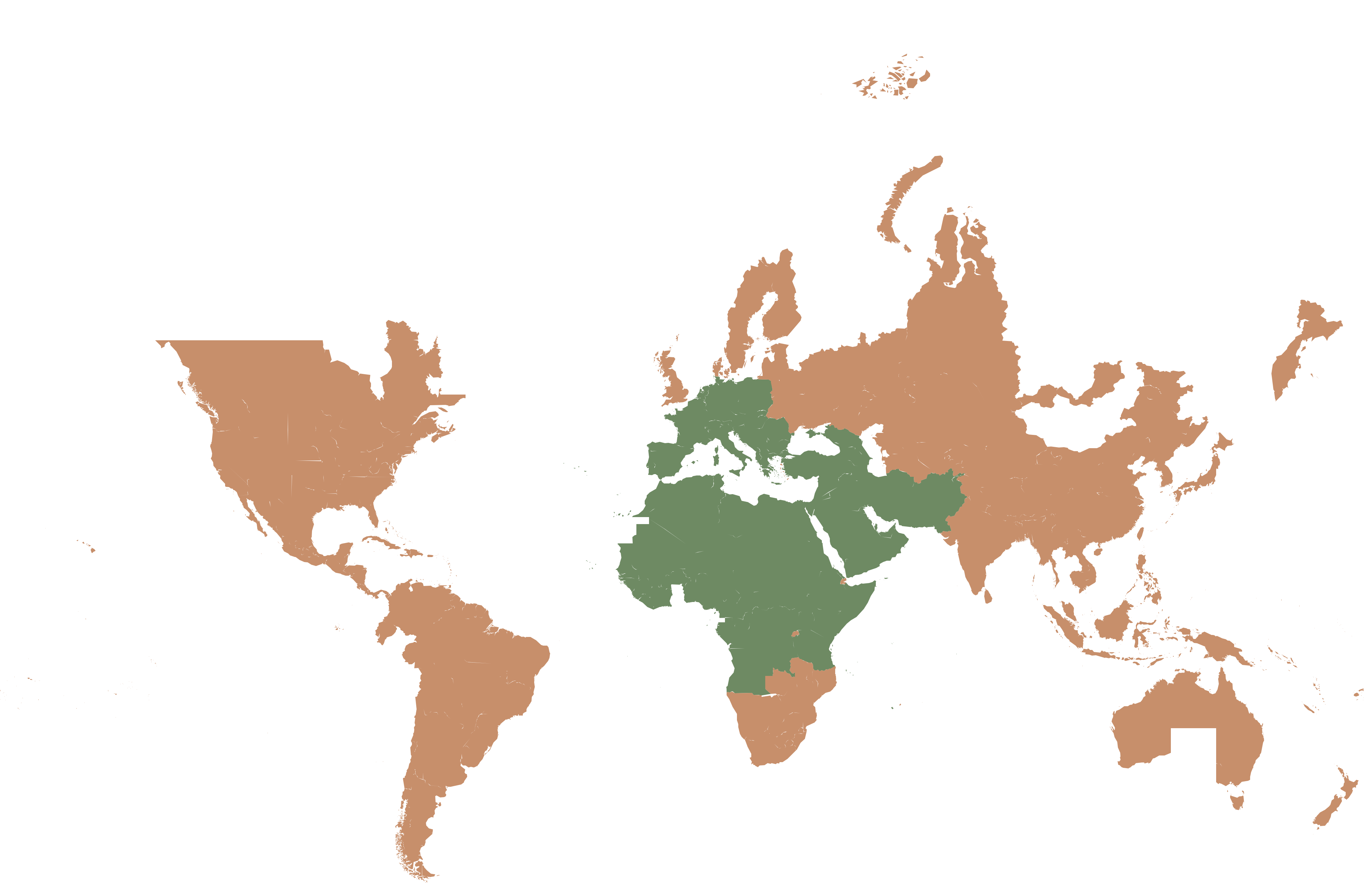
- Native
- Introduced
- Africa
- Western Asia
History
Portulaca oleracea has a probable native range in northern Africa and western Asia but has spread worldwide over millennia of human use. Linnaeus described it in Species Plantarum (1753). It has been cultivated as a food since ancient Egypt and was a staple vegetable across Persia, Greece, and Rome; Dioscorides and Pliny recommended it as a cooling summer green.
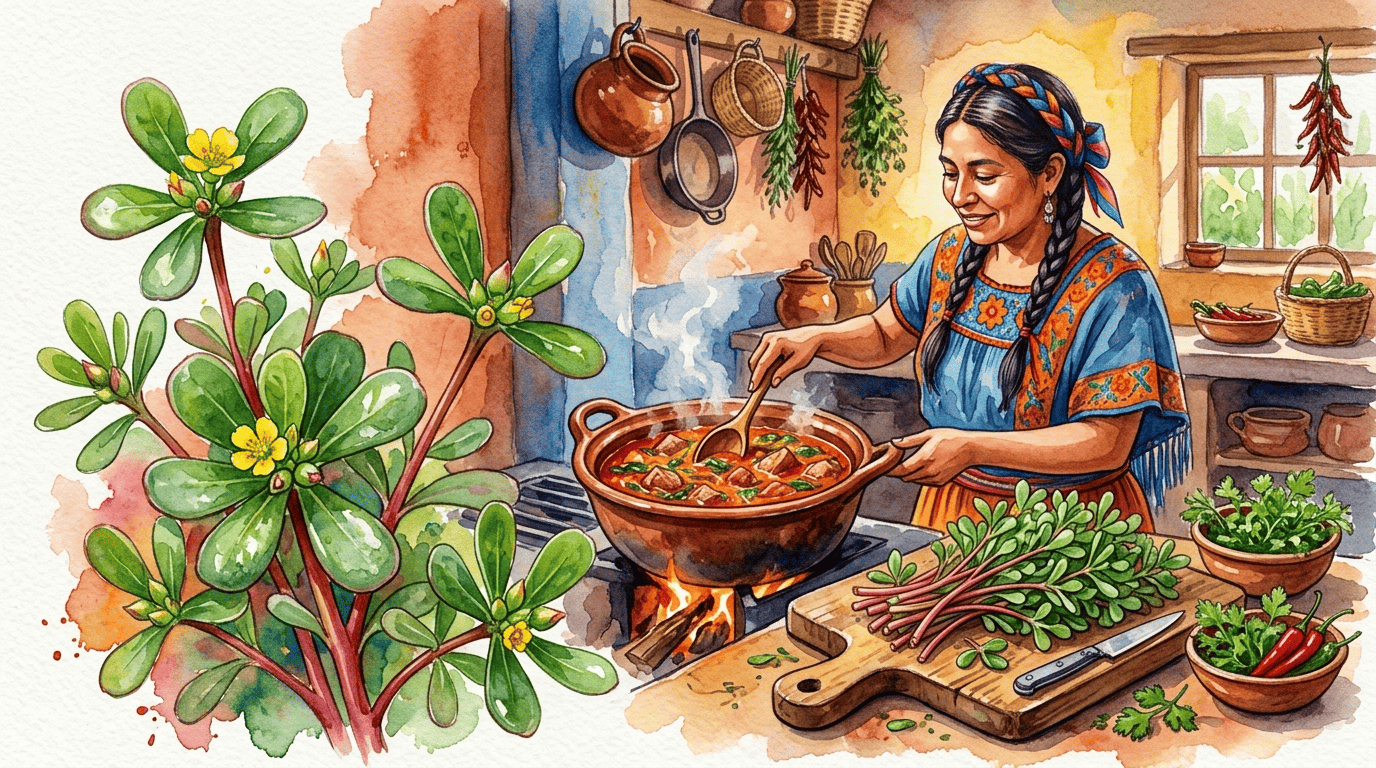
Modern nutrition studies show it contains more omega-3 alpha-linolenic acid than any other leafy green vegetable, alongside high levels of vitamins A, C, and magnesium. Mexican cooking prizes it as verdolagas in pork stews; Turkish, Greek, and Indian cuisines use it similarly. Despite its nutritional star power, it is also one of the 10 worst summer-annual weeds of world agriculture, with each plant producing over 240,000 seeds that remain viable for 40+ years.
Origin uncertain but documented in human use across Eurasia and the Americas for millennia. Central to Greek, Mexican, Turkish, and North African cuisines as verdolagas and semizotu. Dual identity as one of the world's worst weeds and one of the world's most nutritious edible plants.
Symbolism & meaning
What It Symbolizes
Common Purslane is widely regarded as one of the world's most nutritious plants, rich in omega-3 fatty acids, and yet most gardeners pull it and throw it away. So its meaning is the bittersweet observation of a nutritious weed. Another layer is succulent tenacity, for purslane can survive months pulled and lying on the soil surface, often re-rooting from a stranded stem. The plant is an ecological reminder that what we call a weed and what we call a vegetable often differ only by attention.
- Nutritious weed — the world's most nutritious plant that people pull and throw away
- Succulent tenacity — survives months pulled and lying on soil
Where the Name Comes From
'Portulaca' from Latin 'portula' meaning small gate, for the lid-topped seed capsule; 'oleracea' means of the vegetable garden, reflecting its edible use.
Uses & Fun Facts
- Tangy purslane leaves eaten raw in salads worldwide
- Folk remedy rich in omega-3 fatty acids
Related plants
More Portulaca plants


Plants with similar care
 Chinese AbeliaAbelia chinensis
 Fragrant AbeliaAbelia mosanensis
 Large-Flowered AbeliaAbelia uniflora
 Glossy AbeliaAbelia x grandiflora
Frequently asked questions
How often should I water Common Purslane?
Water about every 14 days during the growing season, and always let excess water drain away.
How much light does Common Purslane need?
Full sun: 6+ hrs direct. Watch the leaves — scorching or stretching means the light needs adjusting.
Is Common Purslane toxic to cats or dogs?
Pets Slight (Dogs Slight · Cats Slight) Educational information, not medical or veterinary advice. If exposure is suspected, contact a doctor or veterinarian.
Is Common Purslane easy to grow?
Yes — it is considered an easy, beginner-friendly plant.
When does Common Purslane bloom?
It typically blooms Jun–Nov in the Northern Hemisphere.
YardMate
Identify any plant in seconds
Snap a photo — YardMate names the plant, diagnoses problems, and reminds you when to water.
Download on the App Store