 YardMate


Meadow Buttercup
Ranunculus acris
Easy · Beginner friendlyAbout Meadow Buttercup
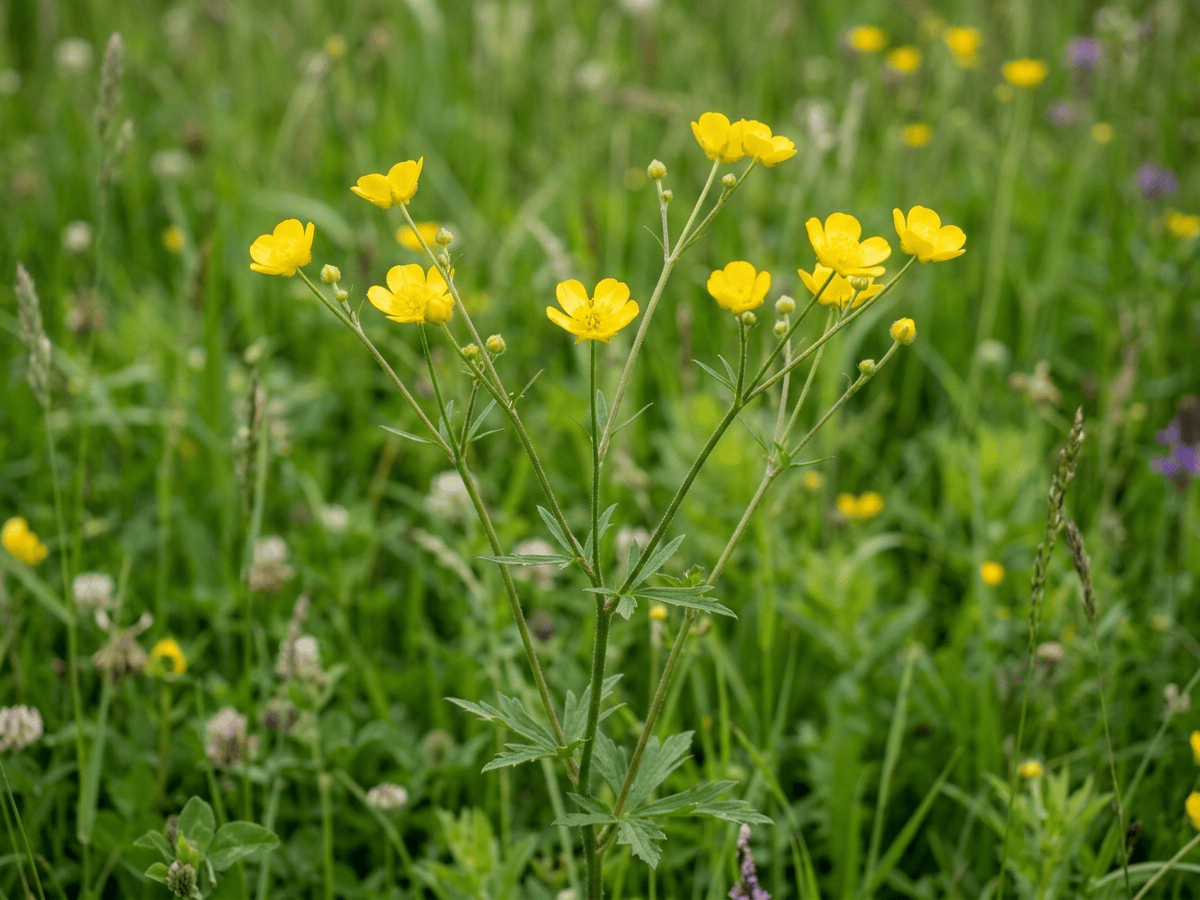
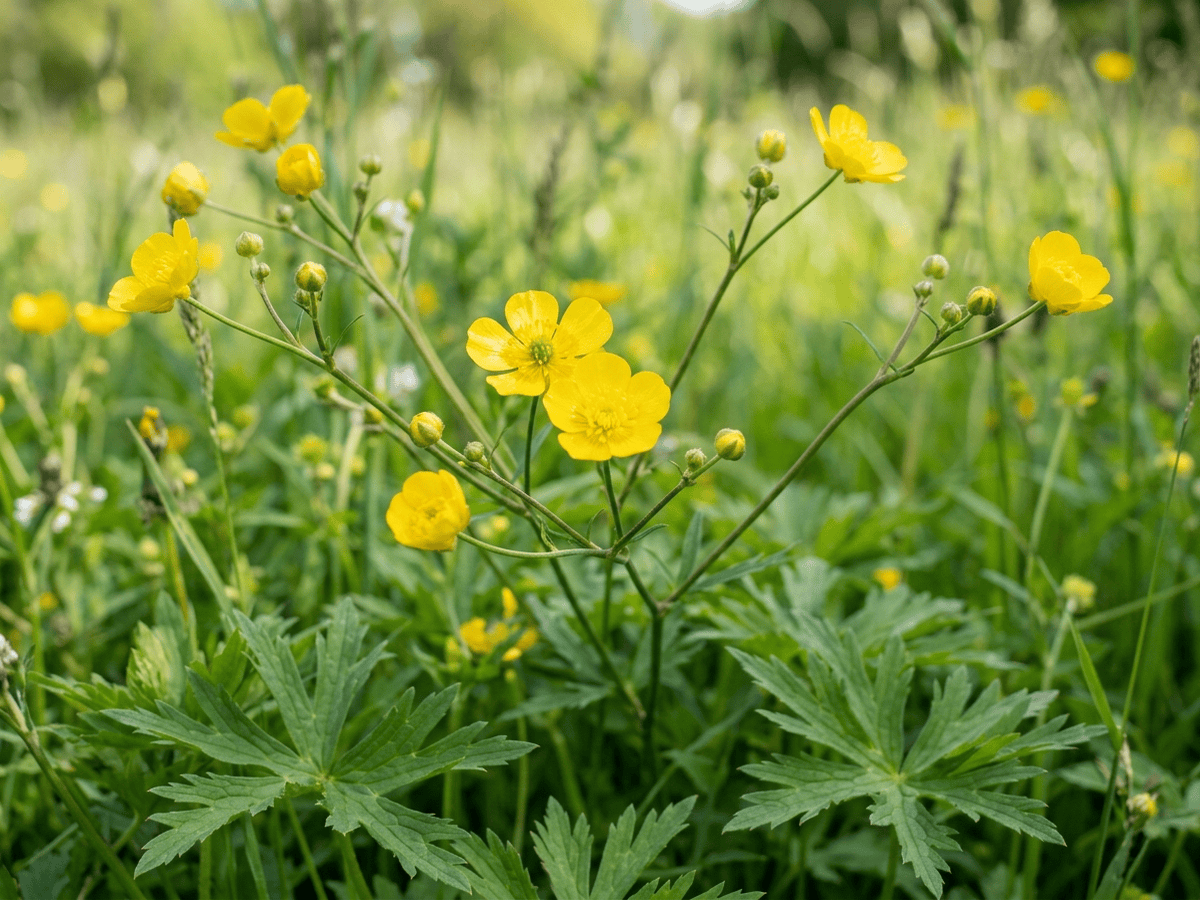
Meadow Buttercup is a European perennial hardy in USDA zones 3-7, producing tall 2 to 3 foot branching stems topped with glossy yellow cup-shaped flowers in early to midsummer. Growing from fibrous roots with deeply divided hand-shaped leaves, it has naturalized widely across the northeastern US in wet meadows and pastures. Sometimes grown in garden beds as a traditional cottage-garden buttercup with classic meadow charm.
- Long-blooming
- Pollinator-friendly
How to care for Meadow Buttercup
Watering
- Springevery 5 days
- Summerevery 3 days
- Fallevery 7 days
- Winterevery 14 days
Soil · Well-draining
- Main mixLoam + coarse sand 3:175%
- DrainageGravel25%
Sharp drainage matters most — bulbs rot in wet soil while dormant.
FERTILIZER
Balanced Feed 14-14-14
An even feed covers all three needs at once, keeping leaves, roots and blooms moving together with nothing pushed out of balance.
- Nitrogen · Leaves
- Phosphorus · Roots + Blooms
- Potassium · Strength
- Springevery 60 days
- Summerevery 90 days
At a Glance
- NativeEurope, East Asia
- Height2–3 ft (0.6–0.9 m)
- Spread1–1.5 ft (0.3–0.5 m)
- Flower colorYellow
- Foliage colorGreen
- SoilLoamy, Moisture-retentive
- LocationsYard
Bloom time
BLOOM CYCLE
Peak bloom
May–Aug
Glossy yellow buttercup flowers early summer to midsummer
Toxicity
Humans Moderate · Pets Moderate
protoanemonin and ranunculin
Moderate
- All
- Contact
- Ingestion
EXPOSURE Touching any part of the plant. Eating any part of the plant.
EFFECT Skin blistering, mouth blistering, and gI upset.
NOTE Fresh sap strongly irritating and can cause blistering. Drying destroys toxicity, so hay is safe.
Moderate
- All
- Ingestion
EXPOSURE Eating any part of the plant.
EFFECT Drooling, vomiting, and bloody diarrhea.
NOTE Fresh sap strongly irritating and can cause blistering. Drying destroys toxicity, so hay is safe.
Moderate
- All
- Ingestion
EXPOSURE Eating any part of the plant.
EFFECT Drooling, vomiting, and bloody diarrhea.
NOTE Fresh sap strongly irritating and can cause blistering. Drying destroys toxicity, so hay is safe.
Educational information, not medical or veterinary advice. If exposure is suspected, contact a doctor or veterinarian.
DISTRIBUTION


- Native
- Introduced
- Europe
- East Asia
History

Ranunculus acris grows across temperate Europe and Asia in meadows, pastures, and roadsides. Linnaeus described it in Species Plantarum (1753); acris means 'sharp' or 'acrid', referring to the caustic sap. European settlers carried it to North America where it naturalized widely.
Medieval European farmers knew cows would not graze it; 'cow baulks' of uneaten buttercup stand out in heavily grazed meadows. Folk tradition held that holding a buttercup under the chin reveals one's love of butter by the reflected yellow glow — a phenomenon now shown to be due to unique epidermal cells that reflect ultraviolet and yellow light strongly. In gardens the double-flowered 'Flore Pleno', cultivated since the 17th century, and 'Stevenii' (larger single flowers) are admired for bright yellow button blooms.
It can be invasive in pasture. Native to Europe and Asia, introduced to colonial America by the 1600s with European livestock. Naturalized across northern pastures, the yellow flowers became iconic in children's games of holding flowers under chins to test butter-love. Still sold as a cottage garden perennial and the double-flowered Flore Pleno is a traditional favorite.
Symbolism & meaning
What It Symbolizes
The Meadow Buttercup is the patron of childhood joy, its glossy yellow flowers held under chins to test, in time-honored tradition, who loves butter. Across European pastures, generations of children have measured affection by its golden reflection on their skin. This is the wildflower of summer pasture sunshine, blooming in such abundance that whole meadows seem dipped in light — a flower forever tied to the small magic of long, warm afternoons.
- Childhood joy — holding flowers under chins to test butter-love
- Meadow sunshine — glossy yellow flowers glow in pastures
Where the Name Comes From
The name Meadow Buttercup points to meadows. 'Ranunculus' from Latin 'rana' meaning little frog, for species growing in wet places; 'acris' from Latin means sharp or acrid, for the irritating sap.
Uses & Fun Facts
- Meadow Buttercup flowers nourish foraging bees and pollinators
Related plants
More Ranunculus plants


Plants with similar care
 Chinese AbeliaAbelia chinensis
 Fragrant AbeliaAbelia mosanensis
 Large-Flowered AbeliaAbelia uniflora
 Glossy AbeliaAbelia x grandiflora
Frequently asked questions
How often should I water Meadow Buttercup?
In summer, water about every 3 days; in winter, about every 14 days. Adjust for heat, pot size and drainage.
How much light does Meadow Buttercup need?
Full sun: 6+ hrs direct. Watch the leaves — scorching or stretching means the light needs adjusting.
Is Meadow Buttercup toxic to cats or dogs?
Pets Moderate (Dogs Moderate · Cats Moderate) Educational information, not medical or veterinary advice. If exposure is suspected, contact a doctor or veterinarian.
Is Meadow Buttercup easy to grow?
Yes — it is considered an easy, beginner-friendly plant.
When does Meadow Buttercup bloom?
It typically blooms May–Aug in the Northern Hemisphere.
YardMate
Identify any plant in seconds
Snap a photo — YardMate names the plant, diagnoses problems, and reminds you when to water.
Download on the App Store