 YardMate

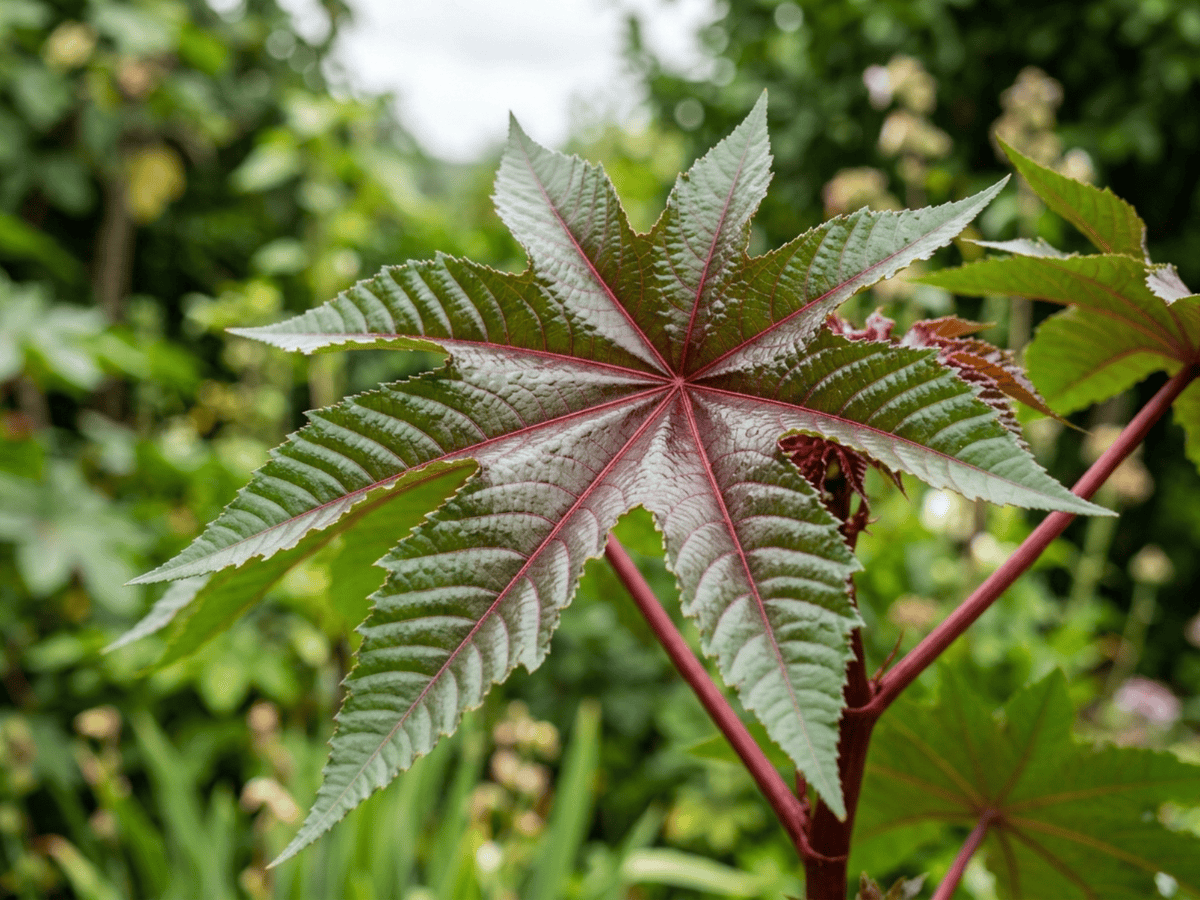


Castor Bean
Ricinus communis
Easy · Beginner friendlyAbout Castor Bean
Castor Bean is a giant annual (perennial in tropical zones) grown as a dramatic statement plant in US gardens, reaching 6–10 feet in a single season with huge palmate leaves in bronze, red, or burgundy and spiky seed pods. Native to tropical Africa, it is cultivated as a tropical-look foliage accent in mixed borders. Warning: all parts, especially the seeds, contain ricin—extremely toxic to humans, pets, and livestock. Not suitable for gardens with children or pets.
- Architectural
- Fast-growing
- Tropical
How to care for Castor Bean
Watering
- Springevery 3 days
- Summerevery 2 days
- Fallevery 7 days
- Winterevery 21 days
Soil · Well-draining
- Top dressingPine bark mulch10%
- Main mixPotting soil + perlite 2:170%
- DrainageLECA / gravel20%
Never skip the drainage layer — standing water is the top cause of root rot.
FERTILIZER
Balanced Feed 14-14-14
An even feed covers all three needs at once, keeping leaves, roots and blooms moving together with nothing pushed out of balance.
- Nitrogen · Leaves
- Phosphorus · Roots + Blooms
- Potassium · Strength
- Springevery 21 days
- Summerevery 21 days
At a Glance
- NativeAfrica
- Height6–15 ft (1.8–4.6 m)
- Spread4–8 ft (1.2–2.4 m)
- Flower colorRed, Pink, Yellow, Green
- Foliage colorGreen, Red, Bronze
- Fruit colorRed, Green
- SoilLoamy, Well-drained, Rich
- LocationsYard
Bloom time
BLOOM CYCLE
Peak bloom
Aug–Sep
Spiky red seed pods late summer
Fragrance
NO FRAGRANCE
No notable fragrance.
Toxicity
Humans Severe · Pets Severe
ricin
Severe
- Seed
- Ingestion
EXPOSURE Eating seeds.
EFFECT Ricin: severe GI symptoms, organ failure, death and 4-8 seeds potentially lethal in adults, single seed lethal in child.
NOTE Documented concern for humans: Ricin: severe GI symptoms, organ failure, death and 4-8 seeds potentially lethal in adults, single seed lethal in child.
Severe
- Seed
- Ingestion
EXPOSURE Eating seeds.
EFFECT Severe vomiting, bloody diarrhea, organ failure, death.
NOTE ASPCA lists castor bean as extremely toxic — among the most dangerous ornamental plants in common cultivation. Not safe to grow where children or pets have access.
Severe
- Seed
- Ingestion
EXPOSURE Eating seeds.
EFFECT Same as dogs.
NOTE ASPCA lists castor bean as extremely toxic — among the most dangerous ornamental plants in common cultivation. Not safe to grow where children or pets have access.
Educational information, not medical or veterinary advice. If exposure is suspected, contact a doctor or veterinarian.
DISTRIBUTION


- Native
- Introduced
- Africa
History
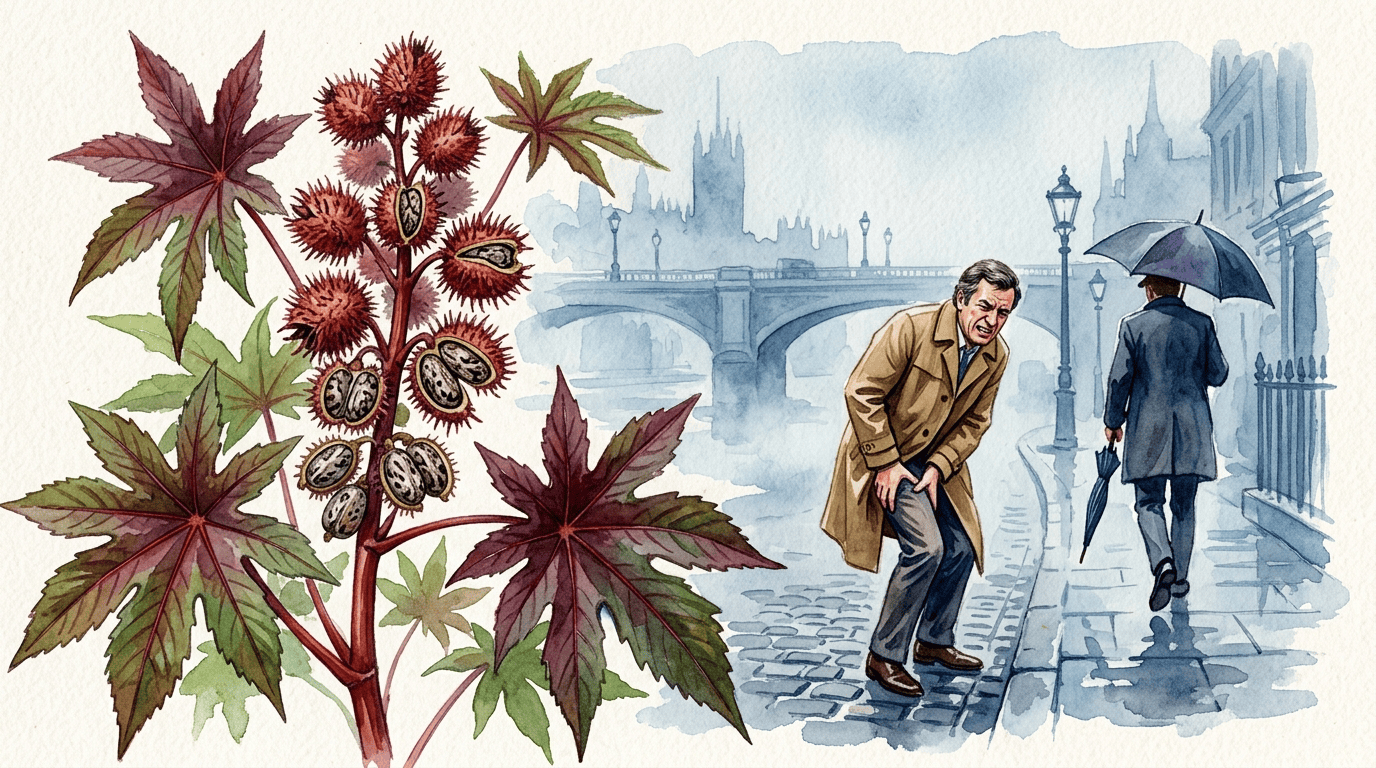
Ricinus communis is thought to be native to eastern Africa — likely the tropical highlands of Ethiopia and Kenya — though cultivation and naturalization has been so extensive for so long that precise native origin is uncertain. It is one of the most ancient oil crops in human history: castor seeds have been found in Egyptian tombs dating to 4000 BCE and the plant is mentioned in Herodotus (5th century BCE) as a known Egyptian crop. Many biblical scholars identify the "gourd" (qiqayon in Hebrew) that God caused to grow up over Jonah in the Biblical Book of Jonah 4:6-10 as castor bean, based on the rapid growth rate of the plant and linguistic comparison. Castor oil, pressed from the seeds, is a classic traditional laxative, an industrial lubricant, and a raw material for nylon and polymer synthesis.
Global commercial castor oil production is concentrated in India, Mozambique, China, and Brazil. The defining danger of the species is that the seeds contain ricin, a ribosome-inactivating protein that is among the most deadly natural toxins known — on a per-weight basis, ricin is approximately 6000 times more toxic than cyanide by injection and roughly 2000 times more toxic by ingestion. A single castor seed contains enough ricin to kill a child; four to eight seeds can kill an adult.
Ricin has been weaponized in the 1978 Markov assassination (Bulgarian defector Georgi Markov, killed by ricin-pellet umbrella-tip attack in London) and in multiple 2010s-2020s terrorism incidents. Fortunately, commercial castor oil is ricin-free because ricin is water-soluble and remains in the seedcake residue rather than the pressed oil. Growing Ricinus as an ornamental is common in warm climates, valued for its enormous palmate leaves and dramatic tropical effect. Cultivated for over 6,000 years for castor oil, the seeds were pressed in ancient Egypt and India. Introduced to American gardens in colonial times, today grown purely as ornamental. Modern cultivars like 'Carmencita' and 'New Zealand Purple' offer rich burgundy foliage.
Symbolism & meaning
What It Symbolizes
Castor Bean is tropical extravagance with a severe secret. Giant palmate leaves and spiny seed capsules make it look almost prehistoric, a plant built for dramatic entrances. Its symbolism is guarded abundance: lush, fast, and theatrical, yet carrying chemistry that insists the spectacle be respected from a distance.
- Isolation — imposing solitary form in the garden
- Caution — beauty paired with deadly toxicity
Where the Name Comes From
Genus from Latin 'ricinus' (tick) for the resemblance of seeds to ticks; 'communis' means 'common'.
Uses & Fun Facts
- Giant palmate leaves create back-of-border tropical statement
- Bronze-red foliage and spiky pods provide bold seasonal accent
- Seeds pressed industrially for castor oil lubricants and coatings
Related plants
Plants with similar care
 Chinese AbeliaAbelia chinensis
 Fragrant AbeliaAbelia mosanensis
 Large-Flowered AbeliaAbelia uniflora
 Glossy AbeliaAbelia x grandiflora
Frequently asked questions
How often should I water Castor Bean?
In summer, water about every 2 days; in winter, about every 21 days. Adjust for heat, pot size and drainage.
How much light does Castor Bean need?
Full sun: 6+ hrs direct. Watch the leaves — scorching or stretching means the light needs adjusting.
Is Castor Bean toxic to cats or dogs?
Pets Severe (Dogs Severe · Cats Severe) Educational information, not medical or veterinary advice. If exposure is suspected, contact a doctor or veterinarian.
Is Castor Bean easy to grow?
Yes — it is considered an easy, beginner-friendly plant.
When does Castor Bean bloom?
It typically blooms Aug–Sep in the Northern Hemisphere.
YardMate
Identify any plant in seconds
Snap a photo — YardMate names the plant, diagnoses problems, and reminds you when to water.
Download on the App Store