 YardMate

Black Lace Elderberry
Sambucus nigra 'Black Lace'
Easy · Beginner friendlyAbout Black Lace Elderberry
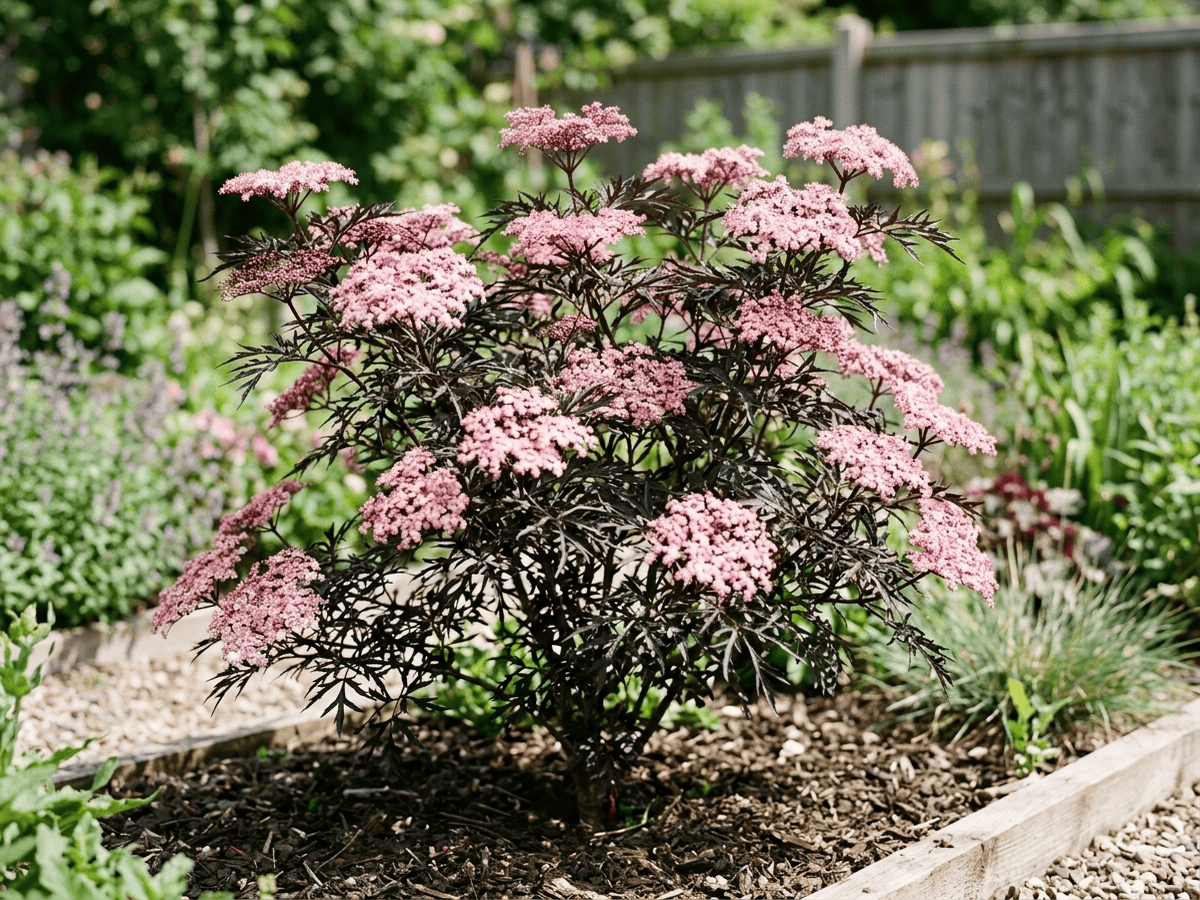
Sambucus nigra 'Black Lace' is a dramatic dark-leaved cultivar of European elderberry with deeply cut, finely divided, near-black foliage resembling a purple Japanese maple. Bred at East Malling Research Station in England and released in 2003, it revolutionized elderberry as an ornamental and became one of the most widely planted specimen shrubs of the 2010s.
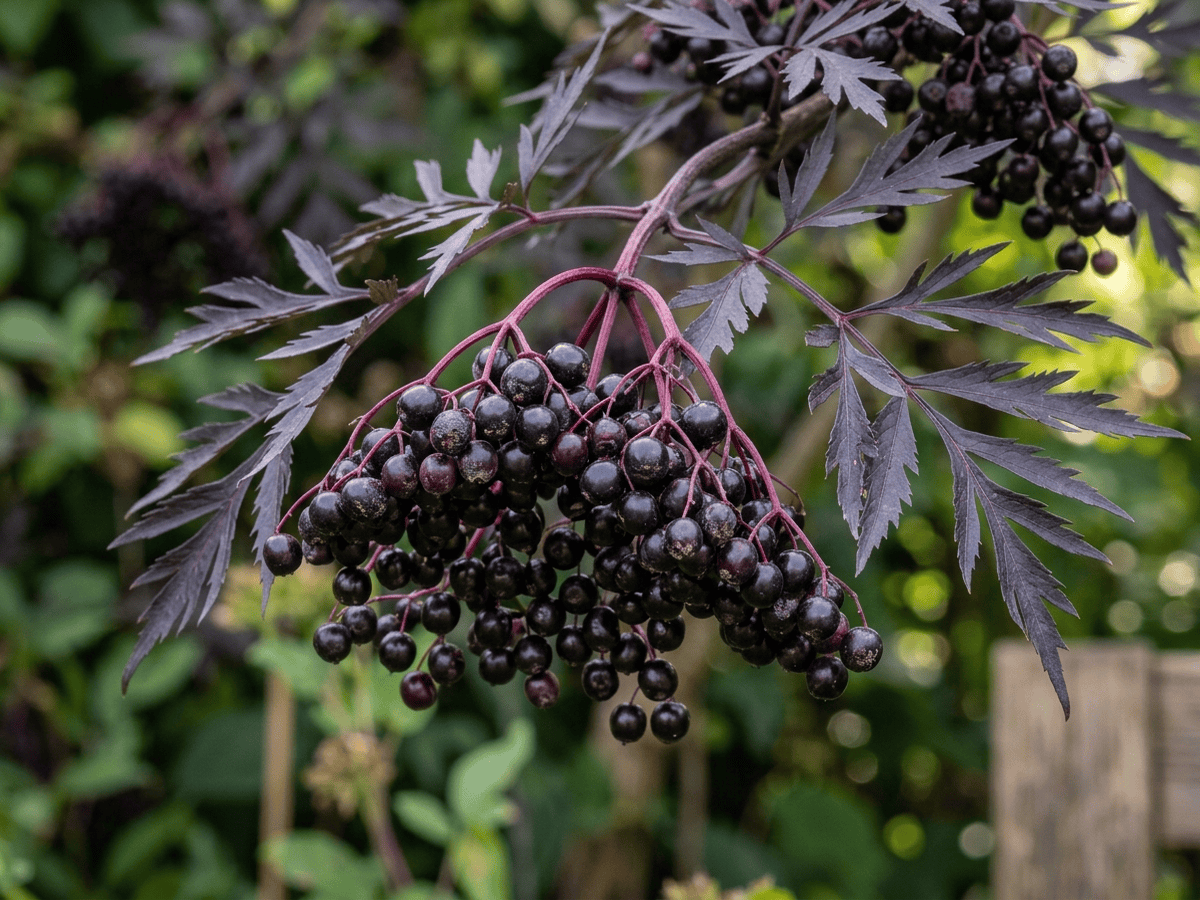
Plants reach 2-3 m tall and produce flat lemon-pink flower clusters in early summer (striking against the black foliage) followed by blue-black berries. Flowers and berries are functionally identical to the wild species — fully usable for cordial and syrup.
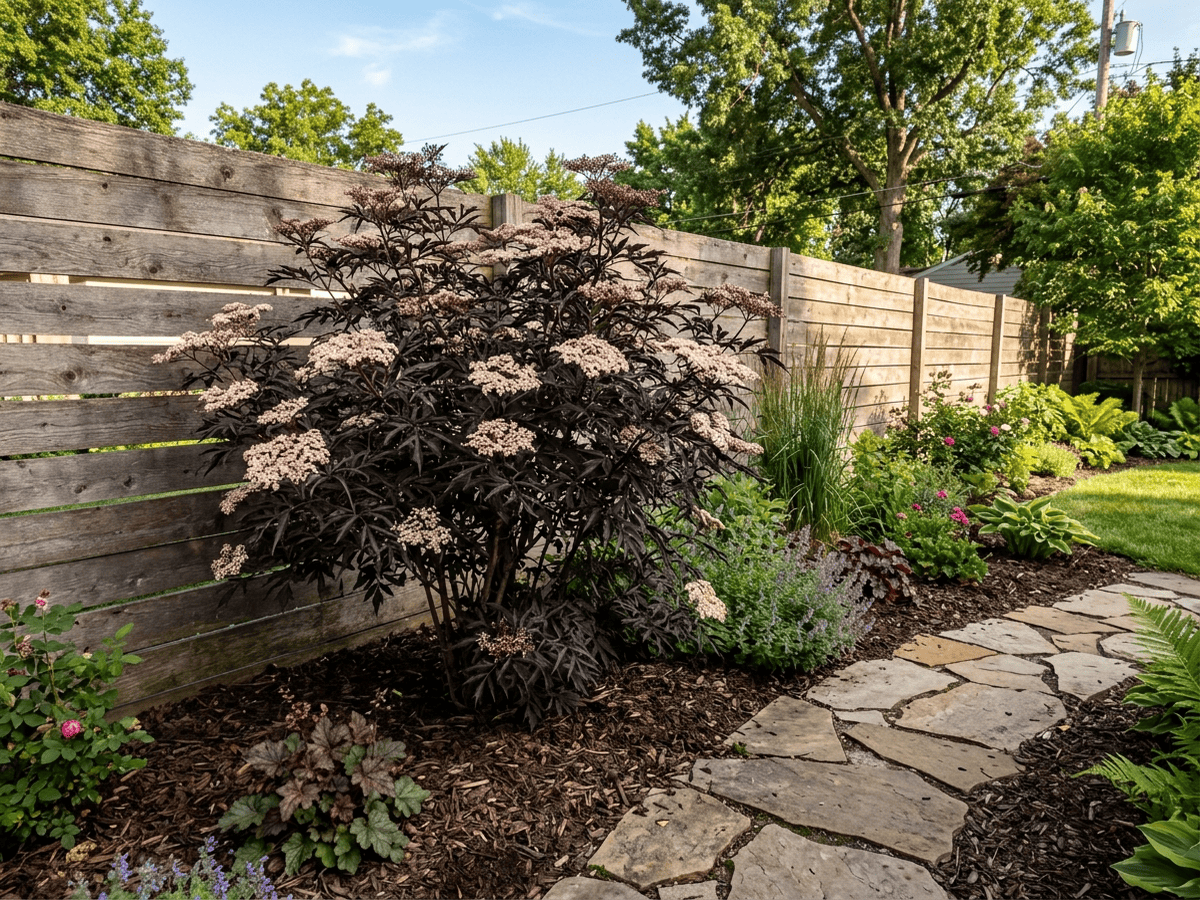
Best color develops in full sun. Cut back hard in early spring for larger finer foliage and smaller mature size. Pairs beautifully with chartreuse, silver, and pink flowers. A modern garden design classic.
- Edible
- Architectural
How to care for Black Lace Elderberry
Watering
- Springevery 7 days
- Summerevery 5 days
- Fallevery 10 days
- Winterevery 21 days
Soil · Well-draining
- Top dressingPine bark mulch10%
- Main mixPotting soil + perlite 2:170%
- DrainageLECA / gravel20%
Never skip the drainage layer — standing water is the top cause of root rot.
FERTILIZER
Balanced Feed 14-14-14
An even feed covers all three needs at once, keeping leaves, roots and blooms moving together with nothing pushed out of balance.
- Nitrogen · Leaves
- Phosphorus · Roots + Blooms
- Potassium · Strength
- Springevery 30 days
- Summerevery 30 days
At a Glance
- NativeEurope
- Height8–12 ft (2.4–3.7 m)
- Spread8–12 ft (2.4–3.7 m)
- Flower colorPink, Cream
- Foliage colorPurple
- Fruit colorBlack, Blue
- SoilLoamy, Moisture-retentive
- LocationsYard
Bloom time
BLOOM CYCLE
Peak bloom
May–Aug
Lemon-pink flower clusters in early summer contrast stunningly with black foliage.
Fragrance
MODERATE FRAGRANCE
The flowers have a classic elderflower scent.
Toxicity
Humans Moderate · Pets Moderate
sambunigrin
Moderate
- Leaf
- Stem
- Raw berry
- Ingestion
EXPOSURE Eating leaves, stems, and raw berry.
EFFECT Same as species: sambunigrin toxicity and cooking destroys.
NOTE Identical toxicity to parent species. Cook before eating berries.
Moderate
- Leaf
- Stem
- Raw berry
- Ingestion
EXPOSURE Eating leaves, stems, and raw berry.
EFFECT Vomiting, diarrhea.
NOTE Identical toxicity to parent species. Cook before eating berries.
Moderate
- Leaf
- Stem
- Raw berry
- Ingestion
EXPOSURE Eating leaves, stems, and raw berry.
EFFECT Vomiting, diarrhea.
NOTE Identical toxicity to parent species. Cook before eating berries.
Educational information, not medical or veterinary advice. If exposure is suspected, contact a doctor or veterinarian.
DISTRIBUTION

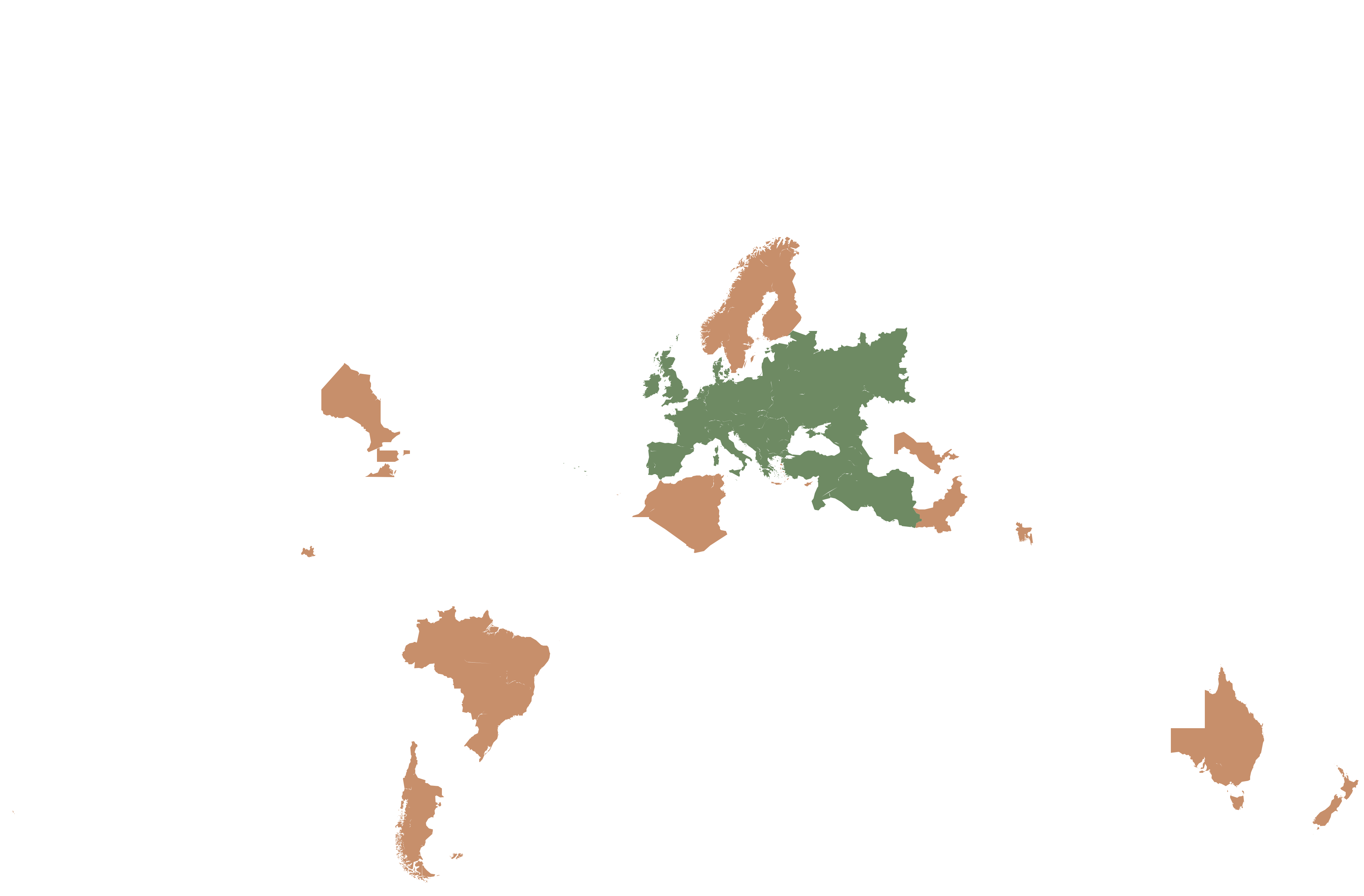
- Native
- Introduced
- Europe
History
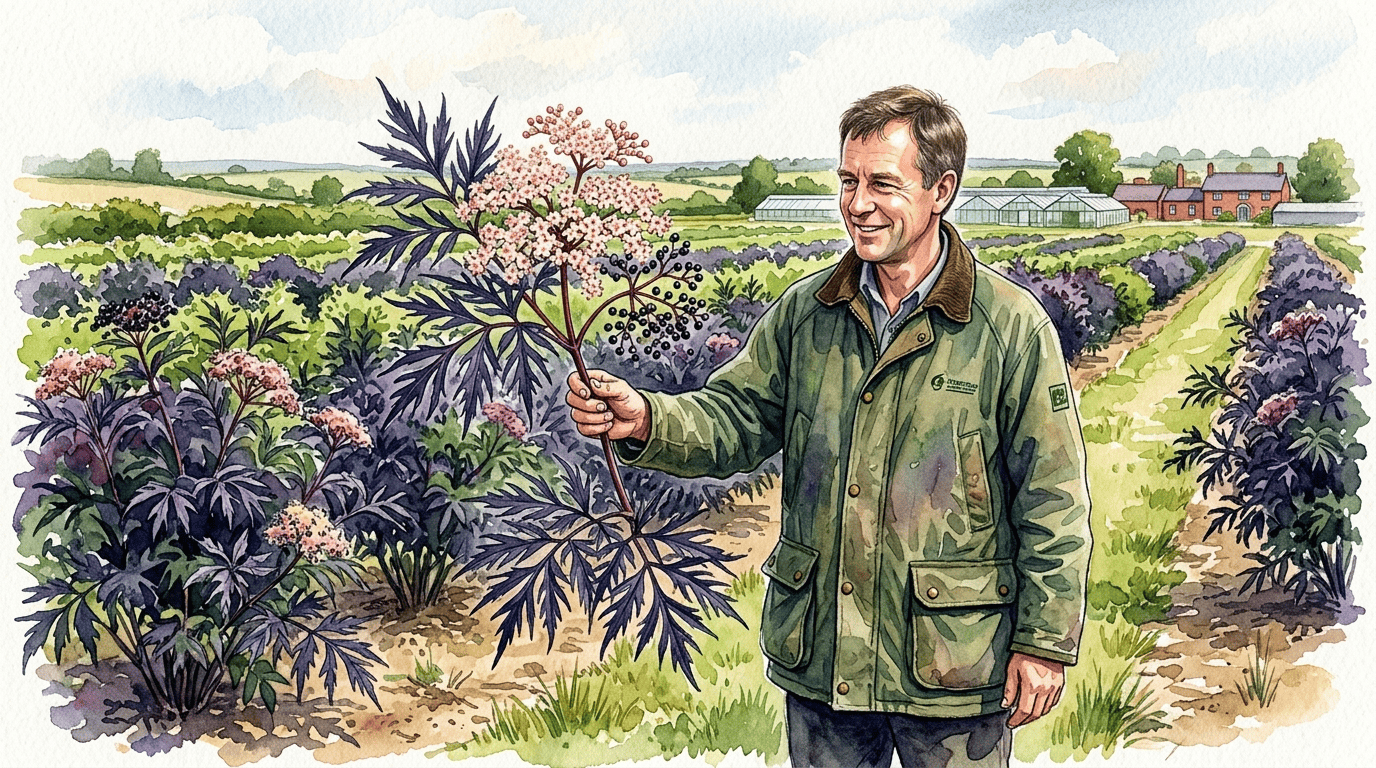
The cultivar 'Black Lace' (breeder cultivar name 'Eva') was bred at the renowned East Malling Research Station in Kent, England, by Ken Tobutt and colleagues, and released in 2003. It was an immediate success because it combined three highly desirable traits: deeply cut finely divided foliage (like a Japanese maple); near-black coloration that holds through summer; and full retention of the species' edible flower and berry crops. It dominated the dark-foliage-shrub market in the 2010s and was a consistent feature of Chelsea Flower Show gold-medal gardens.
Best coloration develops in full sun; in shade the foliage reads dark green rather than black. Cutting back hard in early spring (to 30-45 cm) encourages larger more deeply-cut foliage on new wood and keeps size manageable.
Pairs beautifully in design with chartreuse-foliage partners (Physocarpus 'Dart's Gold,' Choisya 'Sundance'), silver-leaved sages and artemisias, and pink-flowered companions like geraniums and campion. Like the straight species, raw leaves/stems/raw berries are toxic; cooked flowers and ripe berries are fully safe and usable. Revolutionized elderberry as garden ornamental.
Symbolism & meaning
What It Symbolizes
Black Lace Elderberry turns elder folklore gothic. Finely cut near-black leaves and pink flowers give a common hedgerow genus the drama of a Victorian mourning dress. Its symbolism is transformation through style: the old elder spirit translated into a modern garden silhouette.
- Mystery — Near-black foliage evokes depth and drama
- Dual Beauty — Ornamental drama plus edible harvest
Where the Name Comes From
Black Lace from the foliage — nearly black and deeply cut; breeder cultivar name 'Eva.'
Uses & Fun Facts
- Cutleaf purple foliage gives shrub borders a dark lacy backdrop
Related plants
More Sambucus plants
Plants with similar care
 Chinese AbeliaAbelia chinensis
 Fragrant AbeliaAbelia mosanensis
 Large-Flowered AbeliaAbelia uniflora
 Glossy AbeliaAbelia x grandiflora
Frequently asked questions
How often should I water Black Lace Elderberry?
In summer, water about every 5 days; in winter, about every 21 days. Adjust for heat, pot size and drainage.
How much light does Black Lace Elderberry need?
Full sun: 6+ hrs direct. Watch the leaves — scorching or stretching means the light needs adjusting.
Is Black Lace Elderberry toxic to cats or dogs?
Pets Moderate (Dogs Moderate · Cats Moderate) Educational information, not medical or veterinary advice. If exposure is suspected, contact a doctor or veterinarian.
Is Black Lace Elderberry easy to grow?
Yes — it is considered an easy, beginner-friendly plant.
When does Black Lace Elderberry bloom?
It typically blooms May–Aug in the Northern Hemisphere.
YardMate
Identify any plant in seconds
Snap a photo — YardMate names the plant, diagnoses problems, and reminds you when to water.
Download on the App Store