 YardMate

Miniature Umbrella Tree
Schefflera arboricola
Easy · Beginner friendlyAbout Miniature Umbrella Tree
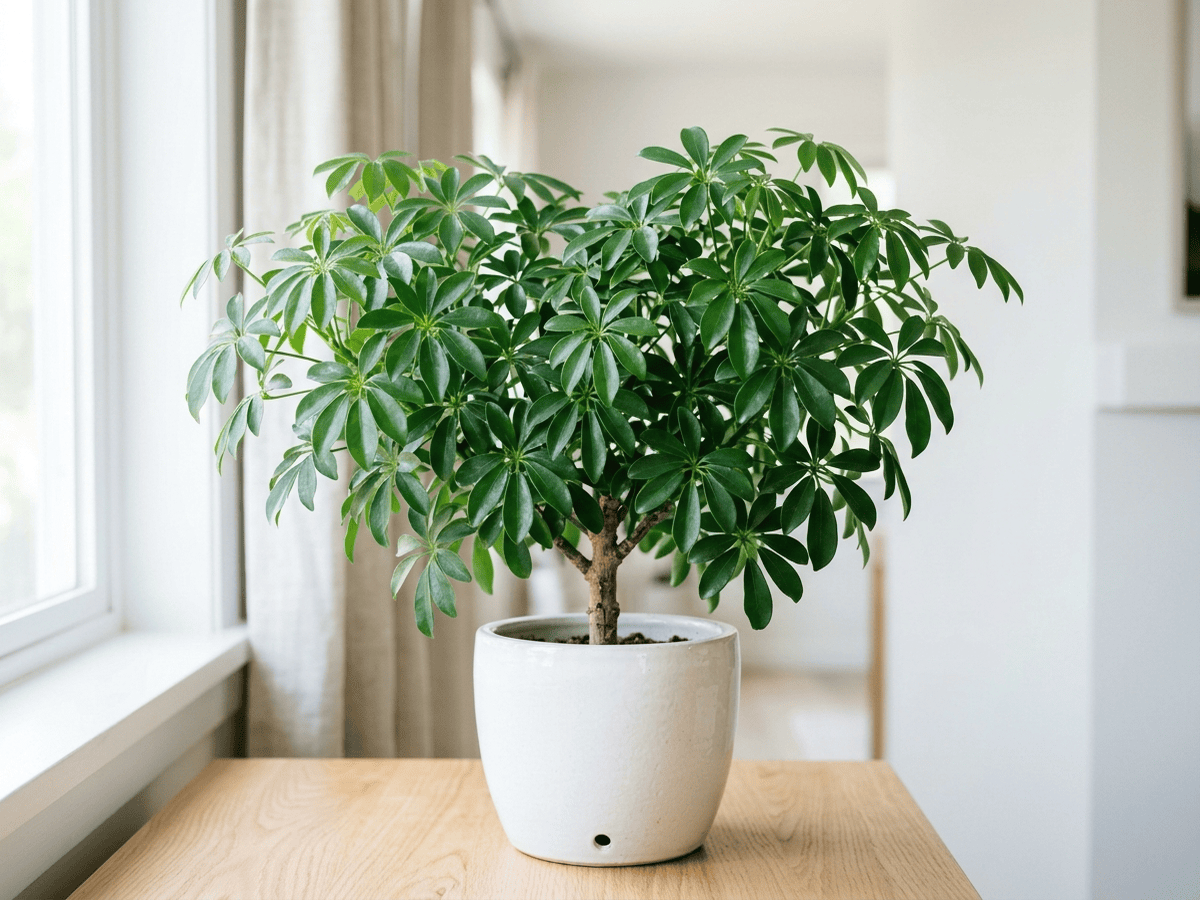
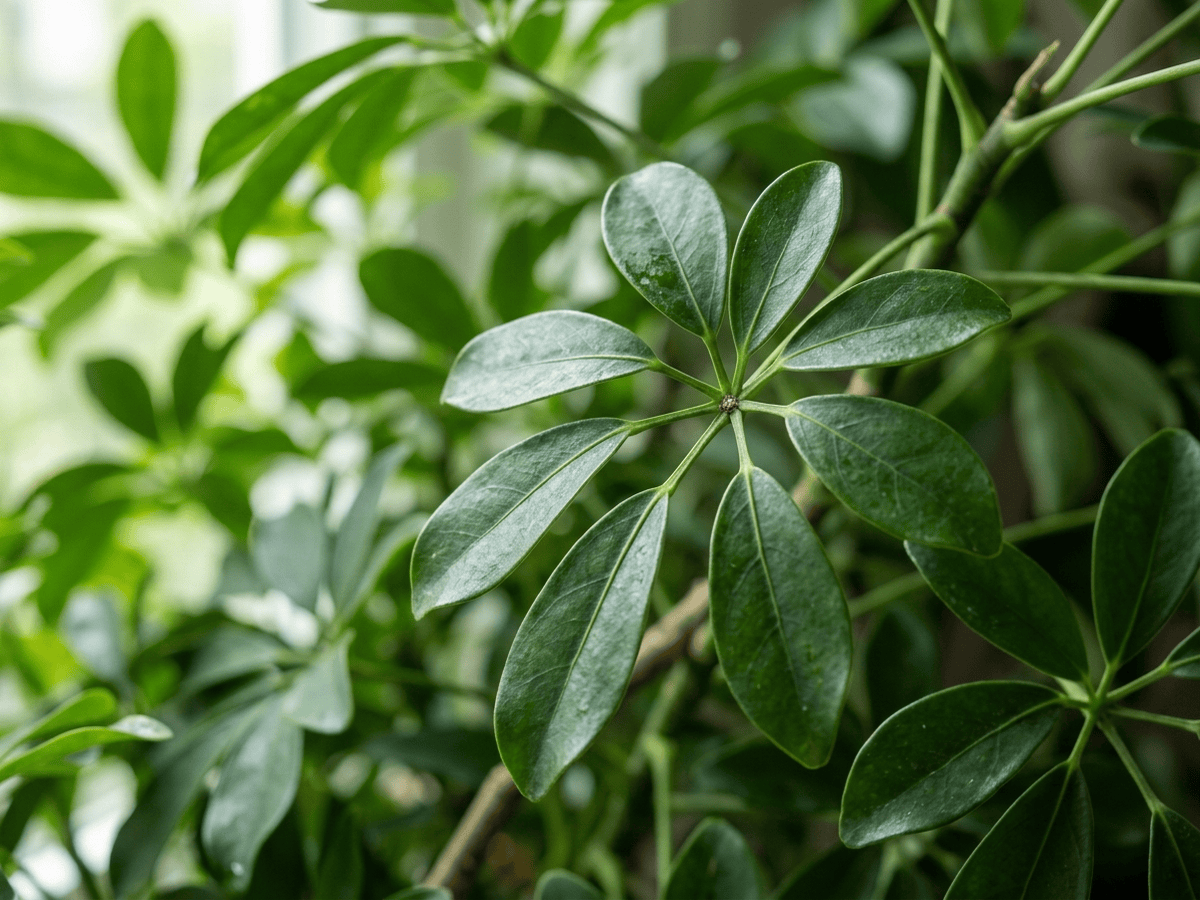
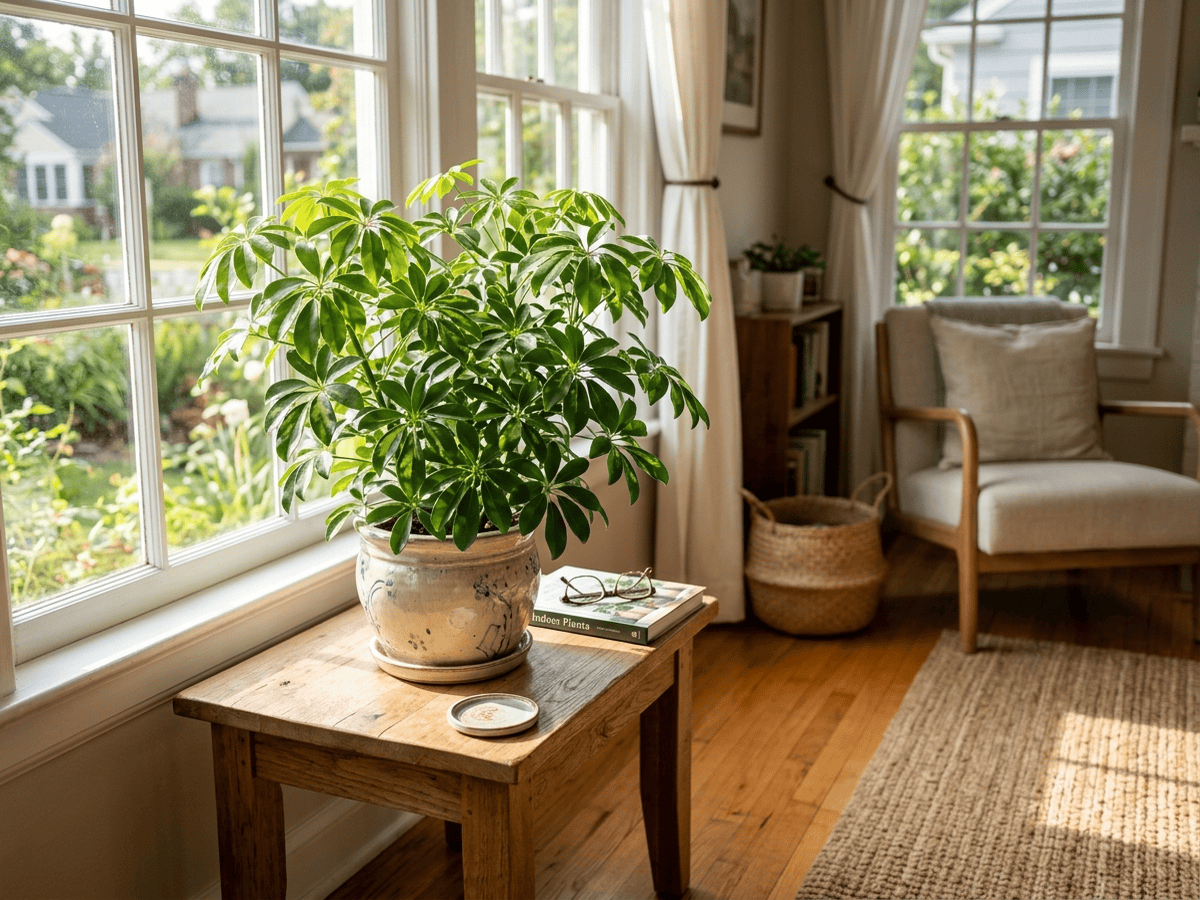
Schefflera arboricola, the dwarf umbrella tree, is a compact version of its larger cousin, with smaller, denser clusters of 7–9 rounded leaflets per leaf. Native to Taiwan and Hainan, it is one of the most popular indoor trees worldwide, adaptable to a wide range of light conditions. Variegated cultivars like 'Gold Capella' with yellow-splashed leaves brighten any room. It can be pruned into bushy shapes, braided, or trained as bonsai. Growth is moderate, and mature indoor plants reach 1–2 meters. It is hardier and more forgiving than S. actinophylla.
- Air-purifying
How to care for Miniature Umbrella Tree
Watering
- Springevery 7 days
- Summerevery 5 days
- Fallevery 10 days
- Winterevery 14 days
Soil · Well-draining
- Main mixLoam + bark + perlite 2:1:175%
- DrainageLECA25%
Bark keeps the mix from compacting under a heavy root ball.
FERTILIZER
Balanced Feed 14-14-14
An even feed covers all three needs at once, keeping leaves, roots and blooms moving together with nothing pushed out of balance.
- Nitrogen · Leaves
- Phosphorus · Roots + Blooms
- Potassium · Strength
- Springevery 30 days
- Summerevery 30 days
- Fallevery 60 days
At a Glance
- NativeEast Asia
- Height4–8 ft (1.2–2.4 m)
- Spread2–4 ft (0.6–1.2 m)
- Flower colorRed
- Foliage colorGreen, Yellow, Variegated
- Fruit colorOrange
- SoilLoamy, Well-drained, Rich
- LocationsIndoor · Balcony
Bloom time
BLOOM CYCLE
Peak bloom
Jun–Aug
Small red flower panicles; rarely indoors
Fragrance
NO FRAGRANCE
Not fragrant.
Toxicity
Humans Moderate · Pets Moderate
calcium oxalate, saponins, and terpenoids
Moderate
- Leaf
- Stem
- Sap
- Contact
- Ingestion
EXPOSURE Touching leaves, stems, and sap. Eating leaves, stems, and sap.
EFFECT Oral burning, tongue swelling, GI upset and skin dermatitis from sap.
NOTE Same toxic profile as S. actinophylla.
Moderate
- Leaf
- Stem
- Ingestion
EXPOSURE Eating leaves and stems.
EFFECT Oral irritation, intense burning of mouth, drooling, vomiting, difficulty swallowing and per ASPCA.
NOTE Same toxic profile as S. actinophylla.
Moderate
- Leaf
- Stem
- Ingestion
EXPOSURE Eating leaves and stems.
EFFECT Oral irritation, intense burning of mouth, drooling, vomiting, difficulty swallowing and per ASPCA.
NOTE Same toxic profile as S. actinophylla.
Educational information, not medical or veterinary advice. If exposure is suspected, contact a doctor or veterinarian.
DISTRIBUTION


- Native
- Introduced
- East Asia
History
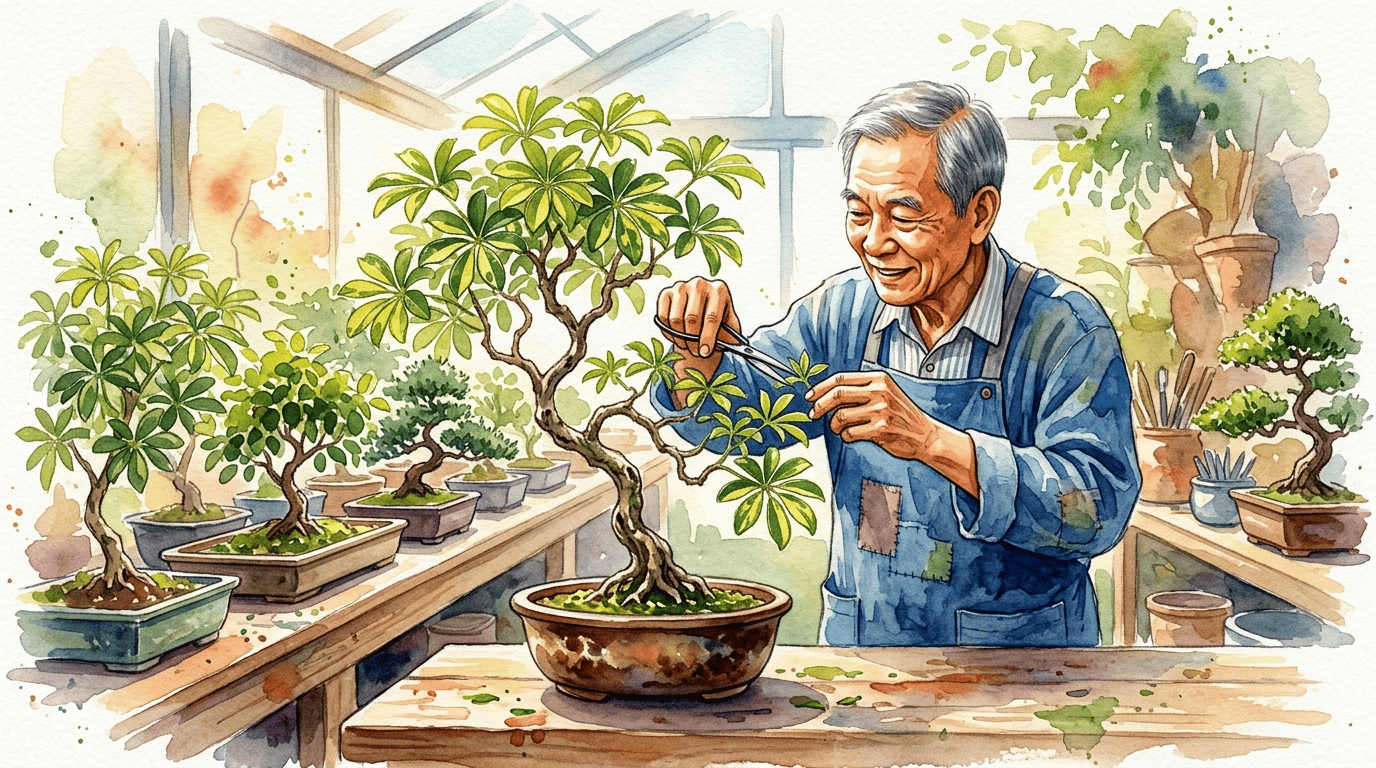
Schefflera arboricola is native to Taiwan and the southern Chinese provinces of Hainan and Guangdong, where it grows as a multi-stemmed evergreen understory shrub. It entered Western horticulture in the mid-20th century and quickly displaced its larger cousin Schefflera actinophylla as the preferred indoor umbrella plant. The reason was scale: S. arboricola stays smaller, branches readily, tolerates pruning, and accepts lower light, making it far more practical for homes and offices.
Variegated forms such as 'Gold Capella' turned it into a bright foliage plant, while its fast growth and small leaves made it useful for tropical bonsai; Taiwanese and Chinese artists were early to exploit that potential. Like many aroids and araliads in the houseplant trade, it is moderately toxic to pets through irritating compounds. Its success is a story of domesticated size: the same umbrella look, finally room-friendly.
Symbolism & meaning
What It Symbolizes
The Miniature Umbrella Tree expresses balance, its evenly radiating leaflets fanning out from each stem in a clear visual statement of harmony and equilibrium. It is a plant of geometric calm, its steady symmetry restful in homes and offices that need a quiet center. It is often read as a flower of botanical poise, a houseplant whose meaning is the soft authority of well-distributed weight, beauty arising from the simple promise that nothing here is leaning too far in any one direction.
- Balance — Its evenly radiating leaflets represent harmony and equilibrium
Where the Name Comes From
The name Miniature Umbrella Tree describes umbrella-like whorls or canopy form. Schefflera for Jacob Scheffler. Arboricola means 'tree-dwelling,' as it sometimes grows epiphytically on other trees in the wild.
Uses & Fun Facts
- Adaptable indoor tree for offices and homes
- Trained as bonsai specimen for collectors
- Variegated cultivars brighten low-light interior spaces beautifully
Related plants
More Schefflera plants
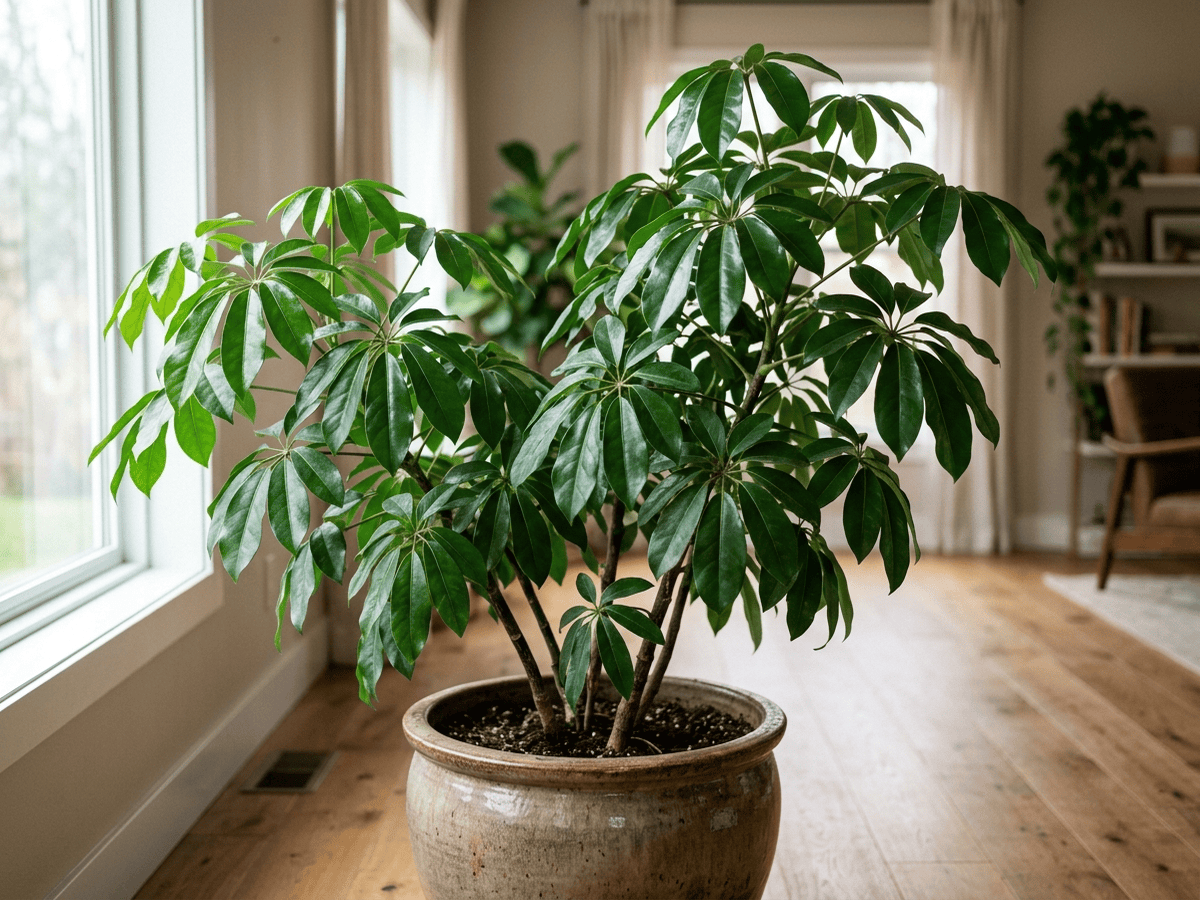
Plants with similar care
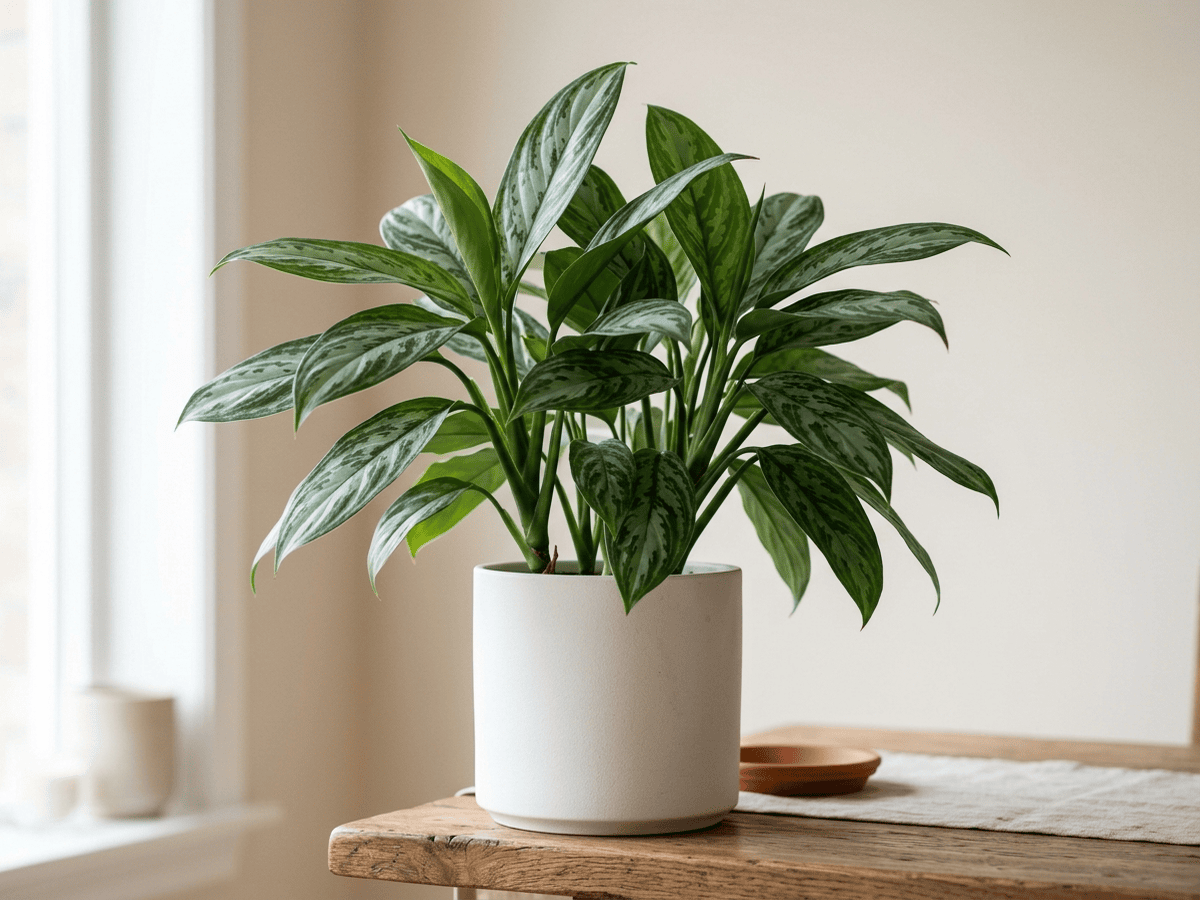 Philippine EvergreenAglaonema commutatum
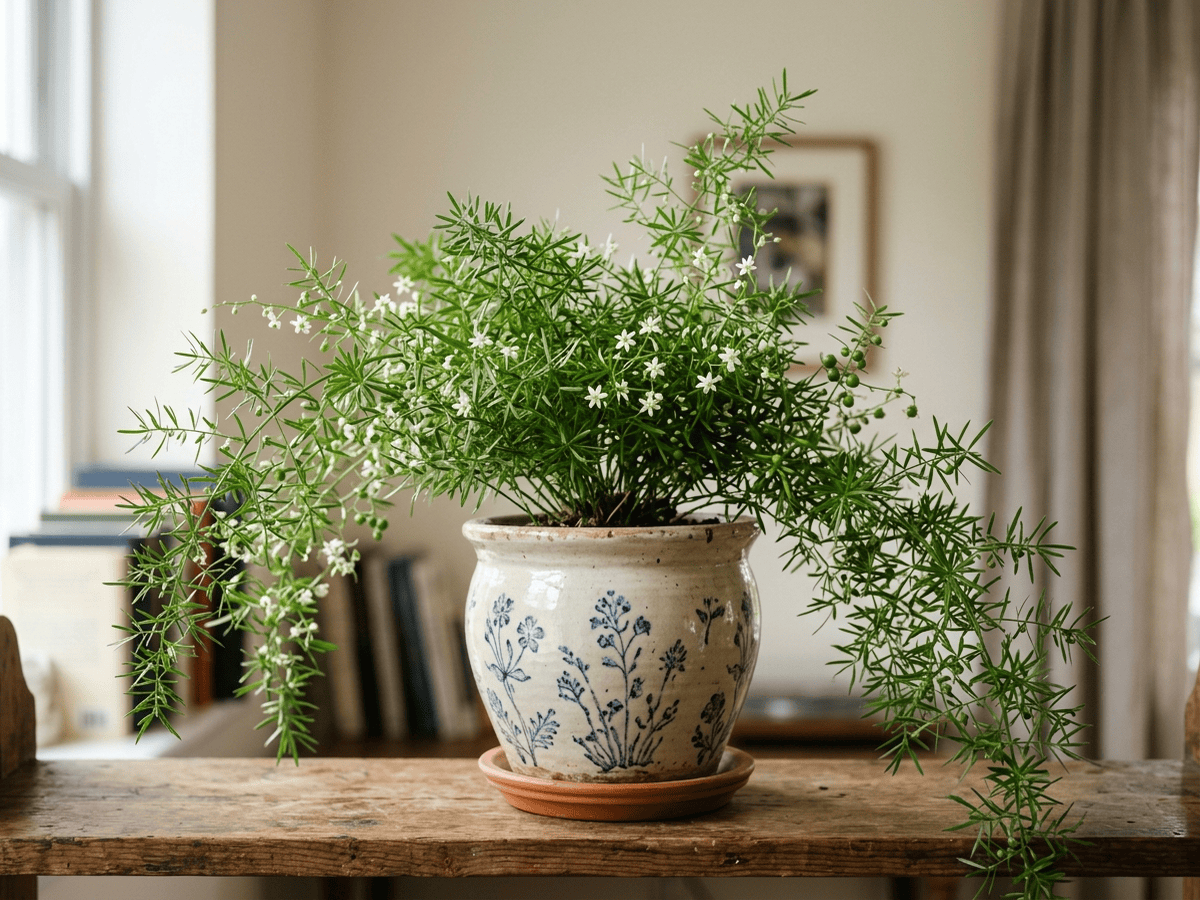 Sprenger's AsparagusAsparagus densiflorus
 Entire-Leaf False Goat’s BeardAstilbe simplicifolia
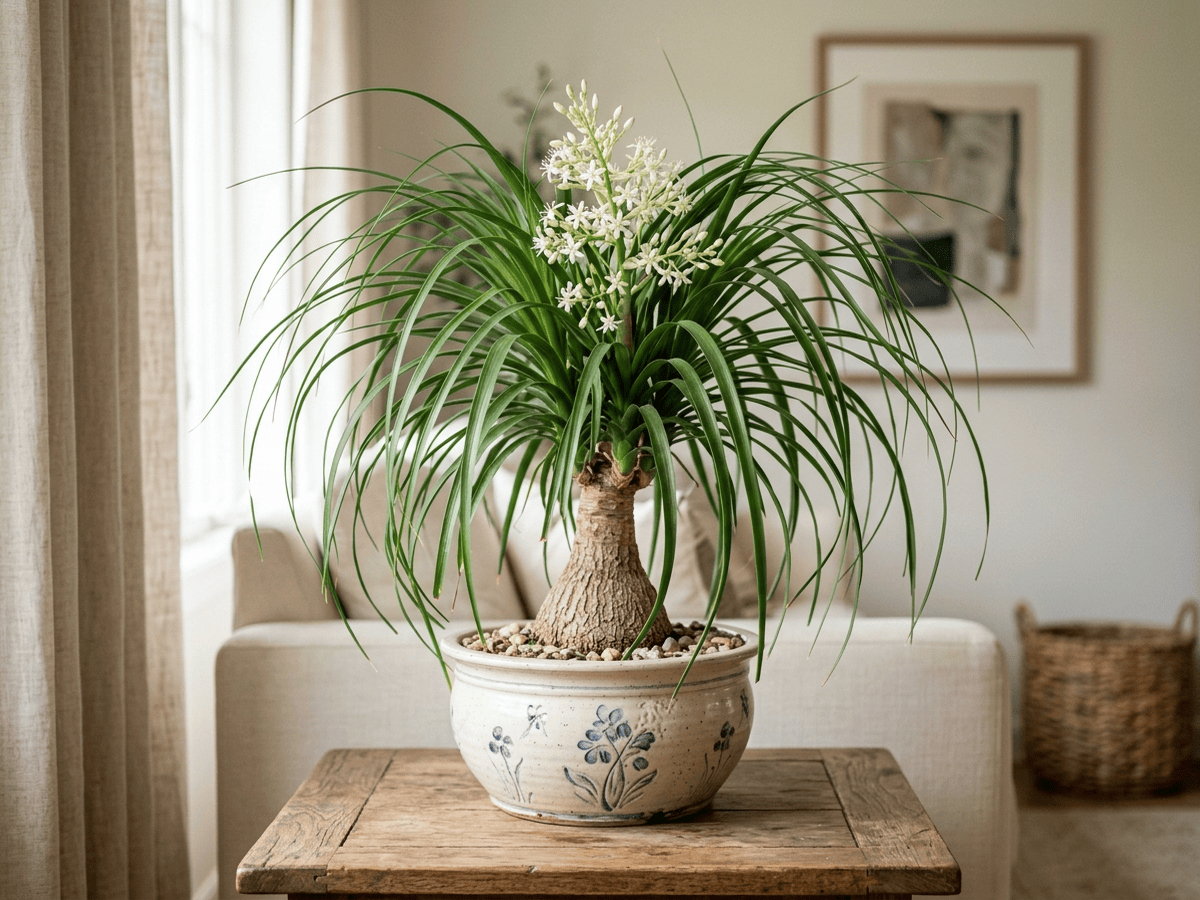 Ponytail PalmBeaucarnea recurvata
Frequently asked questions
How often should I water Miniature Umbrella Tree?
In summer, water about every 5 days; in winter, about every 14 days. Adjust for heat, pot size and drainage.
How much light does Miniature Umbrella Tree need?
Part shade: 2–4 hrs direct. Watch the leaves — scorching or stretching means the light needs adjusting.
Is Miniature Umbrella Tree toxic to cats or dogs?
Pets Moderate (Dogs Moderate · Cats Moderate) Educational information, not medical or veterinary advice. If exposure is suspected, contact a doctor or veterinarian.
Is Miniature Umbrella Tree easy to grow?
Yes — it is considered an easy, beginner-friendly plant.
Can Miniature Umbrella Tree be grown indoors?
Yes, it adapts well to indoor growing given the right light.
When does Miniature Umbrella Tree bloom?
It typically blooms Jun–Aug in the Northern Hemisphere.
YardMate
Identify any plant in seconds
Snap a photo — YardMate names the plant, diagnoses problems, and reminds you when to water.
Download on the App Store