 YardMate
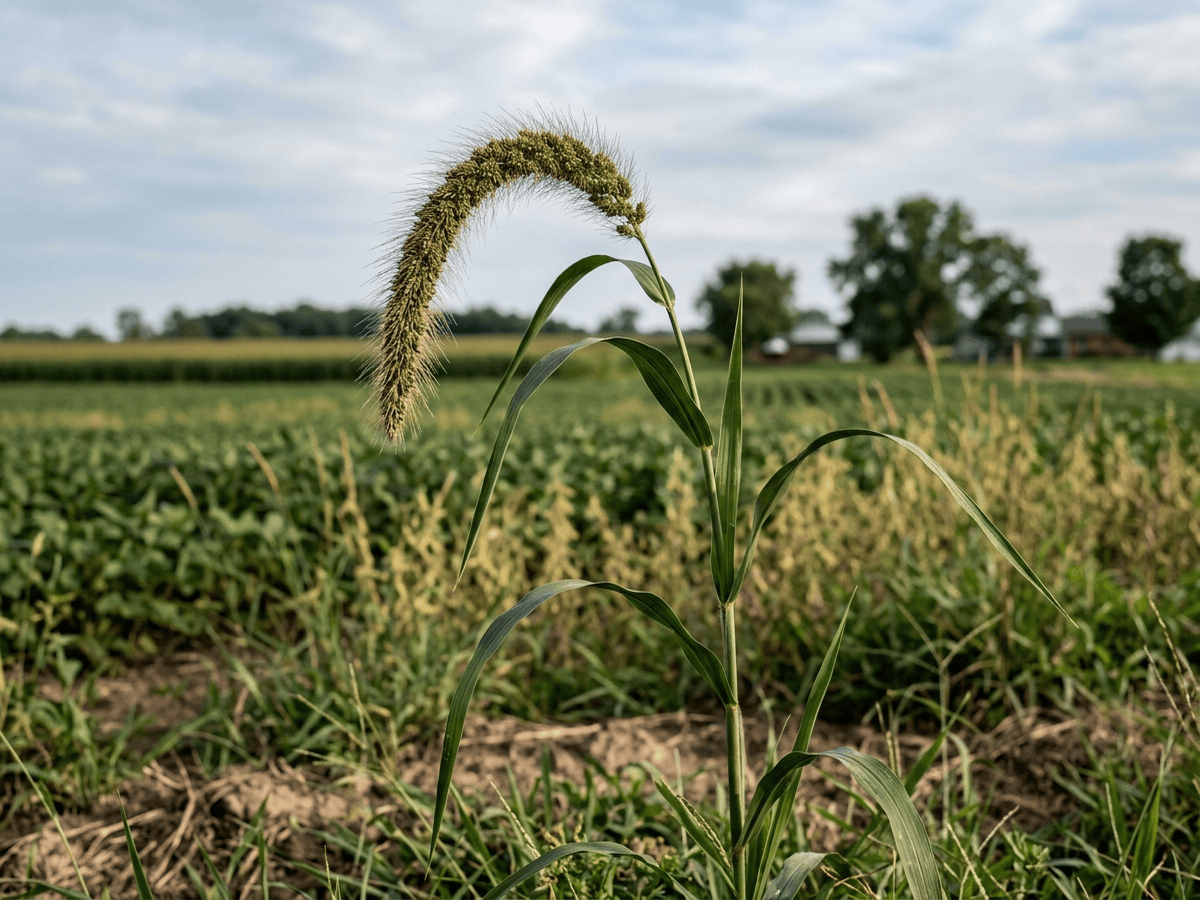
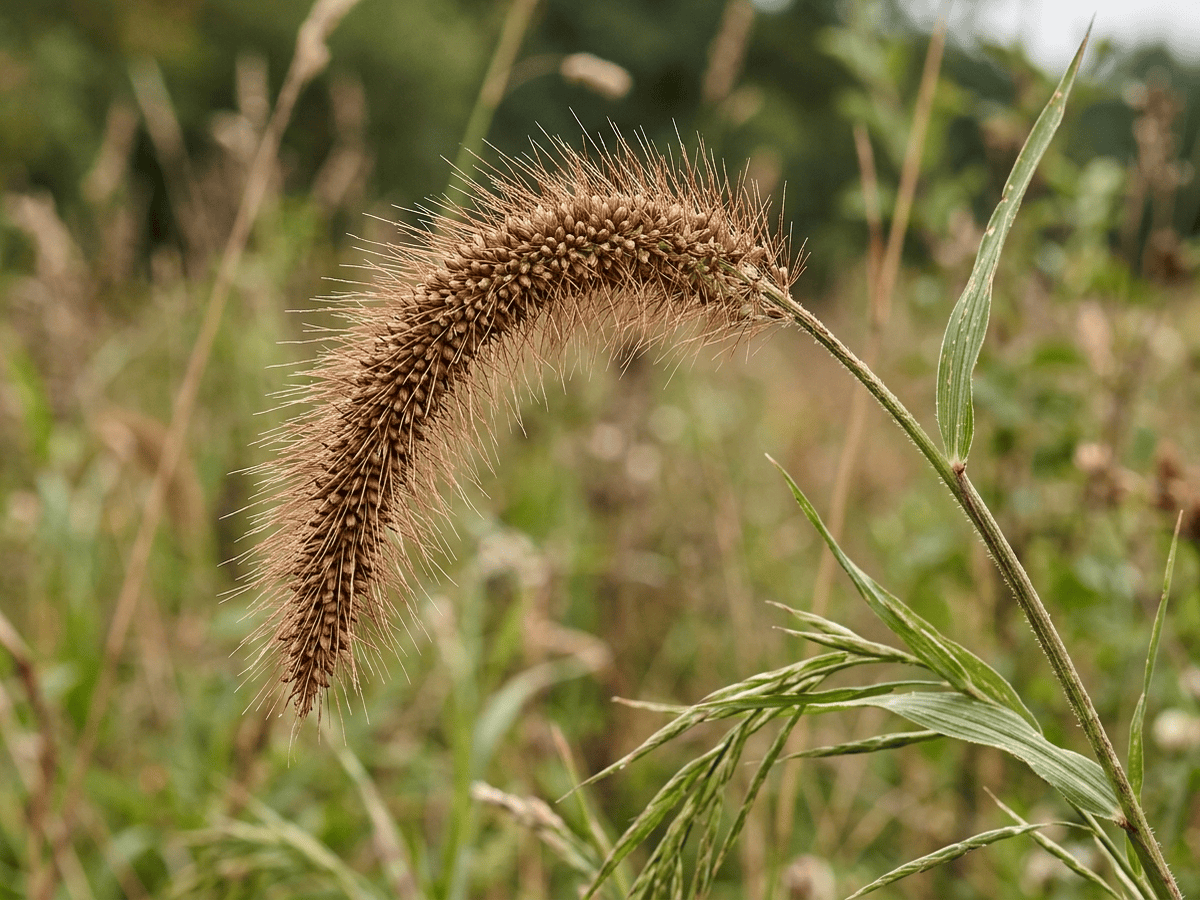
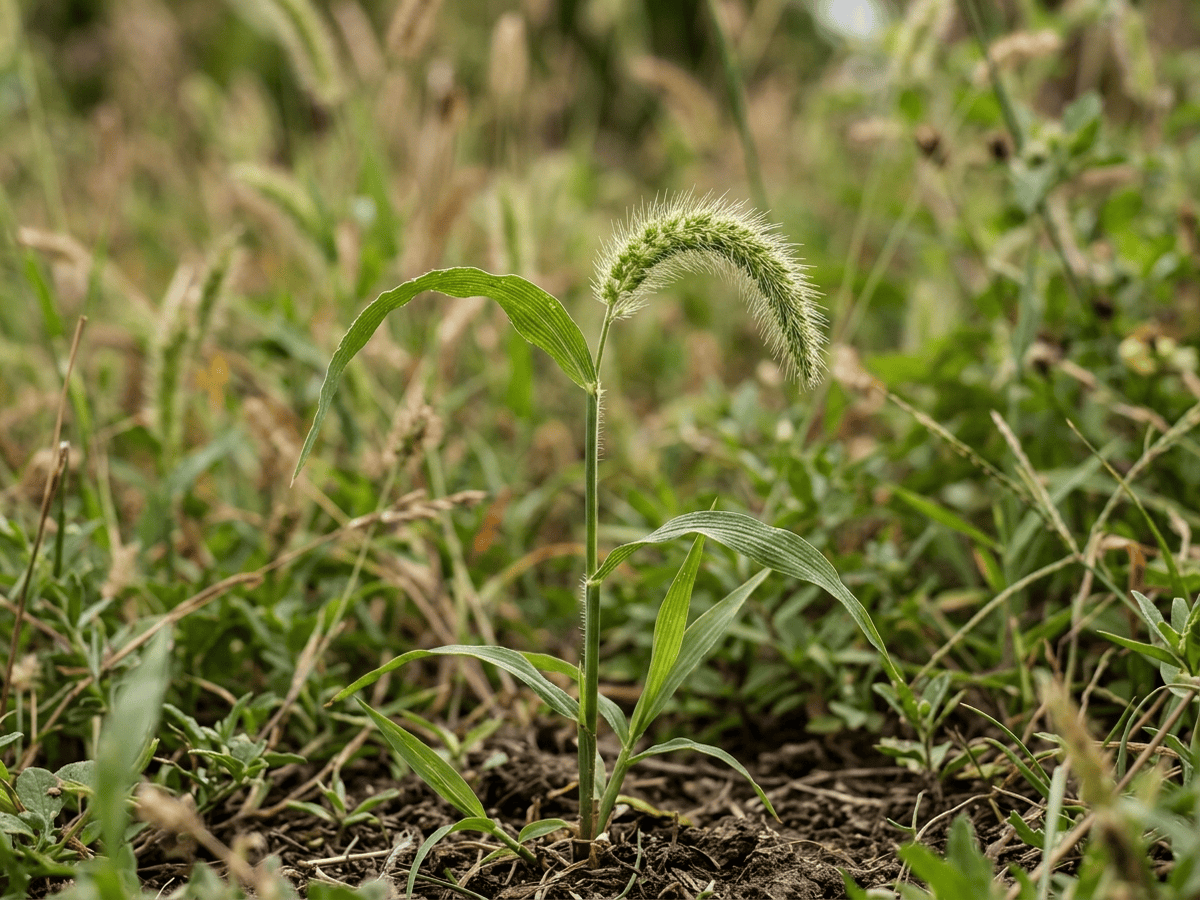

Giant Foxtail
Setaria faberi
Easy · Beginner friendlyAbout Giant Foxtail
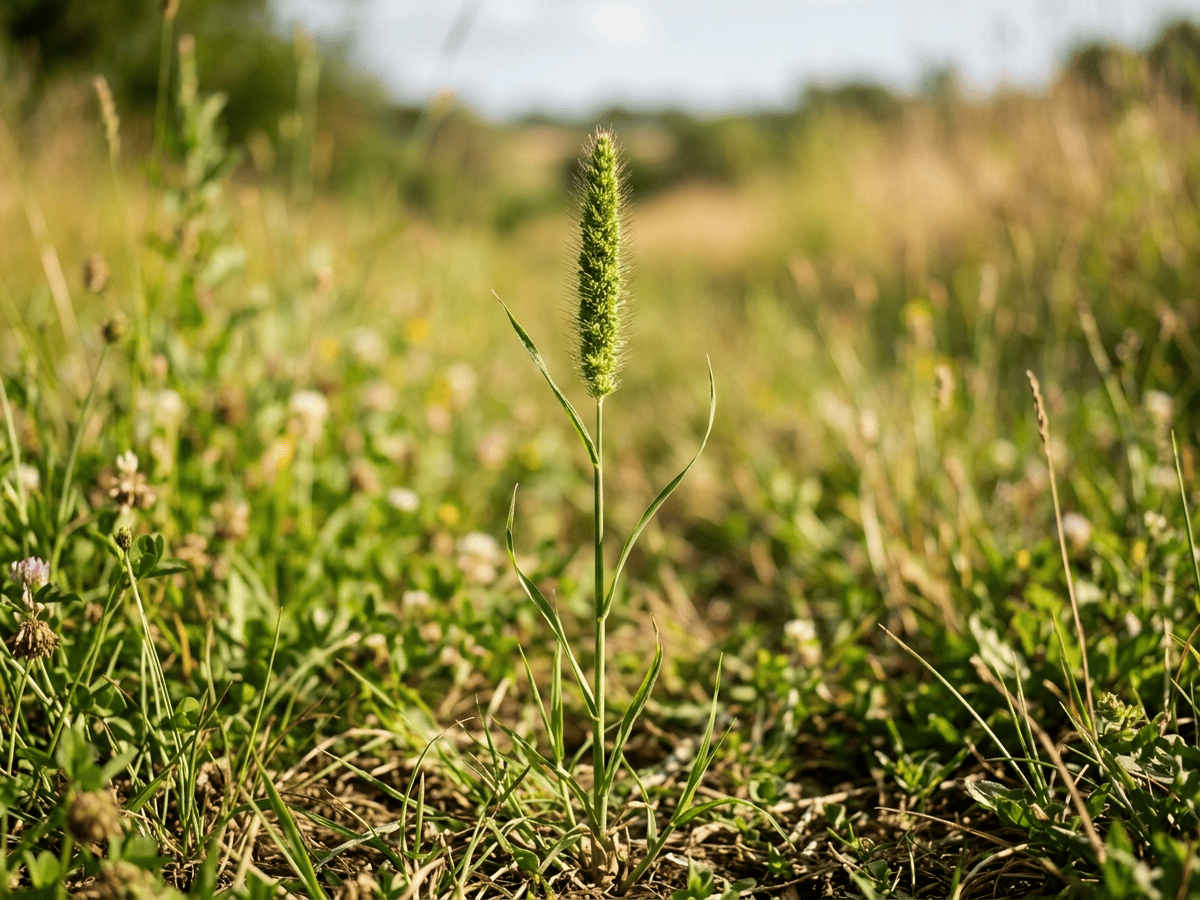
Giant Foxtail is a Chinese warm-season annual grass introduced to the US in the 1920s via contaminated soybean seed and now a major agricultural weed across the Midwest corn and soybean belt. Growing 2 to 6 feet tall with nodding bristly seed heads longer and larger than green foxtail. One of the most economically damaging weeds in American row-crop agriculture.
- Heat-tolerant
How to care for Giant Foxtail
Watering
- Springevery 14 days
- Summerevery 7 days
- Fallevery 14 days
- Winterpause watering
Soil · Well-draining
- Top dressingPine bark mulch10%
- Main mixPotting soil + perlite 2:170%
- DrainageLECA / gravel20%
Never skip the drainage layer — standing water is the top cause of root rot.
FERTILIZER
This plant needs little to no feeding.
At a Glance
- NativeEast Asia
- Height3–6 ft (0.9–1.8 m)
- Spread1–2 ft (0.3–0.6 m)
- Flower colorGreen
- Foliage colorGreen
- Fruit colorBrown
- SoilLoamy, Well-drained
- LocationsYard
Bloom time
BLOOM CYCLE
Peak bloom
Jul–Nov
Nodding bristly seed heads July through frost
Toxicity
Pets Slight
Unknown toxic principle
Not reported
EXPOSURE No exposure route is reported.
EFFECT No toxic effect is reported.
NOTE No toxicity is reported for humans in this catalog; this is not evidence that the plant is edible or harmless.
Slight
- Seed
- Contact
EXPOSURE Touching seeds.
EFFECT Foxtail awns cause soft-tissue infections.
NOTE Barbed awns can embed in pet fur and skin; not chemically toxic.
Slight
- Seed
- Contact
EXPOSURE Touching seeds.
EFFECT Foxtail awns cause soft-tissue infections.
NOTE Barbed awns can embed in pet fur and skin; not chemically toxic.
Educational information, not medical or veterinary advice. If exposure is suspected, contact a doctor or veterinarian.
DISTRIBUTION

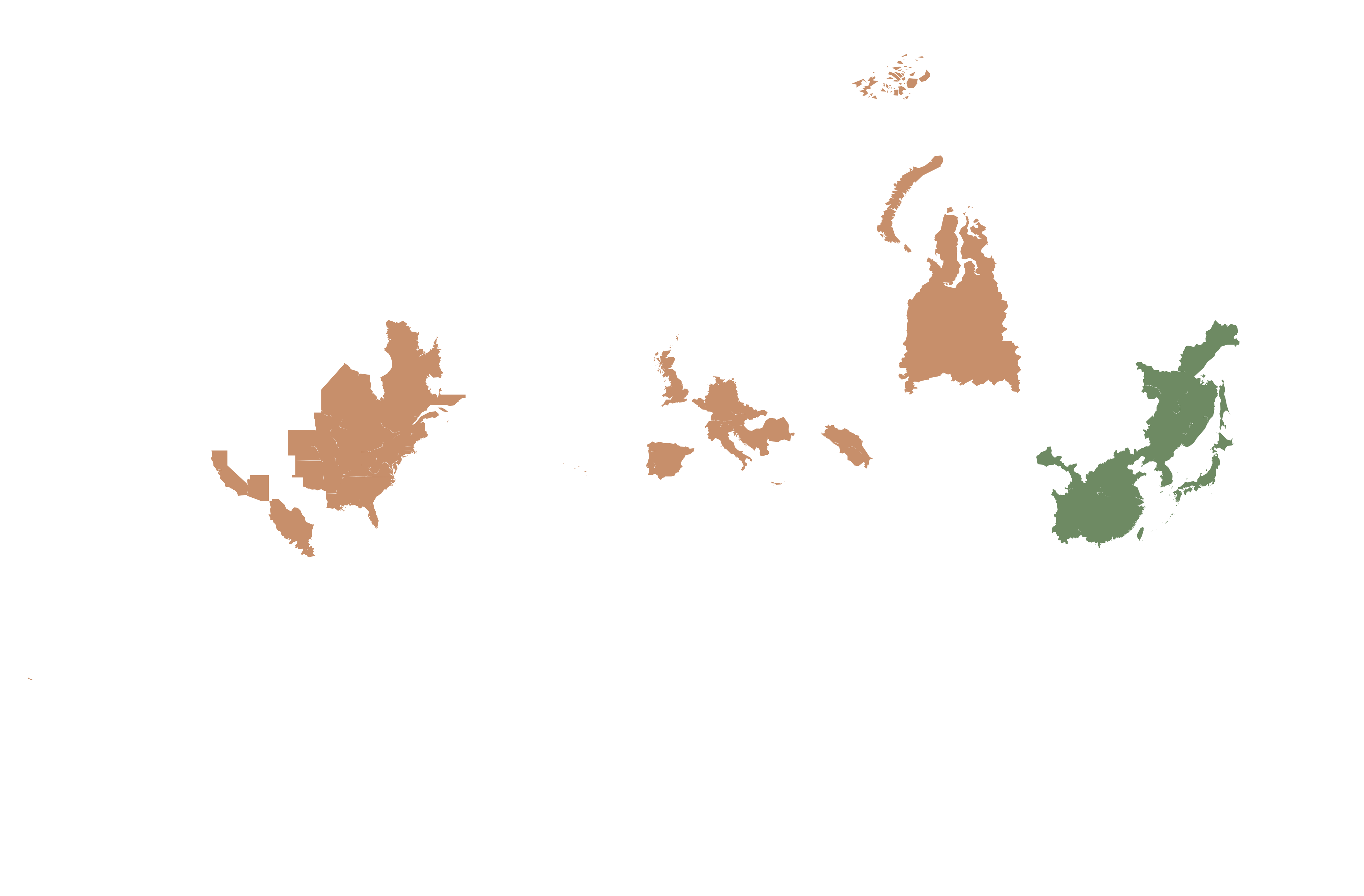
- Native
- Introduced
- East Asia
History

Setaria faberi is native to eastern China. Reinhold Herrmann described the species in 1910, named in honor of the German missionary and botanist Ernst Faber who collected extensively in China in the late 19th century. It was accidentally introduced to North America around 1925 in contaminated foxtail millet seed imports from Japan, and by 1952 had spread across the Midwestern US corn belt.
It is larger and more competitive than S. viridis, routinely reaching 1.5 m and carrying arching nodding seed heads up to 20 cm long. It ranks among the 10 worst weeds of US agriculture, with infestations reducing corn yields by up to 30%.
Herbicide resistance to atrazine, glyphosate, and ALS inhibitors has evolved in multiple Midwest populations. Like other foxtails, its barbed seed awns can cause veterinary injuries in dogs and livestock. Now the most economically damaging of the foxtail species in American corn and soybean fields, triggering widespread herbicide programs.
Symbolism & meaning
What It Symbolizes
Giant foxtail is a modern invader, riding into American agriculture in the 1920s as a contaminant in soybean shipments from Asia and spreading across the corn belt within a generation. As a nodding giant it stands taller than its native cousins, with heavier bristly seed heads that arch over crop rows. The plant is a quiet record of how globalization writes itself into the weed flora of a continent.
- Modern invader — spread from 1920s soybean shipments
- Nodding giant — taller with heavier seed heads than its cousin
Where the Name Comes From
'faberi' honors Ernst Faber (1839-1899), German missionary-botanist who collected widely in China.
Uses & Fun Facts
- Seedy panicles feed sparrows, finches, and small mammals
Related plants
More Setaria plants
Plants with similar care
 Chinese AbeliaAbelia chinensis
 Fragrant AbeliaAbelia mosanensis
 Large-Flowered AbeliaAbelia uniflora
 Glossy AbeliaAbelia x grandiflora
Frequently asked questions
How often should I water Giant Foxtail?
Water about every 14 days during the growing season, and always let excess water drain away.
How much light does Giant Foxtail need?
Full sun: 6+ hrs direct. Watch the leaves — scorching or stretching means the light needs adjusting.
Is Giant Foxtail toxic to cats or dogs?
Pets Slight (Dogs Slight · Cats Slight) Educational information, not medical or veterinary advice. If exposure is suspected, contact a doctor or veterinarian.
Is Giant Foxtail easy to grow?
Yes — it is considered an easy, beginner-friendly plant.
When does Giant Foxtail bloom?
It typically blooms Jul–Nov in the Northern Hemisphere.
YardMate
Identify any plant in seconds
Snap a photo — YardMate names the plant, diagnoses problems, and reminds you when to water.
Download on the App Store