 YardMate
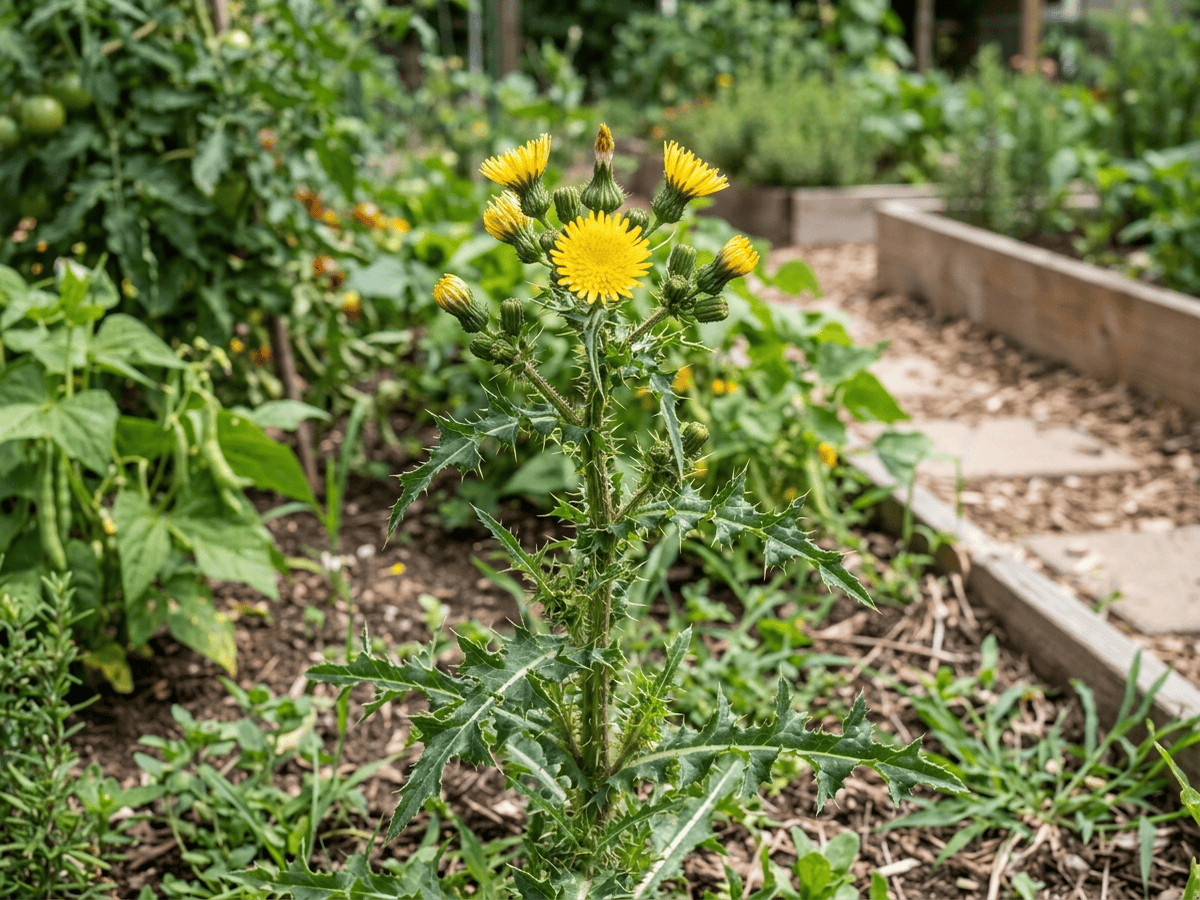

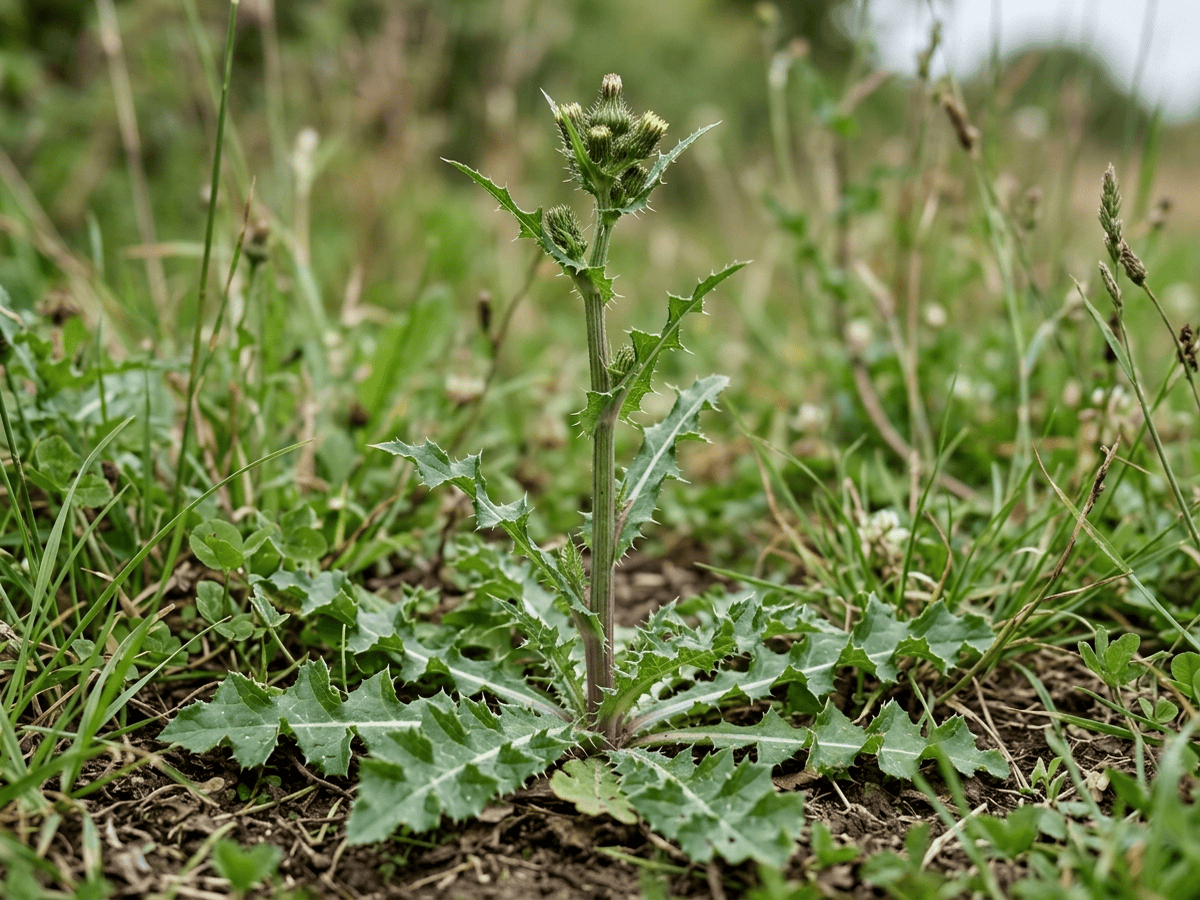

Prickly Sowthistle
Sonchus asper
Easy · Beginner friendlyAbout Prickly Sowthistle
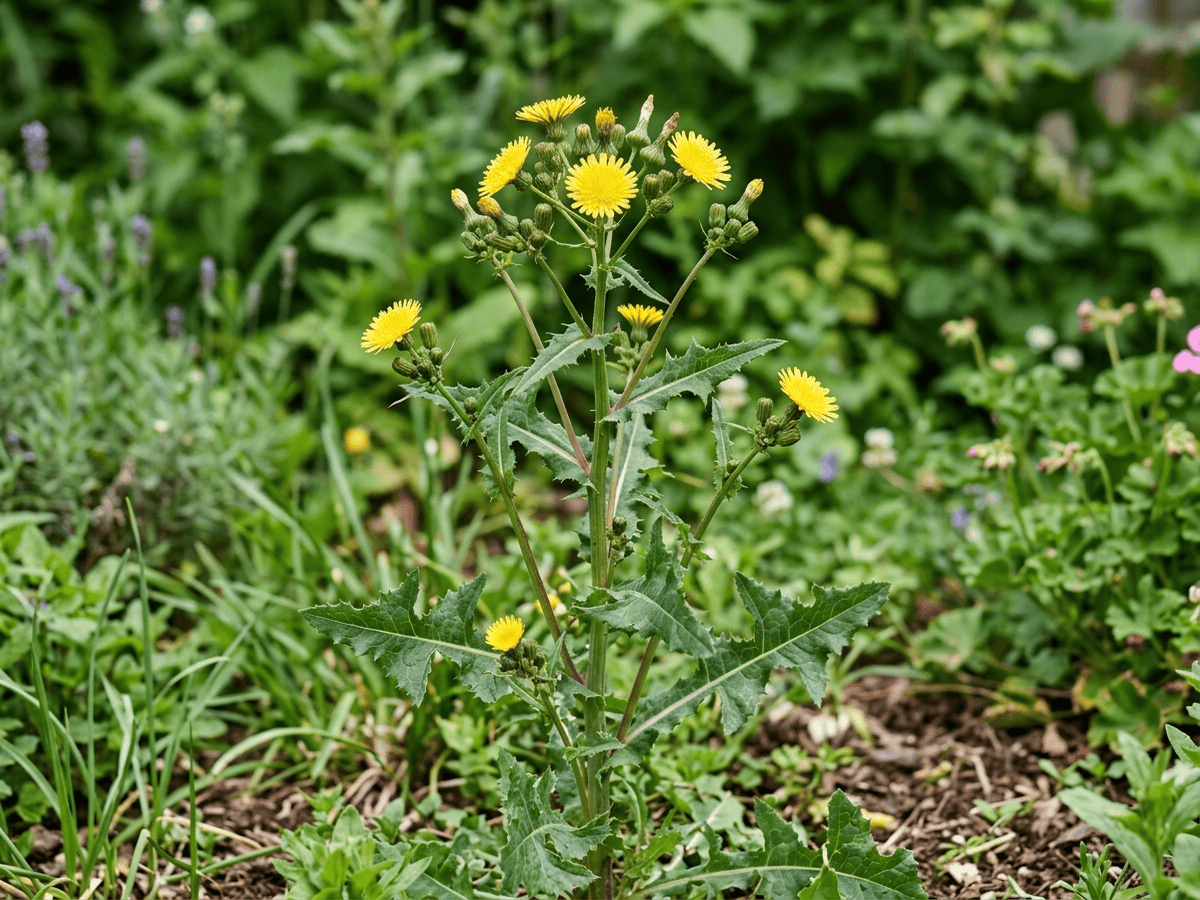
Spiny Sowthistle is a European annual weed with hollow stems and stiff prickly leaves that clasp the stem, naturalized throughout the US as a garden and agricultural pest. Growing 1 to 5 feet tall, it produces clusters of small yellow dandelion-like flowers followed by wind-borne seed heads. A persistent cool-to-warm-season weed of American vegetable gardens, roadsides, and cropland.
- Fast-growing
How to care for Prickly Sowthistle
Watering
- Springevery 10 days
- Summerevery 7 days
- Fallevery 14 days
- Winterpause watering
Soil · Rich & well-draining
- Top dressingCompost10%
- Main mixPotting soil + compost 3:180%
- DrainageGravel10%
Top up the compost layer each season.
FERTILIZER
This plant needs little to no feeding.
At a Glance
- NativeEurope, Africa, Western Asia
- Height1–4 ft (0.3–1.2 m)
- Spread0.5–1 ft (0.2–0.3 m)
- Flower colorYellow
- Foliage colorGreen
- SoilLoamy, Well-drained
- LocationsYard
Bloom time
BLOOM CYCLE
Peak bloom
Mar–Nov
Yellow dandelion-like flower clusters spring to fall
Toxicity
Humans Safe · Pets Safe
None reported
Safe
EXPOSURE No exposure route is reported.
EFFECT No toxic effect is reported.
NOTE Listed as non-toxic for humans; avoid eating ornamental plants unless confirmed edible.
Safe
EXPOSURE No exposure route is reported.
EFFECT No toxic effect is reported.
NOTE Listed as non-toxic for dogs; avoid eating ornamental plants unless confirmed edible.
Safe
EXPOSURE No exposure route is reported.
EFFECT No toxic effect is reported.
NOTE Listed as non-toxic for cats; avoid eating ornamental plants unless confirmed edible.
Educational information, not medical or veterinary advice. If exposure is suspected, contact a doctor or veterinarian.
DISTRIBUTION

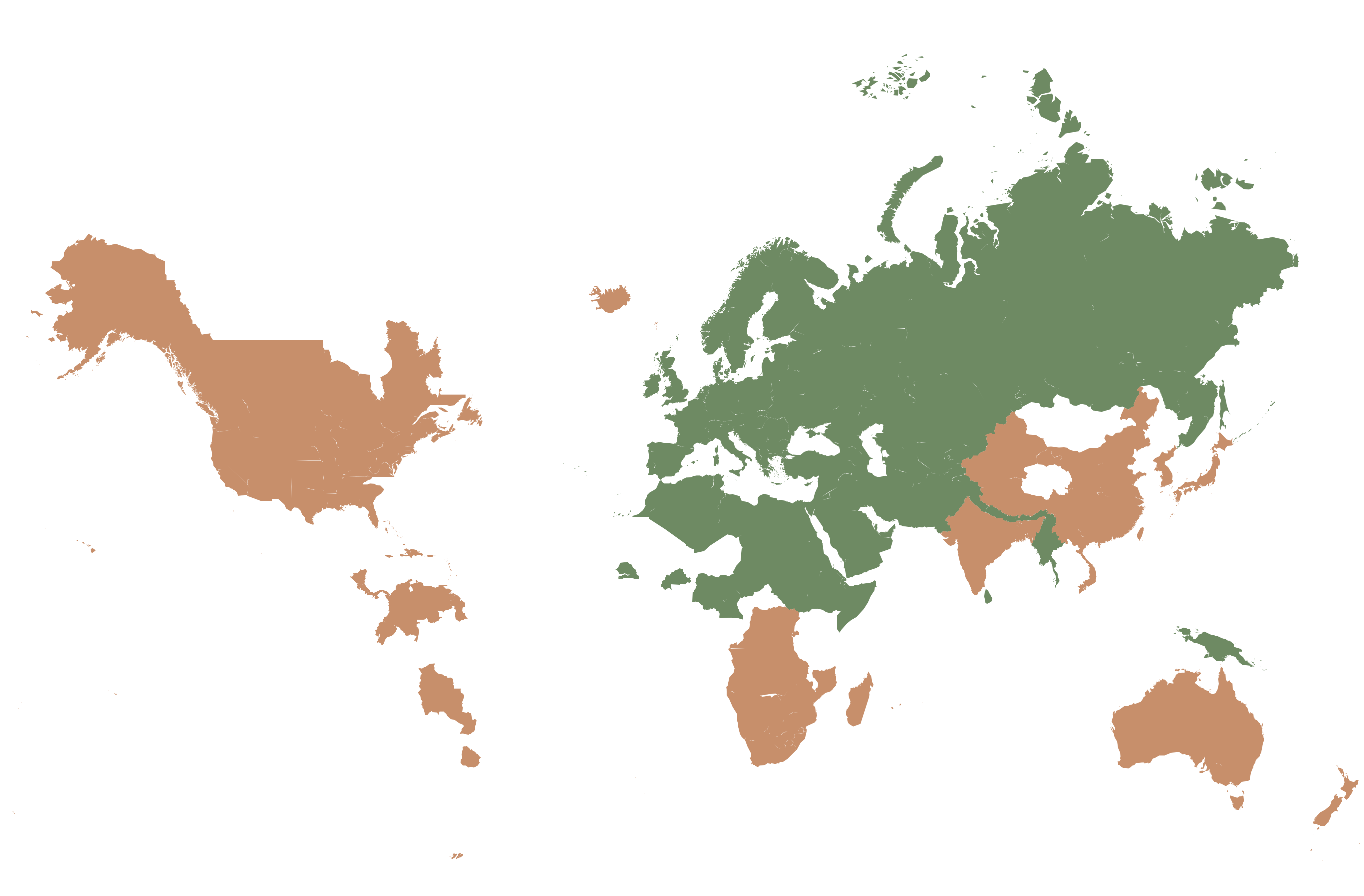
- Native
- Introduced
- Europe
- Africa
- Western Asia
History

Sonchus asper, prickly or spiny sow thistle, is a fast-growing annual composite native to Europe, North Africa, and western Asia, now a weed of disturbed soil on every continent except Antarctica. Ancient Greek and Roman writers including Theophrastus and Pliny mentioned the plant as both a wild vegetable and a folk remedy, and Mediterranean country cooks still gather young rosettes for salads, boiled greens, and pies. The name sow thistle refers to its historic use as fodder for lactating pigs, reputedly increasing milk yield.
The hollow stems bleed white latex when broken, and the small yellow flowerheads open in the early morning and close by midday. The species produces abundant wind-borne seeds that establish rapidly on any bare ground.
Native to Europe and North Africa, Spiny Sowthistle spread globally with agriculture and is now one of the most common annual weeds in American vegetable gardens and farm fields. More prickly and aggressive than its smoother sibling Sonchus oleraceus, it is particularly troublesome in irrigated vegetable crops.
Symbolism & meaning
What It Symbolizes
Prickly Sowthistle wears armored abundance, its spiny, clasping leaves defending a profusion of yellow flowers and the wind-blown seeds that follow. As the spiny twin of common sowthistle, it claims disturbed ground with stubborn, prickly insistence. In its tough rosette, weediness becomes a kind of biological armor wrapped around irrepressible fertility.
- Armored abundance — prickly leaves defend prolific seeds
- Spiny twin — prickly sibling to common sowthistle
Where the Name Comes From
'asper' from Latin means rough or prickly, for the stiff leaf margins.
Uses & Fun Facts
- Tender young leaves eaten as bitter greens in Mediterranean countryside
Related plants
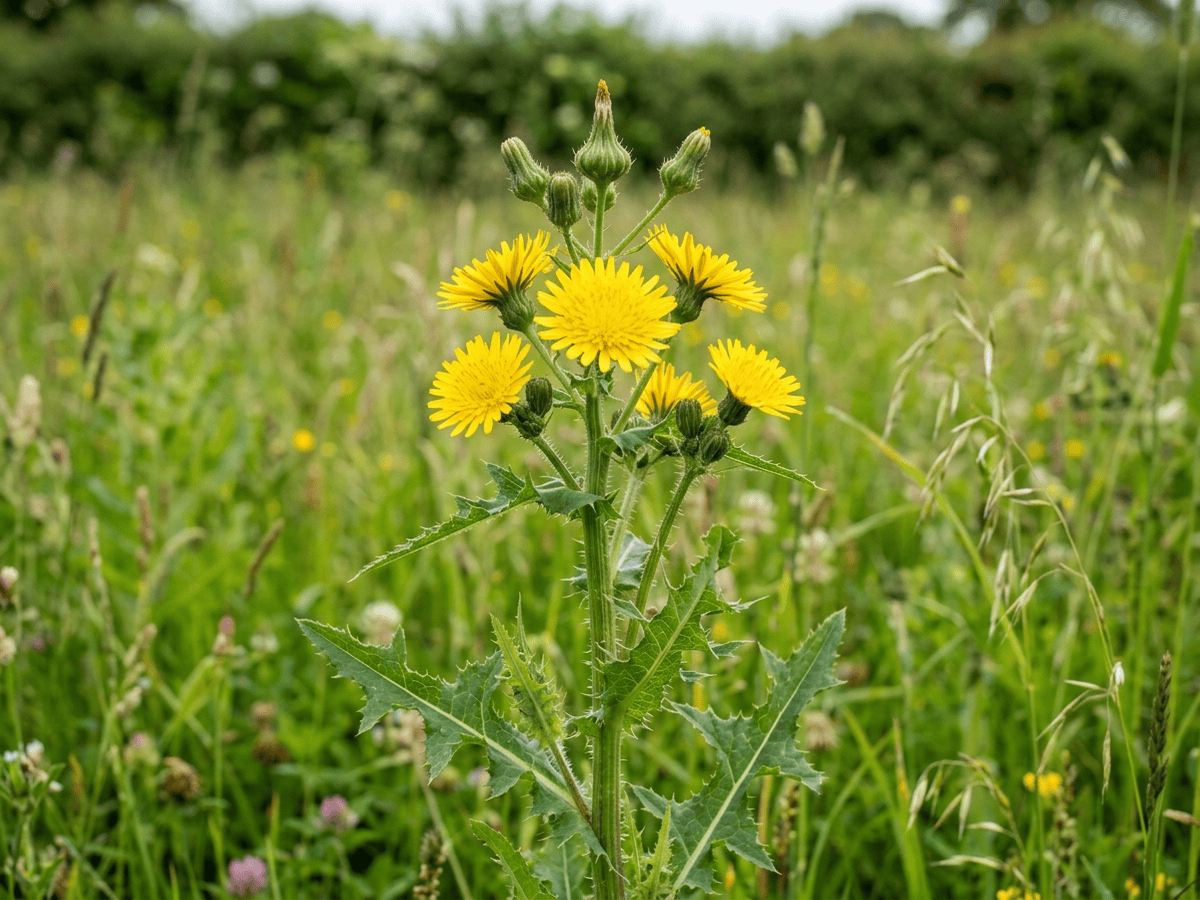
More Sonchus plants
Plants with similar care
 Chinese AbeliaAbelia chinensis
 Fragrant AbeliaAbelia mosanensis
 Large-Flowered AbeliaAbelia uniflora
 Glossy AbeliaAbelia x grandiflora
Frequently asked questions
How often should I water Prickly Sowthistle?
Water about every 10 days during the growing season, and always let excess water drain away.
How much light does Prickly Sowthistle need?
Full sun: 6+ hrs direct. Watch the leaves — scorching or stretching means the light needs adjusting.
Is Prickly Sowthistle toxic to cats or dogs?
Pets Safe (Dogs Safe · Cats Safe) Educational information, not medical or veterinary advice. If exposure is suspected, contact a doctor or veterinarian.
Is Prickly Sowthistle easy to grow?
Yes — it is considered an easy, beginner-friendly plant.
When does Prickly Sowthistle bloom?
It typically blooms Mar–Nov in the Northern Hemisphere.
YardMate
Identify any plant in seconds
Snap a photo — YardMate names the plant, diagnoses problems, and reminds you when to water.
Download on the App Store