 YardMate


Common Sow-Thistle
Sonchus oleraceus
Easy · Beginner friendlyAbout Common Sow-Thistle
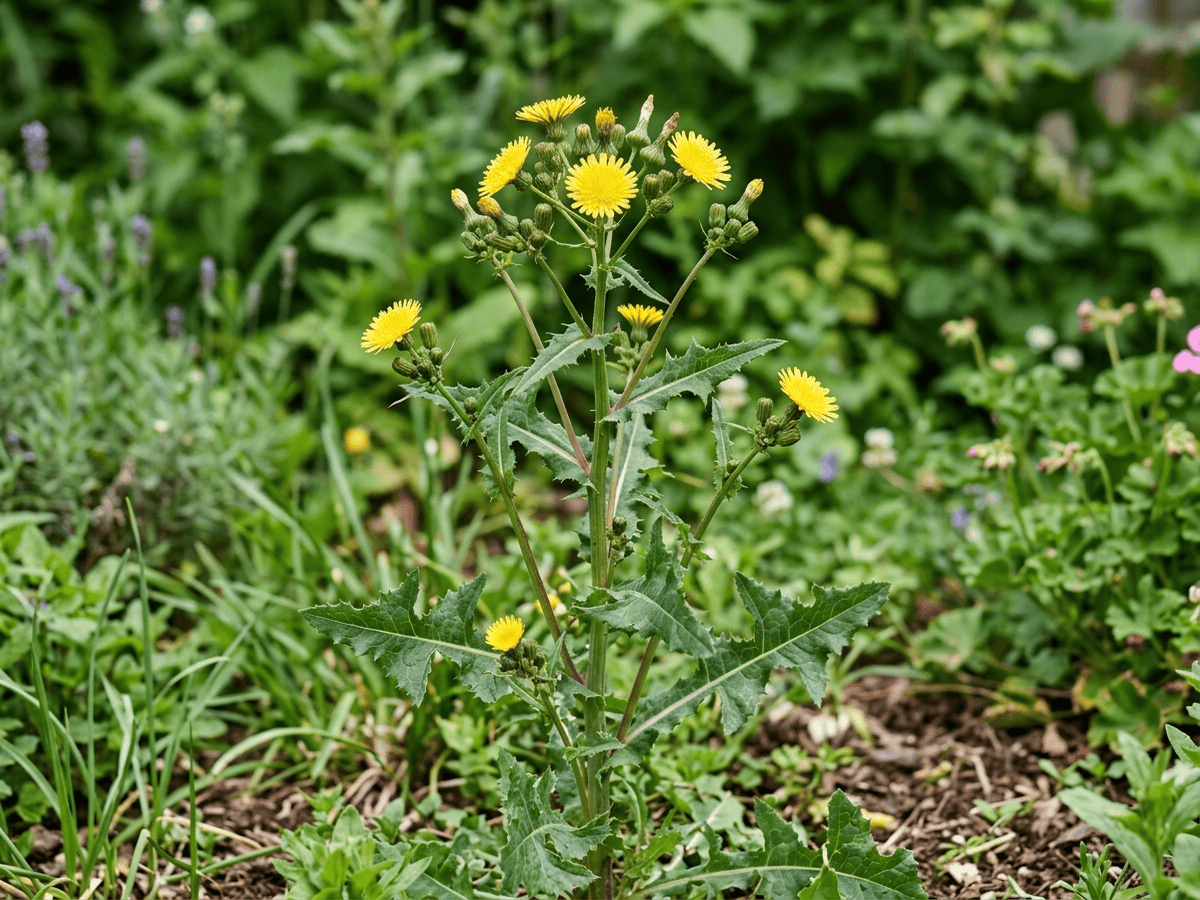
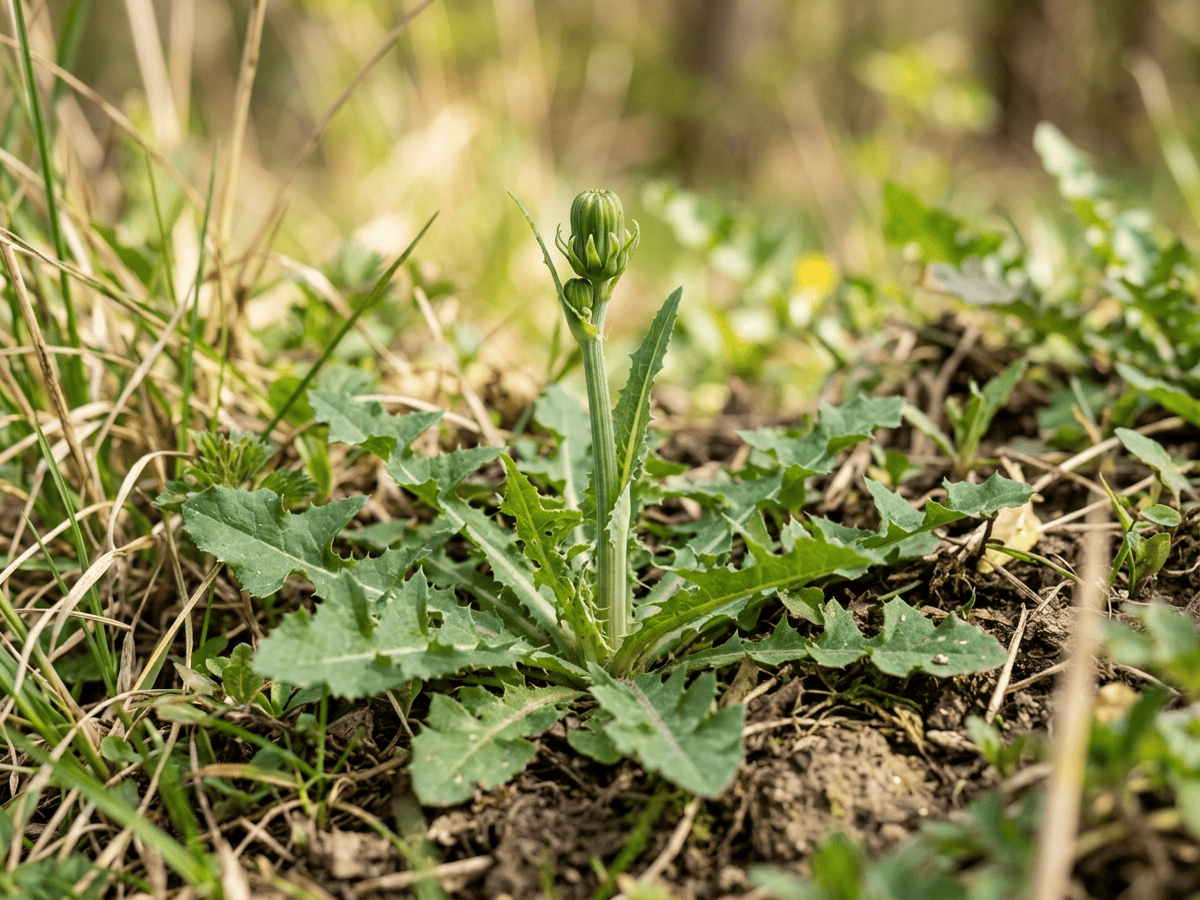
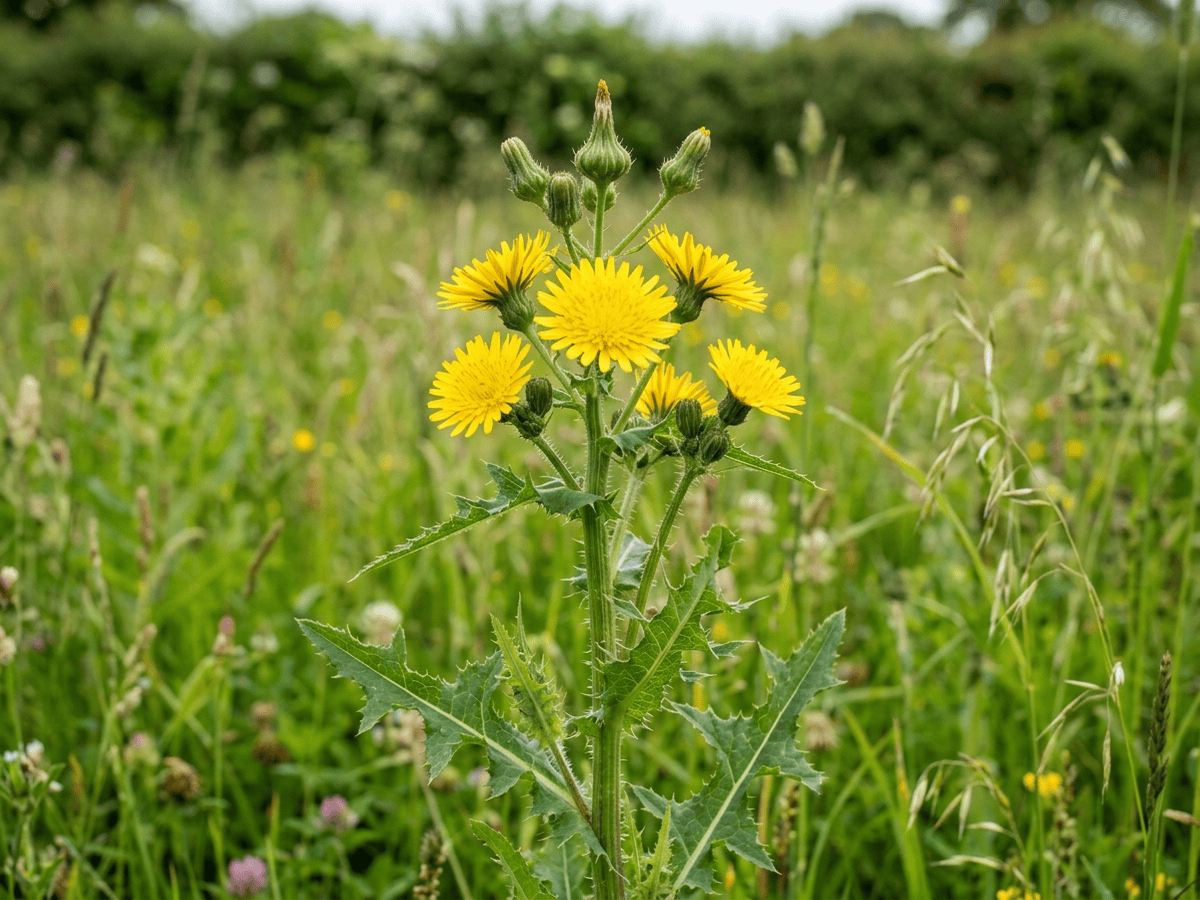
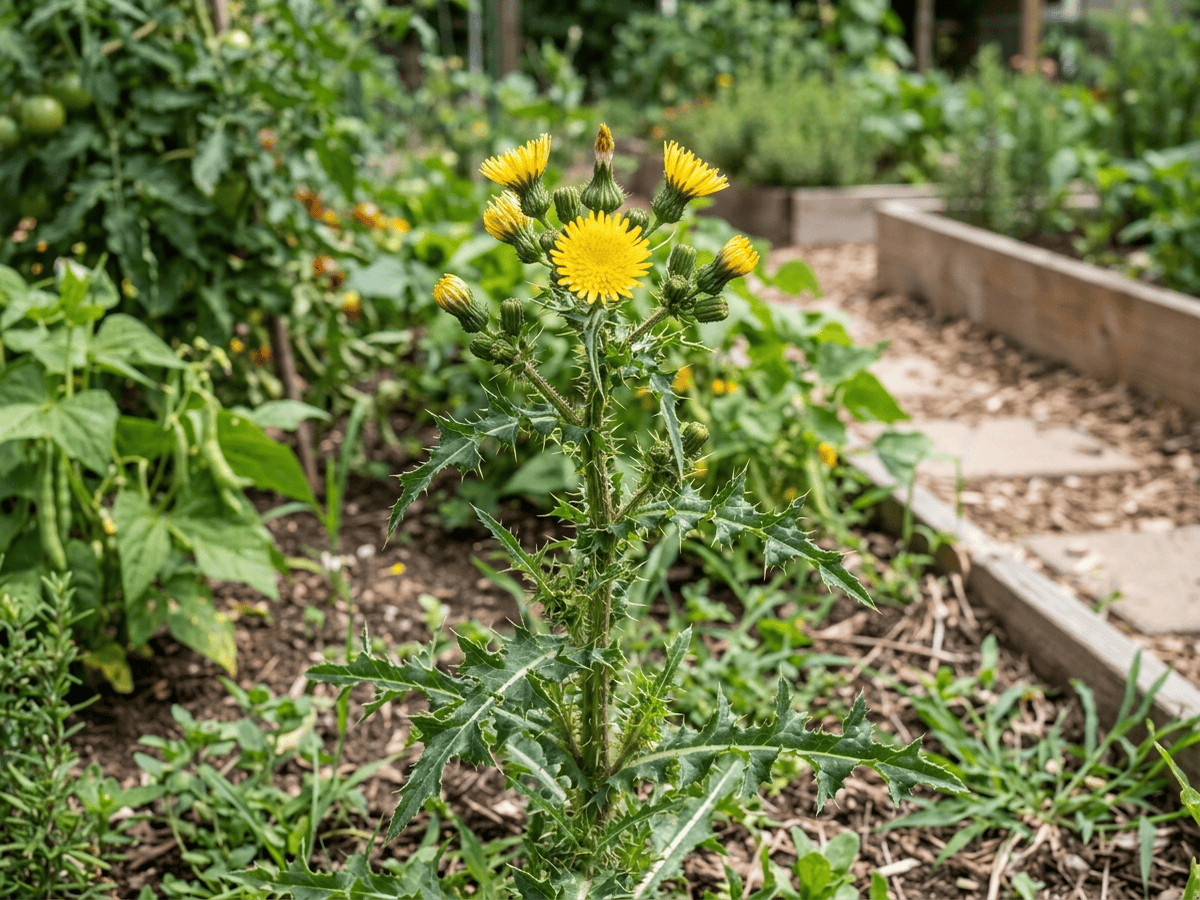
Common Sowthistle is a European annual weed with hollow stems, soft prickly-lobed leaves, and dandelion-like yellow flowers, widely naturalized across the US as a garden and agricultural pest. Growing 1 to 5 feet tall, it exudes milky sap when cut and produces wind-dispersed seeds that colonize disturbed soil rapidly. A persistent aggressive weed of American vegetable gardens, roadsides, and waste ground.
- Edible
- Fast-growing
How to care for Common Sow-Thistle
Watering
- Springevery 7 days
- Summerevery 5 days
- Fallevery 10 days
- Winterevery 21 days
Soil · Rich & well-draining
- Top dressingCompost10%
- Main mixPotting soil + compost 3:180%
- DrainageGravel10%
Top up the compost layer each season.
FERTILIZER
This plant needs little to no feeding.
At a Glance
- NativeEurope, Western Asia, Africa
- Height1–4 ft (0.3–1.2 m)
- Spread1–2 ft (0.3–0.6 m)
- Flower colorYellow
- Foliage colorGreen
- SoilLoamy, Well-drained
- LocationsYard
Bloom time
BLOOM CYCLE
Peak bloom
Mar–Nov
Yellow dandelion-like flowers spring through fall
Toxicity
No toxicity has been reported for this plant. Still, it is wise to keep pets from chewing on any houseplant.
Educational information, not medical or veterinary advice. If exposure is suspected, contact a doctor or veterinarian.
DISTRIBUTION

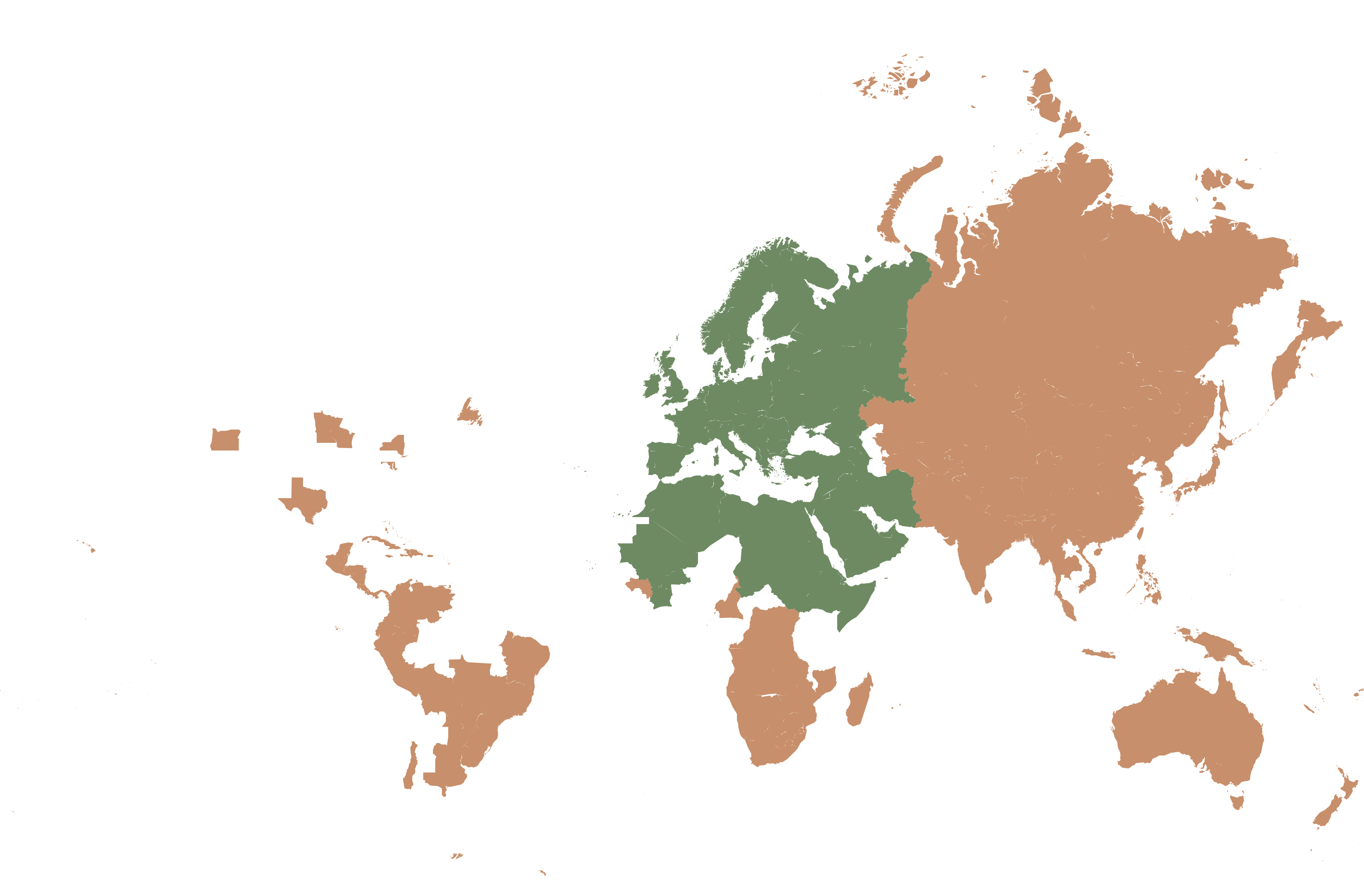
- Native
- Introduced
- Europe
- Western Asia
- Africa
History
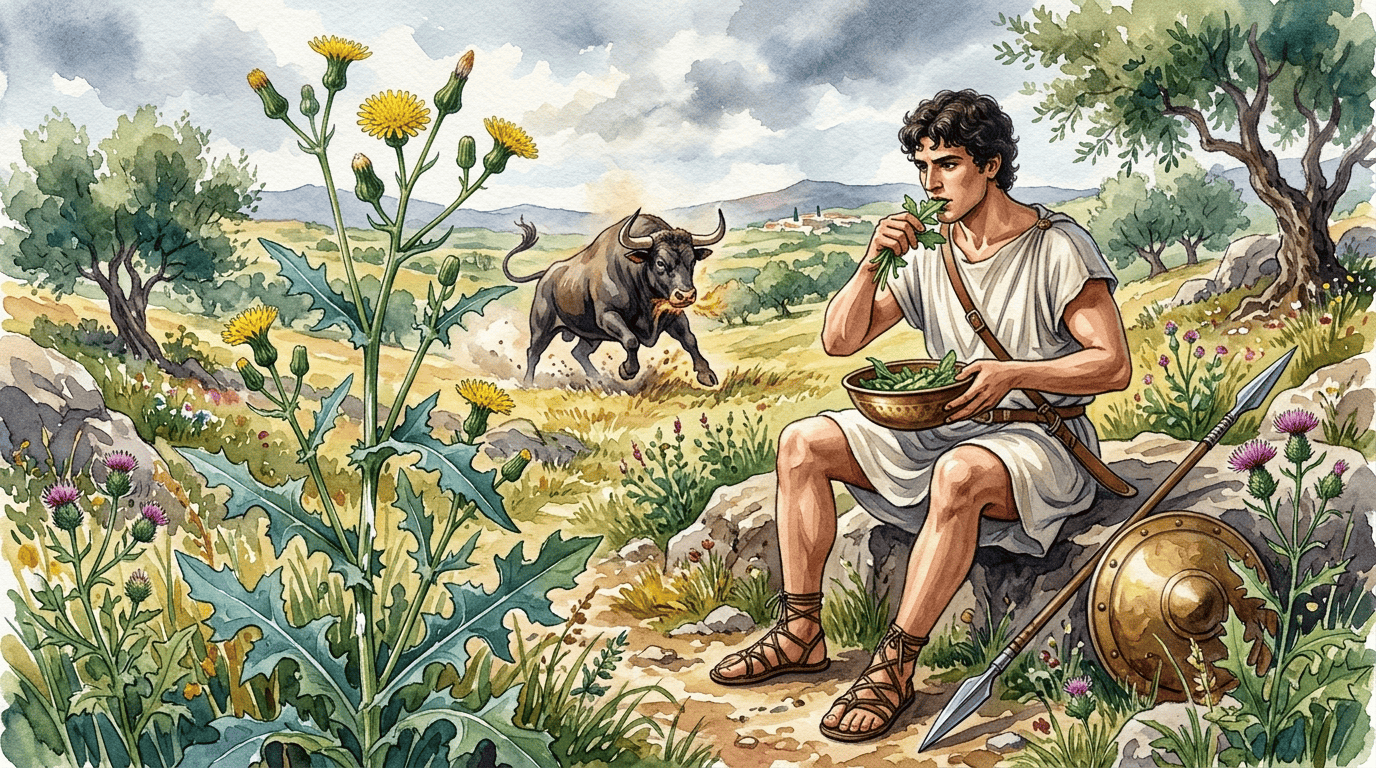
Sonchus oleraceus is native to Europe, western Asia, and North Africa. Linnaeus described it in Species Plantarum (1753); the epithet oleraceus means 'of the kitchen garden', reflecting its ancient culinary use. Classical Greek sources including Pliny recorded that Theseus fed on sow thistle before fighting the Bull of Marathon, and Greek Olympic athletes reportedly consumed it as a performance herb.
The young leaves are still eaten as salad greens across the Mediterranean, India (called sonchas), New Zealand Māori cuisine (pūhā, a Sonchus species), and Pacific islands. Dairy farmers noticed cows feeding on it produced more milk, inspiring the common name 'sow thistle' (sow = female pig, though also 'sow' is archaic English for lactating female).
It is one of the 10 worst weeds in Australian agriculture and has evolved glyphosate resistance in Australia, the US, and Europe. Native to Europe, North Africa, and western Asia, Sowthistle spread globally with agriculture and is now one of the most common annual weeds in American vegetable gardens and farm fields.
Symbolism & meaning
What It Symbolizes
Common Sow-Thistle can symbolize unwelcome generosity, growing wherever ground is disturbed and offering edible leaves nobody asked for. One layer is wild abundance, the way it appears almost anywhere humans break the soil, and the second is forager's friend, for it is a recognised wild green in many Mediterranean and Asian cuisines despite its weed status. The plant's symbolism is more ecological than romantic, a sober reminder that one culture's pest is often another's overlooked dinner.
- Wild abundance — grows everywhere disturbed ground is found
- Forager's friend — edible in traditional cuisines despite weed status
Where the Name Comes From
'Sonchus' from an ancient Greek name for the plant; 'oleraceus' from Latin means of the vegetable garden, reflecting its edible use.
Uses & Fun Facts
- Young sow-thistle leaves eaten raw or cooked as wild greens
Related plants
More Sonchus plants
Plants with similar care
 Chinese AbeliaAbelia chinensis
 Fragrant AbeliaAbelia mosanensis
 Large-Flowered AbeliaAbelia uniflora
 Glossy AbeliaAbelia x grandiflora
Frequently asked questions
How often should I water Common Sow-Thistle?
In summer, water about every 5 days; in winter, about every 21 days. Adjust for heat, pot size and drainage.
How much light does Common Sow-Thistle need?
Full sun: 6+ hrs direct. Watch the leaves — scorching or stretching means the light needs adjusting.
Is Common Sow-Thistle toxic to cats or dogs?
No toxicity has been reported for this plant. Still, it is wise to keep pets from chewing on any houseplant. Educational information, not medical or veterinary advice. If exposure is suspected, contact a doctor or veterinarian.
Is Common Sow-Thistle easy to grow?
Yes — it is considered an easy, beginner-friendly plant.
When does Common Sow-Thistle bloom?
It typically blooms Mar–Nov in the Northern Hemisphere.
YardMate
Identify any plant in seconds
Snap a photo — YardMate names the plant, diagnoses problems, and reminds you when to water.
Download on the App Store