 YardMate
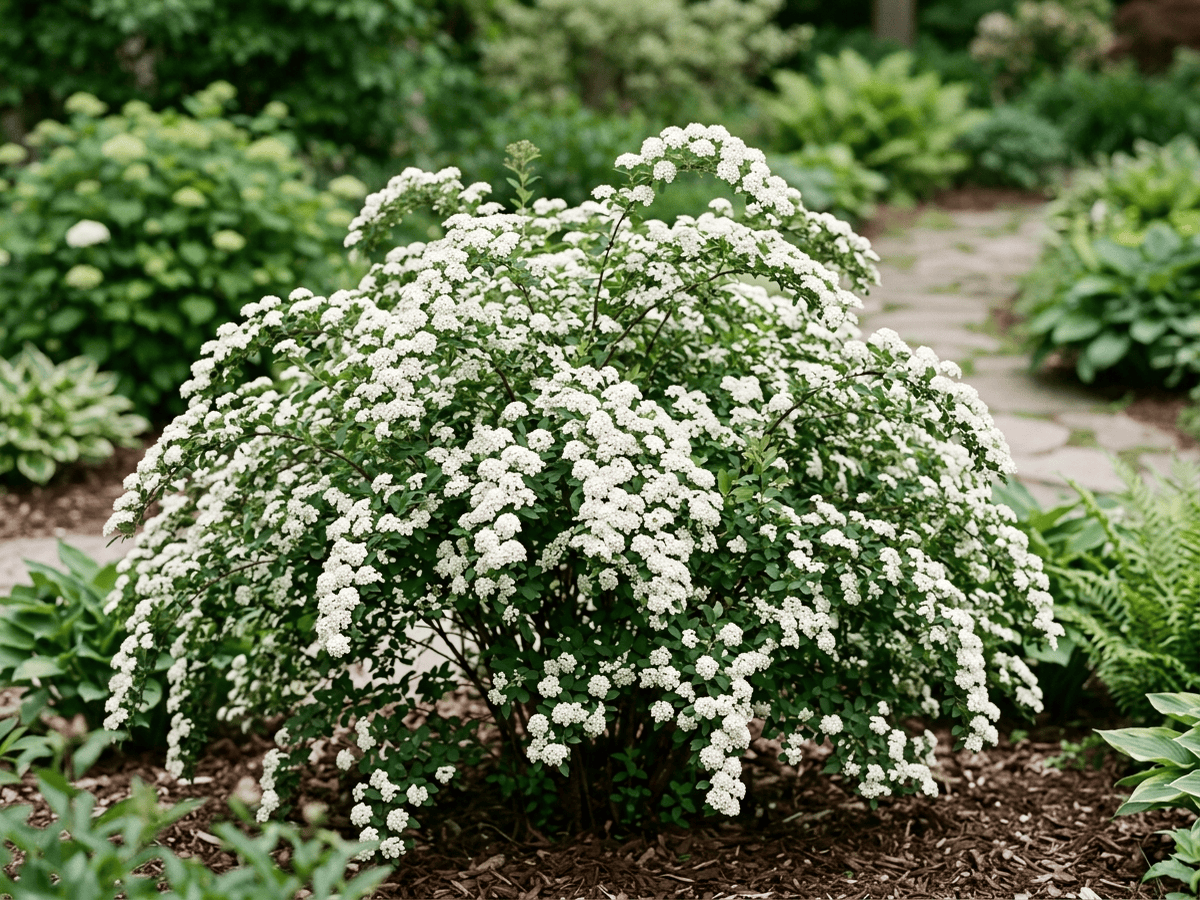
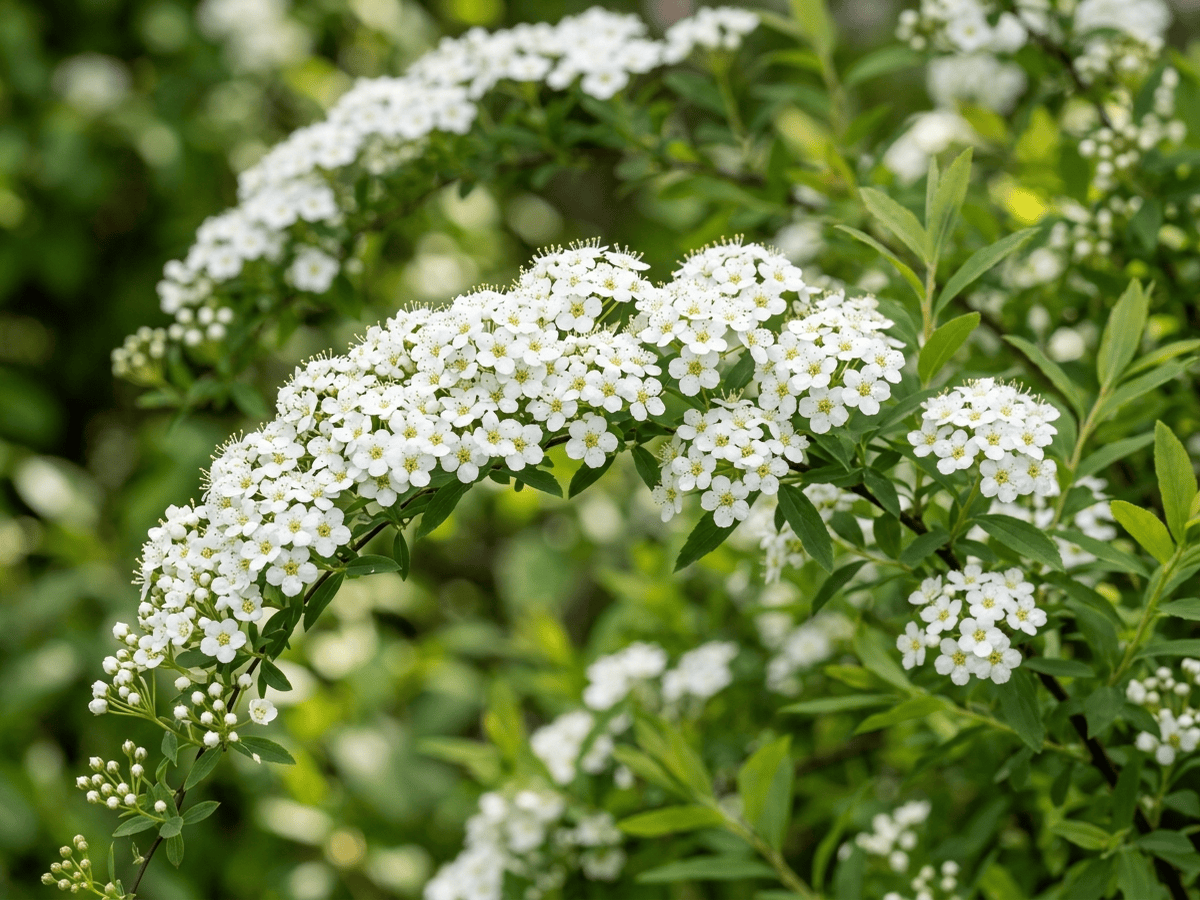


Snowmound Spirea
Spiraea nipponica
Easy · Beginner friendlyAbout Snowmound Spirea
Nippon Spirea is a dense mounding deciduous shrub from Japan, growing 4-8 feet tall and wide with a neat rounded form. In late spring it produces dense clusters of pure white flowers that completely cover the dark green foliage, creating a stunning snowball effect. The compact cultivar 'Snowmound' is one of the most popular white-flowered shrubs in American landscapes. Blue-green foliage turns yellow in autumn, and the dense branching provides good winter structure.
- Low-maintenance
- Cold-hardy
- Compact
How to care for Snowmound Spirea
Watering
- Springevery 7 days
- Summerevery 5 days
- Fallevery 10 days
- Winterevery 21 days
Soil · Rich & loamy
- Top dressingBark mulch15%
- Main mixRich loam + compost 3:170%
- DrainageGravel15%
Use fully finished compost — fresh compost burns roots.
FERTILIZER
Balanced Feed 14-14-14
An even feed covers all three needs at once, keeping leaves, roots and blooms moving together with nothing pushed out of balance.
- Nitrogen · Leaves
- Phosphorus · Roots + Blooms
- Potassium · Strength
- Springevery 30 days
At a Glance
- NativeEast Asia
- Height4–8 ft (1.2–2.4 m)
- Spread5–8 ft (1.5–2.4 m)
- Flower colorWhite
- Foliage colorBlue-green, Green, Yellow
- SoilLoamy, Well-drained
- LocationsYard
Bloom time
BLOOM CYCLE
Peak bloom
May–Jun
Dense white flower clusters May to June covering entire shrub
Fragrance
LIGHT FRAGRANCE
The flowers have a mild sweet scent.
Toxicity
No toxicity has been reported for this plant. Still, it is wise to keep pets from chewing on any houseplant.
Educational information, not medical or veterinary advice. If exposure is suspected, contact a doctor or veterinarian.
DISTRIBUTION


- Native
- Introduced
- East Asia
History

Spiraea nipponica occurs naturally only in the mountains of Shikoku Island, Japan, where it grows on rocky slopes. Russian botanist Karl Maximowicz formally described the species in 1866 from specimens collected by Richard Oldham. The epithet nipponica simply means of Japan (from the Japanese name for the country, Nippon).
The shrub forms dense rounded to arching mounds of 1-2 meters with small dark blue-green leaves and, in late May and June, produces flat-topped umbel-like corymbs of pure white flowers along the length of each branch, creating a striking snowfall effect. Introduced to Western cultivation in the late 19th century, it remained fairly obscure until the Dutch-raised cultivar 'Snowmound' was introduced from the Netherlands in 1969—a compact, exceptionally floriferous selection with leaves smaller and bluer than the species.
'Snowmound' has since become one of the most widely planted deciduous shrubs in North American and European landscapes for its reliable bloom, clean foliage, and complete disease resistance. The cultivar 'Snowmound', selected at the US National Arboretum, became one of the most commercially successful shrub introductions of the 20th century. In Japan, the species grows on rocky mountain slopes alongside alpine plants, showing its tough constitution.
Symbolism & meaning
What It Symbolizes
Snowmound Spirea can symbolize purity, its cascading sprays of small white flowers in late spring suggesting a sudden, unseasonable snowfall on the shrub border. Another layer is perfection, for its naturally rounded form rarely needs pruning, settling into a near-symmetrical mound year after year. In the language of formal-leaning cottage gardens, this spirea is the disciplined small celebration, a plant whose moment of bloom feels both immaculate and quietly inevitable.
- Purity — cascading white flowers suggest fresh snowfall
- Perfection — naturally symmetrical rounded form
Where the Name Comes From
'Nipponica' means 'of Nippon (Japan)', referring to its Japanese origin.
Uses & Fun Facts
- Snowmound spirea forms informal flowering hedge
- Arching branches drip white spring flower clusters
Related plants
More Spiraea plants
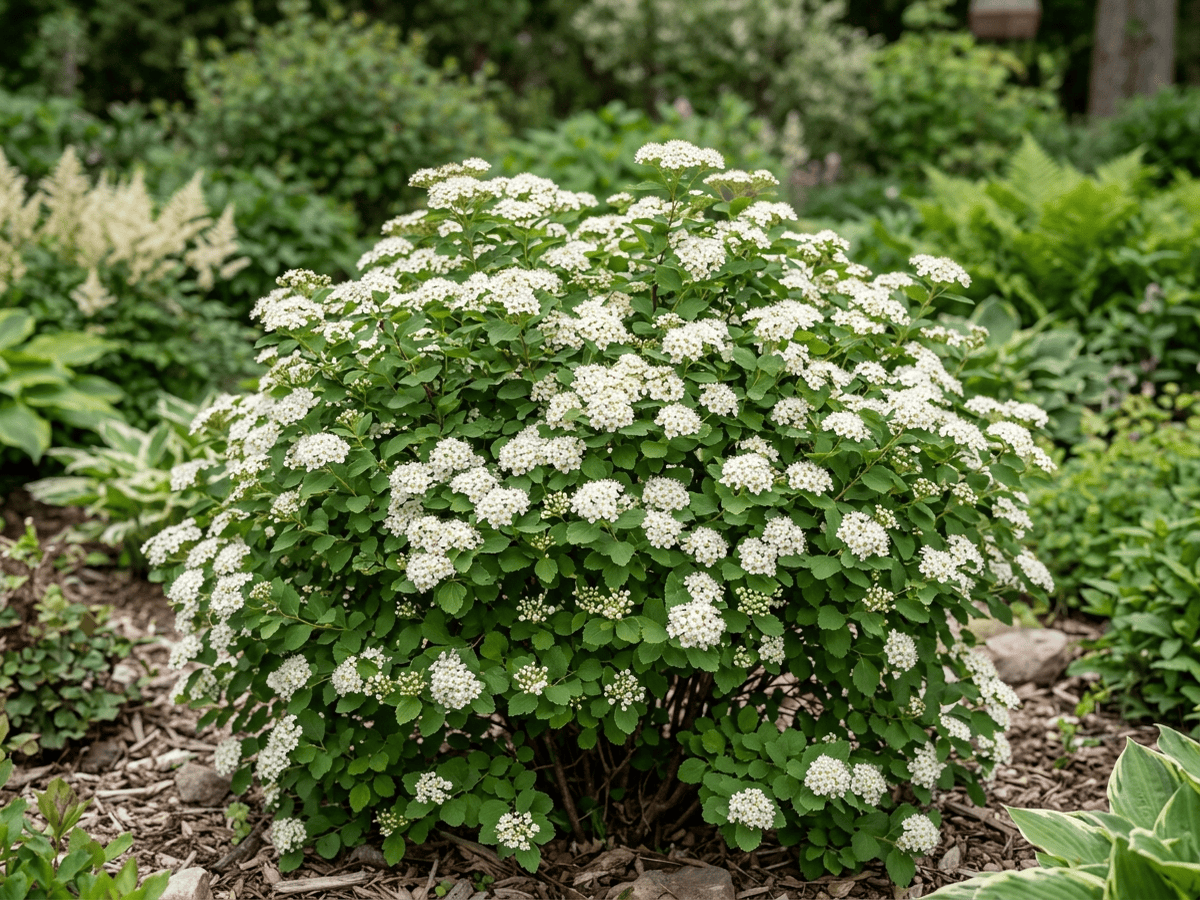 Birch-Leaved SpireaSpiraea betulifolia
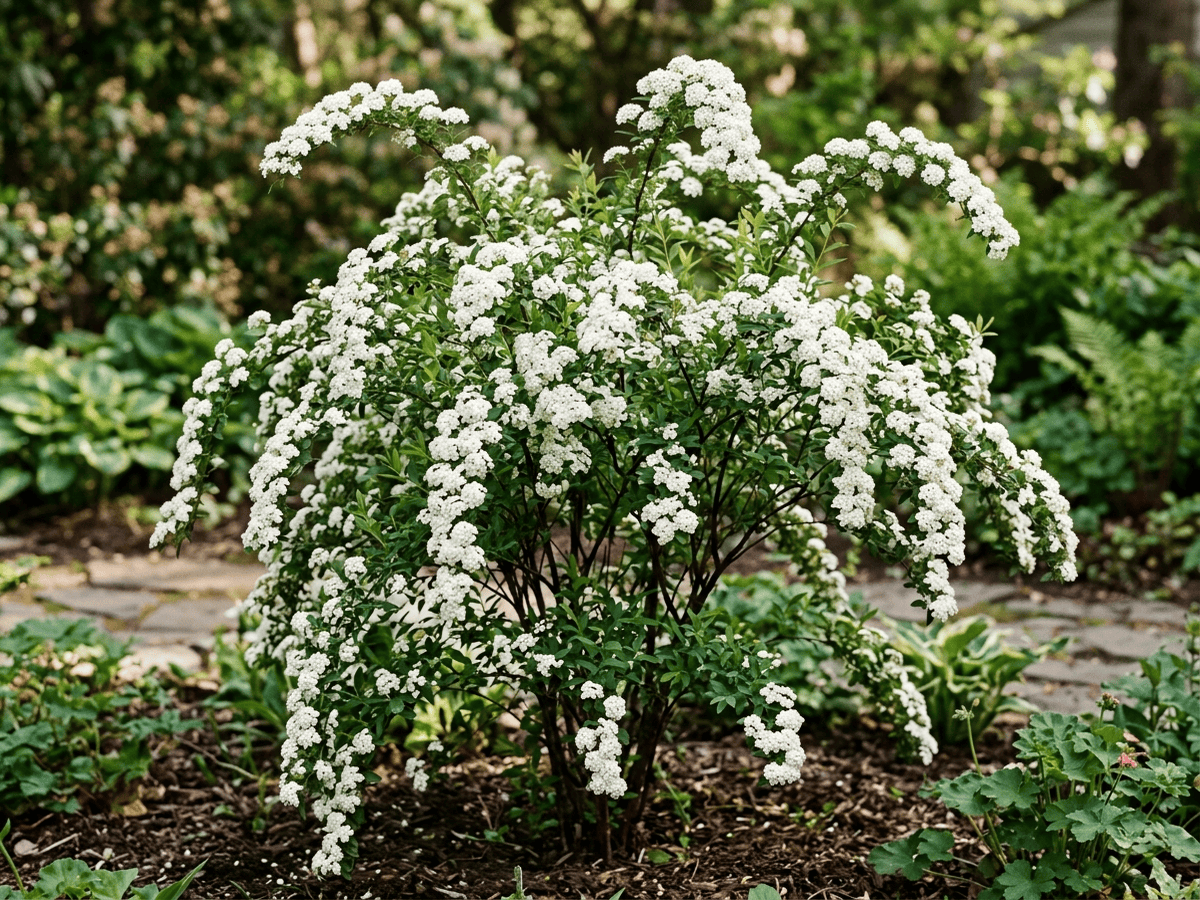 Reeve's SpireaSpiraea cantoniensis
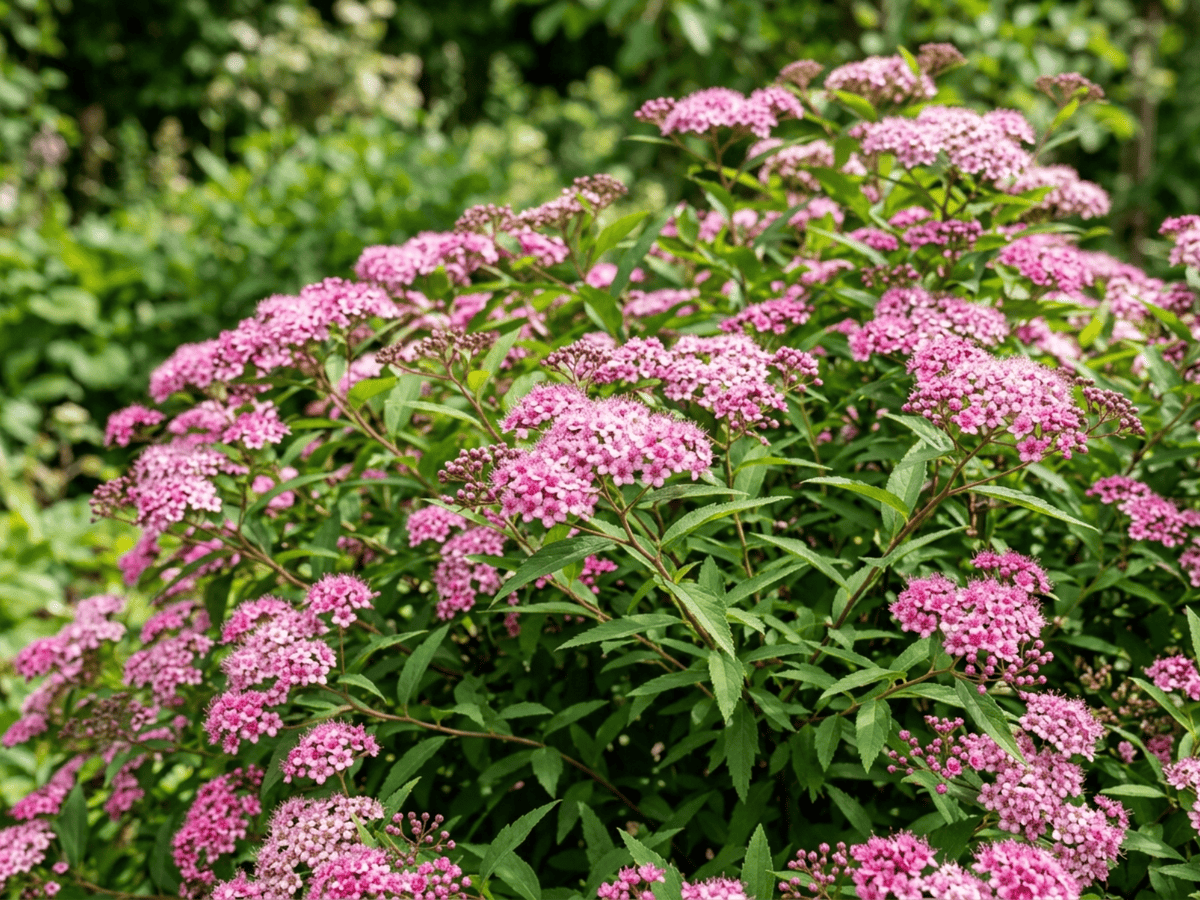 Japanese SpireaSpiraea japonica
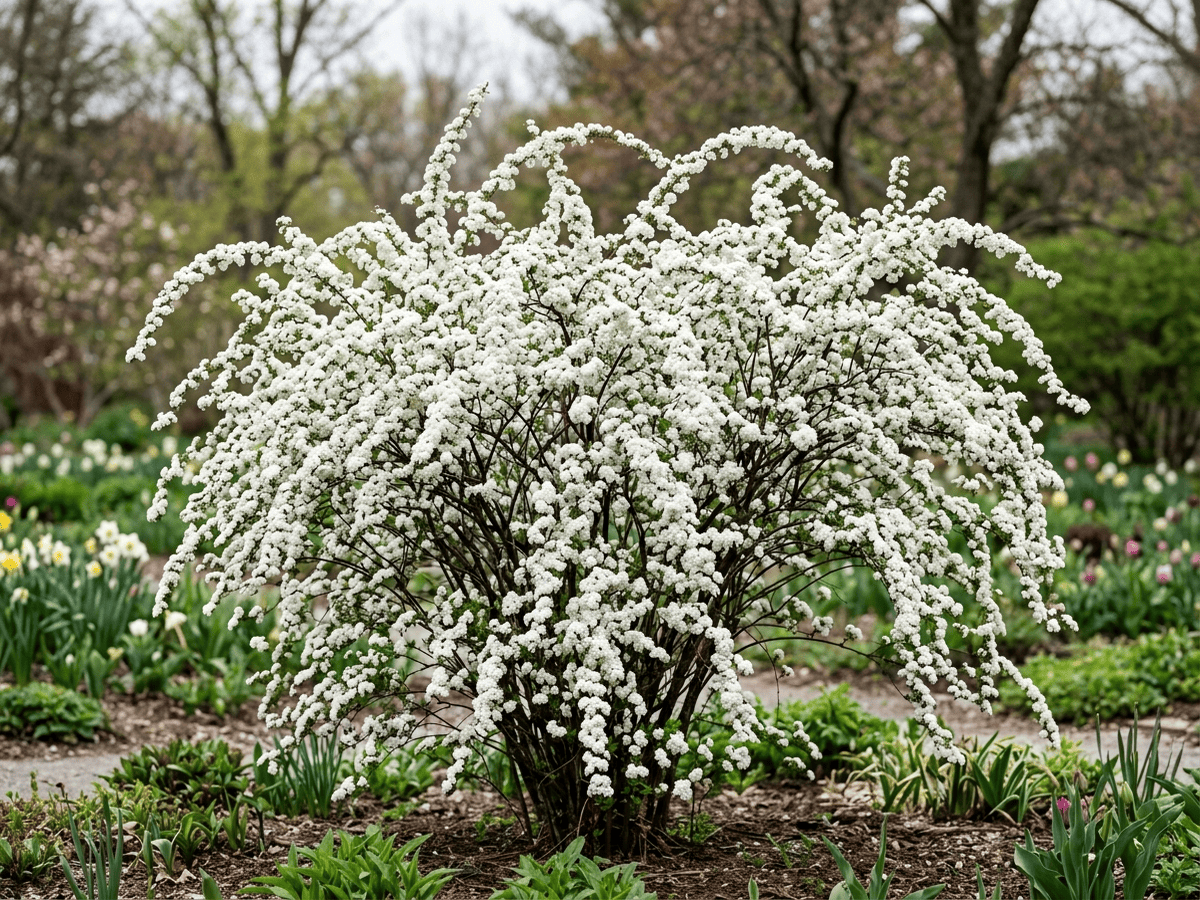 Bridal-WreathSpiraea prunifolia
Plants with similar care
 Chinese AbeliaAbelia chinensis
 Fragrant AbeliaAbelia mosanensis
 Large-Flowered AbeliaAbelia uniflora
 Glossy AbeliaAbelia x grandiflora
Frequently asked questions
How often should I water Snowmound Spirea?
In summer, water about every 5 days; in winter, about every 21 days. Adjust for heat, pot size and drainage.
How much light does Snowmound Spirea need?
Full sun: 6+ hrs direct. Watch the leaves — scorching or stretching means the light needs adjusting.
Is Snowmound Spirea toxic to cats or dogs?
No toxicity has been reported for this plant. Still, it is wise to keep pets from chewing on any houseplant. Educational information, not medical or veterinary advice. If exposure is suspected, contact a doctor or veterinarian.
Is Snowmound Spirea easy to grow?
Yes — it is considered an easy, beginner-friendly plant.
When does Snowmound Spirea bloom?
It typically blooms May–Jun in the Northern Hemisphere.
YardMate
Identify any plant in seconds
Snap a photo — YardMate names the plant, diagnoses problems, and reminds you when to water.
Download on the App Store