 YardMate
French Marigold
Tagetes patula
Easy · Beginner friendlyAbout French Marigold
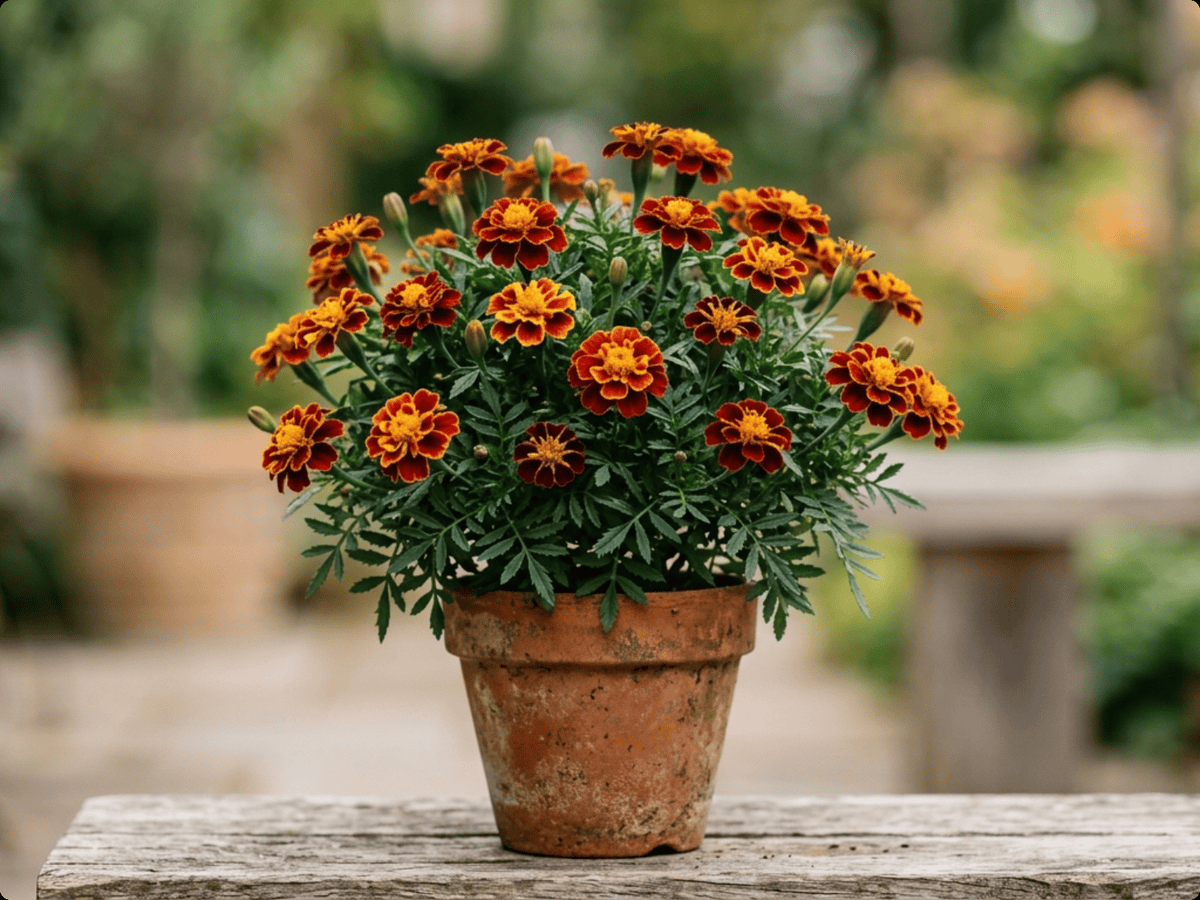
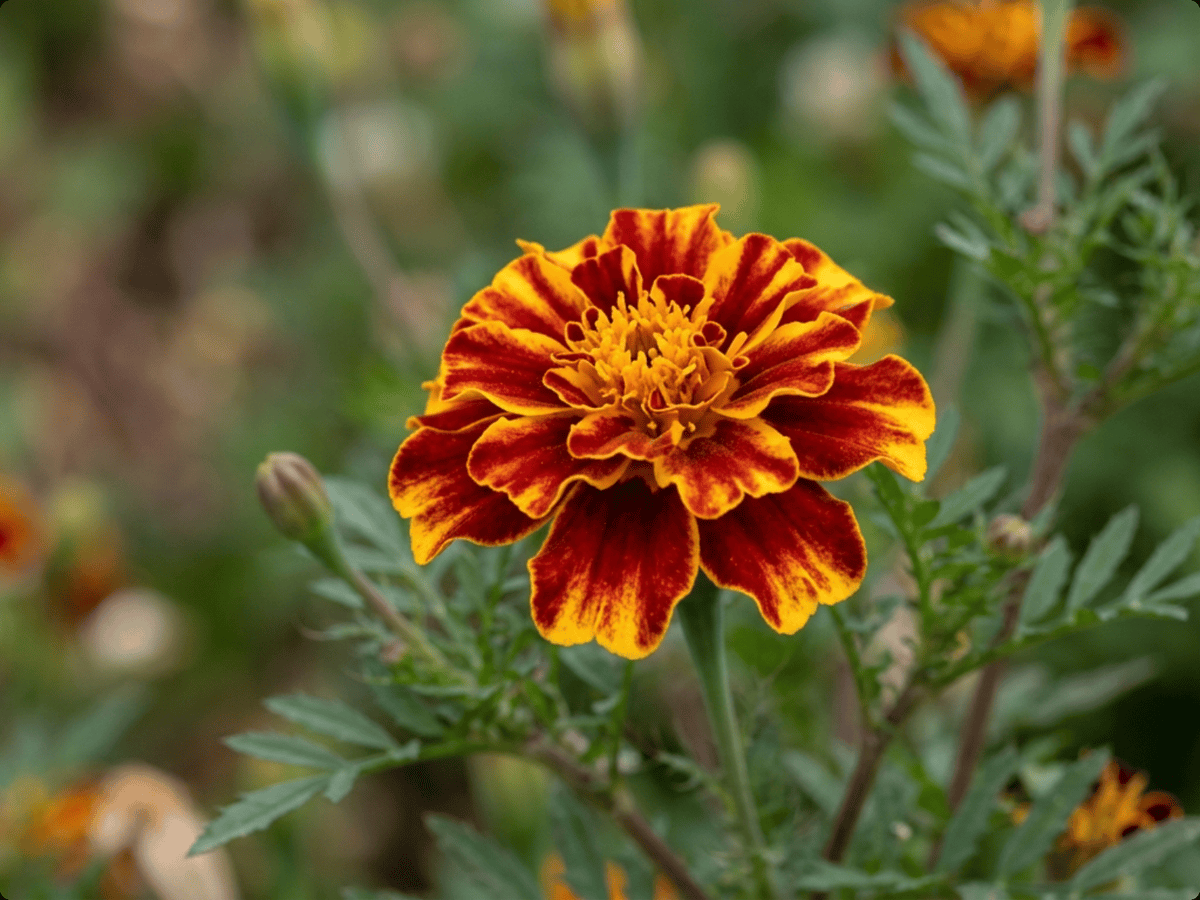
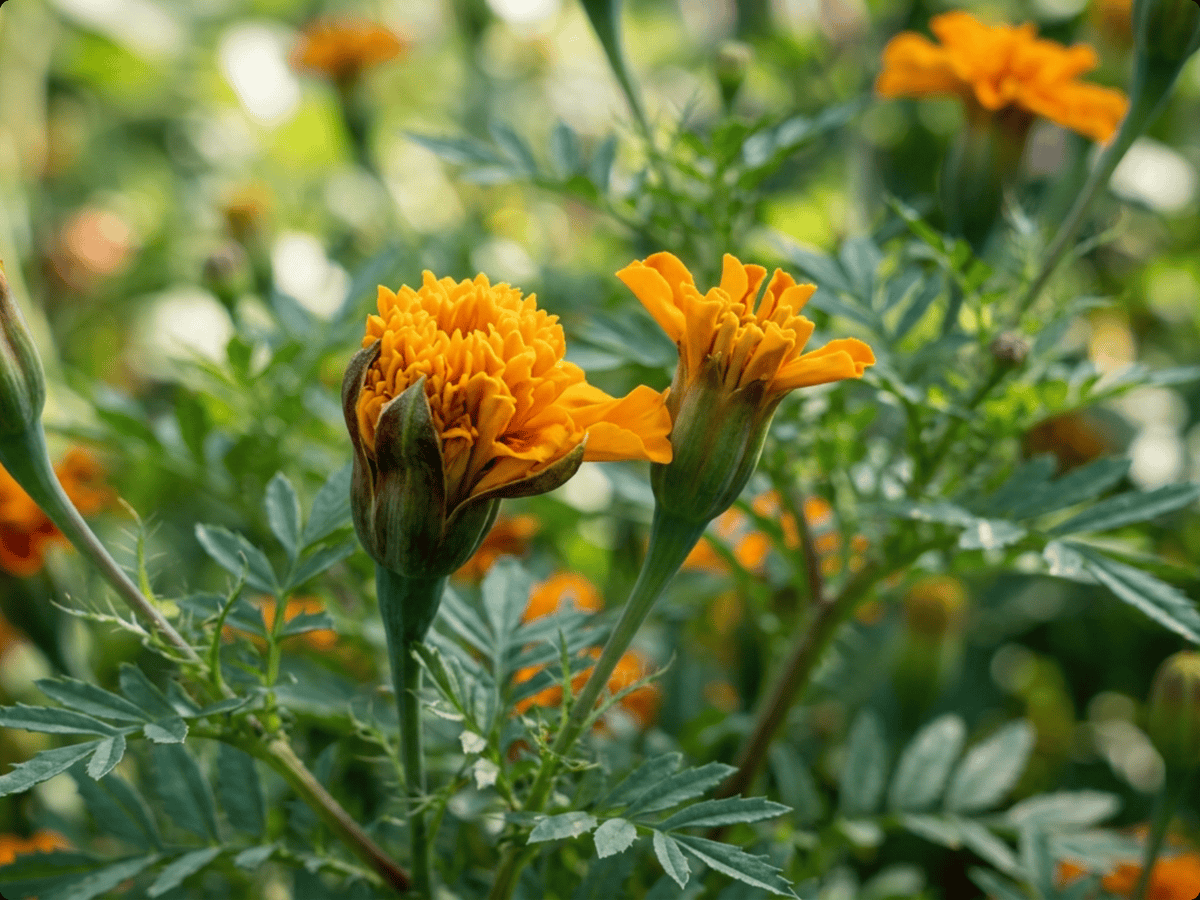
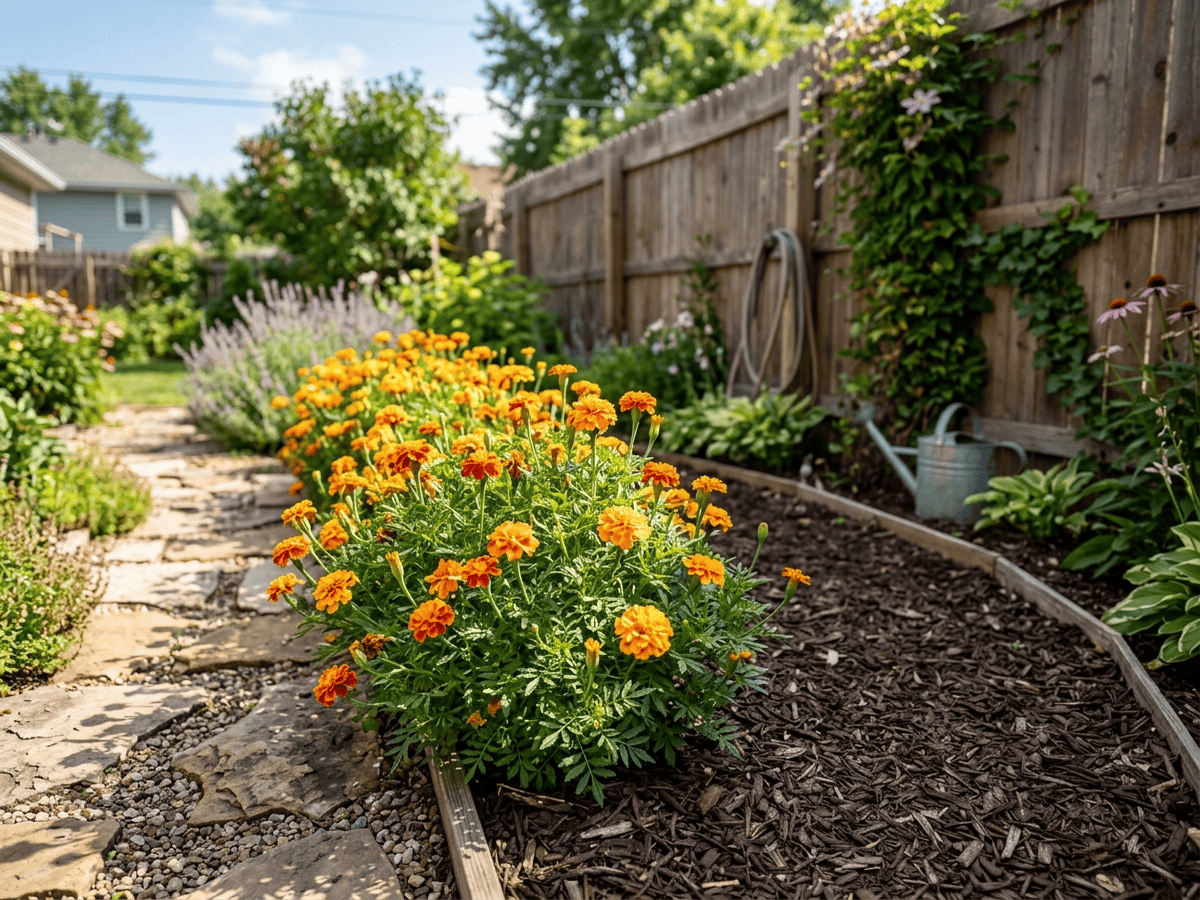
Tagetes patula, the French marigold, is a compact, bushy annual producing an abundance of small single or double flowers in warm shades of yellow, orange, red, and bicolors. At 20–30 cm tall, it is the perfect edging and container plant. Native to Mexico, it is widely used as a companion plant — its roots release alpha-terthienyl, which kills root-knot nematodes. The pungent scent also repels whiteflies and aphids. French marigolds bloom prolifically from late spring until frost with minimal care, making them one of the most reliable garden annuals worldwide.
- Compact
How to care for French Marigold
Watering
- Springevery 5 days
- Summerevery 3 days
- Fallevery 7 days
- Winterpause watering
Soil · Well-draining
- Top dressingPine bark mulch10%
- Main mixPotting soil + perlite 2:170%
- DrainageLECA / gravel20%
Never skip the drainage layer — standing water is the top cause of root rot.
FERTILIZER
Balanced Feed 14-14-14
An even feed covers all three needs at once, keeping leaves, roots and blooms moving together with nothing pushed out of balance.
- Nitrogen · Leaves
- Phosphorus · Roots + Blooms
- Potassium · Strength
- Springevery 21 days
- Summerevery 21 days
At a Glance
- NativeNorth America, Central America
- Height0.5–1.5 ft (0.2–0.5 m)
- Spread0.5–1 ft (0.2–0.3 m)
- Flower colorOrange, Yellow, Red
- Foliage colorGreen
- SoilWell-drained, Loamy, Neutral
- LocationsYard · Balcony
Bloom time
BLOOM CYCLE
Peak bloom
Jun–Aug
Prolific small blooms; excellent companion plant for tomatoes and peppers
Fragrance
STRONG FRAGRANCE
Pungent medicinal scent from crushed foliage.
Toxicity
Pets Slight
α-terthienyl (thiophene)
Not reported
EXPOSURE No exposure route is reported.
EFFECT No toxic effect is reported.
NOTE No toxicity is reported for humans in this catalog; this is not evidence that the plant is edible or harmless.
Slight
- Leaf
- Contact
EXPOSURE Touching leaves.
EFFECT Contact dermatitis and per ASPCA.
NOTE Same Tagetes profile; α-terthienyl is the active nematicidal compound.
Slight
- Leaf
- Contact
- Ingestion
EXPOSURE Touching leaves. Eating leaves.
EFFECT Mild GI upset, dermatitis and per ASPCA.
NOTE Same Tagetes profile; α-terthienyl is the active nematicidal compound.
Educational information, not medical or veterinary advice. If exposure is suspected, contact a doctor or veterinarian.
DISTRIBUTION

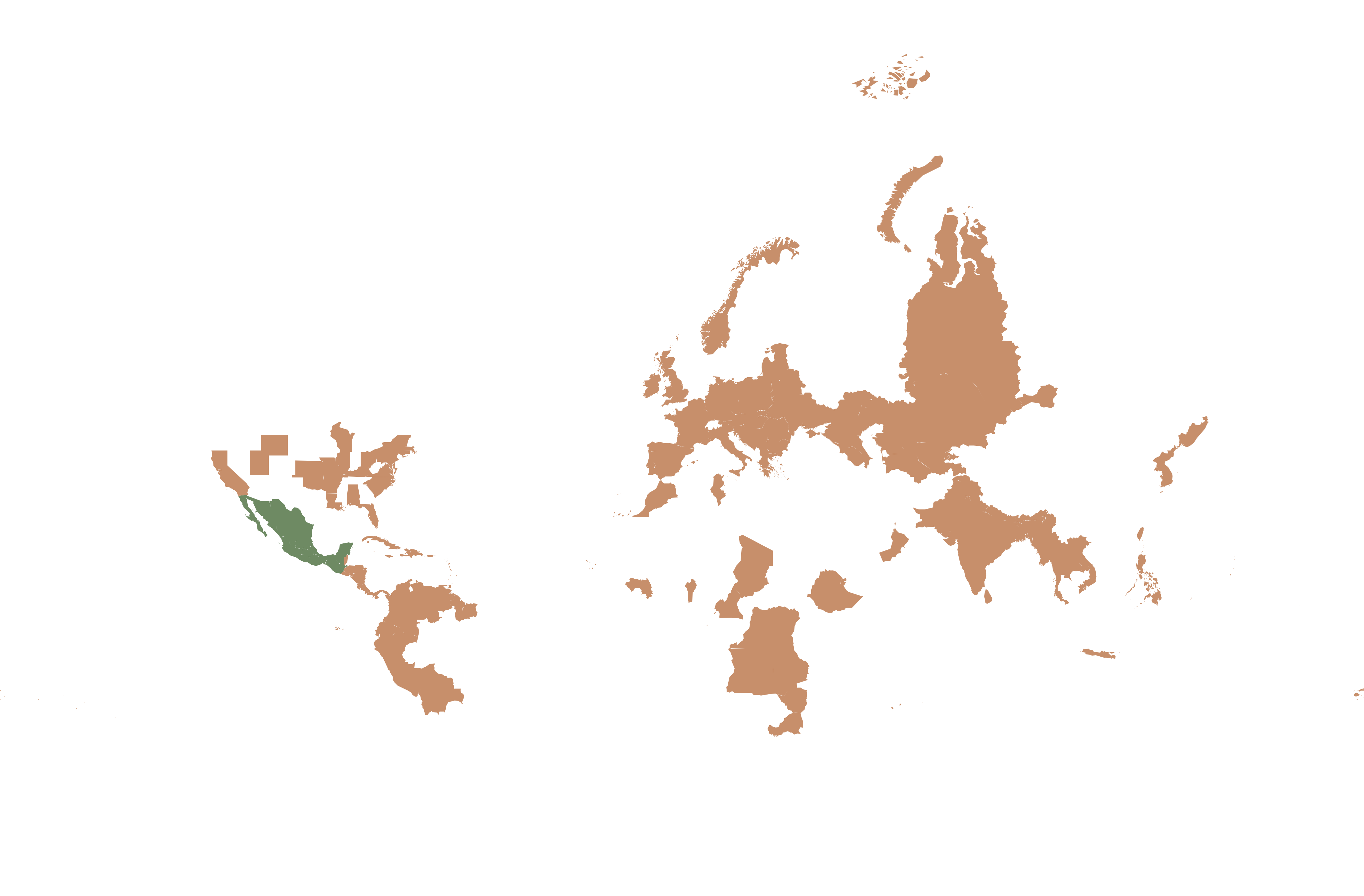
- Native
- Introduced
- North America
- Central America
History

Tagetes patula is native to Mexico and Guatemala, not France: the 'French' in the common name comes from its 16th-century naturalization in French gardens, from which it spread to Britain as a garden annual. It is smaller and bushier than T. erecta, and bred to produce dense compact edging plants ('Disco', 'Durango', 'Bonanza' series). Its role as a companion plant is backed by genuine evidence: its roots secrete α-terthienyl, a thiophene compound that kills root-knot nematodes (Meloidogyne), and interplanting or rotating T. patula in vegetable beds reduces nematode damage to subsequent crops.
Commercially cultivated in India and Mexico for both the cut-flower trade and dye production. Non-toxic to pets. French marigolds aren't French either — the name comes from their arrival in France via French explorers returning from the Americas in the 16th century.
Parisian gardeners adopted them enthusiastically, and they became associated with France. Their nematode-killing ability is well-documented scientifically: planting French marigolds as a cover crop for one season can reduce root-knot nematode populations by over 90%, replacing toxic chemical fumigants. This biological pest control has made them invaluable in organic farming. The 'Bonanza' and 'Durango' series are among the most widely planted annual flowers in commercial landscaping.
Symbolism & meaning
What It Symbolizes
The French Marigold evokes Warmth — sunny gold and orange blooms that have brightened cottage doorways and vegetable beds for centuries, evoking the comfort of hearth and home. Across cultures, from Mexican Día de Muertos altars to Indian temple garlands, it has marked moments where warmth and remembrance meet. A small flower carrying a great deal of human affection.
- Warmth — Its sunny, generous blooming represents the warmth of hearth and home
Where the Name Comes From
The name French Marigold points to France or French horticultural tradition. Tagetes from Tages, Etruscan deity. Patula means 'spreading,' describing the open growth habit.
Uses & Fun Facts
- Bright orange and yellow blooms edge sunny summer beds
- Reliable annual filler for window boxes and pots
- Central to Mexican Day of the Dead altars and offerings
- Open blooms feed butterflies and hoverflies
Related plants
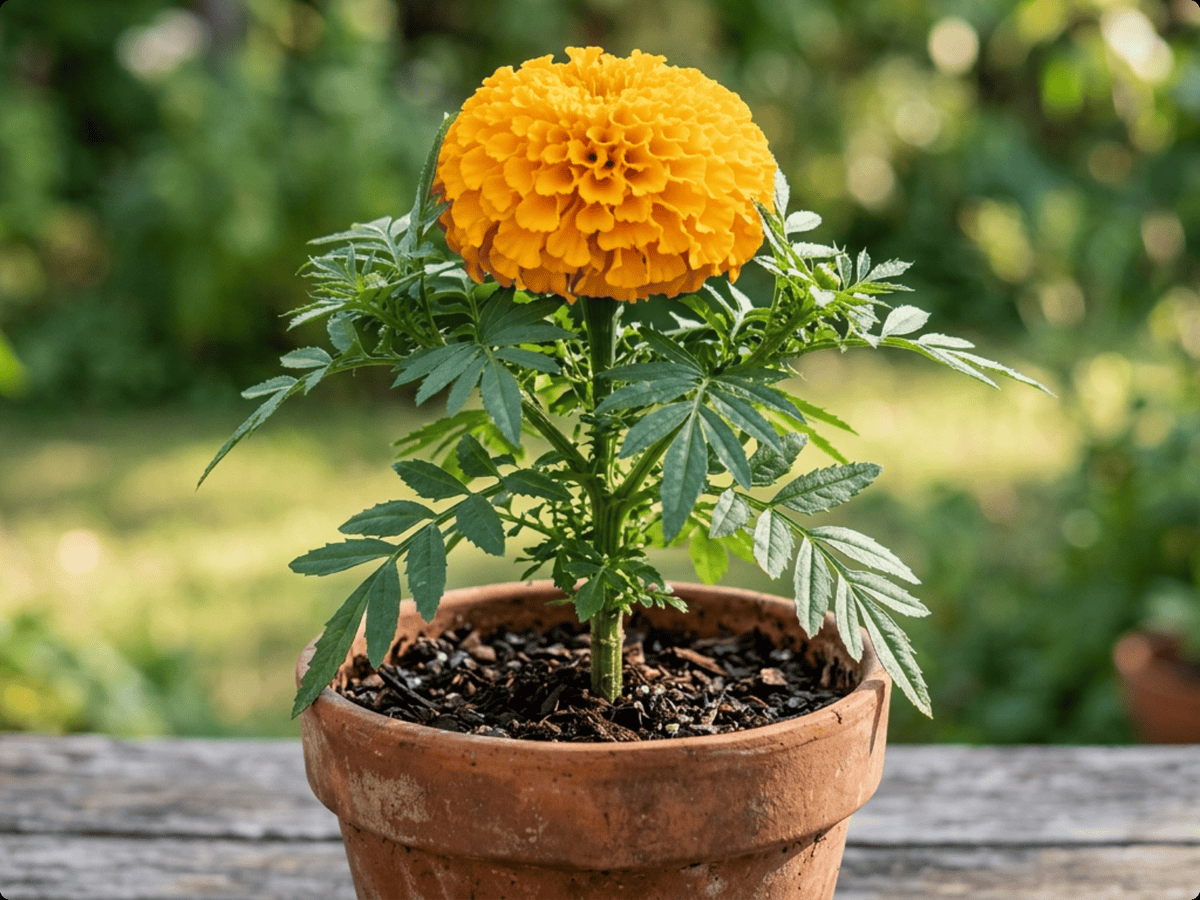
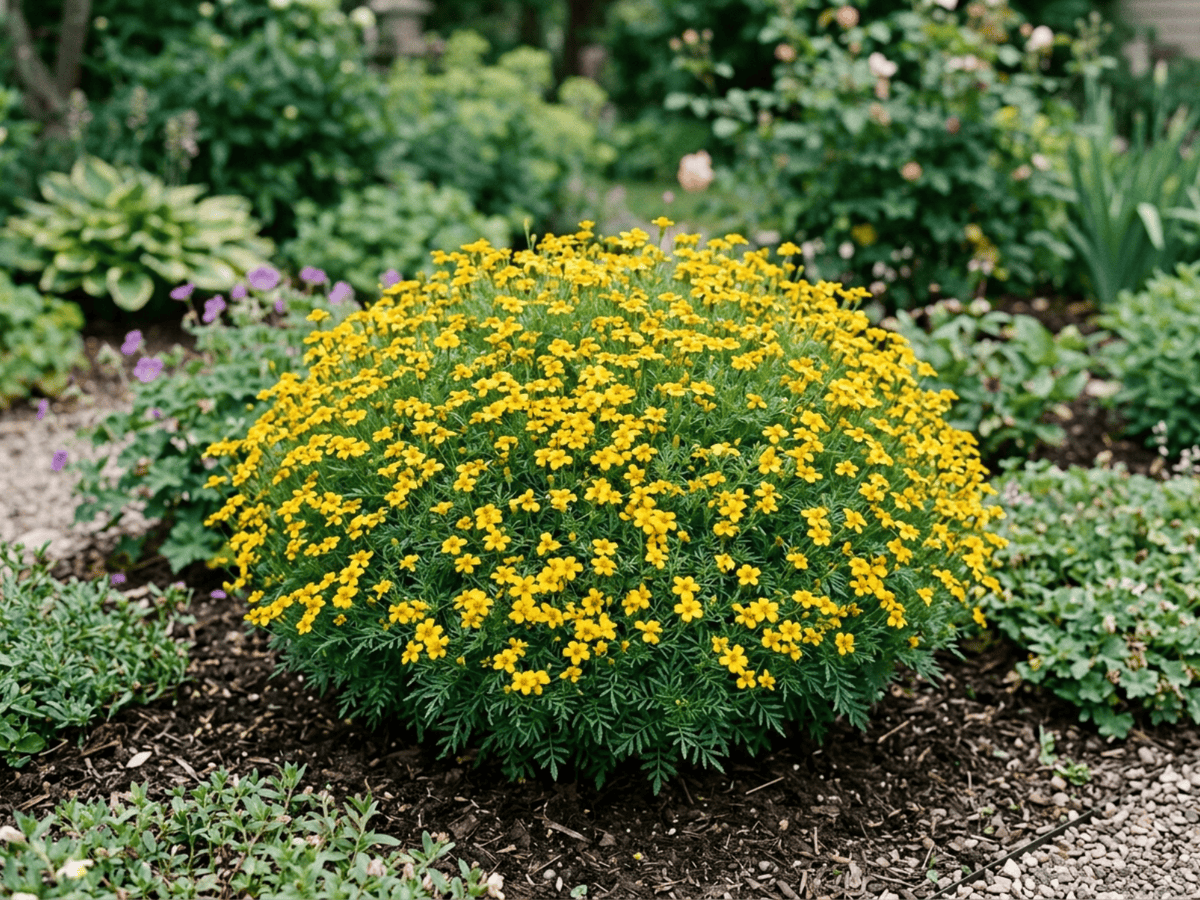
More Tagetes plants
Plants with similar care
 Chinese AbeliaAbelia chinensis
 Fragrant AbeliaAbelia mosanensis
 Large-Flowered AbeliaAbelia uniflora
 Glossy AbeliaAbelia x grandiflora
Frequently asked questions
How often should I water French Marigold?
Water about every 5 days during the growing season, and always let excess water drain away.
How much light does French Marigold need?
Full sun: 6+ hrs direct. Watch the leaves — scorching or stretching means the light needs adjusting.
Is French Marigold toxic to cats or dogs?
Pets Slight (Dogs Slight · Cats Slight) Educational information, not medical or veterinary advice. If exposure is suspected, contact a doctor or veterinarian.
Is French Marigold easy to grow?
Yes — it is considered an easy, beginner-friendly plant.
When does French Marigold bloom?
It typically blooms Jun–Aug in the Northern Hemisphere.
YardMate
Identify any plant in seconds
Snap a photo — YardMate names the plant, diagnoses problems, and reminds you when to water.
Download on the App Store