 YardMate

Petite Marigold
Tagetes tenuifolia
Easy · Beginner friendlyAbout Petite Marigold
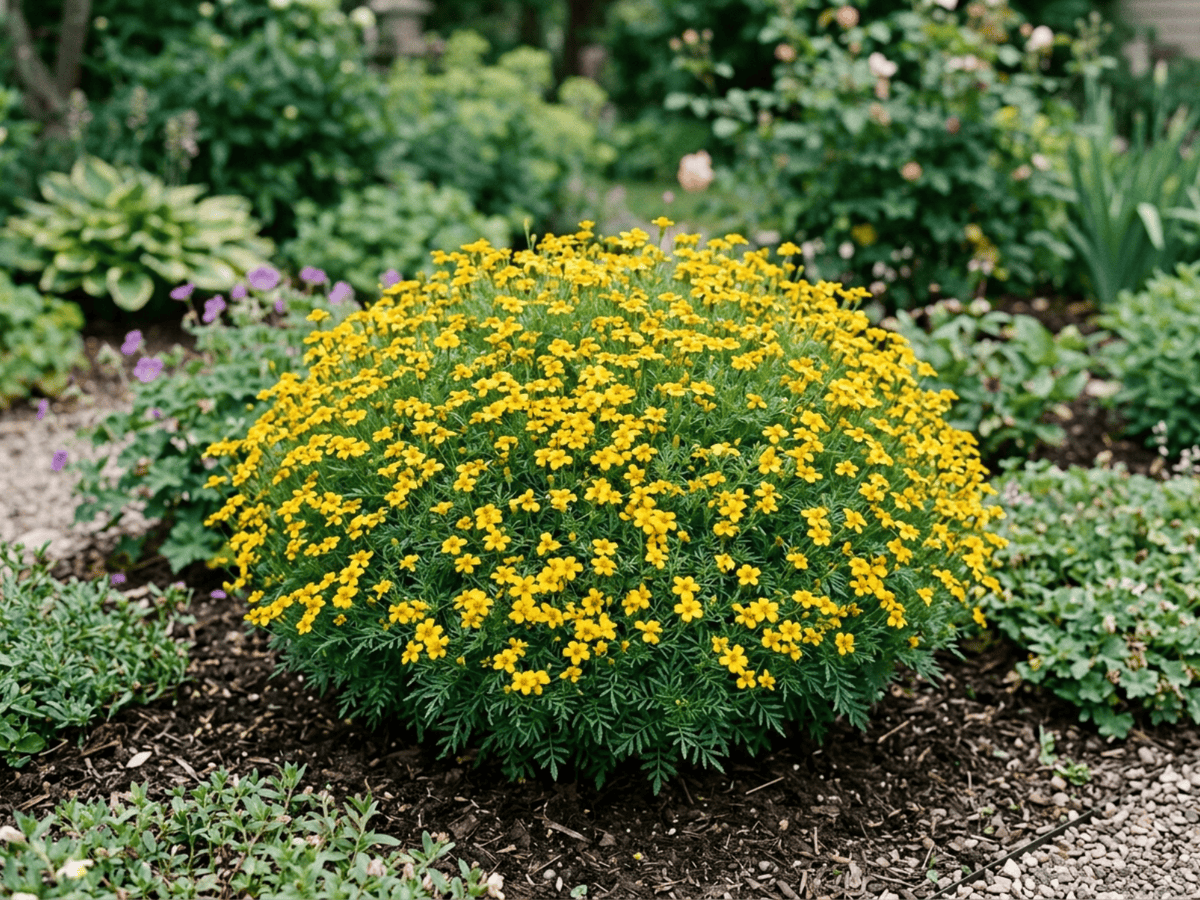
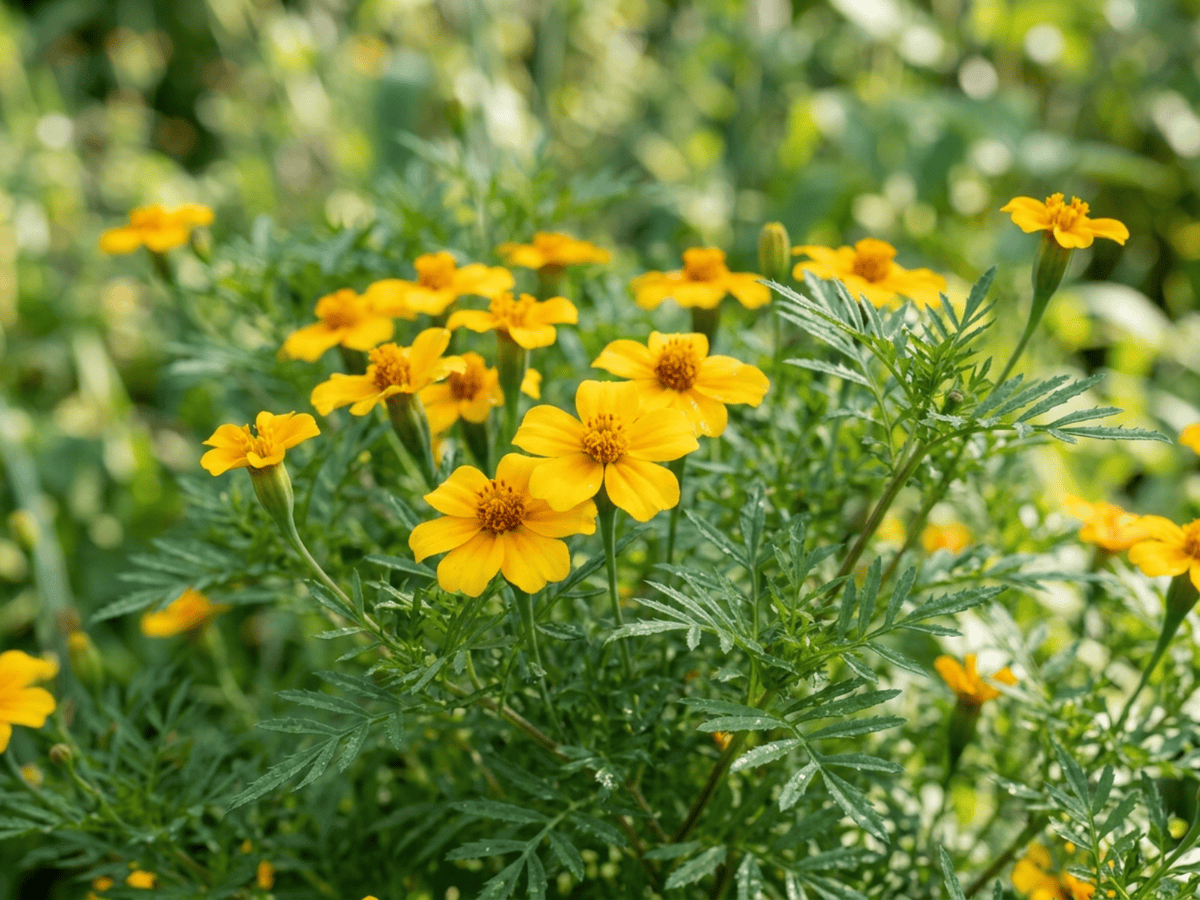
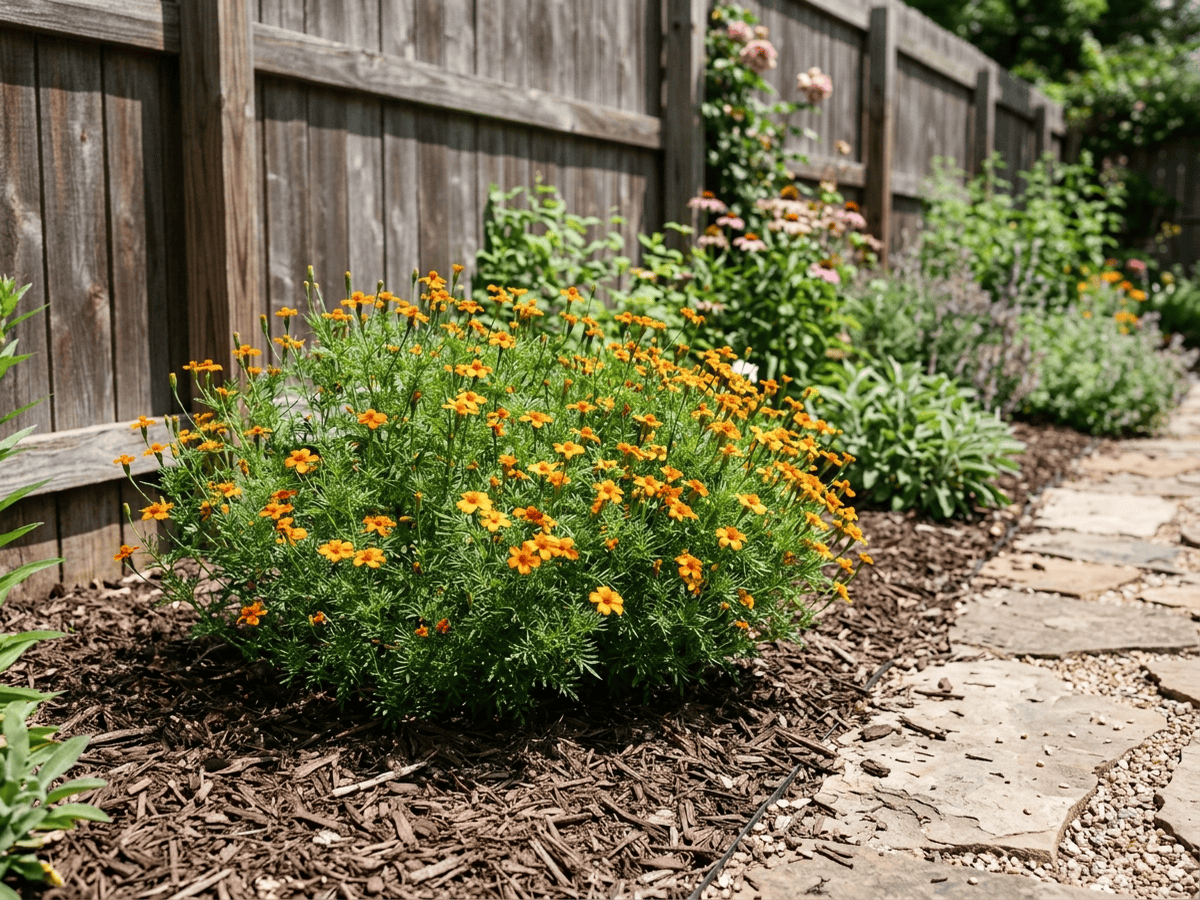
Signet Marigold is a compact annual from Mexico and Guatemala, 8–12 inches tall with finely-divided lemon-scented foliage and masses of small, single daisy-like flowers in yellow, gold, or orange. Edible petals are used as a saffron substitute. More delicate-looking than standard French or African marigolds, it suits herb gardens, edging, and cottage plantings. Heat- and drought-tolerant, self-cleaning, and a reliable pollinator plant across the US.
- Edible
- Fragrant
- Heat-tolerant
- Pollinator-friendly
How to care for Petite Marigold
Watering
- Springevery 5 days
- Summerevery 4 days
- Fallevery 10 days
- Winterpause watering
Soil · Rich & well-draining
- Top dressingCompost10%
- Main mixPotting soil + compost 3:180%
- DrainageGravel10%
Top up the compost layer each season.
FERTILIZER
Balanced Feed 14-14-14
An even feed covers all three needs at once, keeping leaves, roots and blooms moving together with nothing pushed out of balance.
- Nitrogen · Leaves
- Phosphorus · Roots + Blooms
- Potassium · Strength
- Springevery 21 days
- Summerevery 21 days
At a Glance
- NativeNorth America, Central America
- Height0.5–1 ft (0.2–0.3 m)
- Spread0.5–1 ft (0.2–0.3 m)
- Flower colorYellow, Orange, Red
- Foliage colorGreen
- SoilLoamy, Well-drained
- LocationsYard · Balcony
Bloom time
BLOOM CYCLE
Peak bloom
Jun–Nov
Tiny daisy flowers summer to frost
Fragrance
MODERATE FRAGRANCE
Citrus-tarragon scent from crushed leaves — pleasant rather than the harsh marigold smell of T. erecta.
Toxicity
Pets Slight
thiophenes
Not reported
EXPOSURE No exposure route is reported.
EFFECT Flowers edible with citrus-tarragon flavor and no significant toxicity.
NOTE No human toxicity is reported in this catalog; avoid eating ornamental plants unless confirmed edible.
Slight
- All
- Ingestion
EXPOSURE Eating any part of the plant.
EFFECT Mild GI upset and skin contact can cause mild irritation.
NOTE ASPCA lists Tagetes as mildly toxic to dogs, cats, and horses (GI and skin irritation). Edible human use is well established.
Slight
- All
- Ingestion
EXPOSURE Eating any part of the plant.
EFFECT Same as dogs.
NOTE ASPCA lists Tagetes as mildly toxic to dogs, cats, and horses (GI and skin irritation). Edible human use is well established.
Educational information, not medical or veterinary advice. If exposure is suspected, contact a doctor or veterinarian.
DISTRIBUTION

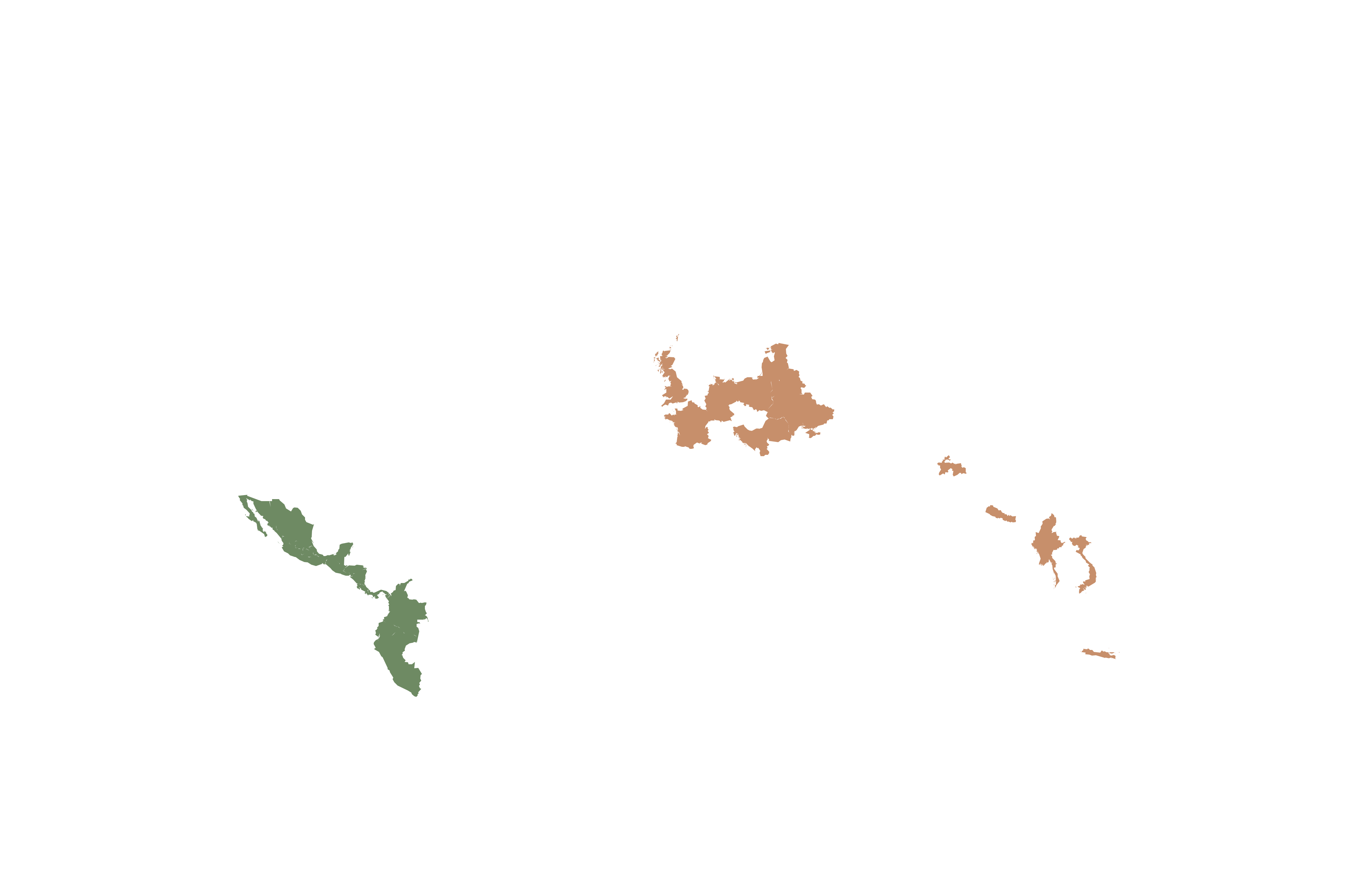
- Native
- Introduced
- North America
- Central America
History
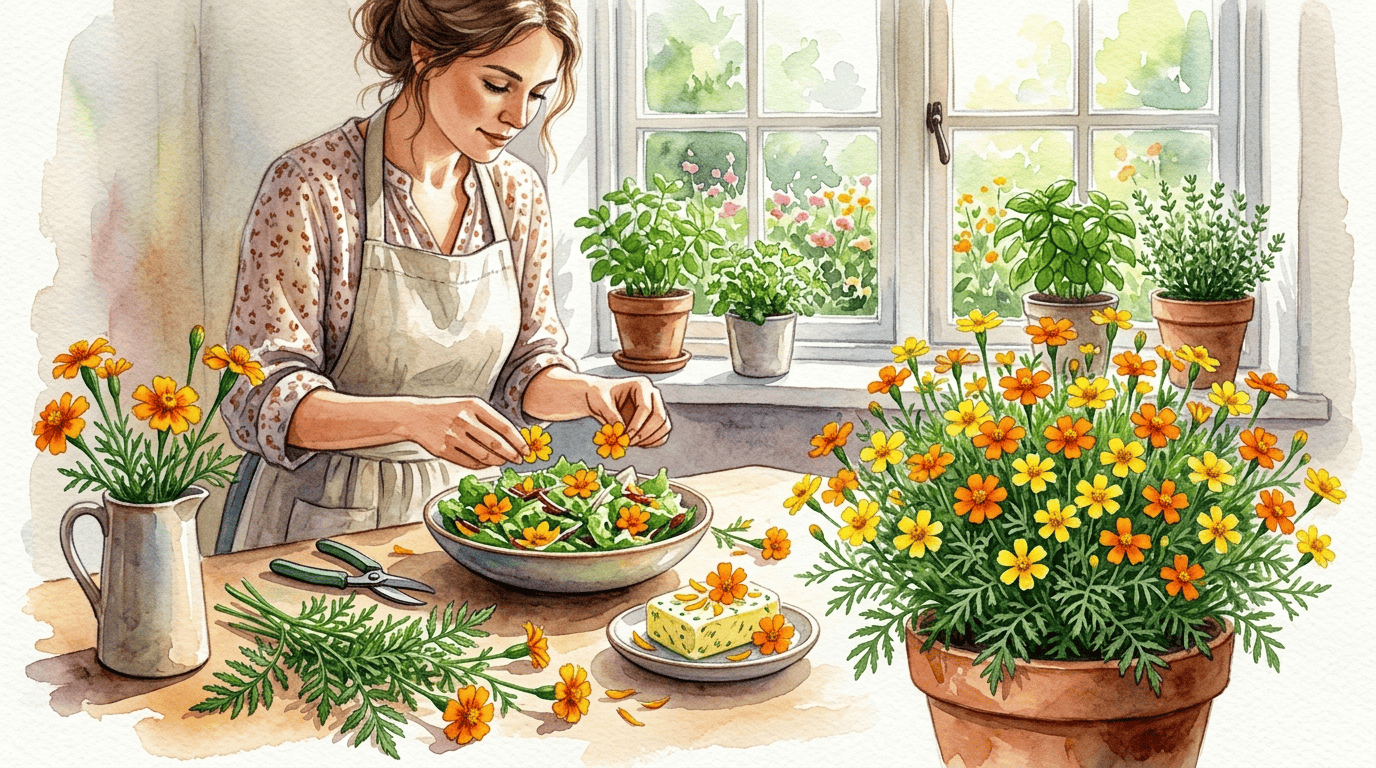
Tagetes tenuifolia is native to Mexico and Central America (south through Guatemala and Honduras), where it grows as a small understory marigold in open woodlands, disturbed ground, and grassland edges. It is a compact rounded annual 20-30 cm tall and wide, with distinctively finely-dissected lacy pinnate leaves that form a delicate fern-like mound of foliage, quite different from the coarser foliage of the more familiar Tagetes erecta (African marigold) and T. patula (French marigold). In late spring through autumn it produces masses of small single-form daisy flowers just 2 cm across in pure gold, clear lemon-yellow, or bright tangerine-orange — the plant is grown primarily for sheer floral profusion rather than individual flower size, and well-grown plants become almost hidden under the cloud of small flowers. The species is the source of the edible "signet" or "lemon gem" marigolds used in culinary applications: the flowers and foliage have a pleasant citrus-tarragon flavor unique among Tagetes species and are used as garnish, in salads, and in flavoring vinegars and compound butters.
Popular cultivars include "Lemon Gem" (pure lemon-yellow), "Tangerine Gem" (bright orange), "Red Gem" (unusual bronze-red), and "Paprika." Requires full sun; tolerates heat and moderate drought better than larger marigold types. Self-seeds modestly.
An excellent pollinator and beneficial-insect attractant plant. Used by indigenous Mesoamerican peoples for cooking and ceremony; the 'Gem' series (Lemon Gem, Tangerine Gem) became America's favorite culinary marigold in the late 20th century, popular in farmer's market cut-flower bunches and edible-flower production.
Symbolism & meaning
What It Symbolizes
Petite Marigold is creativity in small golden tufts, its cheerful flowers seeming to spark new ideas in every border they enter. Their warm, sunny tones evoke a feeling of genuine sunshine even on overcast days. In each tiny daisy-like bloom lies a little beam of color encouraging the gardener to try something fresh.
- Creativity — cheerful blooms spark imagination
- Warmth — golden tones evoke sunshine
Where the Name Comes From
Genus honors Etruscan deity Tages; 'tenuifolia' means 'slender-leaved'.
Uses & Fun Facts
- Lemon-flavored petals garnish salads and mimic saffron
- Finely cut foliage releases bright lemon citrus scent
- Small daisy flowers attract hoverflies and beneficial insects
- Compact heat-tolerant marigold for kitchen herb pots
Related plants
More Tagetes plants
Plants with similar care
 Chinese AbeliaAbelia chinensis
 Fragrant AbeliaAbelia mosanensis
 Large-Flowered AbeliaAbelia uniflora
 Glossy AbeliaAbelia x grandiflora
Frequently asked questions
How often should I water Petite Marigold?
Water about every 5 days during the growing season, and always let excess water drain away.
How much light does Petite Marigold need?
Full sun: 6+ hrs direct. Watch the leaves — scorching or stretching means the light needs adjusting.
Is Petite Marigold toxic to cats or dogs?
Pets Slight (Dogs Slight · Cats Slight) Educational information, not medical or veterinary advice. If exposure is suspected, contact a doctor or veterinarian.
Is Petite Marigold easy to grow?
Yes — it is considered an easy, beginner-friendly plant.
When does Petite Marigold bloom?
It typically blooms Jun–Nov in the Northern Hemisphere.
YardMate
Identify any plant in seconds
Snap a photo — YardMate names the plant, diagnoses problems, and reminds you when to water.
Download on the App Store