 YardMate


Mexican Marigold
Tagetes erecta
Easy · Beginner friendlyAbout Mexican Marigold
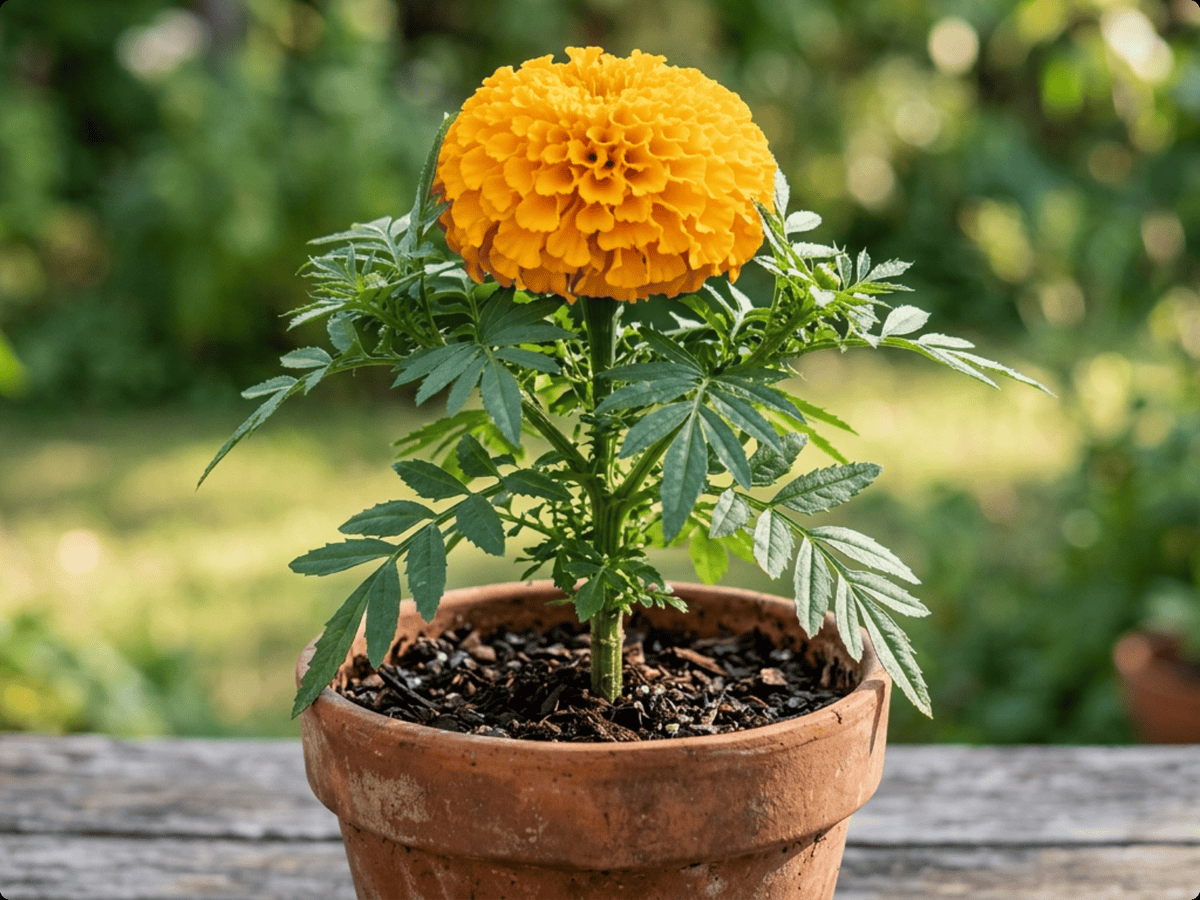
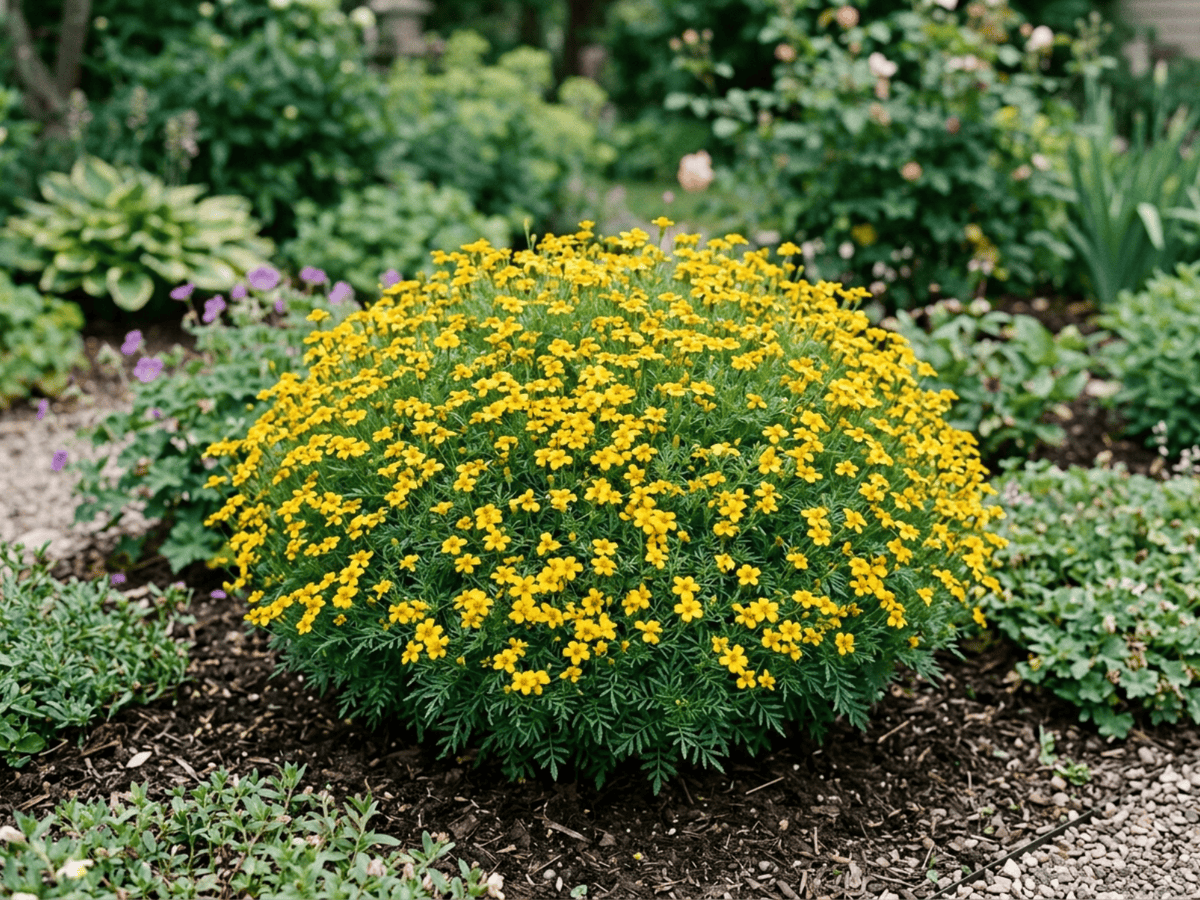
Tagetes erecta, the African marigold (actually from Mexico), produces large, pompom-like flowers in rich yellows, oranges, and creams on sturdy 60–90 cm plants. One of the easiest annuals from seed, it blooms from early summer until frost. The pungent foliage deters many garden pests. In Mexico, marigolds are the iconic flower of Día de los Muertos, creating golden paths to guide spirits home. Commercial varieties like 'Inca' and 'Discovery' produce uniform plants for mass bedding. Marigold extract (lutein) is the primary commercial source of this important eye-health supplement.
- Edible
- Cut-flower
How to care for Mexican Marigold
Watering
- Springevery 5 days
- Summerevery 3 days
- Fallevery 7 days
- Winterpause watering
Soil · Rich & well-draining
- Top dressingCompost10%
- Main mixPotting soil + compost 3:180%
- DrainageGravel10%
Top up the compost layer each season.
FERTILIZER
Balanced Feed 14-14-14
An even feed covers all three needs at once, keeping leaves, roots and blooms moving together with nothing pushed out of balance.
- Nitrogen · Leaves
- Phosphorus · Roots + Blooms
- Potassium · Strength
- Springevery 21 days
- Summerevery 21 days
At a Glance
- NativeNorth America, Central America
- Height1–3 ft (0.3–0.9 m)
- Spread1–2 ft (0.3–0.6 m)
- Flower colorOrange, Yellow
- Foliage colorGreen
- SoilLoamy, Well-drained
- LocationsYard · Balcony
Bloom time
BLOOM CYCLE
Peak bloom
Jun–Nov
Large pompom blooms; deadhead for continuous flowering; pungent foliage deters pests
Fragrance
STRONG FRAGRANCE
Distinctive pungent medicinal scent when foliage is crushed; polarizing — some love it, some find it overwhelming.
Toxicity
Humans Slight · Pets Slight
thiophenes (nematicidal compounds)
Slight
- Leaf
- Sap
- Contact
- Ingestion
EXPOSURE Touching leaves and sap. Eating leaves and sap.
EFFECT Mild dermatitis and mild GI upset if eaten in quantity.
NOTE Documented concern for humans: Mild dermatitis and mild GI upset if eaten in quantity.
Slight
- Leaf
- Contact
EXPOSURE Touching leaves.
EFFECT Contact dermatitis from crushed foliage in sensitive individuals and per ASPCA.
NOTE Flower petals are used as colorant/edible garnish, but NC State flags poisonous characteristics; ASPCA notes mild pet dermatitis/GI effects.
Slight
- Leaf
- Contact
- Ingestion
EXPOSURE Touching leaves. Eating leaves.
EFFECT Mild GI upset, dermatitis from crushed foliage and per ASPCA.
NOTE Flower petals are used as colorant/edible garnish, but NC State flags poisonous characteristics; ASPCA notes mild pet dermatitis/GI effects.
Educational information, not medical or veterinary advice. If exposure is suspected, contact a doctor or veterinarian.
DISTRIBUTION

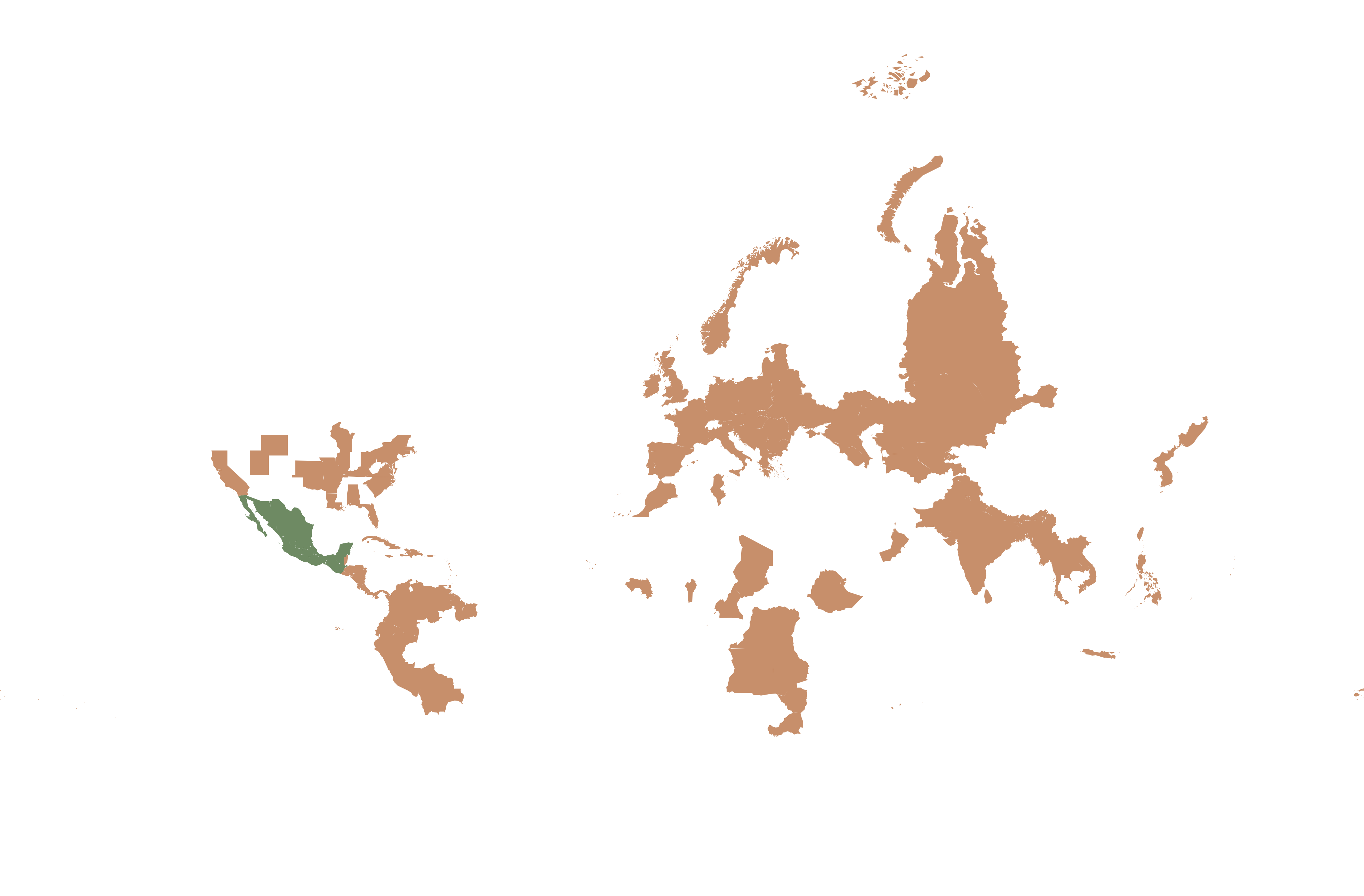
- Native
- Introduced
- North America
- Central America
History
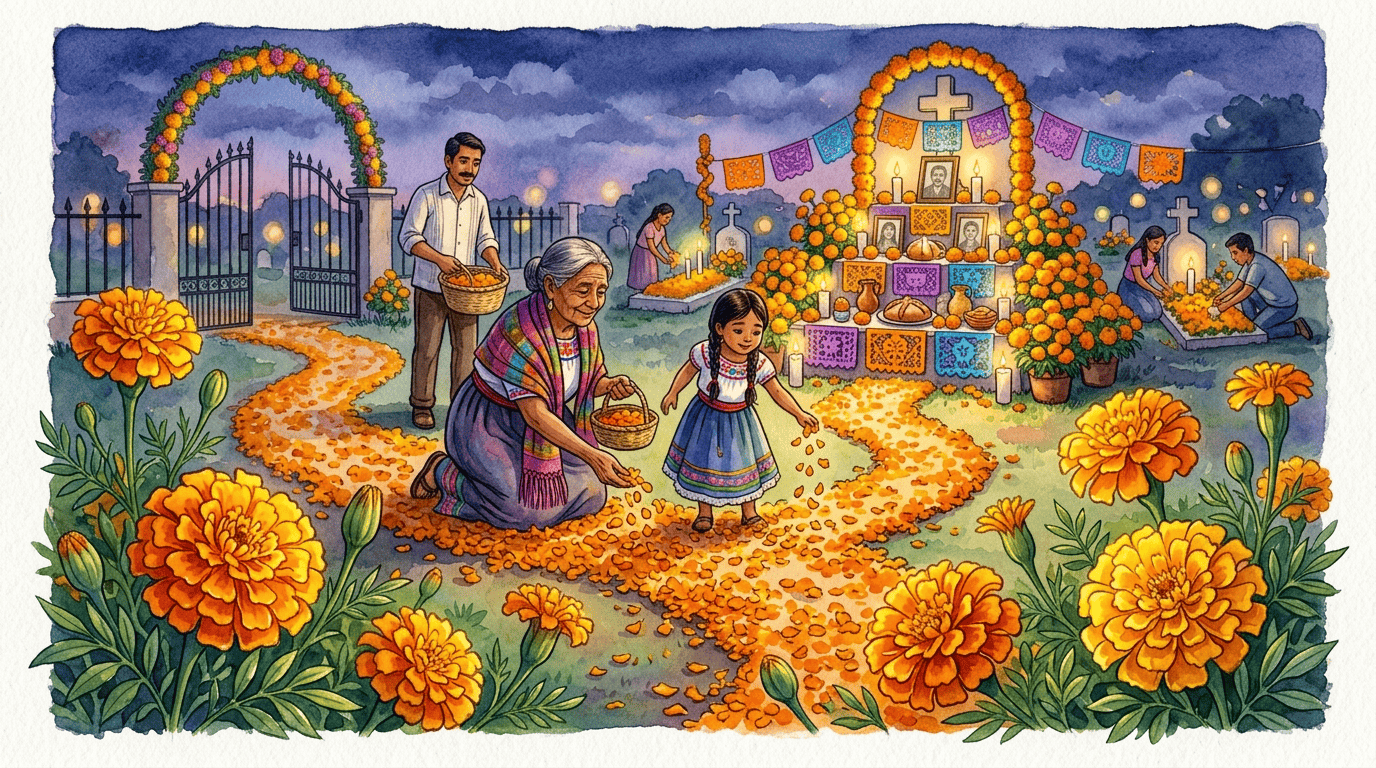
Tagetes erecta is native to Mexico and Central America, where it was cultivated and culturally important long before European contact. Its Nahuatl name is cempasúchil ('twenty-flower' or 'many-petal flower'), and it remains the defining flower of Mexico's Day of the Dead (Día de los Muertos) celebrations on November 1–2: altars are piled with its vivid orange-yellow flowers, and petal paths are laid from cemetery gates to family graves to guide the returning spirits of the dead home. Spanish colonizers took it to Europe in the 1500s, and the species now grows as a crop throughout India, China, and South Asia, where it is also the source of yellow-orange carotenoid pigments used commercially in chicken feed (to deepen egg yolk color) and in fabric dyeing.
Non-toxic to pets. Spanish explorers brought it to Europe in the 1500s, and it reached Africa via Portuguese traders — hence the misleading common name.
In Mexico, the Día de los Muertos celebration uses over 15,000 tonnes of marigold flowers annually — the bright petals are believed to attract departed souls with their color and scent. India is the world's largest marigold producer, growing them for temple garlands, wedding decorations, and the industrial extraction of lutein, a carotenoid pigment crucial for eye health.
Symbolism & meaning
What It Symbolizes
Mexican Marigold is remembrance in marigold gold — the flower of the Día de los Muertos, scattered on graves and altars to guide the spirits of the departed home with it bright color and pungent scent. For centuries before the conquest the Aztecs offered its as cempasúchil, the flower of the dead, and the tradition has never faltered. It is the petal path that connects the living and the loved-no-longer-here.
- Remembrance — The Día de los Muertos flower, guiding spirits of the departed home with golden light
Where the Name Comes From
The name Mexican Marigold points to Mexico. Tagetes from Tages, an Etruscan deity. Erecta means 'upright,' for the tall growth habit.
Uses & Fun Facts
- Sacred bloom for Mexican Día de los Muertos altars
- Petals add color to salads and traditional dishes
- Industrial source of lutein pigment for poultry feed
- Easy bedding annual deterring pests in vegetable gardens
Related plants
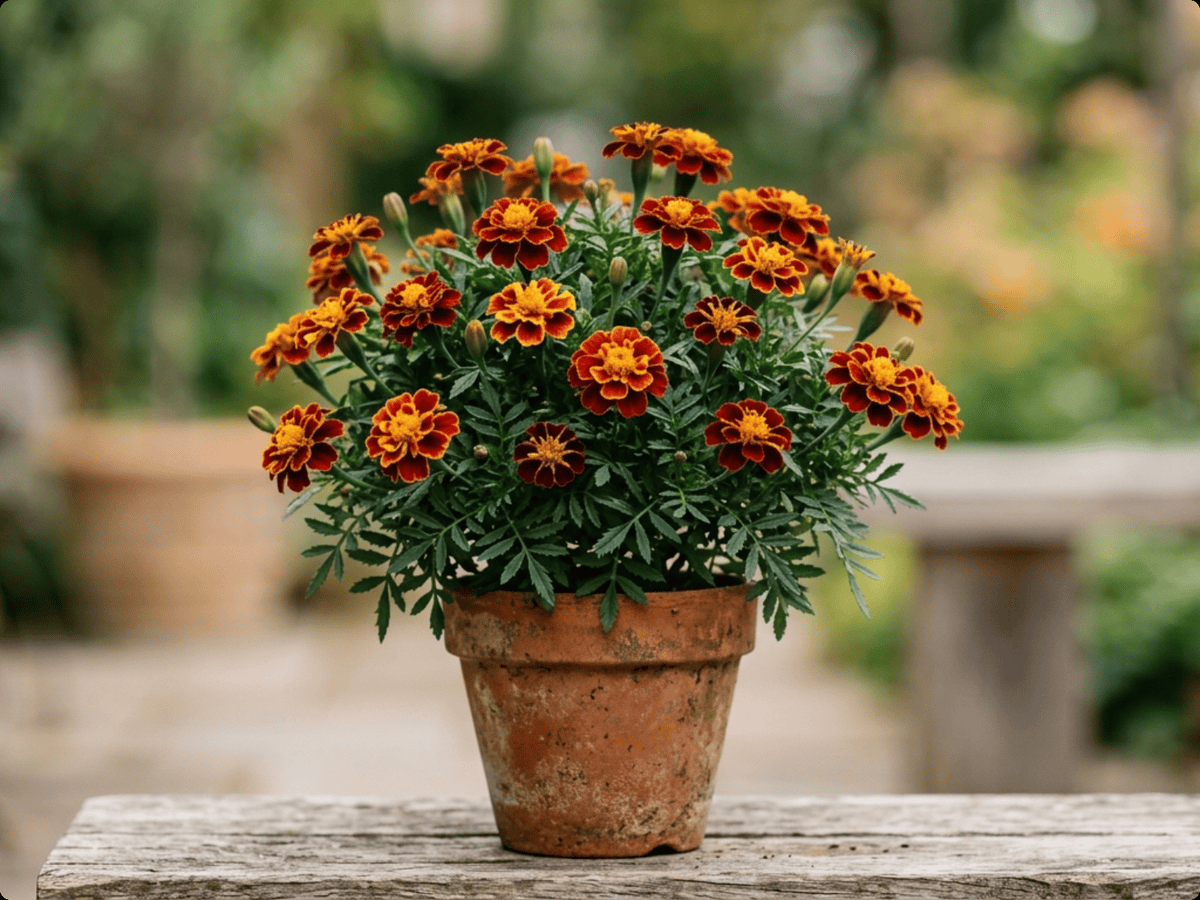
More Tagetes plants
Plants with similar care
 Chinese AbeliaAbelia chinensis
 Fragrant AbeliaAbelia mosanensis
 Large-Flowered AbeliaAbelia uniflora
 Glossy AbeliaAbelia x grandiflora
Frequently asked questions
How often should I water Mexican Marigold?
Water about every 5 days during the growing season, and always let excess water drain away.
How much light does Mexican Marigold need?
Full sun: 6+ hrs direct. Watch the leaves — scorching or stretching means the light needs adjusting.
Is Mexican Marigold toxic to cats or dogs?
Pets Slight (Dogs Slight · Cats Slight) Educational information, not medical or veterinary advice. If exposure is suspected, contact a doctor or veterinarian.
Is Mexican Marigold easy to grow?
Yes — it is considered an easy, beginner-friendly plant.
When does Mexican Marigold bloom?
It typically blooms Jun–Nov in the Northern Hemisphere.
YardMate
Identify any plant in seconds
Snap a photo — YardMate names the plant, diagnoses problems, and reminds you when to water.
Download on the App Store