 YardMate
Flowering Inch Plant
Tradescantia cerinthoides
Medium · Some experienceAbout Flowering Inch Plant
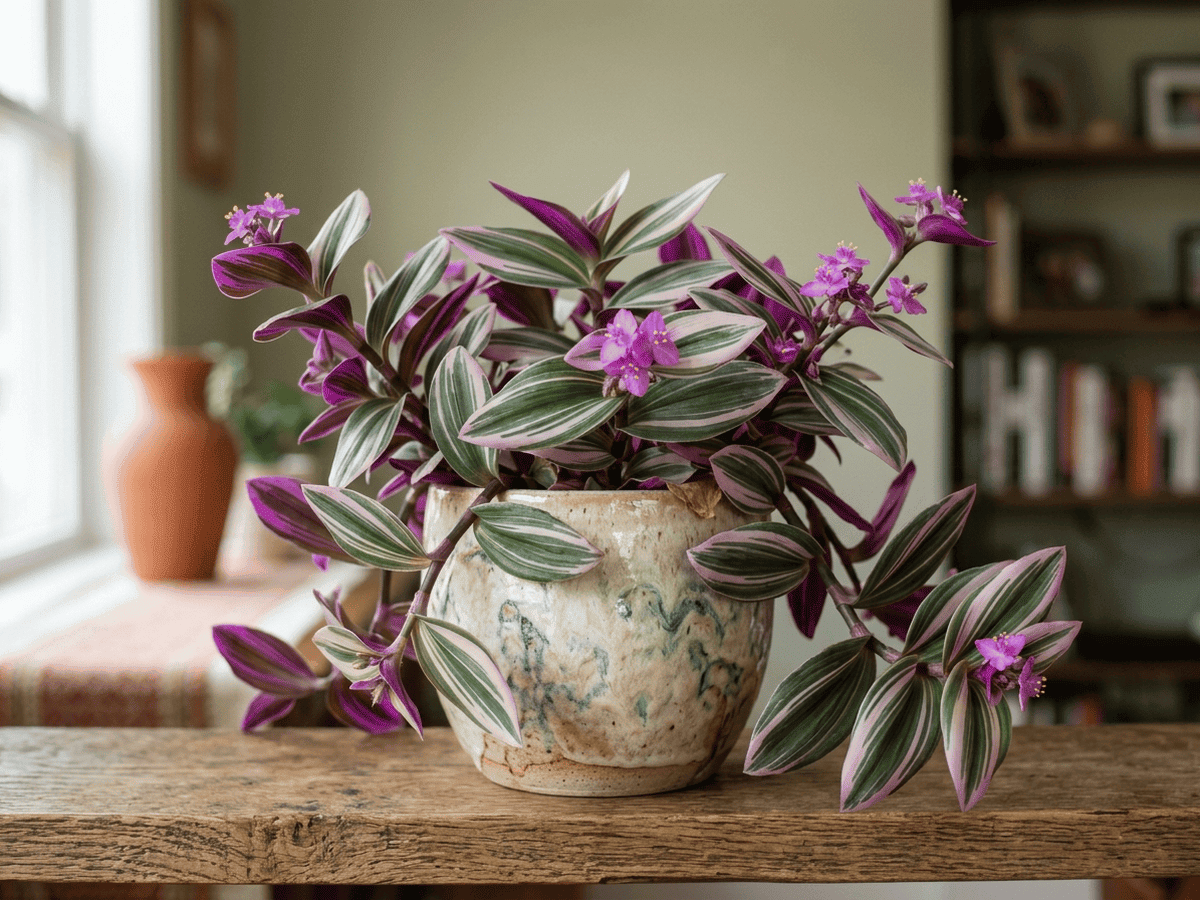
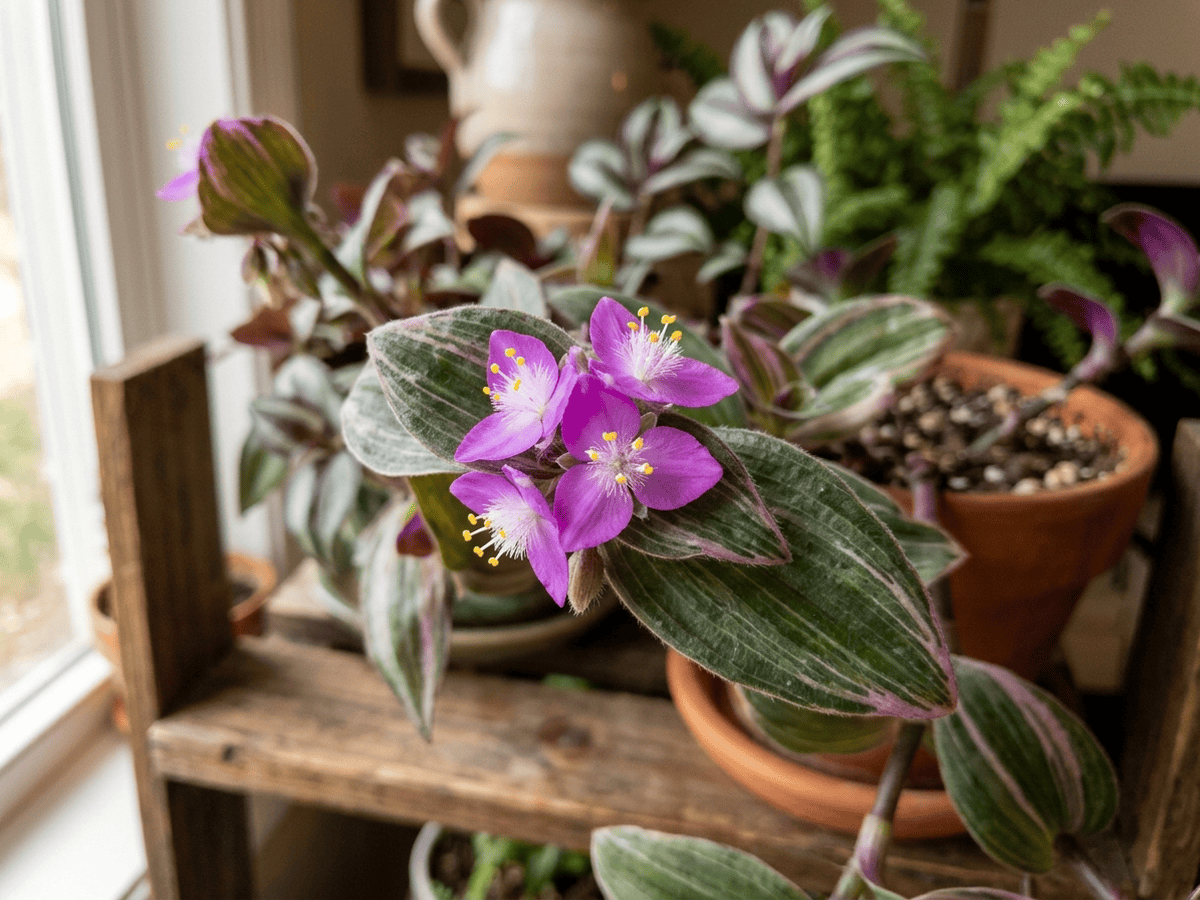
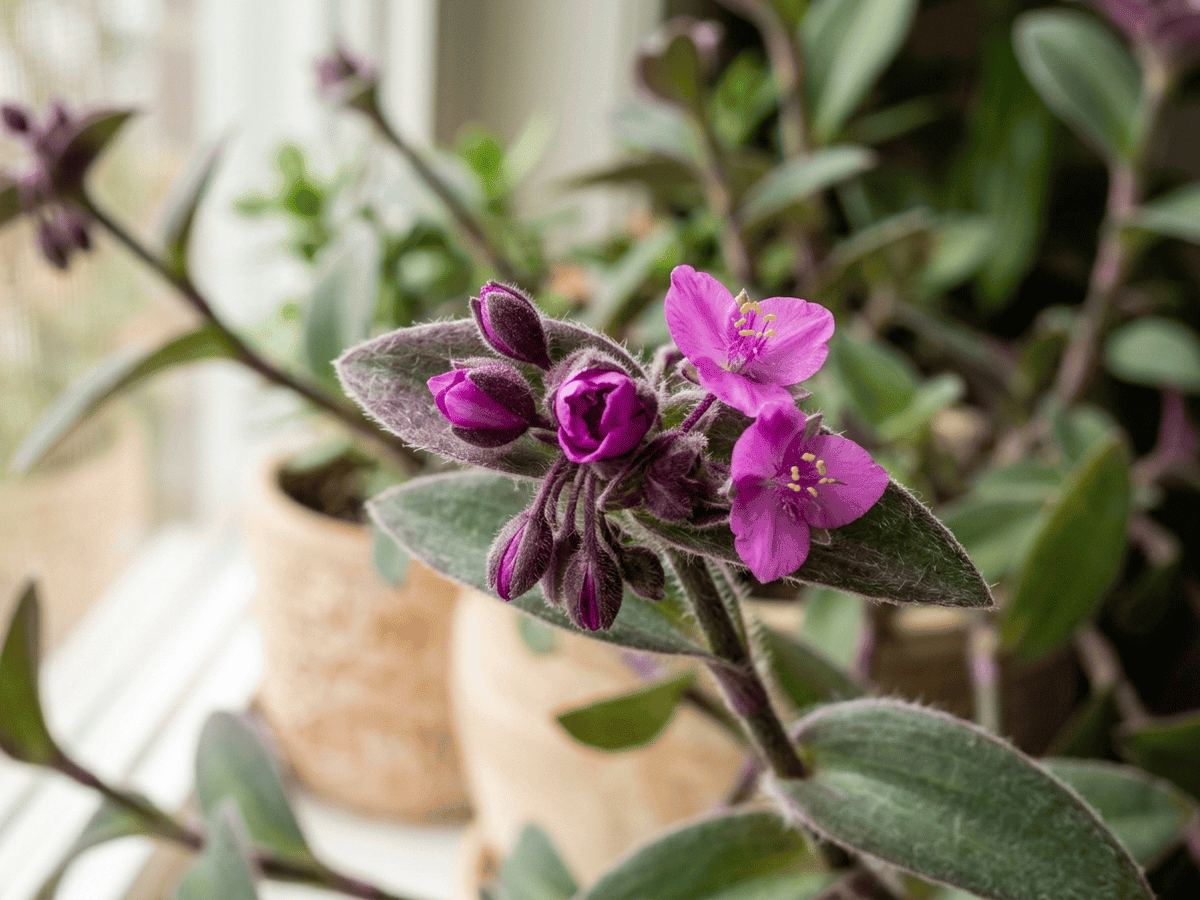
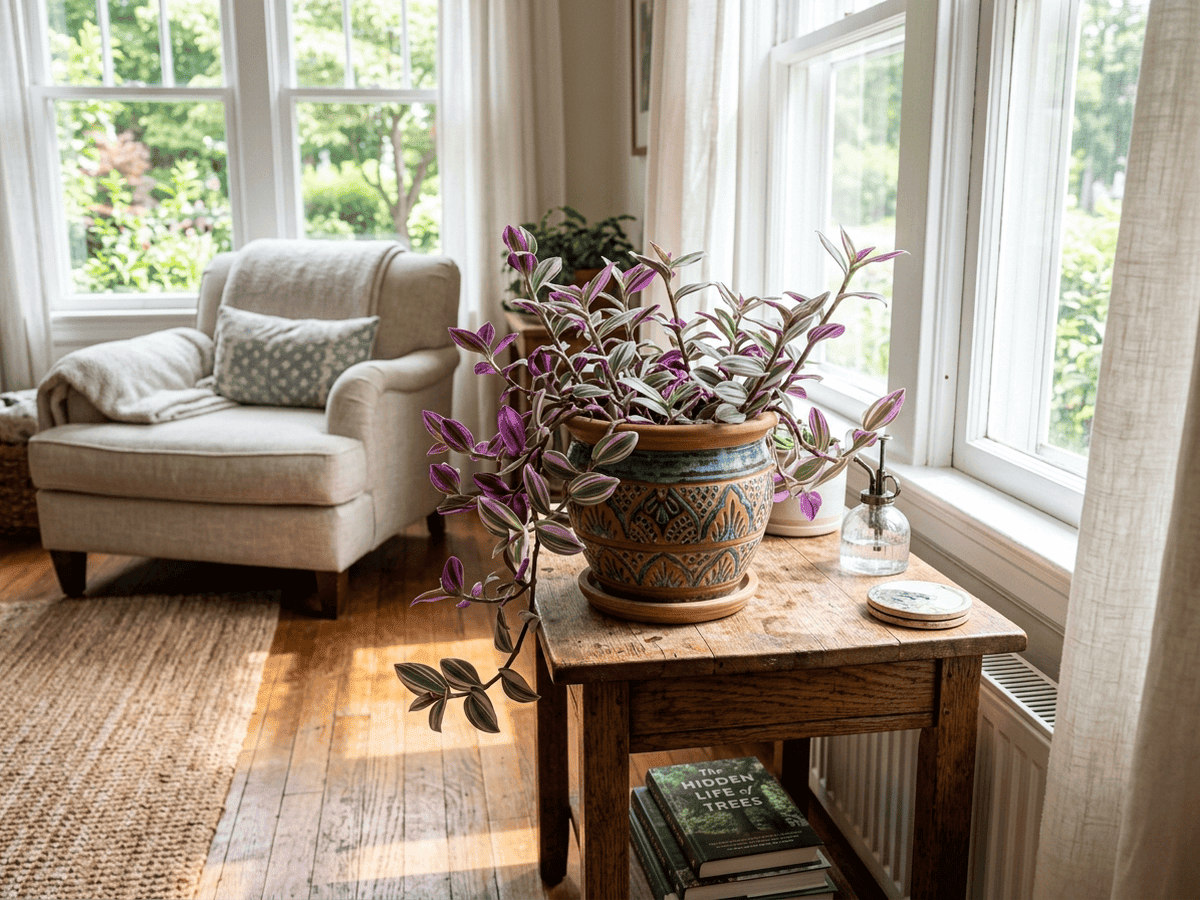
The Flowering Inch Plant is a trailing perennial from the grasslands, rocky outcrops, and coastal sand dunes of southeastern Brazil, Uruguay, and northeastern Argentina, where creeping stems root wherever they touch soil. Its fleshy, lance-shaped leaves are deep green above and flushed purple beneath, covered in fine silvery hairs that catch the light. Three-petaled magenta-pink flowers open in loose clusters through summer, cradled by boat-shaped bracts. Easygoing and fast-spreading, it thrives as a groundcover, hanging basket, or houseplant, tolerating bright light or partial shade with minimal care.
- Fast-growing
- Spreading
- Container-friendly
- Pollinator-friendly
- Shade-tolerant
How to care for Flowering Inch Plant
Watering
- Springevery 10 days
- Summerevery 5 days
- Fallevery 15 days
- Winterpause watering
Soil · Well-draining
- Top dressingPine bark mulch10%
- Main mixPotting soil + perlite 2:170%
- DrainageLECA / gravel20%
Never skip the drainage layer — standing water is the top cause of root rot.
FERTILIZER
Balanced Feed 14-14-14
An even feed covers all three needs at once, keeping leaves, roots and blooms moving together with nothing pushed out of balance.
- Nitrogen · Leaves
- Phosphorus · Roots + Blooms
- Potassium · Strength
- Springevery 30 days
- Summerevery 30 days
- Fallevery 30 days
At a Glance
- NativeSouth America
- Height0.5–1 ft (0.2–0.3 m)
- Spread1–2 ft (0.3–0.6 m)
- Flower colorPurple, Pink
- Foliage colorGreen
- Fruit colorBlue
- SoilLoamy, Well-drained
- LocationsYard · Patio · Indoor
Bloom time
BLOOM CYCLE
Peak bloom
May–Sep
The flowers of this plant bloom in summer, colorful and attracting insects.
Toxicity
Humans Slight · Pets Moderate
calcium oxalate raphides
Slight
- Sap
- Stem
- Leaf
- Contact
EXPOSURE Touching sap, stems, and leaves.
EFFECT Mild skin irritation in sensitive individuals.
NOTE Sap causes contact dermatitis in pets and sensitive people; ingestion may cause mild drooling and stomach upset in dogs and cats.
Moderate
- Sap
- Stem
- Leaf
- Contact
- Sap
- Ingestion
EXPOSURE Touching sap, stems, and leaves. Contact with sap, stems, and leaves. Eating sap, stems, and leaves.
EFFECT Contact dermatitis, skin redness, drooling, and mild vomiting if ingested.
NOTE Sap causes contact dermatitis in pets and sensitive people; ingestion may cause mild drooling and stomach upset in dogs and cats.
Moderate
- Sap
- Stem
- Leaf
- Contact
- Sap
- Ingestion
EXPOSURE Touching sap, stems, and leaves. Contact with sap, stems, and leaves. Eating sap, stems, and leaves.
EFFECT Contact dermatitis, skin redness, drooling, and mild vomiting if ingested.
NOTE Sap causes contact dermatitis in pets and sensitive people; ingestion may cause mild drooling and stomach upset in dogs and cats.
Educational information, not medical or veterinary advice. If exposure is suspected, contact a doctor or veterinarian.
DISTRIBUTION


- Native
- Introduced
- South America
History
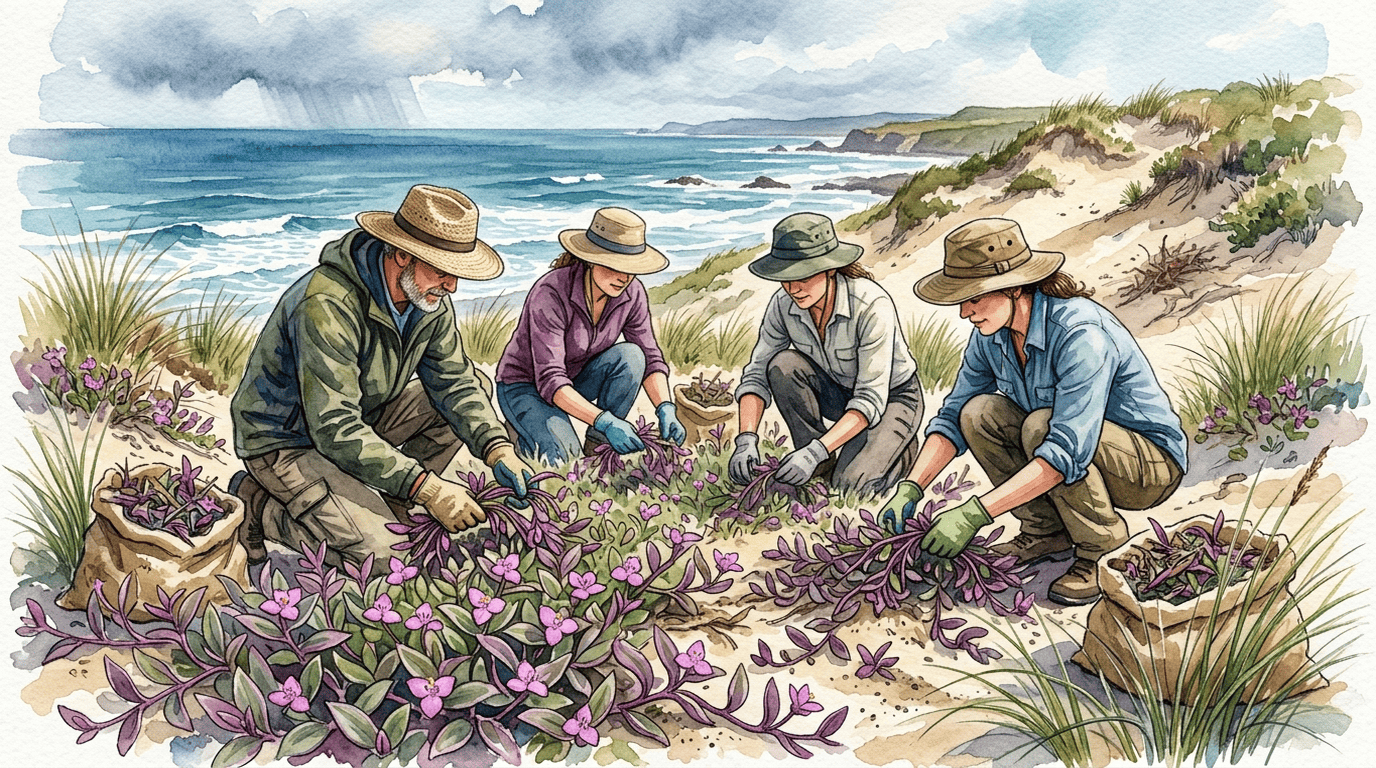
The genus Tradescantia commemorates John Tradescant the Elder and his son, two of the most celebrated gardeners of 17th-century England. As keepers of the royal gardens under Charles I, the Tradescants traveled abroad and traded with fellow collectors to fill their London garden and their famous cabinet of curiosities, the Ark, with plants and oddities gathered from across the known world. Two centuries later, in 1843, the German botanist Carl Sigismund Kunth formally described this particular species from specimens collected in the grasslands, rocky outcrops, and coastal sand dunes of southeastern Brazil, Uruguay, and northeastern Argentina, naming it cerinthoides for its leaves' resemblance to the honeywort genus Cerinthe. Prized by gardeners worldwide for its resilience and trailing purple-flushed foliage, the Flowering Inch Plant was carried far beyond its native range as an ornamental groundcover and houseplant. In places like New Zealand and parts of Australia, it escaped cultivation and now forms dense mats along coastal dunes and forest margins, crowding out native seedlings — turning a cherished garden plant into a target for conservation volunteers working to restore threatened dune ecosystems.
Symbolism & meaning
What It Symbolizes
Because a single broken stem of the Flowering Inch Plant can root and multiply almost anywhere it lands — from sun-baked dunes to shaded windowsills — gardeners have long read it as an emblem of resilience and abundance, a plant that turns scarcity into thriving green cover.
- Resilience — Its ability to root from any broken stem and thrive across harsh dunes and shaded understories makes it a symbol of quiet endurance.
- Abundance — Dense trailing mats of foliage and prolific summer flowers evoke lush, unstoppable growth.
Where the Name Comes From
The genus honors John Tradescant the Elder and his son, 17th-century English royal gardeners and plant collectors; cerinthoides refers to the leaves' resemblance to Cerinthe, the honeywort genus.
Uses & Fun Facts
- Popular trailing groundcover and houseplant for containers and hanging baskets.
- Three-petaled summer flowers attract bees and other small pollinators.
Related plants
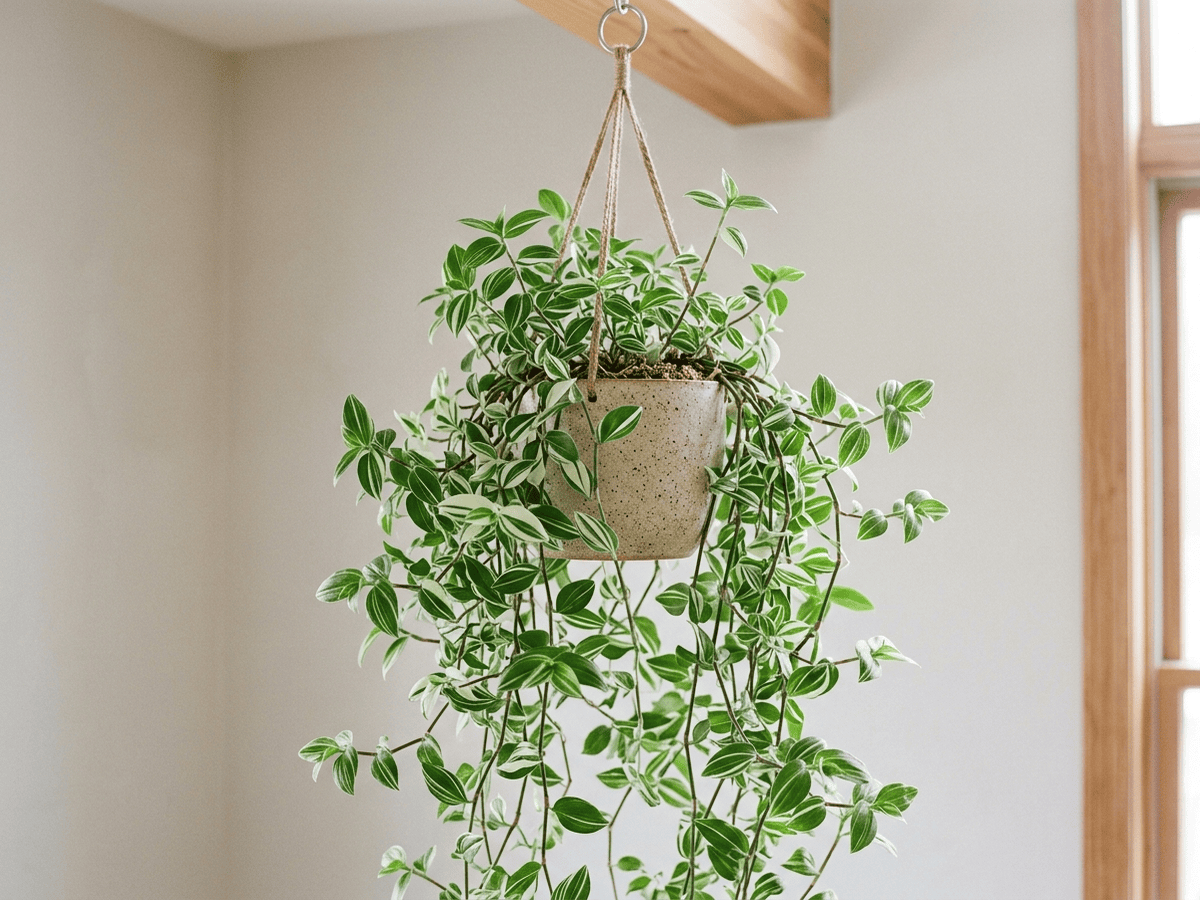
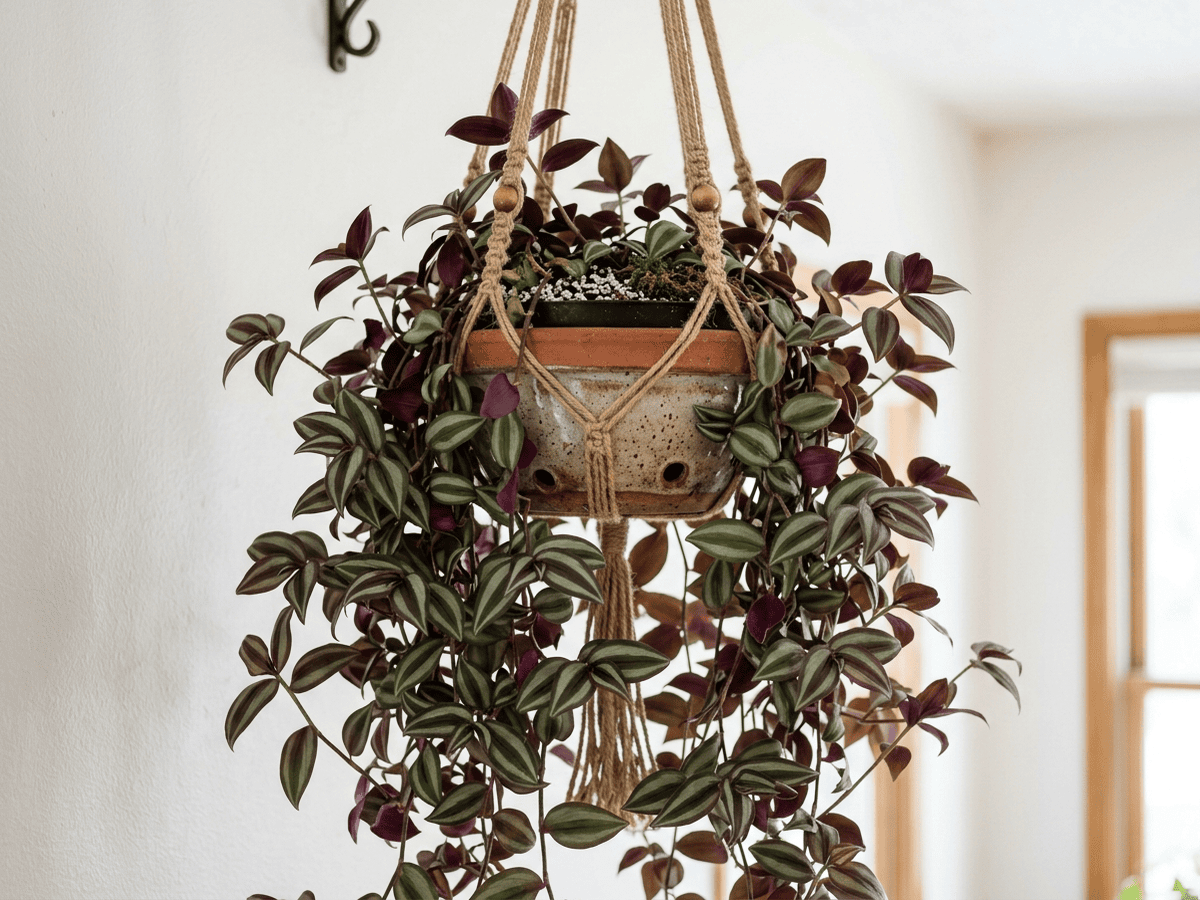
More Tradescantia plants
Plants with similar care
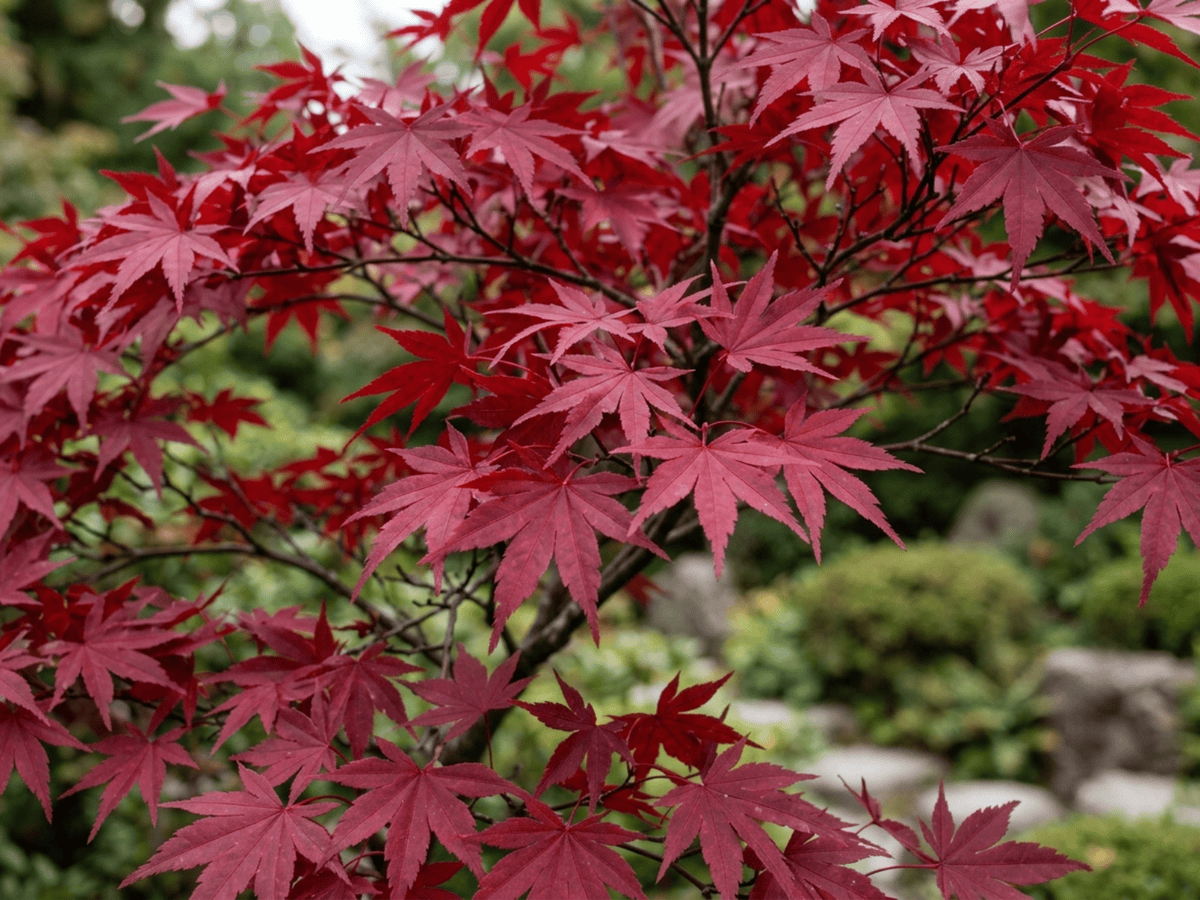 Japanese MapleAcer palmatum
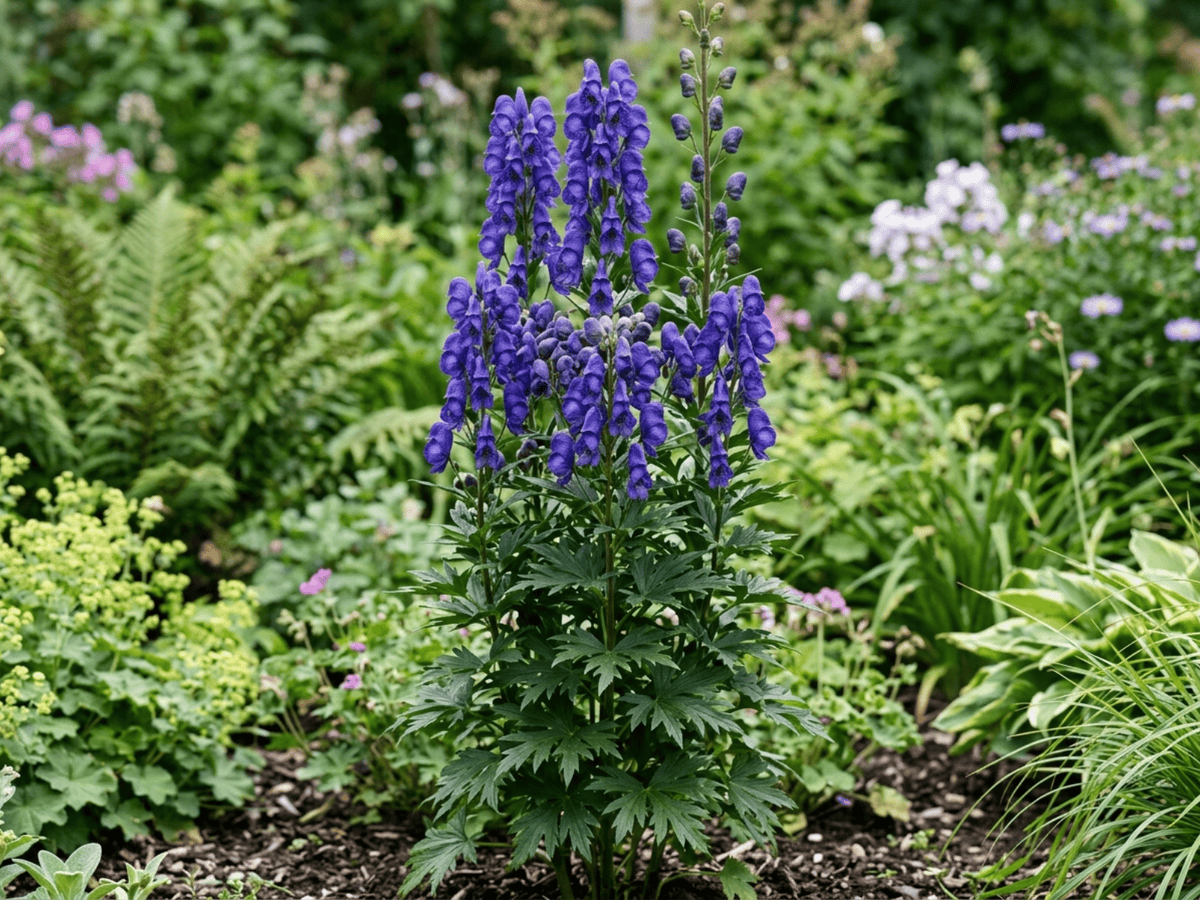 Azure MonkshoodAconitum carmichaelii
 Florida HobblebushAgarista populifolia
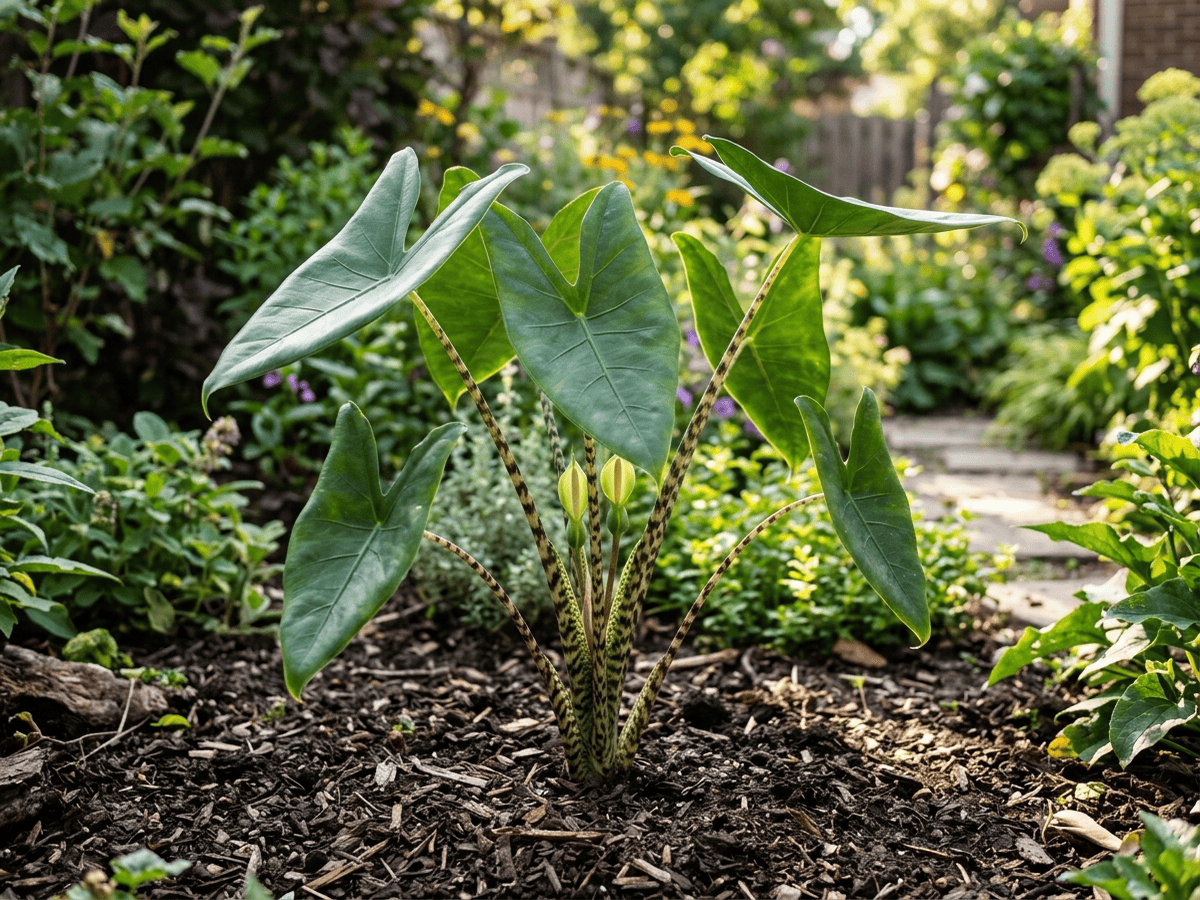 Alocasia zebrinaAlocasia zebrina
Frequently asked questions
How often should I water Flowering Inch Plant?
Water about every 10 days during the growing season, and always let excess water drain away.
How much light does Flowering Inch Plant need?
Part shade: 2–4 hrs direct. Watch the leaves — scorching or stretching means the light needs adjusting.
Is Flowering Inch Plant toxic to cats or dogs?
Pets Moderate (Dogs Moderate · Cats Moderate) Educational information, not medical or veterinary advice. If exposure is suspected, contact a doctor or veterinarian.
Is Flowering Inch Plant easy to grow?
It is moderately demanding: a good choice once you have a little experience.
Can Flowering Inch Plant be grown indoors?
Yes, it adapts well to indoor growing given the right light.
When does Flowering Inch Plant bloom?
It typically blooms May–Sep in the Northern Hemisphere.
YardMate
Identify any plant in seconds
Snap a photo — YardMate names the plant, diagnoses problems, and reminds you when to water.
Download on the App Store