 YardMate

Small-Leaf Spiderwort
Tradescantia fluminensis
Easy · Beginner friendlyAbout Small-Leaf Spiderwort
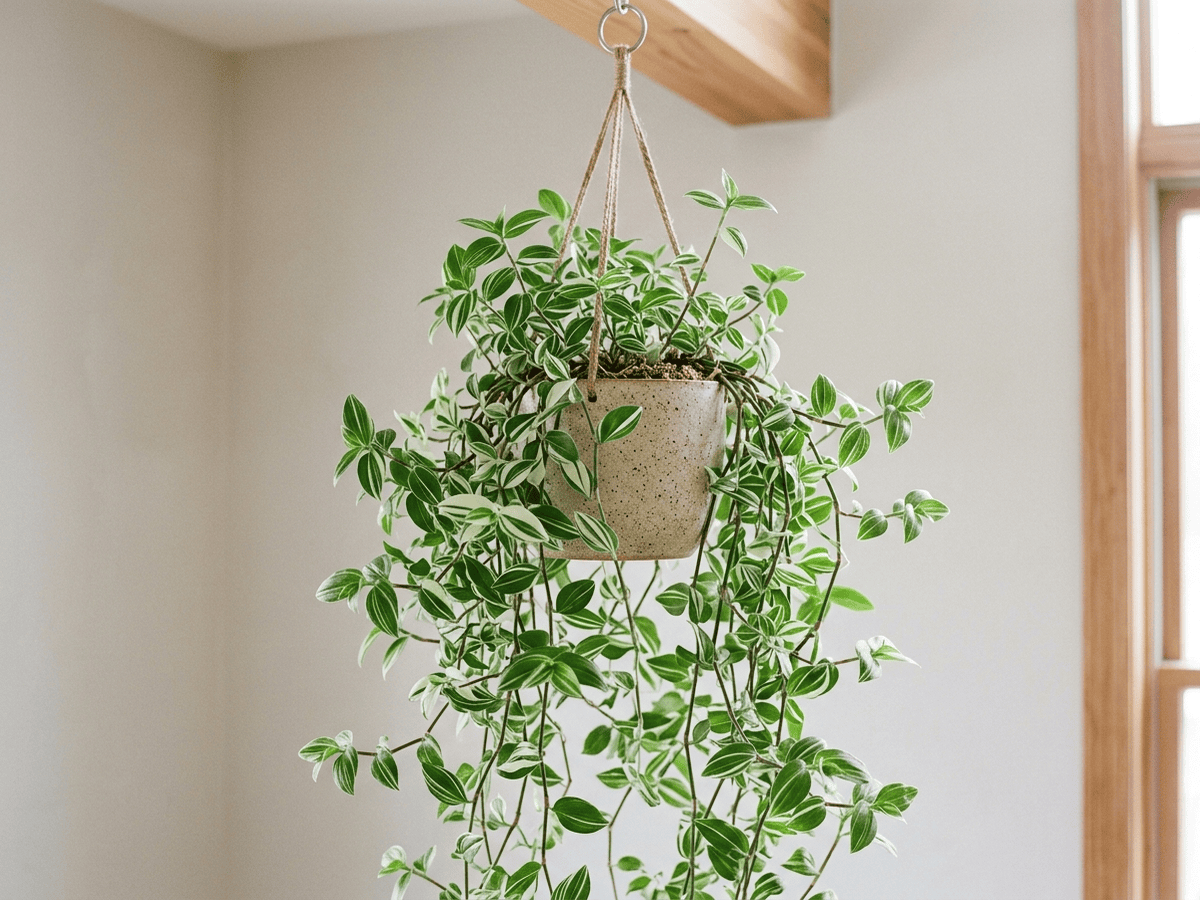
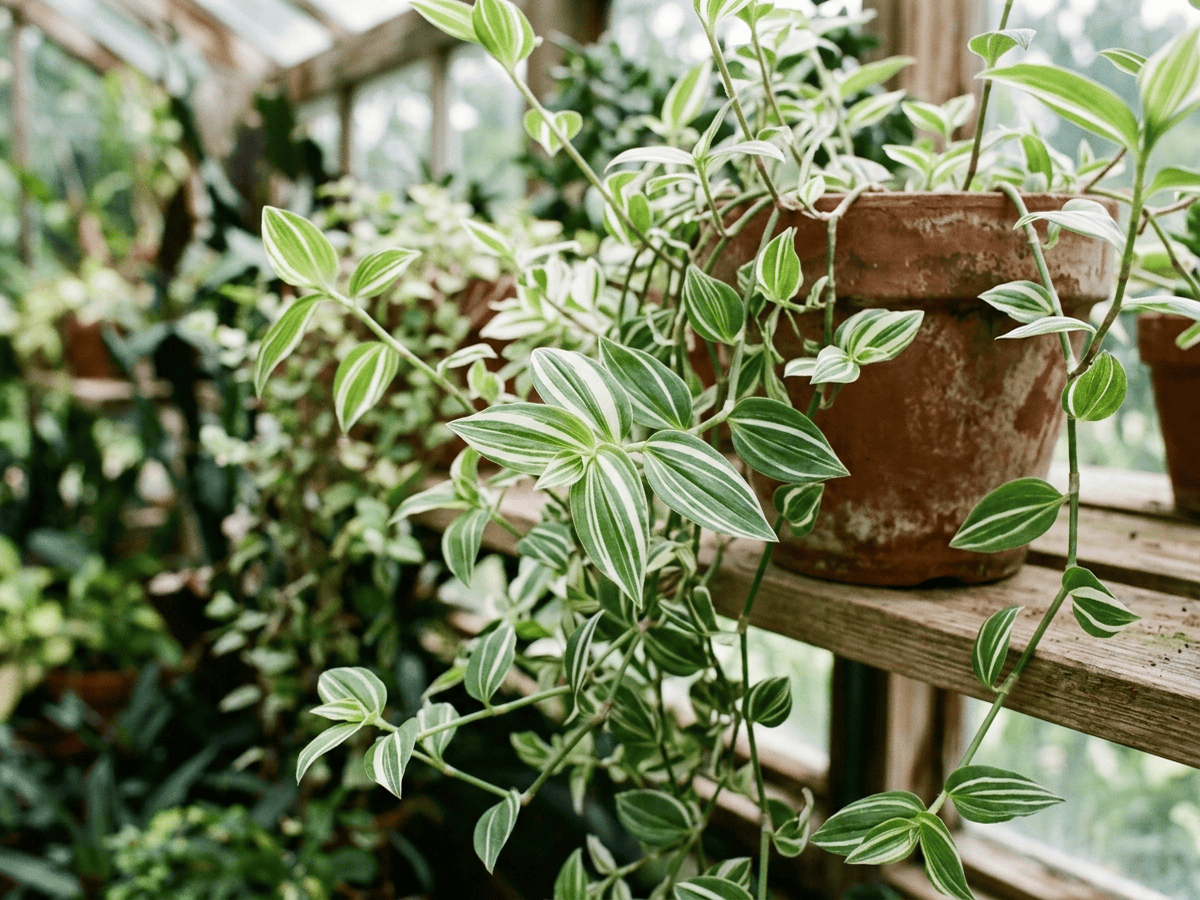
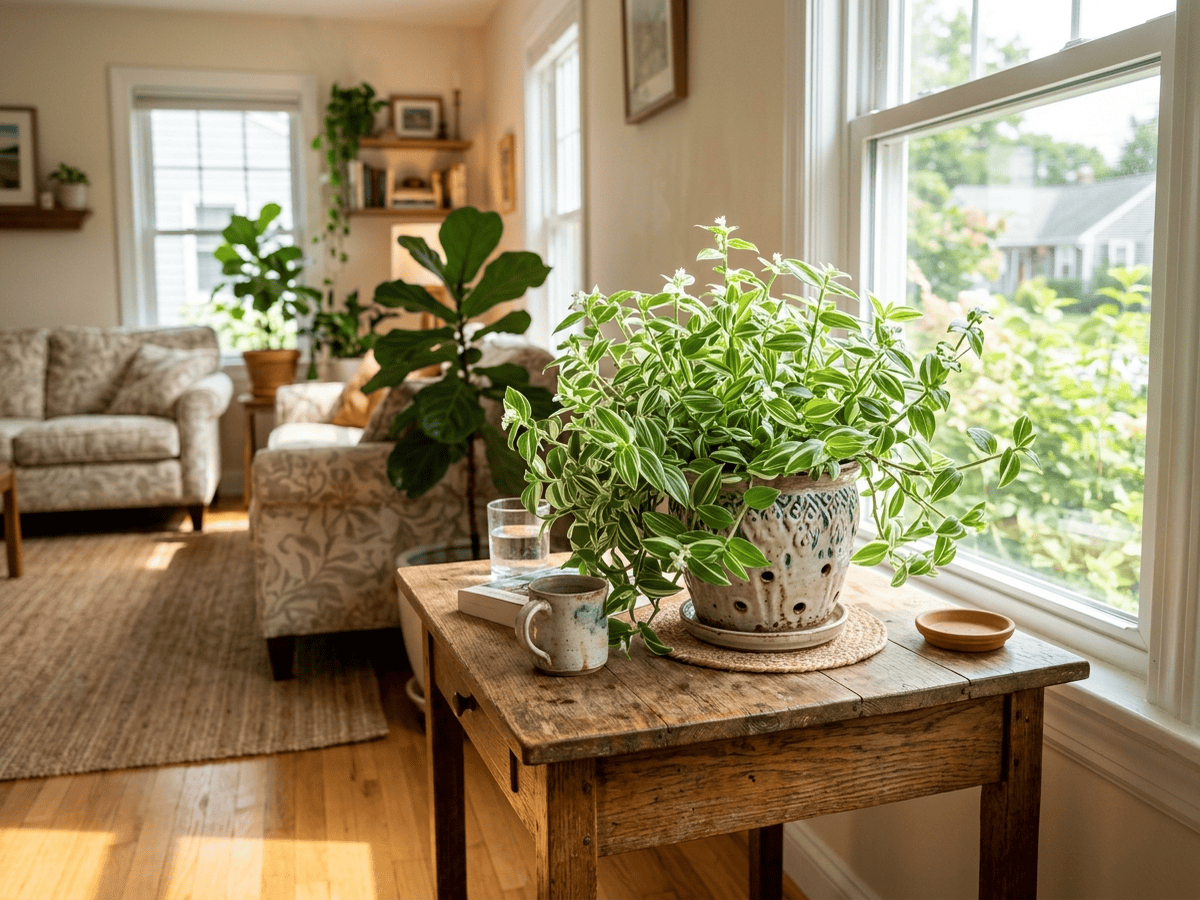
Tradescantia fluminensis, the small-leaf spiderwort, is a vigorous trailing plant with oval, glossy green leaves on fleshy stems. Native to southeastern Brazil, it is even more robust than T. zebrina, forming dense mats of foliage. Variegated forms like 'Tricolor' with pink, white, and green stripes are popular houseplants. The plant is virtually indestructible — any stem fragment with a node will root and grow. This resilience makes it both an excellent beginner plant indoors and a serious invasive threat in warm climates including New Zealand, Australia, and the southeastern United States.
- Trailing
- Groundcover
- Fast-growing
How to care for Small-Leaf Spiderwort
Watering
- Springevery 5 days
- Summerevery 4 days
- Fallevery 7 days
- Winterevery 10 days
Soil · Well-draining
- Top dressingPine bark mulch10%
- Main mixPotting soil + perlite 2:170%
- DrainageLECA / gravel20%
Never skip the drainage layer — standing water is the top cause of root rot.
FERTILIZER
Balanced Feed 14-14-14
An even feed covers all three needs at once, keeping leaves, roots and blooms moving together with nothing pushed out of balance.
- Nitrogen · Leaves
- Phosphorus · Roots + Blooms
- Potassium · Strength
- Springevery 30 days
- Summerevery 30 days
- Fallevery 60 days
At a Glance
- NativeSouth America
- Height0.5–1 ft (0.2–0.3 m)
- Spread1–2 ft (0.3–0.6 m)
- Flower colorWhite
- Foliage colorGreen, Variegated, Red
- SoilLoamy, Moisture-retentive
- LocationsIndoor · Balcony
Bloom time
BLOOM CYCLE
Peak bloom
May–Sep
Small three-petaled white flowers
Fragrance
NO FRAGRANCE
Not fragrant.
Toxicity
Humans Slight · Pets Slight
unidentified sap irritants
Slight
- Sap
- Contact
EXPOSURE Touching sap.
EFFECT Mild contact dermatitis in sensitive individuals.
NOTE Primarily a contact irritant; not internally toxic.
Slight
- Leaf
- Stem
- Sap
- Contact
- Ingestion
EXPOSURE Touching leaves, stems, and sap. Eating leaves, stems, and sap.
EFFECT Allergic dermatitis where sap contacts belly, mild GI upset if eaten, and per ASPCA Tradescantia listing.
NOTE Primarily a contact irritant; not internally toxic.
Slight
- Leaf
- Stem
- Sap
- Contact
- Ingestion
EXPOSURE Touching leaves, stems, and sap. Eating leaves, stems, and sap.
EFFECT Allergic dermatitis where sap contacts skin, mild GI upset if eaten, and per ASPCA Tradescantia listing.
NOTE Primarily a contact irritant; not internally toxic.
Educational information, not medical or veterinary advice. If exposure is suspected, contact a doctor or veterinarian.
DISTRIBUTION

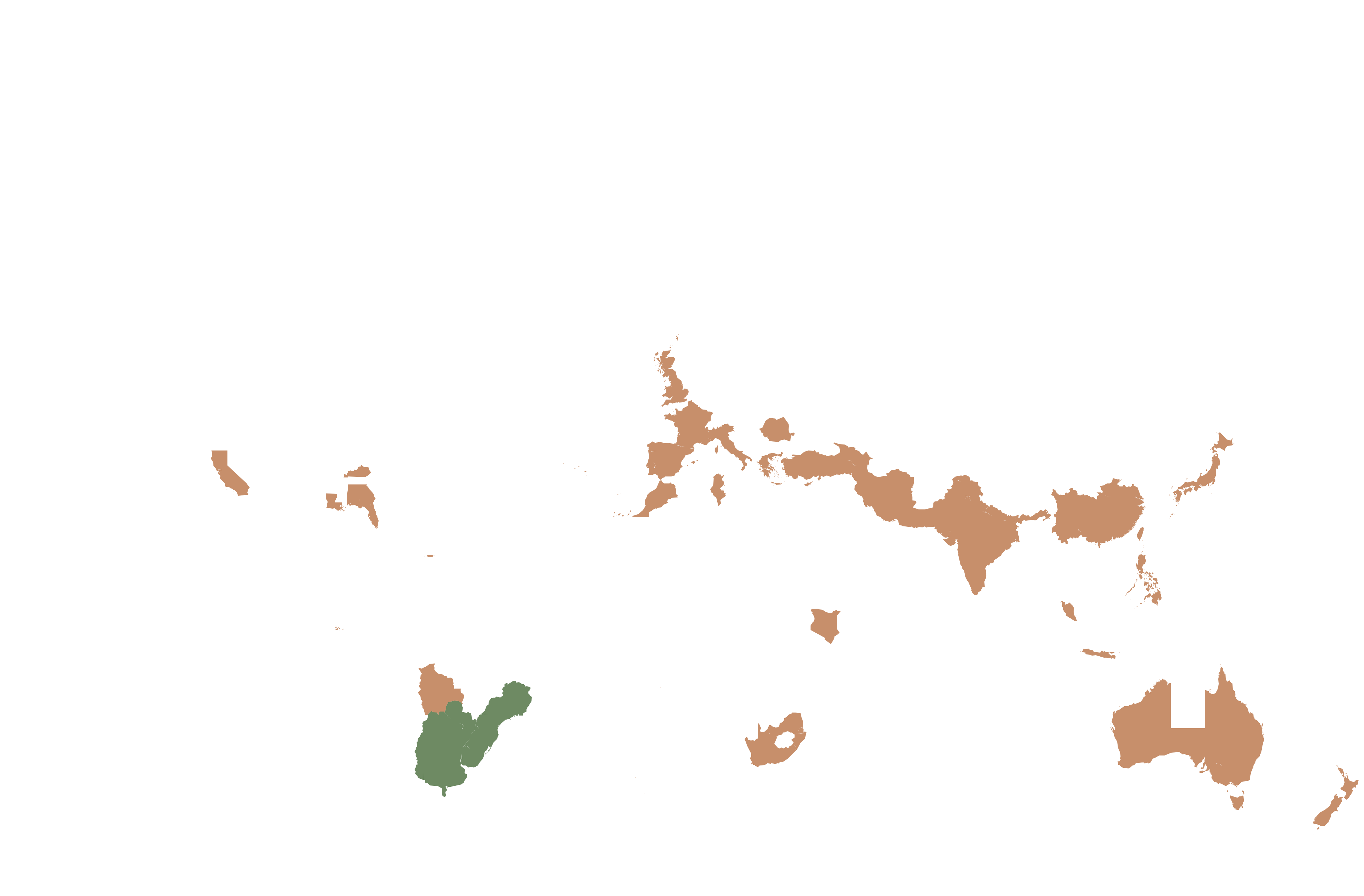
- Native
- Introduced
- South America
History

Tradescantia fluminensis is native to the Atlantic coastal forests of southeastern Brazil and Argentina, where it grows as a trailing ground-cover beneath humid canopies. Introduced globally as an ornamental in the 19th century for its glossy green leaves and small white flowers, it escaped into wild forests in almost every humid temperate and subtropical region where it was planted. In New Zealand it is now classified as a priority invasive and banned from sale; it forms dense mats up to 60 cm deep that prevent native tree seedlings from establishing.
Biological control programs using Brazilian leaf-beetles began in the 2010s with partial success. As a houseplant — including the popular 'Nanouk' and 'Tricolor' cultivars — it remains inexpensive and easy to grow.
Tradescantia fluminensis is named after the Rio de Janeiro region (Flumen Januarii) where it was first collected. Research at Landcare Research NZ identified a tradescantia leaf beetle as a biological control agent.
Symbolism & meaning
What It Symbolizes
The Small-Leaf Spiderwort can symbolize resilience, regenerating from the smallest stem fragment and quietly resuming growth wherever it lands. Its symbolism is the unstoppable life force itself, the green that always finds a way back, often to the surprise and frustration of gardeners trying to remove it. In the language of houseplants, tradescantia is the cheerful immortal, a vine whose meaning sits exactly between admiration for its tenacity and respect for its capacity to outlast almost any neglect.
- Resilience — Its ability to regenerate from the smallest fragment represents unstoppable life force
Where the Name Comes From
Tradescantia honors John Tradescant, English royal gardener. Fluminensis means 'of the river,' referring to the Rio de Janeiro region where it was first found.
Uses & Fun Facts
- Trailing inch-plant covers shaded ground in mild climates
- Easy hanging-basket plant for indoor or porch display
- Glossy striped leaves on cascading stems
Related plants
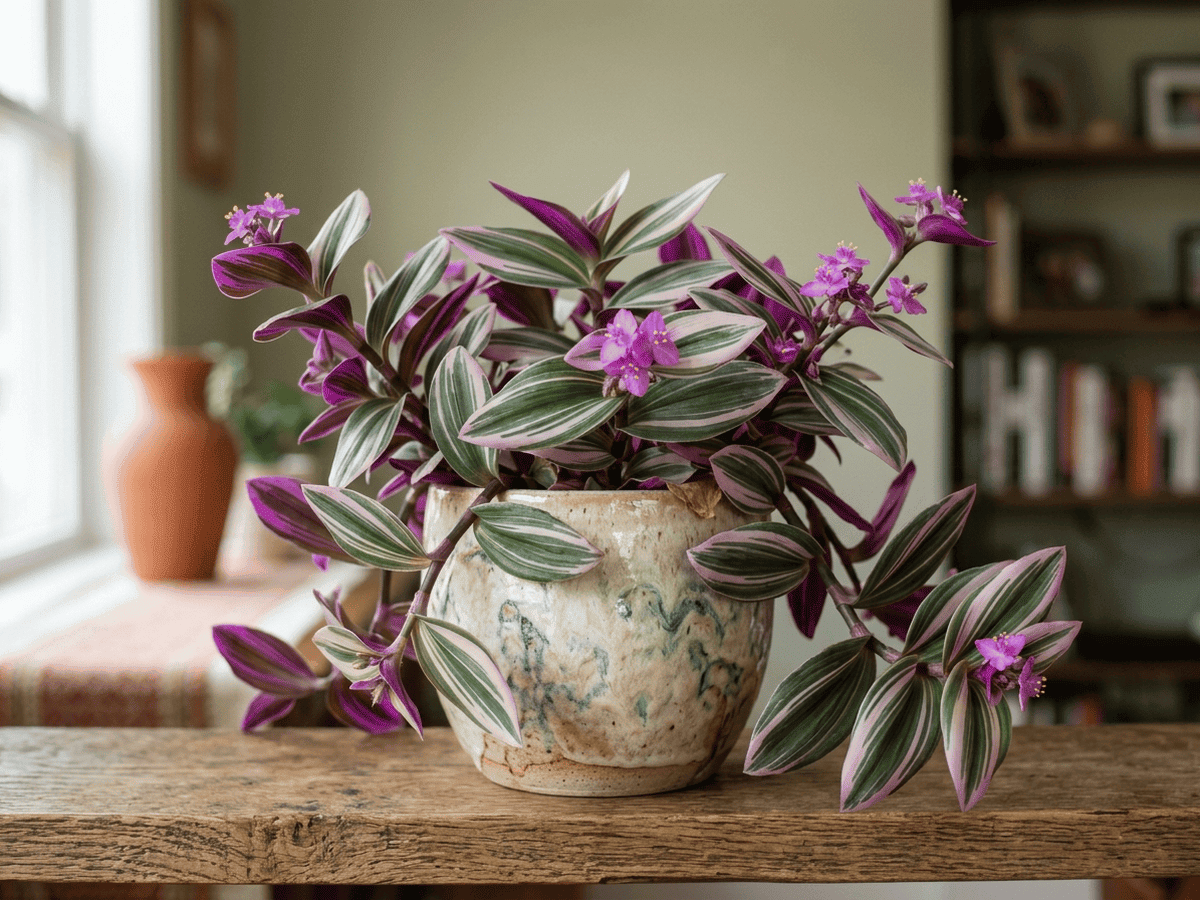
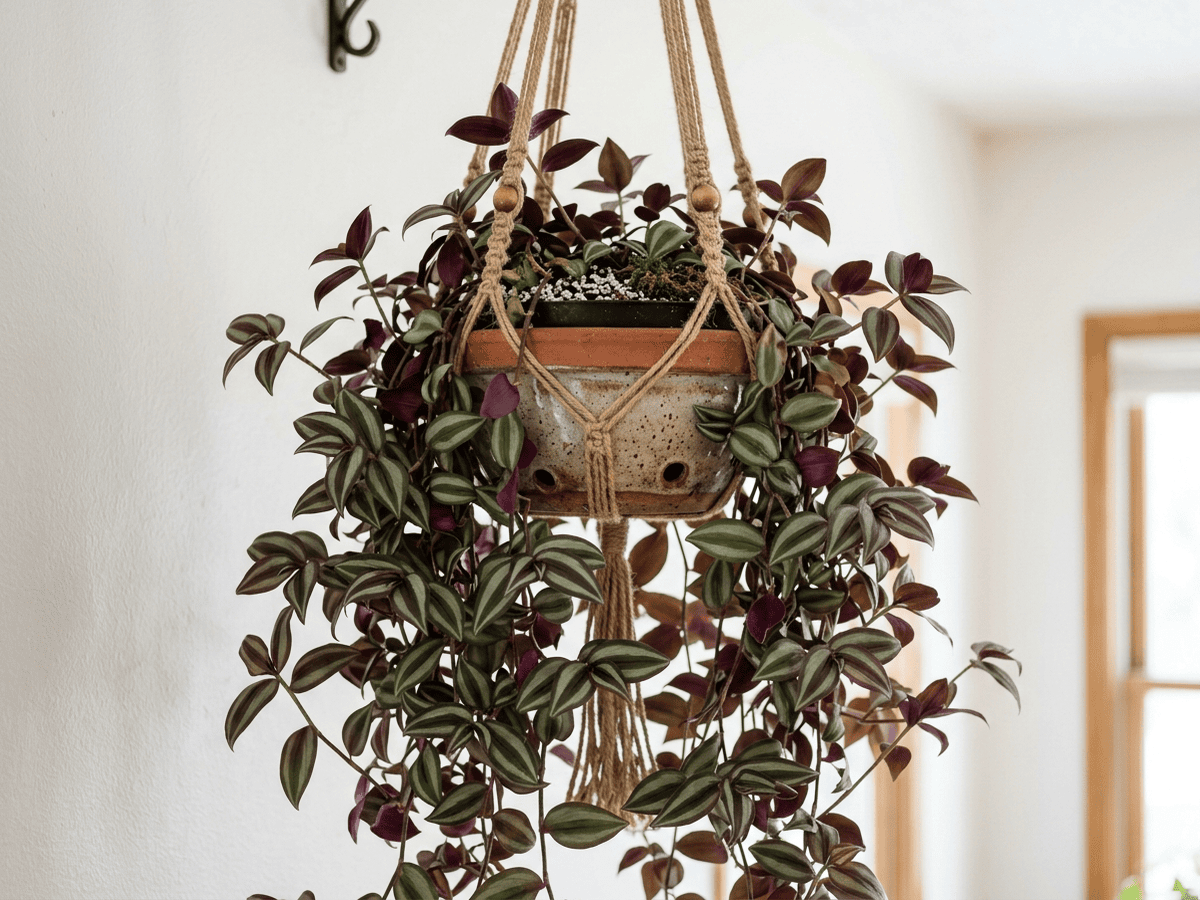
More Tradescantia plants
Plants with similar care
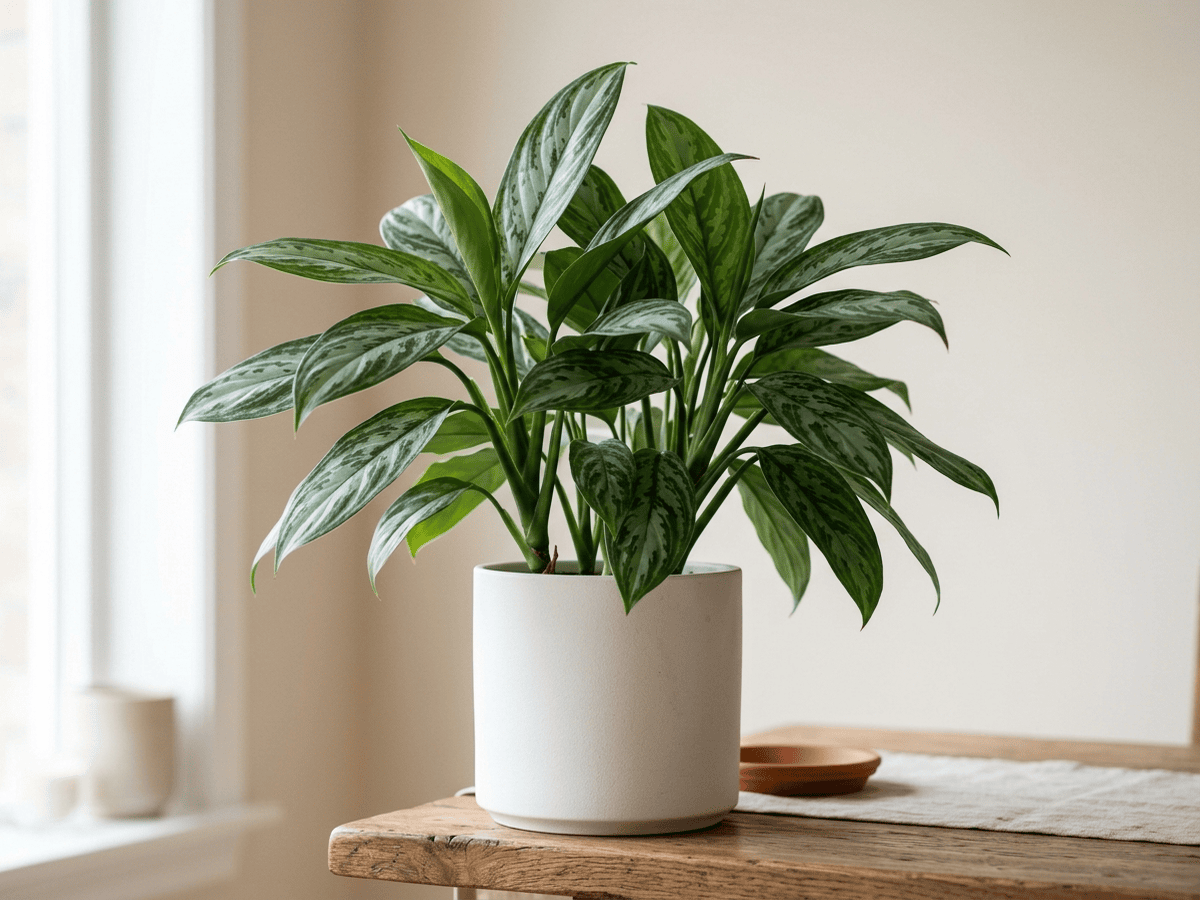 Philippine EvergreenAglaonema commutatum
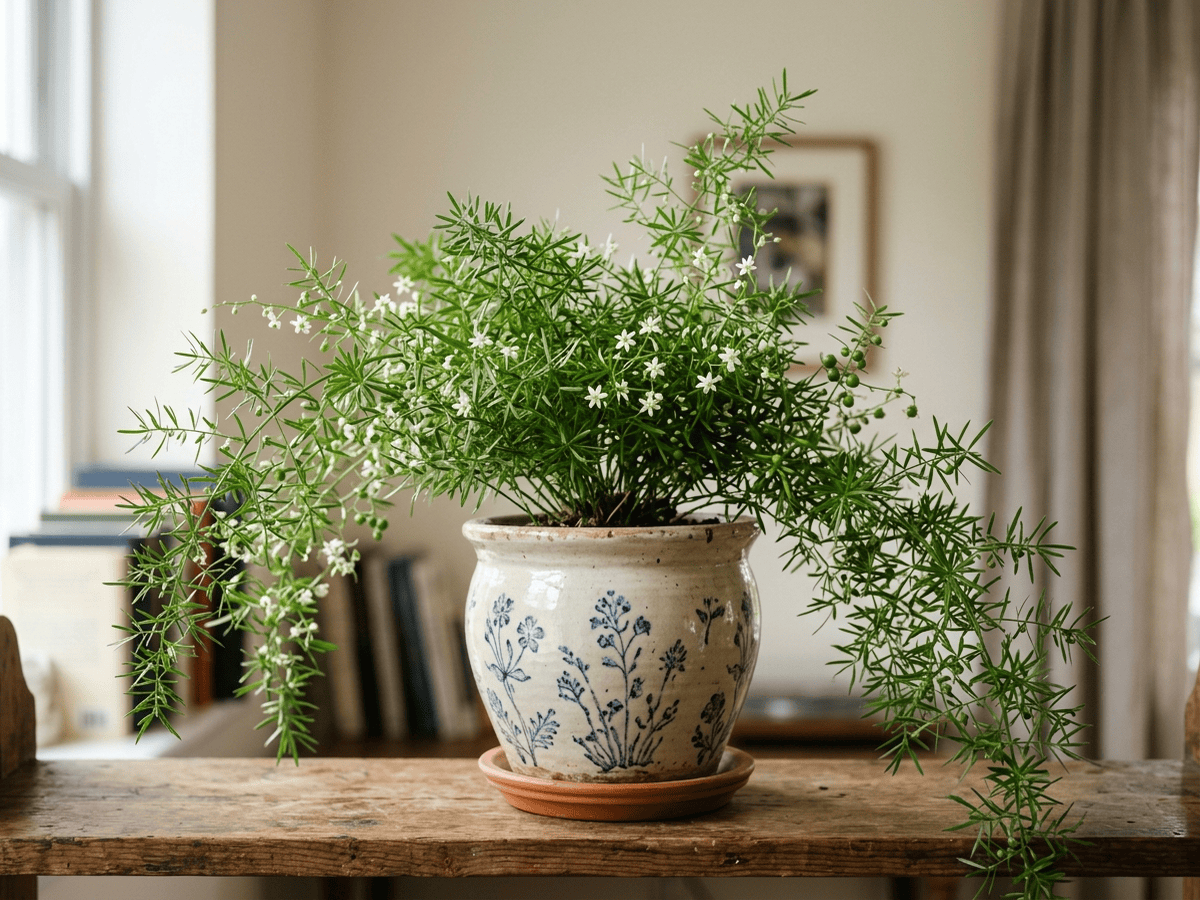 Sprenger's AsparagusAsparagus densiflorus
 Entire-Leaf False Goat’s BeardAstilbe simplicifolia
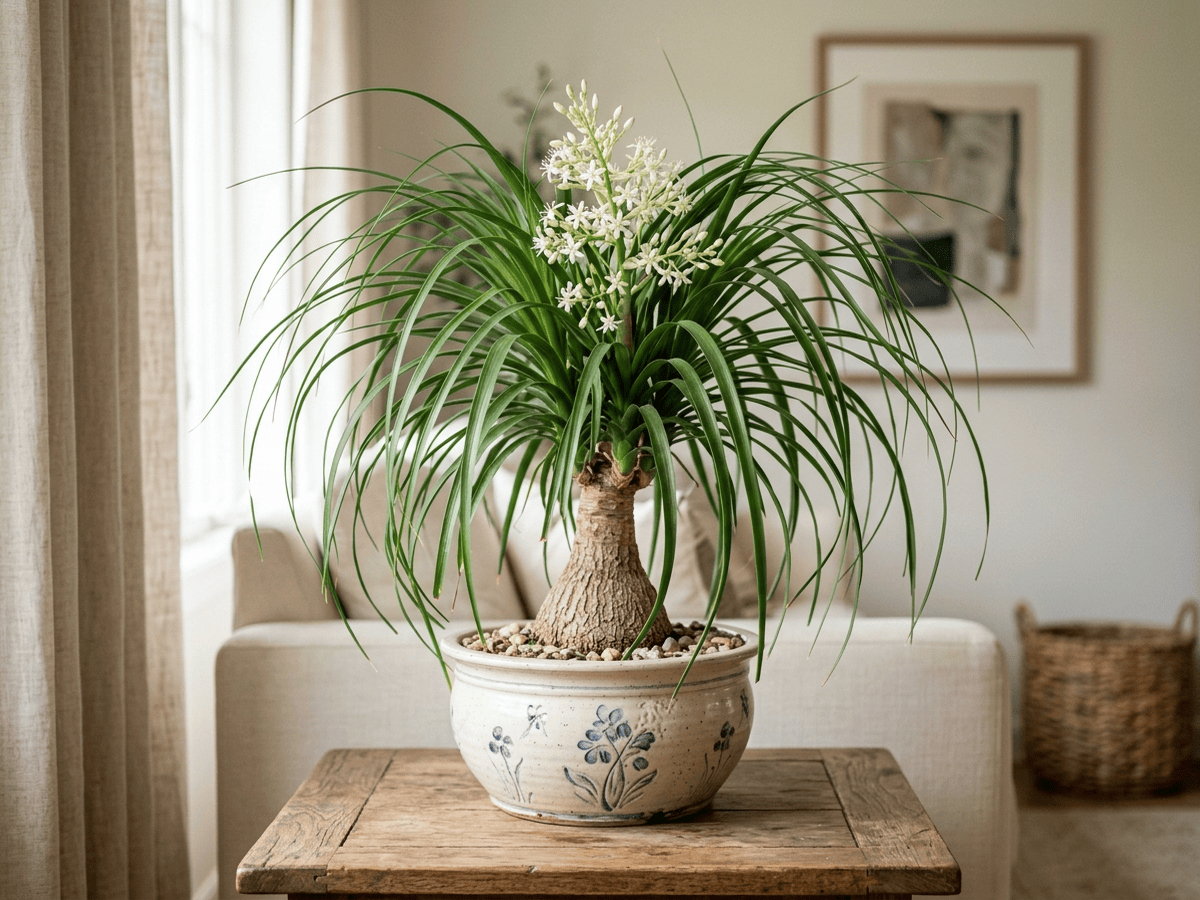 Ponytail PalmBeaucarnea recurvata
Frequently asked questions
How often should I water Small-Leaf Spiderwort?
In summer, water about every 4 days; in winter, about every 10 days. Adjust for heat, pot size and drainage.
How much light does Small-Leaf Spiderwort need?
Part shade: 2–4 hrs direct. Watch the leaves — scorching or stretching means the light needs adjusting.
Is Small-Leaf Spiderwort toxic to cats or dogs?
Pets Slight (Dogs Slight · Cats Slight) Educational information, not medical or veterinary advice. If exposure is suspected, contact a doctor or veterinarian.
Is Small-Leaf Spiderwort easy to grow?
Yes — it is considered an easy, beginner-friendly plant.
Can Small-Leaf Spiderwort be grown indoors?
Yes, it adapts well to indoor growing given the right light.
When does Small-Leaf Spiderwort bloom?
It typically blooms May–Sep in the Northern Hemisphere.
YardMate
Identify any plant in seconds
Snap a photo — YardMate names the plant, diagnoses problems, and reminds you when to water.
Download on the App Store