 YardMate


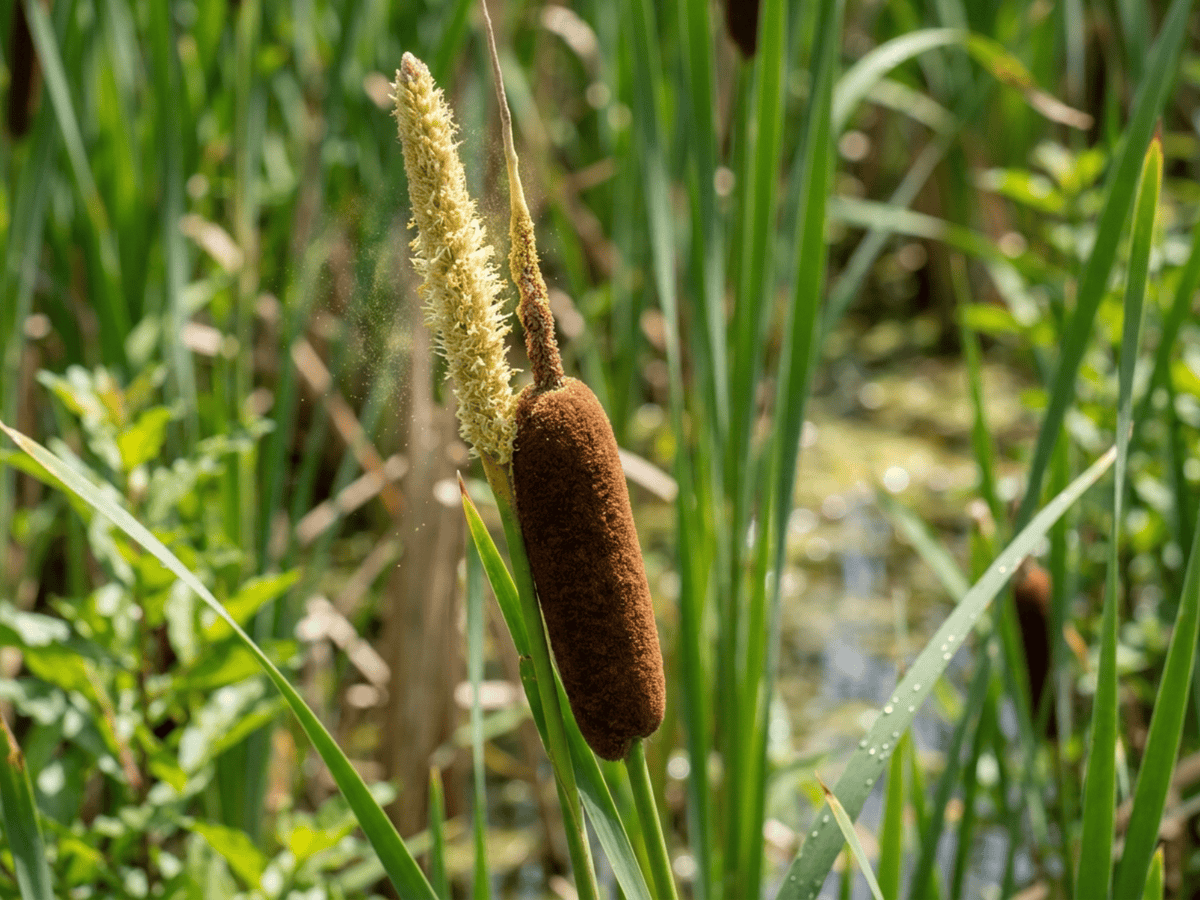

Broadleaf Cattail
Typha latifolia
Easy · Beginner friendlyAbout Broadleaf Cattail
Typha latifolia, the common cattail or bulrush, is one of the most widespread and recognizable wetland plants in the world, found across North America, Europe, Asia, and parts of Africa. It grows 1.5–3 meters tall with long, flat, sword-like leaves and produces the iconic brown, cigar-shaped seed heads that persist through winter. It colonizes marshes, pond edges, ditches, and wet meadows, spreading vigorously by thick rhizomes. While it is valued for wildlife habitat and water filtration, it can become aggressively weedy in constructed ponds and wetlands, potentially choking out other aquatic plants. Every part of the plant is edible or useful — young shoots taste like cucumber, the pollen is a protein-rich flour substitute, and the fluffy seed heads were used by Indigenous peoples for insulation, wound dressing, and tinder. It is an important ecological species that provides nesting habitat for red-winged blackbirds and other marsh birds.
- Edible
- Wildlife-friendly
How to care for Broadleaf Cattail
Watering
- Springevery 1 days
- Summerevery 1 days
- Fallevery 1 days
- Winterevery 2 days
Soil · Bog-wet
- WaterStanding water above soil20%
- SoilHeavy pond soil80%
No drainage layer — keep water standing above the soil.
FERTILIZER
This plant needs little to no feeding.
At a Glance
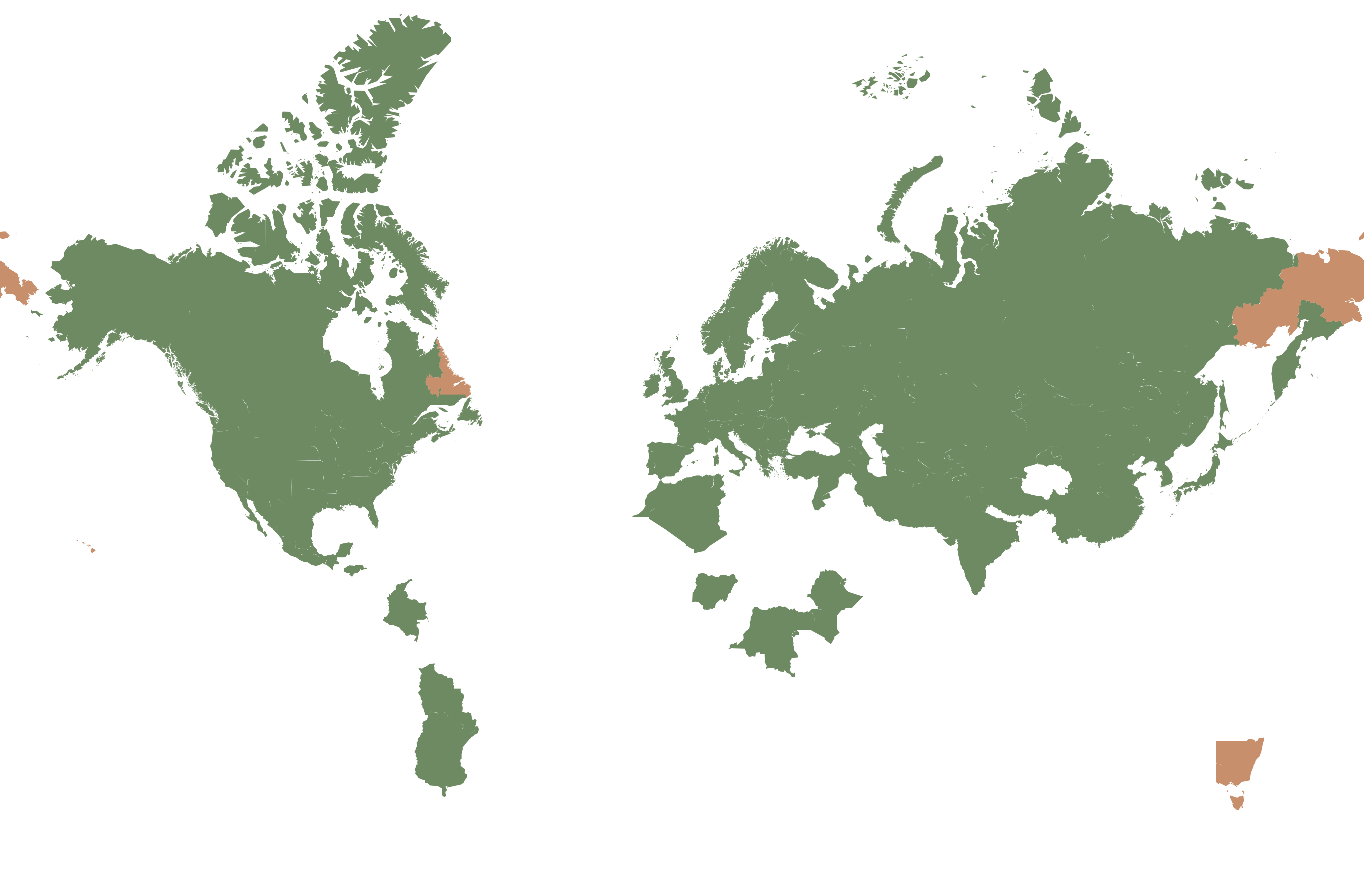
- NativeNorth America, Europe, East Asia, Africa
- Height5–10 ft (1.5–3 m)
- Spread2–4 ft (0.6–1.2 m)
- Flower colorYellow
- Foliage colorGreen
- SoilMoisture-retentive
- LocationsYard
Bloom time
BLOOM CYCLE
Peak bloom
Jun–Aug
Brown cylindrical seed heads form in summer and persist through winter for interest
Fragrance
NO FRAGRANCE
No notable fragrance.
Toxicity
No toxicity has been reported for this plant. Still, it is wise to keep pets from chewing on any houseplant.
Educational information, not medical or veterinary advice. If exposure is suspected, contact a doctor or veterinarian.
DISTRIBUTION

- Native
- Introduced
- North America
- Europe
- East Asia
- Africa
History

Typha latifolia is a tall circumboreal wetland perennial, native across North America, Europe, Asia, and North Africa — one of the most widely distributed wetland plants in the world. Its distinctive dense brown cylindrical female flower spike with the thinner male spike attached above gives rise to the common name "cattail" (and "bulrush" in British usage, though "bulrush" in North America more often refers to Scirpus). Ethnobotanist and wilderness instructor Tom Brown Jr. memorably called the cattail "the supermarket of the swamp" because virtually every part is useful: the yellow pollen collected from the male spike is a rich protein-and-carotenoid flour ingredient; the young green shoots (sometimes called "Cossack asparagus") are eaten as a spring vegetable; the peeled young stems are crisp and sweet; the rhizomes (peeled, boiled, and crushed) yield starch; the immature female flower spikes are boiled and eaten like corn on the cob; the mature seed-fluff is superb tinder and was used as stuffing for pillows, life jackets, and diapers; the fibrous leaves are woven into mats, baskets, and chair seats. Indigenous North American peoples used cattails extensively — a cultural importance reflected in multiple Indigenous place names referring to cattail marshes.
Cattails are also valuable water-quality plants, absorbing nutrients and heavy metals. Cattails have been used by humans for at least 30,000 years — starch grains from Typha have been found on Stone Age grinding stones in Europe. Indigenous peoples across North America considered the cattail a 'supermarket of the swamp' because virtually every part is edible or useful at different times of year.
The fluffy seed down was used to stuff bedding, diapers, and life jackets. During World War II, cattail down was actually collected as a substitute for kapok in life preservers. Modern ecological engineering uses constructed cattail wetlands to treat wastewater, as the plants excel at absorbing nitrogen, phosphorus, and heavy metals.
Symbolism & meaning
What It Symbolizes
Broadleaf Cattail is abundance refusing to waste itself, its roots, shoots, pollen, and fluffy seed heads all feeding people, birds, and basket-weavers across continents. Adapted to the harshest wetland conditions, it expresses survival as a generous virtue rather than a private one. In every brown spike rises a quiet manifesto: thrive, then share.
- Abundance — Every part is useful, symbolizing resourcefulness and nature's bounty
- Survival — Thrives in harsh wetland conditions, representing adaptability and toughness
Where the Name Comes From
Typha from Greek 'typhos' (marsh), referring to its wetland habitat. Latifolia means 'broad-leaved' in Latin.
Uses & Fun Facts
- Young shoots, pollen, and rhizomes eaten as wild forage
- Dense stands shelter waterfowl, redwings, and amphibians
- Leaves woven into mats, baskets, and chair seats
- Used in wetland restoration to filter and clean runoff
Related plants
Plants with similar care
 Chinese AbeliaAbelia chinensis
 Fragrant AbeliaAbelia mosanensis
 Large-Flowered AbeliaAbelia uniflora
 Glossy AbeliaAbelia x grandiflora
Frequently asked questions
How often should I water Broadleaf Cattail?
In summer, water about every 1 days; in winter, about every 2 days. Adjust for heat, pot size and drainage.
How much light does Broadleaf Cattail need?
Full sun: 6+ hrs direct. Watch the leaves — scorching or stretching means the light needs adjusting.
Is Broadleaf Cattail toxic to cats or dogs?
No toxicity has been reported for this plant. Still, it is wise to keep pets from chewing on any houseplant. Educational information, not medical or veterinary advice. If exposure is suspected, contact a doctor or veterinarian.
Is Broadleaf Cattail easy to grow?
Yes — it is considered an easy, beginner-friendly plant.
When does Broadleaf Cattail bloom?
It typically blooms Jun–Aug in the Northern Hemisphere.
YardMate
Identify any plant in seconds
Snap a photo — YardMate names the plant, diagnoses problems, and reminds you when to water.
Download on the App Store