 YardMate
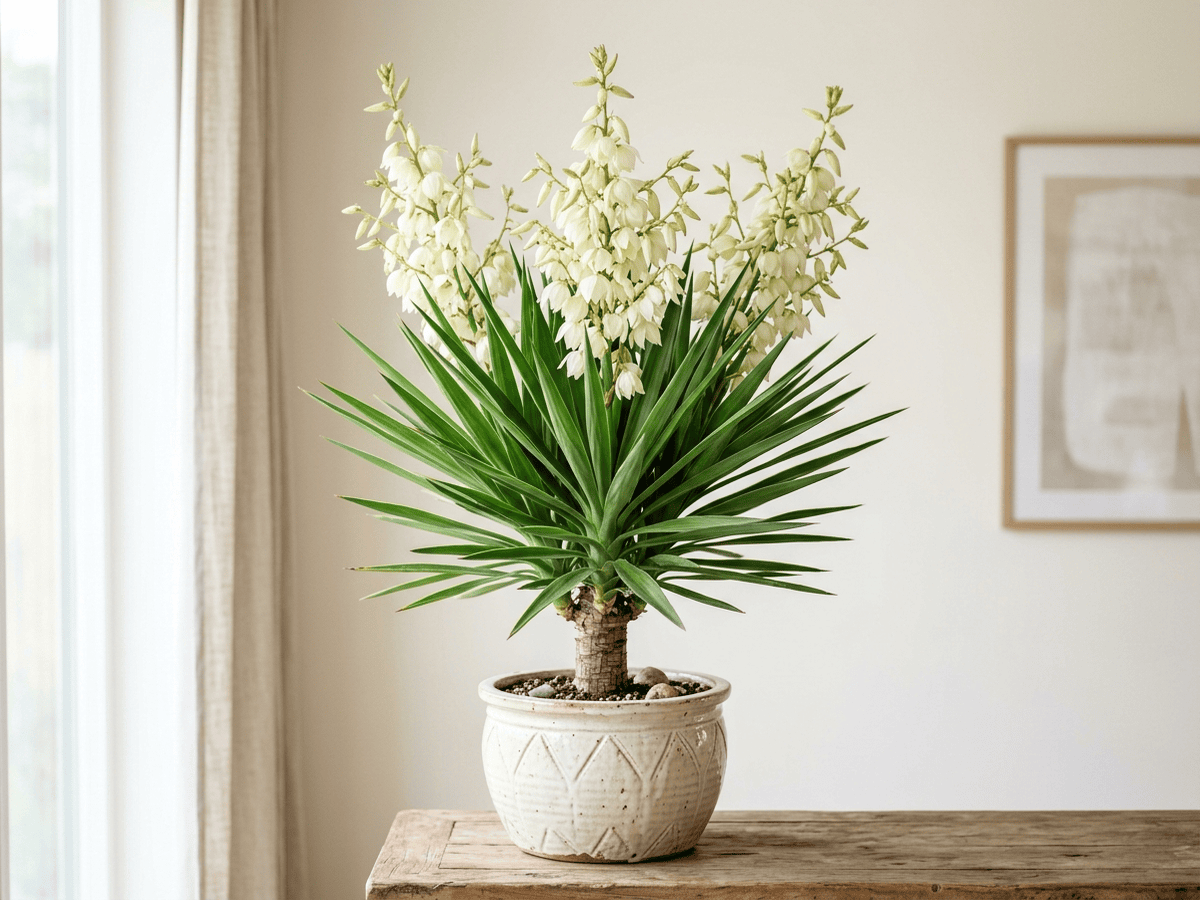


Spineless Yucca
Yucca elephantipes
Easy · Beginner friendlyAbout Spineless Yucca
Yucca elephantipes, the spineless yucca or yucca cane, is a tough, architectural houseplant with thick woody canes topped by rosettes of long, sword-shaped, dark green leaves. Native to Mexico and Central America, it is the only commonly grown yucca soft enough to be safely kept indoors — the leaf tips are not dangerously sharp unlike desert yuccas. It tolerates drought, low humidity, and even some direct sun. The thick trunk stores water, allowing it to survive weeks of neglect. In its homeland, the flowers and tender stems are a popular cooked vegetable called 'izote.'
- Drought-tolerant
- Architectural
How to care for Spineless Yucca
Watering
- Springevery 14 days
- Summerevery 10 days
- Fallevery 21 days
- Winterevery 30 days
Soil · Fast-draining
- Main mixSand + pumice + soil 1:1:150%
- DrainagePumice / gravel50%
Keep grit at half the mix or more — this soil is meant to dry out fast.
FERTILIZER
Balanced Feed 14-14-14
An even feed covers all three needs at once, keeping leaves, roots and blooms moving together with nothing pushed out of balance.
- Nitrogen · Leaves
- Phosphorus · Roots + Blooms
- Potassium · Strength
- Springevery 60 days
- Summerevery 60 days
At a Glance
- NativeNorth America, Central America
- Height4–8 ft (1.2–2.4 m)
- Spread2–4 ft (0.6–1.2 m)
- Flower colorWhite, Cream
- Foliage colorGreen, Variegated
- Fruit colorGreen
- SoilSandy, Well-drained
- LocationsIndoor · Balcony
Bloom time
BLOOM CYCLE
Peak bloom
Jun–Aug
Large panicles of white bell flowers; rare indoors
Fragrance
LIGHT FRAGRANCE
Flowers have a light sweet scent.
Toxicity
Pets Moderate
steroidal saponins
Not reported
EXPOSURE No exposure route is reported.
EFFECT Flowers and young stalks are a traditional food after cooking and raw parts can cause mild nausea from saponins.
NOTE No toxicity is reported for humans in this catalog; this is not evidence that the plant is edible or harmless.
Moderate
- Leaf
- Stem
- Root
- Ingestion
EXPOSURE Eating leaves, stems, and roots.
EFFECT Vomiting, weakness, drooling, lack of coordination, dilated pupils in cats and per ASPCA.
NOTE Saponin toxicity; livestock poisoning documented historically in the US Southwest.
Moderate
- Leaf
- Stem
- Root
- Ingestion
EXPOSURE Eating leaves, stems, and roots.
EFFECT Vomiting, weakness, drooling, lack of coordination, dilated pupils and per ASPCA.
NOTE Saponin toxicity; livestock poisoning documented historically in the US Southwest.
Educational information, not medical or veterinary advice. If exposure is suspected, contact a doctor or veterinarian.
DISTRIBUTION


- Native
- Introduced
- North America
- Central America
History
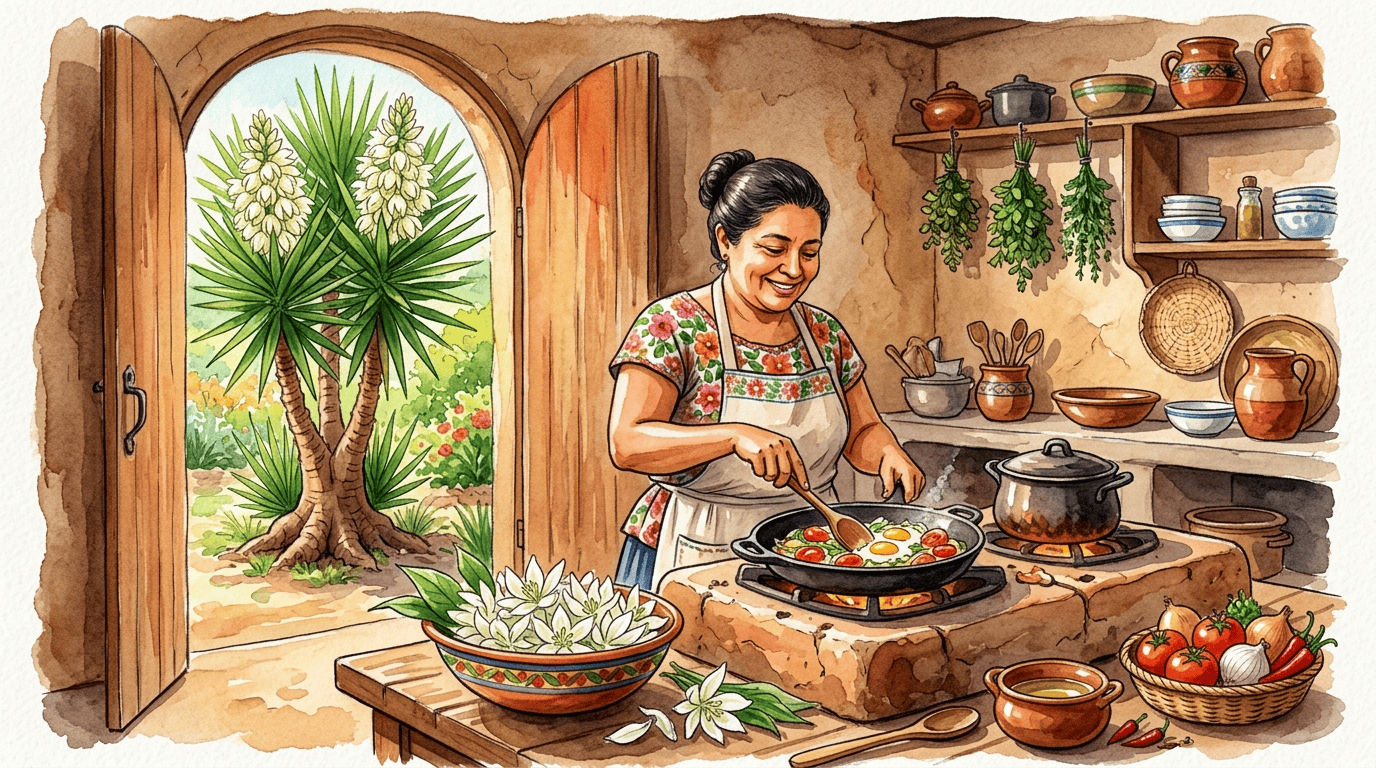
Yucca elephantipes (also called Y. guatemalensis) is native to Mexico and Guatemala, where it grows as a large tree-sized yucca up to eight meters tall, with a thickened basal trunk that gave it the 'elephant's foot' species name. Unlike the more famous sword-leafed yuccas of the desert Southwest, its leaves are soft and spineless, making it safe for garden and indoor use. In Mexican and Central American cuisine its large white flower clusters and young flower stalks — flor de izote — are a traditional seasonal food, blanched and cooked with eggs or in tamales. It entered Western horticulture in the 19th century and became one of the most widely sold indoor 'trees' of the 1970s and 1980s, prized for tolerance of dry office air.
Significantly toxic to dogs and cats. The yucca flower is the national flower of El Salvador, where 'flor de izote' is both a cultural symbol and a beloved food — the petals are sautéed with eggs and tomatoes. In Guatemala and Mexico, the tender young flower stalks and petals are eaten in soups and stews.
The plant was a staple food for Mayan peoples. In the houseplant trade, yucca canes are produced by cutting thick trunks into sections, shipping them from Central American farms, and potting them — the stored energy in the trunk sprouts new rosettes at the top. This industrial process makes yucca one of the cheapest large houseplants available.
Symbolism & meaning
What It Symbolizes
Spineless Yucca is determination in upright sword leaves, thriving in dry, hot, demanding conditions where lesser plants politely retire. Its tough trunk and rosettes feel as steady as architecture, a green reminder that grit can also be graceful. In its persistent vertical form, perseverance has been given its own small green column.
- Determination — Thriving in harsh, dry conditions with minimal resources represents grit and perseverance
Where the Name Comes From
Yucca from a Taino (Caribbean indigenous) word. Elephantipes means 'elephant's foot,' describing the swollen trunk base of mature trees.
Uses & Fun Facts
- Soft-leaved indoor tree safe for homes with kids and pets
- Cooked flower petals eaten in traditional Mexican cuisine
- Architectural rosette anchors xeric landscapes in mild climates
Related plants
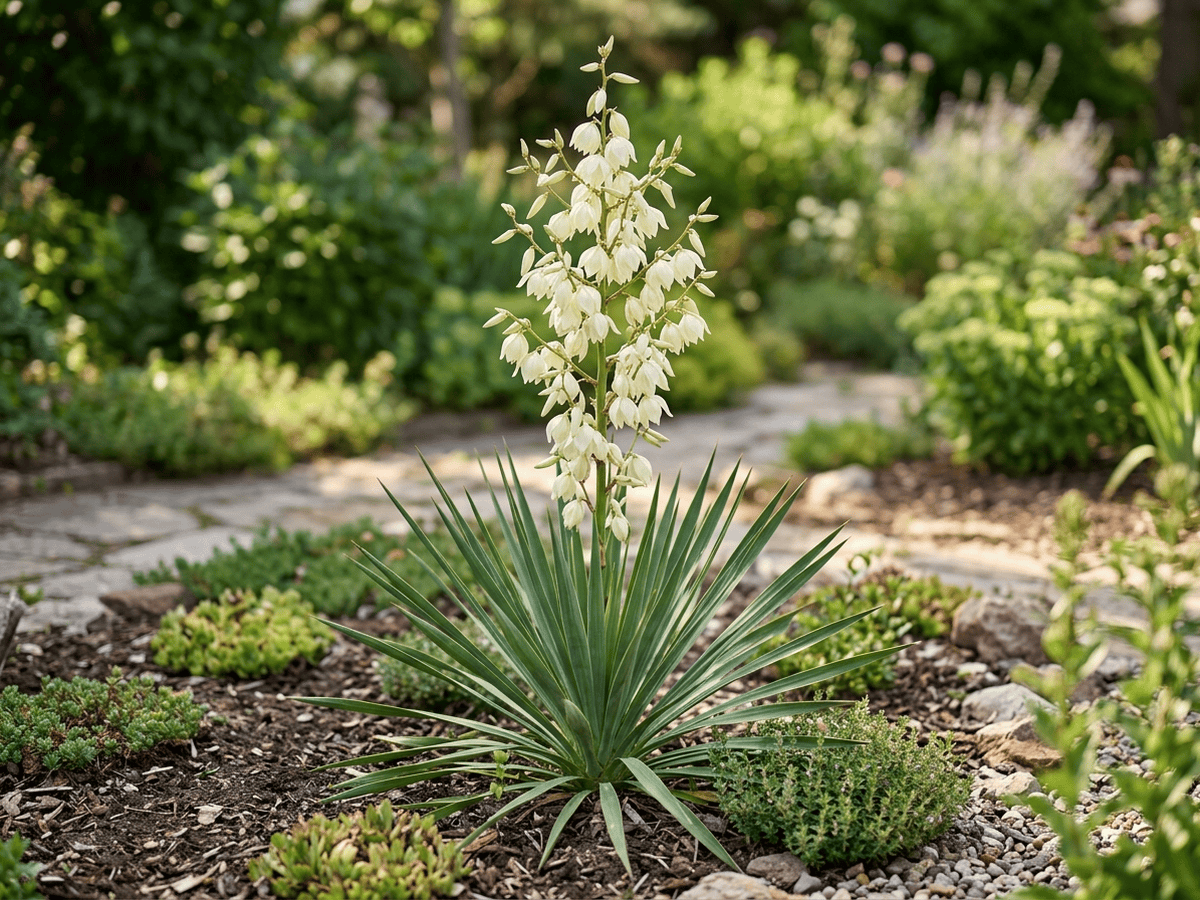
More Yucca plants
Plants with similar care
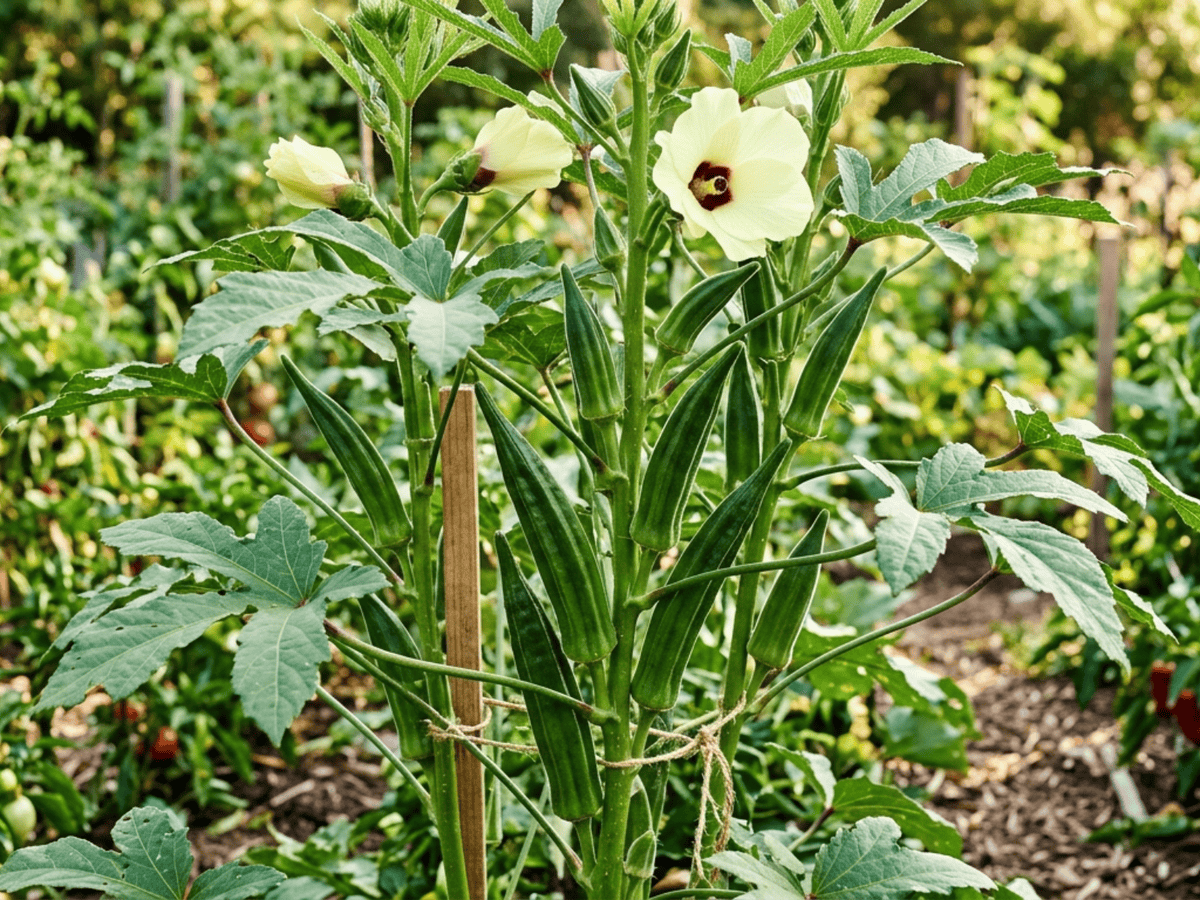 OkraAbelmoschus esculentus
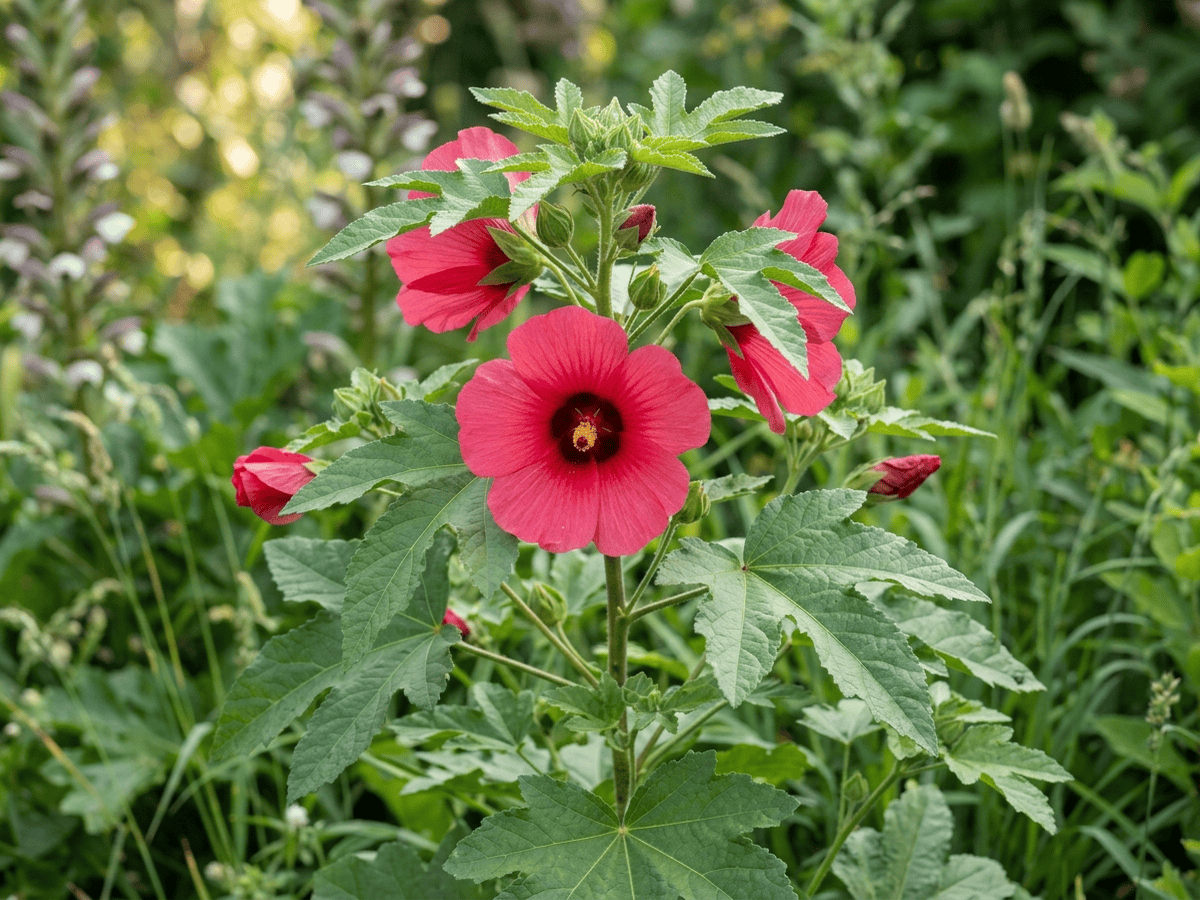 MuskseedAbelmoschus moschatus
 Black AeoniumAeonium arboreum 'Zwartkop'
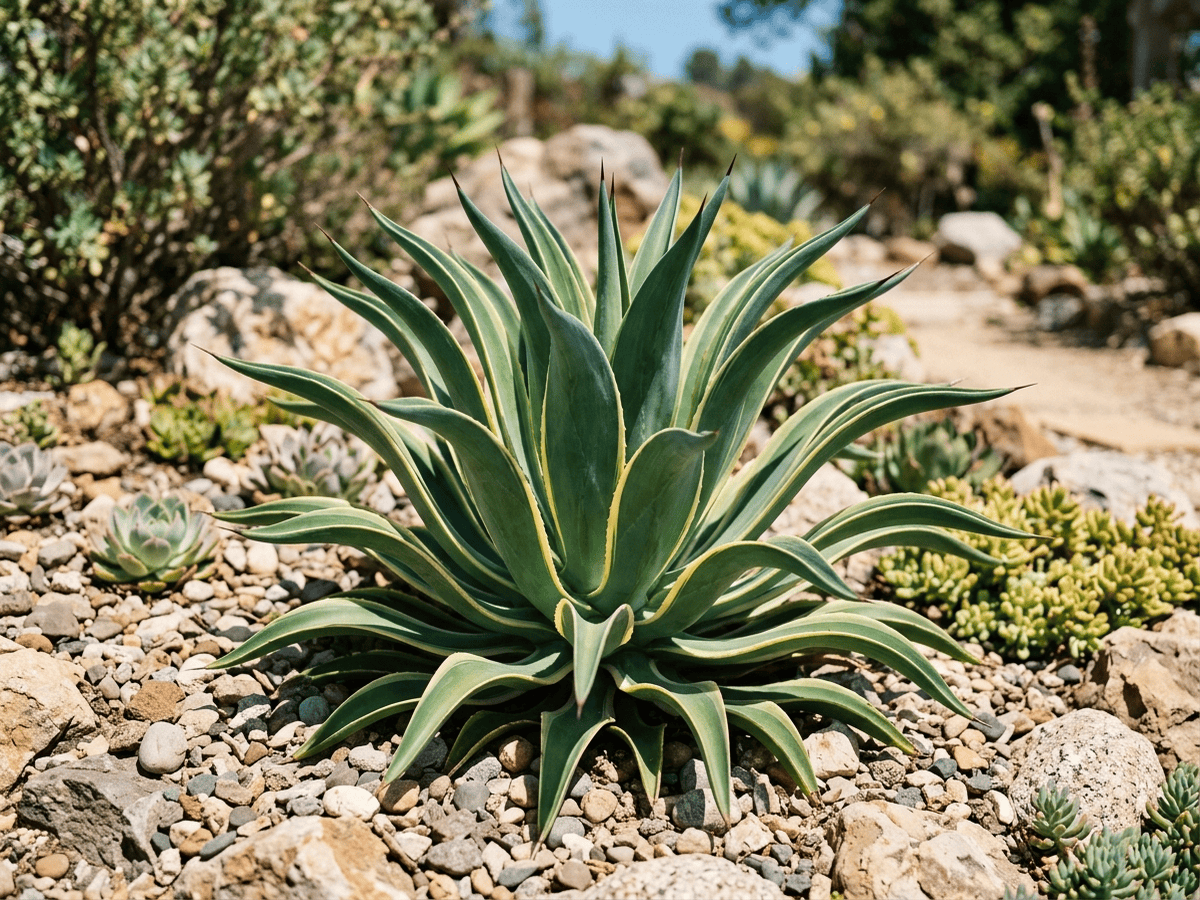 Smooth AgaveAgave desmettiana
Frequently asked questions
How often should I water Spineless Yucca?
In summer, water about every 10 days; in winter, about every 30 days. Adjust for heat, pot size and drainage.
How much light does Spineless Yucca need?
Full sun: 6+ hrs direct. Watch the leaves — scorching or stretching means the light needs adjusting.
Is Spineless Yucca toxic to cats or dogs?
Pets Moderate (Dogs Moderate · Cats Moderate) Educational information, not medical or veterinary advice. If exposure is suspected, contact a doctor or veterinarian.
Is Spineless Yucca easy to grow?
Yes — it is considered an easy, beginner-friendly plant.
Can Spineless Yucca be grown indoors?
Yes, it adapts well to indoor growing given the right light.
When does Spineless Yucca bloom?
It typically blooms Jun–Aug in the Northern Hemisphere.
YardMate
Identify any plant in seconds
Snap a photo — YardMate names the plant, diagnoses problems, and reminds you when to water.
Download on the App Store