 YardMate


Okra
Abelmoschus esculentus
Easy · Beginner friendlyAbout Okra
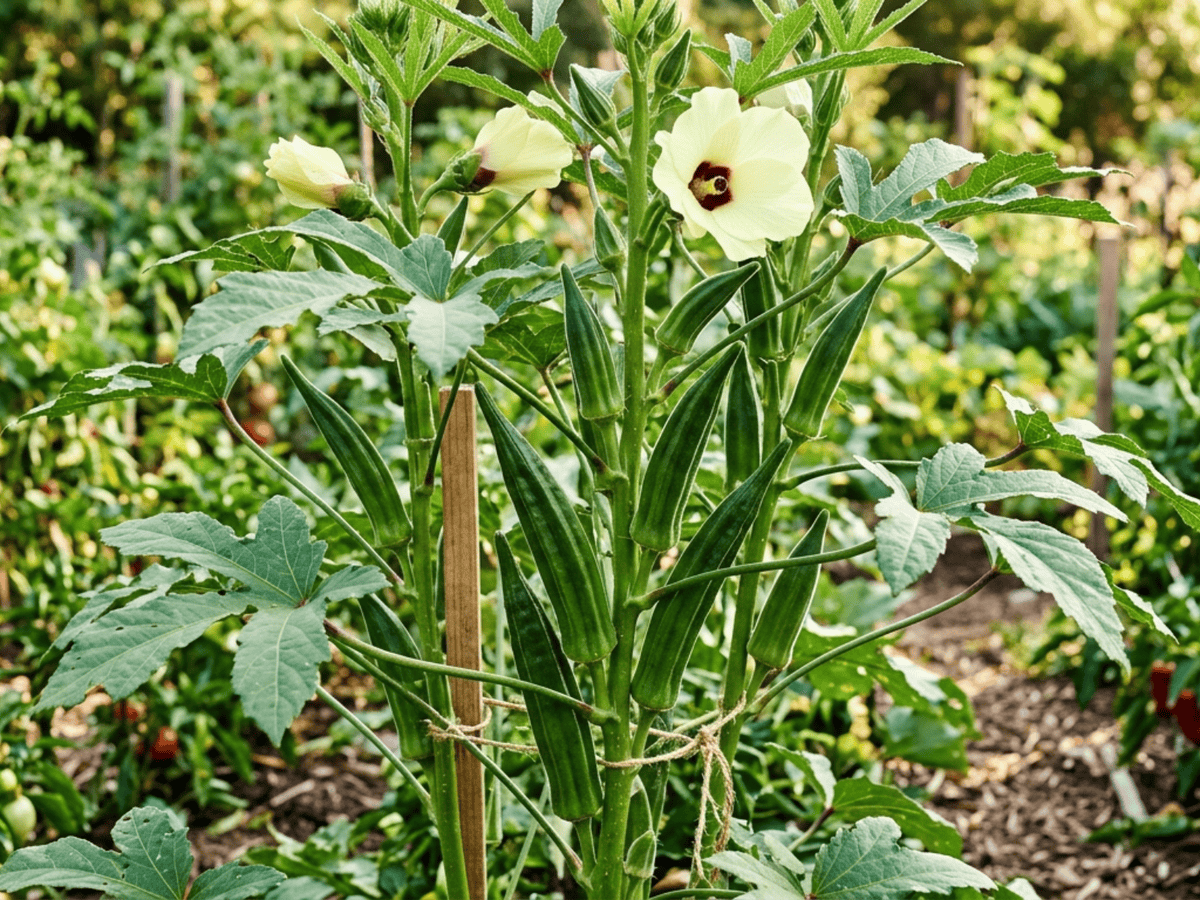
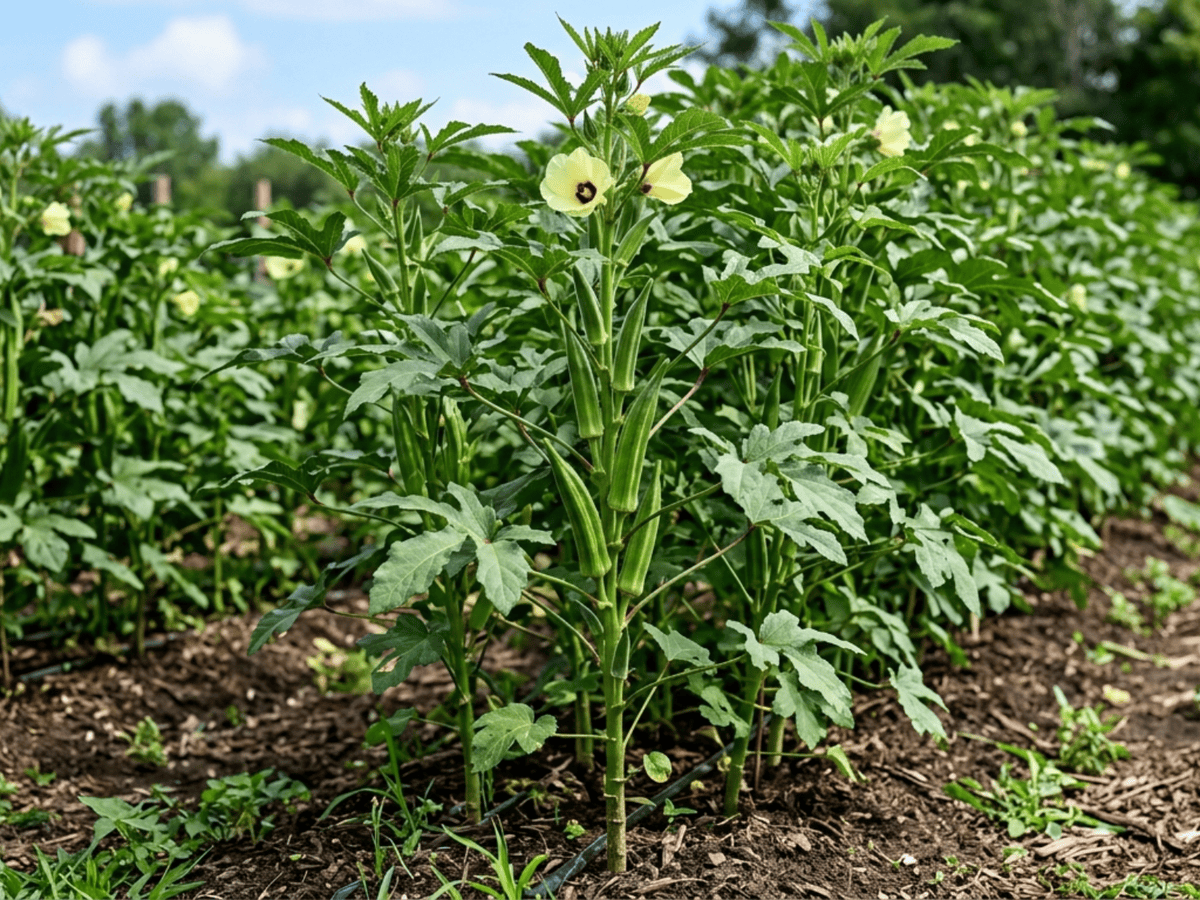
Abelmoschus esculentus, okra (also known as lady's finger or gumbo), is a tropical annual in the Malvaceae family native to East Africa or South Asia. Growing 1–2 m tall with large, lobed leaves and gorgeous hibiscus-like yellow flowers with deep crimson centres, okra is both ornamental and productive. The edible pods develop rapidly after flowering, best harvested young (7–10 cm) before they become fibrous.
Okra thrives in heat, requiring USDA zones 5–11 during summer with soil temperatures above 18°C. It demands full sun and tolerates poor, dry soil once established—a trait reflecting its origins in hot, semi-arid regions. In southern US states and tropical countries, it is a garden staple. In cooler climates it needs a sheltered, warm spot or greenhouse.
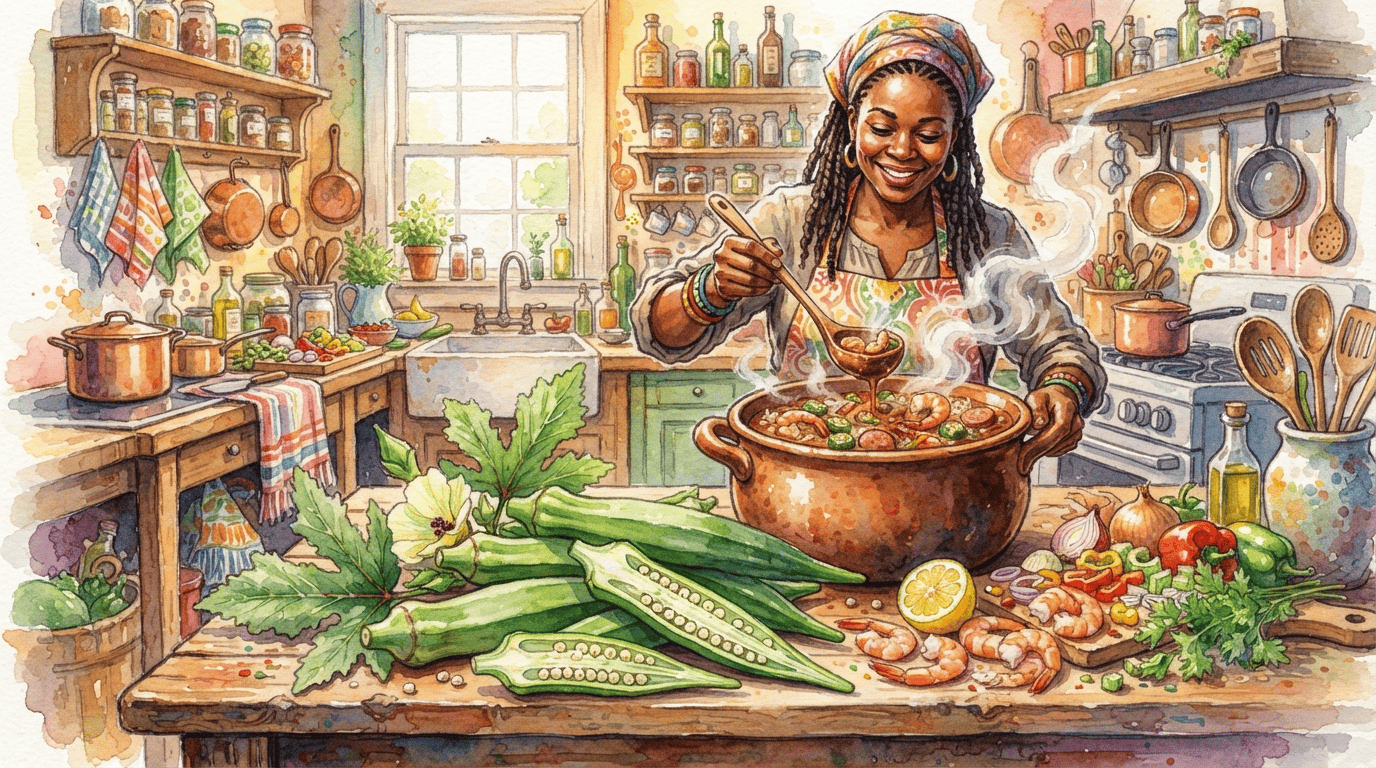
Okra's characteristic mucilage (the 'sliminess' some find off-putting) is actually its secret weapon: it naturally thickens soups and stews without flour or cream, and is the essential ingredient in Cajun gumbo. Slicing and frying, roasting at high heat, or pickling eliminates the mucilage for those who prefer less slippery textures. Okra is nutritionally rich in folate, vitamin C, and soluble fibre that supports digestive health. The plant's history connects the cuisines of West Africa, India, the Middle East, and the American South through the transatlantic slave trade.
- Edible
- Drought-tolerant
How to care for Okra
Watering
- Springevery 3 days
- Summerevery 2 days
- Fallevery 4 days
- Winterevery 7 days
Soil · Rich & well-draining
- Top dressingCompost10%
- Main mixPotting soil + compost 3:180%
- DrainageGravel10%
Top up the compost layer each season.
FERTILIZER
Balanced Feed 14-14-14
An even feed covers all three needs at once, keeping leaves, roots and blooms moving together with nothing pushed out of balance.
- Nitrogen · Leaves
- Phosphorus · Roots + Blooms
- Potassium · Strength
- Springevery 14 days
- Summerevery 14 days
- Fallevery 21 days
At a Glance
- NativeAfrica
- Height3–6 ft (0.9–1.8 m)
- Spread1.5–3 ft (0.5–0.9 m)
- Flower colorYellow, Cream
- Foliage colorGreen
- Fruit colorGreen
- SoilRich, Loamy, Well-drained
- LocationsYard · Indoor · Balcony
Bloom time
BLOOM CYCLE
Peak bloom
Jun–Aug
Beautiful hibiscus-like flowers open for one day; harvest pods 3–5 days after flowering.
Fragrance
NO FRAGRANCE
No notable fragrance.
Toxicity
Humans Safe · Pets Safe
None reported
Safe
EXPOSURE No exposure route is reported.
EFFECT Widely consumed and no significant toxicity.
NOTE Listed as non-toxic for humans; avoid eating ornamental plants unless confirmed edible.
Safe
EXPOSURE No exposure route is reported.
EFFECT Not listed as toxic.
NOTE Listed as non-toxic for dogs; avoid eating ornamental plants unless confirmed edible.
Safe
EXPOSURE No exposure route is reported.
EFFECT Not listed as toxic.
NOTE Listed as non-toxic for cats; avoid eating ornamental plants unless confirmed edible.
Educational information, not medical or veterinary advice. If exposure is suspected, contact a doctor or veterinarian.
DISTRIBUTION


- Native
- Introduced
- Africa
History
Abelmoschus esculentus is probably native to northeastern Africa, with strong evidence pointing toward Ethiopia. It was cultivated in ancient Egypt and spread across North Africa, the Middle East, India, and South Asia through early trade and farming.
The English name "okra" comes through West African languages, reflecting the crop's arrival in the Atlantic world with enslaved Africans who carried both seeds and cultivation knowledge. In the Americas it became foundational to African diaspora cuisines, especially Louisiana gumbo, Brazilian caruru, Caribbean callaloo, coo-coo, and pepperpot.
The pod's mucilaginous texture, produced by soluble fiber polysaccharides, is what gives many of these dishes their body. Okra is also central to Indian bhindi, Middle Eastern bamia, and African sauces, remaining a cultural bridge between African, Asian, and American Southern foodways.
Symbolism & meaning
What It Symbolizes
Okra carries a quiet grace in its pale hibiscus blooms and slender, tapering pods, an elegance often overlooked in the vegetable garden. Yet its deeper meaning is one of heritage: carried across the Atlantic in the pockets and memories of enslaved Africans, it became a thread of continuity in Southern, Caribbean, and Creole kitchens. To grow okra is to honor refined beauty and cultural resilience together.
- Grace — The elegant flower and slender pods give okra an association with beauty and refined charm
- Heritage — Carried across the Atlantic by enslaved Africans, okra symbolizes cultural resilience and continuity
Where the Name Comes From
Abelmoschus from Arabic 'abu-l-musk' (father of musk), referencing a related species' musky seeds; 'esculentus' means edible in Latin.
Uses & Fun Facts
- Tender pods harvested as vegetable in gumbo and stews
- Hibiscus-like yellow flowers add tropical color to vegetable gardens
Related plants
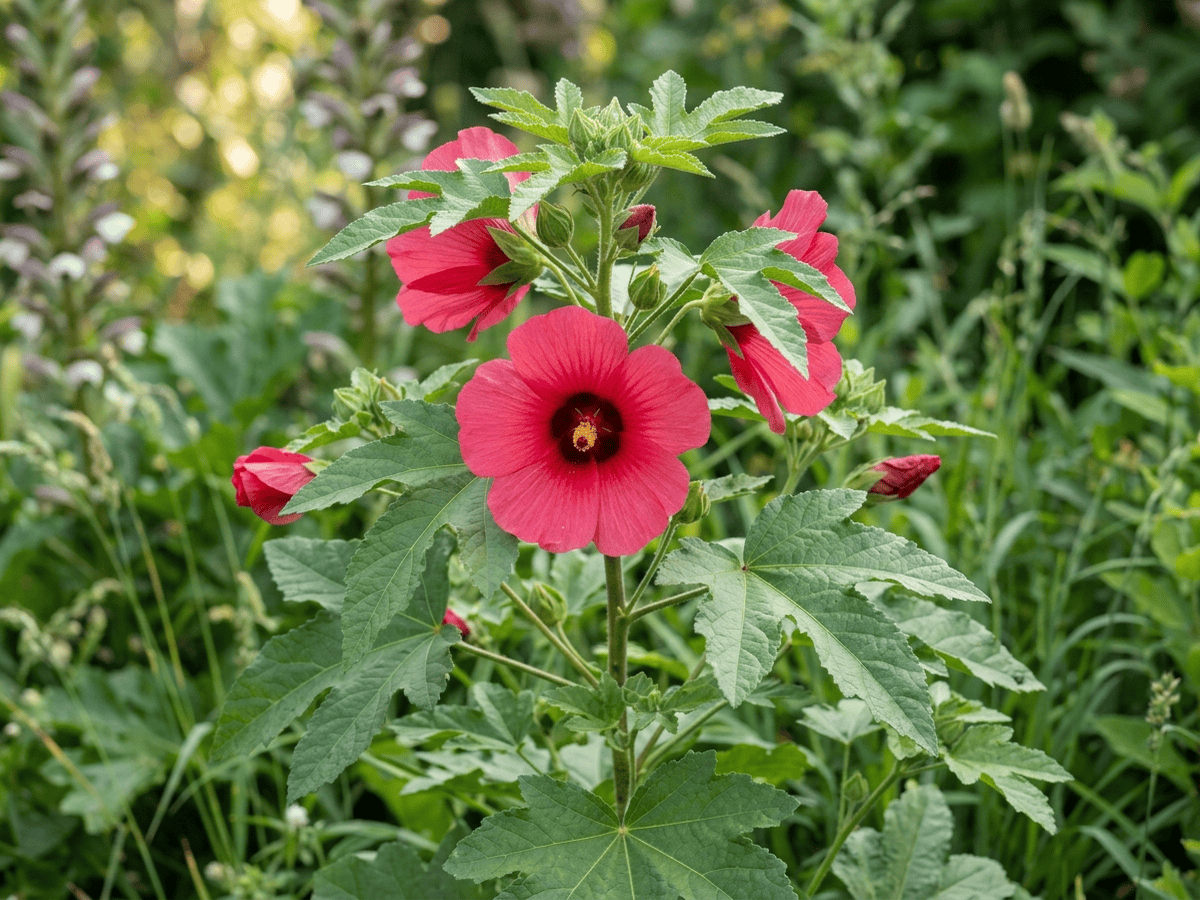
More Abelmoschus plants
Plants with similar care
 Chinese AbeliaAbelia chinensis
 Fragrant AbeliaAbelia mosanensis
 Large-Flowered AbeliaAbelia uniflora
 Glossy AbeliaAbelia x grandiflora
Frequently asked questions
How often should I water Okra?
In summer, water about every 2 days; in winter, about every 7 days. Adjust for heat, pot size and drainage.
How much light does Okra need?
Full sun: 6+ hrs direct. Watch the leaves — scorching or stretching means the light needs adjusting.
Is Okra toxic to cats or dogs?
Pets Safe (Dogs Safe · Cats Safe) Educational information, not medical or veterinary advice. If exposure is suspected, contact a doctor or veterinarian.
Is Okra easy to grow?
Yes — it is considered an easy, beginner-friendly plant.
Can Okra be grown indoors?
Yes, it adapts well to indoor growing given the right light.
When does Okra bloom?
It typically blooms Jun–Aug in the Northern Hemisphere.
YardMate
Identify any plant in seconds
Snap a photo — YardMate names the plant, diagnoses problems, and reminds you when to water.
Download on the App Store