 YardMate

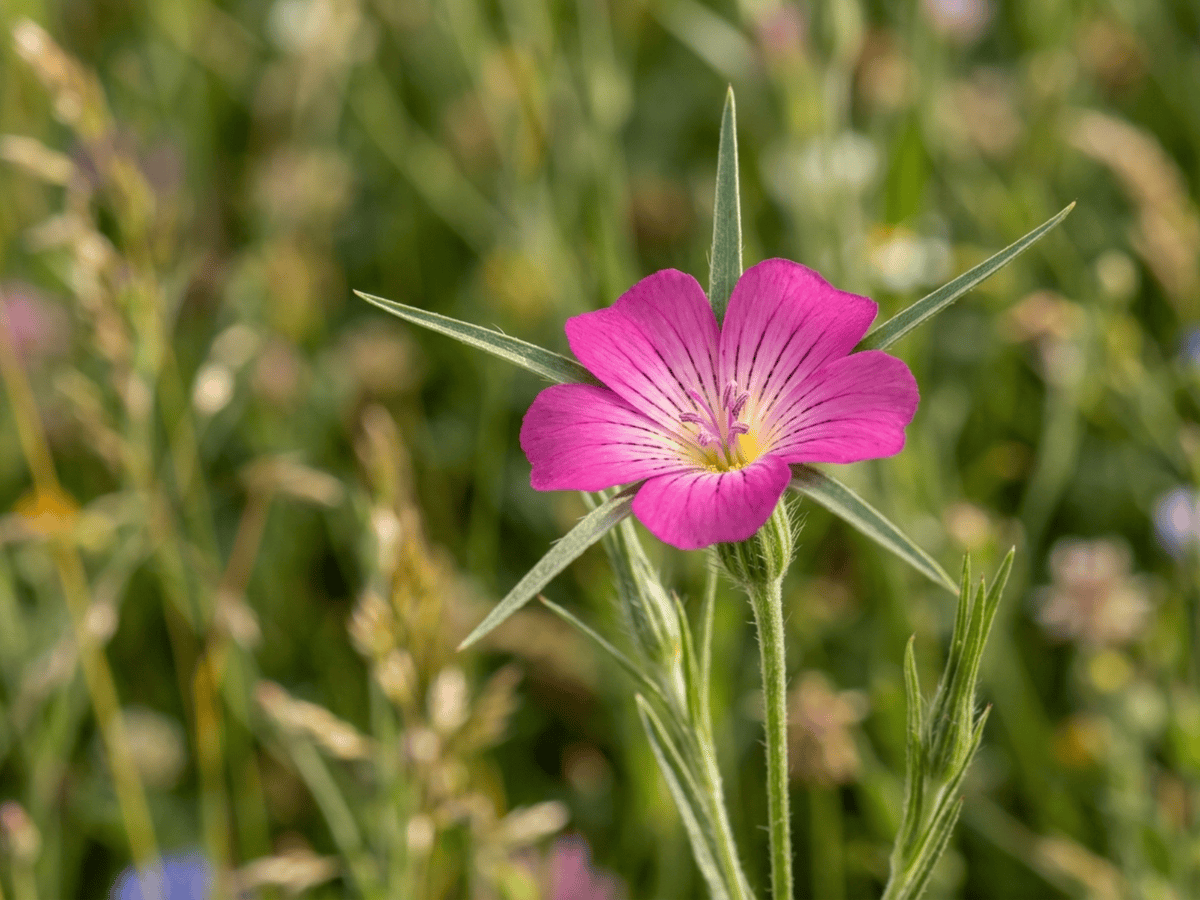


Corn Cockle
Agrostemma githago
Easy · Beginner friendlyAbout Corn Cockle
Agrostemma githago, the corn cockle, is a slender annual wildflower native to the eastern Mediterranean that was once one of the most common weeds of European grain fields. Growing 60 to 100 cm tall on slim, silvery-hairy stems, it produces elegant funnel-shaped flowers of magenta-pink to pale lilac, each decorated with fine dark lines radiating from the center. The flowers nod gracefully on long stems, giving the plant an airy, romantic quality in cottage garden plantings. Once so abundant that its toxic seeds contaminated flour and caused widespread poisoning, modern agriculture has virtually eliminated it from the wild, making it now more common in gardens than in grain fields. The seeds contain the saponin githagin, which is toxic to humans and livestock when consumed in significant quantities — historically, bread made from heavily contaminated grain caused symptoms of poisoning. Today, corn cockle is grown as a nostalgic cottage garden annual and wildflower meadow component, valued for its ethereal beauty and historical significance.
- Pollinator-friendly
- Cut-flower
- Fast-growing
- Long-blooming
How to care for Corn Cockle
Watering
- Springevery 5 days
- Summerevery 4 days
- Fallevery 10 days
- Winterpause watering
Soil · Well-draining
- Top dressingPine bark mulch10%
- Main mixPotting soil + perlite 2:170%
- DrainageLECA / gravel20%
Never skip the drainage layer — standing water is the top cause of root rot.
FERTILIZER
This plant needs little to no feeding.
At a Glance
- NativeEurope, Western Asia
- Height2–3 ft (0.6–0.9 m)
- Spread1 ft (0.3 m)
- Flower colorPink, Purple, White
- Foliage colorGreen, Silver
- SoilLoamy, Well-drained, Neutral
- LocationsYard
Bloom time
BLOOM CYCLE
Peak bloom
Mar–May
Direct sow in spring on bare soil; thin to 20 cm apart for upright growth; self-sows if seeds drop
Fragrance
NO FRAGRANCE
No notable fragrance.
Toxicity
Humans Moderate · Pets Moderate
githagin, agrostemmic acid, and saponins
Moderate
- Seed
- Ingestion
EXPOSURE Eating seeds.
EFFECT Chronic flour-contamination "githagism" historically caused weakness, GI upset, sometimes death.
NOTE Documented concern for humans: Chronic flour-contamination "githagism" historically caused weakness, GI upset, sometimes death.
Moderate
- Seed
- Plant
- Ingestion
EXPOSURE Eating seeds and plant.
EFFECT Vomiting, diarrhea, weakness.
NOTE Not prominently listed by ASPCA. Historical grain-flour contamination was a public health issue in Europe.
Moderate
- Seed
- Plant
- Ingestion
EXPOSURE Eating seeds and plant.
EFFECT Same as dogs.
NOTE Not prominently listed by ASPCA. Historical grain-flour contamination was a public health issue in Europe.
Educational information, not medical or veterinary advice. If exposure is suspected, contact a doctor or veterinarian.
DISTRIBUTION

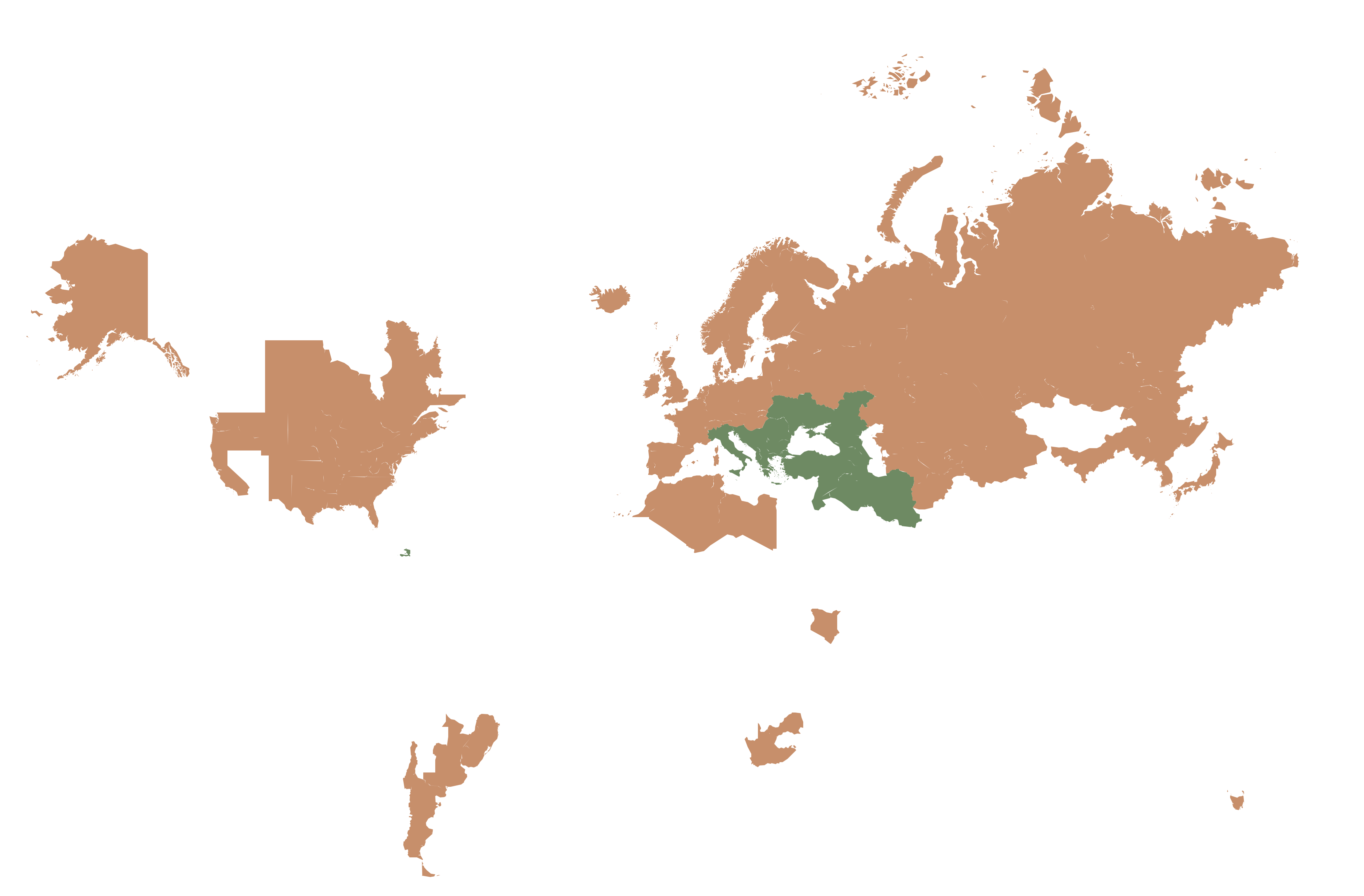
- Native
- Introduced
- Europe
- Western Asia
History
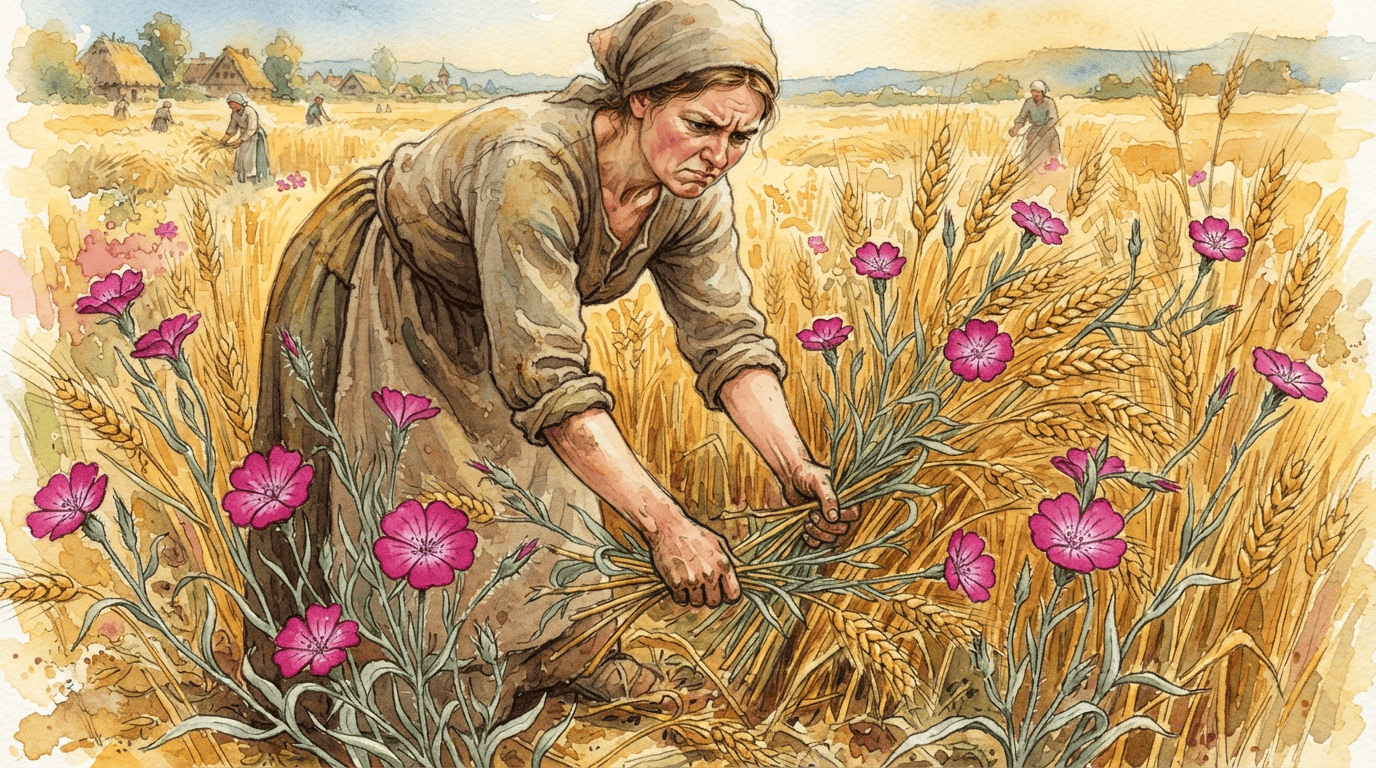
Agrostemma githago is native to Europe and western Asia, from the British Isles and Iberia east through the Caucasus and into Iran. For millennia it was one of the most common weeds of European grain fields — growing alongside wheat, rye, and barley with an eerily similar seed size and seedling appearance that made it almost impossible to remove during hand harvest or pre-modern seed cleaning. The seeds contain githagin and related saponins that are moderately toxic: chronic consumption of corncockle-contaminated bread flour caused the historical "corncockle poisoning" (also called "githagism") — a gastrointestinal and nervous complaint recognized in European medical literature from the medieval period through the early 20th century, characterized by weakness, vertigo, GI upset, and sometimes death in severe cases of contaminated-flour consumption. Modern 20th-century grain-cleaning technology — sieves, air-flow separators, gravity tables — effectively separates corncockle seeds from grain, and by approximately the 1960s-70s the species had largely disappeared from European commercial wheat fields.
Its disappearance has been so complete that it is now listed as endangered or near-extinct as a wild grain-field plant in the UK, Germany, Poland, and several other European countries — a striking transformation from noxious common weed to conservation priority within less than a century. It is still widely grown from seed as a pretty meadow-style garden annual with magenta-pink five-petaled flowers. Corn cockle was so intertwined with European grain farming that its toxic seeds were a genuine public health hazard for centuries.
Before modern seed-cleaning technology, bread made from contaminated wheat could cause digestive illness and, in extreme cases, death. The plant was specifically targeted by agricultural improvement campaigns in the 19th century and was largely eradicated by herbicides in the 20th century. Ironically, its near-extinction from farmland has made it a conservation priority in parts of Europe. The name 'cockle' comes from Old English 'coccel,' meaning a weed among grain. In the Bible, the plant is referenced in Job 31:40: 'Let thistles grow instead of wheat, and cockle instead of barley.' Today it is cherished by gardeners who appreciate its elegant flowers and bittersweet agricultural history.
Symbolism & meaning
What It Symbolizes
Corn Cockle embodies gentleness, its delicate magenta flowers nodding on slender stems with the quiet grace of a half-remembered melody. Once a familiar companion to wheat fields across Europe, it now carries a tender nostalgia — a vanishing field flower evoking the lost landscapes of traditional farming. To grow it today is to keep faith with a softer, slower agricultural past.
- Gentleness — Its delicate, nodding flowers embody quiet grace and soft beauty
- Nostalgia — A vanishing field flower that evokes the lost landscapes of traditional farming
Where the Name Comes From
Agrostemma from Greek 'agros' (field) and 'stemma' (garland or wreath), meaning 'garland of the fields.' Githago derives from 'git,' an old name for corn cockle in European languages.
Uses & Fun Facts
- Tall magenta-pink blooms favored in cottage and cutting gardens
- Slender annual for meadow plantings and grain-field nostalgia beds
- Open blooms attract bumblebees and solitary bees
Related plants
Plants with similar care
 Chinese AbeliaAbelia chinensis
 Fragrant AbeliaAbelia mosanensis
 Large-Flowered AbeliaAbelia uniflora
 Glossy AbeliaAbelia x grandiflora
Frequently asked questions
How often should I water Corn Cockle?
Water about every 5 days during the growing season, and always let excess water drain away.
How much light does Corn Cockle need?
Full sun: 6+ hrs direct. Watch the leaves — scorching or stretching means the light needs adjusting.
Is Corn Cockle toxic to cats or dogs?
Pets Moderate (Dogs Moderate · Cats Moderate) Educational information, not medical or veterinary advice. If exposure is suspected, contact a doctor or veterinarian.
Is Corn Cockle easy to grow?
Yes — it is considered an easy, beginner-friendly plant.
When does Corn Cockle bloom?
It typically blooms Mar–May in the Northern Hemisphere.
YardMate
Identify any plant in seconds
Snap a photo — YardMate names the plant, diagnoses problems, and reminds you when to water.
Download on the App Store