 YardMate


Butterfly Milkweed
Asclepias tuberosa
Easy · Beginner friendlyAbout Butterfly Milkweed
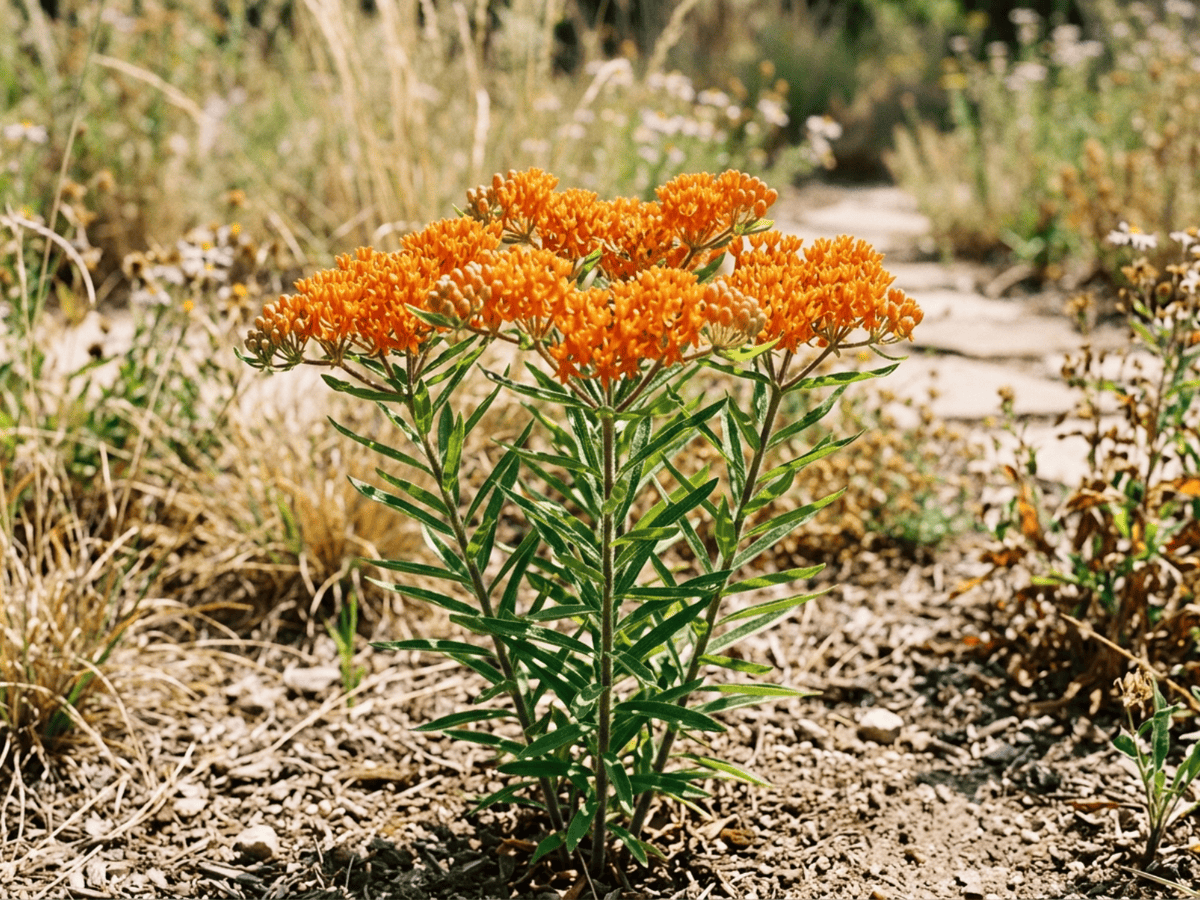
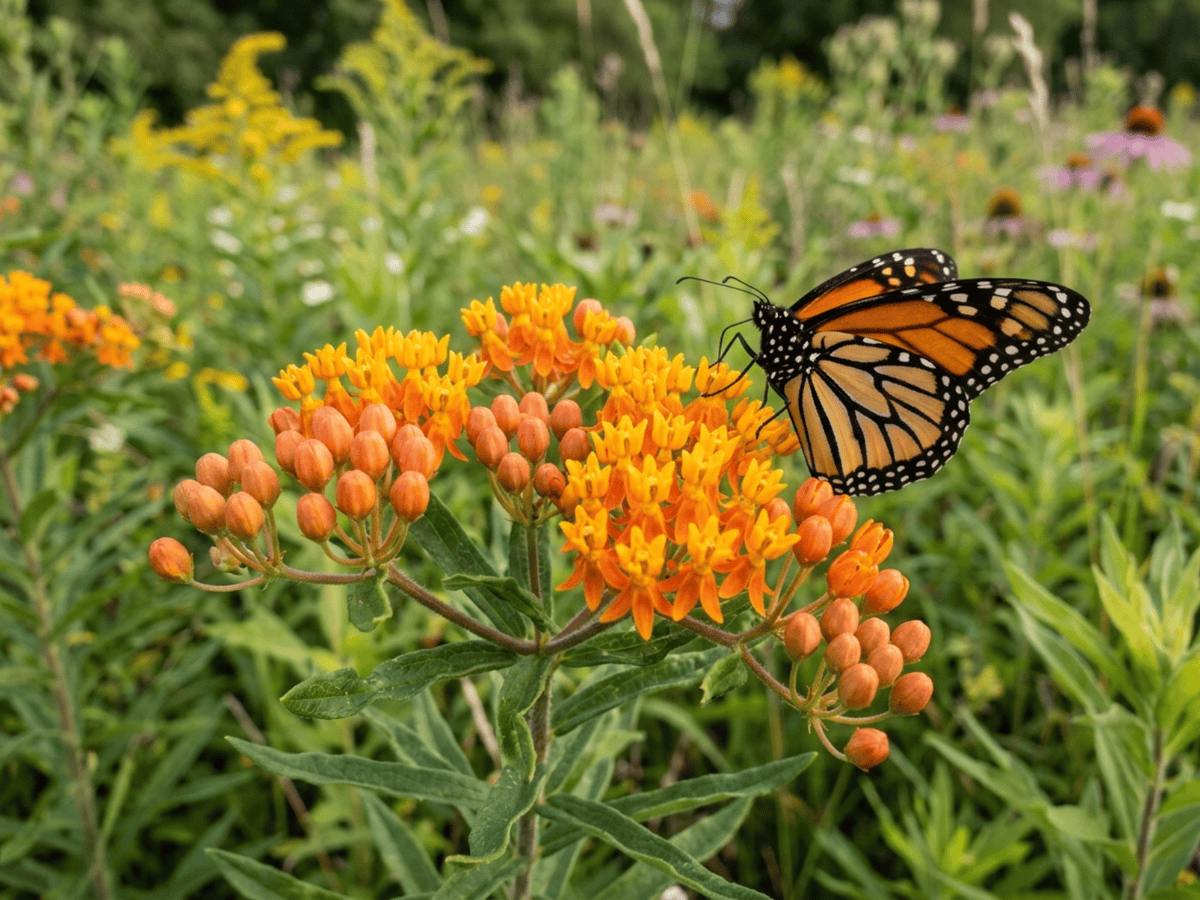
Asclepias tuberosa, butterfly weed, is the most brilliantly colored milkweed species, producing clusters of vivid orange to yellow-orange flowers that blaze like fire across summer meadows. Native to eastern and southern North America, it is a critical host plant for monarch butterflies — female monarchs lay their eggs exclusively on milkweed species, and the caterpillars feed on the leaves, absorbing cardiac glycosides that make them toxic to predators. Unlike most milkweeds, butterfly weed has clear rather than milky sap and a deep taproot that makes it extremely drought-tolerant but difficult to transplant. Growing 30–75 cm tall, it is more compact and garden-friendly than common milkweed, forming tidy clumps rather than aggressive colonies. The flowers attract a spectacular diversity of butterflies, bees, and beneficial insects. Seed pods split open in autumn to release seeds on silky parachutes. It is an essential component of any monarch conservation planting and was named the Perennial Plant Association's Plant of the Year.
- Drought-tolerant
- Native
- Pollinator-friendly
How to care for Butterfly Milkweed
Watering
- Springevery 7 days
- Summerevery 5 days
- Fallevery 14 days
- Winterevery 30 days
Soil · Well-draining
- Top dressingPine bark mulch10%
- Main mixPotting soil + perlite 2:170%
- DrainageLECA / gravel20%
Never skip the drainage layer — standing water is the top cause of root rot.
FERTILIZER
- Springevery 60 days
At a Glance
- NativeNorth America
- Height1–3 ft (0.3–0.9 m)
- Spread1–2 ft (0.3–0.6 m)
- Flower colorOrange, Yellow, Red
- Foliage colorGreen
- SoilSandy, Well-drained
- LocationsYard
Bloom time
BLOOM CYCLE
Peak bloom
Jun–Aug
Vivid orange flower clusters in summer; deep taproot — plant in permanent location
Fragrance
LIGHT FRAGRANCE
The flowers have a light sweet scent.
Toxicity
Humans Slight · Pets Slight
cardiac glycosides (lower levels than in many Asclepias)
Slight
- All
- Ingestion
EXPOSURE Eating any part of the plant.
EFFECT Milkweeds contain cardiac glycosides and a. tuberosa is among the less toxic species but should not be eaten.
NOTE Documented concern for humans: Milkweeds contain cardiac glycosides and a. tuberosa is among the less toxic species but should not be eaten.
Slight
- All
- Ingestion
EXPOSURE Eating any part of the plant.
EFFECT Mild GI upset and a. tuberosa less potent than other Asclepias.
NOTE ASPCA lists milkweeds generally as toxic; A. tuberosa has less cardiac glycoside content than more showy milkweeds.
Slight
- All
- Ingestion
EXPOSURE Eating any part of the plant.
EFFECT Mild GI upset.
NOTE ASPCA lists milkweeds generally as toxic; A. tuberosa has less cardiac glycoside content than more showy milkweeds.
Educational information, not medical or veterinary advice. If exposure is suspected, contact a doctor or veterinarian.
DISTRIBUTION


- Native
- North America
History

Asclepias tuberosa is native to eastern and central North America — from southern Ontario and New England south to Florida and west to Texas and Arizona. It produces flat-topped clusters of vivid orange (occasionally yellow or red) small five-pointed flowers on 45-75 cm stems through summer, blooming from mid-summer through fall. It is one of the most important larval host plants for monarch butterfly (Danaus plexippus) caterpillars — which feed exclusively on Asclepias leaves and sequester the plants' cardiac glycosides for their own defense against predation — and is widely planted in the extensive Monarch Highway, waystation, and habitat-restoration plantings that seek to reverse monarch population decline caused by loss of prairie and roadside milkweed habitat. The common name "pleurisy root" reflects 18th- and 19th-century American folk medicinal use: colonial and Appalachian herbalists used dried root preparations to treat pleurisy, pneumonia, bronchitis, and various lung inflammations — a use inherited from Indigenous Southeastern tribes including the Cherokee and Creek.
Unlike most milkweeds, A. tuberosa does not produce the characteristic milky white latex when broken — its sap is clear — reflecting its somewhat anomalous position within the genus. It was selected as the 2017 Perennial Plant Association Plant of the Year, reflecting its rising profile in native-plant gardening. The Omaha, Cherokee, and Delaware nations prepared root decoctions for pleurisy, bronchitis, and other respiratory ailments — earning it the folk name 'pleurisy root.'
Today its significance centers on monarch butterfly conservation. Monarch populations have declined over 80% in two decades, primarily due to habitat loss and the eradication of milkweeds from agricultural landscapes by herbicide-tolerant crops. Butterfly weed has become the flagship species for the 'plant milkweed' movement, with millions of plants distributed through conservation programs. Every milkweed planted is a potential nursery for the next generation of monarchs making their incredible 4,800 km migration to Mexico.
Symbolism & meaning
What It Symbolizes
Butterfly Milkweed blazes orange across the tallgrass prairie, a beacon of courage in a sea of green. It is the host plant of monarch transformation — its leaves feeding the caterpillar that will become the butterfly bound for Mexico, the most famous metamorphosis in North American nature. To plant its is to take part in that ancient relay, offering the next generation the leaf they cannot live without.
- Courage — A bold orange beacon on the prairie, symbolizing bravery and spirited determination
- Transformation — Host to monarch metamorphosis — from caterpillar to butterfly, representing profound change
Where the Name Comes From
Asclepias honors Asklepios, Greek god of physicians. Tuberosa refers to the tuberous taproot. Common name 'butterfly weed' reflects its extraordinary attractiveness to butterflies.
Uses & Fun Facts
- Critical host plant for monarch butterfly caterpillars
- Roots used in traditional remedies for respiratory complaints
- Vivid orange umbels draw butterflies and native bees
- Drought-tolerant native wildflower for prairie meadows
Related plants
More Asclepias plants

Plants with similar care
 Chinese AbeliaAbelia chinensis
 Fragrant AbeliaAbelia mosanensis
 Large-Flowered AbeliaAbelia uniflora
 Glossy AbeliaAbelia x grandiflora
Frequently asked questions
How often should I water Butterfly Milkweed?
In summer, water about every 5 days; in winter, about every 30 days. Adjust for heat, pot size and drainage.
How much light does Butterfly Milkweed need?
Full sun: 6+ hrs direct. Watch the leaves — scorching or stretching means the light needs adjusting.
Is Butterfly Milkweed toxic to cats or dogs?
Pets Slight (Dogs Slight · Cats Slight) Educational information, not medical or veterinary advice. If exposure is suspected, contact a doctor or veterinarian.
Is Butterfly Milkweed easy to grow?
Yes — it is considered an easy, beginner-friendly plant.
When does Butterfly Milkweed bloom?
It typically blooms Jun–Aug in the Northern Hemisphere.
YardMate
Identify any plant in seconds
Snap a photo — YardMate names the plant, diagnoses problems, and reminds you when to water.
Download on the App Store