 YardMate


Butterfly Bush
Buddleja davidii
Easy · Beginner friendlyAbout Butterfly Bush
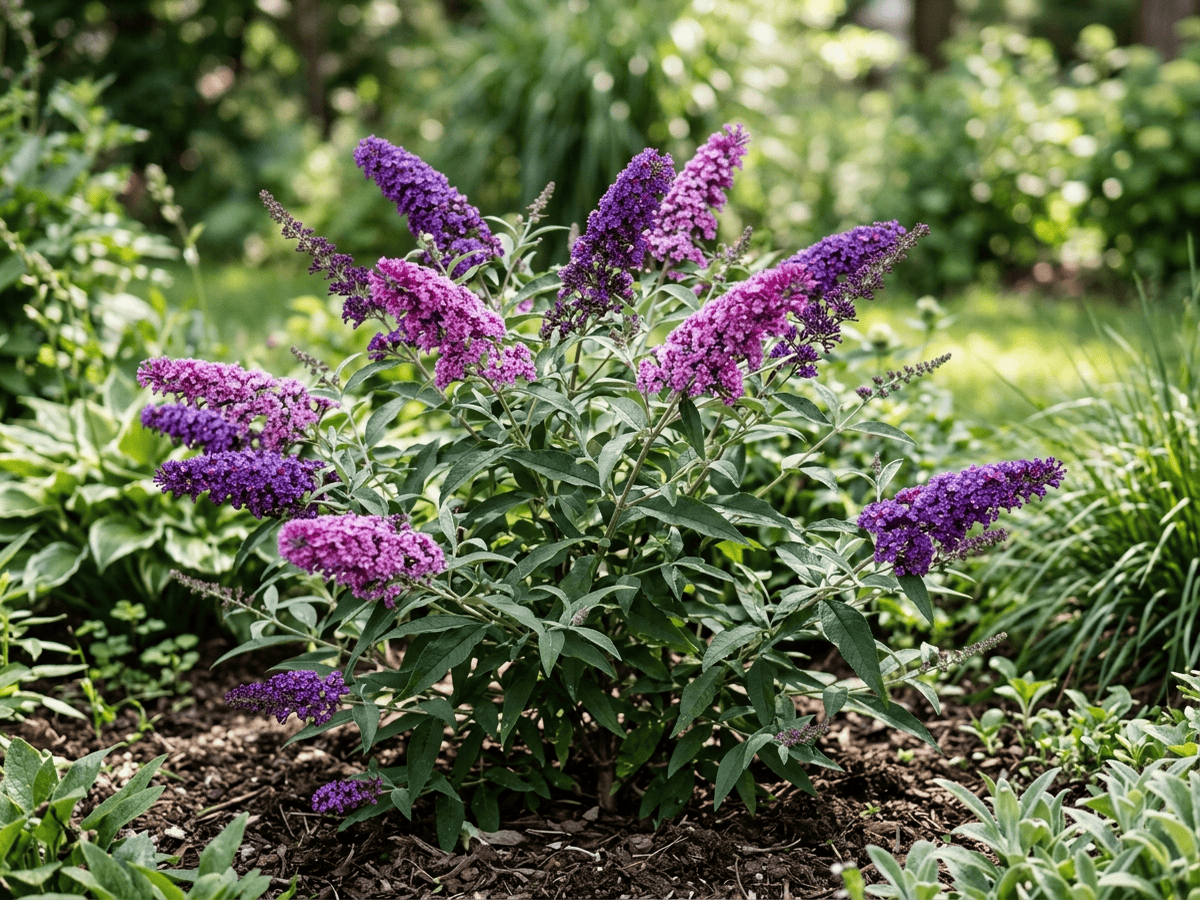
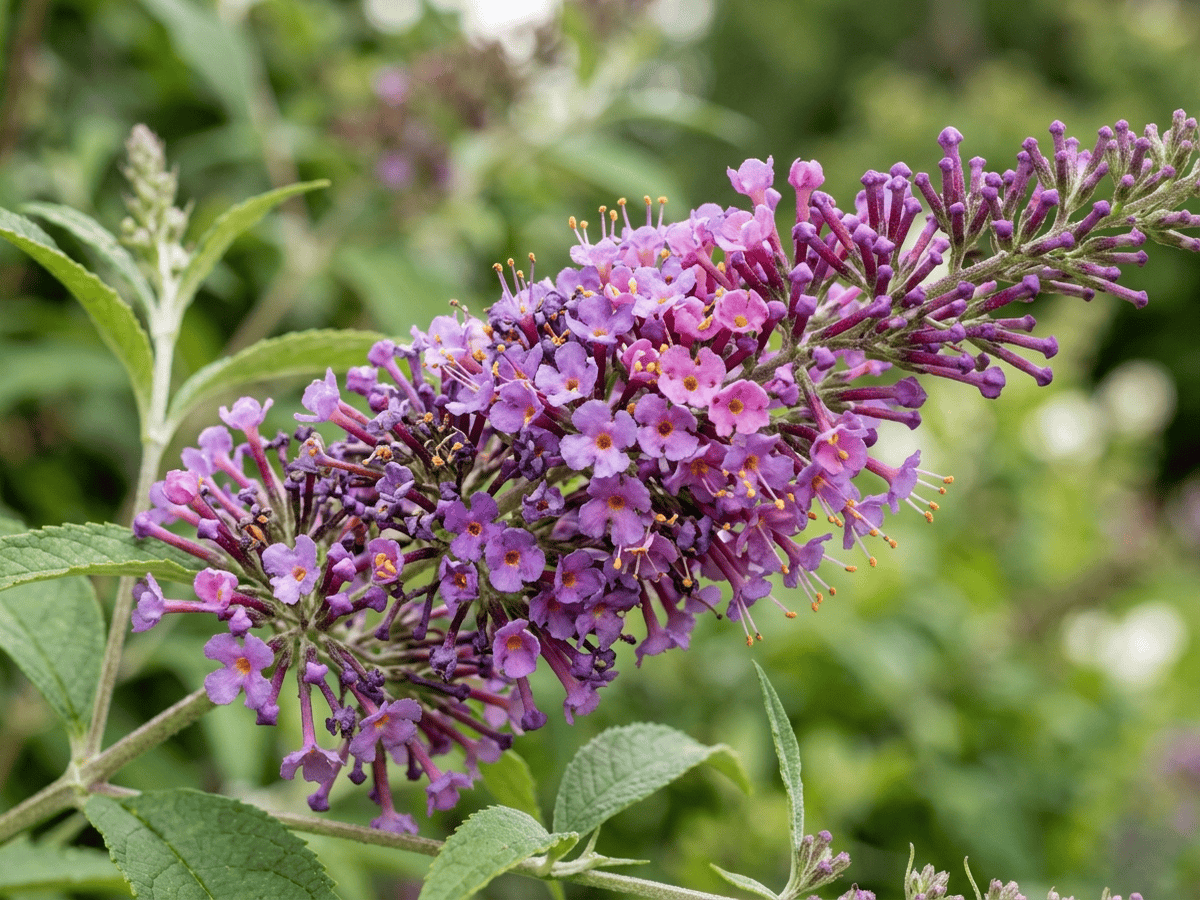
Buddleja davidii, the butterfly bush, is a vigorous deciduous to semi-evergreen shrub native to central China that has become one of the most popular wildlife-attracting garden plants worldwide. Growing 6 to 12 feet tall, it produces long conical panicles of intensely fragrant flowers from midsummer to frost in shades of purple, lavender, pink, white, and deep magenta. True to its name, the nectar-rich flowers are irresistible to butterflies, bees, and hummingbirds, making it a cornerstone of pollinator gardens. It thrives in full sun and well-drained soil, tolerating drought, poor soil, heat, and urban conditions. The plant blooms on new wood and benefits from hard pruning to 12 inches in late winter, which produces vigorous new growth and larger flower panicles. In some regions, particularly the Pacific Northwest, UK, and New Zealand, butterfly bush has become invasive and its planting is discouraged or banned. Newer sterile or low-seed cultivars like the Chip series address this concern while maintaining the butterfly-attracting qualities.
- Fragrant
- Drought-tolerant
- Fast-growing
- Long-blooming
How to care for Butterfly Bush
Watering
- Springevery 5 days
- Summerevery 4 days
- Fallevery 10 days
- Winterevery 30 days
Soil · Rich & loamy
- Top dressingBark mulch15%
- Main mixRich loam + compost 3:170%
- DrainageGravel15%
Use fully finished compost — fresh compost burns roots.
FERTILIZER
Balanced Feed 14-14-14
An even feed covers all three needs at once, keeping leaves, roots and blooms moving together with nothing pushed out of balance.
- Nitrogen · Leaves
- Phosphorus · Roots + Blooms
- Potassium · Strength
- Springevery 45 days
- Summerevery 45 days
At a Glance
- NativeEast Asia
- Height6–12 ft (1.8–3.7 m)
- Spread6–15 ft (1.8–4.6 m)
- Flower colorPurple, Pink, White, Red
- Foliage colorGreen, Silver
- SoilLoamy, Well-drained, Alkaline
- LocationsYard · Indoor · Balcony
Bloom time
BLOOM CYCLE
Peak bloom
Jul–Nov
Long fragrant panicles midsummer to frost on new wood; cut hard to 12 inches in late winter for best flowers. Deadhead to encourage continuous blooming
Fragrance
STRONG FRAGRANCE
Sweet honey-like scent attractive to butterflies and bees.
Toxicity
No toxicity has been reported for this plant. Still, it is wise to keep pets from chewing on any houseplant.
Educational information, not medical or veterinary advice. If exposure is suspected, contact a doctor or veterinarian.
DISTRIBUTION

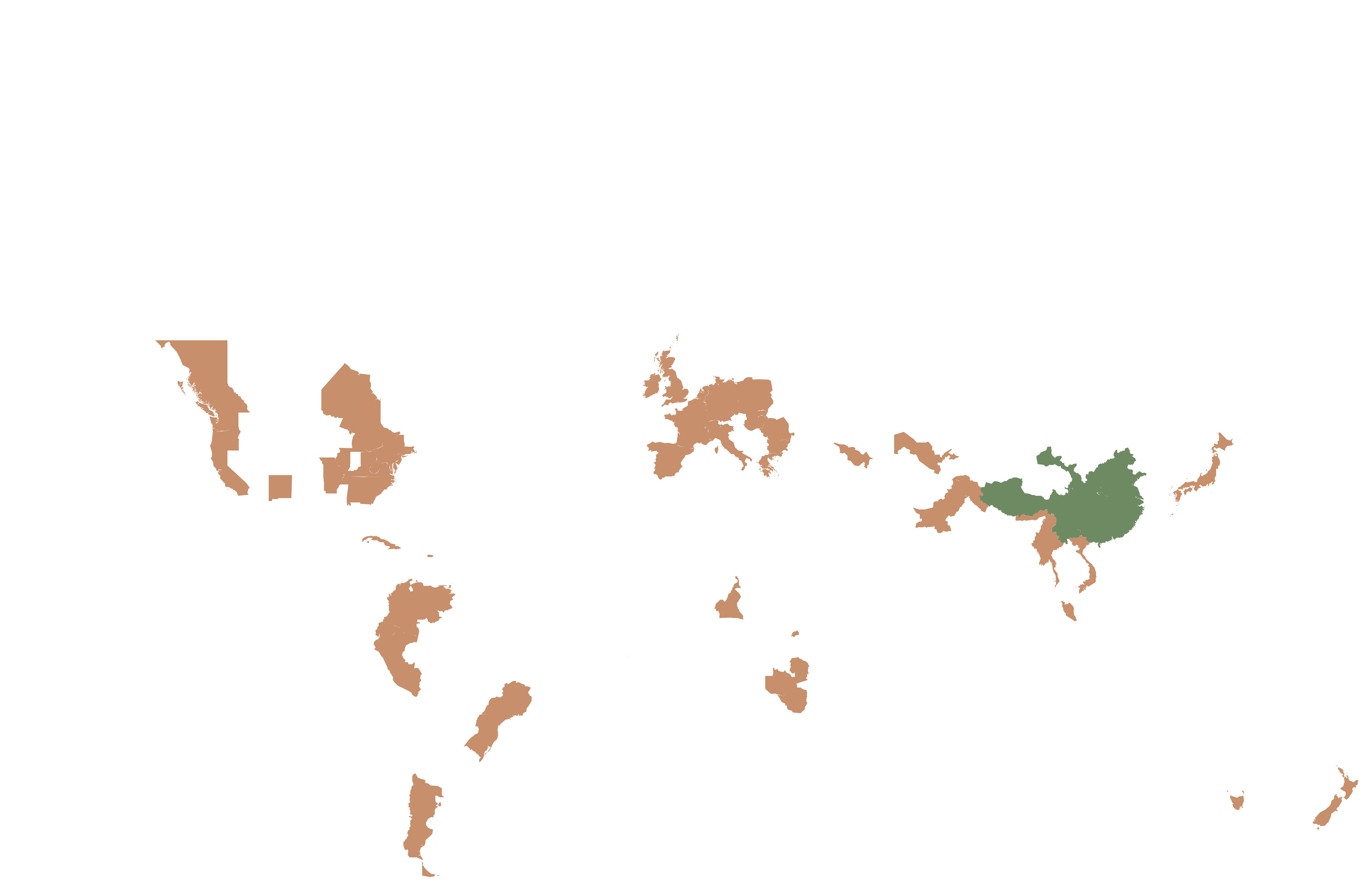
- Native
- Introduced
- East Asia
History
Buddleja davidii is native to central and southwestern China, particularly in the upper Yangtze river system in Sichuan and Hubei, where it colonizes disturbed rocky slopes and riverbanks. French Lazarist missionary and naturalist Père Armand David (after whom the species is named) first collected it in 1869, but the plant entered Western horticulture seriously after the plant hunter Ernest Wilson collected seed for Veitch Nurseries in the 1900s. It rapidly became one of the most widely planted flowering shrubs in temperate gardens due to its long late-summer flower spikes of fragrant lilac, purple, pink, or white flowers that are famously attractive to butterflies and other pollinators.
However, the same traits that make it a successful garden plant — prolific seeding, fast growth, tolerance of poor soil, and ability to colonize rubble — have made it a serious invasive species in the UK (where it colonizes railway cuttings, bombsites, and urban walls), the Pacific Northwest US (where Oregon and Washington classify it as a noxious weed), New Zealand, and parts of Europe. Sterile or near-sterile cultivars such as the Lo & Behold series and the Flutterby series have been developed to reduce invasive risk.
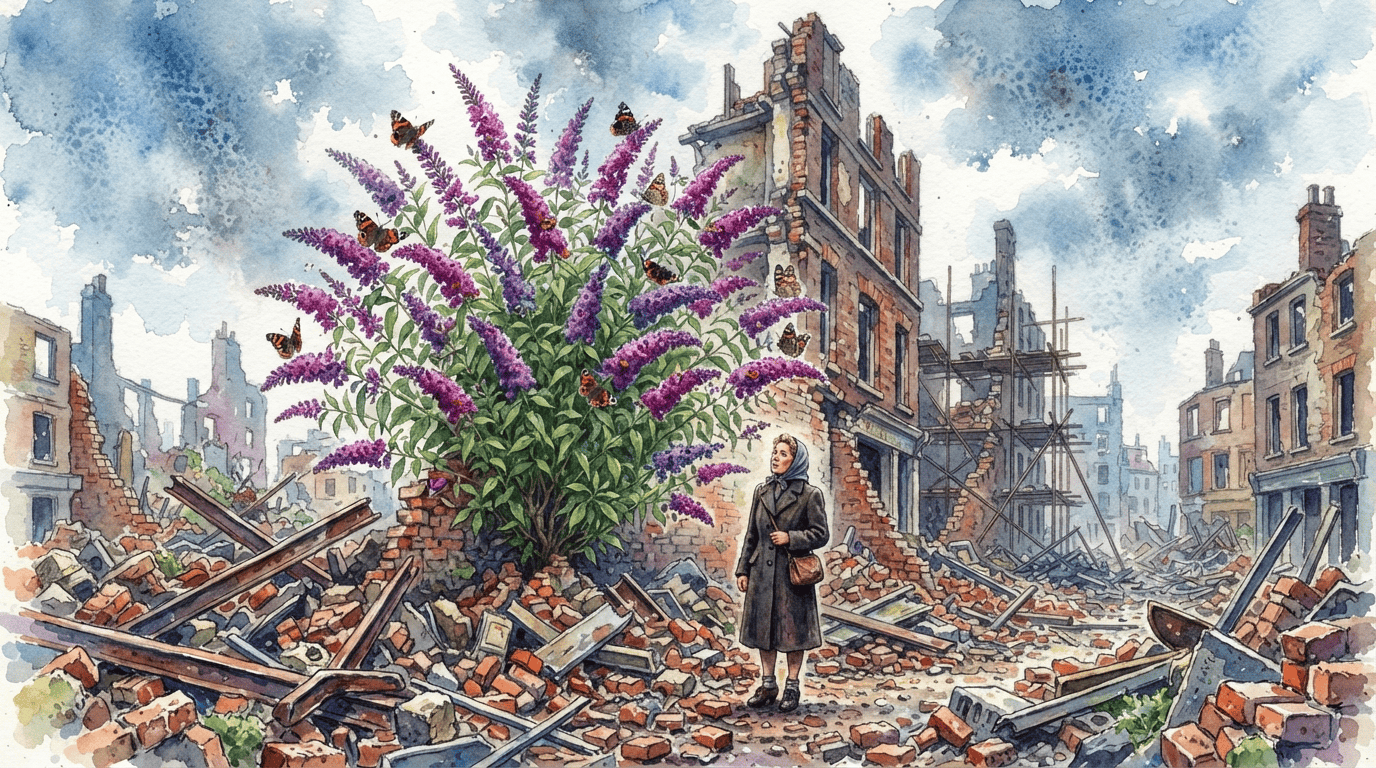
It colonized London's bomb sites during World War II, earning the nickname 'the bombsite plant' for its ability to grow in rubble. The plant is named after Reverend Adam Buddle, an English botanist and rector, though he died before the genus was discovered.
Symbolism & meaning
What It Symbolizes
Butterfly Bush is transformation made visible, its honey-scented spires drawing clouds of butterflies through summer afternoons in a daily metamorphosis of color and motion. Famously it colonized the bombed rubble of postwar London, blooming purple from broken brick — a living symbol of resilience, of beauty insisting on itself in the wake of devastation. It is the plant that turns ruin back into garden.
- Transformation — Its association with butterflies represents metamorphosis and personal growth
- Resilience — Thriving in war-damaged rubble symbolizes recovery and regeneration
Where the Name Comes From
'Buddleja' honors Reverend Adam Buddle (1662–1715), an English botanist. 'Davidii' commemorates Père Armand David, the French missionary who first collected the species in China.
Uses & Fun Facts
- Fragrant panicles swarm with butterflies through midsummer to frost
- Honey-scented flower spikes perfume the surrounding garden
- Fast-growing focal shrub for sunny mixed borders
- Long conical sprays add scent to summer arrangements
Related plants
More Buddleja plants
 Fountain Butterfly-BushBuddleja alternifolia
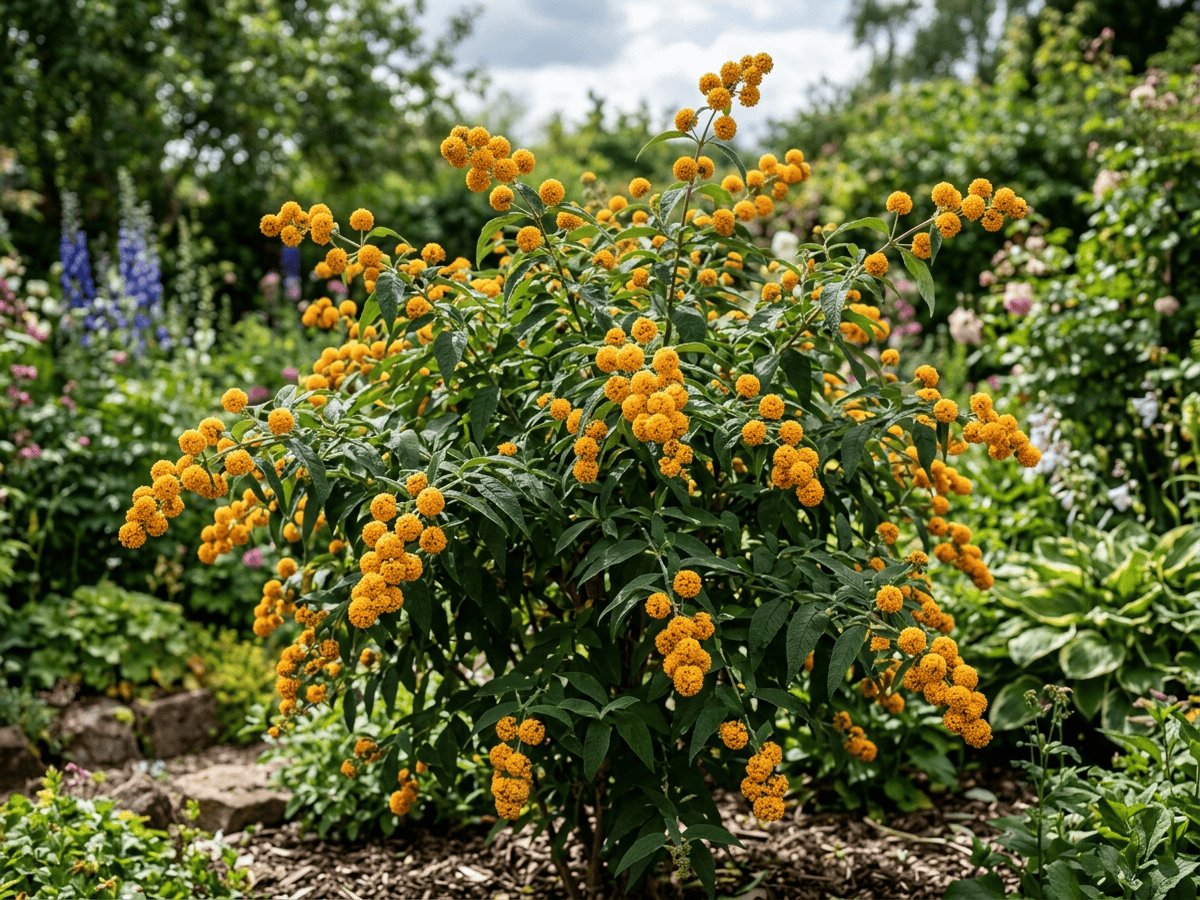 Orange-Ball TreeBuddleja globosa
 Lindley's ButterflybushBuddleja lindleyana
Plants with similar care
 Chinese AbeliaAbelia chinensis
 Fragrant AbeliaAbelia mosanensis
 Large-Flowered AbeliaAbelia uniflora
 Glossy AbeliaAbelia x grandiflora
Frequently asked questions
How often should I water Butterfly Bush?
In summer, water about every 4 days; in winter, about every 30 days. Adjust for heat, pot size and drainage.
How much light does Butterfly Bush need?
Full sun: 6+ hrs direct. Watch the leaves — scorching or stretching means the light needs adjusting.
Is Butterfly Bush toxic to cats or dogs?
No toxicity has been reported for this plant. Still, it is wise to keep pets from chewing on any houseplant. Educational information, not medical or veterinary advice. If exposure is suspected, contact a doctor or veterinarian.
Is Butterfly Bush easy to grow?
Yes — it is considered an easy, beginner-friendly plant.
Can Butterfly Bush be grown indoors?
Yes, it adapts well to indoor growing given the right light.
When does Butterfly Bush bloom?
It typically blooms Jul–Nov in the Northern Hemisphere.
YardMate
Identify any plant in seconds
Snap a photo — YardMate names the plant, diagnoses problems, and reminds you when to water.
Download on the App Store