 YardMate


Marsh Marigold
Caltha palustris
Easy · Beginner friendlyAbout Marsh Marigold
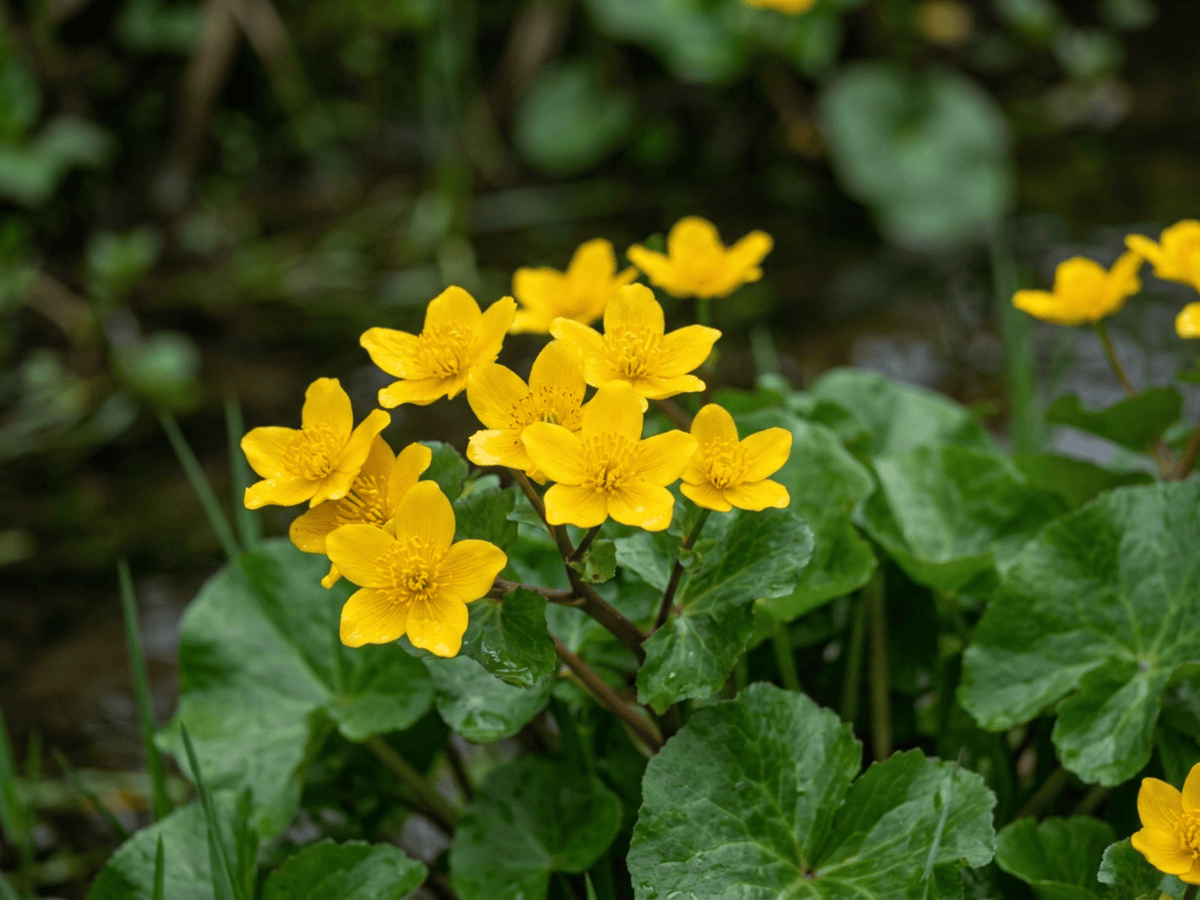
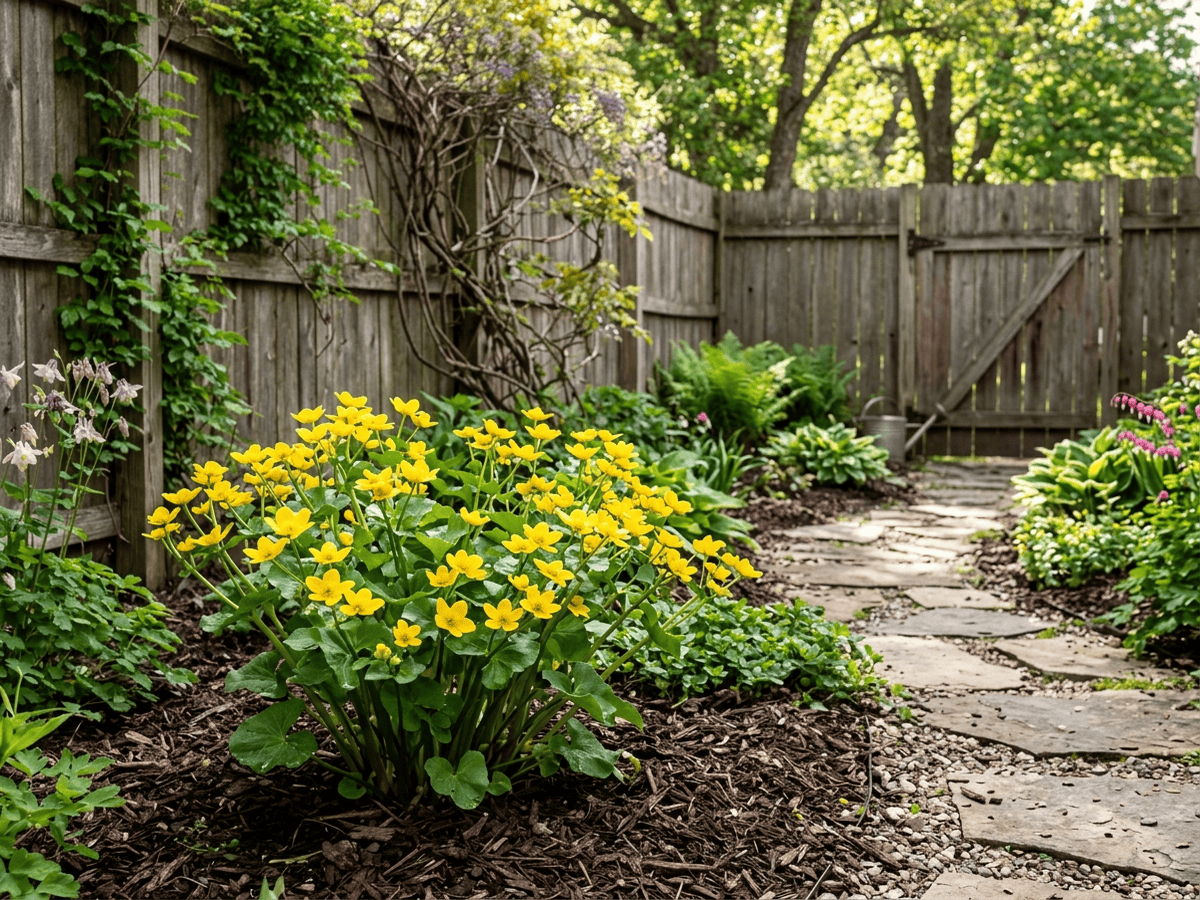
Caltha palustris, the marsh marigold or kingcup, is one of the earliest spring-blooming wetland perennials in the Northern Hemisphere. Its glossy, butter-yellow flowers emerge in March or April, often when snow still lingers, creating vivid golden carpets along stream banks and boggy meadows. The kidney-shaped, dark green leaves are waxy and water-repellent, growing in dense mounds 30–50 cm tall. Native across Europe, Asia, and North America, it thrives in saturated soils and shallow standing water, making it ideal for pond margins and bog gardens. Despite its cheerful appearance, all parts of the plant contain protoanemonin, which is toxic when fresh but breaks down when cooked or dried. Historically it was consumed as a pot herb after thorough boiling. The flowers attract early-season pollinators including bees and hoverflies when few other food sources are available.
- Cold-hardy
- Native
How to care for Marsh Marigold
Watering
- Springevery 1 days
- Summerevery 1 days
- Fallevery 2 days
- Winterevery 7 days
Soil · Bog-wet
- WaterStanding water above soil20%
- SoilHeavy pond soil80%
No drainage layer — keep water standing above the soil.
FERTILIZER
Balanced Feed 14-14-14
An even feed covers all three needs at once, keeping leaves, roots and blooms moving together with nothing pushed out of balance.
- Nitrogen · Leaves
- Phosphorus · Roots + Blooms
- Potassium · Strength
- Springevery 30 days
At a Glance
- NativeNorth America
- Height1–1.5 ft (0.3–0.5 m)
- Spread1–1.5 ft (0.3–0.5 m)
- Flower colorYellow
- Foliage colorGreen
- SoilMoisture-retentive, Loamy
- LocationsYard
Bloom time
BLOOM CYCLE
Peak bloom
Mar–Apr
Bright golden-yellow flowers appear very early spring; thrives in cold, wet conditions
Fragrance
NO FRAGRANCE
No notable fragrance.
Toxicity
Humans Moderate · Pets Moderate
protoanemonin
Moderate
- All
- Ingestion
- Contact
EXPOSURE Eating any part of the plant. Touching any part of the plant.
EFFECT Protoanemonin irritant: burning mouth, GI upset, skin and eye irritation from sap. Cooking or drying destroys the irritant.
NOTE Typical Ranunculaceae protoanemonin toxicity; handled carefully, cooked buds have been used as a caper substitute.
Moderate
- All
- Ingestion
EXPOSURE Eating any part of the plant.
EFFECT Drooling, vomiting, oral irritation.
NOTE Typical Ranunculaceae protoanemonin toxicity; handled carefully, cooked buds have been used as a caper substitute.
Moderate
- All
- Ingestion
EXPOSURE Eating any part of the plant.
EFFECT Same as dogs.
NOTE Typical Ranunculaceae protoanemonin toxicity; handled carefully, cooked buds have been used as a caper substitute.
Educational information, not medical or veterinary advice. If exposure is suspected, contact a doctor or veterinarian.
DISTRIBUTION


- Native
- North America
History

Caltha palustris is a circumboreal wetland perennial native across temperate and arctic Europe, Asia, and North America — from British Isles and European Russia east through Siberia to Kamchatka, and across North America from Alaska and Labrador south to the Carolinas and along the Rocky Mountains. It grows in shallow streams, seeps, wet meadows, marsh edges, and ephemeral snow-melt pools at elevations from sea level to alpine, blooming in very early spring — often emerging through shallow standing water or even snow melt — with 2-4 cm shining bright golden-yellow buttercup-like flowers. The species has accumulated dozens of regional common names reflecting its cultural significance as a herald of spring: "marsh marigold" ("marigold" from "Mary's gold"), "kingcup," "May-blob," "bulls-eye," "cowslip" (in some US regions, though cowslip more properly refers to Primula veris). Shakespeare describes it as "winking Mary-buds" in Cymbeline (Act II, Scene III): "Hark, hark, the lark at heaven's gate sings, / And Phœbus gins arise, / His steeds to water at those springs / On chaliced flowers that lies; / And winking Mary-buds begin / To ope their golden eyes."
The plant contains protoanemonin, a skin-and-mucous-membrane irritant typical of the buttercup family, and should not be eaten or handled without care; very young flower buds have historically been pickled as a caper substitute after pickling inactivates the irritant. Not related to the unrelated African/American annual "marigold" (Tagetes). Caltha palustris has been known since antiquity — its name appears in Pliny the Elder's writings.
In medieval Europe, garlands of marsh marigold were hung on doors during May Day festivals to ward off evil spirits. Anglo-Saxon herbalists called it 'mersc-meargealla' and used it to treat warts. In rural America, boiled leaves were eaten as spring greens by settlers. The plant's ability to bloom while snow is still present made it a powerful symbol of spring's arrival in northern folk traditions.
Symbolism & meaning
What It Symbolizes
Marsh Marigold heralds joy with golden cup-shaped blooms that announce spring's return to wet meadows and stream banks. In Victorian flower language it spoke of desire — the eager anticipation of warmth after long cold months. Its shine on dark spring water is older than any garden, a reminder that happiness sometimes arrives wearing the simplest yellow.
- Joy — its golden blooms herald the happiness of spring's return
- Desire — in Victorian flower language, symbolized eager anticipation
Where the Name Comes From
'Caltha' from Greek 'kalathos' (goblet), describing the cup-shaped flower. 'Palustris' means 'of the marsh' in Latin.
Uses & Fun Facts
- Glossy yellow buttercup flowers brighten early spring bog gardens
- Early flowers feed emerging hoverflies and solitary bees
Related plants
Plants with similar care
 Red BuckeyeAesculus pavia
 Blue BugleAjuga genevensis
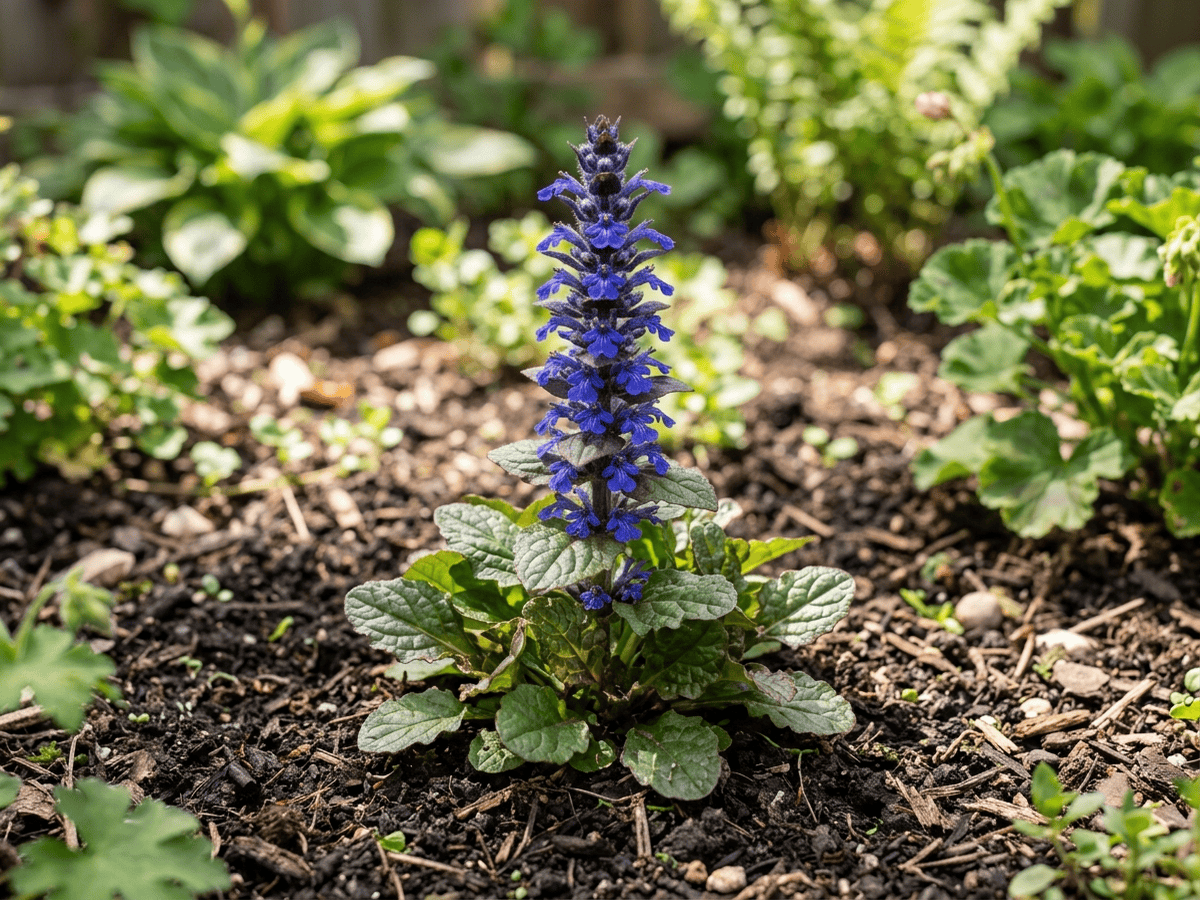 Pyramidal BugleAjuga pyramidalis
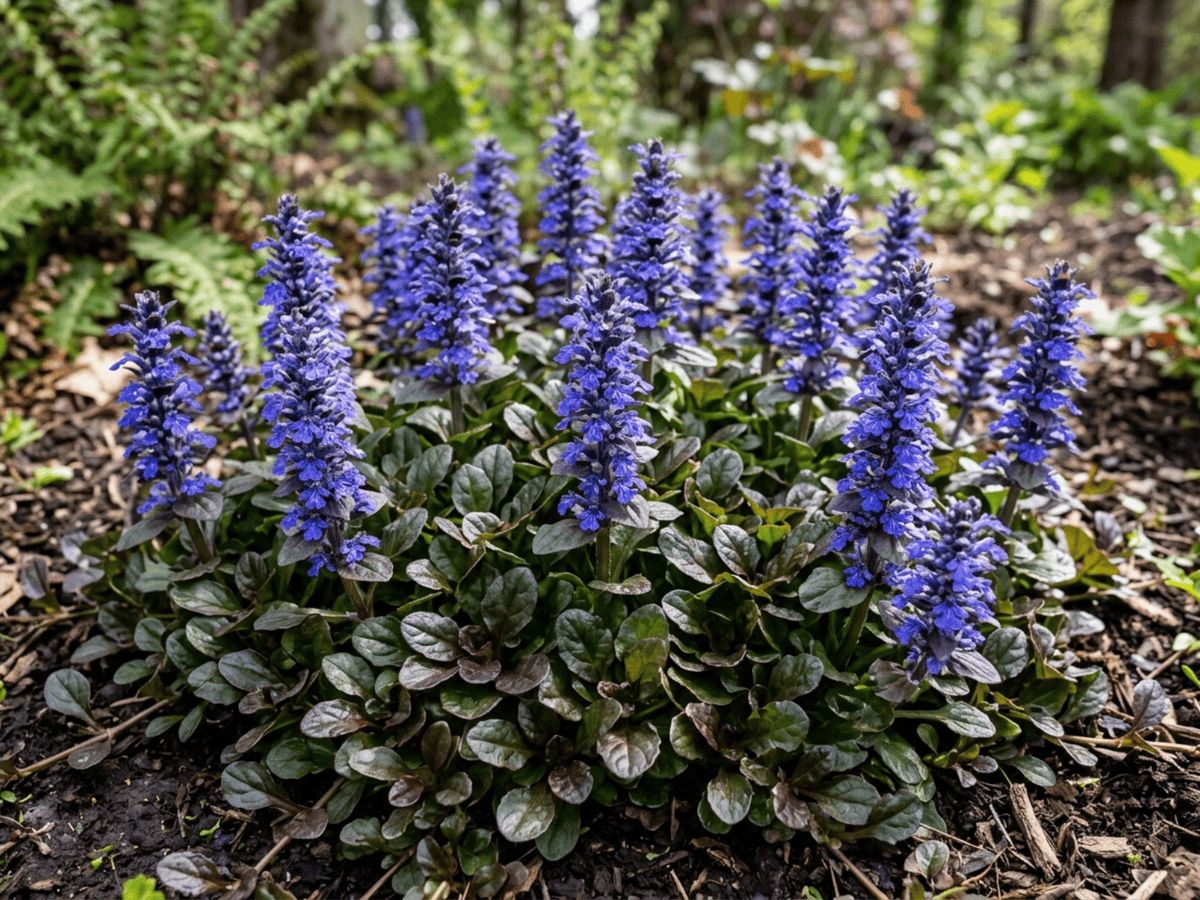 Carpet BugleAjuga reptans
Frequently asked questions
How often should I water Marsh Marigold?
In summer, water about every 1 days; in winter, about every 7 days. Adjust for heat, pot size and drainage.
How much light does Marsh Marigold need?
Part shade: 2–4 hrs direct. Watch the leaves — scorching or stretching means the light needs adjusting.
Is Marsh Marigold toxic to cats or dogs?
Pets Moderate (Dogs Moderate · Cats Moderate) Educational information, not medical or veterinary advice. If exposure is suspected, contact a doctor or veterinarian.
Is Marsh Marigold easy to grow?
Yes — it is considered an easy, beginner-friendly plant.
When does Marsh Marigold bloom?
It typically blooms Mar–Apr in the Northern Hemisphere.
YardMate
Identify any plant in seconds
Snap a photo — YardMate names the plant, diagnoses problems, and reminds you when to water.
Download on the App Store