 YardMate


Carmel Creeper
Ceanothus griseus horizontalis
Easy · Beginner friendlyAbout Carmel Creeper
Carmel Creeper is a low-spreading California native evergreen groundcover reaching 2-4 feet tall and spreading 6-15 feet, with glossy wavy-edged dark green leaves and abundant clusters of medium-blue flowers in spring. A selection from Carmel Bay that has become one of the most popular California native groundcovers for its vigorous cover and reliable bloom. Excellent for large slopes and parkway plantings in Mediterranean California climates.
- Drought-tolerant
- Groundcover
- Evergreen
- Native
How to care for Carmel Creeper
Watering
- Springevery 14 days
- Summerevery 14 days
- Fallevery 21 days
- Winterevery 30 days
Soil · Well-draining
- Top dressingPine bark mulch10%
- Main mixPotting soil + perlite 2:170%
- DrainageLECA / gravel20%
Never skip the drainage layer — standing water is the top cause of root rot.
FERTILIZER
- Springevery 60 days
At a Glance
- NativeNorth America
- Height1.5–3 ft (0.5–0.9 m)
- Spread5–12 ft (1.5–3.7 m)
- Flower colorBlue
- Foliage colorDark-green, Green
- SoilSandy, Well-drained
- LocationsYard
Bloom time
BLOOM CYCLE
Peak bloom
Mar–May
Medium-blue flower clusters March to May
Fragrance
LIGHT FRAGRANCE
Faint honey-like scent from flowers.
Toxicity
No toxicity has been reported for this plant. Still, it is wise to keep pets from chewing on any houseplant.
Educational information, not medical or veterinary advice. If exposure is suspected, contact a doctor or veterinarian.
DISTRIBUTION


- Native
- North America
History
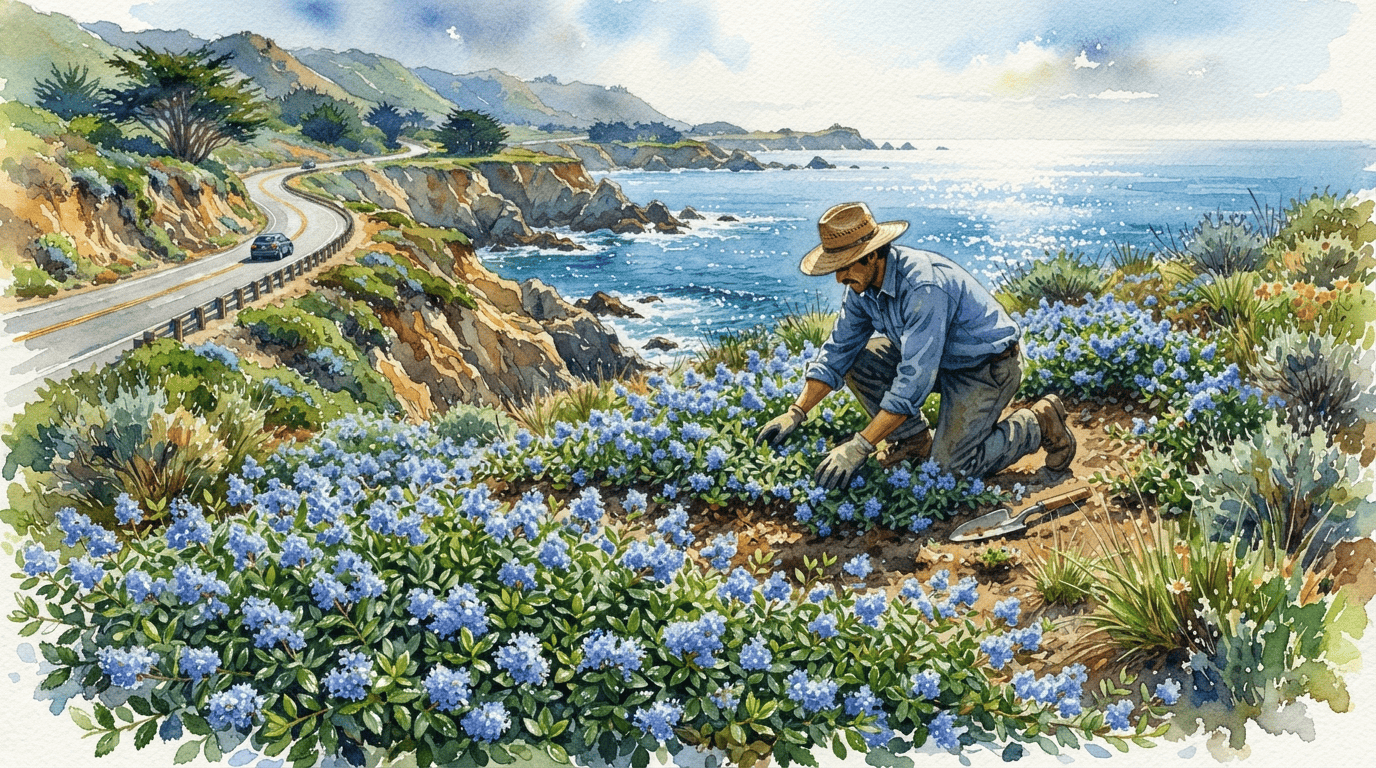
Ceanothus griseus var. horizontalis is a prostrate natural variety of the Carmel ceanothus, endemic to the coastal bluffs of Monterey County, California, particularly around Yankee Point and the Carmel Highlands. Howard E. McMinn of Mills College described the variety horizontalis in 1942 in his monograph of California Ceanothus, distinguishing it from the more upright shrubby species by its prostrate horizontal growth habit—an adaptation to the wind-blasted coastal bluff environment. The variety spreads 3-5 meters wide but rarely exceeds 60 cm tall, forming dense mats of small glossy dark green leaves with serrated margins.
Pale to medium blue flower clusters appear in spring. The cultivar 'Yankee Point' (a somewhat taller form) and 'Diamond Heights' (a gold-variegated sport discovered at Diamond Heights in San Francisco) have become among the most widely planted Ceanothus in California and Mediterranean climates worldwide as drought-tolerant evergreen groundcovers.
All Ceanothus fix atmospheric nitrogen through Frankia root symbioses. Selected from the wild populations around Carmel Bay, California in the mid-20th century. Ubiquitous along California freeways and coastal landscapes for its reliability and coverage.
Symbolism & meaning
What It Symbolizes
Carmel creeper is California's gift of spreading joy — sheets of vivid blue blossom rolling down hillsides each spring, drawing bees by the thousands. As a piece of California heritage it has lined freeways and tumbled over retaining walls statewide, the signature blue of countless commutes. Few native shrubs have so thoroughly defined what spring looks like along the Pacific edge of the continent.
- Spreading joy — broad coverage in lavish blue bloom
- California heritage — signature freeway and slope plant
Where the Name Comes From
'Griseus' means gray-leaved; 'horizontalis' refers to the low spreading habit of this variety.
Uses & Fun Facts
- Evergreen California lilac mat for sunny dry slopes and banks
- Sky-blue spring flower clusters swarm with native bees
Related plants
More Ceanothus plants
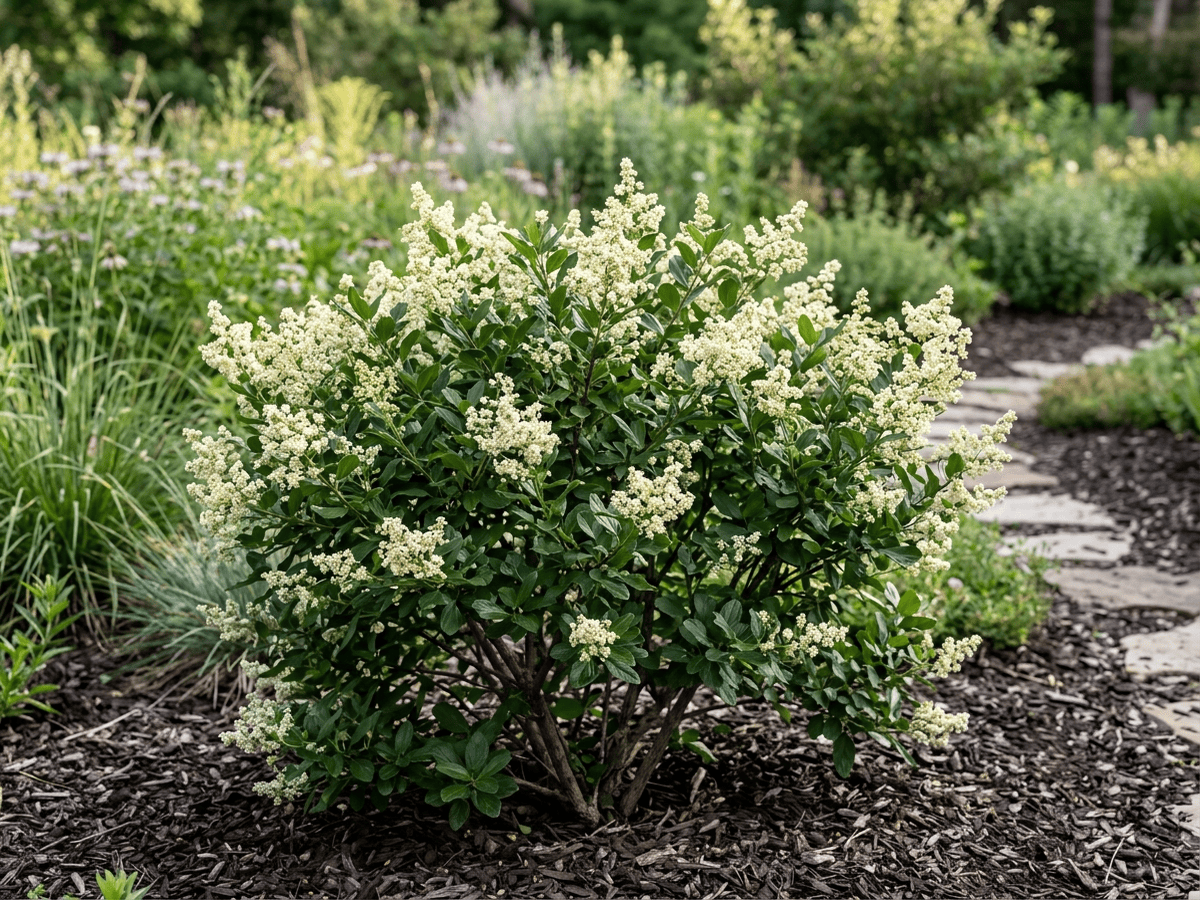 New Jersey TeaCeanothus americanus
 Point Reyes CeanothusCeanothus gloriosus
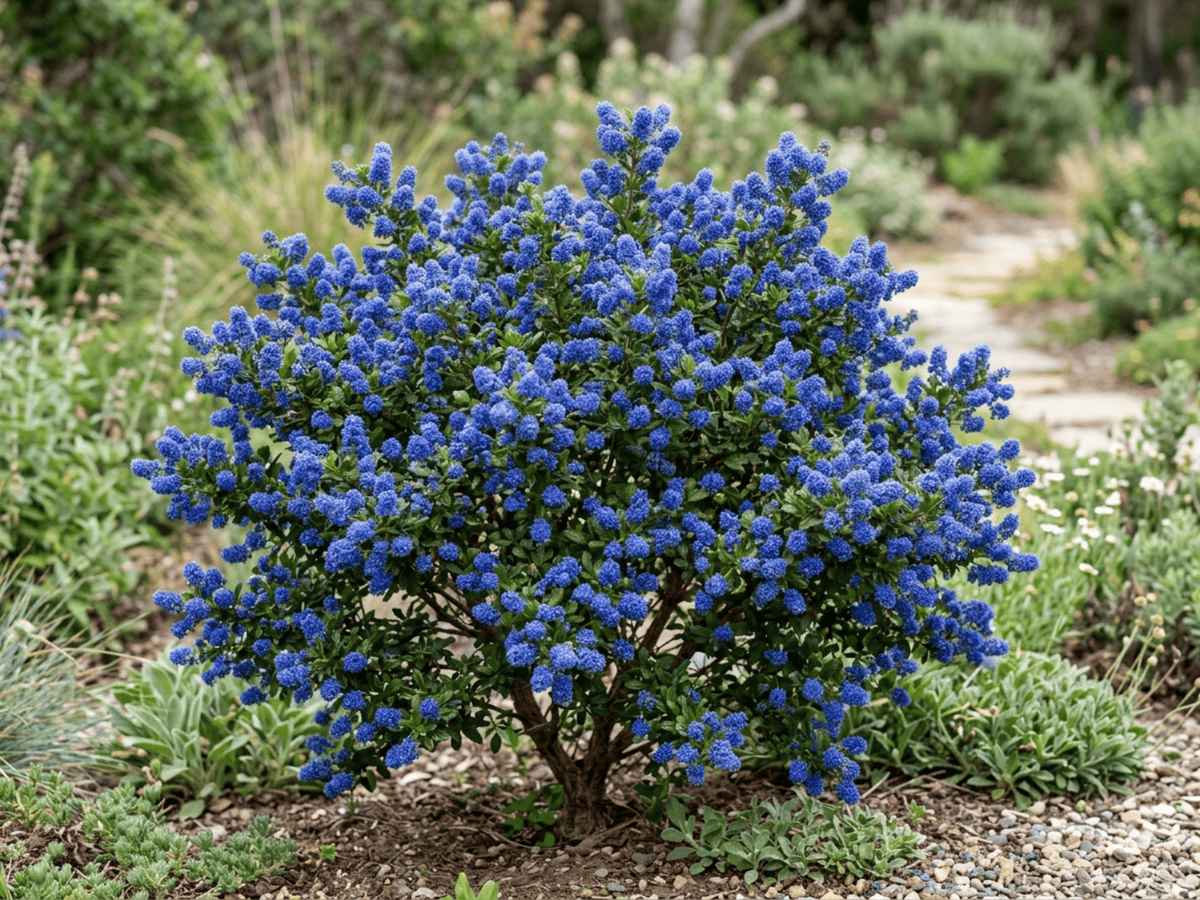 Santa Barbara CeanothusCeanothus impressus
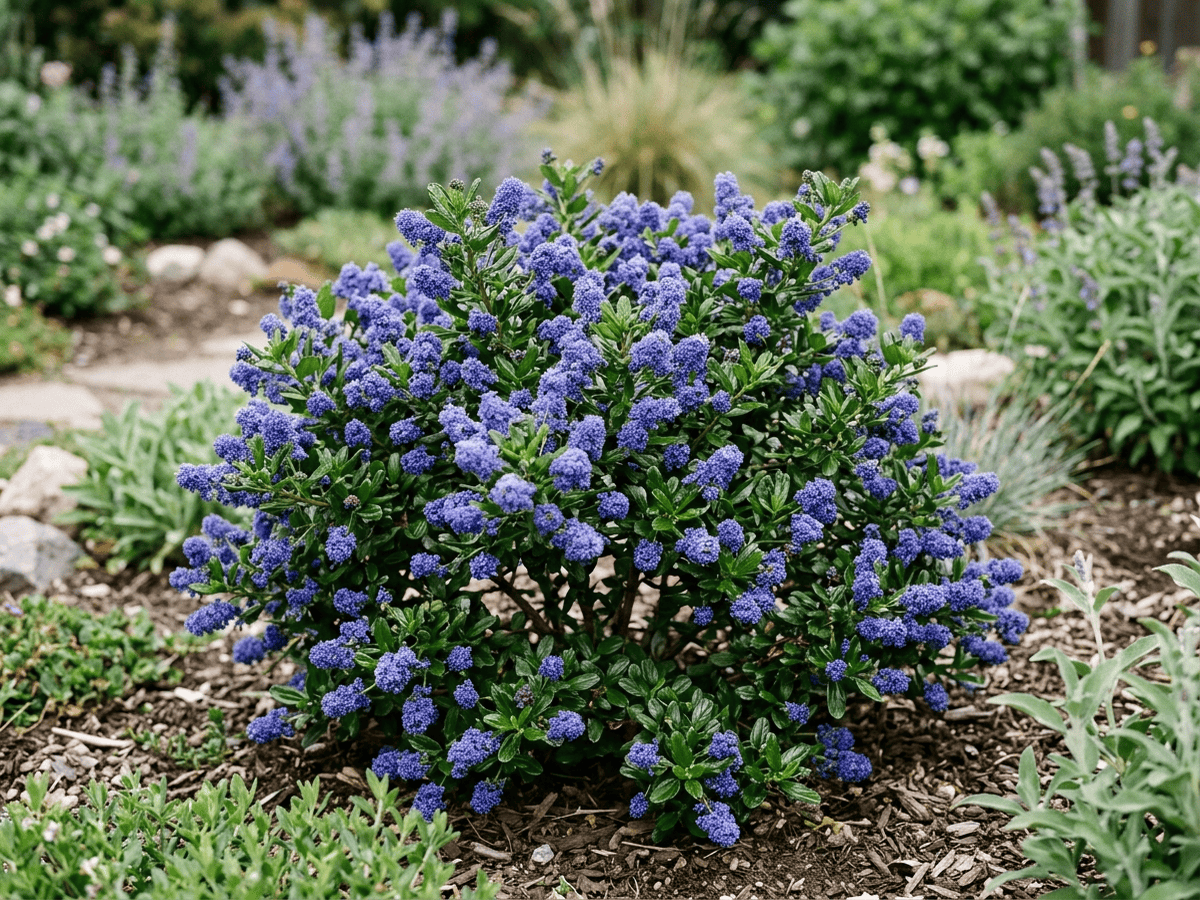 Maritime CeanothusCeanothus maritimus
Plants with similar care
 Chinese AbeliaAbelia chinensis
 Fragrant AbeliaAbelia mosanensis
 Large-Flowered AbeliaAbelia uniflora
 Glossy AbeliaAbelia x grandiflora
Frequently asked questions
How often should I water Carmel Creeper?
In summer, water about every 14 days; in winter, about every 30 days. Adjust for heat, pot size and drainage.
How much light does Carmel Creeper need?
Full sun: 6+ hrs direct. Watch the leaves — scorching or stretching means the light needs adjusting.
Is Carmel Creeper toxic to cats or dogs?
No toxicity has been reported for this plant. Still, it is wise to keep pets from chewing on any houseplant. Educational information, not medical or veterinary advice. If exposure is suspected, contact a doctor or veterinarian.
Is Carmel Creeper easy to grow?
Yes — it is considered an easy, beginner-friendly plant.
When does Carmel Creeper bloom?
It typically blooms Mar–May in the Northern Hemisphere.
YardMate
Identify any plant in seconds
Snap a photo — YardMate names the plant, diagnoses problems, and reminds you when to water.
Download on the App Store