 YardMate

Quail Grass
Celosia argentea
Easy · Beginner friendlyAbout Quail Grass
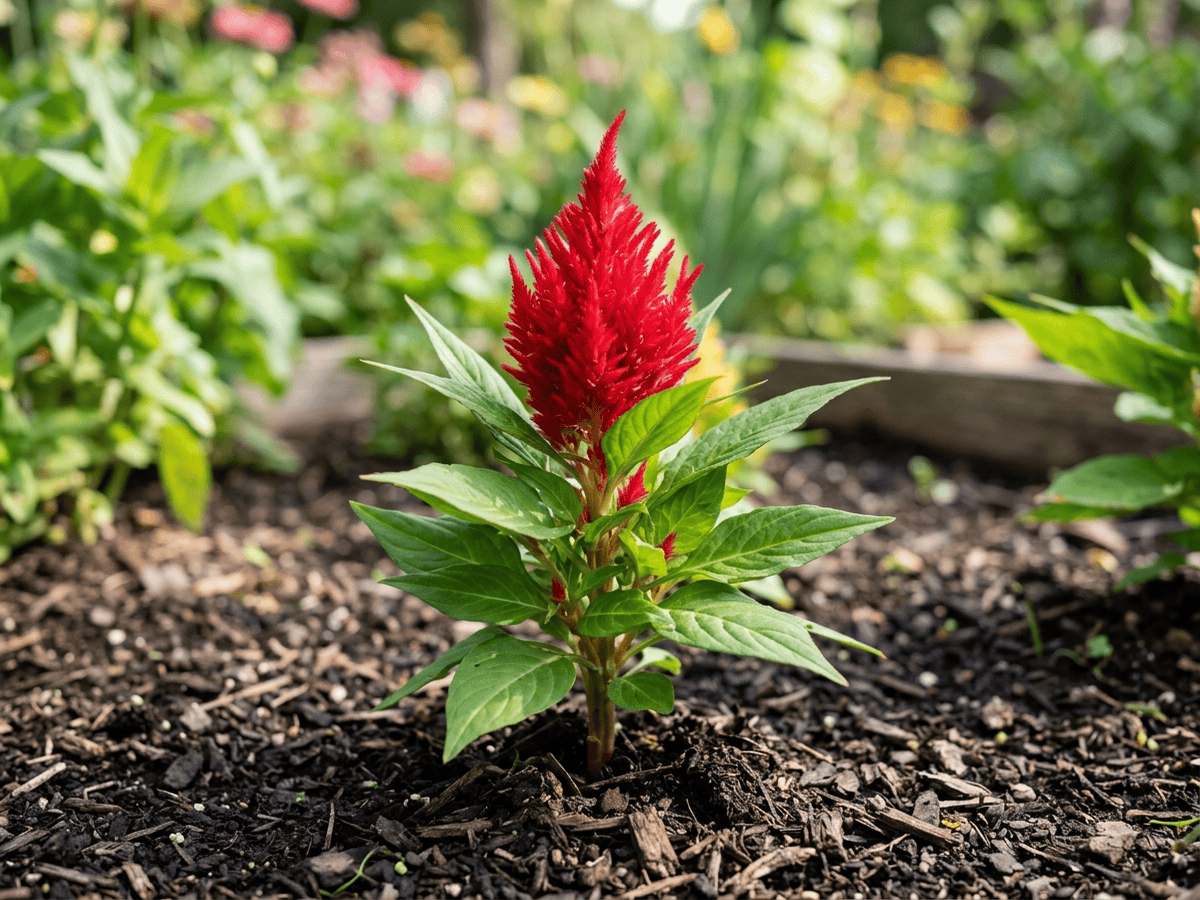
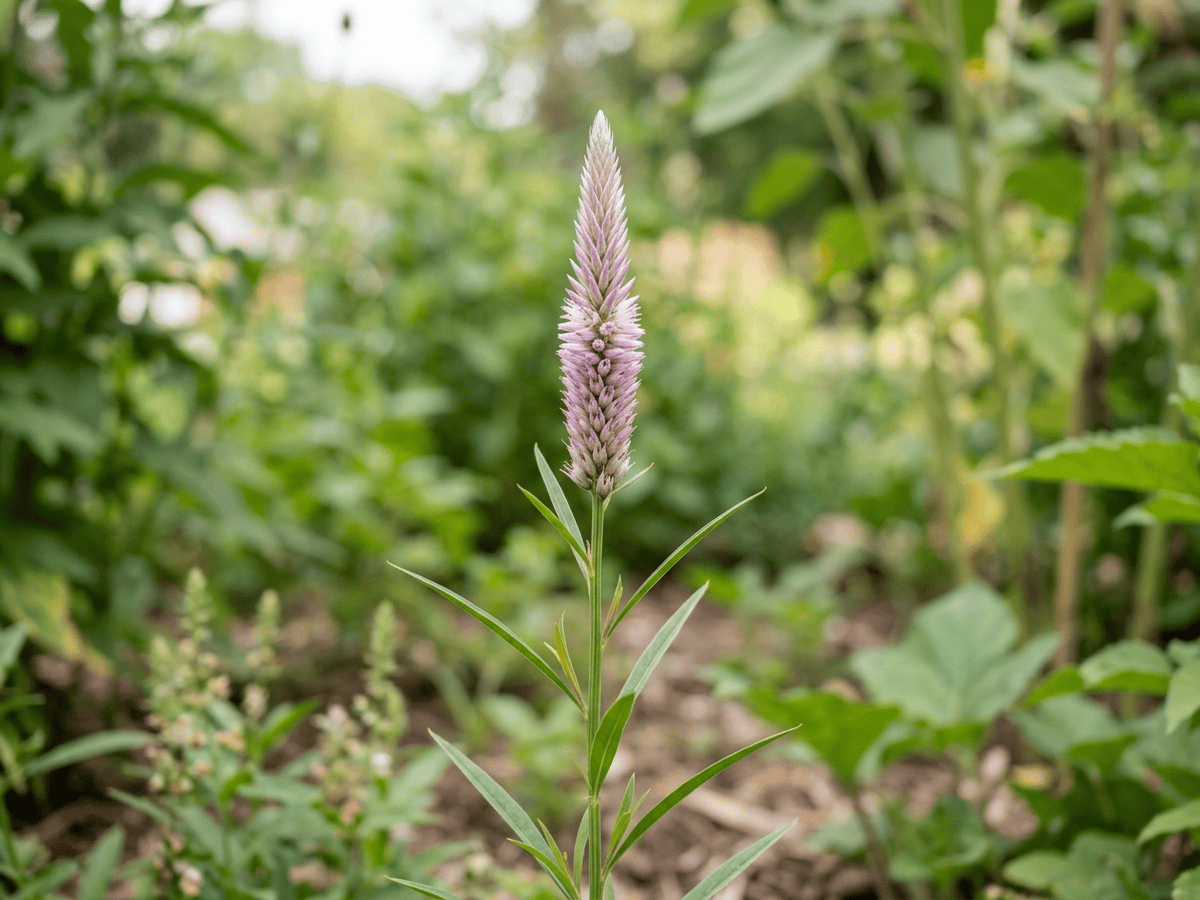
Silver Cockscomb is the wild parent species of all cultivated cockscomb varieties, an upright annual native to tropical Africa, Asia, and the Americas. Growing 1 to 3 feet tall with lance-shaped leaves, it produces silvery-white or pink feathery flower spikes at stem tips from summer through frost. Widely naturalized in the southern US as a garden escape, and grown worldwide as both ornamental and edible leafy vegetable.
- Edible
- Cut-flower
- Drought-tolerant
- Heat-tolerant
How to care for Quail Grass
Watering
- Springevery 5 days
- Summerevery 3 days
- Fallevery 7 days
- Winterpause watering
Soil · Rich & well-draining
- Top dressingCompost10%
- Main mixPotting soil + compost 3:180%
- DrainageGravel10%
Top up the compost layer each season.
FERTILIZER
Balanced Feed 14-14-14
An even feed covers all three needs at once, keeping leaves, roots and blooms moving together with nothing pushed out of balance.
- Nitrogen · Leaves
- Phosphorus · Roots + Blooms
- Potassium · Strength
- Springevery 21 days
- Summerevery 21 days
At a Glance
- NativeAfrica, Southeast Asia
- Height1–3 ft (0.3–0.9 m)
- Spread0.5–1.5 ft (0.2–0.5 m)
- Flower colorWhite, Pink
- Foliage colorGreen, Purple, Red
- SoilLoamy, Well-drained, Rich
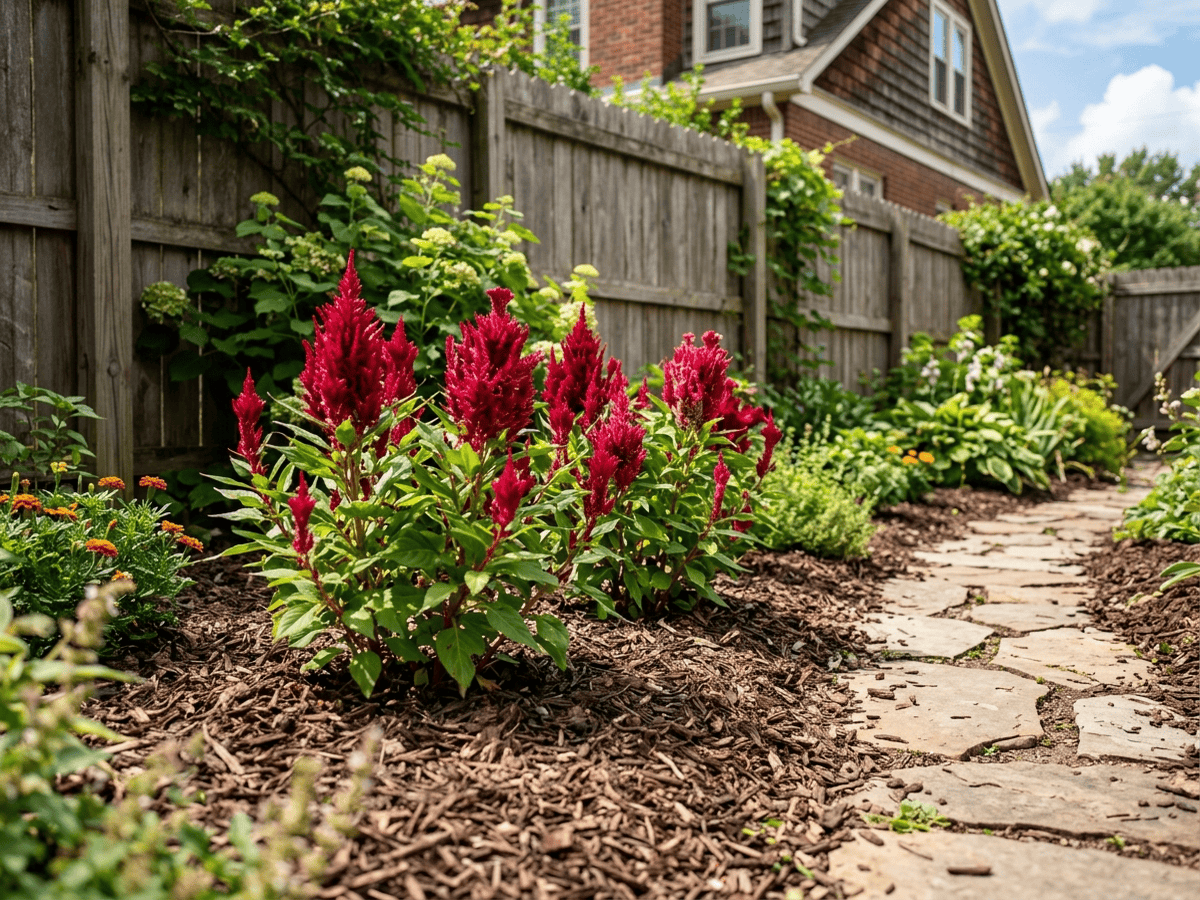
- LocationsYard
Bloom time
BLOOM CYCLE
Peak bloom
Jun–Nov
Silvery-white plume spikes summer to frost
Toxicity
Pets Safe
None reported
Not reported
EXPOSURE No exposure route is reported.
EFFECT No toxic effect is reported.
NOTE No human toxicity is reported in this catalog; avoid eating ornamental plants unless confirmed edible.
Safe
EXPOSURE No exposure route is reported.
EFFECT No toxic effect is reported.
NOTE Listed as non-toxic for dogs; avoid eating ornamental plants unless confirmed edible.
Safe
EXPOSURE No exposure route is reported.
EFFECT No toxic effect is reported.
NOTE Listed as non-toxic for cats; avoid eating ornamental plants unless confirmed edible.
Educational information, not medical or veterinary advice. If exposure is suspected, contact a doctor or veterinarian.
DISTRIBUTION

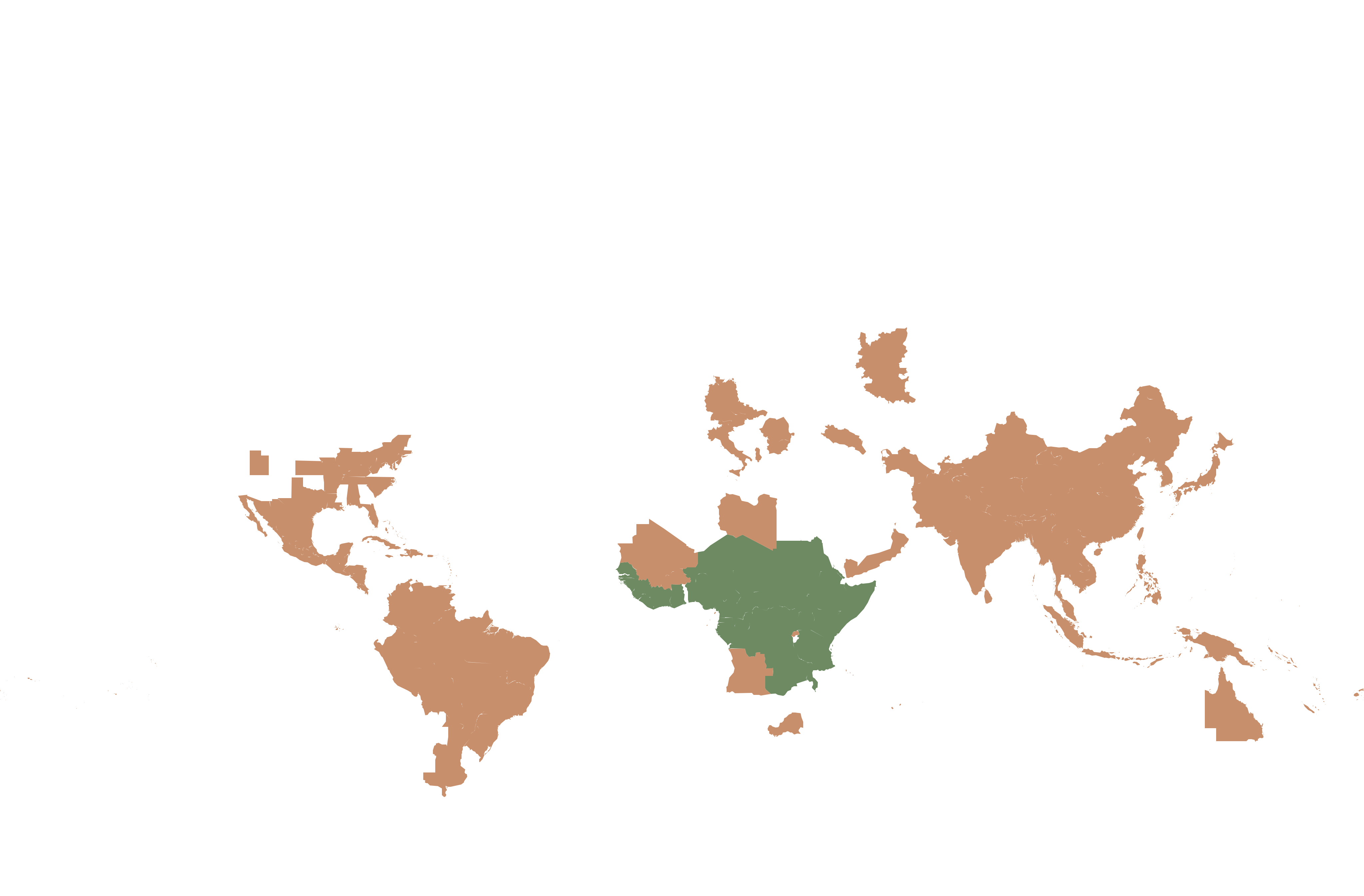
- Native
- Introduced
- Africa
- Southeast Asia
History
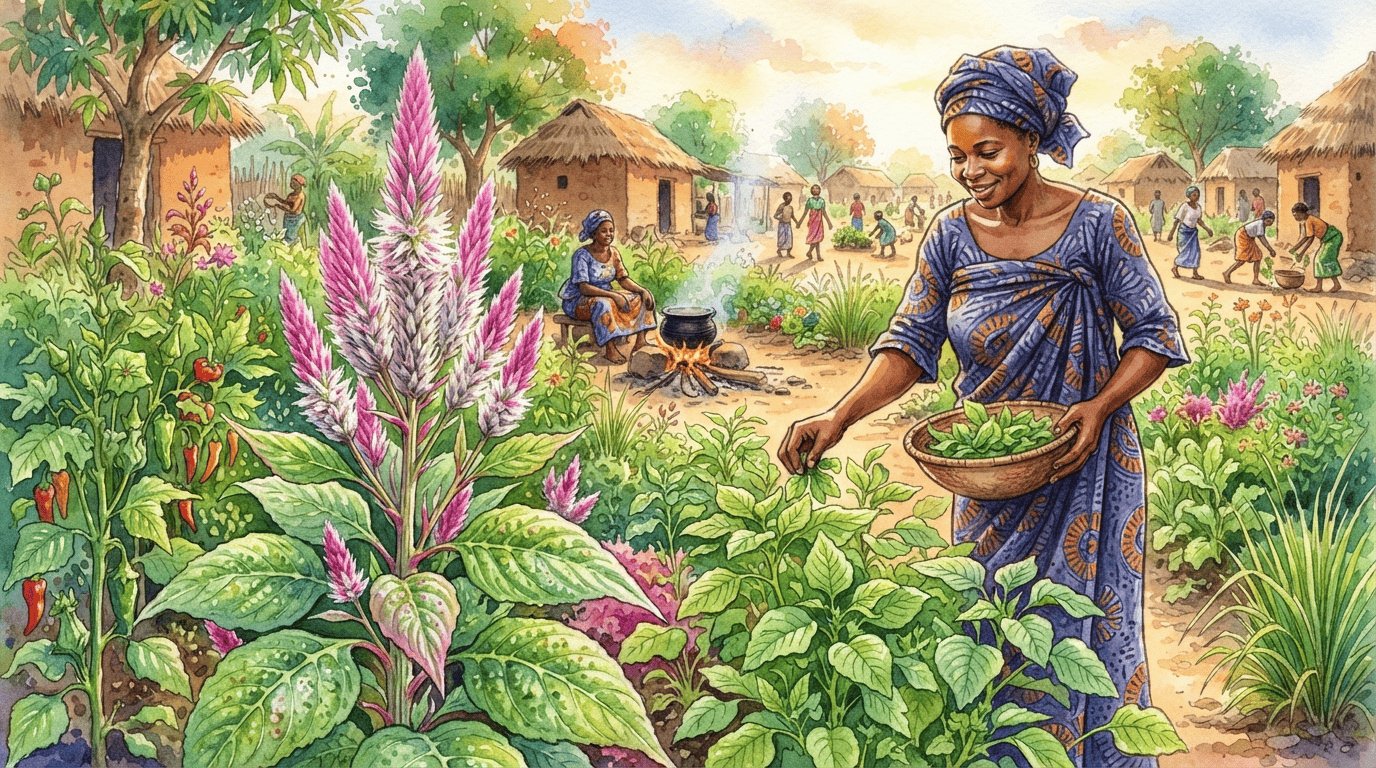
Celosia argentea is a tropical amaranth-family annual native across tropical Africa and Asia and cultivated since antiquity. Linnaeus named the species in 1753, the epithet argentea, silvery, referring to the original wild form's shiny white bracts, though garden forms span vivid red, orange, yellow, and pink. Across West Africa, India, China, Indonesia, and Mexico the tender leaves are cooked as a nutrient-dense pot vegetable known by names including lagos spinach, quail grass, and mfungu.
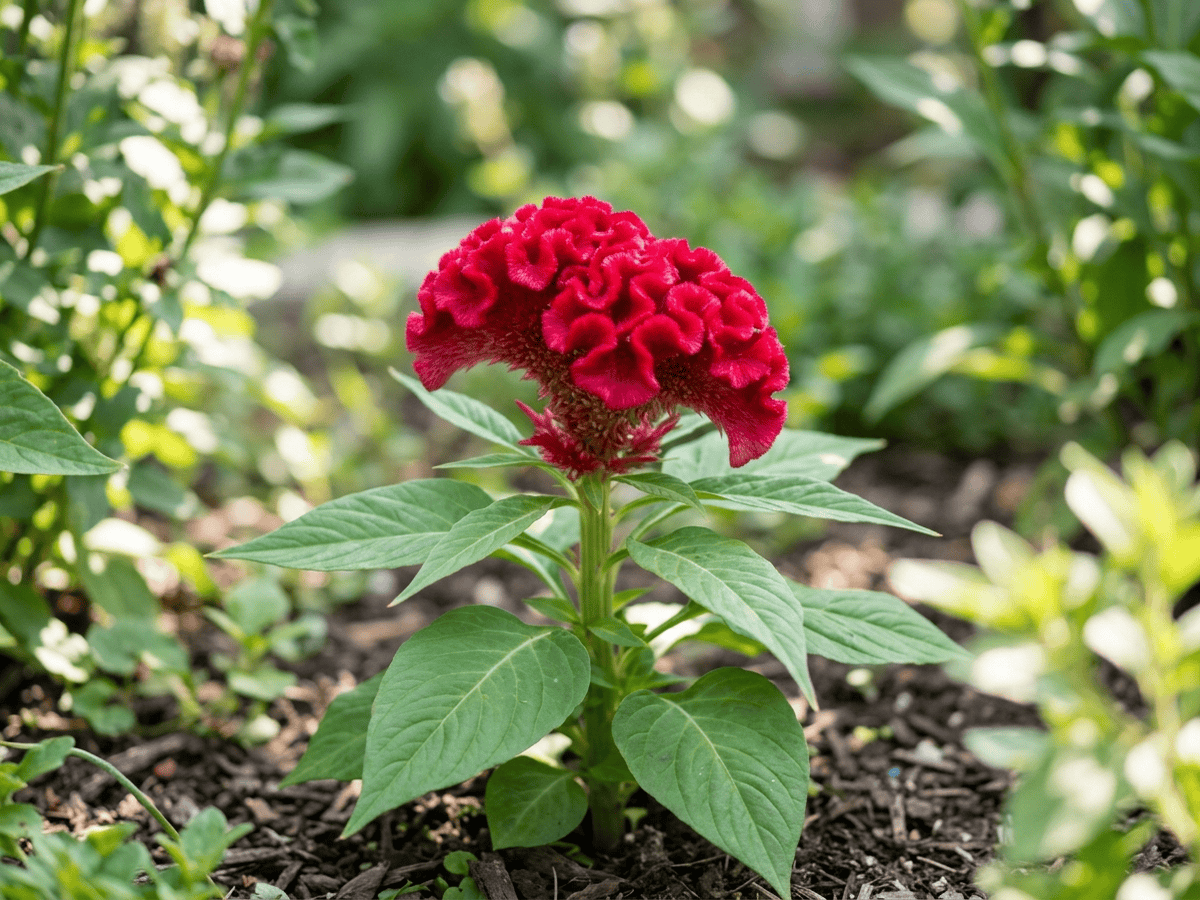
Ornamentally, gardeners grow three main groups: var. argentea with slender feathery plumes, var. cristata with contorted coxcomb heads, and var. spicata with wheat-like spikes. Breeders continue producing improved bedding series like Castle, Kelos, and Fresh Look. The plant is heat-loving, drought-tolerant, and self-seeds readily.
Symbolism & meaning
What It Symbolizes
Quail Grass lifts its plumes in upright flames of magenta, gold and scarlet, and so its meaning is bold flame, a striking botanical fire in the late-summer bed. Another layer is dual purpose, for the same plant that dazzles the border is a leafy staple in West African kitchens, beauty and edible nutrition braided into one species. Celosia reminds the gardener that ornament and sustenance are not opposites, and that boldness can also be useful.
- Bold flame — striking upright flower plumes
- Dual purpose — beauty and edible nutrition combined
Where the Name Comes From
The name Quail Grass describes its grasslike foliage. 'Celosia' from Greek 'keleos' meaning burning, for flame-colored flowers; 'argentea' from Latin means silvery, for the pale flower form.
Uses & Fun Facts
- Tender lagos spinach leaves eaten as African potherb
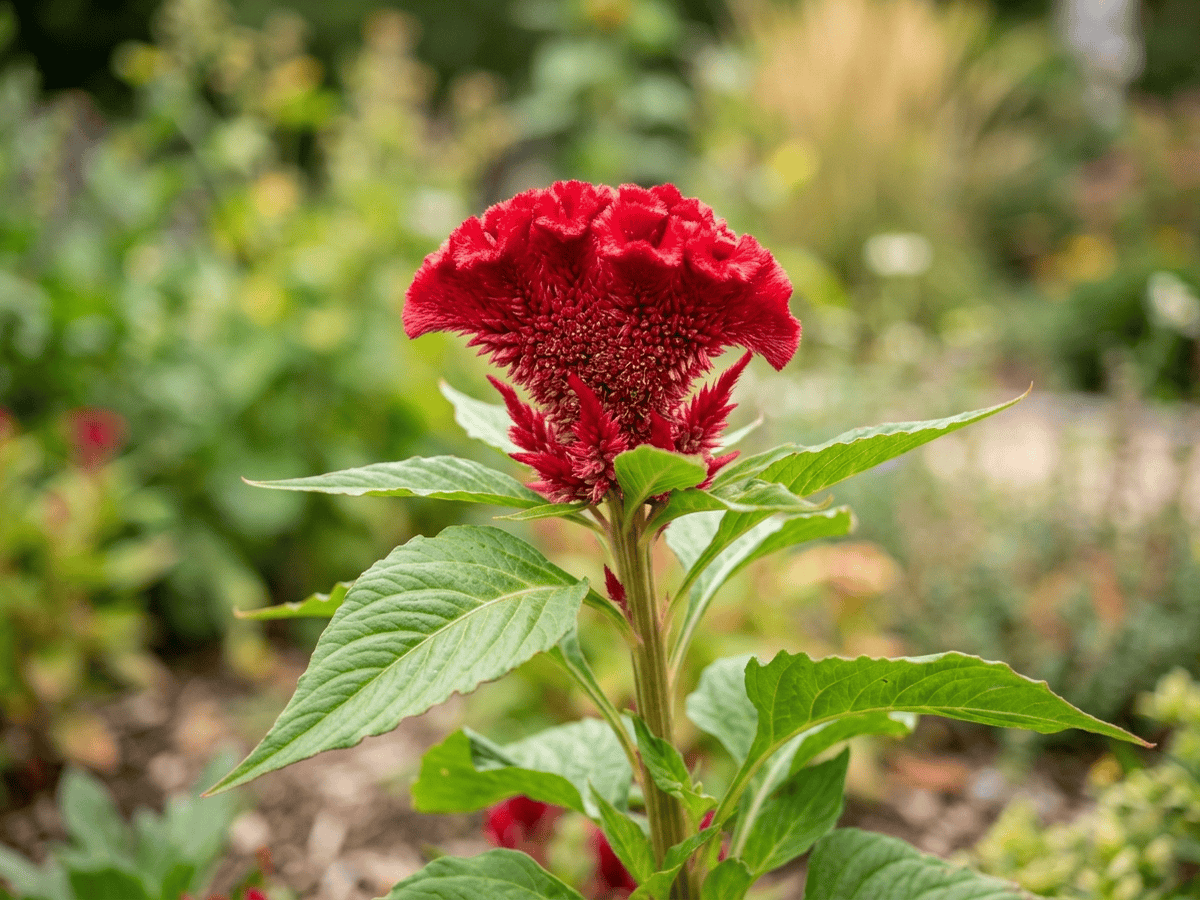
- Velvety crested plumes used fresh and dried
Related plants
More Celosia plants
Plants with similar care
 Chinese AbeliaAbelia chinensis
 Fragrant AbeliaAbelia mosanensis
 Large-Flowered AbeliaAbelia uniflora
 Glossy AbeliaAbelia x grandiflora
Frequently asked questions
How often should I water Quail Grass?
Water about every 5 days during the growing season, and always let excess water drain away.
How much light does Quail Grass need?
Full sun: 6+ hrs direct. Watch the leaves — scorching or stretching means the light needs adjusting.
Is Quail Grass toxic to cats or dogs?
Pets Safe (Dogs Safe · Cats Safe) Educational information, not medical or veterinary advice. If exposure is suspected, contact a doctor or veterinarian.
Is Quail Grass easy to grow?
Yes — it is considered an easy, beginner-friendly plant.
When does Quail Grass bloom?
It typically blooms Jun–Nov in the Northern Hemisphere.
YardMate
Identify any plant in seconds
Snap a photo — YardMate names the plant, diagnoses problems, and reminds you when to water.
Download on the App Store