 YardMate


Florist's Chrysanthemum
Chrysanthemum morifolium
Medium · Some experienceAbout Florist's Chrysanthemum
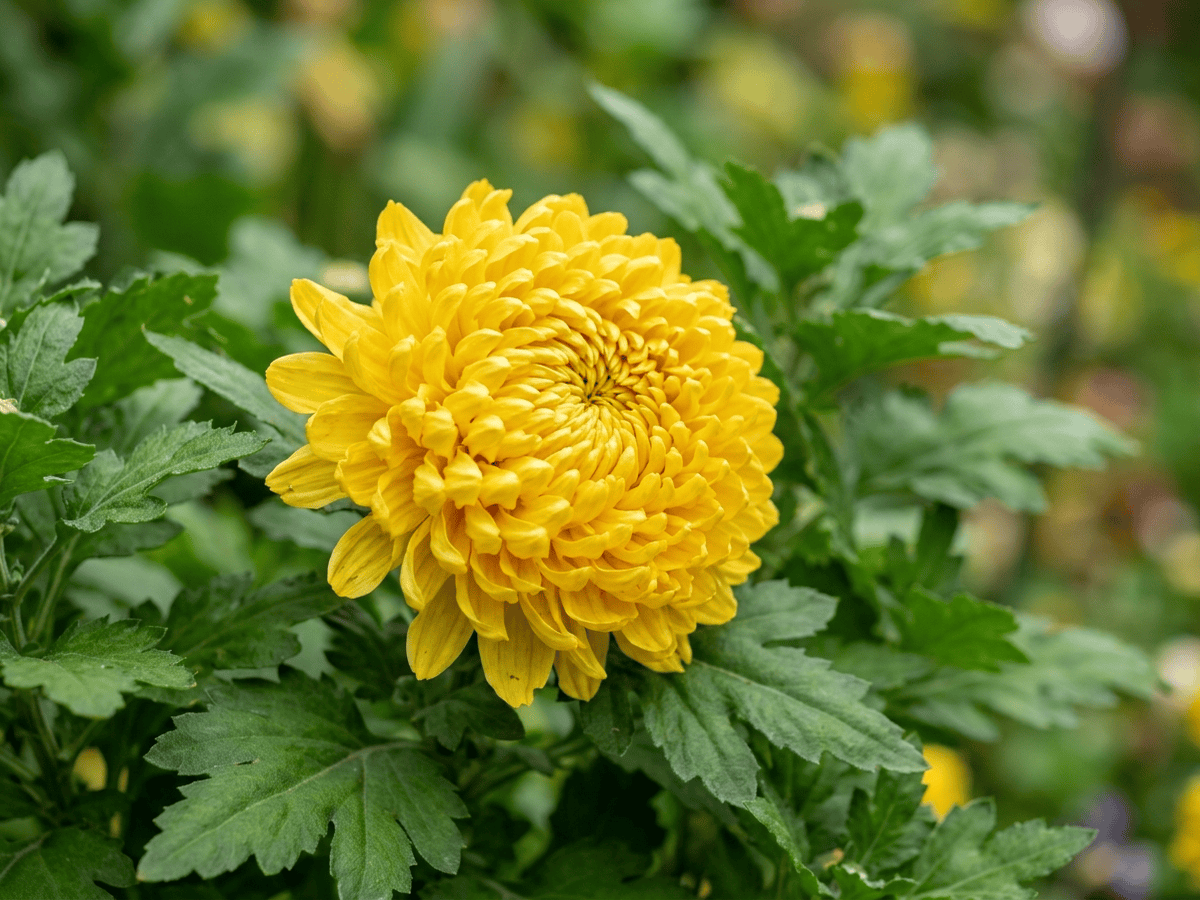
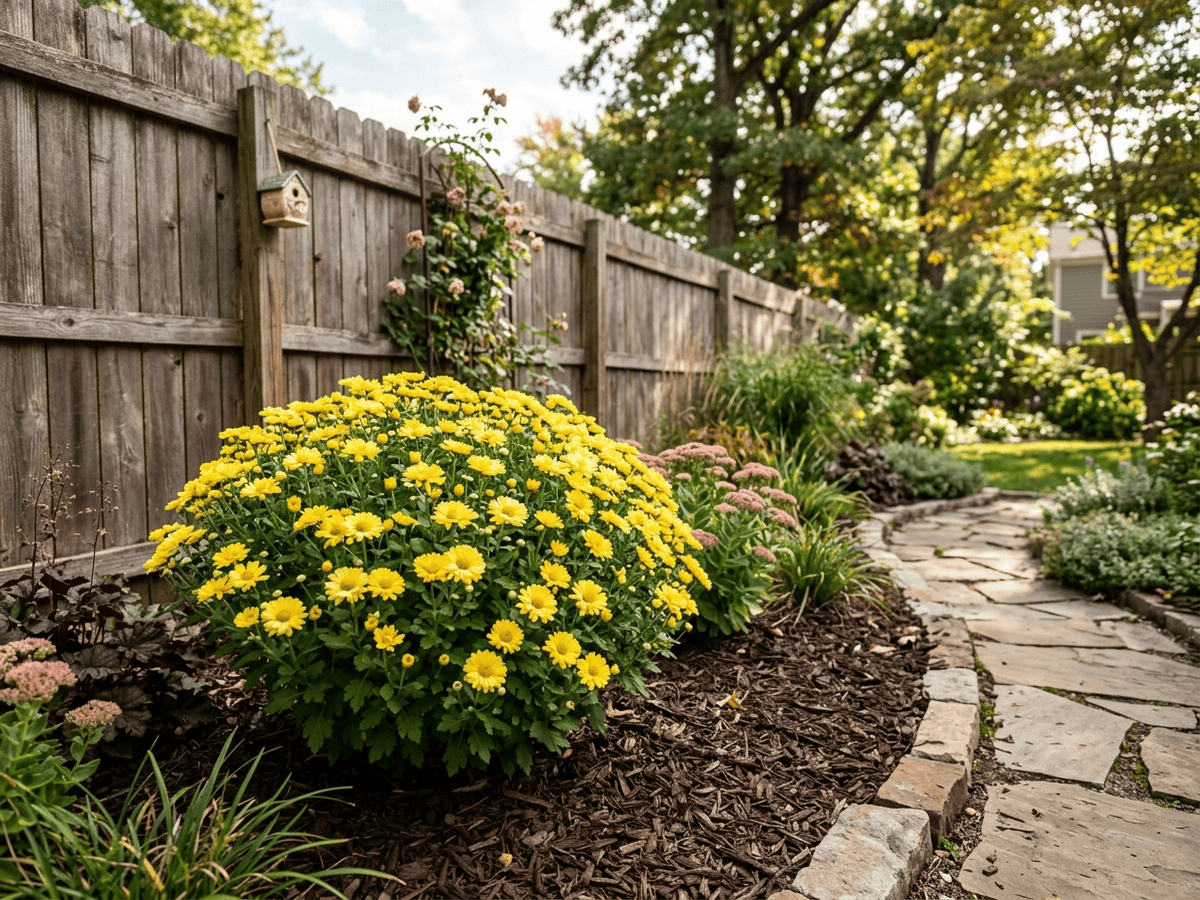
Chrysanthemum morifolium, the florist's chrysanthemum, is one of the most commercially important flowers in the world. It produces dense, rounded flower heads in an extraordinary range of forms — from tight pom-pons to spidery quills to giant exhibition blooms — in every color except blue. Native to East Asia, it has been cultivated in China for over 2,500 years. Chrysanthemums bloom naturally in autumn as day length shortens. Greenhouse growers manipulate photoperiod to produce blooms year-round. It is the second most commercially valuable cut flower globally, after roses.
- Edible
- Medicinal
- Cut-flower
How to care for Florist's Chrysanthemum
Watering
- Springevery 5 days
- Summerevery 3 days
- Fallevery 7 days
- Winterevery 14 days
Soil · Rich & well-draining
- Top dressingCompost10%
- Main mixPotting soil + compost 3:180%
- DrainageGravel10%
Top up the compost layer each season.
FERTILIZER
Balanced Feed 14-14-14
An even feed covers all three needs at once, keeping leaves, roots and blooms moving together with nothing pushed out of balance.
- Nitrogen · Leaves
- Phosphorus · Roots + Blooms
- Potassium · Strength
- Springevery 21 days
- Summerevery 21 days
At a Glance
- NativeEast Asia
- Height1–3 ft (0.3–0.9 m)
- Spread1–3 ft (0.3–0.9 m)
- Flower colorYellow, White, Red, Pink
- Foliage colorGreen
- SoilLoamy, Well-drained, Rich
- LocationsYard · Balcony
Bloom time
BLOOM CYCLE
Peak bloom
Sep–Nov
Autumn bloomer; pinch stems through midsummer for bushier growth and more flowers
Fragrance
MODERATE FRAGRANCE
Characteristic sharp herbal autumn scent; intensity varies by cultivar.
Toxicity
Humans Slight · Pets Moderate
sesquiterpene lactones and pyrethrins
Slight
- Flower
- Leaf
- Contact
- Ingestion
EXPOSURE Touching flowers and leaves. Eating flowers and leaves.
EFFECT Contact dermatitis and edible tea chrysanthemums (juhua) are safe prepared traditionally.
NOTE Pyrethrins are the source of the insecticide class; concentrations are low in ornamental cultivars but toxic to pets especially cats.
Moderate
- Flower
- Leaf
- Stem
- Ingestion
EXPOSURE Eating flowers, leaves, and stems.
EFFECT Vomiting, diarrhea, hypersalivation, incoordination, dermatitis and per ASPCA.
NOTE Pyrethrins are the source of the insecticide class; concentrations are low in ornamental cultivars but toxic to pets especially cats.
Moderate
- Flower
- Leaf
- Stem
- Ingestion
EXPOSURE Eating flowers, leaves, and stems.
EFFECT Vomiting, diarrhea, hypersalivation, incoordination, dermatitis and per ASPCA.
NOTE Pyrethrins are the source of the insecticide class; concentrations are low in ornamental cultivars but toxic to pets especially cats.
Educational information, not medical or veterinary advice. If exposure is suspected, contact a doctor or veterinarian.
DISTRIBUTION


- Native
- Introduced
- East Asia
History

Chrysanthemum morifolium is a cultivated hybrid with over 2,500 years of breeding history in China. Confucius (551–479 BCE) mentioned it, and the poet Tao Yuanming's fifth-century CE odes to the chrysanthemum made it one of the 'Four Gentlemen' of Chinese painting and poetry alongside plum, orchid, and bamboo. It reached Japan around the 4th century CE, where it was adopted in the 12th century as the imperial family's official seal — the sixteen-petal gold chrysanthemum still represents the Japanese emperor today, and 'Chrysanthemum Throne' is a metonym for the monarchy.
The species reached Europe in 1789 and the US in 1798. As a cut flower it is among the top three flowers in global trade by volume, with Dutch, Colombian, and Kenyan greenhouses dominating production. Significantly toxic to pets.
Chrysanthemums are one of the Four Gentlemen of Chinese art (alongside plum blossom, orchid, and bamboo), symbolizing autumn and scholarly integrity. Confucius praised them in 500 BC. The Chongyang Festival (Double Ninth Festival) celebrates chrysanthemums with wine and poetry. In Japan, the chrysanthemum became the Imperial symbol — the 16-petal 'Chrysanthemum Throne' represents the Emperor, and the Order of the Chrysanthemum is the nation's highest honor. Chrysanthemum flowers also yield pyrethrin, the world's most important natural insecticide, extracted primarily from C. cinerariifolium grown in Kenya and Tanzania.
Symbolism & meaning
What It Symbolizes
Chrysanthemum carries longevity in Chinese tradition, blooming when other flowers have faded and frost has come, embodying enduring life and scholarly virtue. It is one of the Four Gentlemen of classical Chinese painting, a flower of late-season constancy and refined character. To grow its is to honor the discipline of those who flower last, whose beauty is inseparable from their willingness to face the cold.
- Longevity — Blooming when other flowers fade, it represents enduring life and scholarly virtue
Where the Name Comes From
Chrysanthemum from Greek 'chrysos' (gold) and 'anthemon' (flower). Morifolium means 'mulberry-leaved.'
Uses & Fun Facts
- Dried flowers steeped in traditional Chinese floral tea
- Pyrethrin extracted from related blooms as natural insecticide
- World's leading commercial cut flower in countless forms
- Symbol of autumn in Chinese and Japanese tradition
Related plants
More Chrysanthemum plants

Plants with similar care
 Mexican AbeliaAbelia floribunda
 Fraser FirAbies fraseri
 Paperbark MapleAcer griseum
 Sugar MapleAcer saccharum
Frequently asked questions
How often should I water Florist's Chrysanthemum?
In summer, water about every 3 days; in winter, about every 14 days. Adjust for heat, pot size and drainage.
How much light does Florist's Chrysanthemum need?
Full sun: 6+ hrs direct. Watch the leaves — scorching or stretching means the light needs adjusting.
Is Florist's Chrysanthemum toxic to cats or dogs?
Pets Moderate (Dogs Moderate · Cats Moderate) Educational information, not medical or veterinary advice. If exposure is suspected, contact a doctor or veterinarian.
Is Florist's Chrysanthemum easy to grow?
It is moderately demanding: a good choice once you have a little experience.
When does Florist's Chrysanthemum bloom?
It typically blooms Sep–Nov in the Northern Hemisphere.
YardMate
Identify any plant in seconds
Snap a photo — YardMate names the plant, diagnoses problems, and reminds you when to water.
Download on the App Store