 YardMate


Bull Thistle
Cirsium vulgare
Easy · Beginner friendlyAbout Bull Thistle
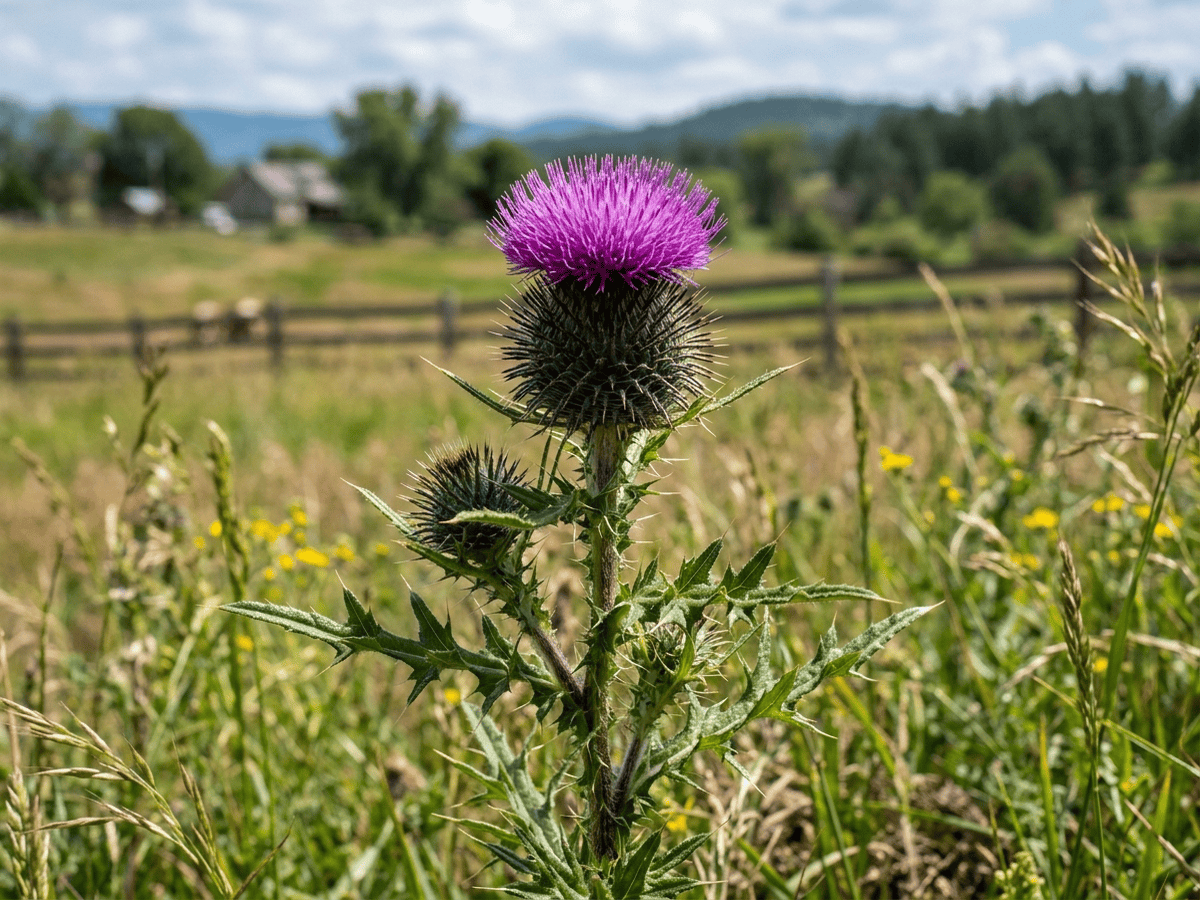
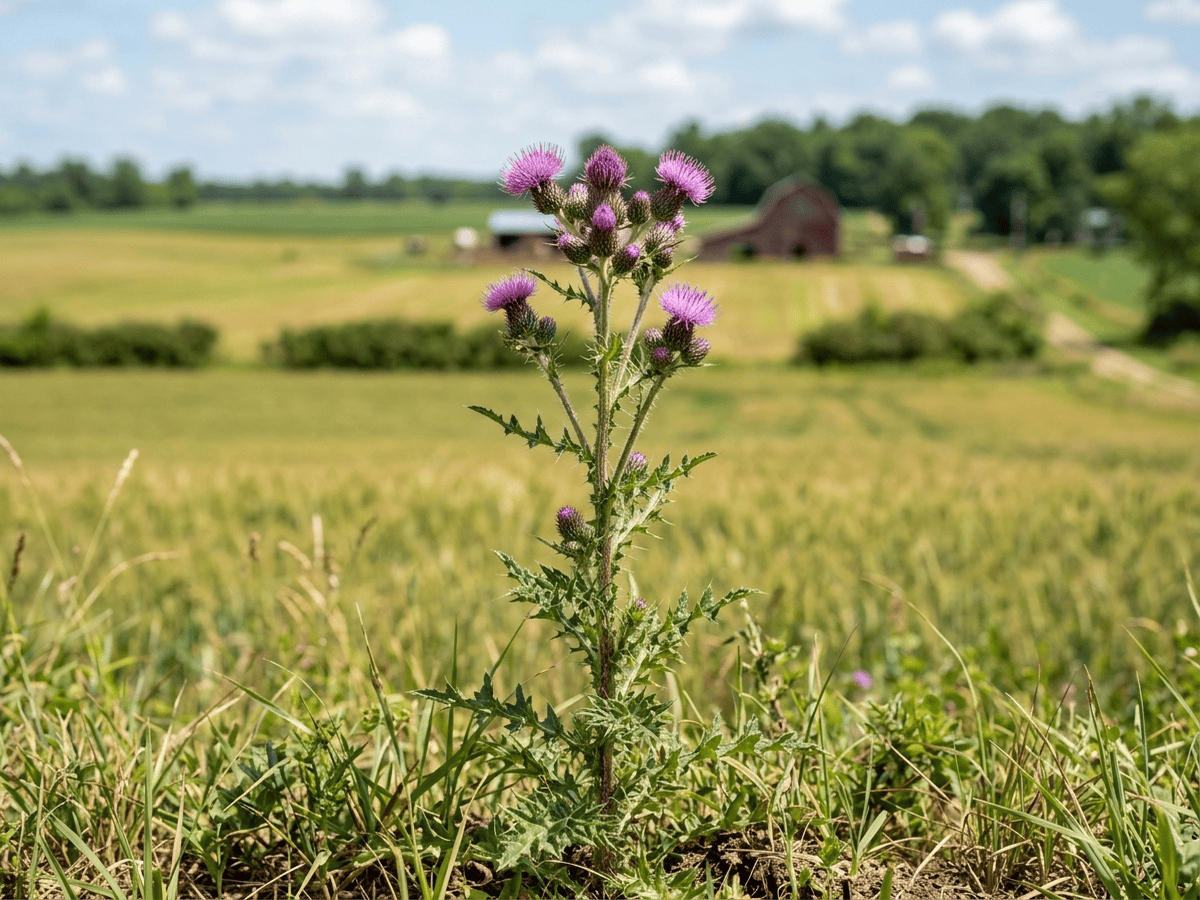
Bull Thistle is a Eurasian biennial thistle forming a spiny rosette in year one and a towering 3 to 6 foot flowering stalk in year two, widely naturalized across US pastures, roadsides, and waste ground. Leaves are deeply lobed with sharp needle-like spines, and the distinctive 1 to 2 inch pink-purple flower heads sit atop spiny-winged stems. Listed as noxious in several western states and a persistent pasture pest nationwide.
- Pollinator-friendly
- Wildlife-friendly
- Drought-tolerant
- Fast-growing
How to care for Bull Thistle
Watering
- Springevery 14 days
- Summerevery 10 days
- Fallevery 14 days
- Winterevery 30 days
Soil · Well-draining
- Top dressingPine bark mulch10%
- Main mixPotting soil + perlite 2:170%
- DrainageLECA / gravel20%
Never skip the drainage layer — standing water is the top cause of root rot.
FERTILIZER
This plant needs little to no feeding.
At a Glance
- NativeEurope, Western Asia, Africa
- Height3–6 ft (0.9–1.8 m)
- Spread1–2 ft (0.3–0.6 m)
- Flower colorPink, Purple
- Foliage colorGreen
- SoilLoamy, Well-drained
- LocationsYard
Bloom time
BLOOM CYCLE
Peak bloom
Jun–Nov
Large pink-purple thistle flower heads summer to fall
Fragrance
MODERATE FRAGRANCE
The flowers have a sweet, honey-like scent.
Toxicity
Humans Slight · Pets Slight
Unknown toxic principle
Slight
- Leaf
- Stem
- Flower
- Contact
EXPOSURE Touching leaves, stems, and flowers.
EFFECT Pricks from spines.
NOTE Not chemically toxic; mechanical injury from spines.
Slight
- Leaf
- Stem
- Flower
- Contact
EXPOSURE Touching leaves, stems, and flowers.
EFFECT Pricks from spines.
NOTE Not chemically toxic; mechanical injury from spines.
Slight
- Leaf
- Stem
- Flower
- Contact
EXPOSURE Touching leaves, stems, and flowers.
EFFECT Pricks from spines.
NOTE Not chemically toxic; mechanical injury from spines.
Educational information, not medical or veterinary advice. If exposure is suspected, contact a doctor or veterinarian.
DISTRIBUTION

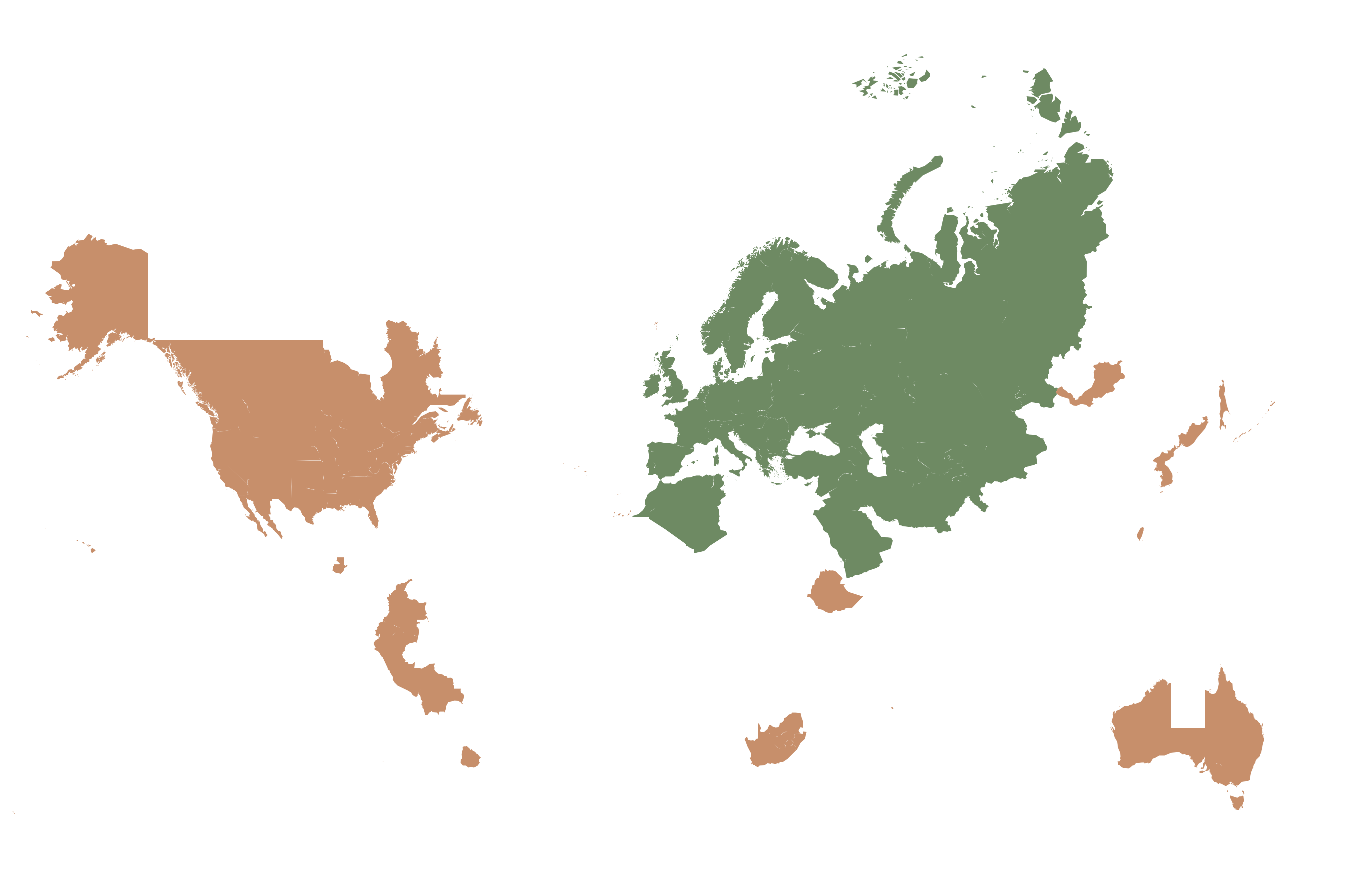
- Native
- Introduced
- Europe
- Western Asia
- Africa
History
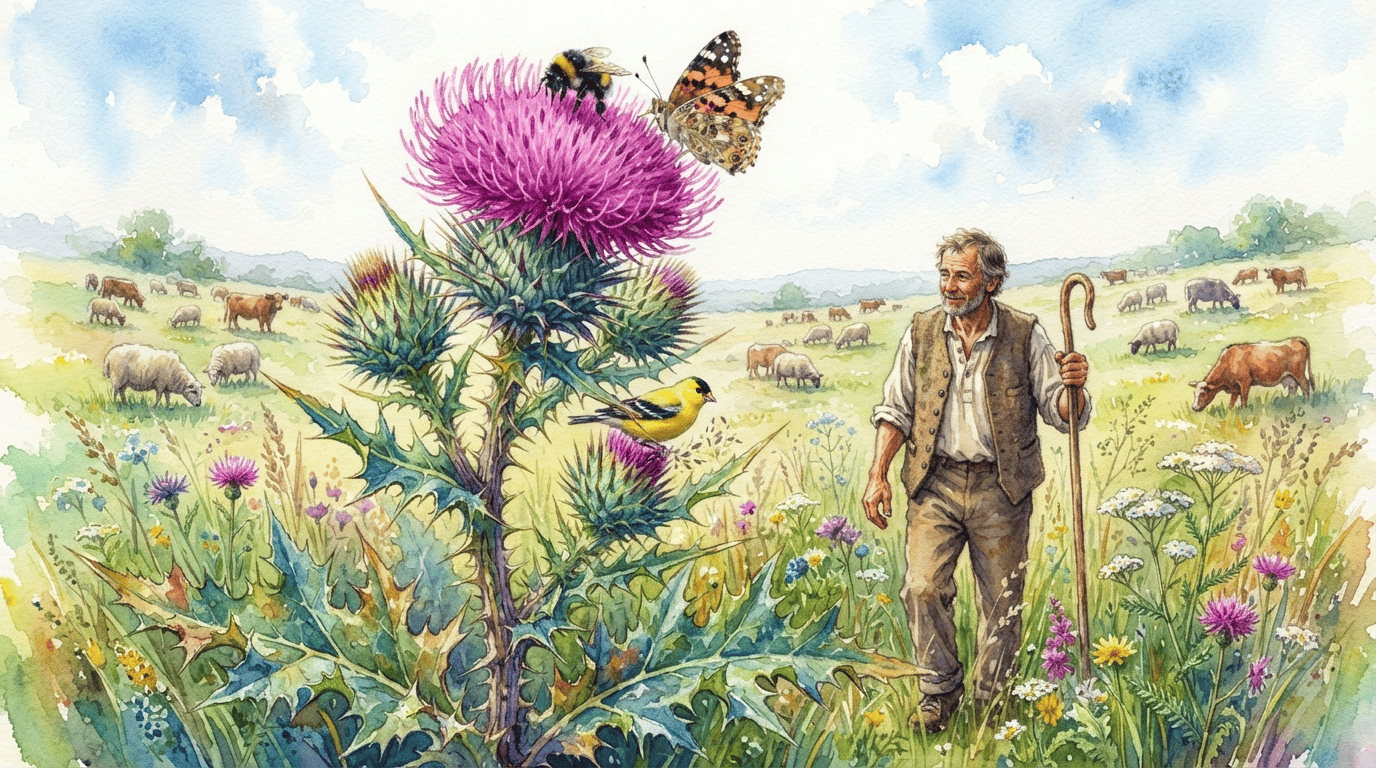
Cirsium vulgare, bull or spear thistle, is a robust biennial composite native to Europe, western Asia, and North Africa. The species forms a flat rosette of deeply lobed, spine-tipped leaves in its first year and bolts in the second to produce a branched stem over a meter tall topped with large, fragrant magenta flowerheads. European colonists carried the plant worldwide in hay, wool, and ballast, and it is now a listed noxious weed in many US states, Australia, and New Zealand.
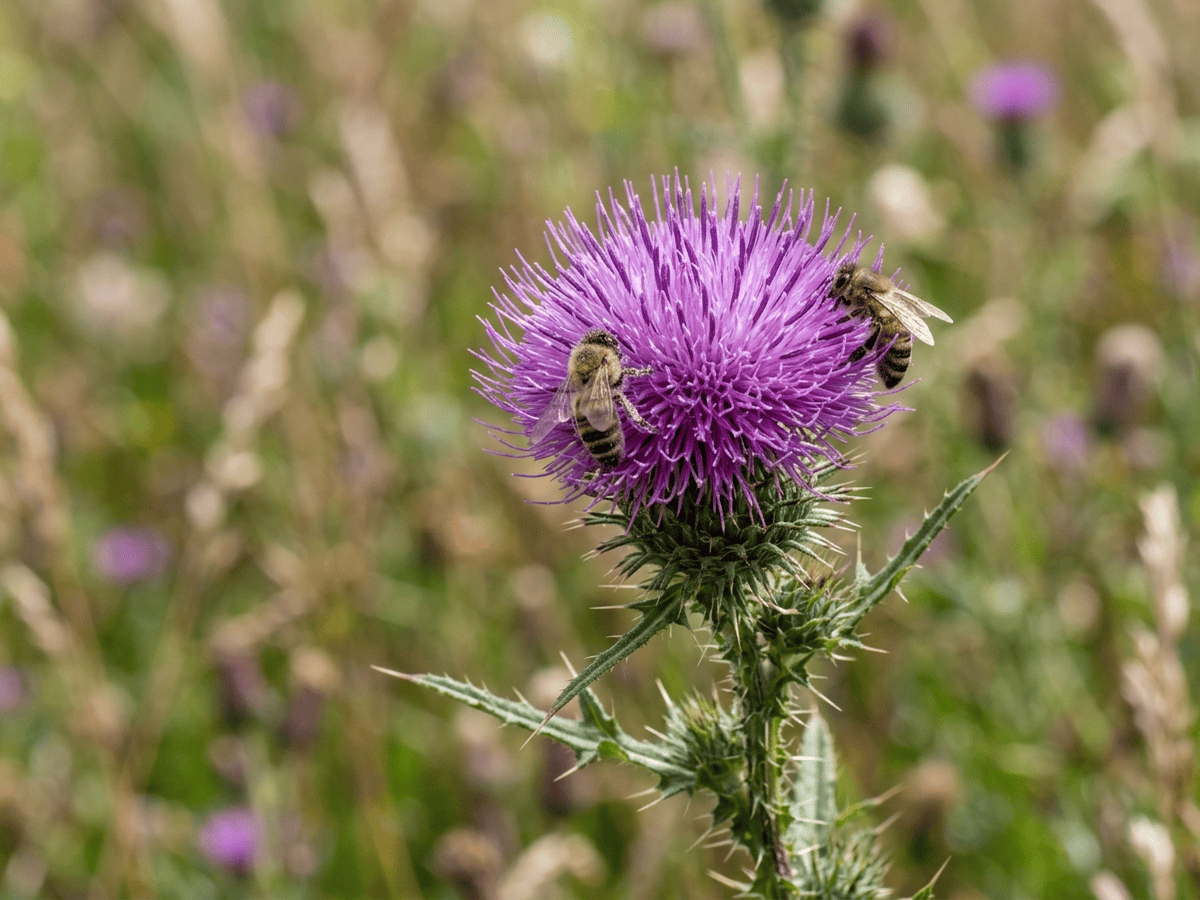
Despite its weedy status, the flowers are among the richest nectar sources in temperate pastures, and studies place it at the top of the list for bumblebee foraging value. Songbirds, especially goldfinches, feast on the oily seeds in late summer.
Native to Europe, Asia, and North Africa, Bull Thistle became established in North America by the 1800s and is now widespread across US pastures and waste ground. Listed noxious in many western states, it reduces forage quality and injures livestock with its formidable spines, though its flowers are excellent bee and butterfly nectar sources.
Symbolism & meaning
What It Symbolizes
Bull thistle is defensive strength incarnate, every stem and leaf armored with spines sharp enough to discourage anything larger than a goldfinch. Across the sea it serves as the Scottish emblem, said to have woken a sleeping clan when invading Norse warriors stepped on its prickles in the dark. Punishment and patriotism live together in this purple-headed weed; respect is the only safe response.
- Defensive strength — heavily armored with spines
- Scottish emblem — thistle symbol of Scotland
Where the Name Comes From
'vulgare' from Latin means common, the most common European thistle.
Related plants
More Cirsium plants
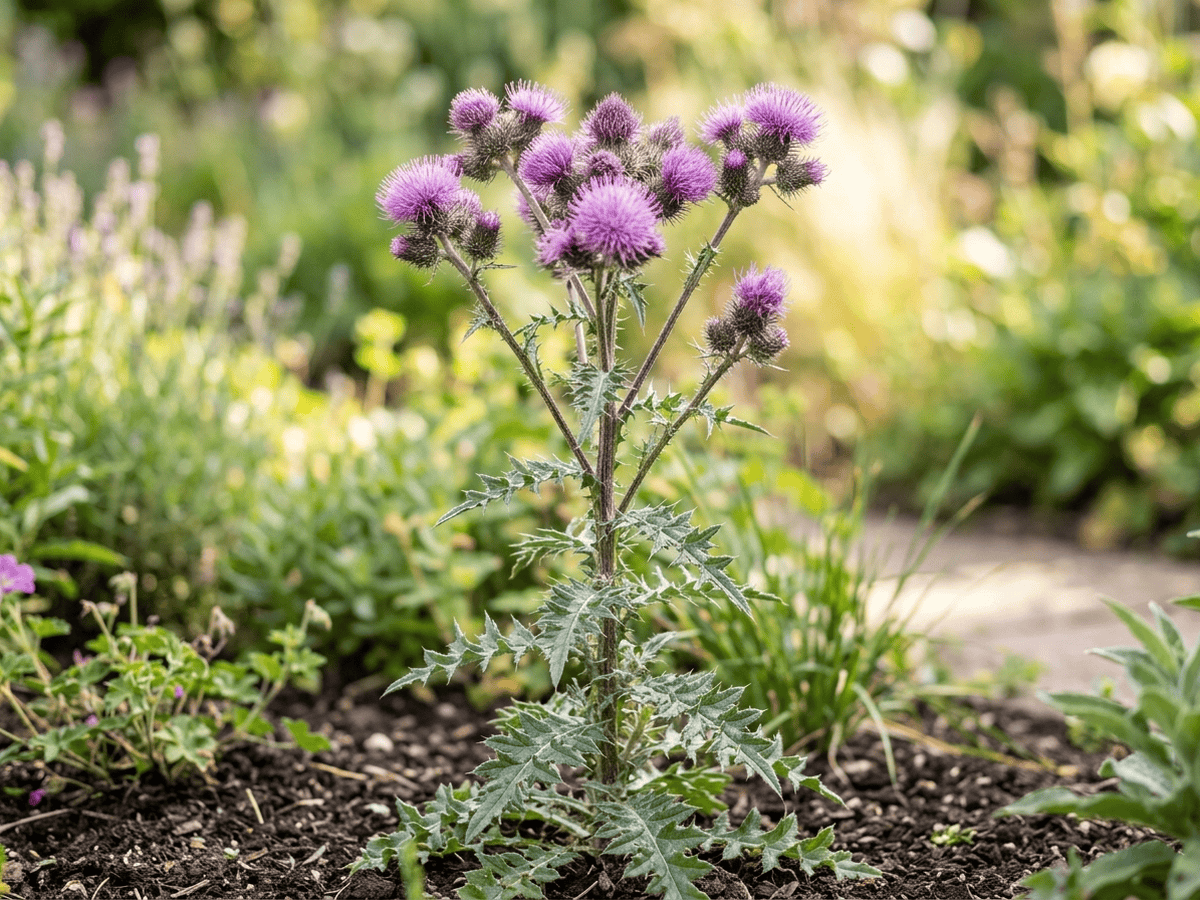
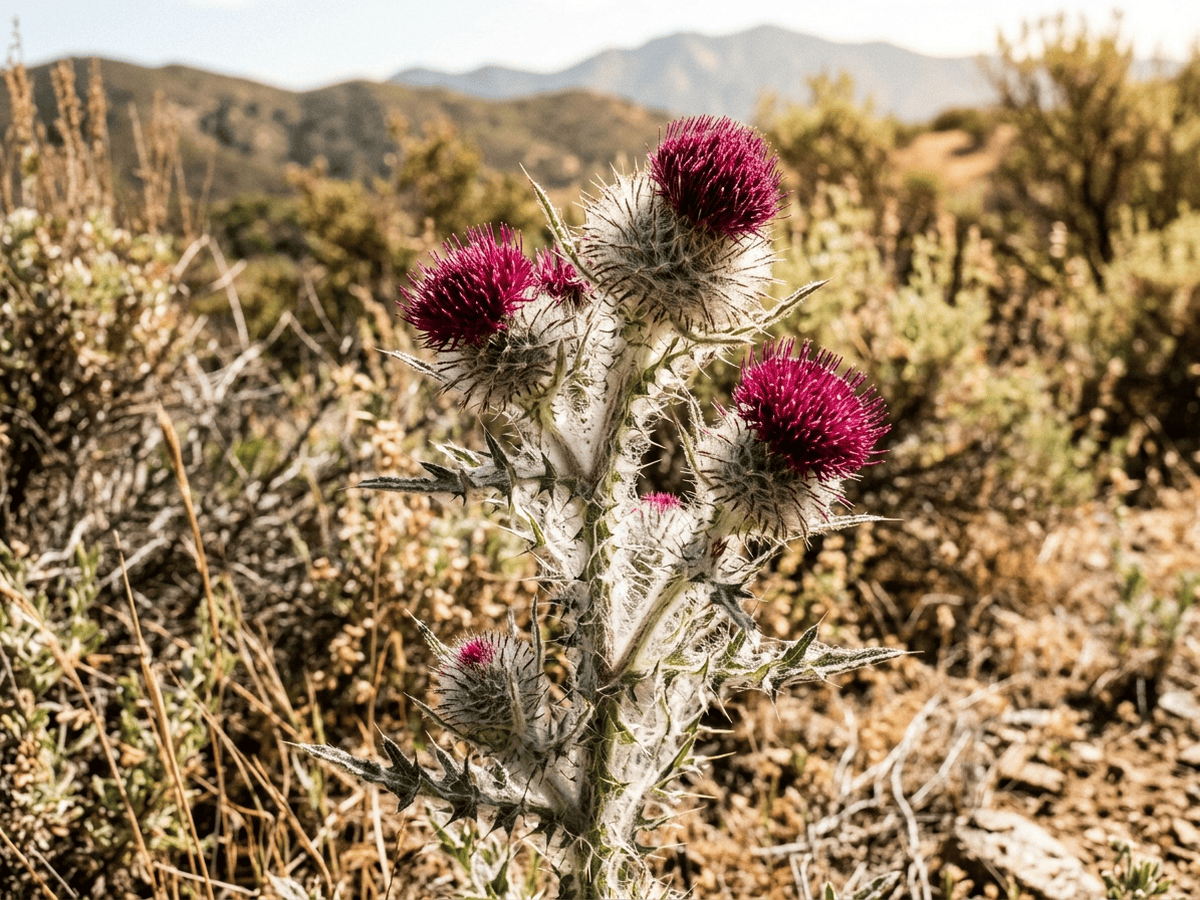
Plants with similar care
 Chinese AbeliaAbelia chinensis
 Fragrant AbeliaAbelia mosanensis
 Large-Flowered AbeliaAbelia uniflora
 Glossy AbeliaAbelia x grandiflora
Frequently asked questions
How often should I water Bull Thistle?
In summer, water about every 10 days; in winter, about every 30 days. Adjust for heat, pot size and drainage.
How much light does Bull Thistle need?
Full sun: 6+ hrs direct. Watch the leaves — scorching or stretching means the light needs adjusting.
Is Bull Thistle toxic to cats or dogs?
Pets Slight (Dogs Slight · Cats Slight) Educational information, not medical or veterinary advice. If exposure is suspected, contact a doctor or veterinarian.
Is Bull Thistle easy to grow?
Yes — it is considered an easy, beginner-friendly plant.
When does Bull Thistle bloom?
It typically blooms Jun–Nov in the Northern Hemisphere.
YardMate
Identify any plant in seconds
Snap a photo — YardMate names the plant, diagnoses problems, and reminds you when to water.
Download on the App Store