 YardMate
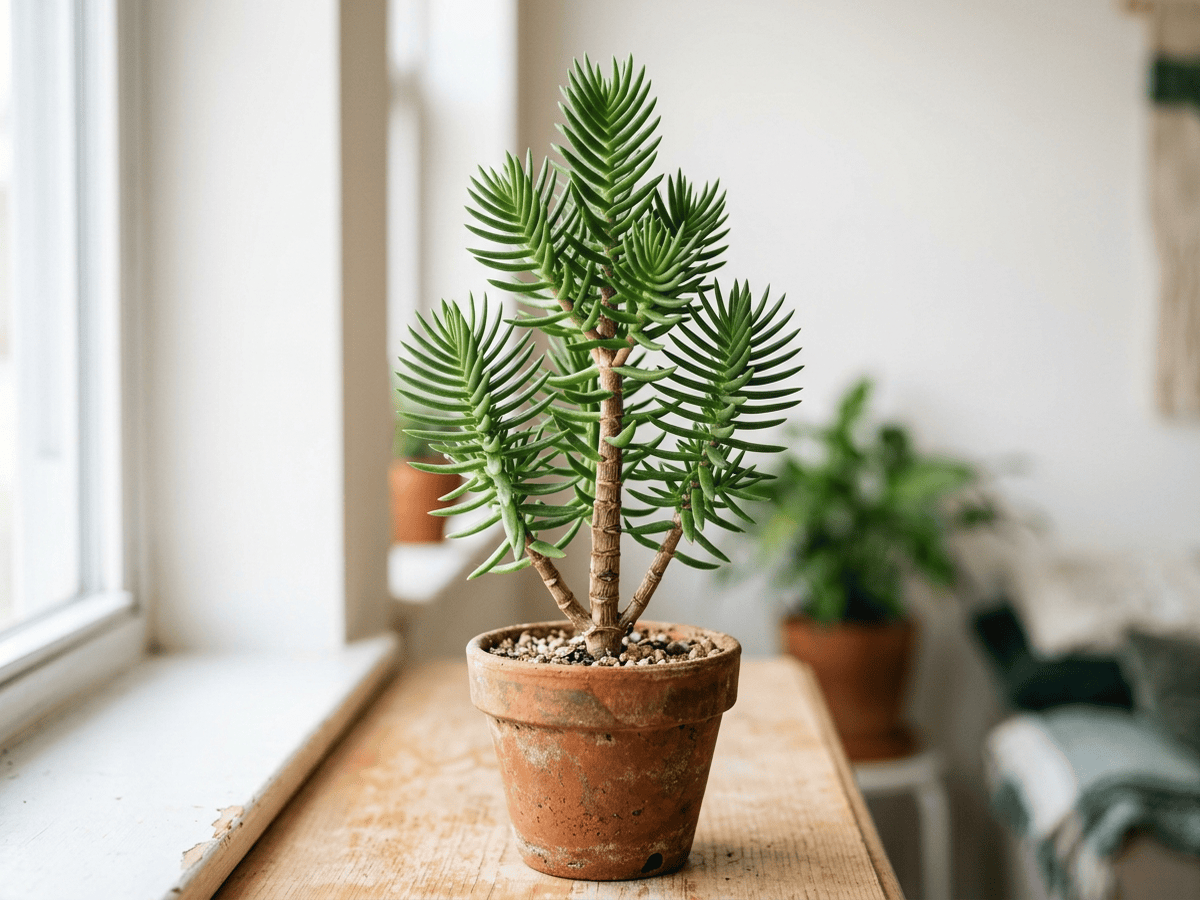

Miniature Pine Tree
Crassula tetragona
Easy · Beginner friendlyAbout Miniature Pine Tree
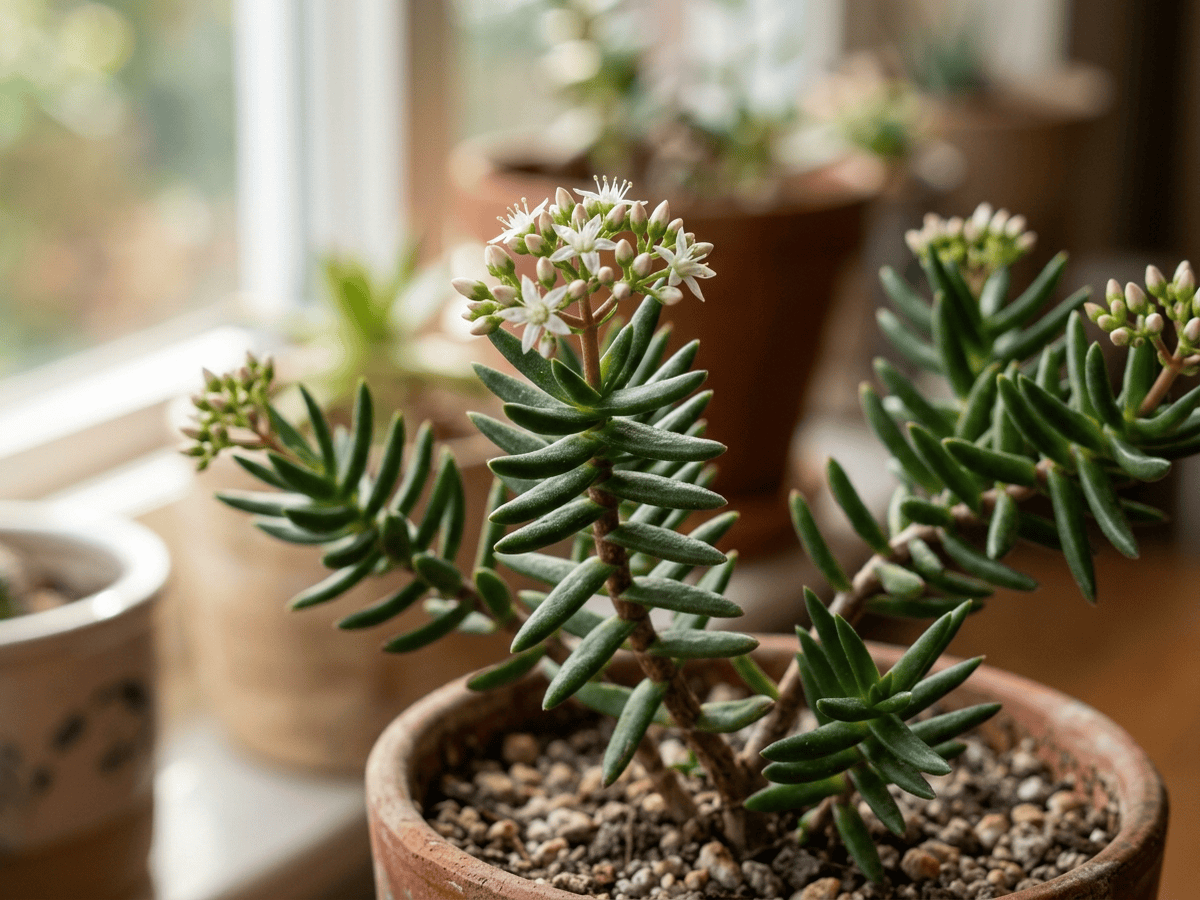
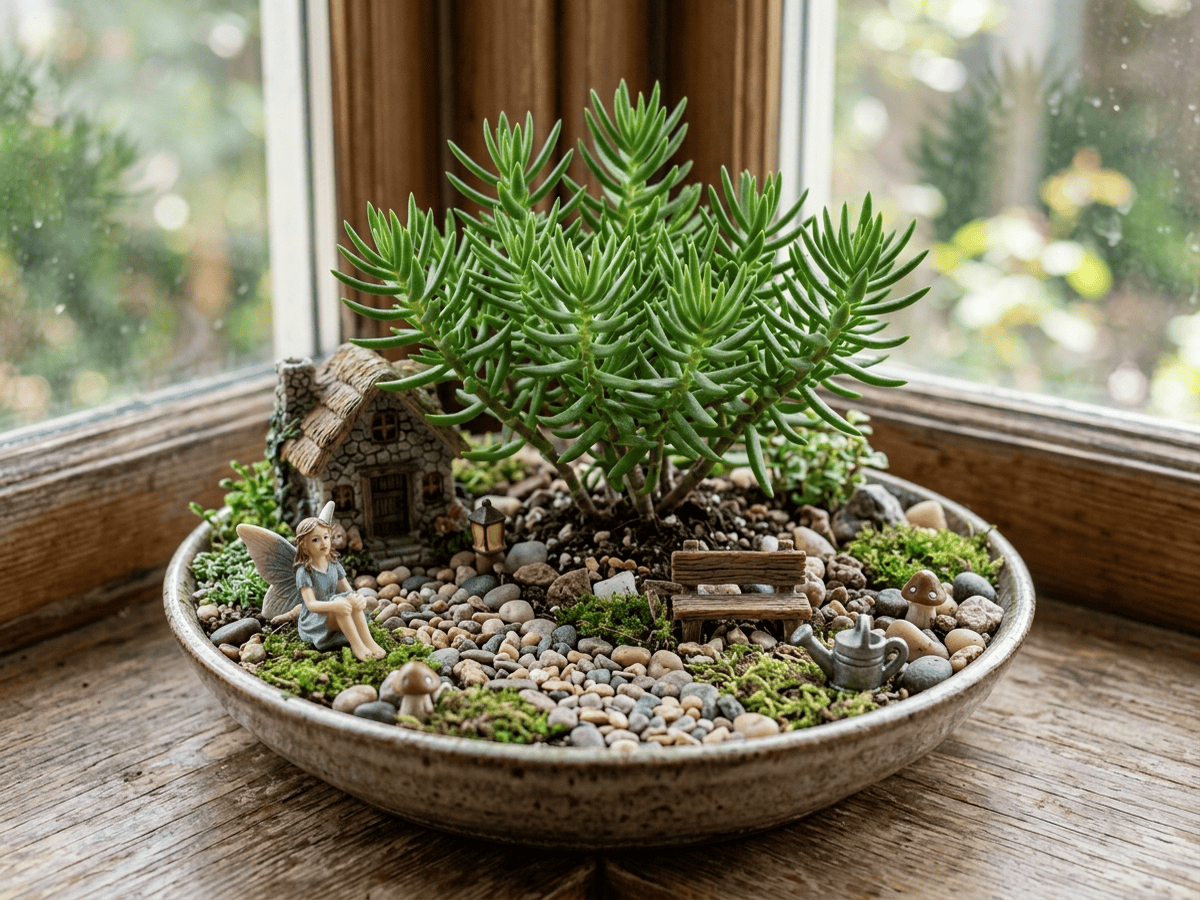
Miniature Pine Tree is a South African upright succulent reaching 2-3 feet, with slender stems clothed in narrow needle-like green leaves arranged in four ranks. Its tree-like architecture makes it a popular bonsai-style succulent and a charming filler for fairy gardens and miniature landscapes. Tiny white star-shaped flowers appear at stem tips in spring and summer. Easy to grow and propagate, it has become a staple of the modern American succulent collection.
- Drought-tolerant
- Container-friendly
- Architectural
- Evergreen
How to care for Miniature Pine Tree
Watering
- Springevery 10 days
- Summerevery 14 days
- Fallevery 21 days
- Winterevery 30 days
Soil · Fast-draining
- Main mixSand + pumice + soil 1:1:150%
- DrainagePumice / gravel50%
Keep grit at half the mix or more — this soil is meant to dry out fast.
FERTILIZER
- Springevery 60 days
At a Glance
- NativeAfrica
- Height1–3 ft (0.3–0.9 m)
- Spread1–2 ft (0.3–0.6 m)
- Flower colorWhite, Cream
- Foliage colorGreen, Red
- SoilSandy, Well-drained
- LocationsBalcony · Indoor · Yard
Bloom time
BLOOM CYCLE
Peak bloom
Mar–Aug
Tiny white star flowers in spring and summer
Toxicity
Pets Moderate
bufadienolides (possible)
Not reported
EXPOSURE No exposure route is reported.
EFFECT No toxic effect is reported.
NOTE No human toxicity is reported in this catalog; avoid eating ornamental plants unless confirmed edible.
Moderate
- Leaf
- Stem
- Ingestion
EXPOSURE Eating leaves and stems.
EFFECT Vomiting and lethargy.
NOTE ASPCA lists Crassula genus as toxic to pets.
Moderate
- Leaf
- Stem
- Ingestion
EXPOSURE Eating leaves and stems.
EFFECT Vomiting and lethargy.
NOTE ASPCA lists Crassula genus as toxic to pets.
Educational information, not medical or veterinary advice. If exposure is suspected, contact a doctor or veterinarian.
DISTRIBUTION


- Native
- Introduced
- Africa
History
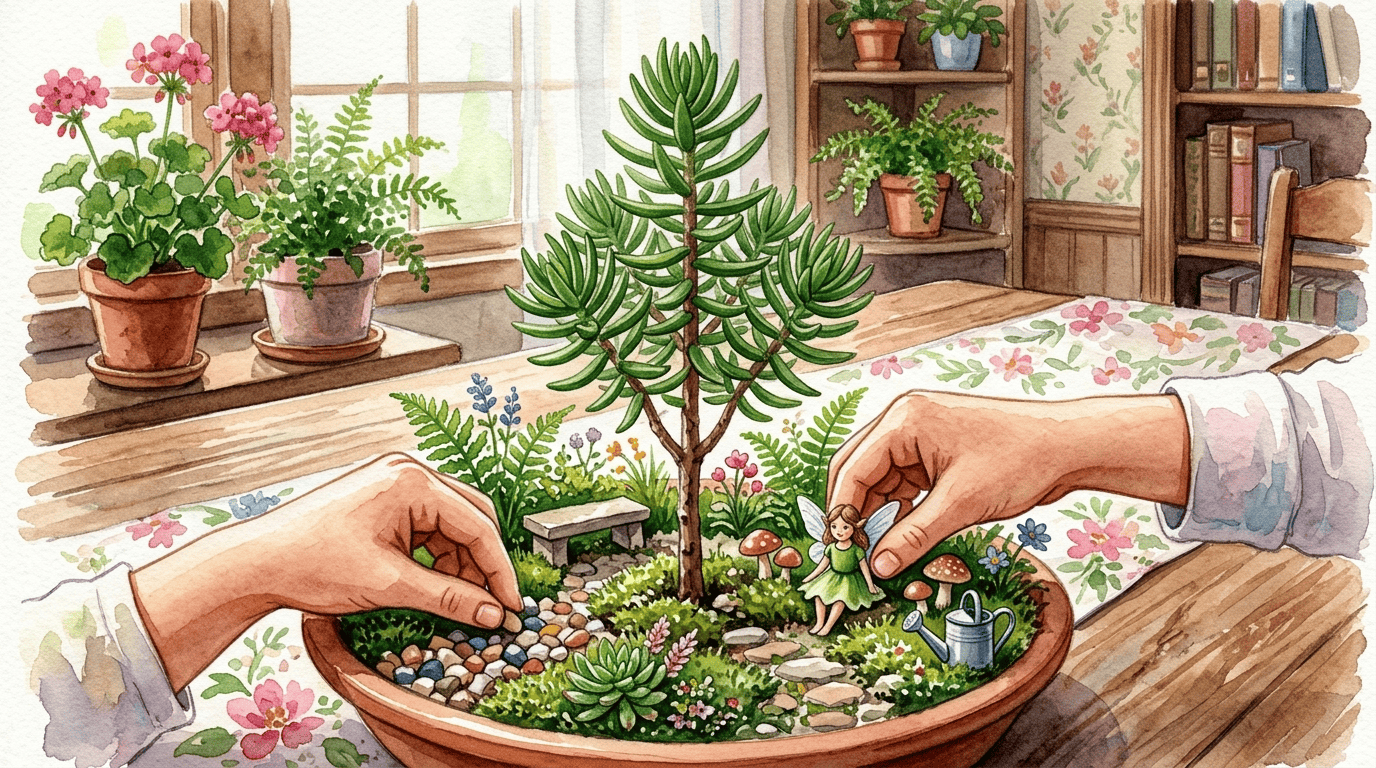
Crassula tetragona, commonly called miniature pine tree, is an upright shrubby succulent in the stonecrop family (Crassulaceae) widely distributed across southern Africa from the Western and Eastern Cape through KwaZulu-Natal into Namibia, Botswana, and Zimbabwe on dry rocky slopes. Carl Linnaeus described the species in Species Plantarum in 1753. The epithet tetragona refers to the four-ranked arrangement of leaves that gives the stems a four-angled (tetragonal) appearance.
Plants grow into sparsely branched upright shrubs 60-90 cm tall with slightly woody stems and whorls of narrow awl-shaped to linear fleshy green leaves 2-4 cm long, giving the overall appearance of a miniature pine tree or dwarf conifer. Small star-shaped white to pale cream flowers appear in terminal clusters in late spring and early summer. Widely used in bonsai-style succulent arrangements, fairy gardens, and miniature landscapes.
Subspecies include acutifolia with pointed leaves and robusta with larger leaves. Long cultivated in European succulent collections, it became a defining plant of the fairy garden trend in 21st-century America for its uncanny resemblance to a miniature pine tree. Propagates easily from stem cuttings.
Symbolism & meaning
What It Symbolizes
Kerkei, with its pine-like form in miniature, suggests endurance — an evergreen succulent whose tiny coniferous shape suggests longevity in a single small pot. It also carries imagination, the perfect tree-stand-in for fairy gardens and fantasy landscapes. To keep one is to compress the meaning of the ancient pine into something that fits on a windowsill.
- Endurance — evergreen pine-like form symbolizes longevity
- Imagination — miniature tree for fantasy garden scenes
Where the Name Comes From
'Tetragona' from Greek meaning four-angled, referring to leaf arrangement around the stem.
Uses & Fun Facts
- Pine-tree-like succulent ideal for miniature landscape pots
- Upright fleshy stems mimic tiny pine trees in succulent gardens
Related plants
More Crassula plants
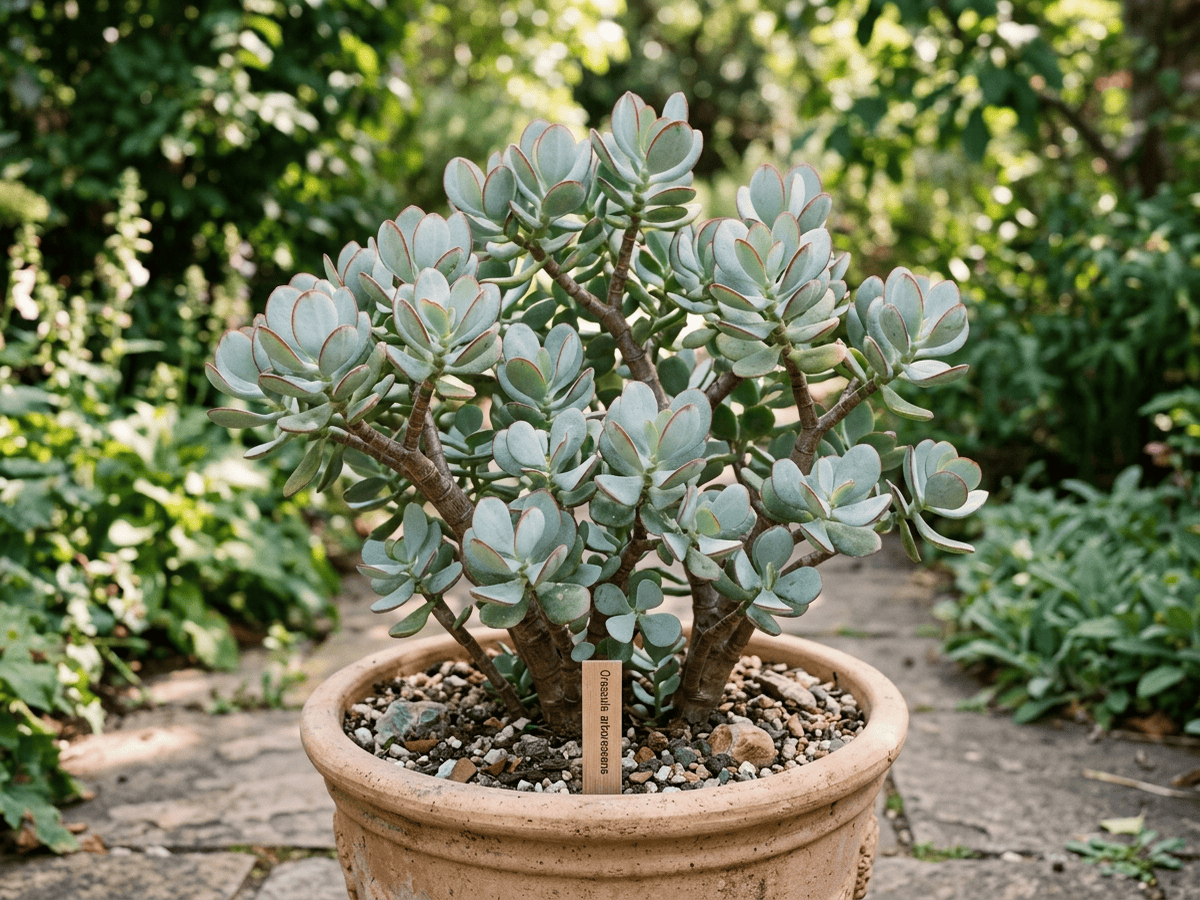 Silver Dollar PlantCrassula arborescens
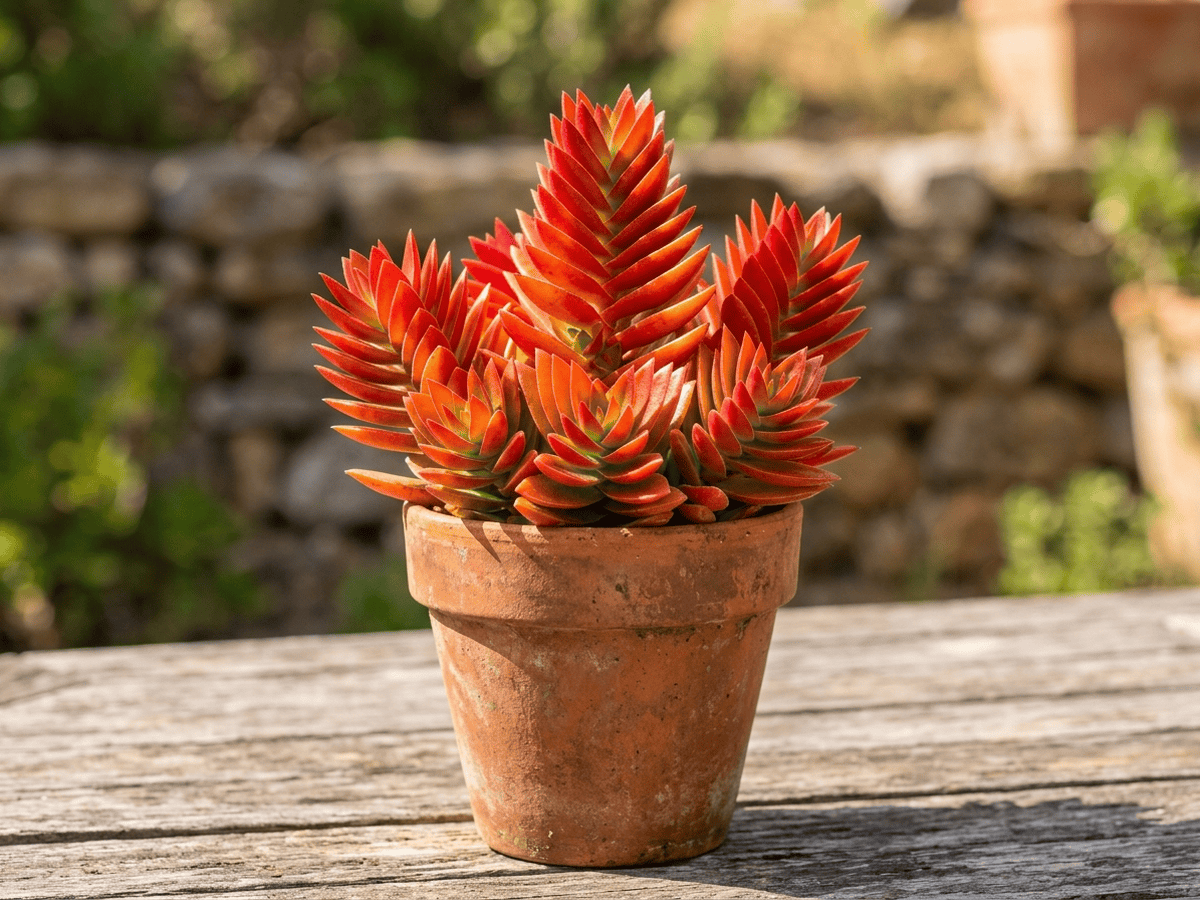 Campfire PlantCrassula capitella
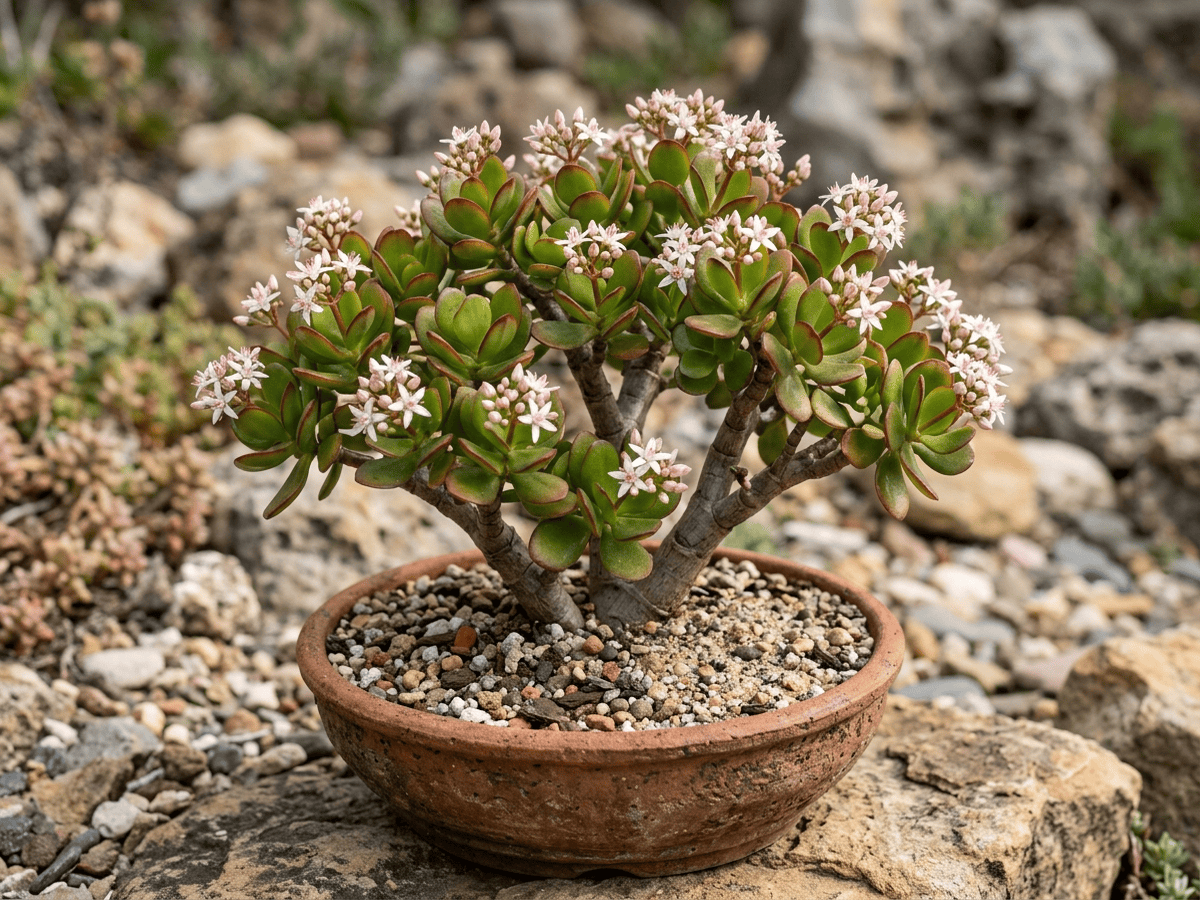 Jade PlantCrassula ovata
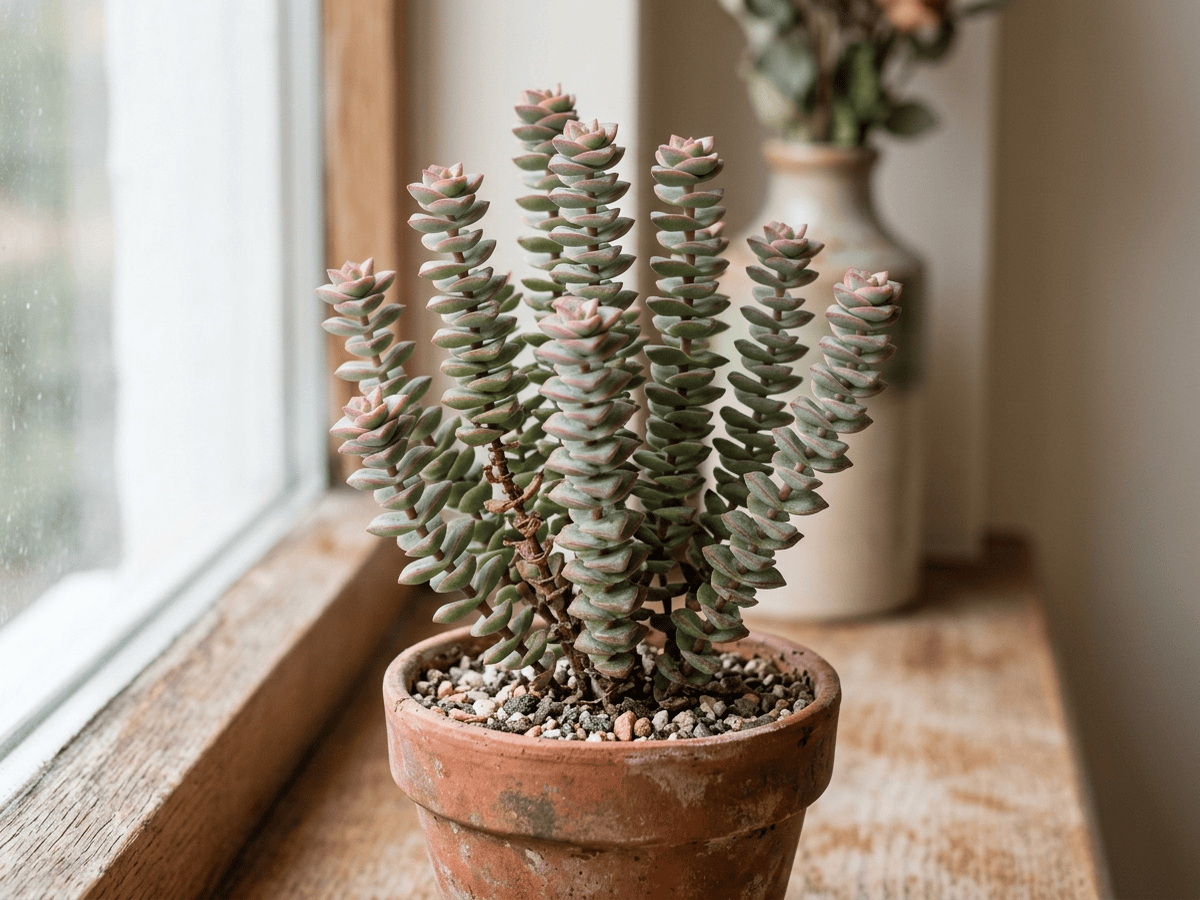 Concertina PlantCrassula perforata
Plants with similar care
 Chinese AbeliaAbelia chinensis
 Fragrant AbeliaAbelia mosanensis
 Large-Flowered AbeliaAbelia uniflora
 Glossy AbeliaAbelia x grandiflora
Frequently asked questions
How often should I water Miniature Pine Tree?
In summer, water about every 14 days; in winter, about every 30 days. Adjust for heat, pot size and drainage.
How much light does Miniature Pine Tree need?
Full sun: 6+ hrs direct. Watch the leaves — scorching or stretching means the light needs adjusting.
Is Miniature Pine Tree toxic to cats or dogs?
Pets Moderate (Dogs Moderate · Cats Moderate) Educational information, not medical or veterinary advice. If exposure is suspected, contact a doctor or veterinarian.
Is Miniature Pine Tree easy to grow?
Yes — it is considered an easy, beginner-friendly plant.
Can Miniature Pine Tree be grown indoors?
Yes, it adapts well to indoor growing given the right light.
When does Miniature Pine Tree bloom?
It typically blooms Mar–Aug in the Northern Hemisphere.
YardMate
Identify any plant in seconds
Snap a photo — YardMate names the plant, diagnoses problems, and reminds you when to water.
Download on the App Store