 YardMate

Silver Dollar Plant
Crassula arborescens
Easy · Beginner friendlyAbout Silver Dollar Plant
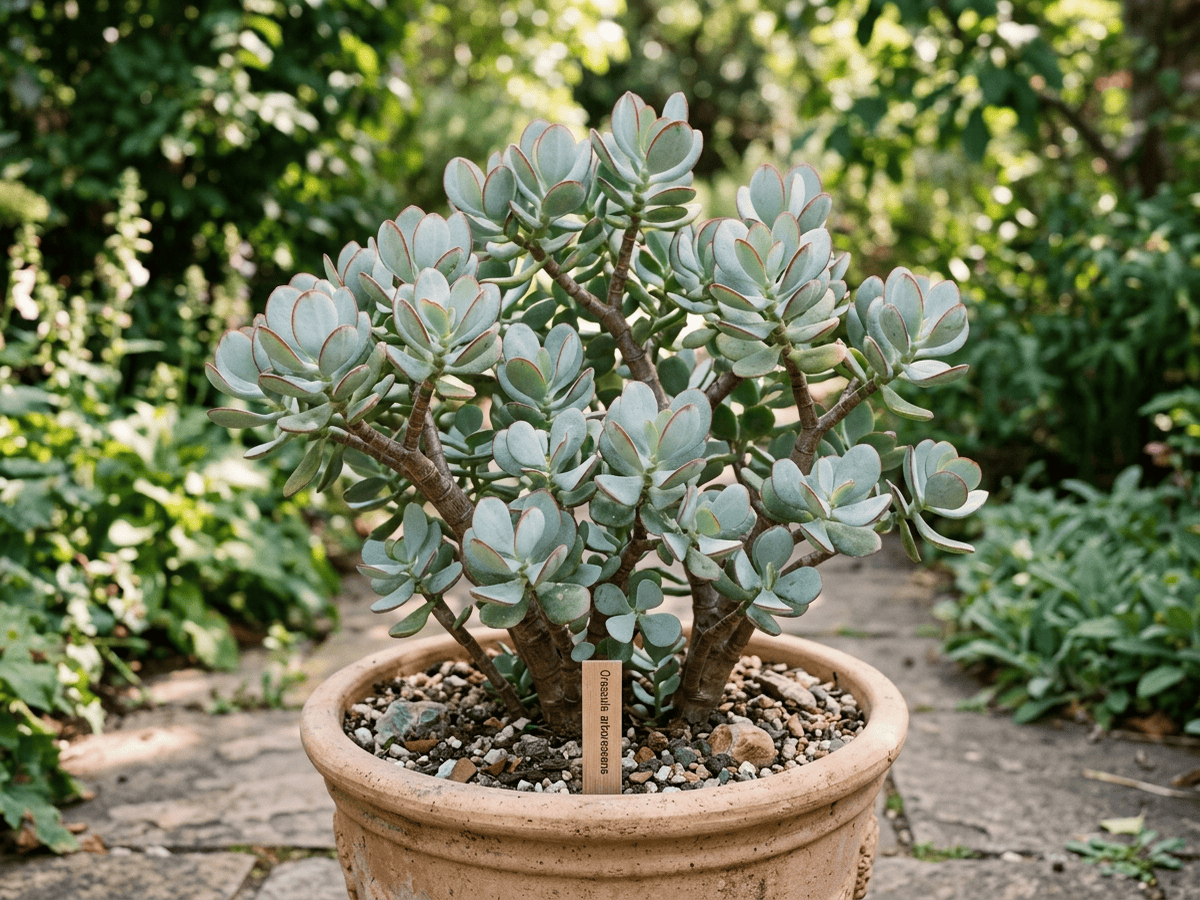
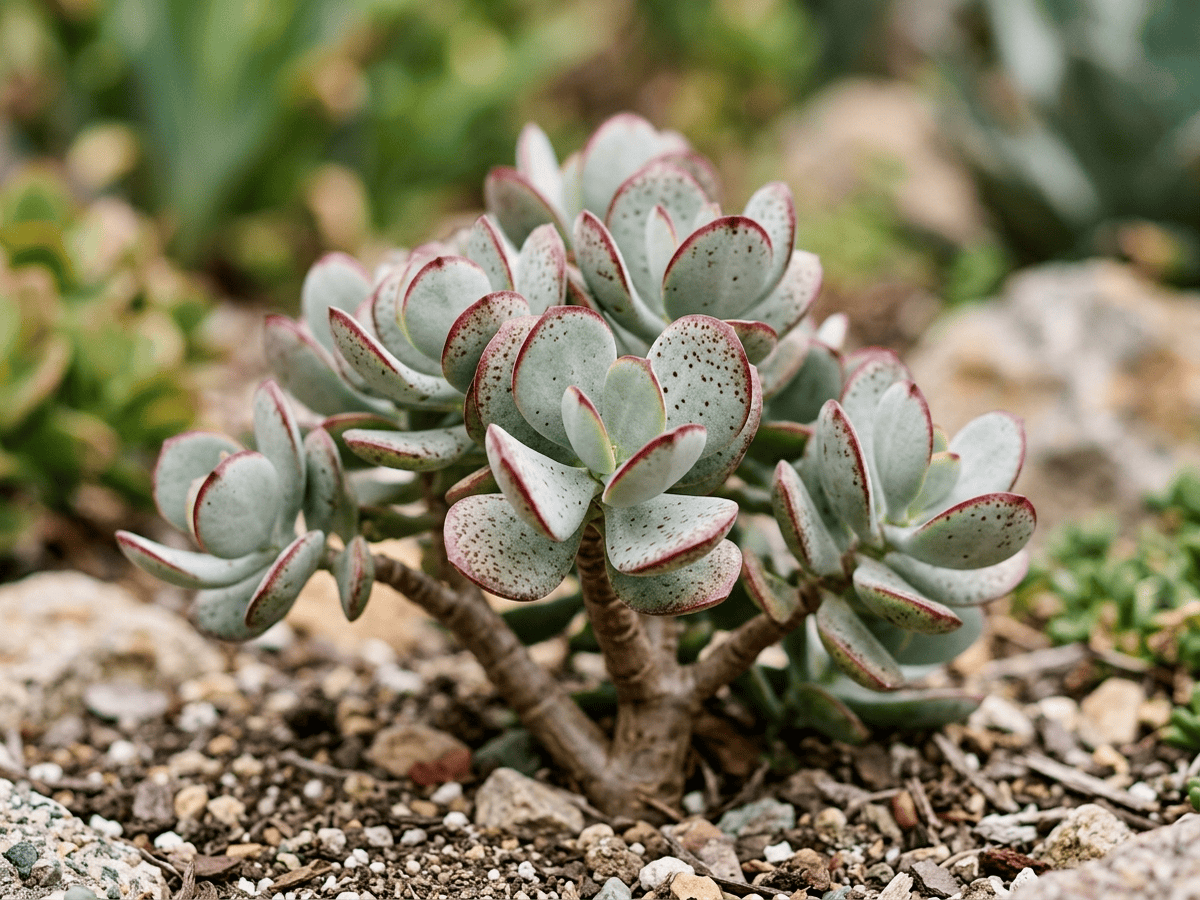
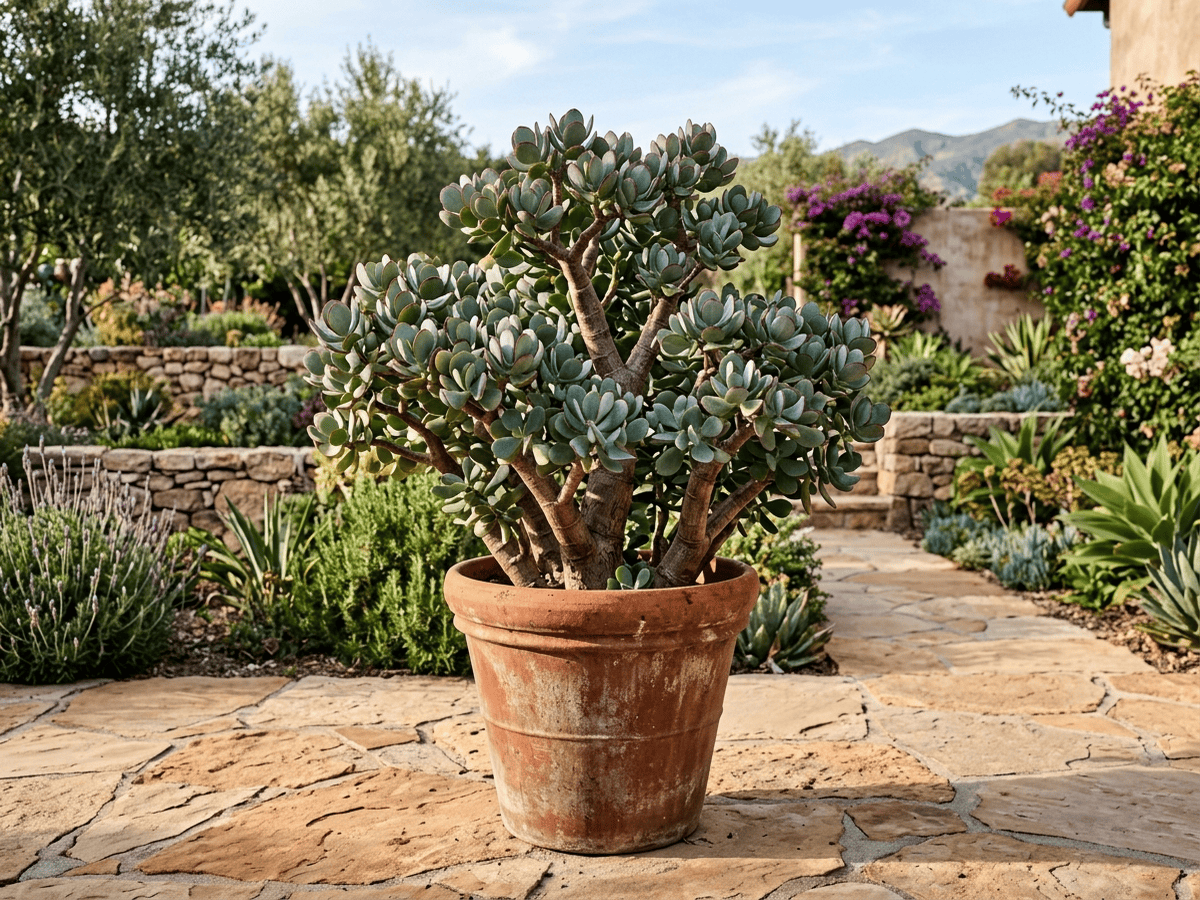
Silver Dollar Jade is a South African shrubby succulent reaching 3-4 feet, with thick gray-green to silvery-blue rounded leaves edged in red and dotted with darker speckles. A close relative of the common jade plant, it forms a small tree-like specimen ideal for large containers and Mediterranean-climate gardens. White to pale-pink star-shaped flowers may appear in winter on mature plants. Highly drought-tolerant and long-lived, it can survive for decades with minimal care.
- Drought-tolerant
- Container-friendly
- Evergreen
How to care for Silver Dollar Plant
Watering
- Springevery 14 days
- Summerevery 14 days
- Fallevery 21 days
- Winterevery 30 days
Soil · Fast-draining
- Main mixSand + pumice + soil 1:1:150%
- DrainagePumice / gravel50%
Keep grit at half the mix or more — this soil is meant to dry out fast.
FERTILIZER
- Springevery 60 days
At a Glance
- NativeAfrica
- Height2–4 ft (0.6–1.2 m)
- Spread2–3 ft (0.6–0.9 m)
- Flower colorWhite, Pink
- Foliage colorBlue-green, Variegated
- SoilSandy, Well-drained
- LocationsYard · Balcony · Indoor
Bloom time
BLOOM CYCLE
Peak bloom
Dec–Feb
White to pink star flowers in winter on mature plants
Toxicity
Humans Slight · Pets Moderate
bufadienolides
Slight
- Leaf
- Ingestion
EXPOSURE Eating leaves.
EFFECT Gastrointestinal upset.
NOTE Documented concern for humans: Gastrointestinal upset.
Moderate
- Leaf
- Stem
- Ingestion
EXPOSURE Eating leaves and stems.
EFFECT Vomiting, lethargy, and arrhythmia.
NOTE ASPCA lists Crassula (jade plant) as toxic to pets.
Moderate
- Leaf
- Stem
- Ingestion
EXPOSURE Eating leaves and stems.
EFFECT Vomiting, lethargy, and depression.
NOTE ASPCA lists Crassula (jade plant) as toxic to pets.
Educational information, not medical or veterinary advice. If exposure is suspected, contact a doctor or veterinarian.
DISTRIBUTION


- Native
- Introduced
- Africa
History
Crassula arborescens, silver jade plant or silver dollar plant, is a large tree-like succulent in the stonecrop family (Crassulaceae) native to the Western Cape and Eastern Cape of South Africa, where it grows on rocky outcrops and arid hillsides. Scottish botanist Philip Miller described the species in 1768 in the Gardeners Dictionary. The plant slowly develops a thick woody trunk with spreading branches reaching 1-3 meters tall, each branch tipped with rosettes of fleshy obovate to nearly round coin-shaped leaves 3-5 cm across, colored distinctive silvery blue-gray with dark maroon spots and a reddish margin.
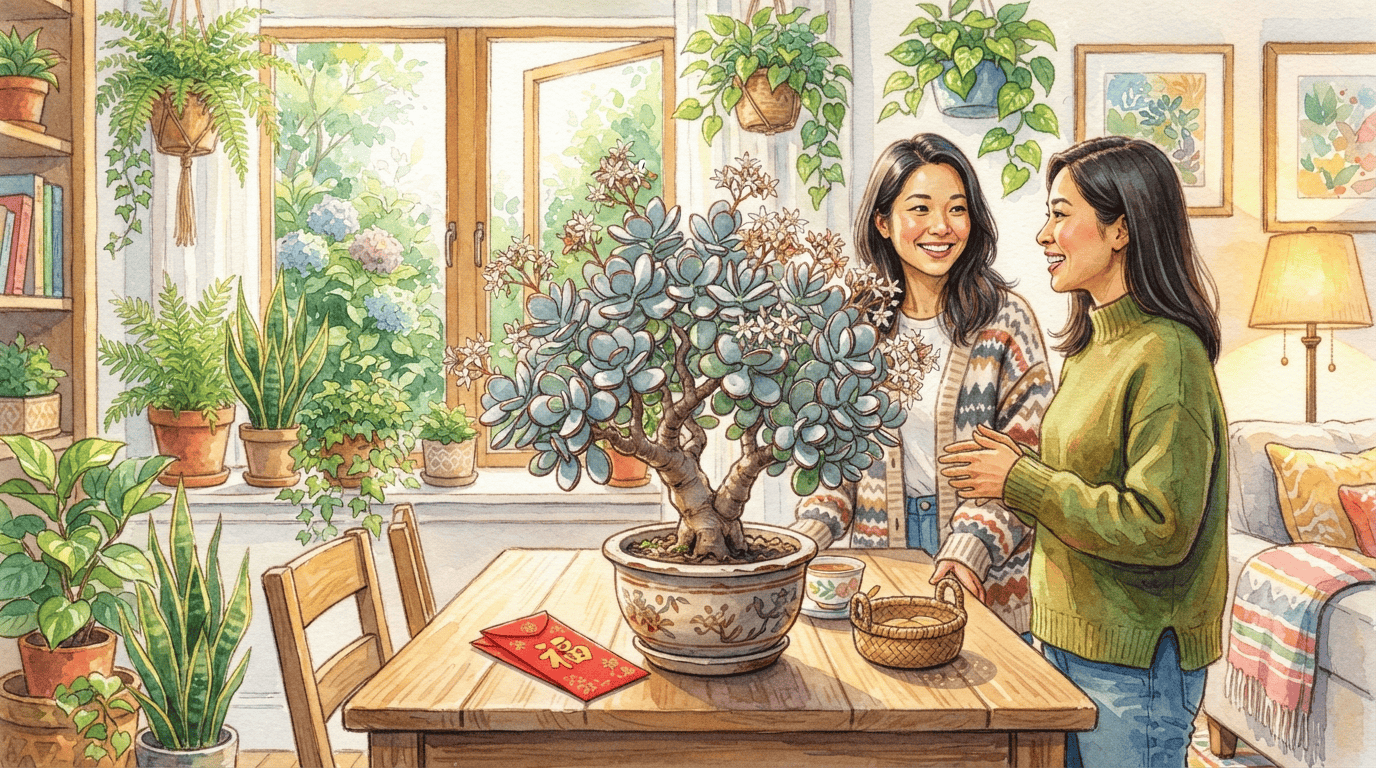
Clusters of small five-petaled white flowers aging pink appear in winter in mature plants. Closely related to the more commonly grown money tree (C. ovata), but distinguished by the rounder glaucous blue-gray foliage with red rims.
Subspecies undulatifolia has wavy leaf margins. Much prized as a houseplant in cold climates and as a striking landscape specimen in Mediterranean and arid areas. Long associated with prosperity and wealth in feng shui traditions, it shares this symbolism with the related common jade plant and is a popular gift plant in Asian-American households.
Symbolism & meaning
What It Symbolizes
The Silver Dollar Plant has long carried the meaning of prosperity, its rounded coin-shaped leaves read across many cultures as a quiet promise of wealth and good fortune. Individual specimens can live for fifty years or more, anchoring a windowsill or courtyard for entire generations, and so it also makes visible longevity. In the language of houseplants, crassula is the family heirloom, a slow grower whose meaning deepens precisely because it stays.
- Prosperity — symbol of wealth and good fortune in many cultures
- Longevity — individual plants can live for 50+ years
Where the Name Comes From
The common name highlights its silver coloring. 'Arborescens' means tree-like, referring to its shrubby stature.
Uses & Fun Facts
- Silver jade succulent thrives in shallow patio pots
- Sculptural trunk gives bonsai-like patio focal point
- Round silver-blue leaves edged in maroon
Related plants
More Crassula plants
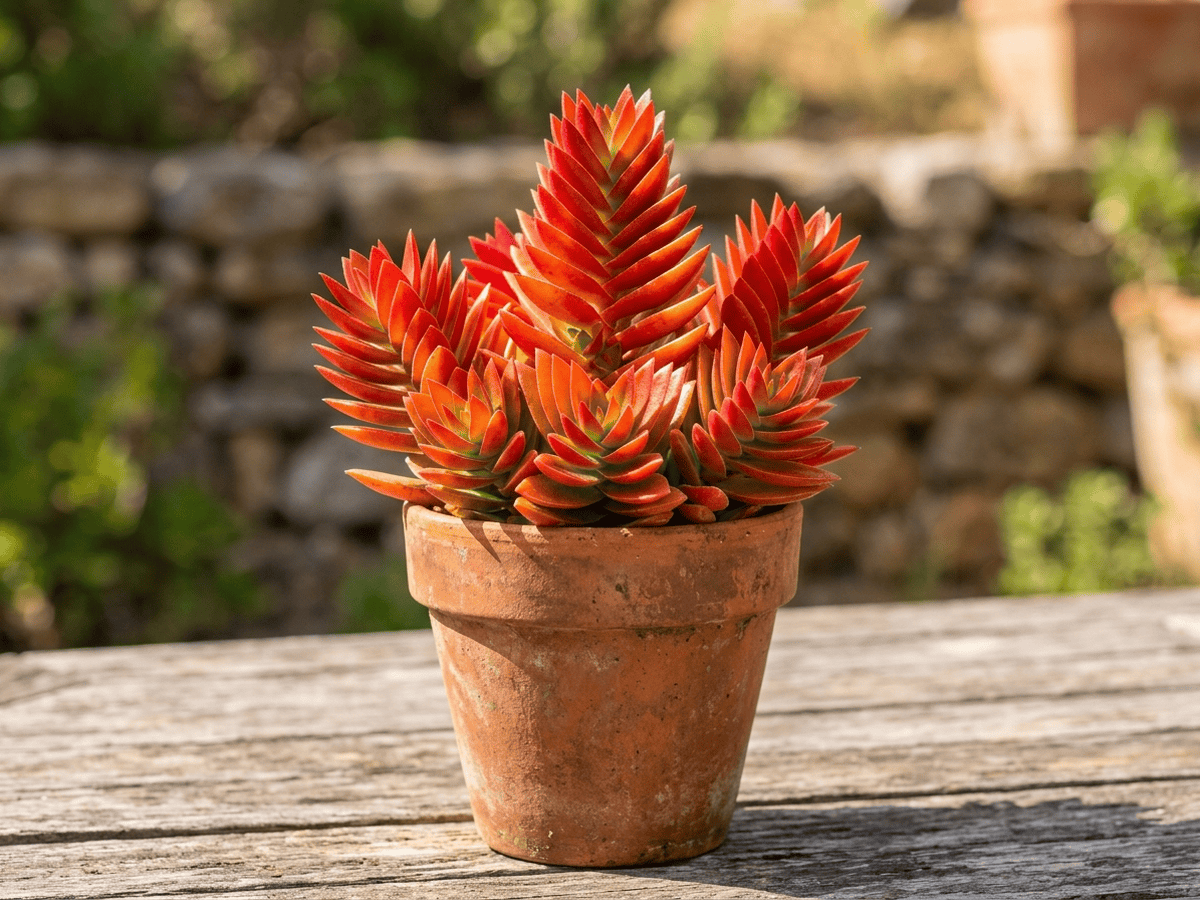 Campfire PlantCrassula capitella
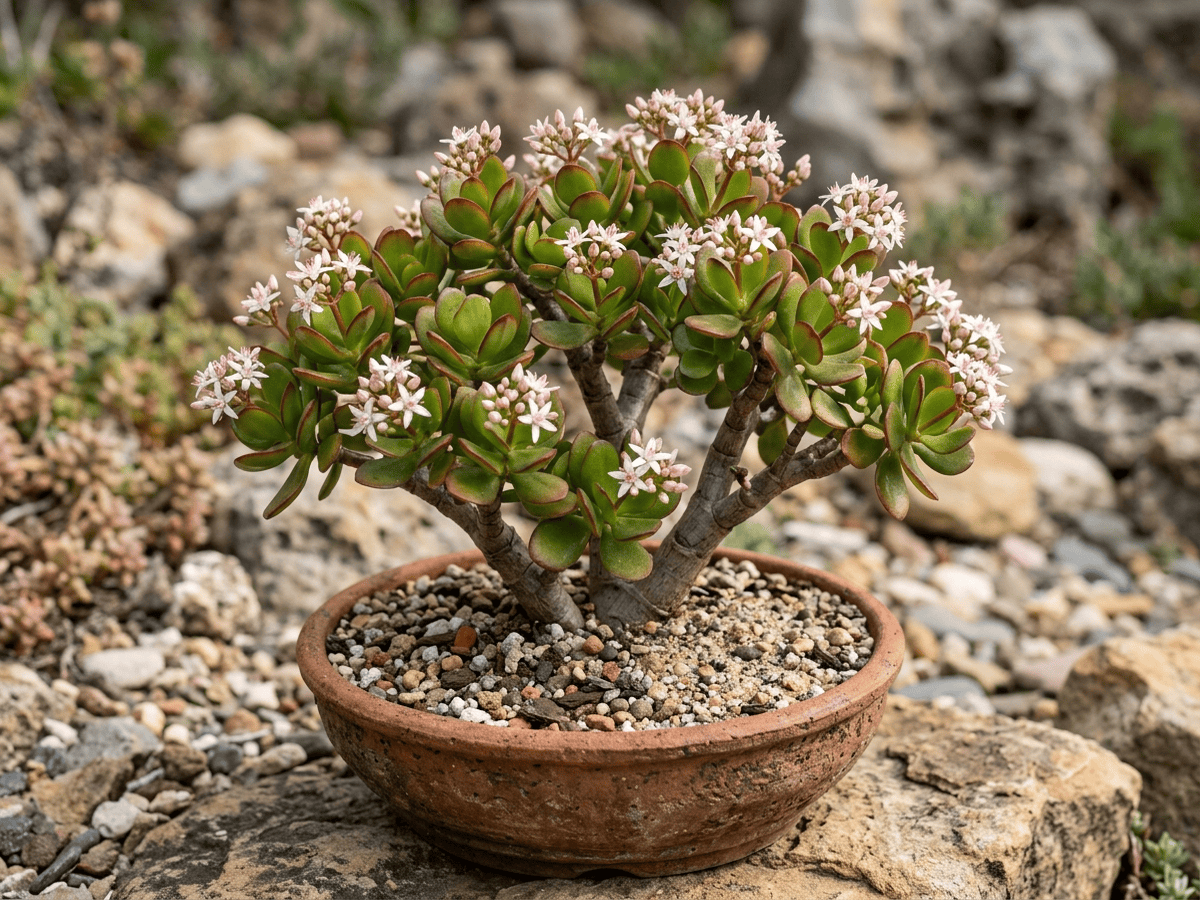 Jade PlantCrassula ovata
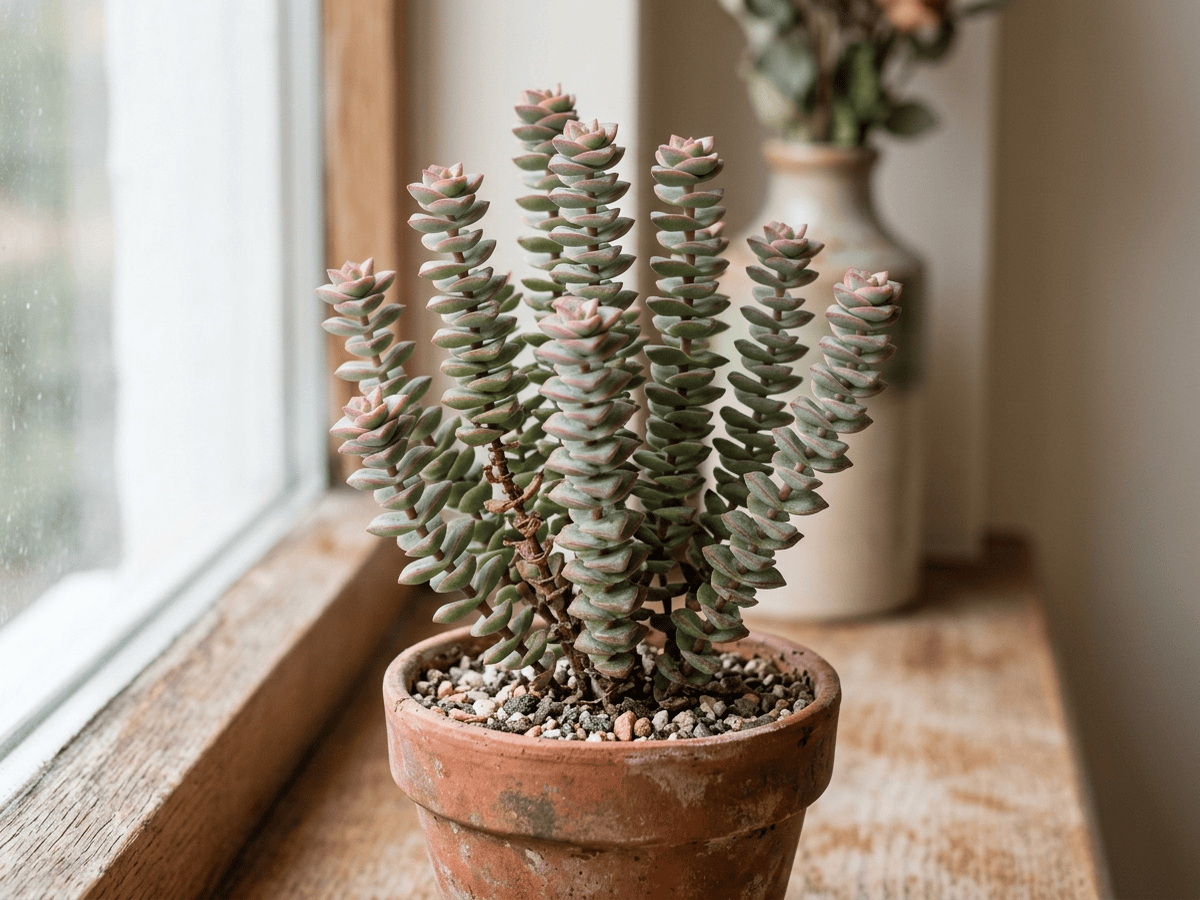 Concertina PlantCrassula perforata
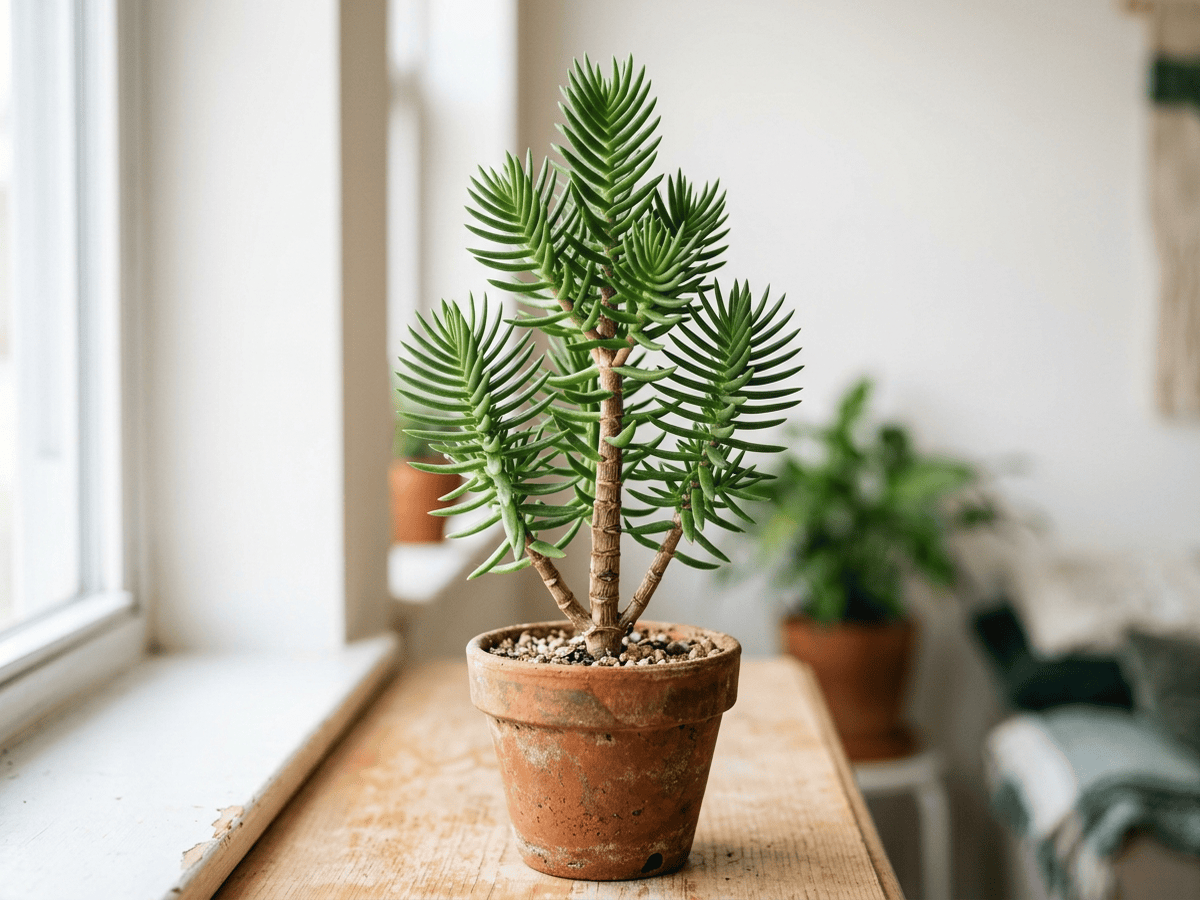 Miniature Pine TreeCrassula tetragona
Plants with similar care
 Chinese AbeliaAbelia chinensis
 Fragrant AbeliaAbelia mosanensis
 Large-Flowered AbeliaAbelia uniflora
 Glossy AbeliaAbelia x grandiflora
Frequently asked questions
How often should I water Silver Dollar Plant?
In summer, water about every 14 days; in winter, about every 30 days. Adjust for heat, pot size and drainage.
How much light does Silver Dollar Plant need?
Full sun: 6+ hrs direct. Watch the leaves — scorching or stretching means the light needs adjusting.
Is Silver Dollar Plant toxic to cats or dogs?
Pets Moderate (Dogs Moderate · Cats Moderate) Educational information, not medical or veterinary advice. If exposure is suspected, contact a doctor or veterinarian.
Is Silver Dollar Plant easy to grow?
Yes — it is considered an easy, beginner-friendly plant.
Can Silver Dollar Plant be grown indoors?
Yes, it adapts well to indoor growing given the right light.
When does Silver Dollar Plant bloom?
It typically blooms Dec–Feb in the Northern Hemisphere.
YardMate
Identify any plant in seconds
Snap a photo — YardMate names the plant, diagnoses problems, and reminds you when to water.
Download on the App Store