 YardMate

Madagascar Dragon Tree
Dracaena marginata
Easy · Beginner friendlyAbout Madagascar Dragon Tree
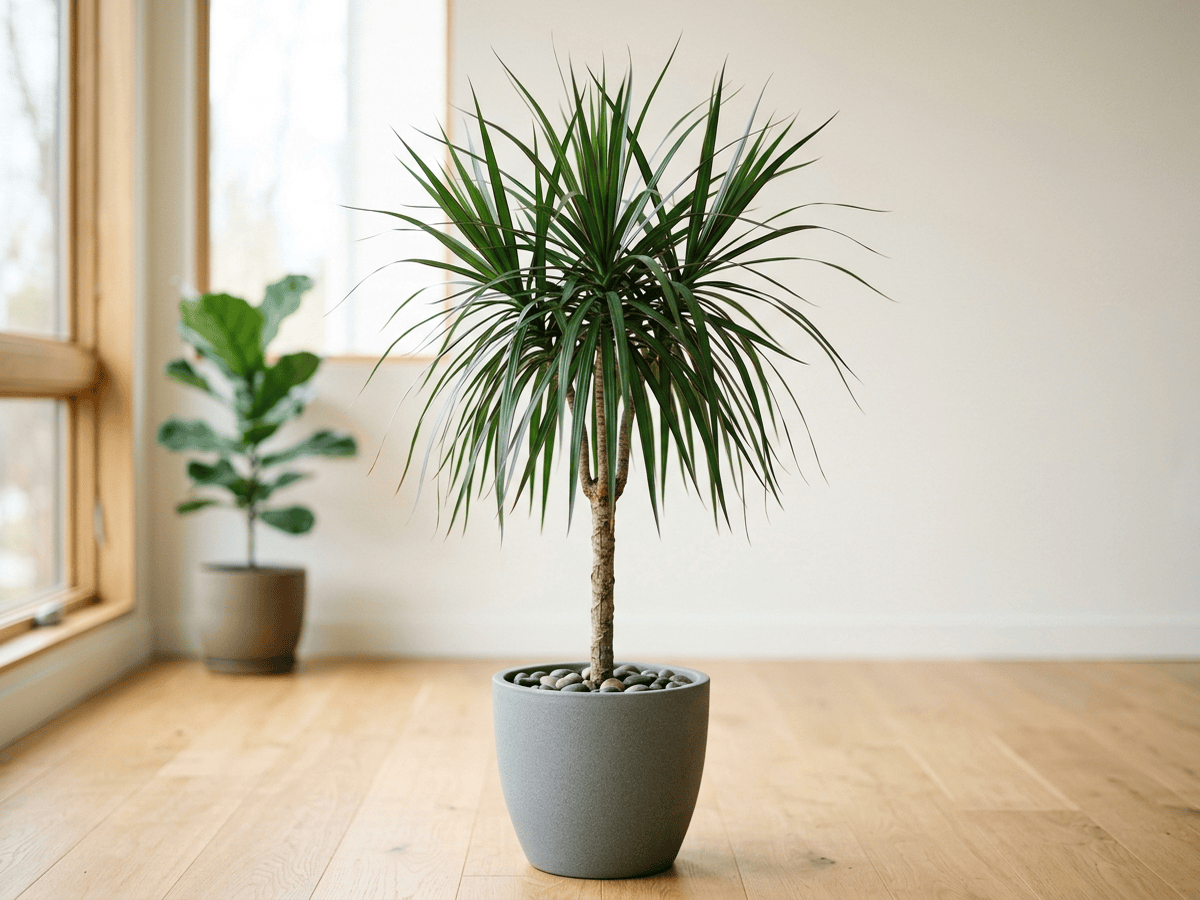
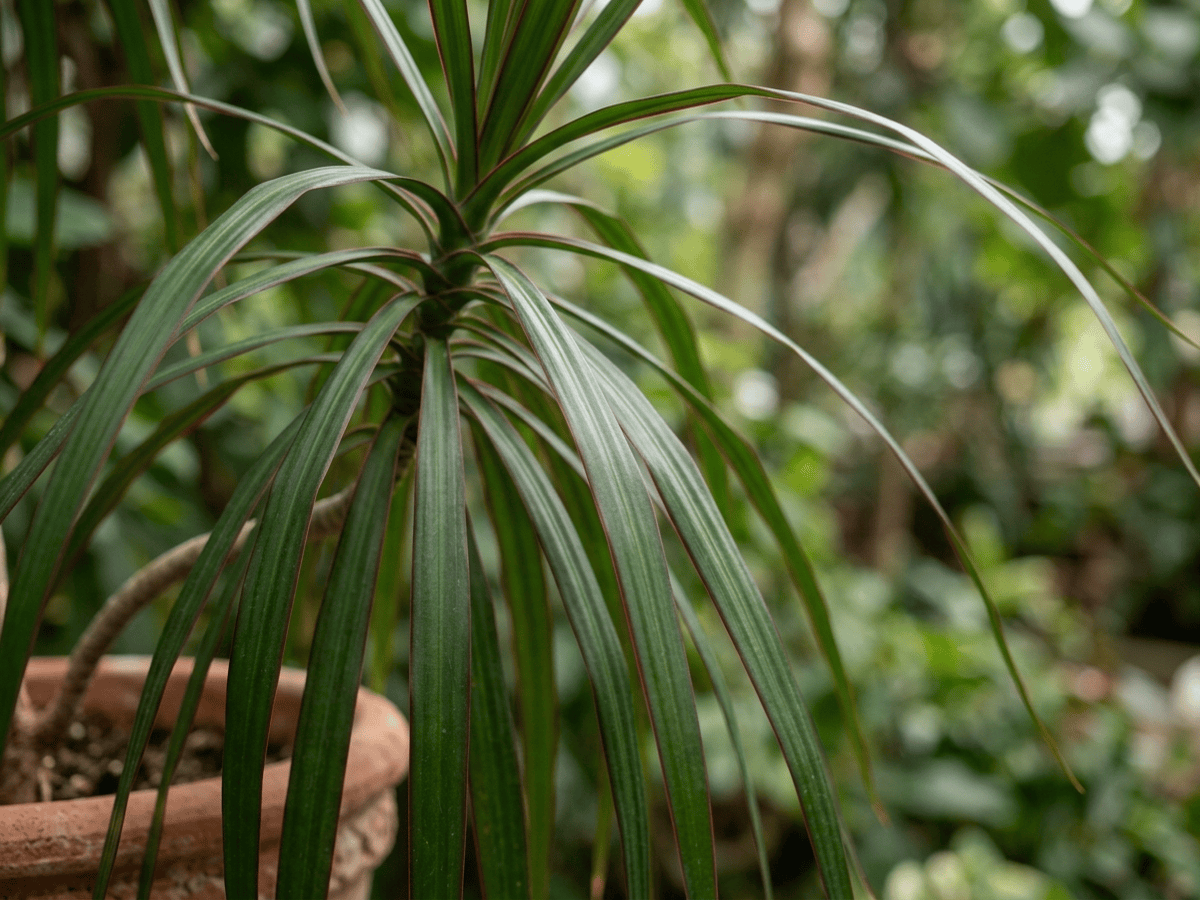
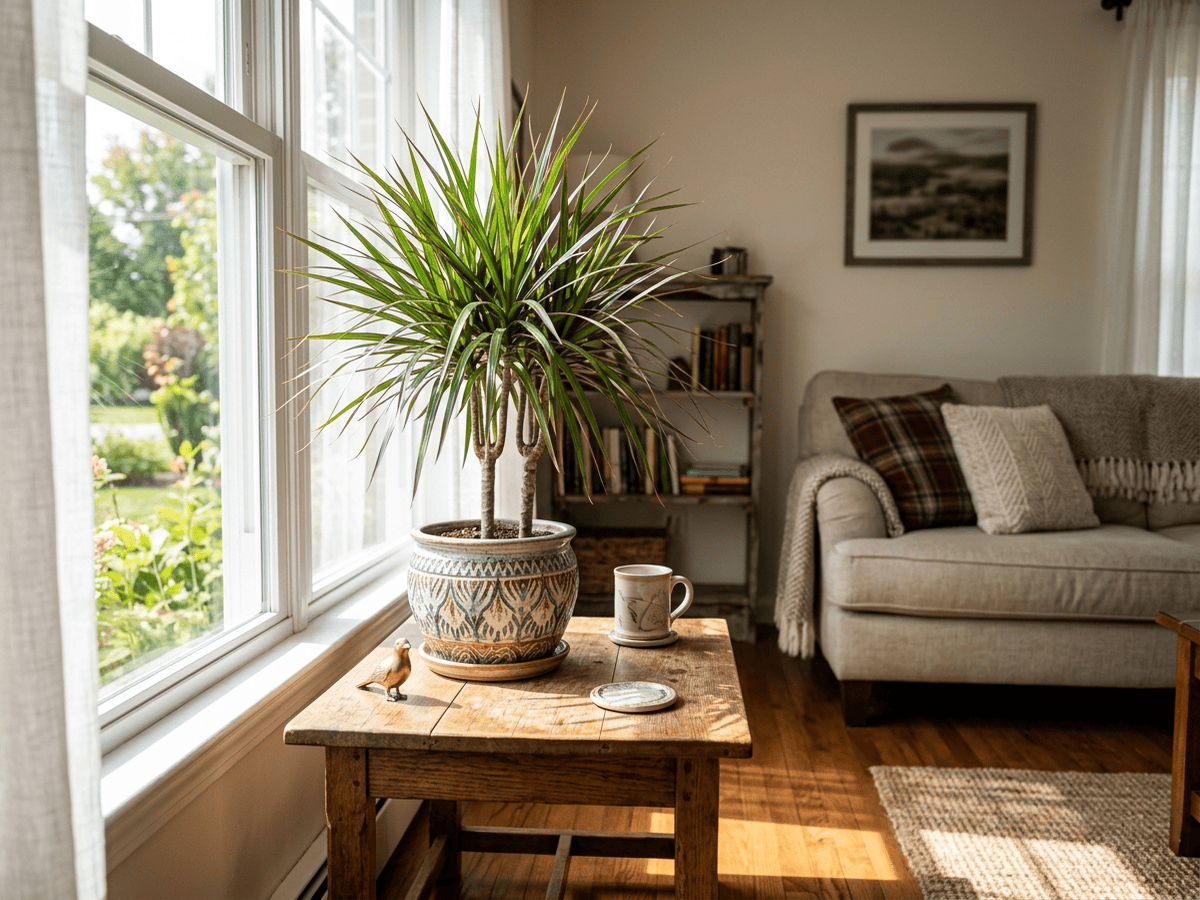
Dracaena marginata, the dragon tree, features slender woody stems topped with tufts of narrow, arching leaves edged in reddish-purple. Native to Madagascar, it adds a sculptural, almost palm-like silhouette to any room. Extremely tolerant of low light and irregular watering, it is one of the most low-maintenance houseplants available. Multiple stems can be braided or trained into artistic shapes. It is also an effective air purifier, removing benzene, formaldehyde, and trichloroethylene. The plant grows slowly indoors, eventually reaching 2 meters over many years.
- Air-purifying
- Drought-tolerant
How to care for Madagascar Dragon Tree
Watering
- Springevery 10 days
- Summerevery 7 days
- Fallevery 14 days
- Winterevery 21 days
Soil · Fast-draining
- Main mixSand + pumice + soil 1:1:150%
- DrainagePumice / gravel50%
Keep grit at half the mix or more — this soil is meant to dry out fast.
FERTILIZER
Balanced Feed 14-14-14
An even feed covers all three needs at once, keeping leaves, roots and blooms moving together with nothing pushed out of balance.
- Nitrogen · Leaves
- Phosphorus · Roots + Blooms
- Potassium · Strength
- Springevery 45 days
- Summerevery 45 days
- Fallevery 60 days
At a Glance
- NativeAfrica
- Height4–6 ft (1.2–1.8 m)
- Spread2–3 ft (0.6–0.9 m)
- Flower colorWhite
- Foliage colorGreen, Red, Variegated
- SoilLoamy, Well-drained
- LocationsIndoor
Bloom time
BLOOM CYCLE
Rarely blooms indoors
Fragrance
LIGHT FRAGRANCE
Rare indoor flowers have a mild sweet scent, most noticeable at night.
Toxicity
Humans Slight · Pets Moderate
saponins
Slight
- Leaf
- Stem
- Ingestion
EXPOSURE Eating leaves and stems.
EFFECT Nausea and mild GI upset.
NOTE Cats often show dilated pupils, which is a Dracaena-specific sign.
Moderate
- Leaf
- Stem
- Ingestion
EXPOSURE Eating leaves and stems.
EFFECT Vomiting (occasionally with blood), depression, anorexia, hypersalivation, dilated pupils in cats and per ASPCA.
NOTE Cats often show dilated pupils, which is a Dracaena-specific sign.
Moderate
- Leaf
- Stem
- Ingestion
EXPOSURE Eating leaves and stems.
EFFECT Vomiting (sometimes with blood), depression, anorexia, hypersalivation, dilated pupils and per ASPCA.
NOTE Cats often show dilated pupils, which is a Dracaena-specific sign.
Educational information, not medical or veterinary advice. If exposure is suspected, contact a doctor or veterinarian.
DISTRIBUTION


- Native
- Africa
History
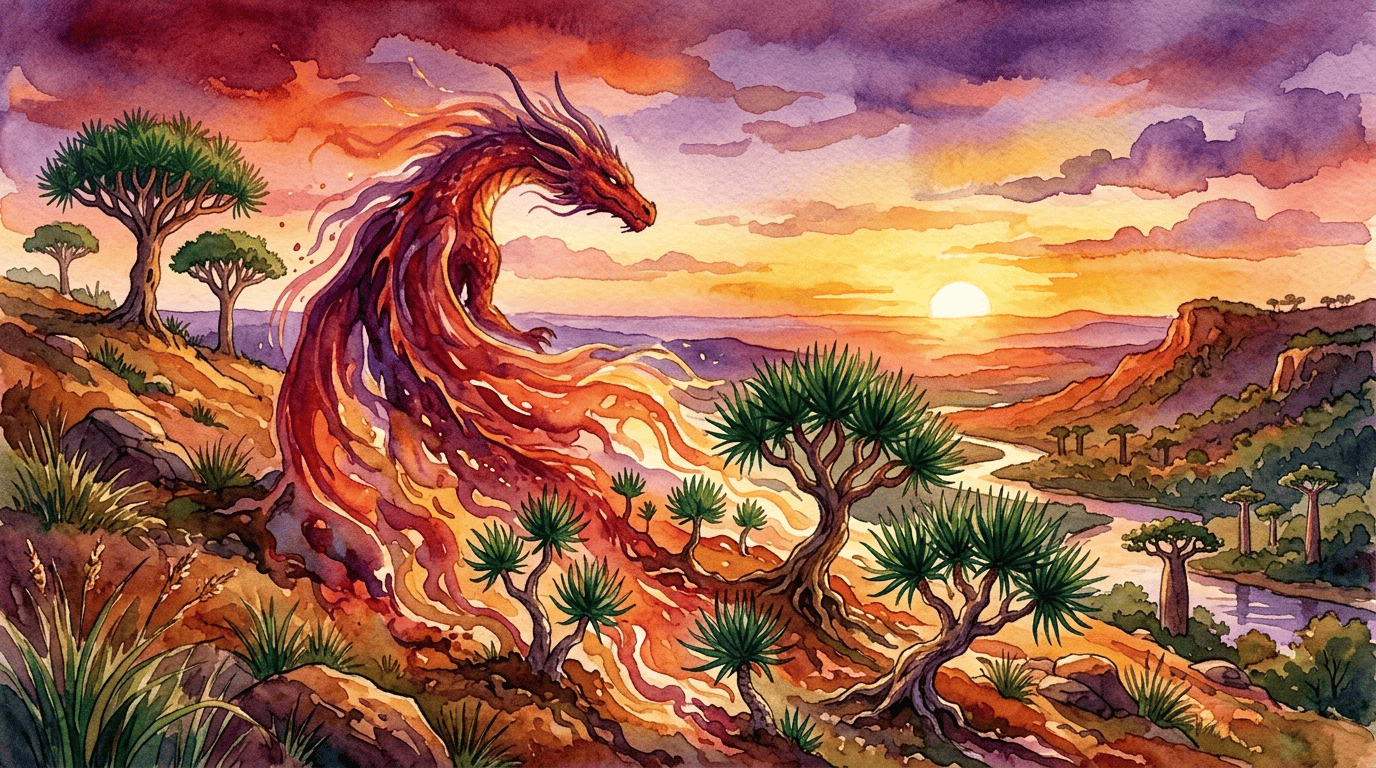
Dracaena marginata is endemic to Madagascar, where it grows on dry rocky hillsides as a slow multi-stemmed shrub or small tree. Collected in the 19th century for European glasshouses, it entered mass production in Dutch and Florida nurseries in the 1960s and became a signature 'architectural' houseplant of the 1970s and 1980s, prized for its sculptural branching and long-lived tolerance of neglect. Its common name alludes to the genus-wide legend of the 'dragon's blood' red resin produced by its better-known cousin Dracaena draco of the Canary Islands; D. marginata itself exudes only a thin reddish sap.
The 2017 molecular reclassification that absorbed Sansevieria into Dracaena left D. marginata's placement unchanged. The dragon tree gets its common name from a Malagasy legend: when a great dragon was slain, trees sprouted from its blood, and the red resin found in some Dracaena species was called 'dragon's blood.'
This resin has been used since ancient Roman times as a dye, varnish, and medicine. In Feng Shui practice, Dracaena marginata placed near the entrance of a home is believed to ward off negative energy.
Symbolism & meaning
What It Symbolizes
Dracaena Reflexa can symbolize strength, drawn from the very name dracaena, dragon, which links the plant to a long folklore of dragon's blood resin and protective power. Its slim, sword-like leaves rise from slender trunks with a quiet resilience, tolerating low light and irregular care for years on end. In the modern interior it has become the calm guardian of office and apartment alike, a small living dragon, undemanding but enduring.
- Strength — The dragon association represents power and resilience
Where the Name Comes From
Dracaena comes from Greek 'drakaina' meaning 'female dragon,' referring to the red resin. Marginata means 'margined,' describing the red leaf edges.
Uses & Fun Facts
- Slender stems and red-edged leaves suit tall indoor pots
- Architectural houseplant tolerates dim apartment corners
Related plants
More Dracaena plants
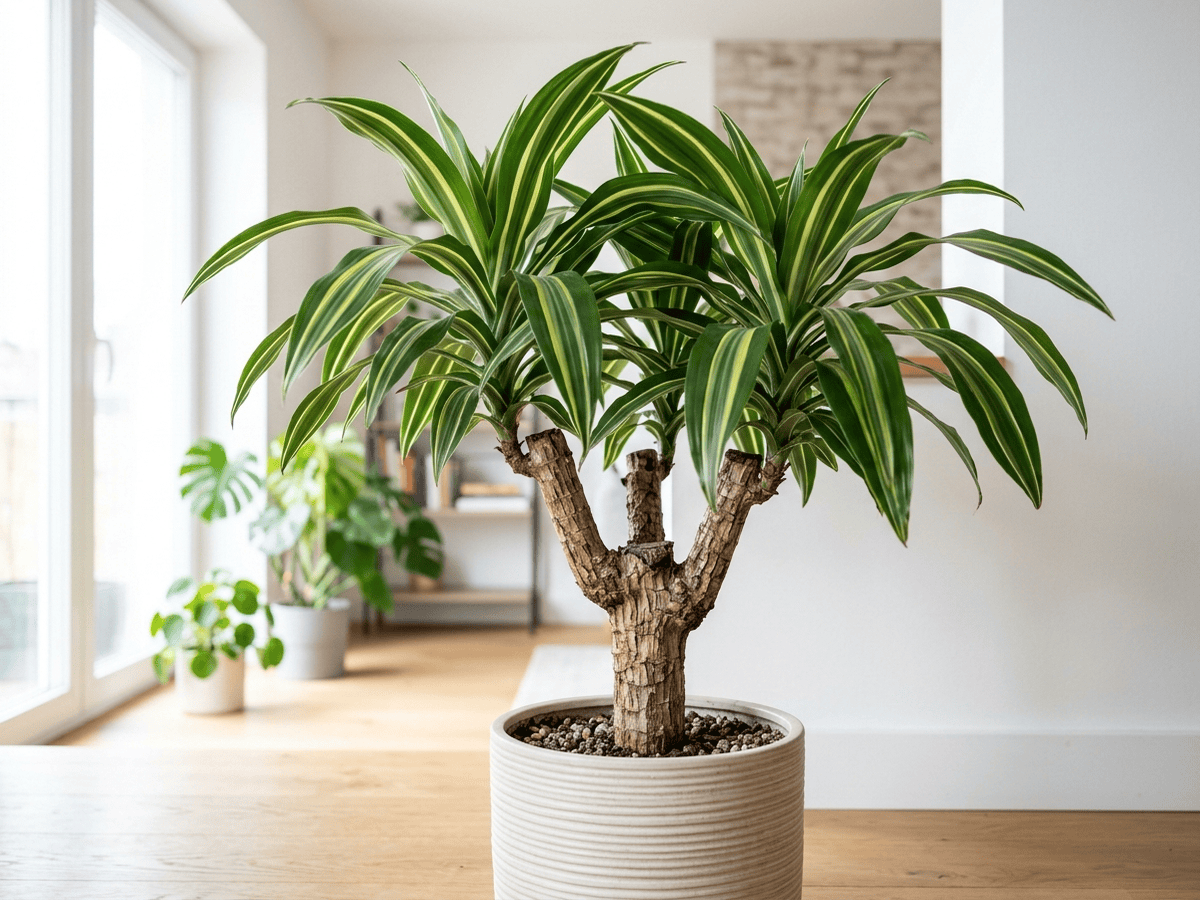 Corn PlantDracaena fragrans
 Song Of IndiaDracaena reflexa
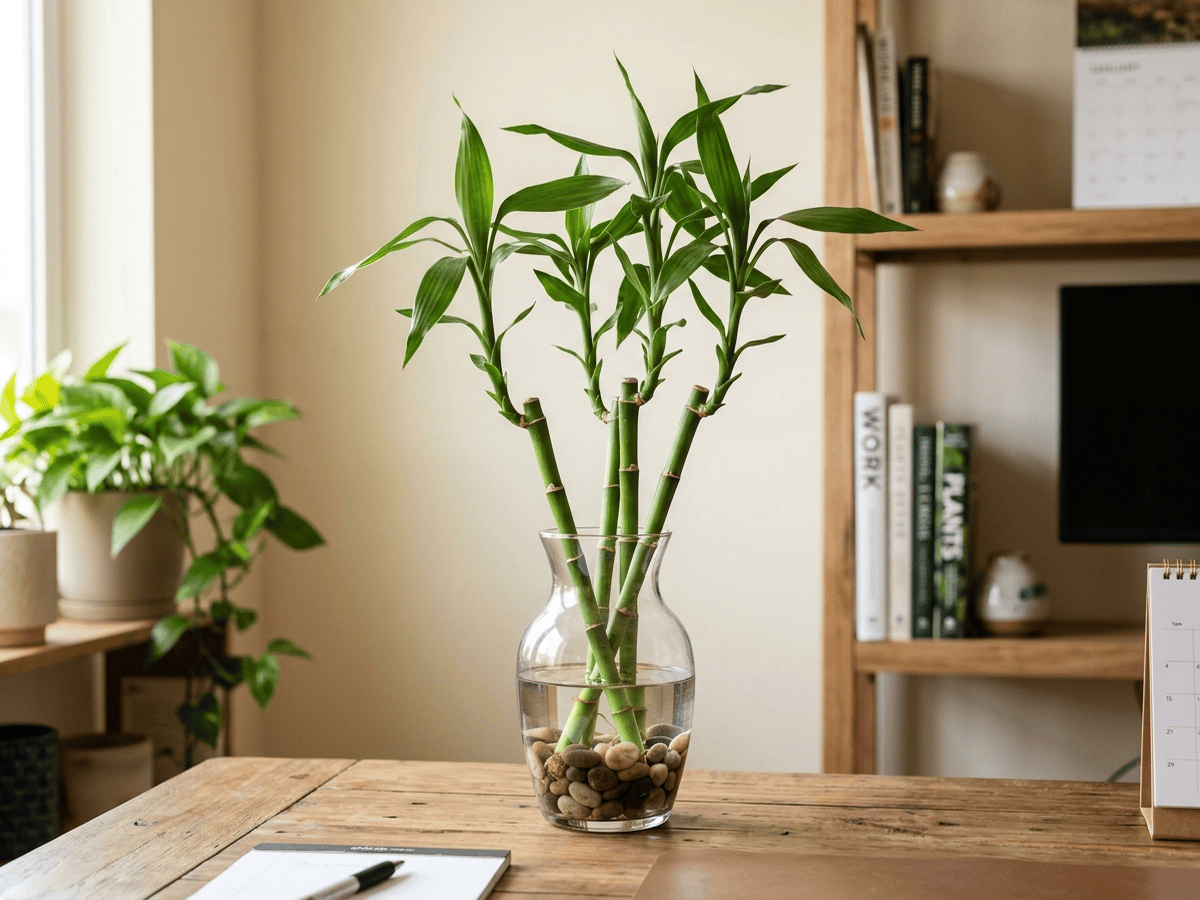 Lucky BambooDracaena sanderiana
 Snake PlantDracaena trifasciata
Plants with similar care
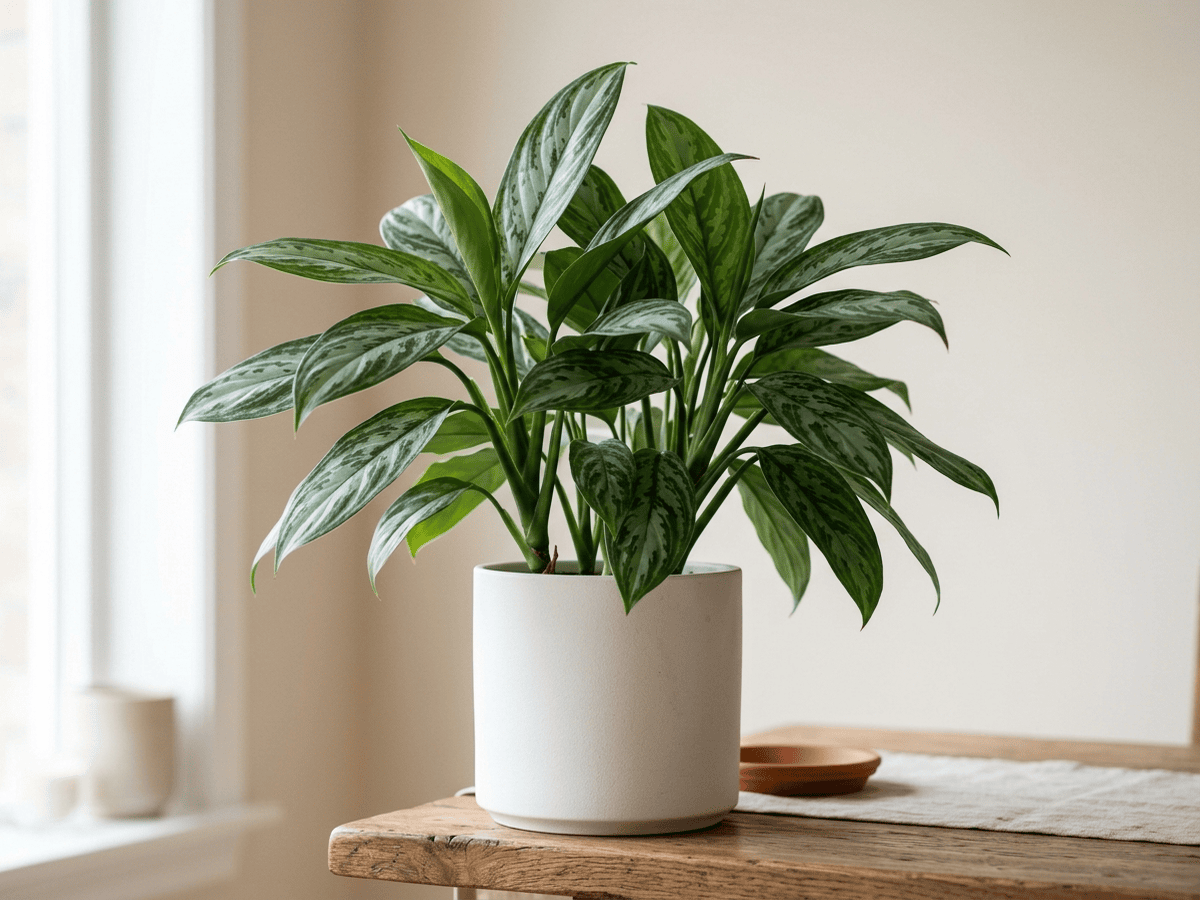 Philippine EvergreenAglaonema commutatum
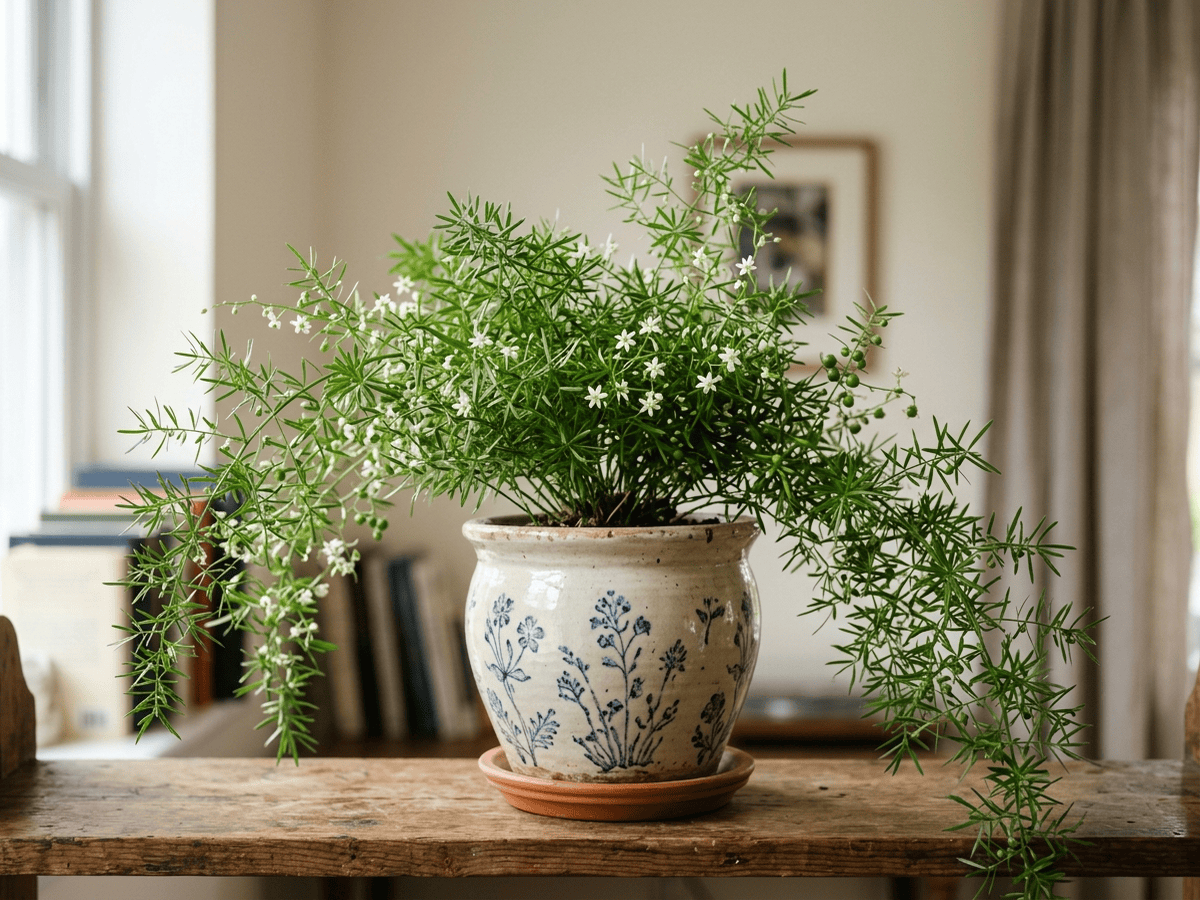 Sprenger's AsparagusAsparagus densiflorus
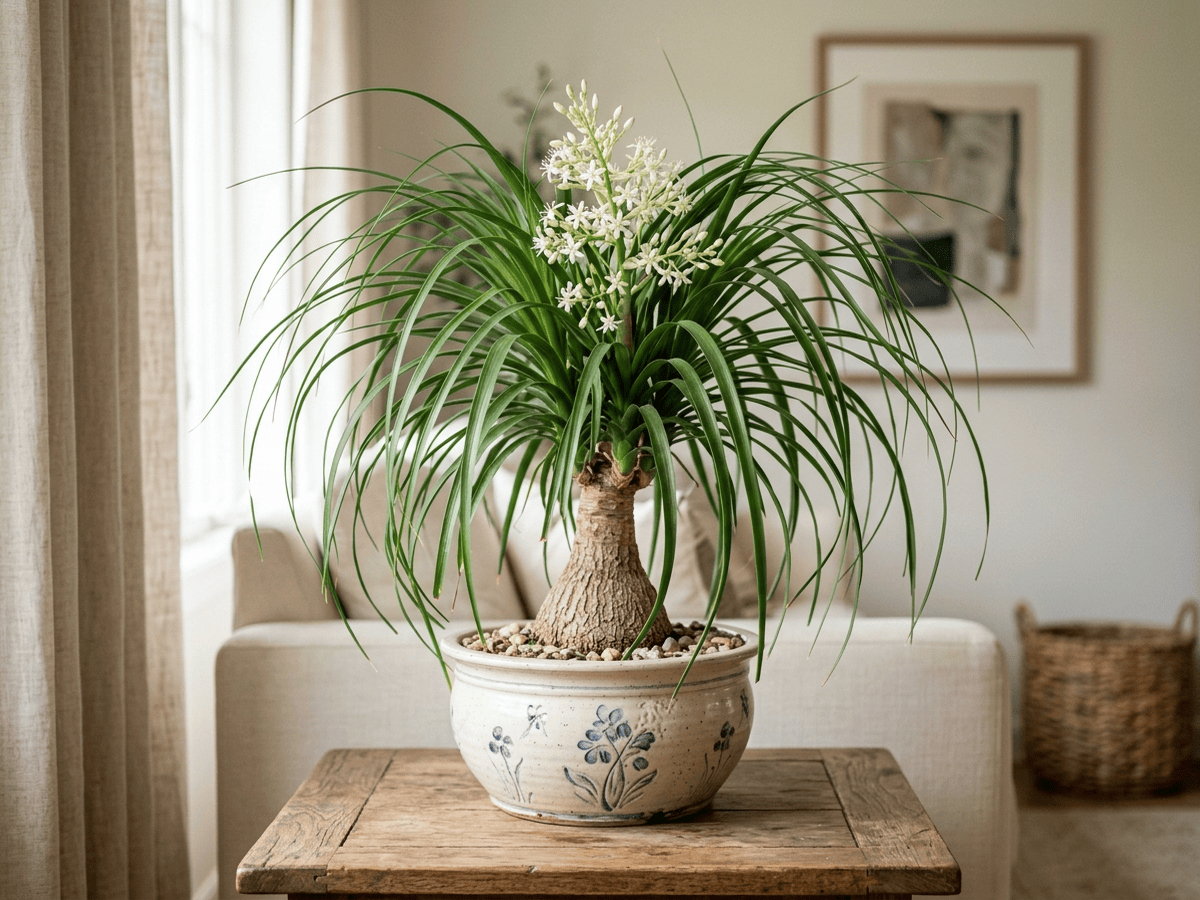 Ponytail PalmBeaucarnea recurvata
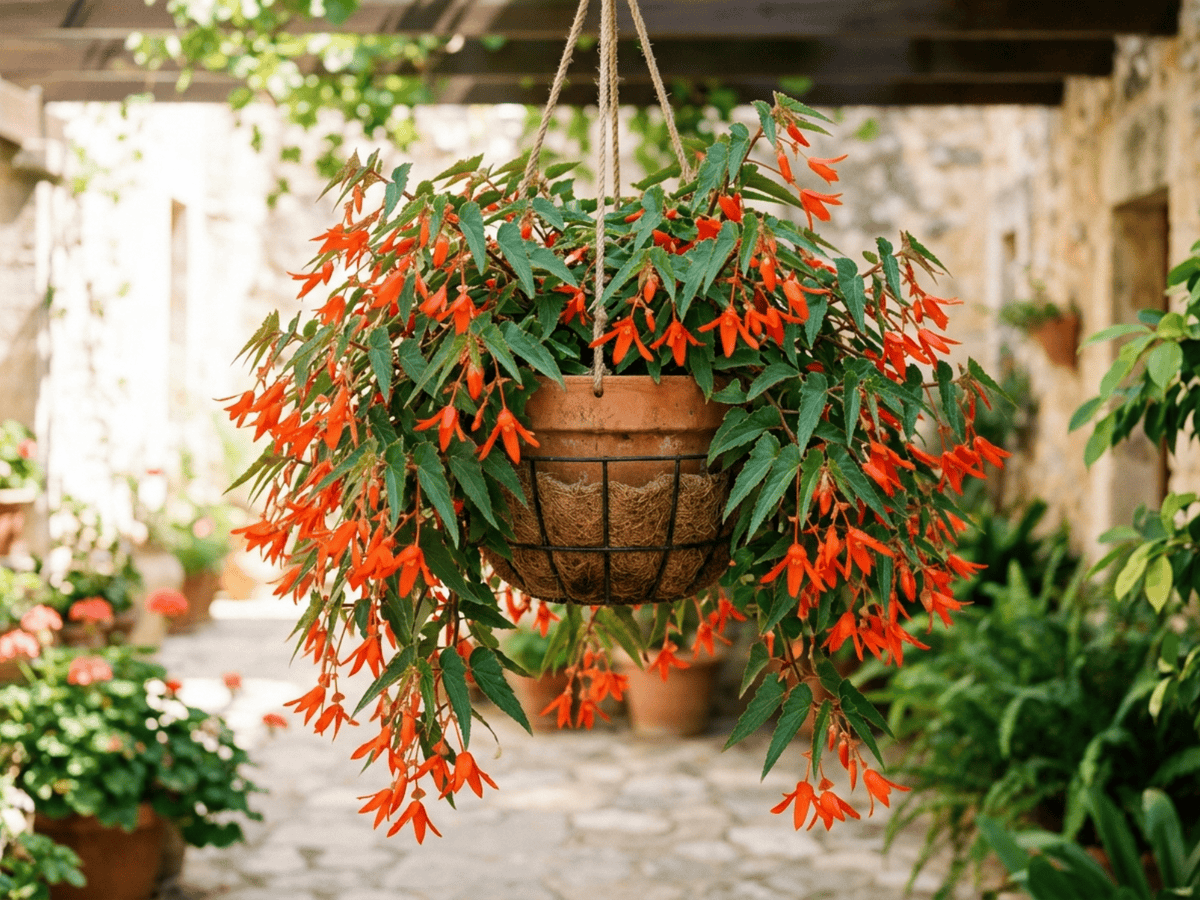 Tuberous BegoniaBegonia boliviensis
Frequently asked questions
How often should I water Madagascar Dragon Tree?
In summer, water about every 7 days; in winter, about every 21 days. Adjust for heat, pot size and drainage.
How much light does Madagascar Dragon Tree need?
Part shade: 2–4 hrs direct. Watch the leaves — scorching or stretching means the light needs adjusting.
Is Madagascar Dragon Tree toxic to cats or dogs?
Pets Moderate (Dogs Moderate · Cats Moderate) Educational information, not medical or veterinary advice. If exposure is suspected, contact a doctor or veterinarian.
Is Madagascar Dragon Tree easy to grow?
Yes — it is considered an easy, beginner-friendly plant.
Can Madagascar Dragon Tree be grown indoors?
Yes, it adapts well to indoor growing given the right light.
YardMate
Identify any plant in seconds
Snap a photo — YardMate names the plant, diagnoses problems, and reminds you when to water.
Download on the App Store