 YardMate


Barnyardgrass
Echinochloa crus-galli
Easy · Beginner friendlyAbout Barnyardgrass
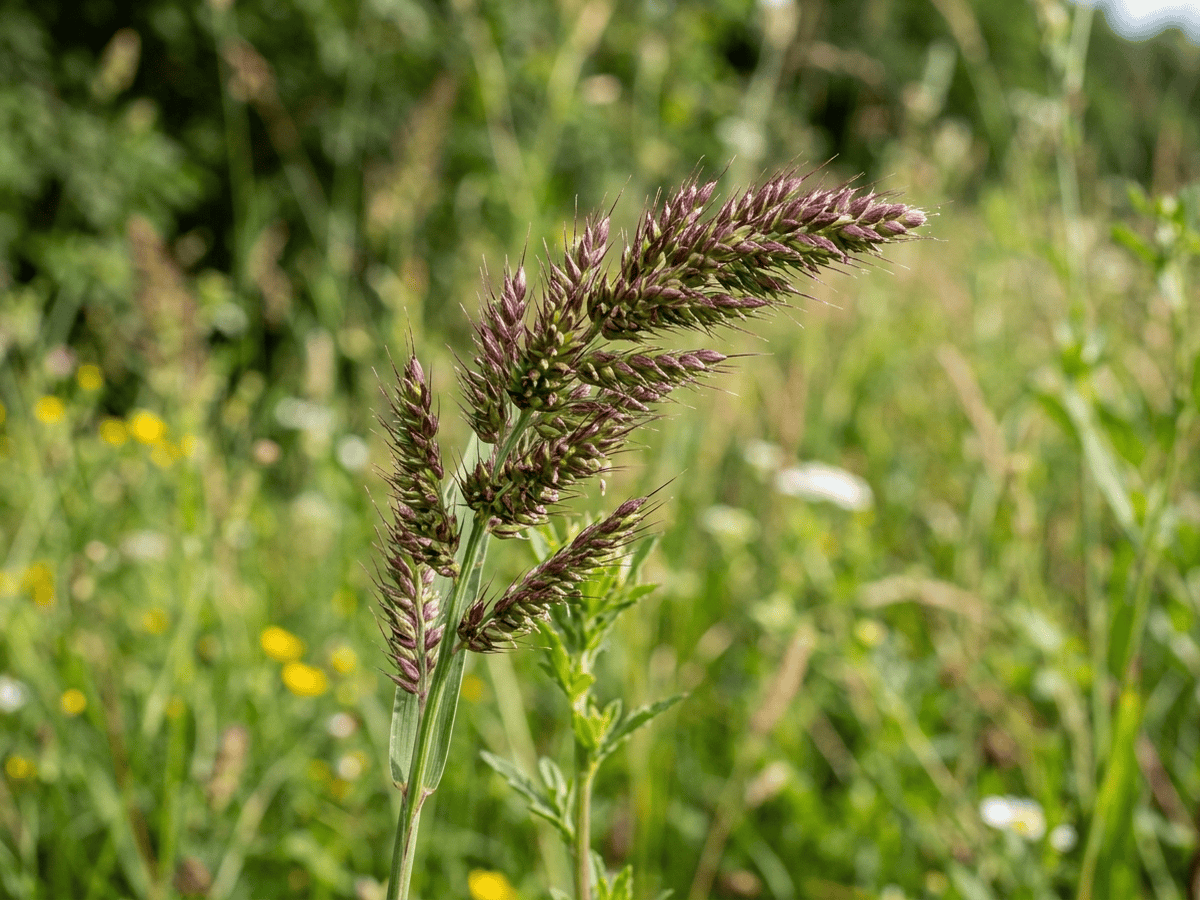
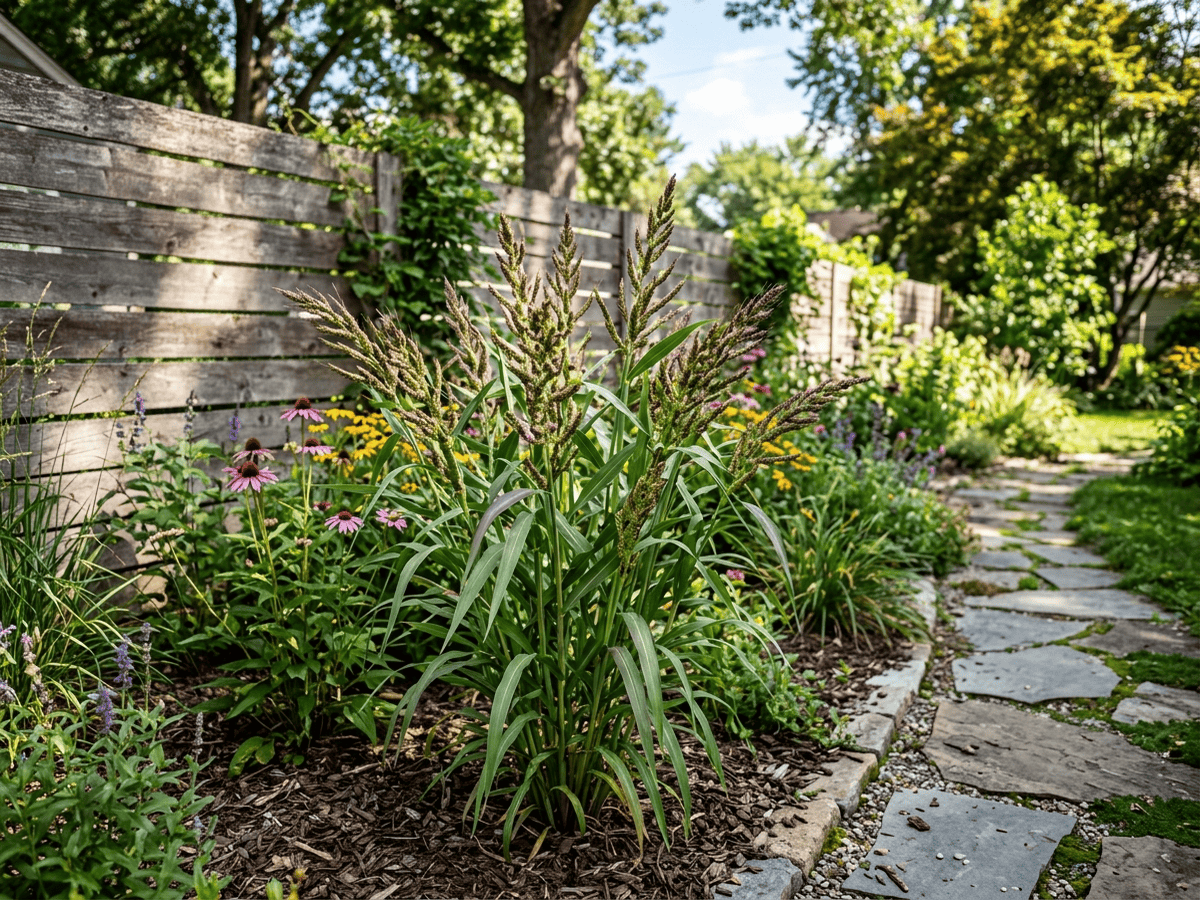
Barnyard Grass is a Eurasian warm-season annual grass naturalized throughout the US, producing stout 1 to 5 foot stems with purple-tinged stalks topped with drooping bristly seed heads. Thrives in wet soils, dominating rice fields, wet ditches, lawns, and irrigated crops. One of the world's worst agricultural weeds, ranking second only to purple nutsedge, and a major rice-field pest across the southern US.
- Fast-growing
- Heat-tolerant
- Edible
How to care for Barnyardgrass
Watering
- Springevery 7 days
- Summerevery 3 days
- Fallevery 14 days
- Winterpause watering
Soil · Rich & well-draining
- Top dressingCompost10%
- Main mixPotting soil + compost 3:180%
- DrainageGravel10%
Top up the compost layer each season.
FERTILIZER
This plant needs little to no feeding.
At a Glance
- NativeEast Asia, Africa
- Height2–5 ft (0.6–1.5 m)
- Spread1–2 ft (0.3–0.6 m)
- Flower colorGreen, Purple
- Foliage colorGreen
- Fruit colorPurple, Brown
- SoilLoamy, Moisture-retentive
- LocationsYard
Bloom time
BLOOM CYCLE
Peak bloom
Jul–Nov
Drooping bristly purple-tinged seed heads July through frost
Toxicity
No toxicity has been reported for this plant. Still, it is wise to keep pets from chewing on any houseplant.
Educational information, not medical or veterinary advice. If exposure is suspected, contact a doctor or veterinarian.
DISTRIBUTION

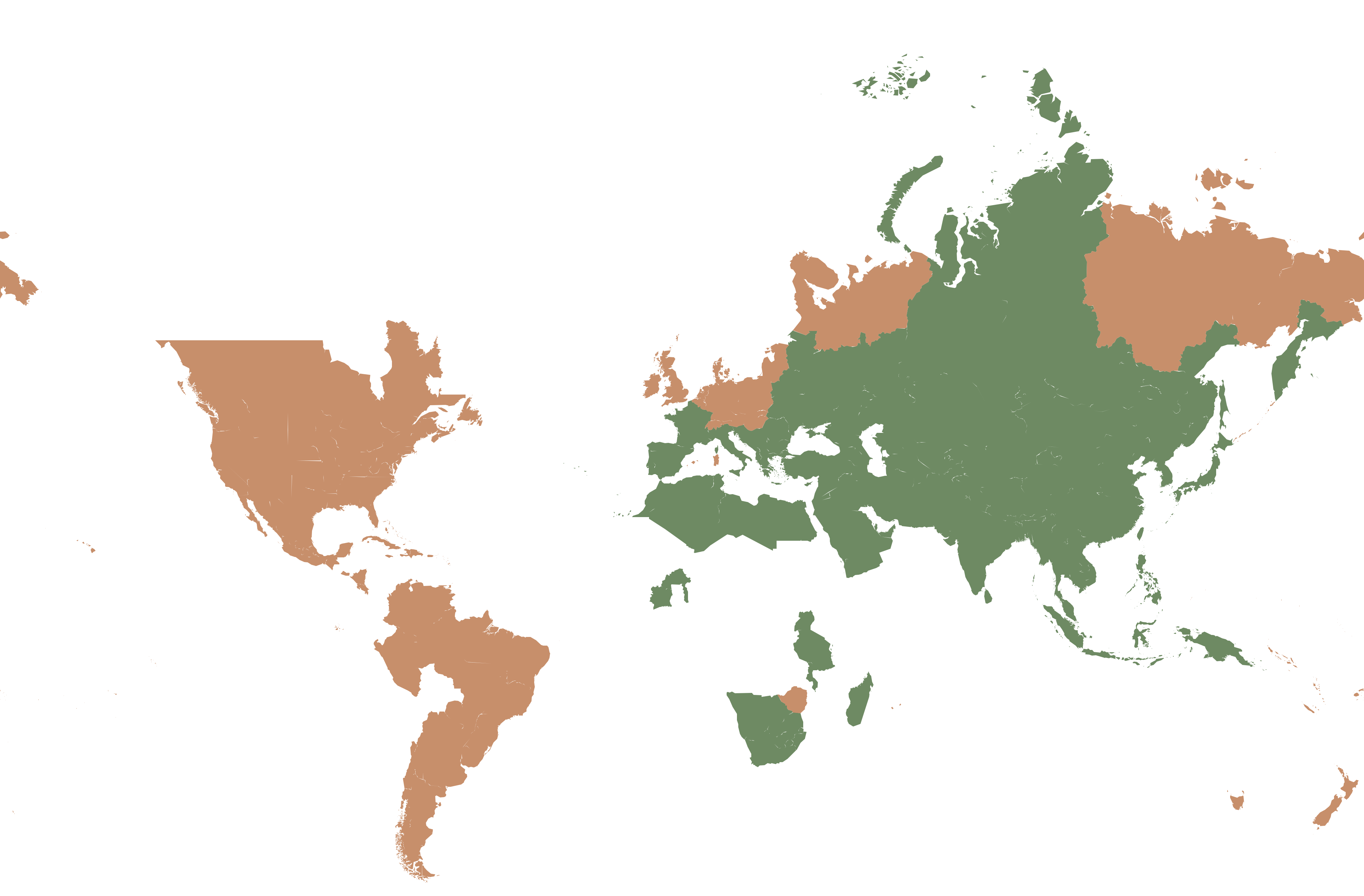
- Native
- Introduced
- East Asia
- Africa
History
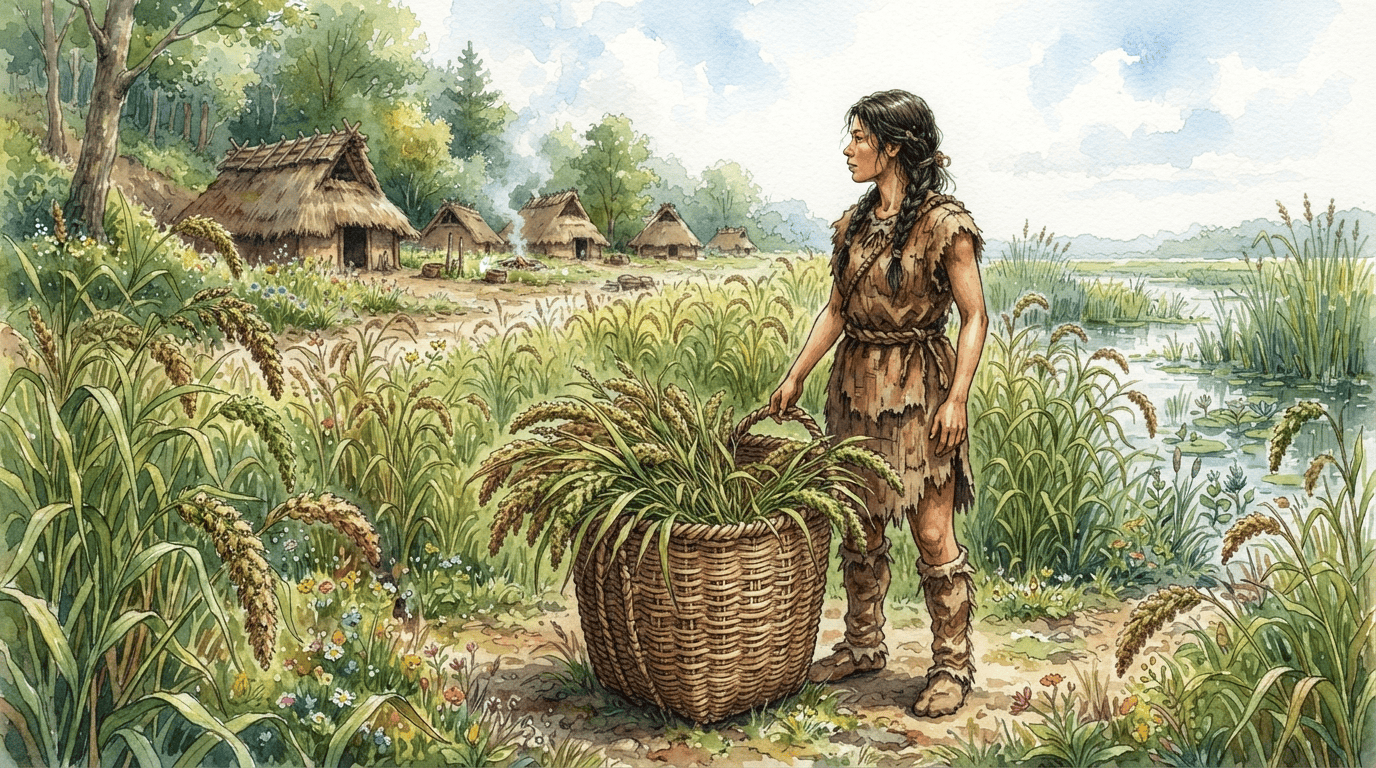
Echinochloa crus-galli has an ambiguous native range spanning Europe, Africa, and Asia — it has been a human camp-follower for so long that its precise origin is debated. Linnaeus described it as Panicum crus-galli in 1753; Palisot de Beauvois transferred it to Echinochloa in 1812. It is the world's most destructive weed of rice paddies, responsible for billions of dollars in annual yield losses in Asian rice.
Over millennia it co-evolved with cultivated rice to become a near-perfect visual mimic at the seedling stage, confounding hand-weeding. In prehistoric Japan (Jomon period, 8000-3000 BCE), its large-seeded form was harvested as a wild cereal — and eventually domesticated as Japanese barnyard millet, Echinochloa esculenta, still grown today in marginal mountainous regions.
Herbicide-resistance to glyphosate, propanil, and ALS inhibitors is now widespread. Native to Eurasia, brought to North America with Old World agriculture. Cultivated for millennia as Japanese millet (barnyard millet) in Japan, India, and China as a famine-proof grain.
Symbolism & meaning
What It Symbolizes
Barnyardgrass dominates rice fields worldwide, and so its meaning is wet field invader, an unromantic ecological observation about one of the planet's most expensive weeds. Its branching seed heads, splayed like a rooster's leg, give it both its scientific epithet and its country nickname. Wherever flooded soil and warm sun meet, barnyardgrass is likely to follow, a weed whose story is told in lost rice yields rather than in the language of flowers.
- Wet field invader — dominates rice fields worldwide
- Rooster leg — distinctive branching seed head shape
Where the Name Comes From
The name Barnyardgrass describes its grasslike foliage. 'Echinochloa' from Greek 'echinos-chloe' meaning hedgehog-grass, for the bristly seed heads; 'crus-galli' from Latin means rooster-leg, for the branching seed-head shape.
Uses & Fun Facts
- Grain historically harvested as famine food in Asia
- Seed heads feed waterfowl and grassland songbirds
Related plants
Plants with similar care
 Chinese AbeliaAbelia chinensis
 Fragrant AbeliaAbelia mosanensis
 Large-Flowered AbeliaAbelia uniflora
 Glossy AbeliaAbelia x grandiflora
Frequently asked questions
How often should I water Barnyardgrass?
Water about every 7 days during the growing season, and always let excess water drain away.
How much light does Barnyardgrass need?
Full sun: 6+ hrs direct. Watch the leaves — scorching or stretching means the light needs adjusting.
Is Barnyardgrass toxic to cats or dogs?
No toxicity has been reported for this plant. Still, it is wise to keep pets from chewing on any houseplant. Educational information, not medical or veterinary advice. If exposure is suspected, contact a doctor or veterinarian.
Is Barnyardgrass easy to grow?
Yes — it is considered an easy, beginner-friendly plant.
When does Barnyardgrass bloom?
It typically blooms Jul–Nov in the Northern Hemisphere.
YardMate
Identify any plant in seconds
Snap a photo — YardMate names the plant, diagnoses problems, and reminds you when to water.
Download on the App Store