 YardMate


Japanese Spindle Tree
Euonymus japonicus
Easy · Beginner friendlyAbout Japanese Spindle Tree
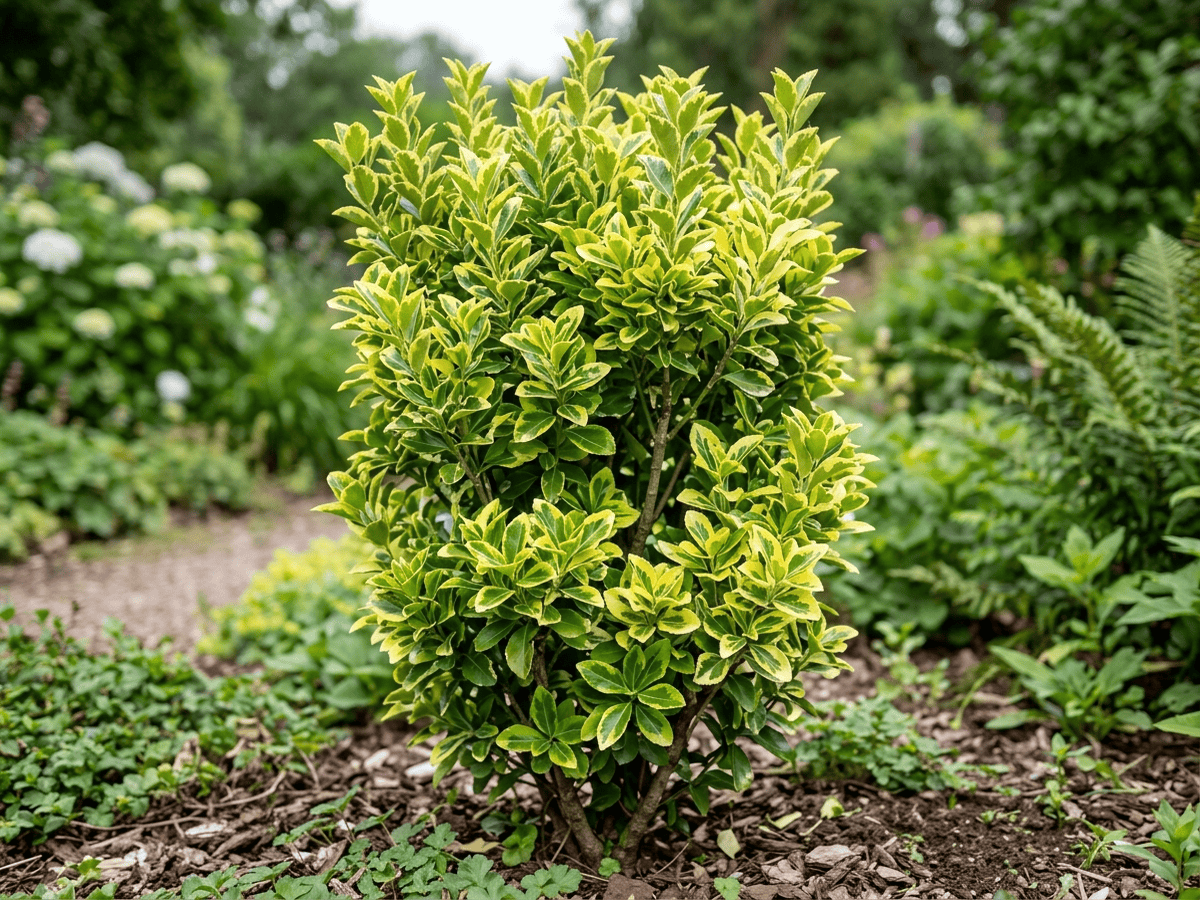
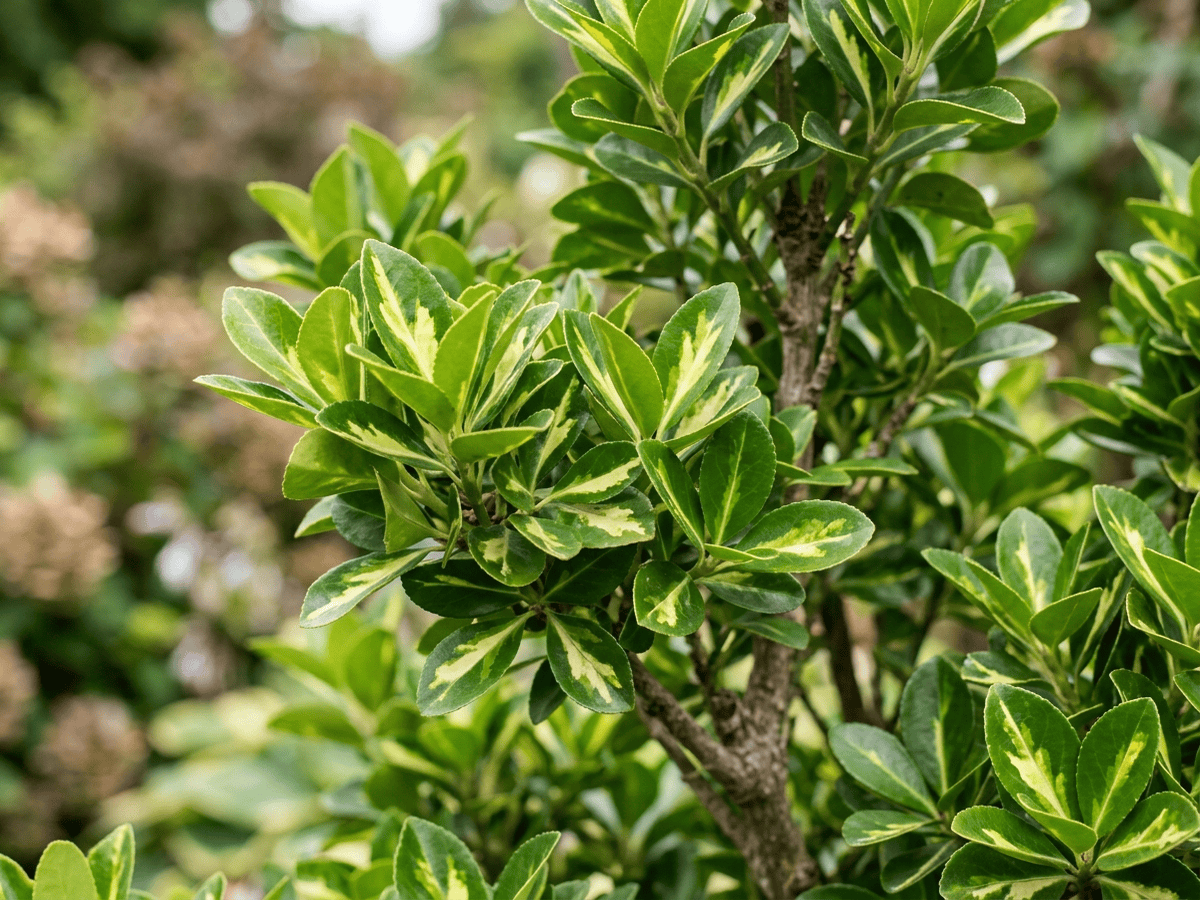
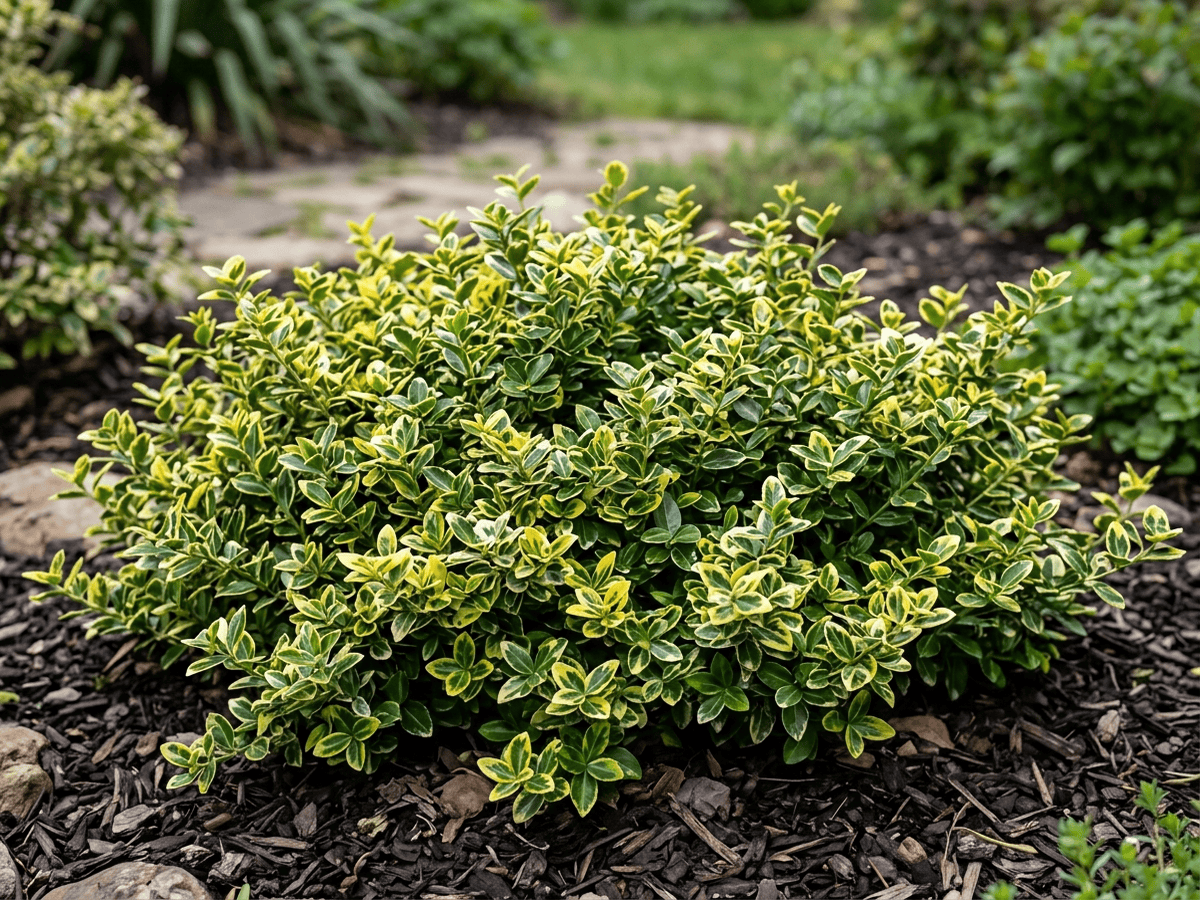
Japanese Spindle is a dense upright evergreen shrub from Japan, growing 6-15 feet tall with thick glossy dark green leaves. Its dense branching and tolerance of heavy shearing make it an excellent formal hedge, topiary, and coastal screening plant. Highly salt-tolerant, it thrives in seaside gardens where most evergreens struggle. Numerous cultivars offer gold, white, and green variegated foliage. Popular throughout the American South and California for its toughness and year-round green density.
- Evergreen
How to care for Japanese Spindle Tree
Watering
- Springevery 7 days
- Summerevery 5 days
- Fallevery 10 days
- Winterevery 21 days
Soil · Well-draining
- Top dressingPine bark mulch10%
- Main mixPotting soil + perlite 2:170%
- DrainageLECA / gravel20%
Never skip the drainage layer — standing water is the top cause of root rot.
FERTILIZER
Balanced Feed 14-14-14
An even feed covers all three needs at once, keeping leaves, roots and blooms moving together with nothing pushed out of balance.
- Nitrogen · Leaves
- Phosphorus · Roots + Blooms
- Potassium · Strength
- Springevery 30 days
At a Glance
- NativeEast Asia
- Height6–10 ft (1.8–3 m)
- Spread4–6 ft (1.2–1.8 m)
- Flower colorWhite, Green
- Foliage colorDark-green, Green, Yellow, Variegated
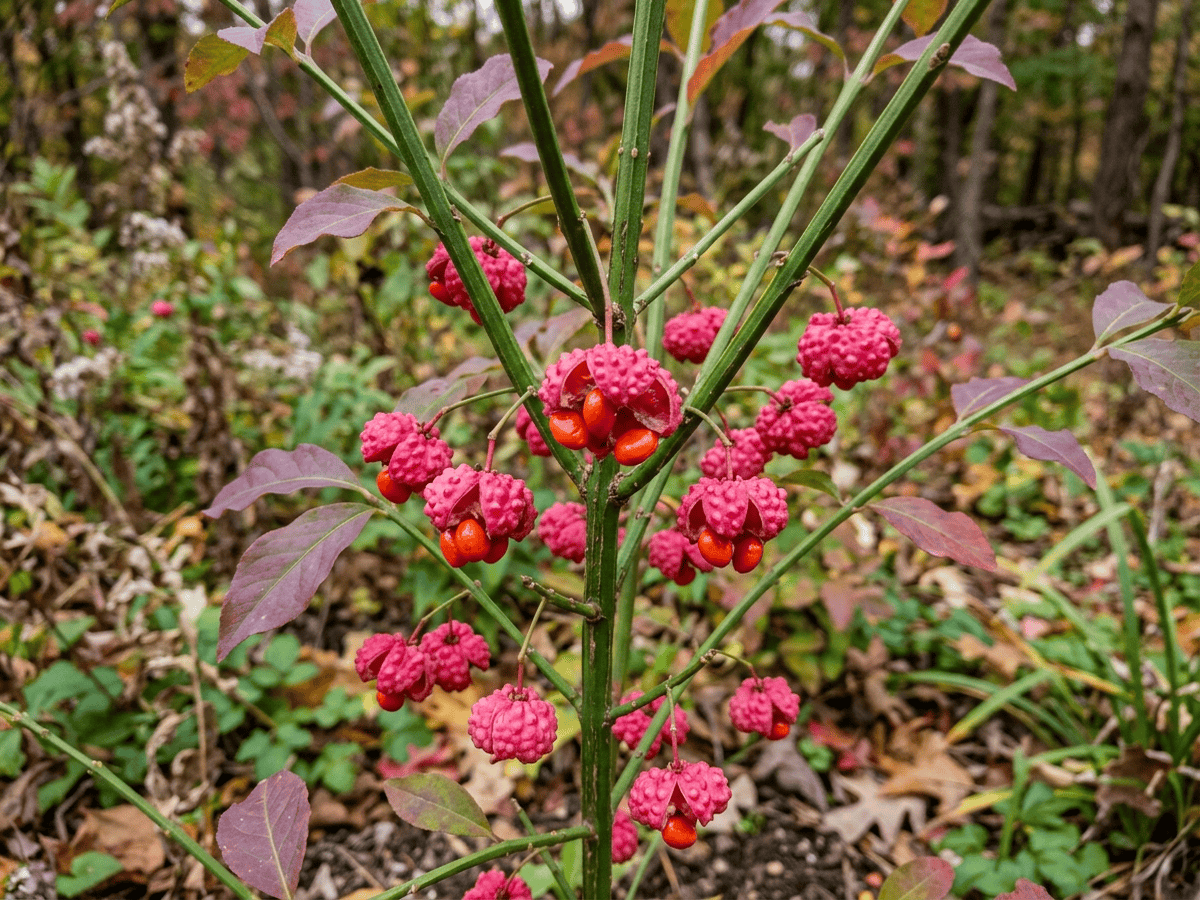
- Fruit colorPink, Orange
- SoilLoamy, Well-drained
- LocationsYard · Balcony
Bloom time
BLOOM CYCLE
Peak bloom
Mar–May
Inconspicuous greenish-white flowers in spring
Fragrance
LIGHT FRAGRANCE
Mild scent—some find unpleasant.
Toxicity
Humans Moderate · Pets Moderate
cardiac glycosides
Moderate
- Leaf
- Fruit
- Seed
- Ingestion
EXPOSURE Eating leaves, fruit, and seeds.
EFFECT GI upset; cardiac glycoside risk.
NOTE Documented concern for humans: GI upset; cardiac glycoside risk.
Moderate
- Leaf
- Fruit
- Ingestion
EXPOSURE Eating leaves and fruit.
EFFECT Vomiting, diarrhea, weakness.
NOTE ASPCA lists Euonymus as toxic to pets.
Moderate
- Leaf
- Fruit
- Ingestion
EXPOSURE Eating leaves and fruit.
EFFECT Vomiting, diarrhea, weakness.
NOTE ASPCA lists Euonymus as toxic to pets.
Educational information, not medical or veterinary advice. If exposure is suspected, contact a doctor or veterinarian.
DISTRIBUTION

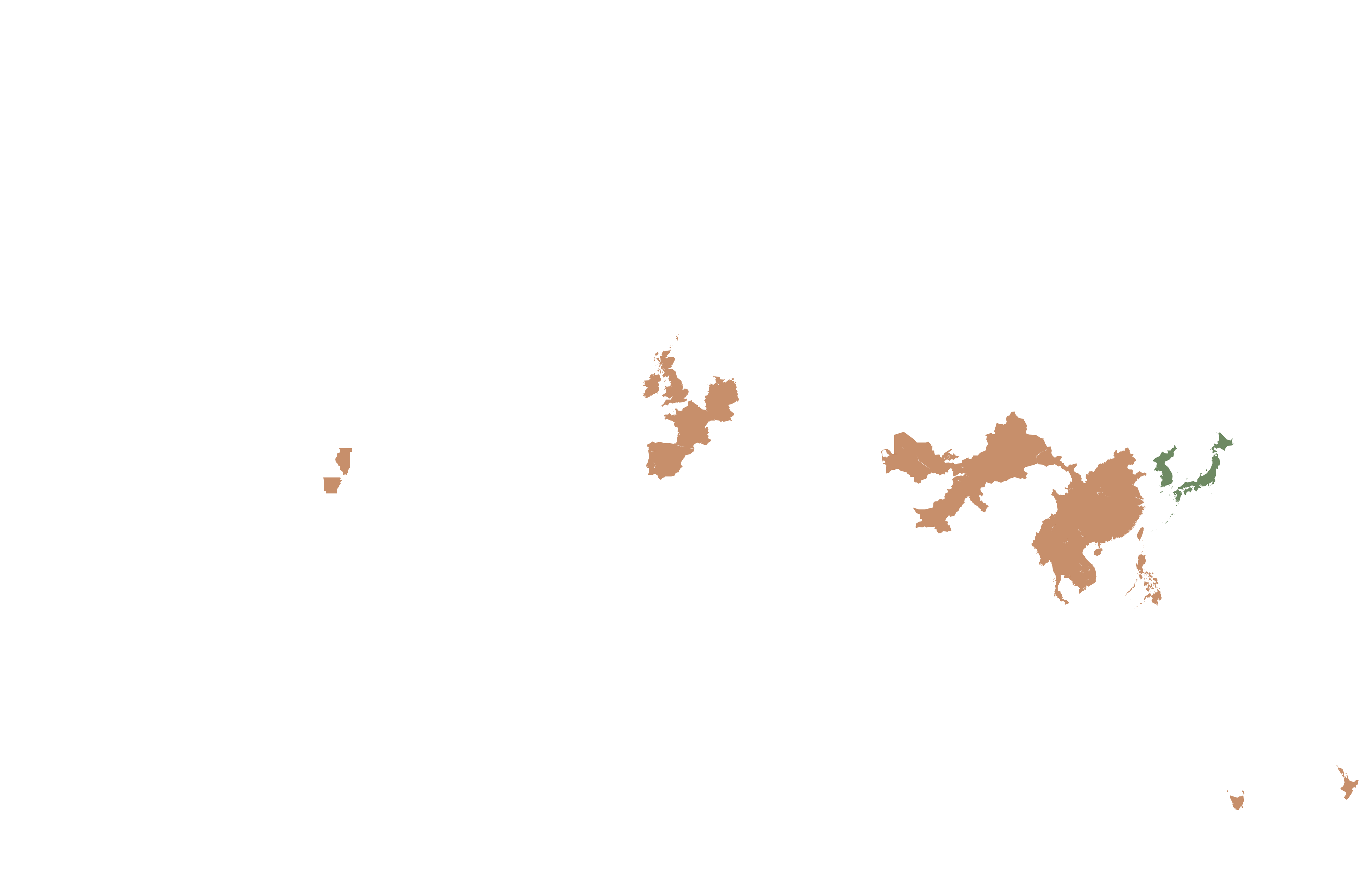
- Native
- Introduced
- East Asia
History

Euonymus japonicus is native to Japan, Korea, and China, typically occurring in coastal forests. Swedish botanist Carl Peter Thunberg described the species in 1780 in Flora Japonica. In Japan the tree is called masaki and has been planted around homes, shrines, and temples since ancient times as an evergreen hedge and protective screen—its thick leathery leaves are resistant to coastal salt spray, wind, and urban pollution.
Introduced to European cultivation around 1800 and to North America shortly after, the species became widely used in mild coastal regions (Pacific coast of the US, the Gulf Coast, Mediterranean Europe) as a formal hedging and topiary evergreen, remarkably tolerant of hard shearing and salt. Numerous variegated cultivars are popular: 'Aureus' (center-yellow), 'Aureomarginatus', 'Microphyllus Variegatus', 'Silver King', 'Silver Princess', 'Chollipo' (introduced from Korea), and 'Moness' (Green Spire). Unlike the closely related E. fortunei, E. japonicus rarely becomes invasive.
It is highly susceptible to powdery mildew and scale insects in humid climates. Introduced to Western gardens in 1804. Widely used in California and Gulf Coast gardens where its salt and heat tolerance are invaluable. The cultivar 'Green Spire' offers a narrow columnar form ideal for tight spaces.
Symbolism & meaning
What It Symbolizes
The Japanese Spindle Tree suggests prosperity through its lush, glossy evergreen growth that suggests abundance even in the depths of winter. As a hedge plant, it has long enabled the formal lines of European and East Asian garden design — the clipped backbone of countless parterres. To plant euonymus is to commit to formality, the quiet conviction that a well-shaped garden reflects a well-ordered life.
- Prosperity — lush evergreen growth symbolizing abundance
- Formality — the hedge plant of choice for classic garden design
Where the Name Comes From
'Japonicus' refers to its Japanese origin.
Uses & Fun Facts
- Salt-tolerant evergreen foliage forms clipped screens and patio hedges
- Japanese Spindle Tree sheared into clipped hedges and privacy screens
- Glossy evergreen foliage holds shape in patio pots and clipped screens
Related plants
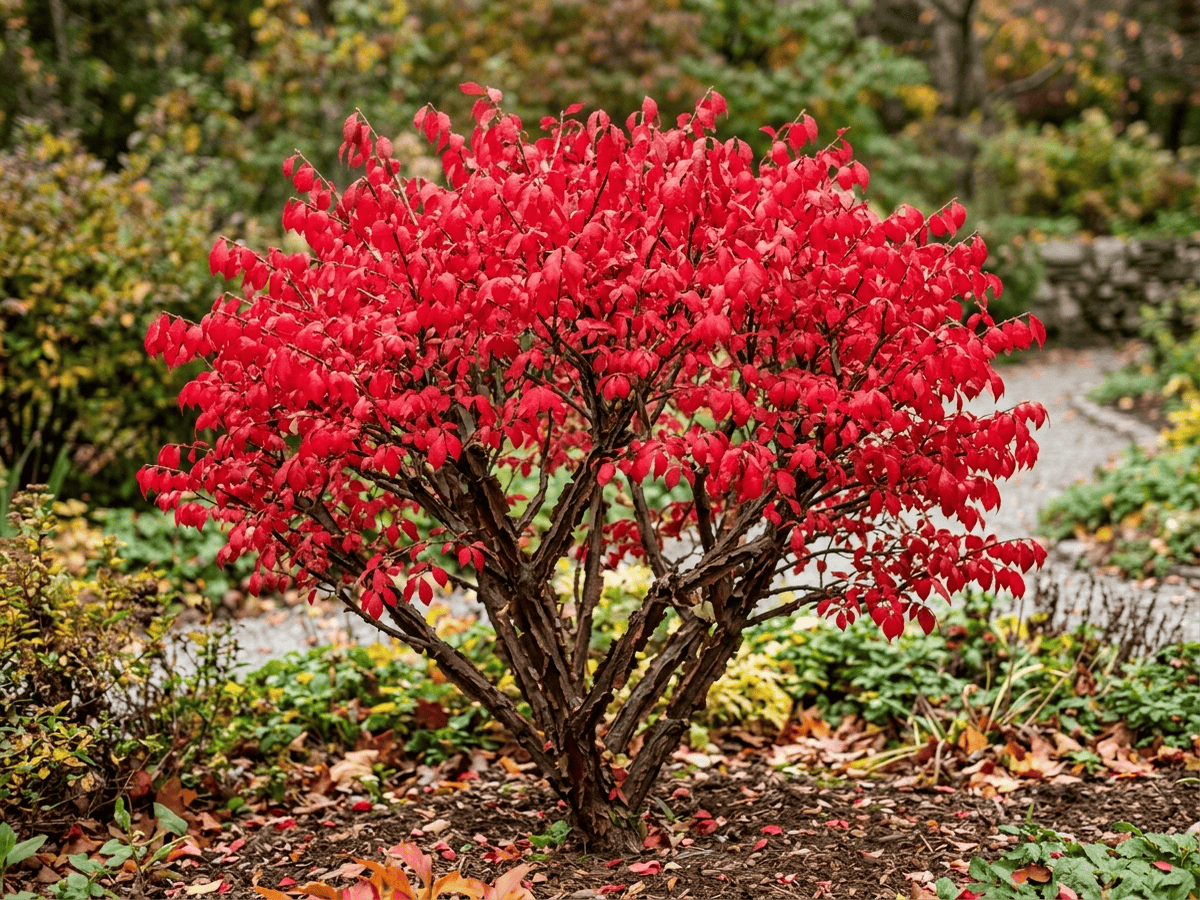
More Euonymus plants
Plants with similar care
 Chinese AbeliaAbelia chinensis
 Fragrant AbeliaAbelia mosanensis
 Large-Flowered AbeliaAbelia uniflora
 Glossy AbeliaAbelia x grandiflora
Frequently asked questions
How often should I water Japanese Spindle Tree?
In summer, water about every 5 days; in winter, about every 21 days. Adjust for heat, pot size and drainage.
How much light does Japanese Spindle Tree need?
Full sun: 6+ hrs direct. Watch the leaves — scorching or stretching means the light needs adjusting.
Is Japanese Spindle Tree toxic to cats or dogs?
Pets Moderate (Dogs Moderate · Cats Moderate) Educational information, not medical or veterinary advice. If exposure is suspected, contact a doctor or veterinarian.
Is Japanese Spindle Tree easy to grow?
Yes — it is considered an easy, beginner-friendly plant.
When does Japanese Spindle Tree bloom?
It typically blooms Mar–May in the Northern Hemisphere.
YardMate
Identify any plant in seconds
Snap a photo — YardMate names the plant, diagnoses problems, and reminds you when to water.
Download on the App Store