 YardMate


Himalayan Crane's-Bill
Geranium himalayense
Easy · Beginner friendlyAbout Himalayan Crane's-Bill
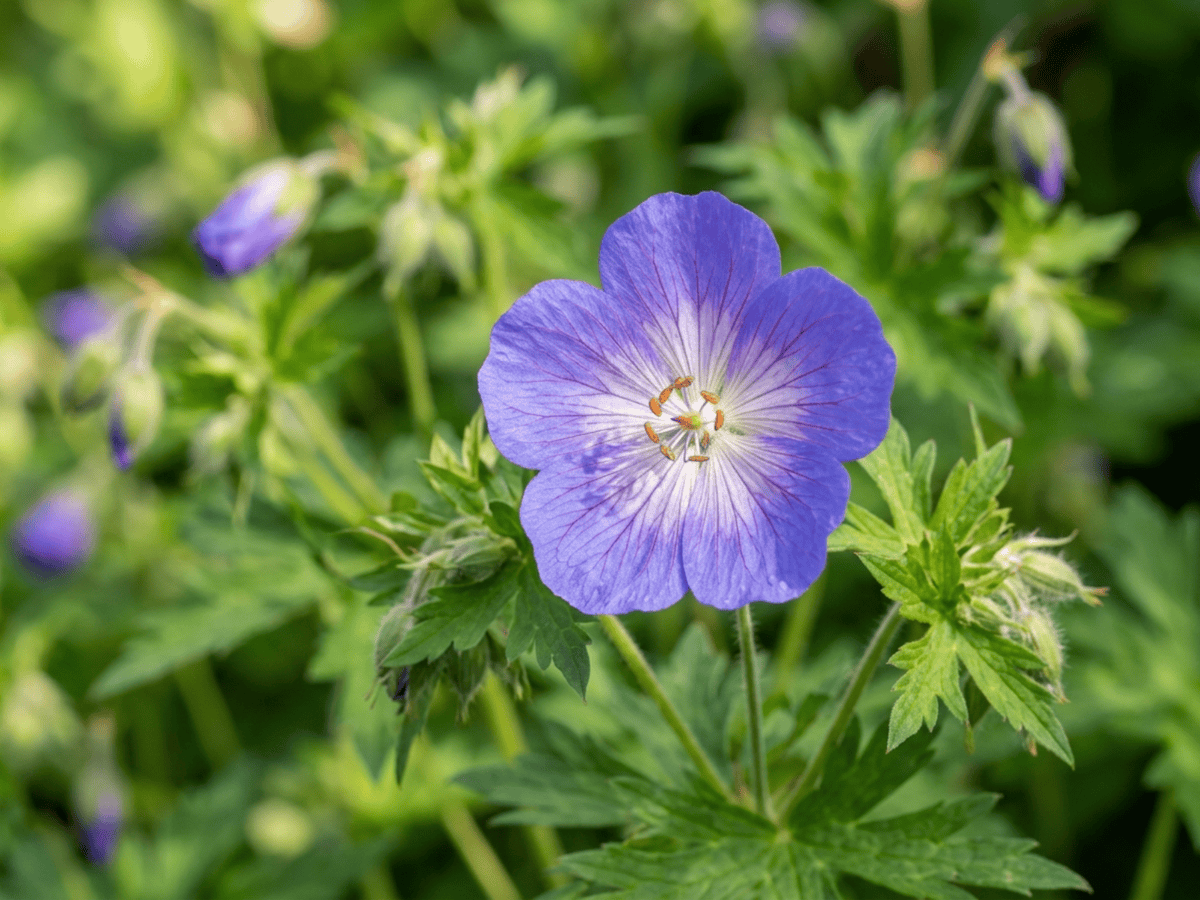
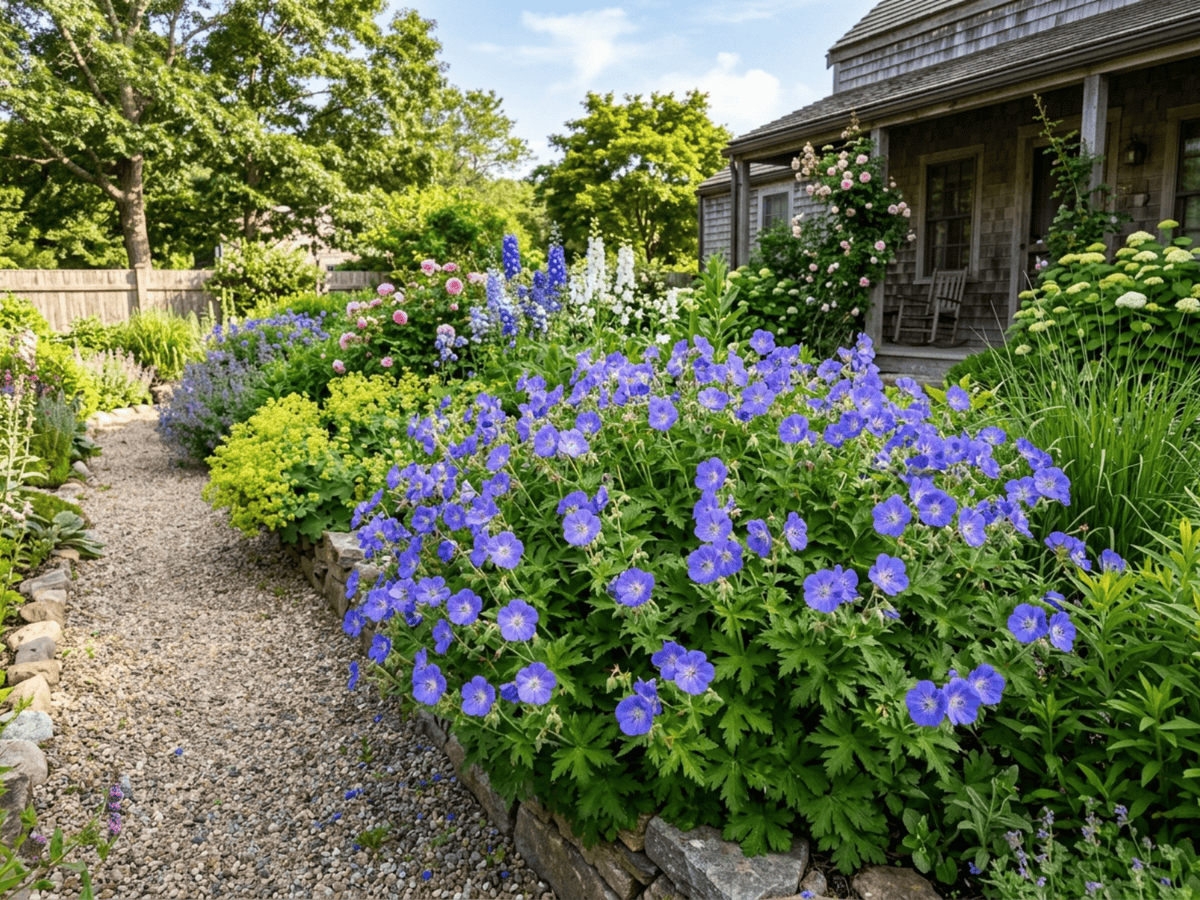
Himalayan Cranesbill is a spreading perennial native to the Himalayas, producing large saucer-shaped violet-blue flowers with dark purple veining above dense mounds of deeply divided green foliage. Growing 12-18 inches tall and wide, it blooms heavily in early summer and reblooms if sheared. Hardy through USDA zones 4-8, it forms an excellent weed-suppressing groundcover in sunny and lightly shaded American borders.
- Cold-hardy
- Deer-resistant
- Groundcover
- Pollinator-friendly
How to care for Himalayan Crane's-Bill
Watering
- Springevery 5 days
- Summerevery 4 days
- Fallevery 7 days
- Winterpause watering
Soil · Well-draining
- Top dressingPine bark mulch10%
- Main mixPotting soil + perlite 2:170%
- DrainageLECA / gravel20%
Never skip the drainage layer — standing water is the top cause of root rot.
FERTILIZER
Balanced Feed 14-14-14
An even feed covers all three needs at once, keeping leaves, roots and blooms moving together with nothing pushed out of balance.
- Nitrogen · Leaves
- Phosphorus · Roots + Blooms
- Potassium · Strength
- Springevery 30 days
- Summerevery 30 days
At a Glance
- NativeSouth Asia, East Asia
- Height1–1.5 ft (0.3–0.5 m)
- Spread1.5–2 ft (0.5–0.6 m)
- Flower colorBlue, Purple
- Foliage colorGreen
- SoilLoamy, Well-drained
- LocationsYard
Bloom time
BLOOM CYCLE
Peak bloom
Jun–Aug
Violet-blue veined flowers June to July, rebloom August
Toxicity
No toxicity has been reported for this plant. Still, it is wise to keep pets from chewing on any houseplant.
Educational information, not medical or veterinary advice. If exposure is suspected, contact a doctor or veterinarian.
DISTRIBUTION


- Native
- Introduced
- South Asia
- East Asia
History
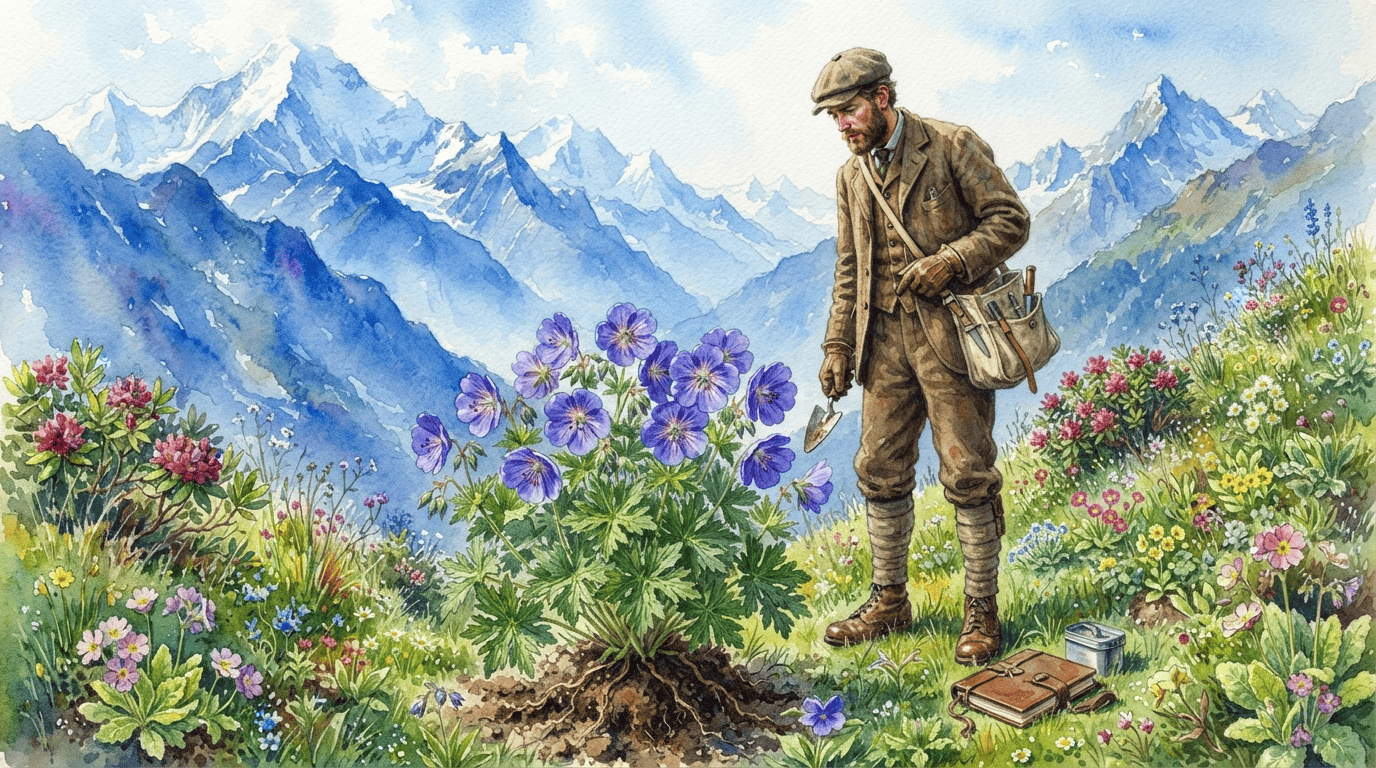
Geranium himalayense grows in subalpine and alpine meadows of the Himalayas from Afghanistan through Nepal to Sikkim and Tibet at 2400-4500m. It entered Western cultivation through 19th-century British collecting in the region. The cultivar 'Johnson's Blue', a 1950s hybrid with G. pratense, was long considered the finest blue geranium.
Its title was eclipsed by 'Rozanne', a chance seedling discovered in the Somerset garden of Donald and Rozanne Waterer in 1989 and introduced commercially by Blooms of Bressingham around 2000. 'Rozanne' features exceptionally long bloom from June through frost on sprawling stems and intense violet-blue flowers with white centers. The Royal Horticultural Society named it Plant of the Centenary at its 2013 celebration, cementing its status as one of the most successful garden perennials ever introduced.
Native to the Himalayas from Afghanistan to northern Pakistan, India, and China. Introduced to Britain in 1825 and long misnamed 'Geranium grandiflorum' before being correctly identified. Parent of the celebrated 'Rozanne' (Geranium x 'Rozanne'), Perennial Plant of the Year 2008 and now one of the best-selling perennials in America.
Symbolism & meaning
What It Symbolizes
Himalayan Crane's-Bill can symbolize tranquility through cool blue-violet blooms that drift across the perennial bed like a quiet mountain stream. Native to high Asian elevations, it also stands for endurance, thriving where altitude and weather punish softer plants. In the cottage garden it is the gentle pacemaker, slowing the eye between brighter perennials and offering, in early summer, a small image of mountain serenity gathered into a single low, blue-flowered mound.
- Tranquility — calming blue blooms evoke mountain serenity
- Endurance — mountain geranium enduring thin soils and cold exposure
Where the Name Comes From
'Himalayense' refers to its native Himalayan range.
Uses & Fun Facts
- Saucer-shaped violet-blue flowers feed native bumblebees
- Mounding cranesbill fills gaps along front-of-border edges
Related plants
More Geranium plants
 Rock Crane's-BillGeranium macrorrhizum
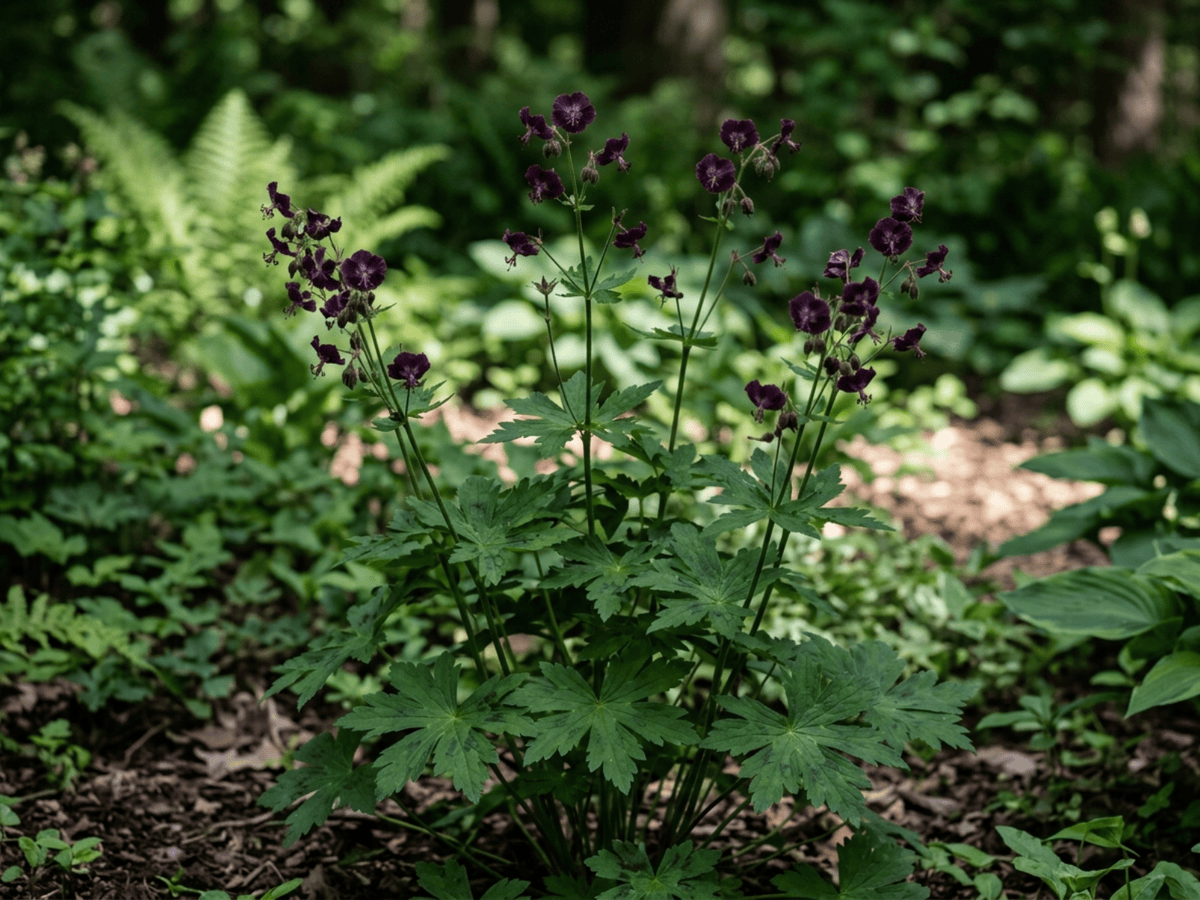 Dusky Crane's-BillGeranium phaeum
 Meadow Crane's-BillGeranium pratense
 Bloody Crane's-BillGeranium sanguineum
Plants with similar care
 Chinese AbeliaAbelia chinensis
 Fragrant AbeliaAbelia mosanensis
 Large-Flowered AbeliaAbelia uniflora
 Glossy AbeliaAbelia x grandiflora
Frequently asked questions
How often should I water Himalayan Crane's-Bill?
Water about every 5 days during the growing season, and always let excess water drain away.
How much light does Himalayan Crane's-Bill need?
Full sun: 6+ hrs direct. Watch the leaves — scorching or stretching means the light needs adjusting.
Is Himalayan Crane's-Bill toxic to cats or dogs?
No toxicity has been reported for this plant. Still, it is wise to keep pets from chewing on any houseplant. Educational information, not medical or veterinary advice. If exposure is suspected, contact a doctor or veterinarian.
Is Himalayan Crane's-Bill easy to grow?
Yes — it is considered an easy, beginner-friendly plant.
When does Himalayan Crane's-Bill bloom?
It typically blooms Jun–Aug in the Northern Hemisphere.
YardMate
Identify any plant in seconds
Snap a photo — YardMate names the plant, diagnoses problems, and reminds you when to water.
Download on the App Store