 YardMate


Bloody Crane's-Bill
Geranium sanguineum
Easy · Beginner friendlyAbout Bloody Crane's-Bill
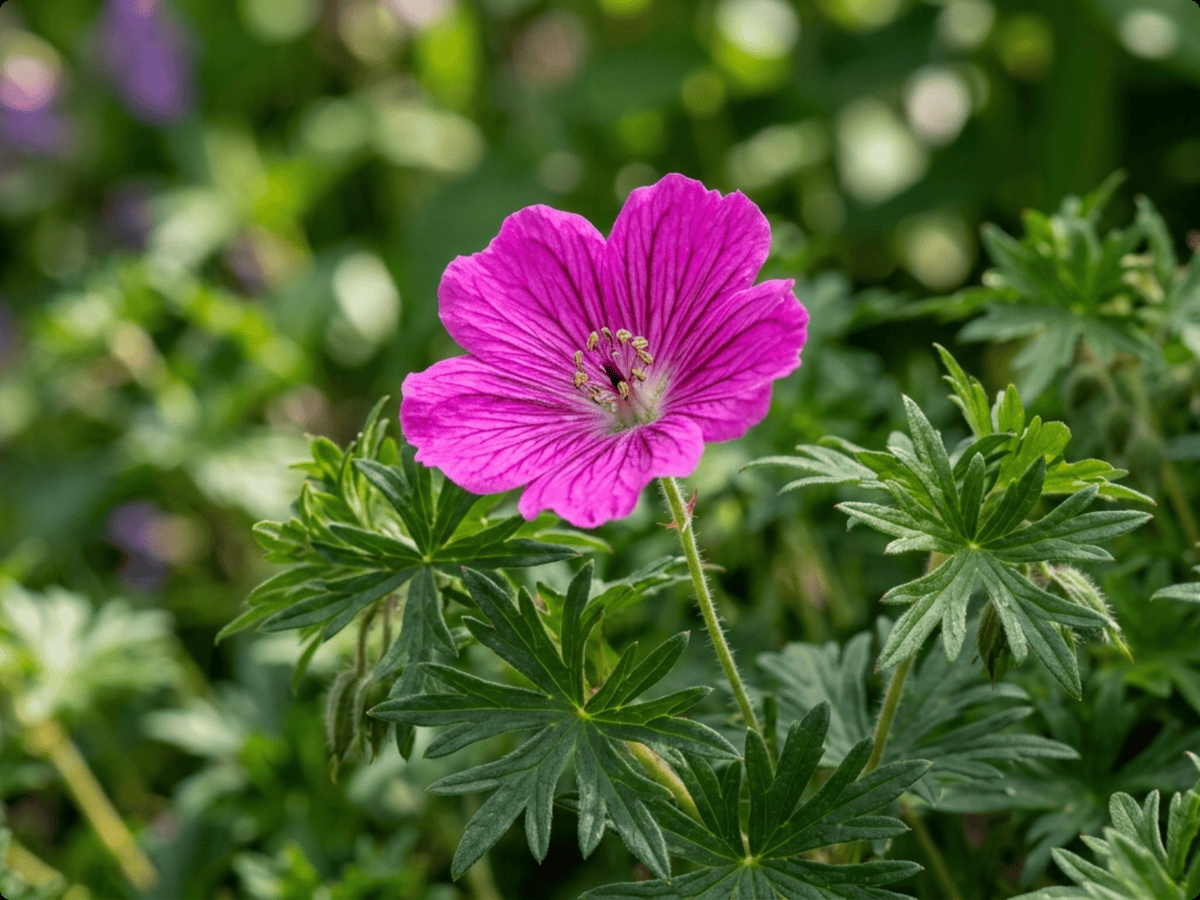
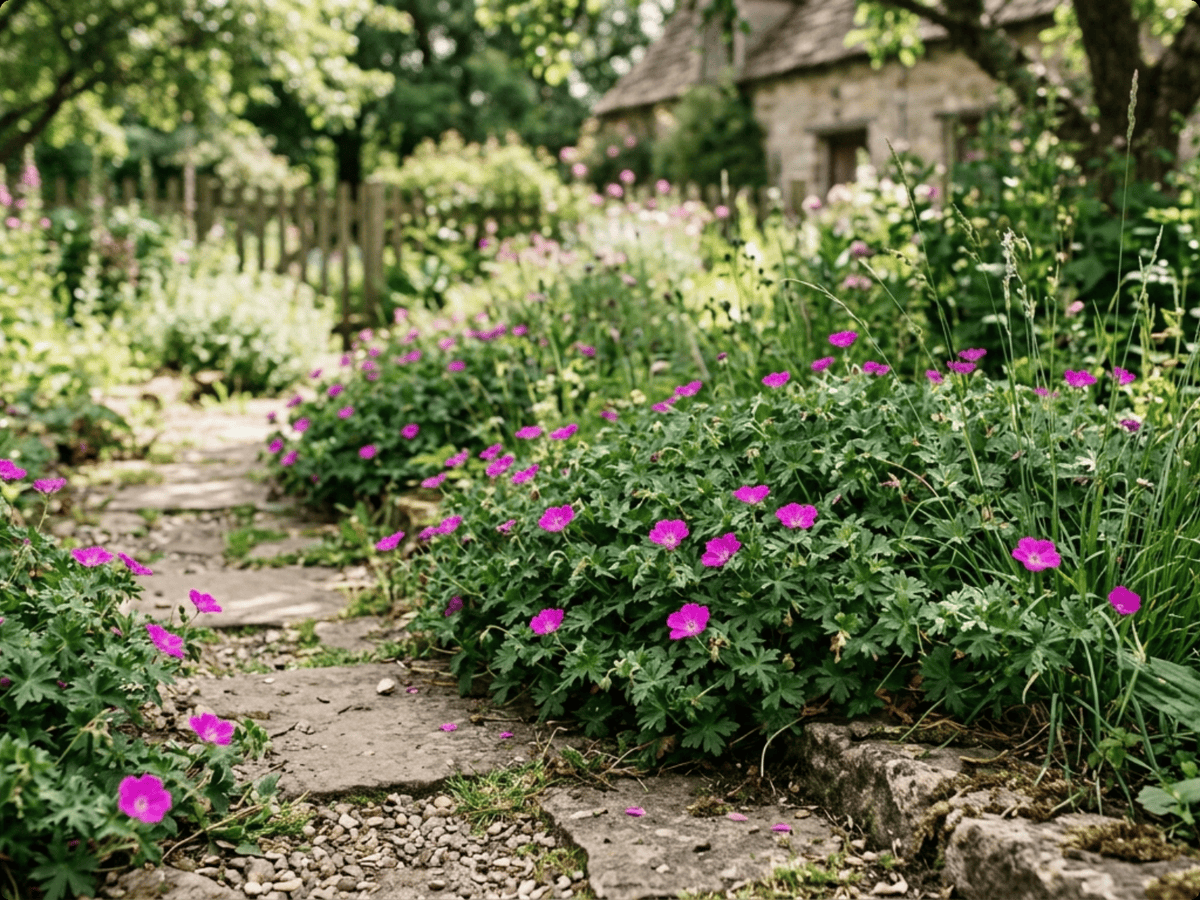
Geranium sanguineum, the bloody cranesbill, is a tough, low-growing perennial producing saucer-shaped magenta-pink flowers over finely cut foliage from late spring through autumn. Native to Europe and western Asia, it forms neat mounds 20–40 cm tall that color brilliantly in autumn with red and purple foliage. Unlike Pelargonium (the 'geranium' of window boxes), this is a true Geranium — hardy, perennial, and cold-tolerant. It thrives in poor soil, tolerates drought, and requires almost no maintenance. The cultivar 'Max Frei' is among the most popular ground-cover perennials.
- Drought-tolerant
- Groundcover
- Fall-color
How to care for Bloody Crane's-Bill
Watering
- Springevery 7 days
- Summerevery 5 days
- Fallevery 10 days
- Winterevery 21 days
Soil · Well-draining
- Top dressingPine bark mulch10%
- Main mixPotting soil + perlite 2:170%
- DrainageLECA / gravel20%
Never skip the drainage layer — standing water is the top cause of root rot.
FERTILIZER
- Springevery 30 days
- Summerevery 30 days
At a Glance
- NativeEurope, Western Asia, Mediterranean
- Height0.5–1.5 ft (0.2–0.5 m)
- Spread1–2 ft (0.3–0.6 m)
- Flower colorPink, Purple, White
- Foliage colorGreen, Red
- SoilLoamy, Well-drained, Neutral
- LocationsYard
Bloom time
BLOOM CYCLE
Peak bloom
Sep–Nov
Long bloom season; magenta flowers; spectacular autumn leaf color; drought-proof
Fragrance
LIGHT FRAGRANCE
Mild musky scent when leaves are crushed.
Toxicity
Humans Safe · Pets Safe
tannins
Safe
EXPOSURE No exposure route is reported.
EFFECT No significant toxicity and historically used in folk medicine.
NOTE Listed as non-toxic for humans; avoid eating ornamental plants unless confirmed edible.
Safe
EXPOSURE No exposure route is reported.
EFFECT Not listed as toxic and true Geranium distinct from toxic Pelargonium.
NOTE Listed as non-toxic for dogs; avoid eating ornamental plants unless confirmed edible.
Safe
EXPOSURE No exposure route is reported.
EFFECT Not listed as toxic.
NOTE Listed as non-toxic for cats; avoid eating ornamental plants unless confirmed edible.
Educational information, not medical or veterinary advice. If exposure is suspected, contact a doctor or veterinarian.
DISTRIBUTION


- Native
- Introduced
- Europe
- Western Asia
- Mediterranean
History
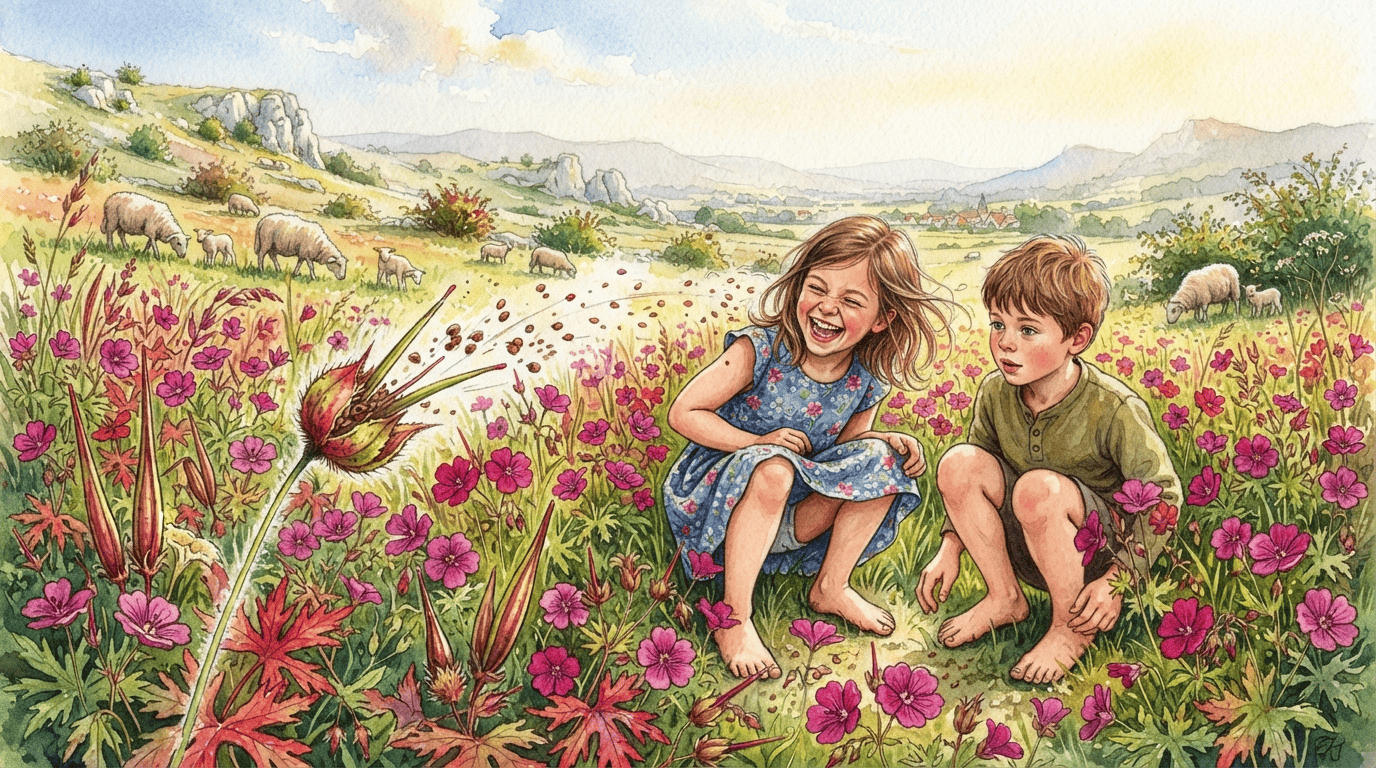
Geranium sanguineum, the true cranesbill geranium (not to be confused with tender South African Pelargonium), is native across Europe to the Caucasus and western Siberia, growing on limestone grasslands, coastal dunes, and open woods. The common name "bloody" refers to the crimson-magenta flowers and to the scarlet autumn foliage; "cranesbill" describes the long beaked seed capsule. John Gerard's 1597 Herball included it among wound-stanching herbs, reflecting folk use of astringent tannin-rich foliage.
It entered formal gardens in the 17th century and rose to prominence through 20th-century British perennial advocates like Graham Stuart Thomas, who promoted it as an easy, drought-tolerant, long-flowering groundcover. The cultivar "Max Frei," introduced from German nurseries in the 1970s, is among the most widely planted hardy perennials in temperate gardens.
When ripe, the capsule splits and coils explosively, launching seeds meters away — one of nature's elegant ballistic mechanisms. Geranium sanguineum has been used in European folk medicine for centuries — the tannin-rich roots were used as an astringent for diarrhea and wound healing. There are over 420 Geranium species worldwide, occupying habitats from alpine meadows to tropical highlands.
Symbolism & meaning
What It Symbolizes
Bloody Crane's-Bill embodies steadfastness, blooming month after month with zero fuss, its magenta flowers reliably opening from late spring well into autumn. It stands for reliable, unwavering devotion, the kind of love that does not require occasions or attention to keep going. It is often read as a flower of long quiet loyalty, the partner in the border who is simply, dependably, always there.
- Steadfastness — Blooming month after month with zero fuss, it represents reliable, unwavering devotion
Where the Name Comes From
Geranium from Greek 'geranos' (crane), for the crane's-bill seed pod shape. Sanguineum means 'blood-red,' for the autumn leaf color.
Uses & Fun Facts
- Magenta-flowered mounds carpet sunny border edges
- Long bloom and fiery autumn foliage for rock gardens
Related plants
More Geranium plants
 Himalayan Crane's-BillGeranium himalayense
 Rock Crane's-BillGeranium macrorrhizum
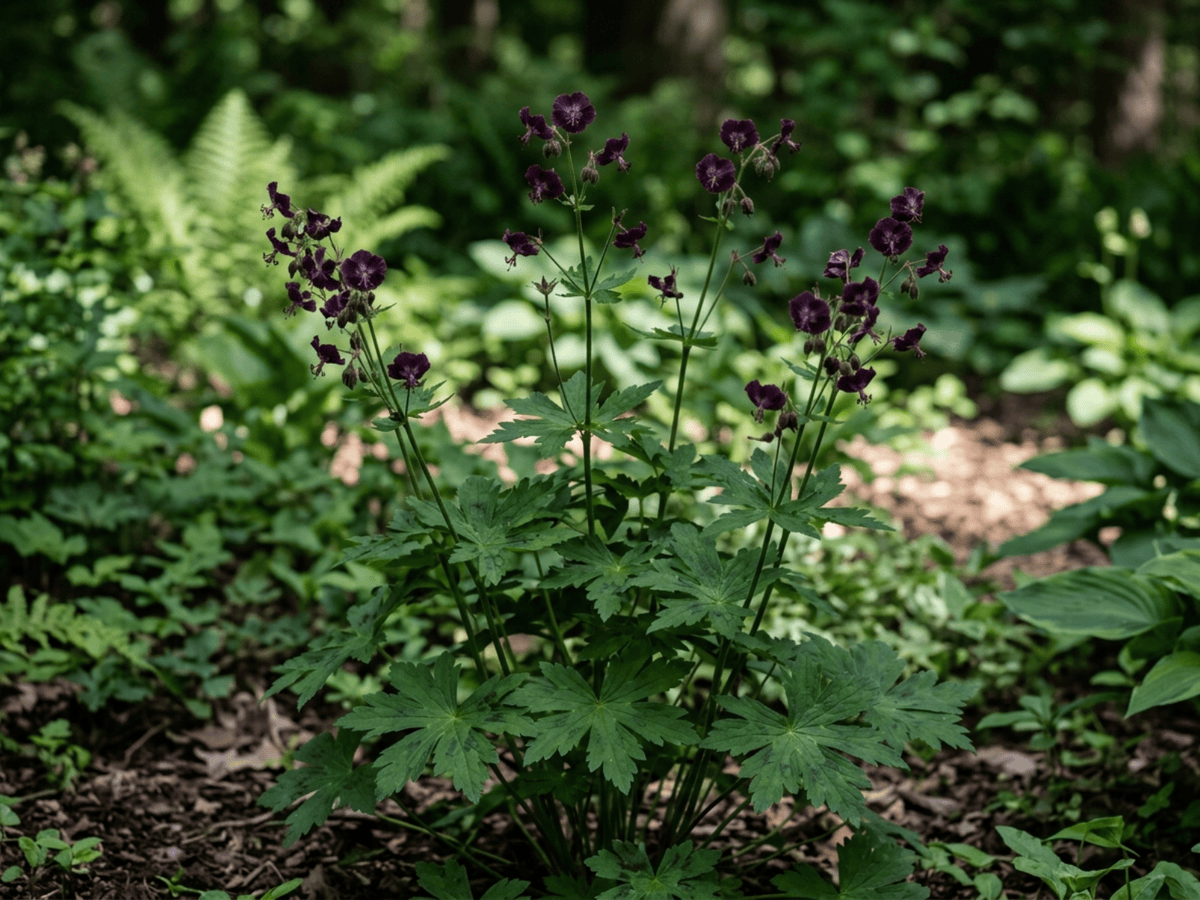 Dusky Crane's-BillGeranium phaeum
 Meadow Crane's-BillGeranium pratense
Plants with similar care
 Chinese AbeliaAbelia chinensis
 Fragrant AbeliaAbelia mosanensis
 Large-Flowered AbeliaAbelia uniflora
 Glossy AbeliaAbelia x grandiflora
Frequently asked questions
How often should I water Bloody Crane's-Bill?
In summer, water about every 5 days; in winter, about every 21 days. Adjust for heat, pot size and drainage.
How much light does Bloody Crane's-Bill need?
Full sun: 6+ hrs direct. Watch the leaves — scorching or stretching means the light needs adjusting.
Is Bloody Crane's-Bill toxic to cats or dogs?
Pets Safe (Dogs Safe · Cats Safe) Educational information, not medical or veterinary advice. If exposure is suspected, contact a doctor or veterinarian.
Is Bloody Crane's-Bill easy to grow?
Yes — it is considered an easy, beginner-friendly plant.
When does Bloody Crane's-Bill bloom?
It typically blooms Sep–Nov in the Northern Hemisphere.
YardMate
Identify any plant in seconds
Snap a photo — YardMate names the plant, diagnoses problems, and reminds you when to water.
Download on the App Store