 YardMate

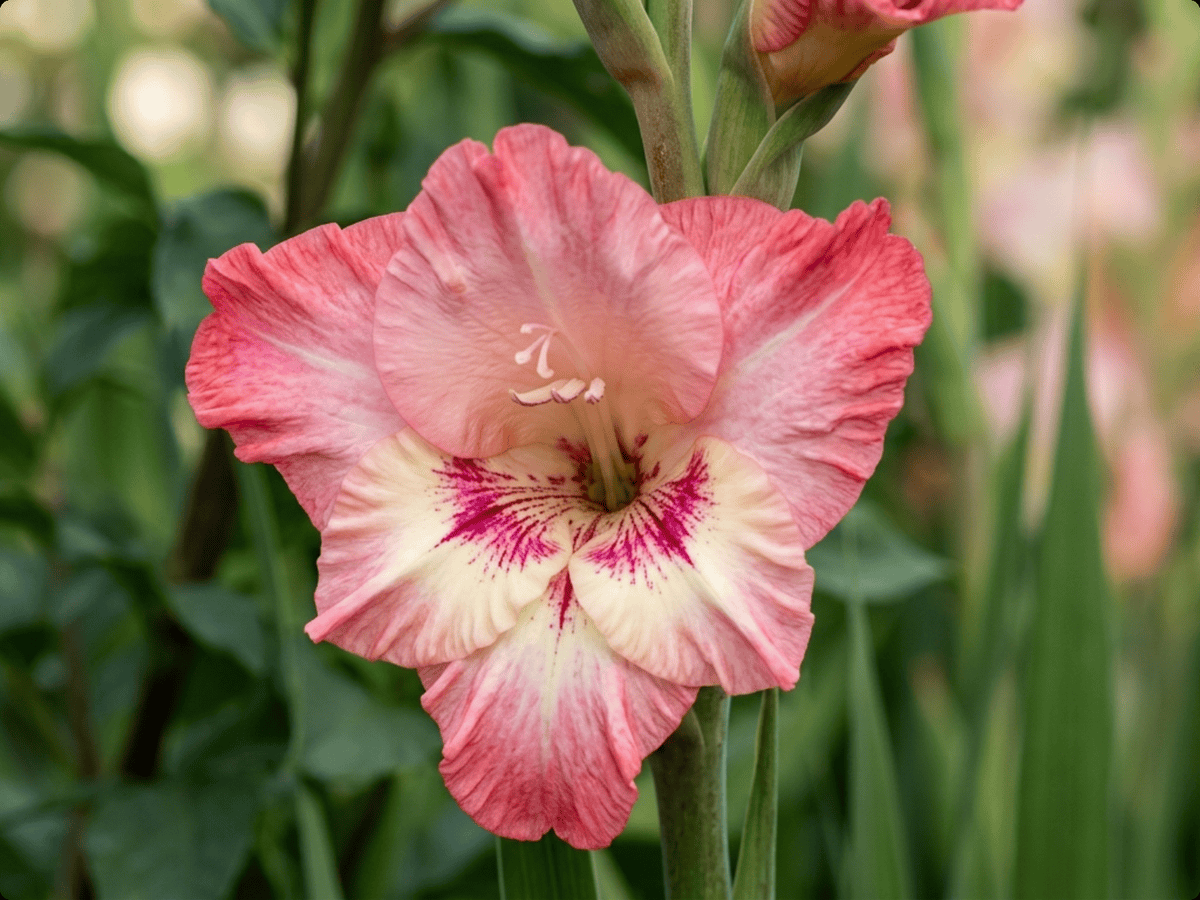


Gladiolus
Gladiolus x gandavensis
Medium · Some experienceAbout Gladiolus
Gladiolus x gandavensis, the garden gladiolus, produces tall, dramatic flower spikes with multiple funnel-shaped florets opening in sequence from bottom to top. Available in every color including green, the spikes can reach 1.5 meters tall, making them one of the tallest cut flowers. Grown from corms planted in spring, they bloom in mid to late summer. The name means 'little sword' from the Latin gladius, for the sword-shaped leaves. Gladioli are tender and corms must be lifted before frost in cold climates. They are among the most important cut flowers worldwide.
- Cut-flower
How to care for Gladiolus
Watering
- Springevery 5 days
- Summerevery 3 days
- Fallevery 7 days
- Winterpause watering
Soil · Well-draining
- Main mixLoam + coarse sand 3:175%
- DrainageGravel25%
Sharp drainage matters most — bulbs rot in wet soil while dormant.
FERTILIZER
Bloom Booster 10-52-10
A phosphorus-forward feed fuels abundant blooms, with just enough nitrogen and potassium to keep foliage and roots steady.
- Nitrogen · Leaves
- Phosphorus · Roots + Blooms
- Potassium · Strength
- Springevery 21 days
- Summerevery 21 days
At a Glance
- NativeAfrica
- Height3–5 ft (0.9–1.5 m)
- Spread0.5–1 ft (0.2–0.3 m)
- Flower colorRed, Pink, White, Yellow
- Foliage colorGreen
- SoilLoamy, Well-drained, Rich
- LocationsYard
Bloom time
BLOOM CYCLE
Peak bloom
Jul–Sep
Plant corms in spring; stake tall varieties; cut when bottom 3 florets open
Fragrance
NO FRAGRANCE
Most modern cultivars are scentless; a few heritage forms retain light fragrance.
Toxicity
Humans Slight · Pets Slight
unidentified irritant glycosides
Slight
- Root
- Ingestion
EXPOSURE Eating roots.
EFFECT GI upset if corm eaten raw.
NOTE Mild toxicity; corm is the most dangerous part.
Slight
- Root
- Flower
- Ingestion
EXPOSURE Eating roots and flowers.
EFFECT Vomiting, drooling, diarrhea, corm most dangerous, and per ASPCA.
NOTE Mild toxicity; corm is the most dangerous part.
Slight
- Root
- Flower
- Ingestion
EXPOSURE Eating roots and flowers.
EFFECT Vomiting, drooling, diarrhea, corm most dangerous, and per ASPCA.
NOTE Mild toxicity; corm is the most dangerous part.
Educational information, not medical or veterinary advice. If exposure is suspected, contact a doctor or veterinarian.
DISTRIBUTION


- Native
- Africa
History
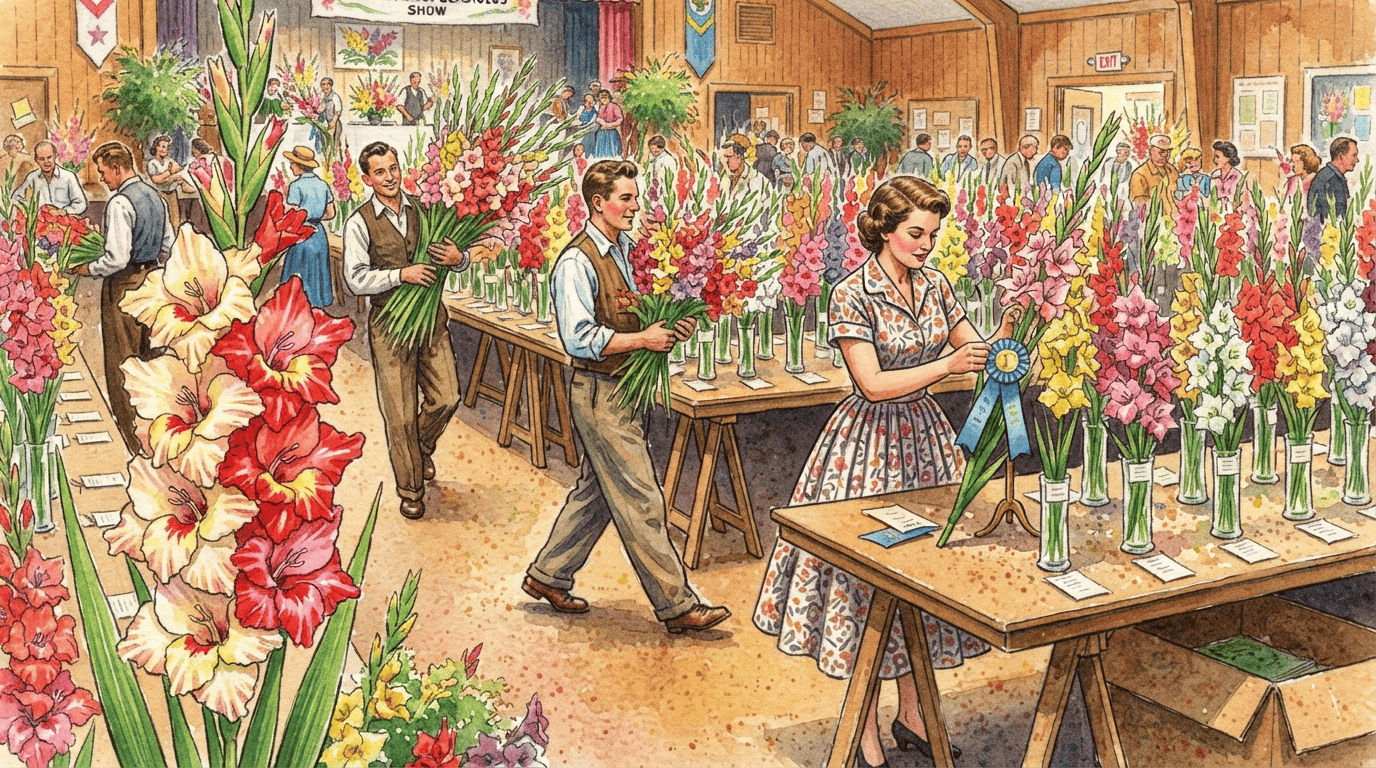
Gladiolus x gandavensis is the hybrid group that launched the modern garden gladiolus. It was developed in Ghent in the 1830s by Belgian horticulturist Hermann Beddinghaus and nurseryman Louis Van Houtte using South African species such as G. oppositiflorus, G. dalenii, G. cardinalis, and G. tristis, with the Mediterranean G. italicus. The name gandavensis comes from Gandavum, the Latin name for Ghent.
Released in the 1840s, these hybrids transformed gladioli from botanical curiosities into mainstream garden and cut flowers. The genus name comes from Latin gladius, a sword, referring to the leaves and connecting the flower linguistically to gladiators. Later American breeding in Oregon and New York enlarged the blooms and built the florist forms that dominated mid-20th-century cut-flower culture, when local gladiolus shows were common and the tall spikes became symbols of summer display.
Symbolism & meaning
What It Symbolizes
Gladiolus takes its name from the Roman gladius — the short sword — and stands accordingly for strength of character, moral integrity, and honor. Its tall flower spikes rise like blades from leaf bases, an unmistakable symbol of upright bearing. To send gladioli is to acknowledge someone's resolve, the kind of recognition usually reserved for soldiers and steady friends.
- Strength of character — Named for the gladiator's sword, representing moral integrity and honor
Where the Name Comes From
Gladiolus from Latin 'gladius' (sword), for the leaf shape. Gandavensis refers to Ghent (Gand), Belgium, where the first hybrids were bred.
Uses & Fun Facts
- Tall flower spikes are classic summer florist bouquet stems
- Vertical accent in sunny perennial and cutting borders
Related plants
More Gladiolus plants
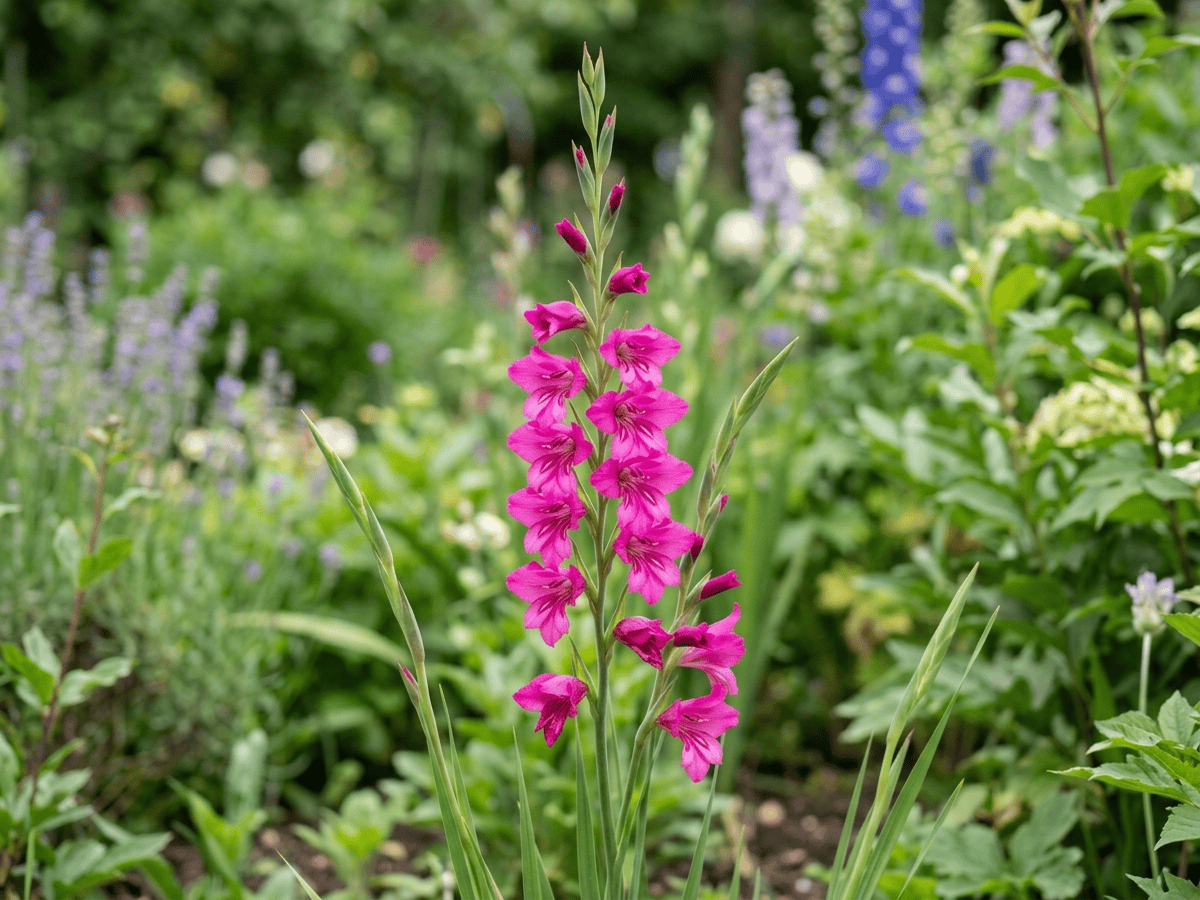 Eastern GladiolusGladiolus communis
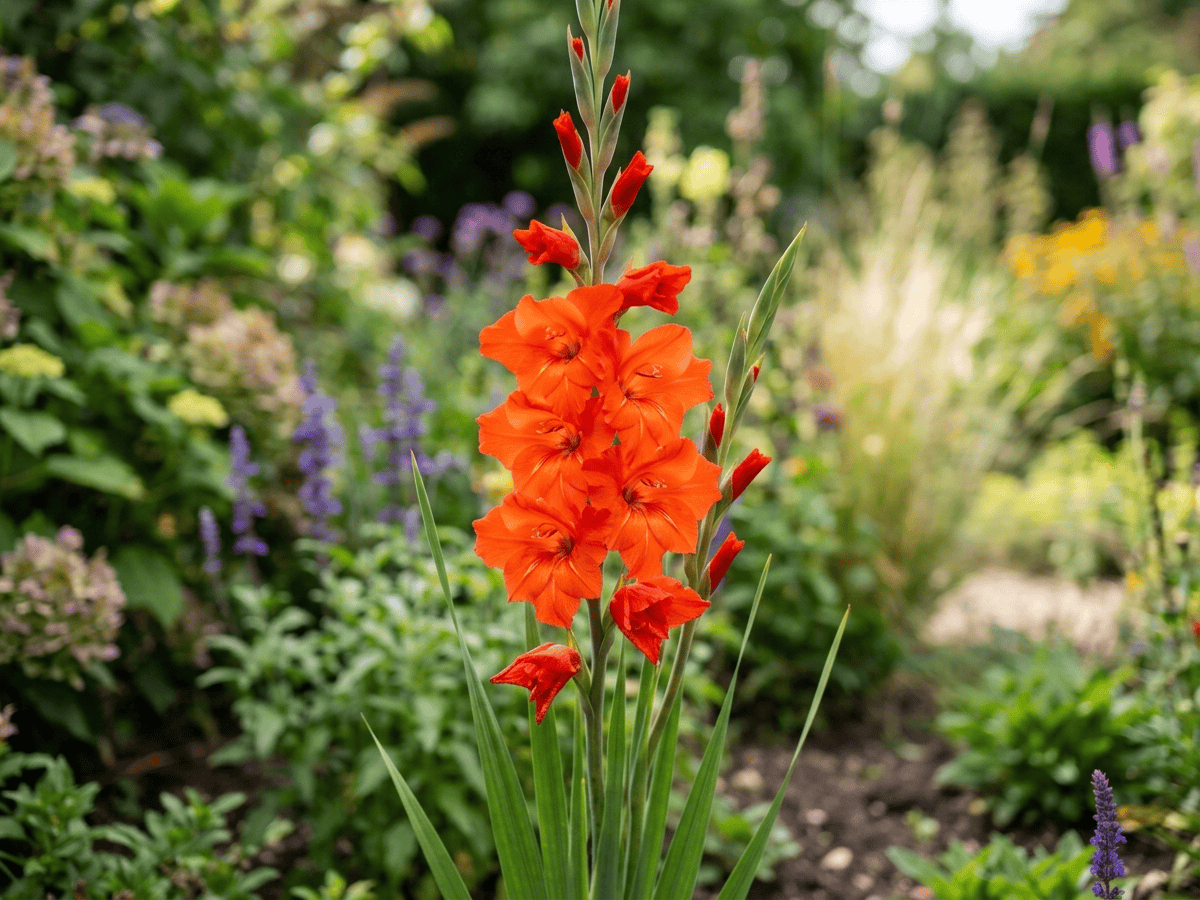 Dragon's-Head LilyGladiolus dalenii
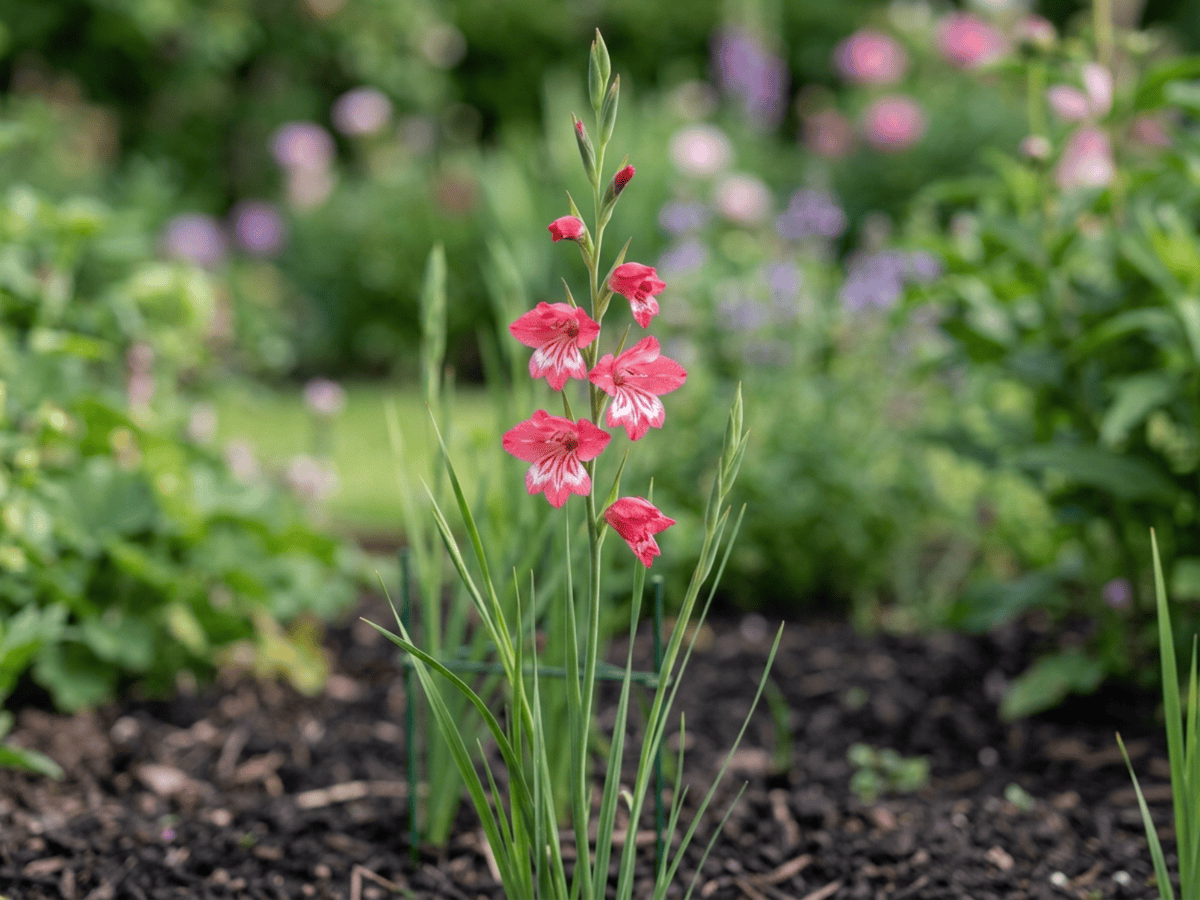 Late BobbejaantjieGladiolus nanus
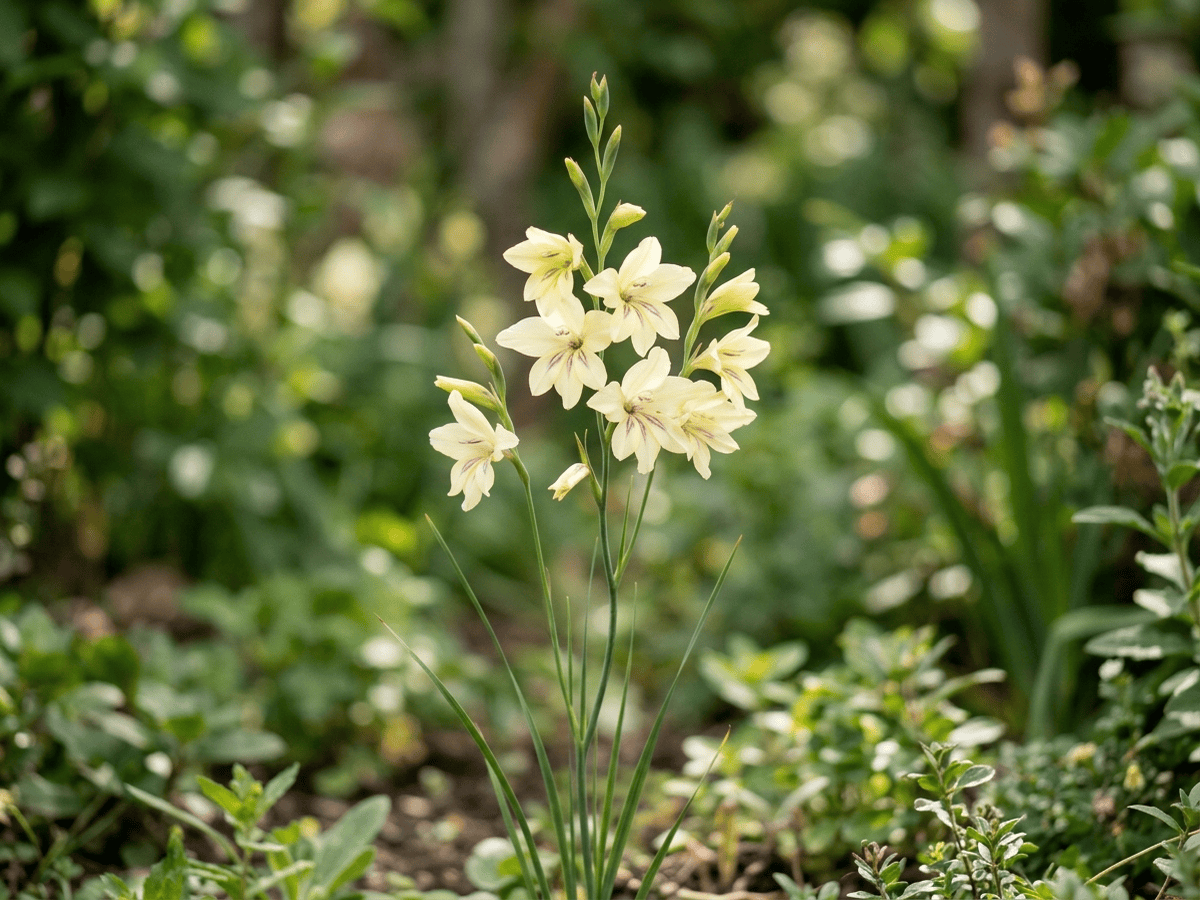 Marsh AfrikanerGladiolus tristis
Plants with similar care
 Mexican AbeliaAbelia floribunda
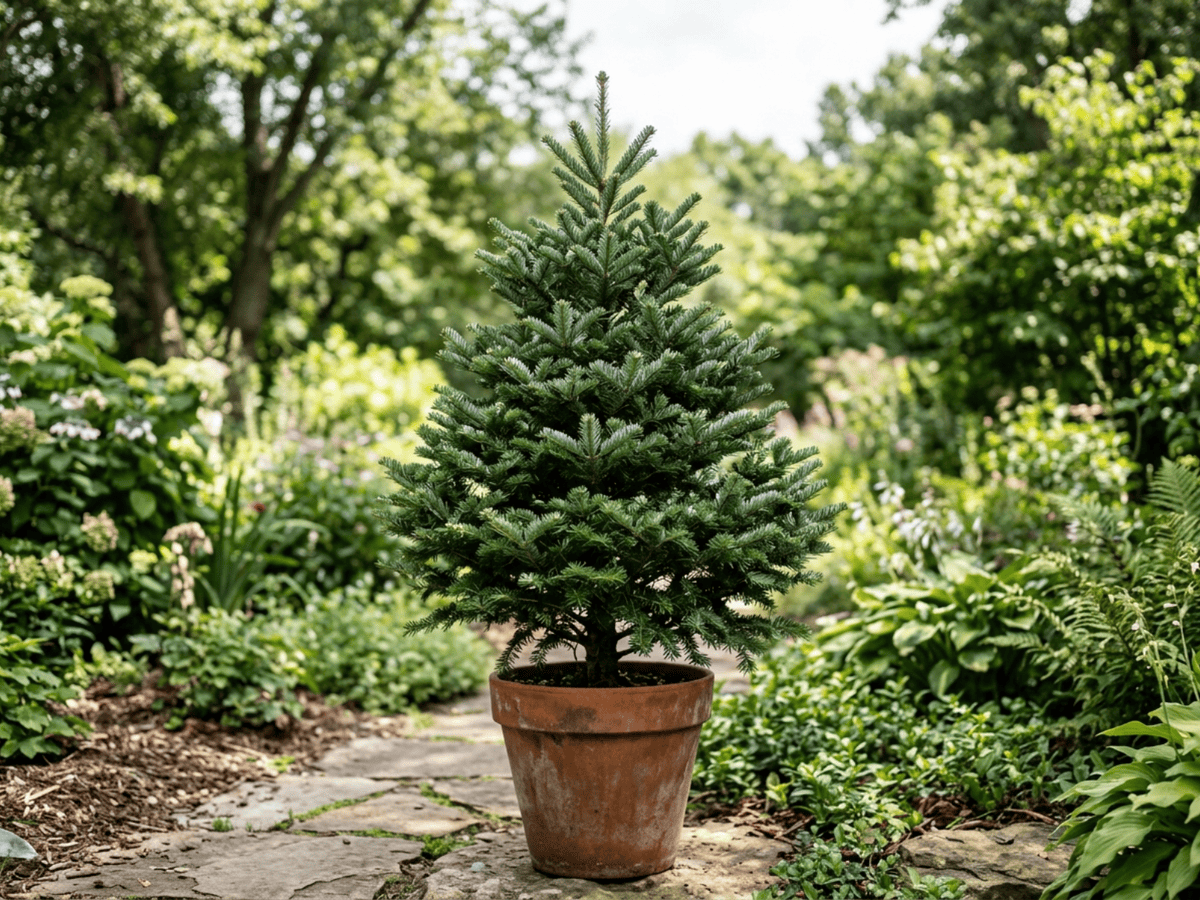 Fraser FirAbies fraseri
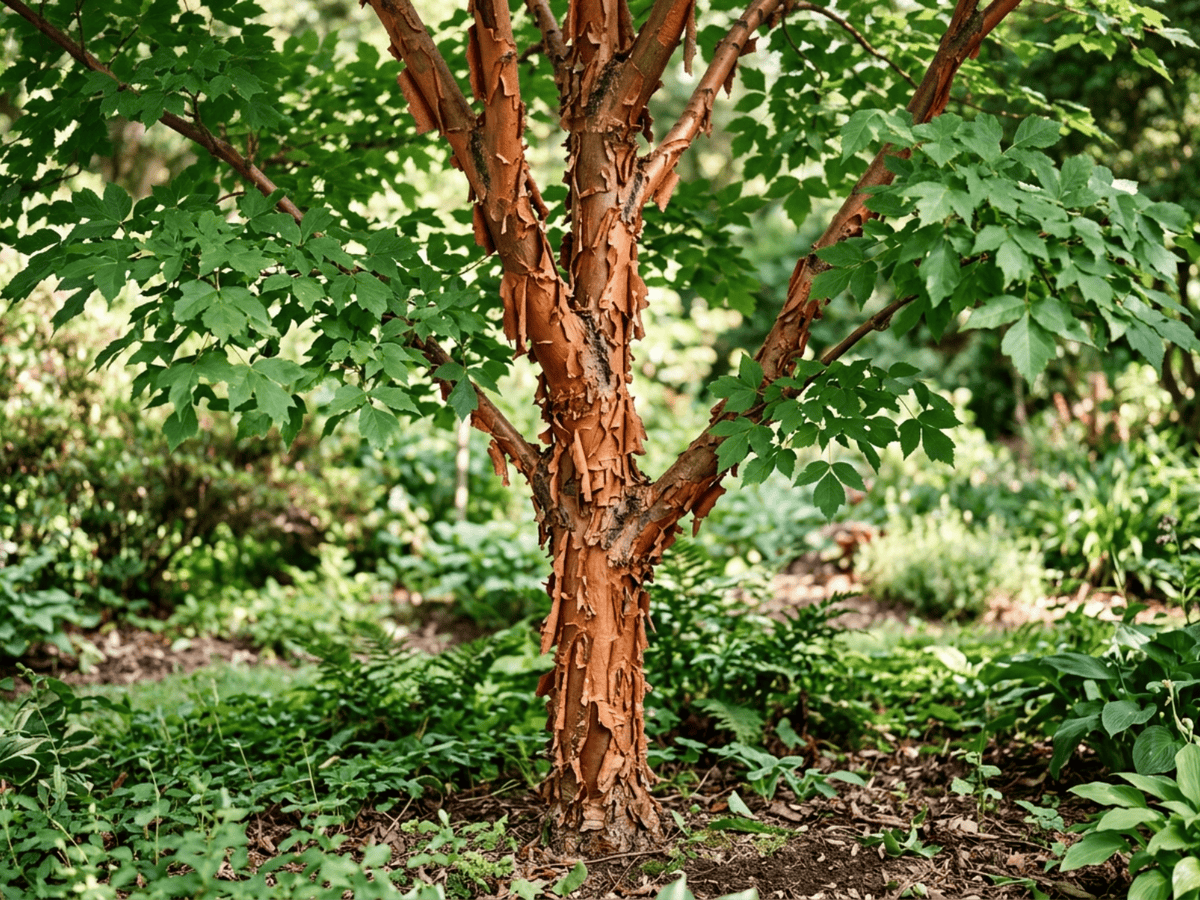 Paperbark MapleAcer griseum
 Sugar MapleAcer saccharum
Frequently asked questions
How often should I water Gladiolus?
Water about every 5 days during the growing season, and always let excess water drain away.
How much light does Gladiolus need?
Full sun: 6+ hrs direct. Watch the leaves — scorching or stretching means the light needs adjusting.
Is Gladiolus toxic to cats or dogs?
Pets Slight (Dogs Slight · Cats Slight) Educational information, not medical or veterinary advice. If exposure is suspected, contact a doctor or veterinarian.
Is Gladiolus easy to grow?
It is moderately demanding: a good choice once you have a little experience.
When does Gladiolus bloom?
It typically blooms Jul–Sep in the Northern Hemisphere.
YardMate
Identify any plant in seconds
Snap a photo — YardMate names the plant, diagnoses problems, and reminds you when to water.
Download on the App Store