 YardMate
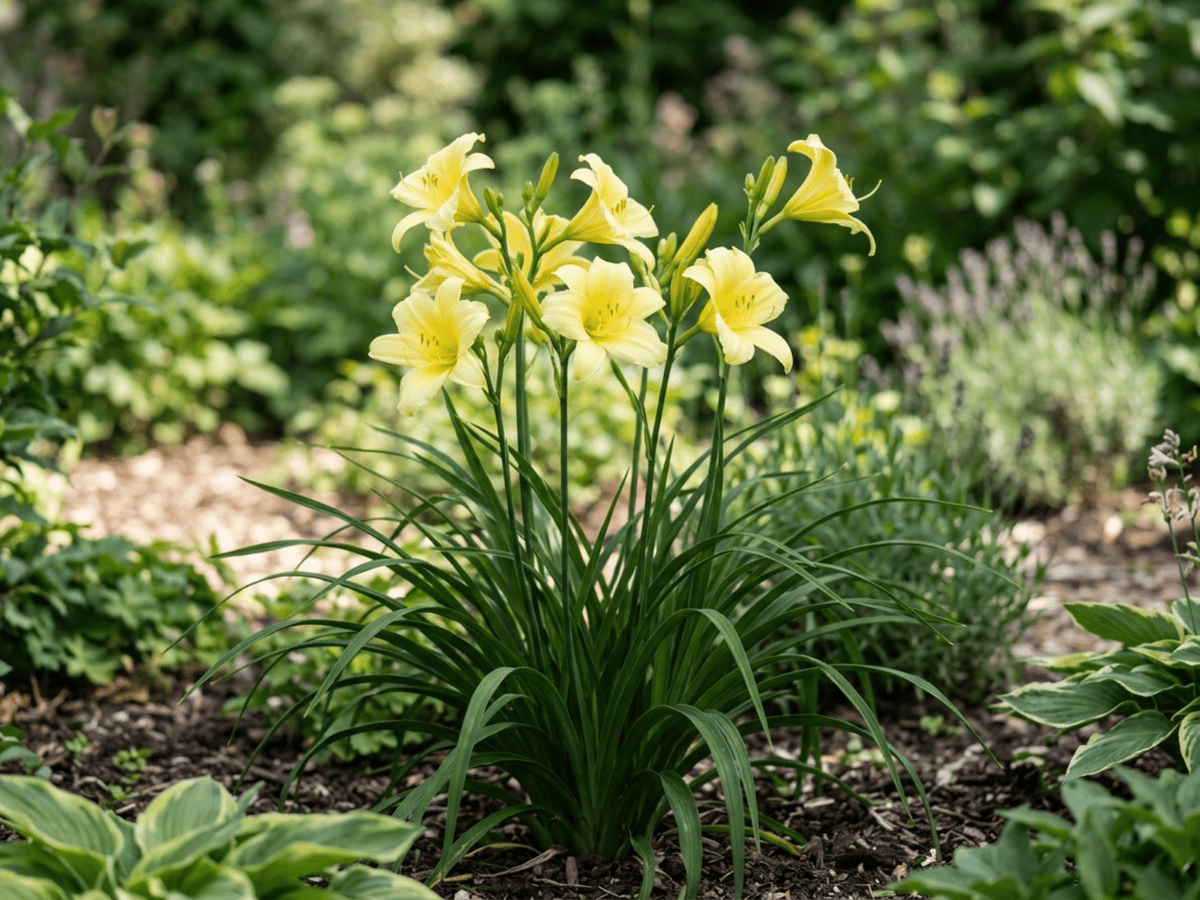


Yellow Daylily
Hemerocallis lilioasphodelus
Easy · Beginner friendlyAbout Yellow Daylily
Lemon Daylily is an heirloom species daylily, 2–3 feet tall, bearing fragrant clear lemon-yellow trumpet flowers on bare scapes in late spring and early summer. One of the oldest daylilies in cultivation—grown in colonial American gardens since the 1600s. Unlike modern rebloomers, it has a single spectacular bloom period but with the delicious lemon fragrance no modern hybrid has matched. Hardy zones 3–9.
- Fragrant
- Deer-resistant
How to care for Yellow Daylily
Watering
- Springevery 5 days
- Summerevery 4 days
- Fallevery 7 days
- Winterpause watering
Soil · Well-draining
- Top dressingPine bark mulch10%
- Main mixPotting soil + perlite 2:170%
- DrainageLECA / gravel20%
Never skip the drainage layer — standing water is the top cause of root rot.
FERTILIZER
Balanced Feed 14-14-14
An even feed covers all three needs at once, keeping leaves, roots and blooms moving together with nothing pushed out of balance.
- Nitrogen · Leaves
- Phosphorus · Roots + Blooms
- Potassium · Strength
- Springevery 30 days
- Summerevery 30 days
At a Glance
- NativeEast Asia, Mediterranean
- Height2–3 ft (0.6–0.9 m)
- Spread1–2 ft (0.3–0.6 m)
- Flower colorYellow
- Foliage colorGreen
- SoilLoamy, Well-drained, Neutral
- LocationsYard
Bloom time
BLOOM CYCLE
Peak bloom
Mar–May
Fragrant lemon-yellow trumpets late spring
Fragrance
MODERATE FRAGRANCE
The flowers have a sweet citrus scent.
Toxicity
Humans Slight · Pets Toxic
unidentified nephrotoxin
Slight
- All
- Ingestion
EXPOSURE Eating any part of the plant.
EFFECT GI upset if eaten raw in quantity.
NOTE Documented concern for humans: GI upset if eaten raw in quantity.
Slight
- All
- Ingestion
EXPOSURE Eating any part of the plant.
EFFECT Mild vomiting.
NOTE ASPCA lists daylilies as highly toxic to cats causing acute kidney failure; dogs tolerate. Buds are edible for humans when cooked.
Toxic
- All
- Ingestion
EXPOSURE Eating any part of the plant.
EFFECT Kidney failure, vomiting, and lethargy.
NOTE ASPCA lists daylilies as highly toxic to cats causing acute kidney failure; dogs tolerate. Buds are edible for humans when cooked.
Educational information, not medical or veterinary advice. If exposure is suspected, contact a doctor or veterinarian.
DISTRIBUTION

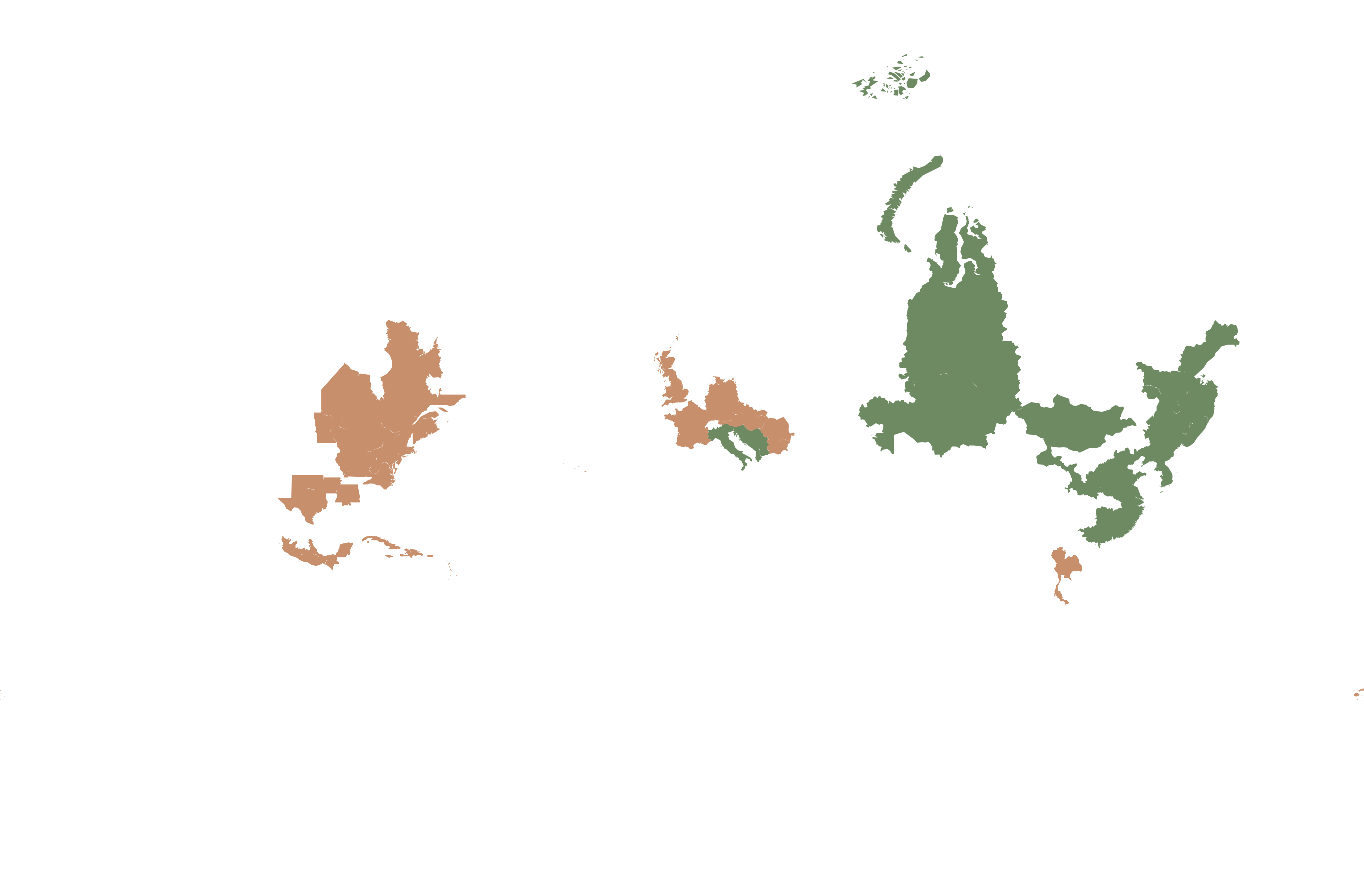
- Native
- Introduced
- East Asia
- Mediterranean
History
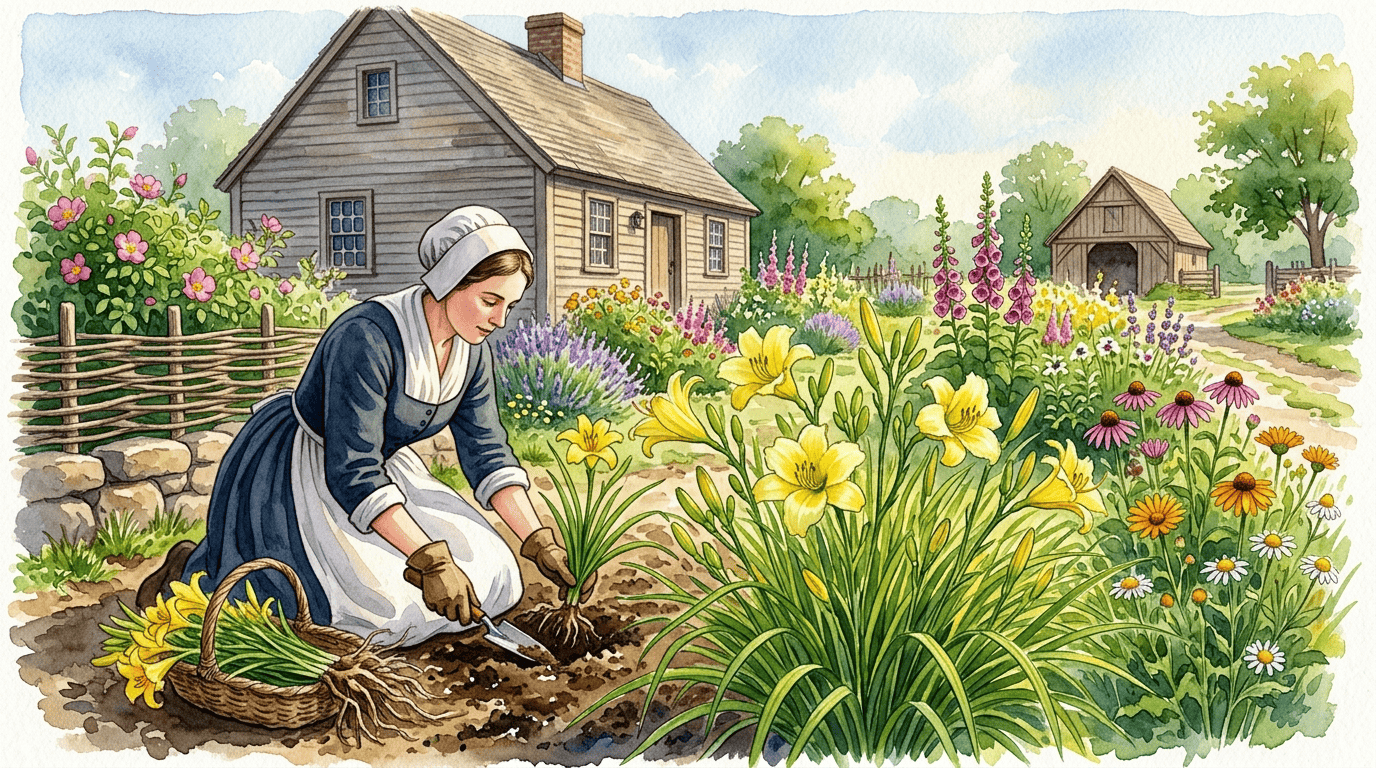
Hemerocallis lilioasphodelus (formerly H. flava), the lemon or yellow daylily, is native to Siberia and northern China. Chinese texts including the Shijing (1000 BCE) reference daylilies used as both food and ornament; young flower buds called jin zhen hua remain a culinary staple. Carolus Clusius brought the species to European cultivation by 1601, and it was among the first perennials carried by colonists to North America.
It naturalized widely along roadsides and old homesteads in the eastern US. Linnaeus formalized the name in 1753. Its soft yellow trumpet flowers and sweet fragrance—unusual in modern hybrids—remain its distinguishing traits.
Virtually all modern daylily hybrids trace partial ancestry to this species. Grown in China for thousands of years and introduced to Europe in the 16th century. Brought to American colonies in the 1600s; one of the few daylilies escaped from old colonial gardens and naturalized in New England roadsides. An heirloom treasure in historic American landscapes.
Symbolism & meaning
What It Symbolizes
Yellow Daylily embodies motherhood in Chinese tradition, where its old name wang you cao, the herb of forgetting sorrow, was associated with mothers easing the cares of their children. It also carries heritage as a colonial American garden heirloom, passed between farmsteads for centuries. It is often read as a flower of inherited care, lemon-yellow blooms tying together generations of mothers and daughters who tended the same patch.
- Motherhood — Chinese symbolism of motherly love
- Heritage — colonial American garden heirloom
Where the Name Comes From
The name Yellow Daylily describes its lily-like flowers. Genus from Greek 'hemera' (day) and 'kallos' (beauty)—each flower lasts only a day; species means 'lily-asphodel'.
Uses & Fun Facts
- Lemon-yellow trumpets release clear citrus fragrance
- Heirloom daylily for naturalized cottage borders
Related plants
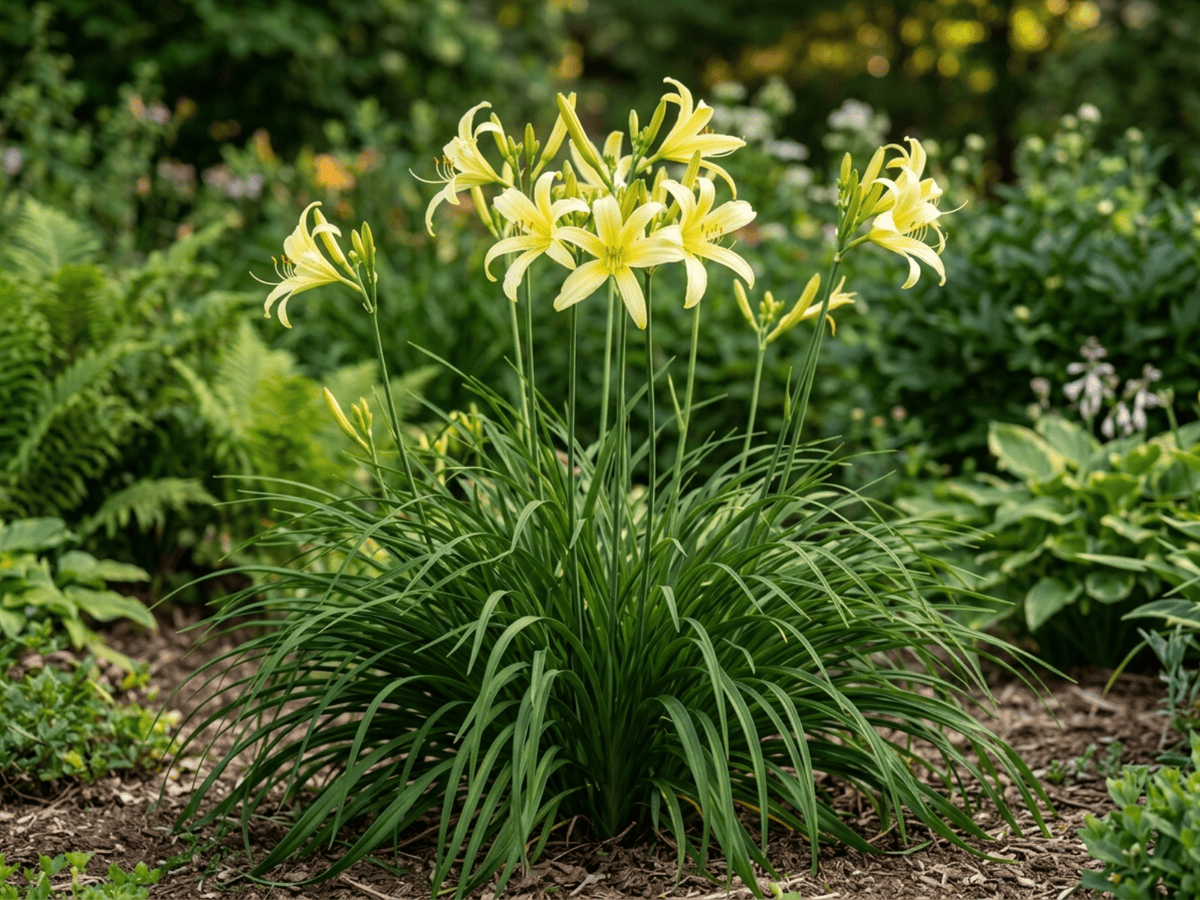
More Hemerocallis plants
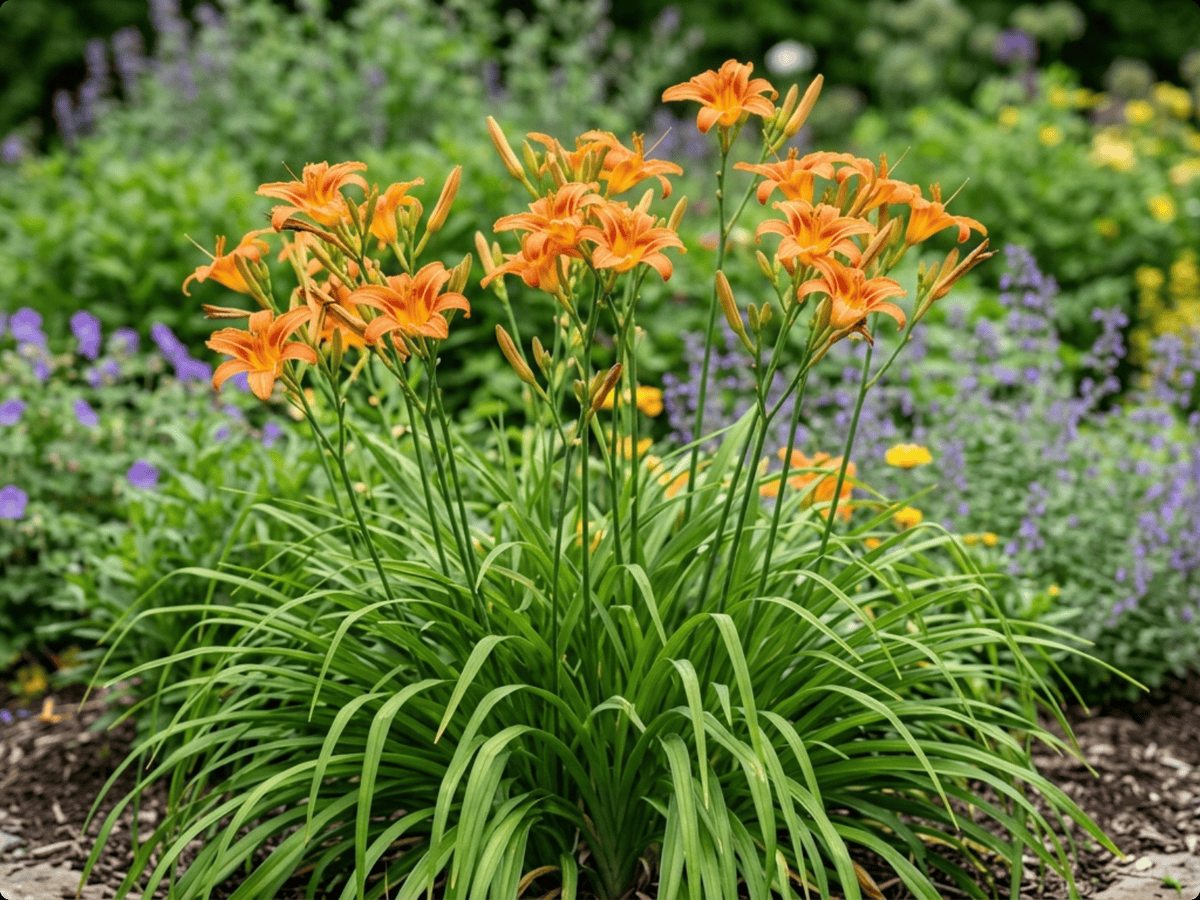
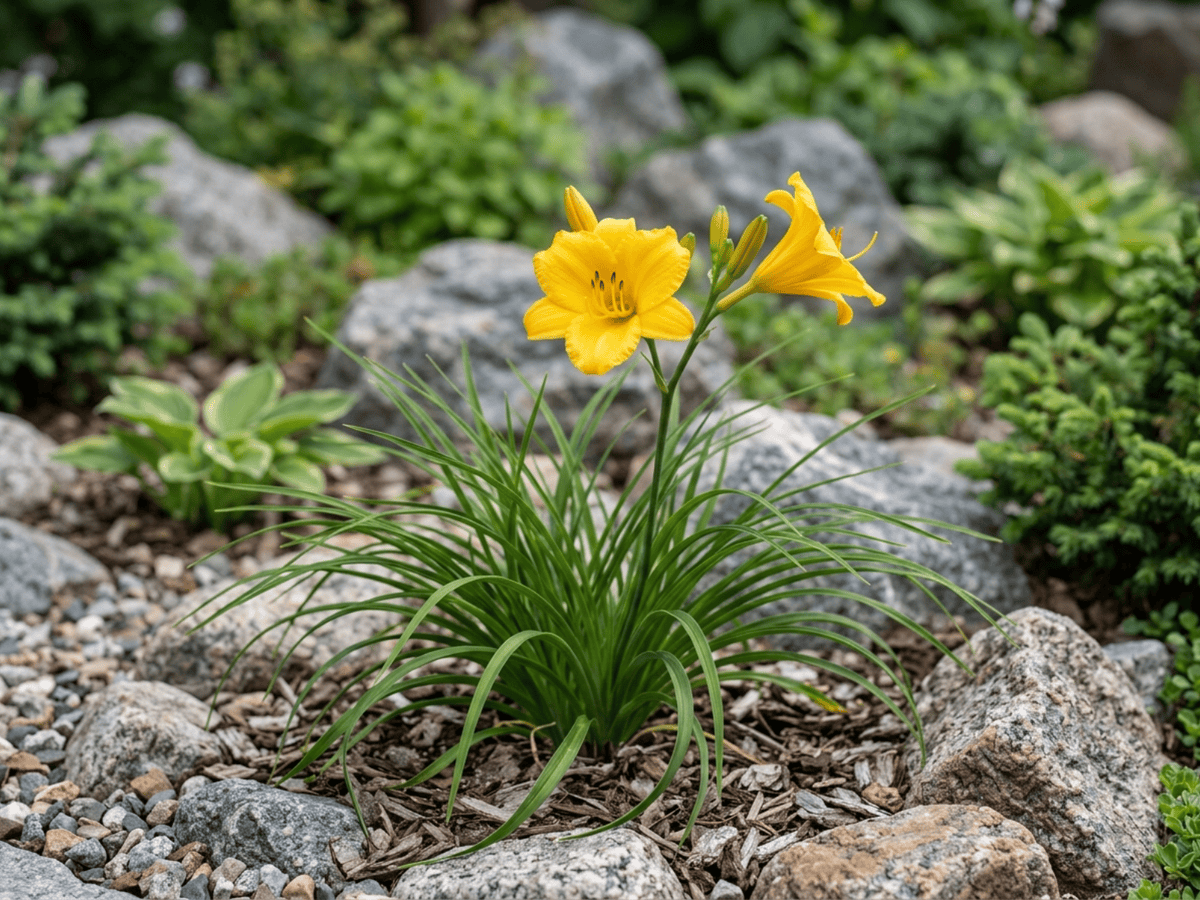
Plants with similar care
 Chinese AbeliaAbelia chinensis
 Fragrant AbeliaAbelia mosanensis
 Large-Flowered AbeliaAbelia uniflora
 Glossy AbeliaAbelia x grandiflora
Frequently asked questions
How often should I water Yellow Daylily?
Water about every 5 days during the growing season, and always let excess water drain away.
How much light does Yellow Daylily need?
Full sun: 6+ hrs direct. Watch the leaves — scorching or stretching means the light needs adjusting.
Is Yellow Daylily toxic to cats or dogs?
Pets Toxic (Dogs Slight · Cats Toxic) Educational information, not medical or veterinary advice. If exposure is suspected, contact a doctor or veterinarian.
Is Yellow Daylily easy to grow?
Yes — it is considered an easy, beginner-friendly plant.
When does Yellow Daylily bloom?
It typically blooms Mar–May in the Northern Hemisphere.
YardMate
Identify any plant in seconds
Snap a photo — YardMate names the plant, diagnoses problems, and reminds you when to water.
Download on the App Store