 YardMate

Wild Hydrangea
Hydrangea arborescens
Easy · Beginner friendlyAbout Wild Hydrangea
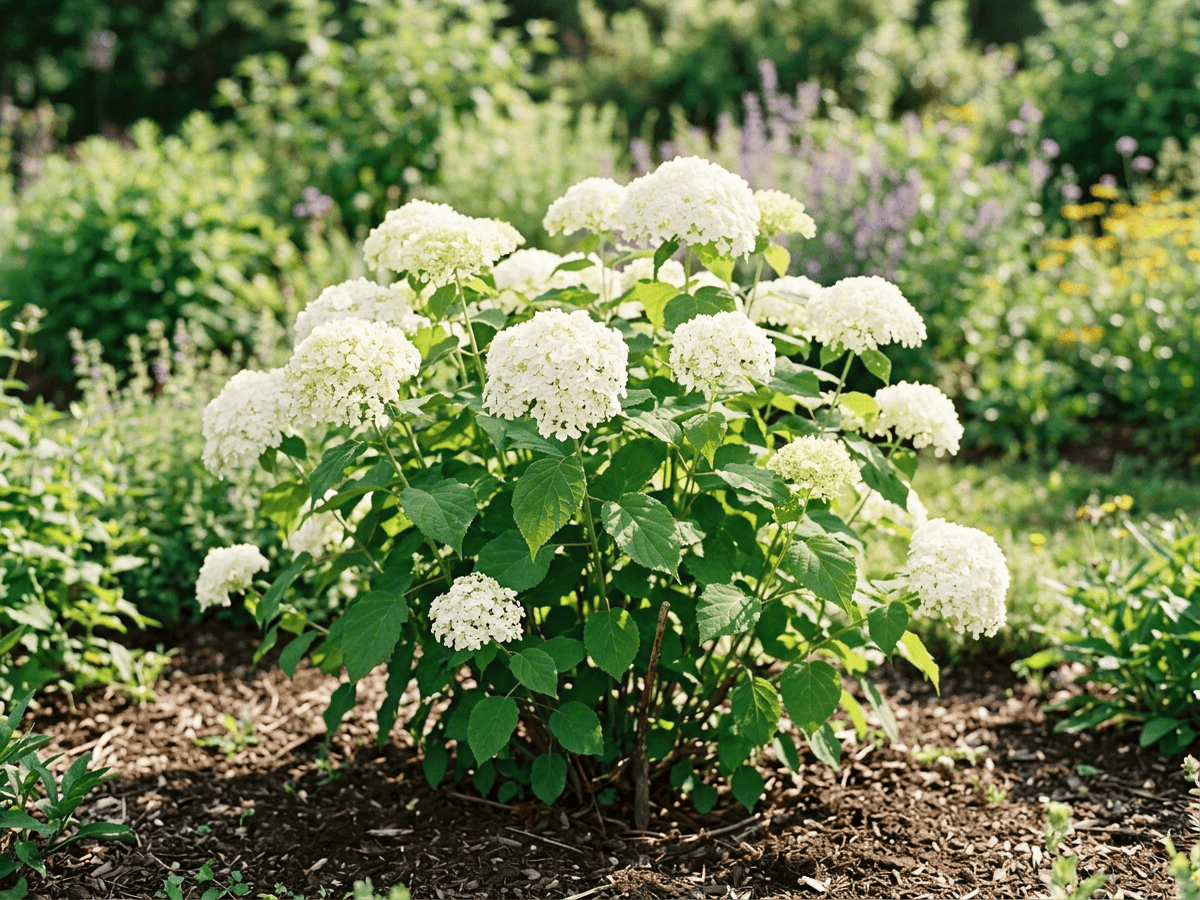
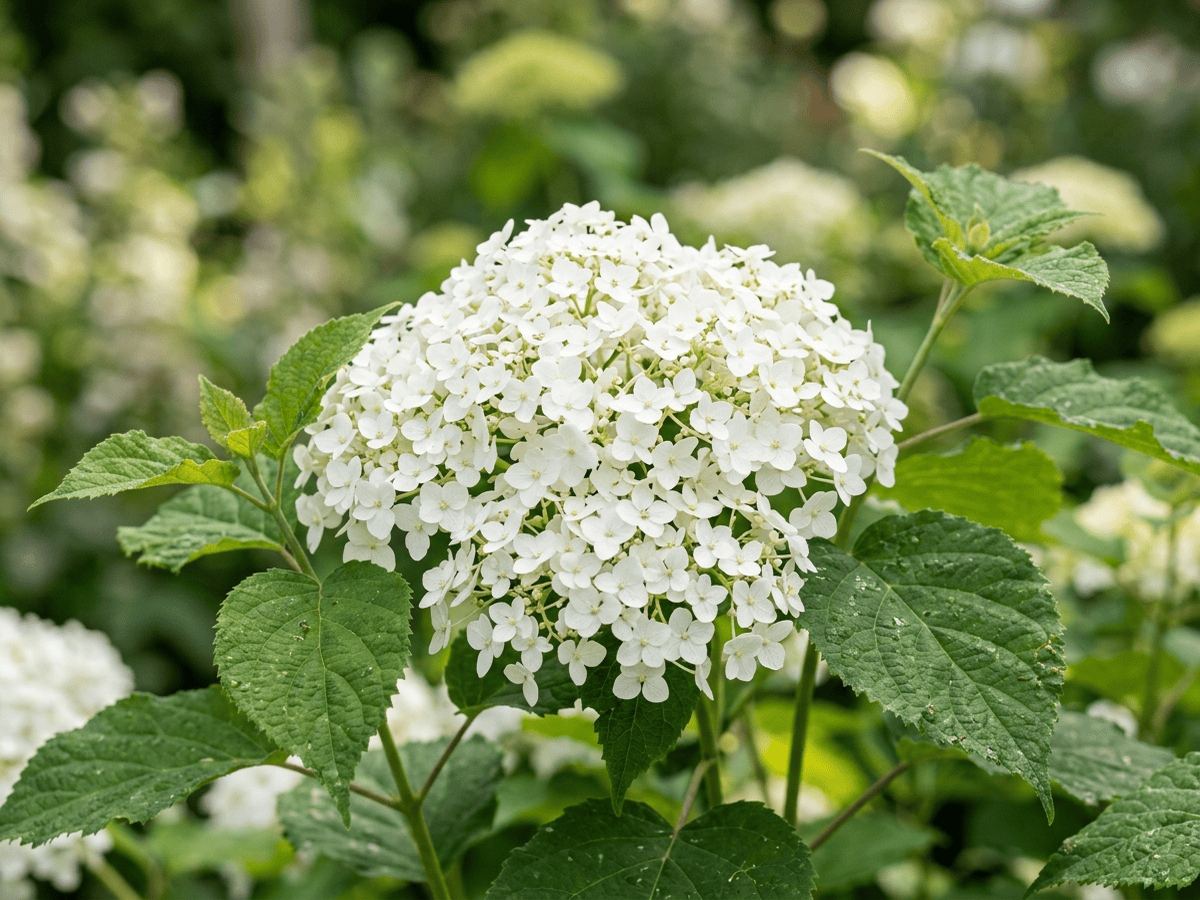
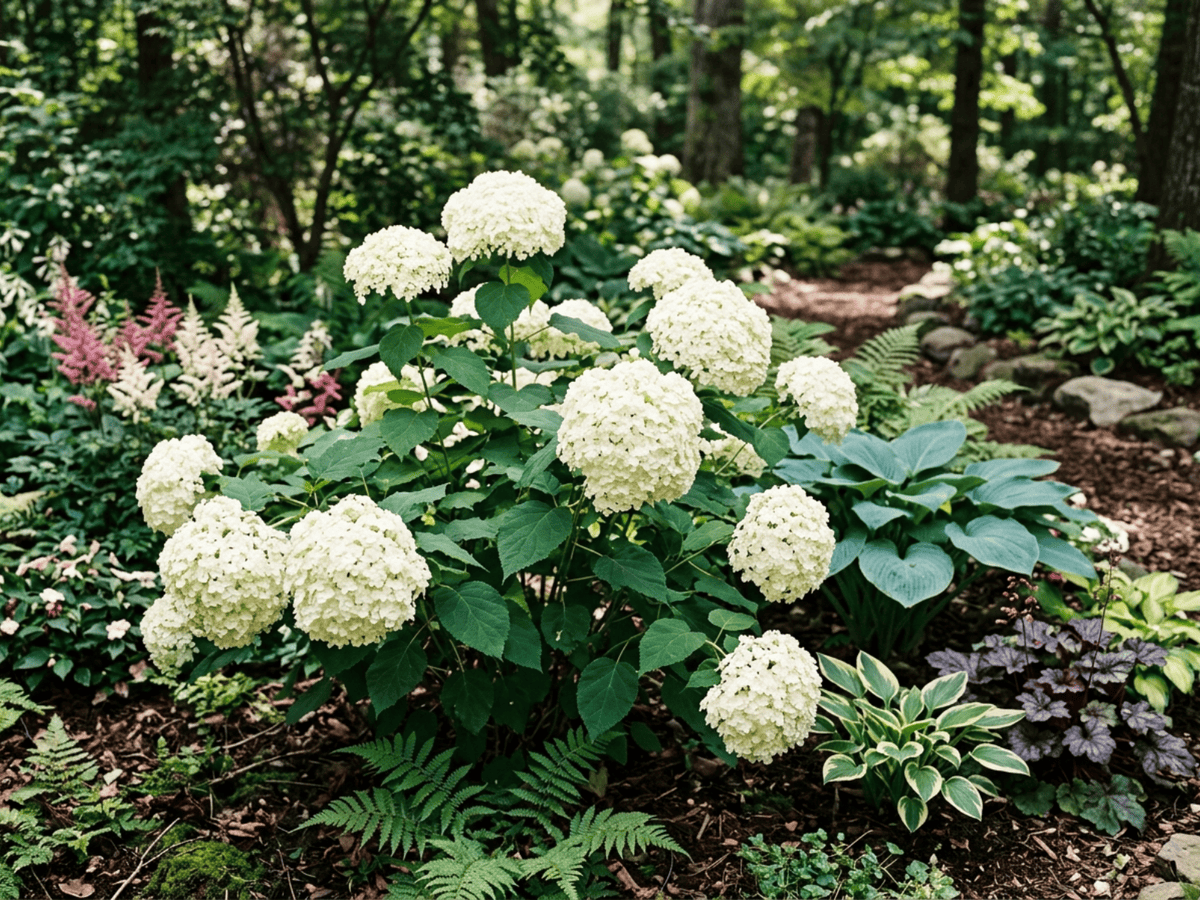
Hydrangea arborescens, the smooth hydrangea, is a native North American shrub producing huge rounded clusters of white flowers in summer. The cultivar 'Annabelle' — discovered wild near Anna, Illinois in 1910 — became one of the most popular garden shrubs ever, with snowball-like flower heads up to 30 cm across. It blooms on new wood and can be cut to the ground each spring. Native to eastern US woodlands, it is naturally shade-tolerant and cold-hardy. The newer cultivar 'Incrediball' improved on 'Annabelle' with stronger stems that don't flop under the weight of flowers.
- Cold-hardy
- Shade-tolerant
- Native
How to care for Wild Hydrangea
Watering
- Springevery 3 days
- Summerevery 2 days
- Fallevery 5 days
- Winterevery 14 days
Soil · Rich & loamy
- Top dressingBark mulch15%
- Main mixRich loam + compost 3:170%
- DrainageGravel15%
Use fully finished compost — fresh compost burns roots.
FERTILIZER
Balanced Feed 14-14-14
An even feed covers all three needs at once, keeping leaves, roots and blooms moving together with nothing pushed out of balance.
- Nitrogen · Leaves
- Phosphorus · Roots + Blooms
- Potassium · Strength
- Springevery 30 days
- Summerevery 30 days
At a Glance
- NativeNorth America
- Height3–6 ft (0.9–1.8 m)
- Spread3–6 ft (0.9–1.8 m)
- Flower colorWhite, Pink
- Foliage colorGreen
- SoilLoamy, Moisture-retentive
- LocationsYard
Bloom time
BLOOM CYCLE
Peak bloom
Jun–Aug
Massive white snowball clusters in summer; blooms on new wood
Fragrance
LIGHT FRAGRANCE
The flowers have a light honey scent.
Toxicity
Humans Moderate · Pets Moderate
hydrangin
Moderate
- Flower
- Leaf
- Stem
- Root
- Ingestion
EXPOSURE Eating flowers, leaves, stems, and roots.
EFFECT Nausea, vomiting, abdominal pain and root consumption historically associated with serious GI illness and cyanide exposure.
NOTE Same cyanogenic glycoside toxicity as other Hydrangeas; medicinal use requires professional preparation.
Moderate
- Flower
- Leaf
- Stem
- Ingestion
EXPOSURE Eating flowers, leaves, and stems.
EFFECT Vomiting, diarrhea, depression, lethargy and per Hydrangea genus ASPCA listing.
NOTE Same cyanogenic glycoside toxicity as other Hydrangeas; medicinal use requires professional preparation.
Moderate
- Flower
- Leaf
- Stem
- Ingestion
EXPOSURE Eating flowers, leaves, and stems.
EFFECT Vomiting, diarrhea, depression, lethargy and per Hydrangea genus ASPCA listing.
NOTE Same cyanogenic glycoside toxicity as other Hydrangeas; medicinal use requires professional preparation.
Educational information, not medical or veterinary advice. If exposure is suspected, contact a doctor or veterinarian.
DISTRIBUTION


- Native
- Introduced
- North America
History
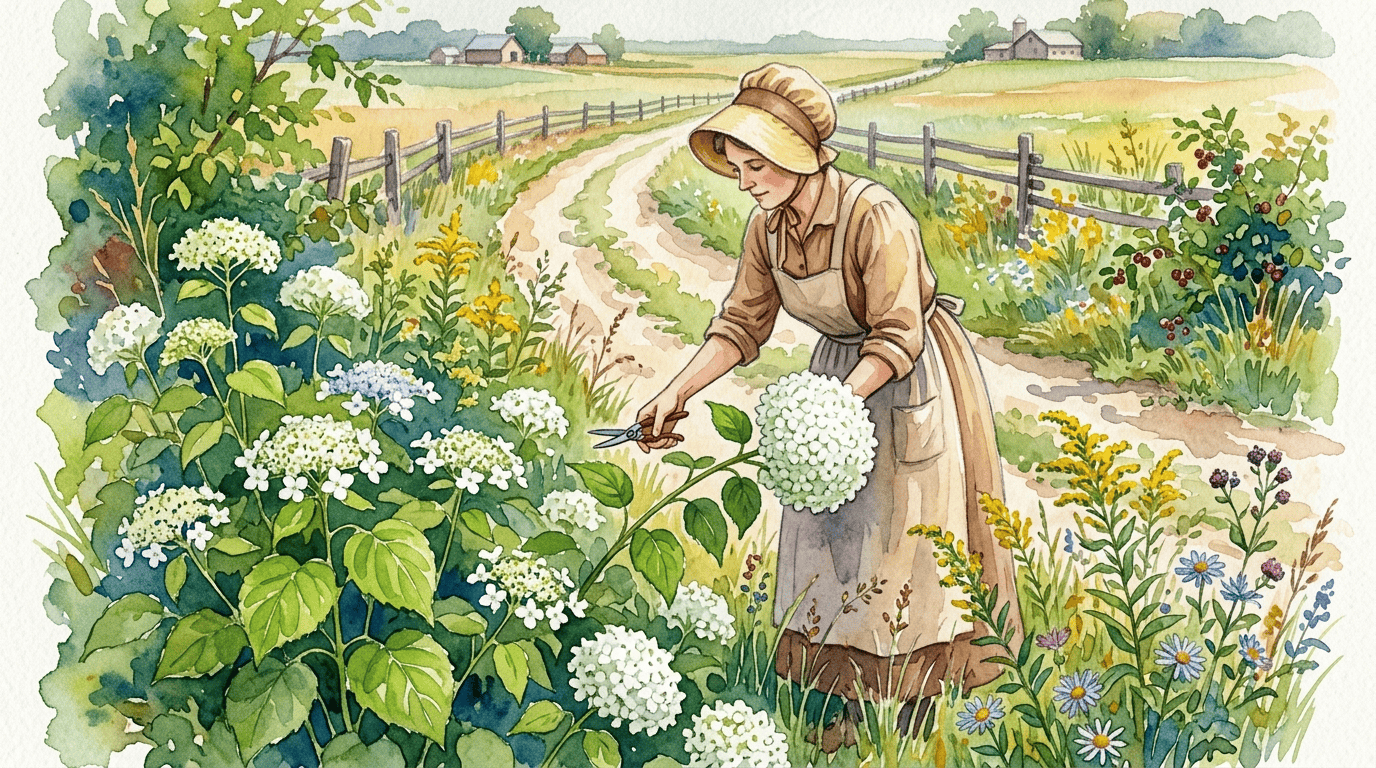
Hydrangea arborescens is native to the eastern United States from New York south to Florida and west to Iowa and Oklahoma, where it grows in stream banks and moist wooded slopes. Cherokee, Iroquois, and other indigenous peoples used root preparations medicinally, particularly as a diuretic and for treating kidney stones — a use documented in 19th-century pharmacopoeias and the basis of enduring herbalist interest. As a garden plant the species was marginal until the 1960 introduction of the cultivar 'Annabelle', a sport discovered in the wild near Anna, Illinois, whose enormous 30-centimeter white globe flower heads transformed the species into a mainstream perennial garden shrub across North America and Europe.
The 2010 introduction of pink-flowered 'Incrediball' sports ('Invincibelle Spirit') continued the modern expansion. Moderately toxic to pets. The story of 'Annabelle' hydrangea begins with Harriet Kirkpatrick, who found it growing wild near Anna, Illinois around 1910.
She shared cuttings with neighbors for decades before horticulturist J.C. McDaniel from the University of Illinois recognized its exceptional flower size and introduced it commercially in the 1960s. It became one of the best-selling ornamental shrubs in North America. Cherokee and other Native American peoples used the root bark of wild H. arborescens medicinally as a diuretic and for kidney stones — the common name 'seven barks' refers to the multiple layers of peeling bark on old stems.
Symbolism & meaning
What It Symbolizes
The wild hydrangea is generous abundance — its enormous white flower domes lean over the woodland edges of the eastern United States all summer, holding more bloom on a single stem than most shrubs offer in a season. There is nothing restrained about it; its meaning lies in overflow. In a garden, one well-placed plant becomes a small monument to the idea that there is always enough.
- Abundance — Its massive, generous flower clusters represent overflowing bounty
Where the Name Comes From
Hydrangea from Greek 'hydor' (water) and 'angeion' (vessel). Arborescens means 'becoming tree-like.'
Uses & Fun Facts
- Large white pompom flower heads dry well for arrangements
- Native shrub with massive Annabelle-type summer flower domes
- Lacecap forms feed native bees and small butterflies
Related plants
More Hydrangea plants
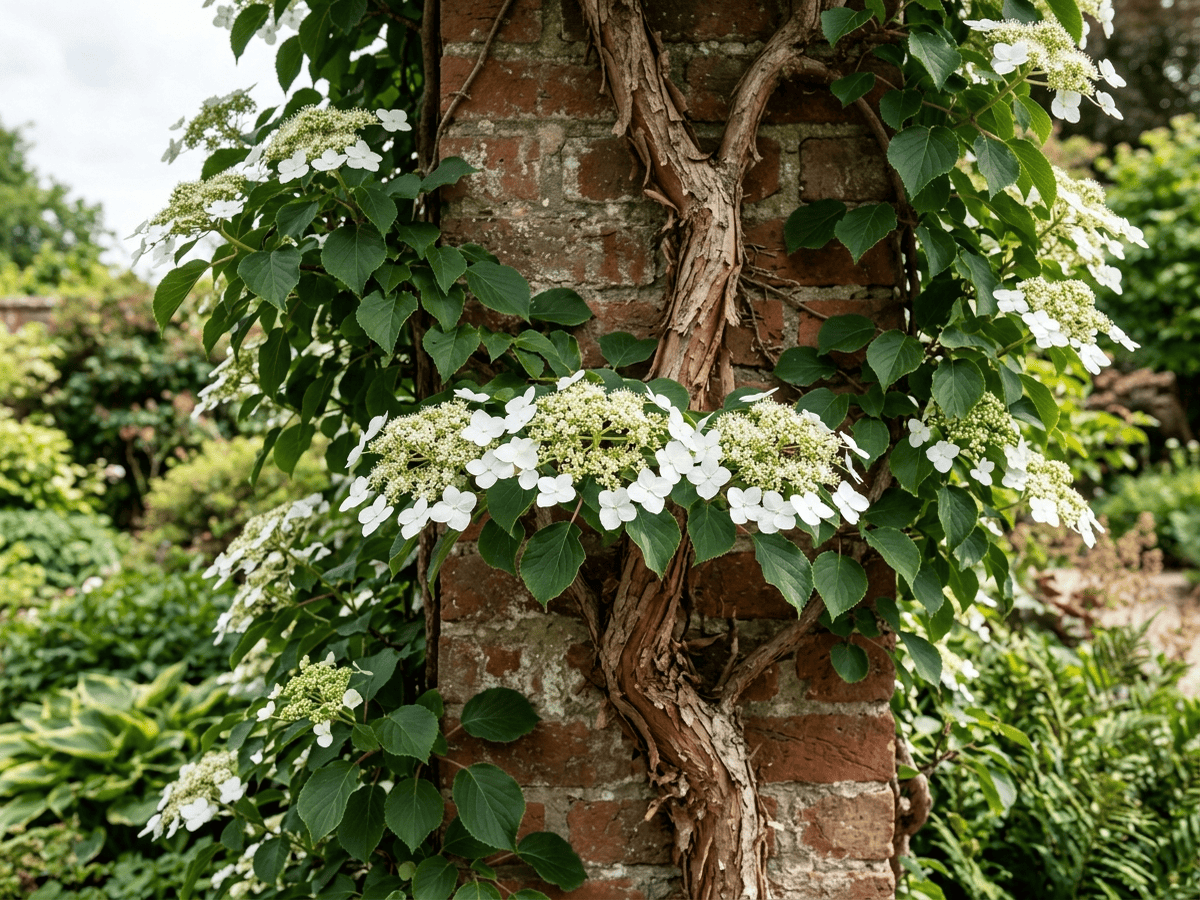 Chinese HydrangeaHydrangea anomala
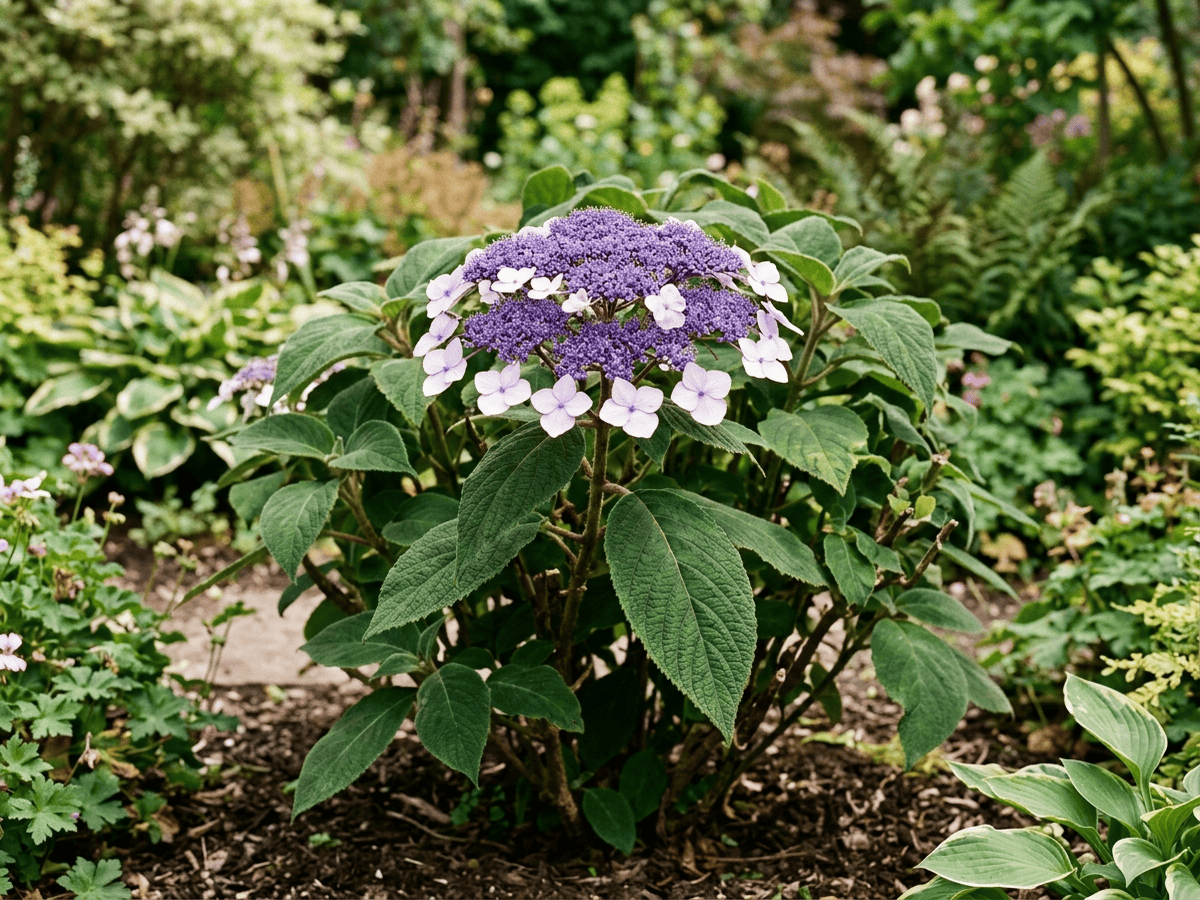 Rough-Leaved HydrangeaHydrangea aspera
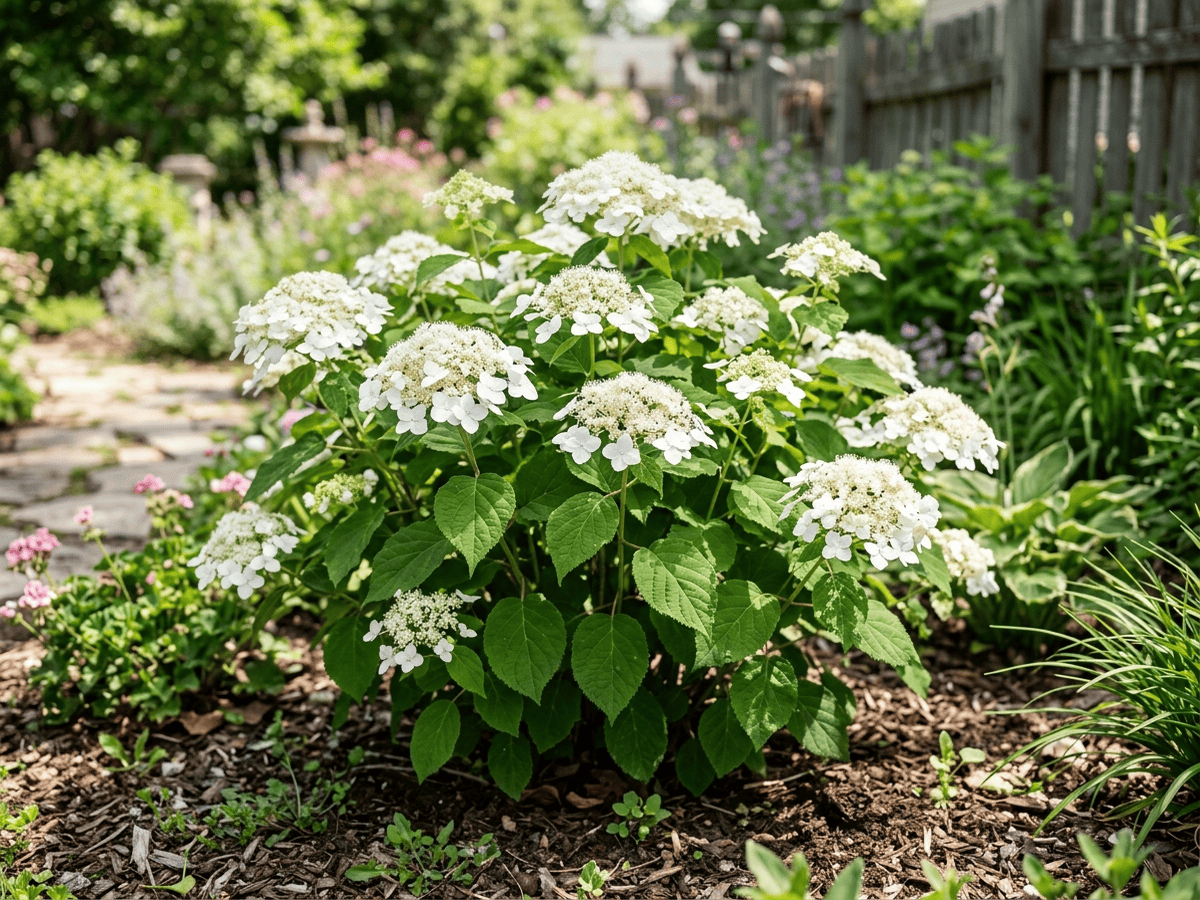 Himalayan HydrangeaHydrangea heteromalla
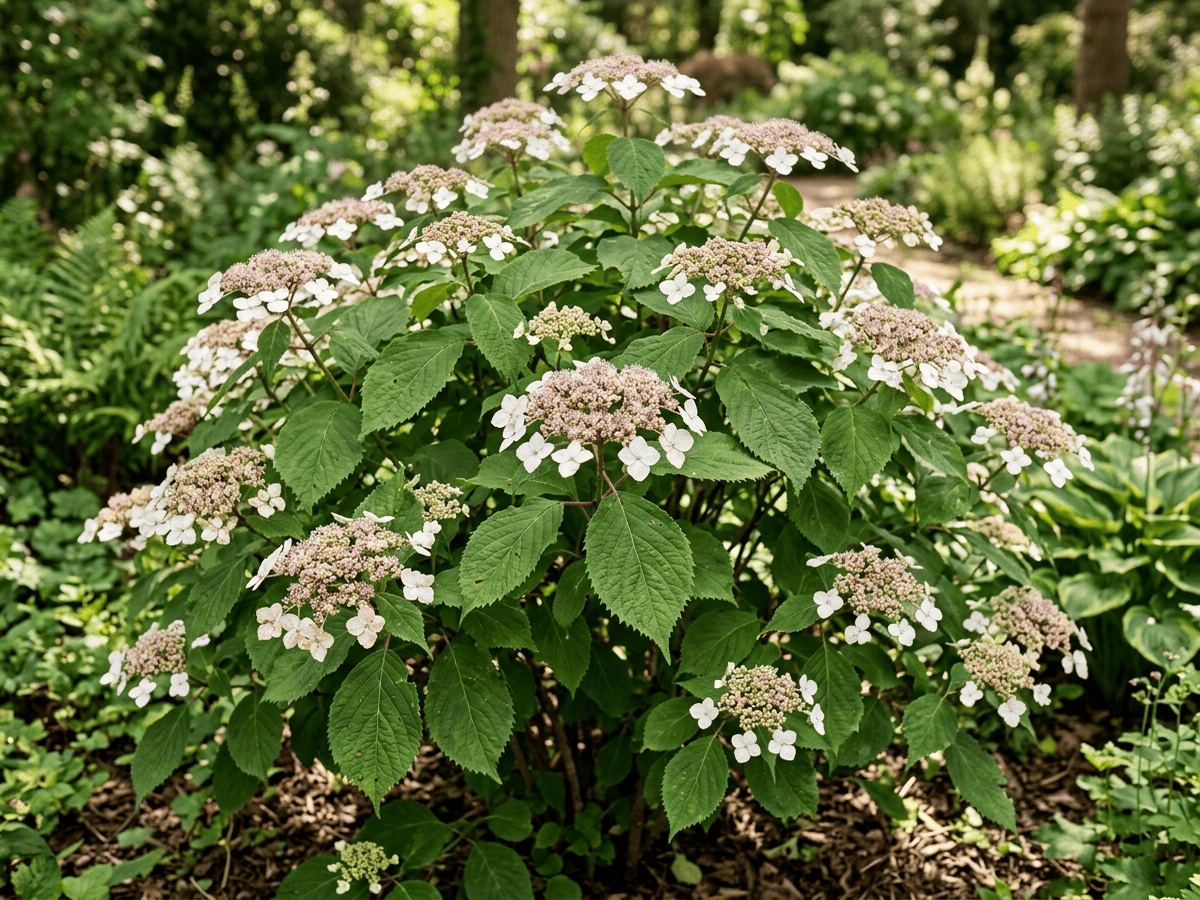 Hydrangea involucrataHydrangea involucrata
Plants with similar care
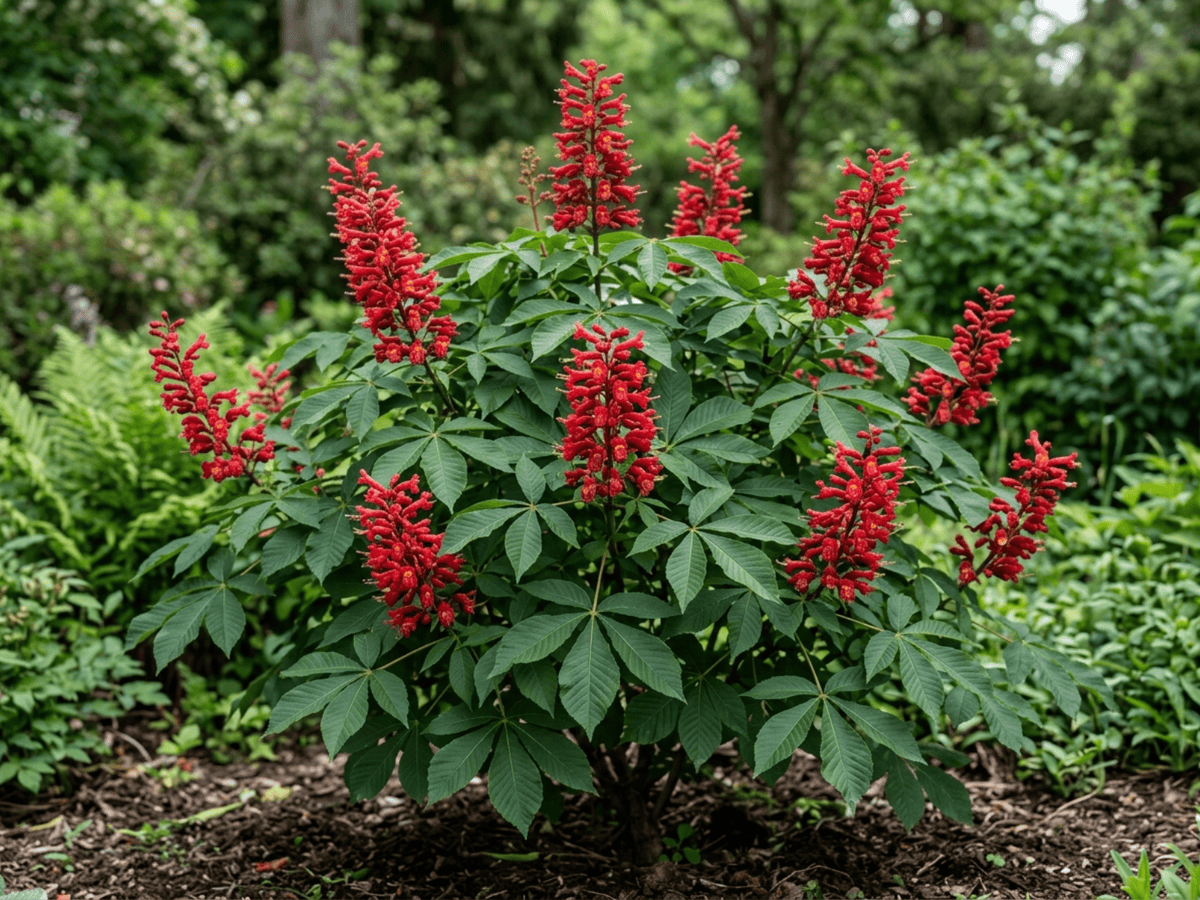 Red BuckeyeAesculus pavia
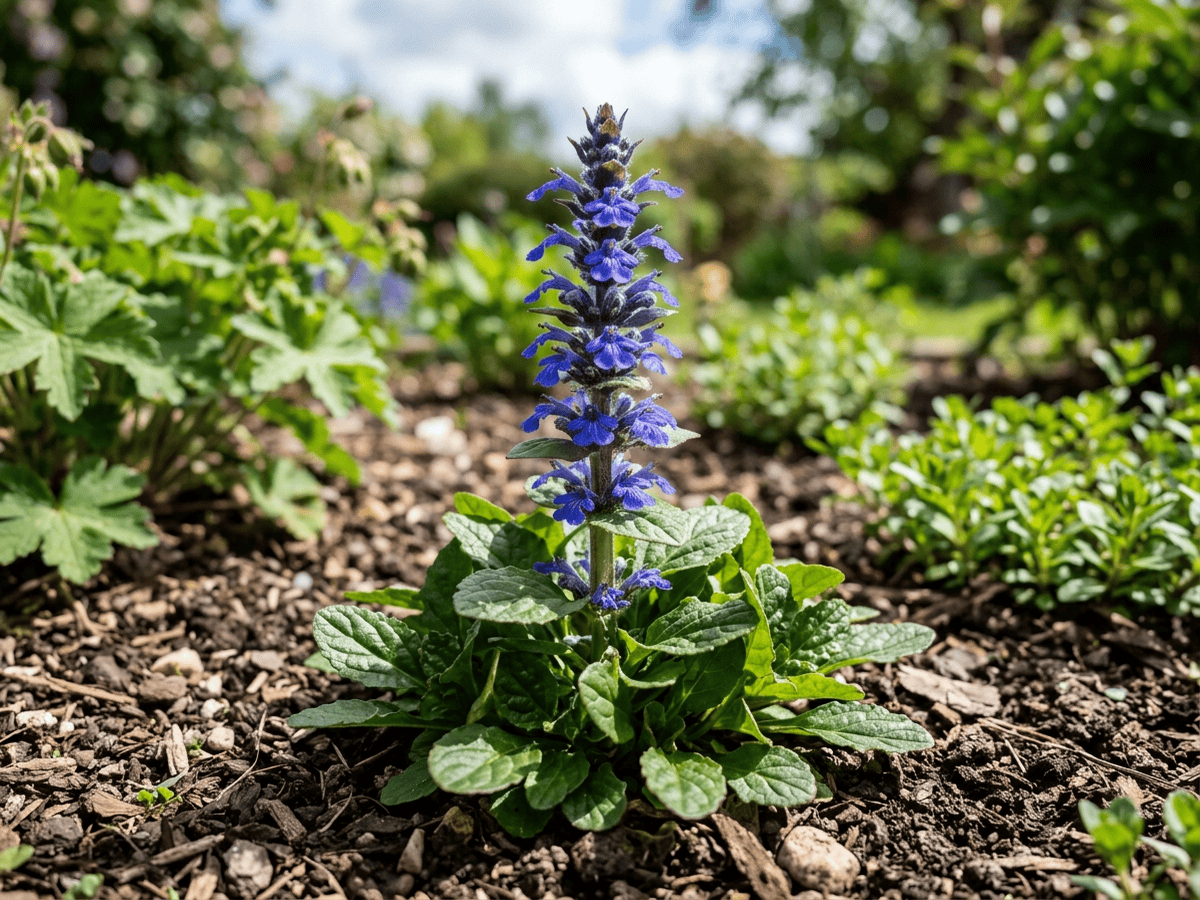 Blue BugleAjuga genevensis
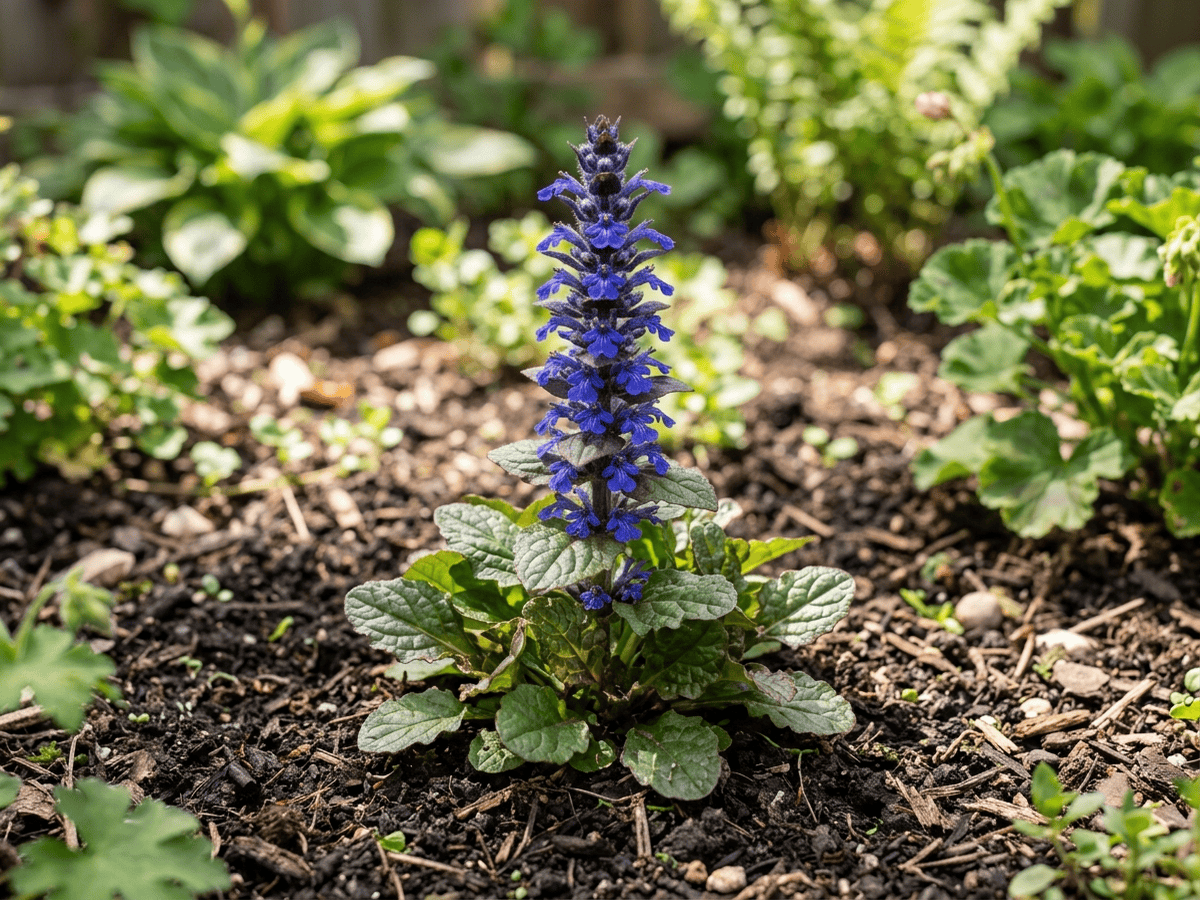 Pyramidal BugleAjuga pyramidalis
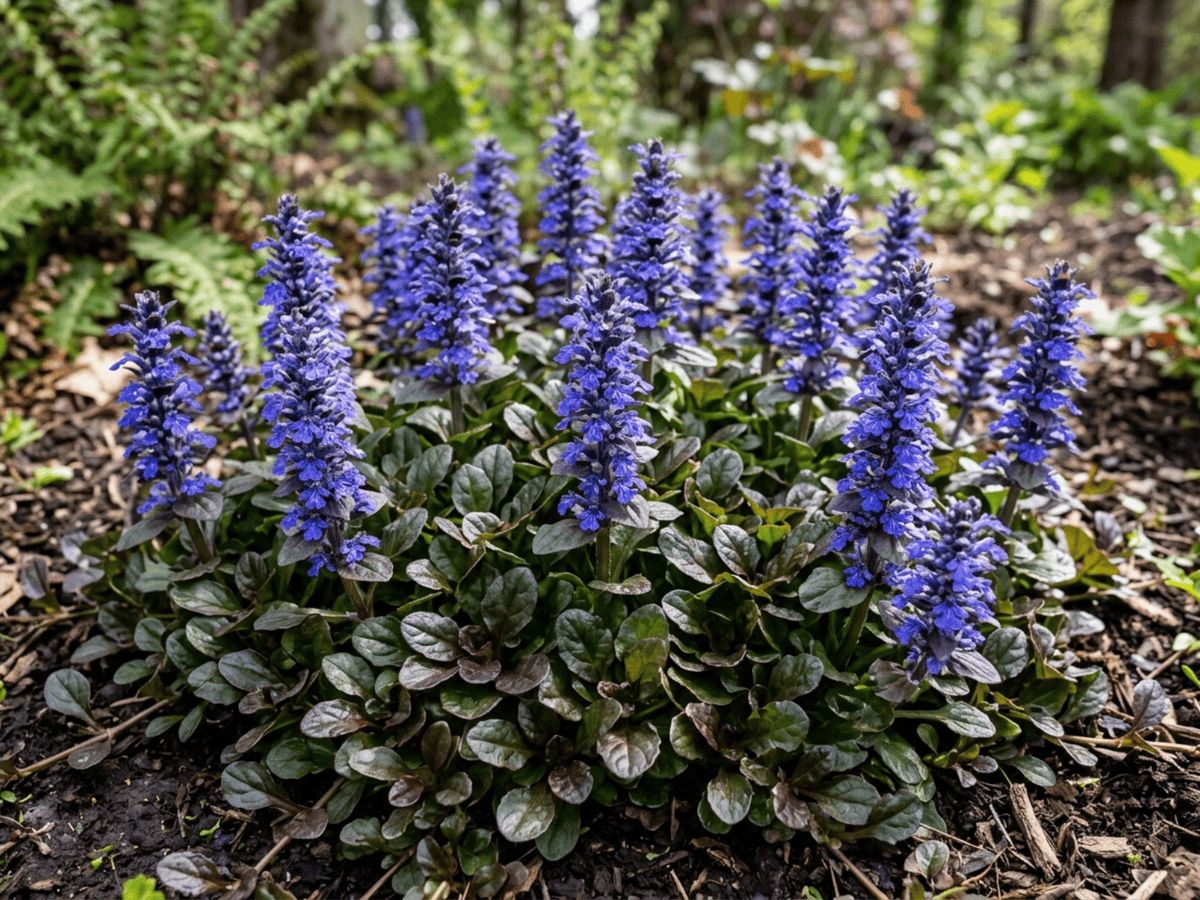 Carpet BugleAjuga reptans
Frequently asked questions
How often should I water Wild Hydrangea?
In summer, water about every 2 days; in winter, about every 14 days. Adjust for heat, pot size and drainage.
How much light does Wild Hydrangea need?
Part shade: 2–4 hrs direct. Watch the leaves — scorching or stretching means the light needs adjusting.
Is Wild Hydrangea toxic to cats or dogs?
Pets Moderate (Dogs Moderate · Cats Moderate) Educational information, not medical or veterinary advice. If exposure is suspected, contact a doctor or veterinarian.
Is Wild Hydrangea easy to grow?
Yes — it is considered an easy, beginner-friendly plant.
When does Wild Hydrangea bloom?
It typically blooms Jun–Aug in the Northern Hemisphere.
YardMate
Identify any plant in seconds
Snap a photo — YardMate names the plant, diagnoses problems, and reminds you when to water.
Download on the App Store