 YardMate


Hydrangea involucrata
Hydrangea involucrata
Medium · Some experienceAbout Hydrangea involucrata
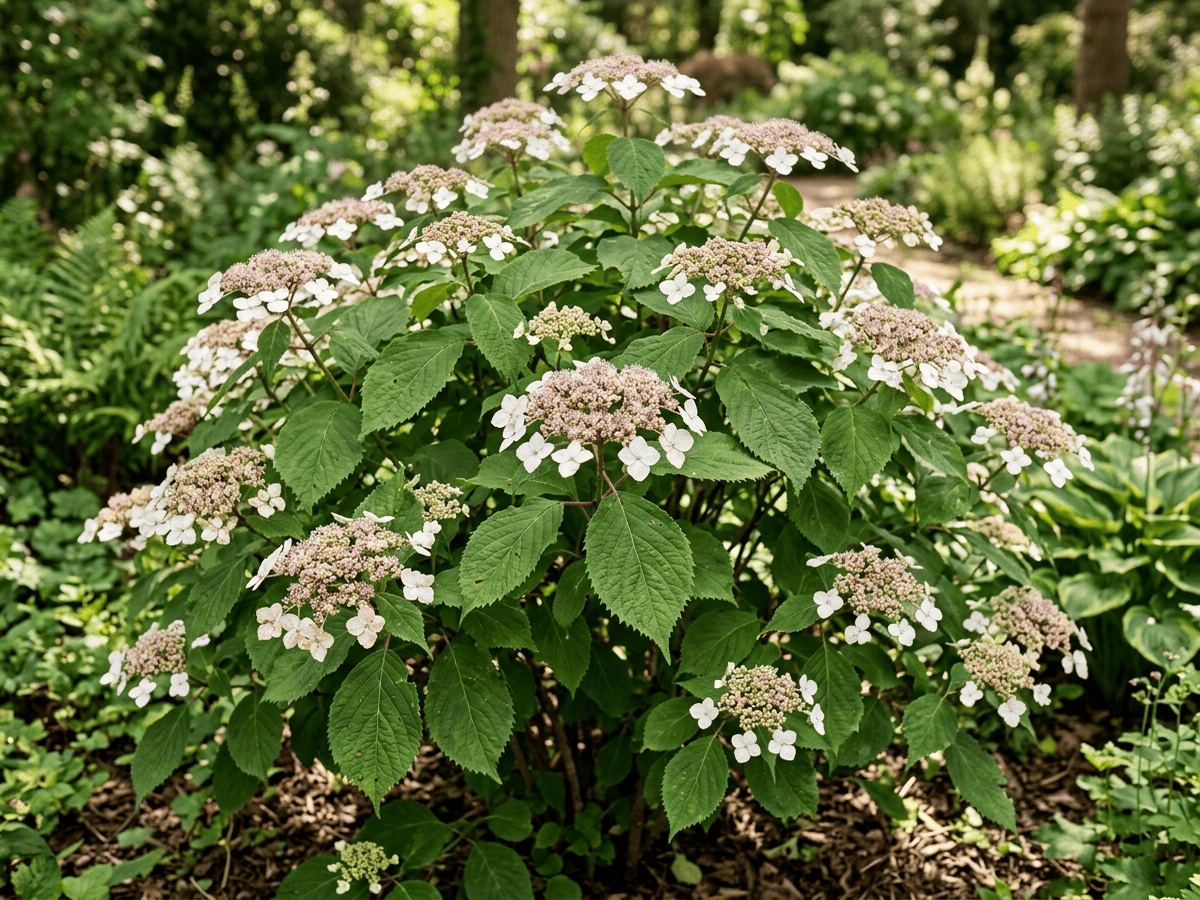
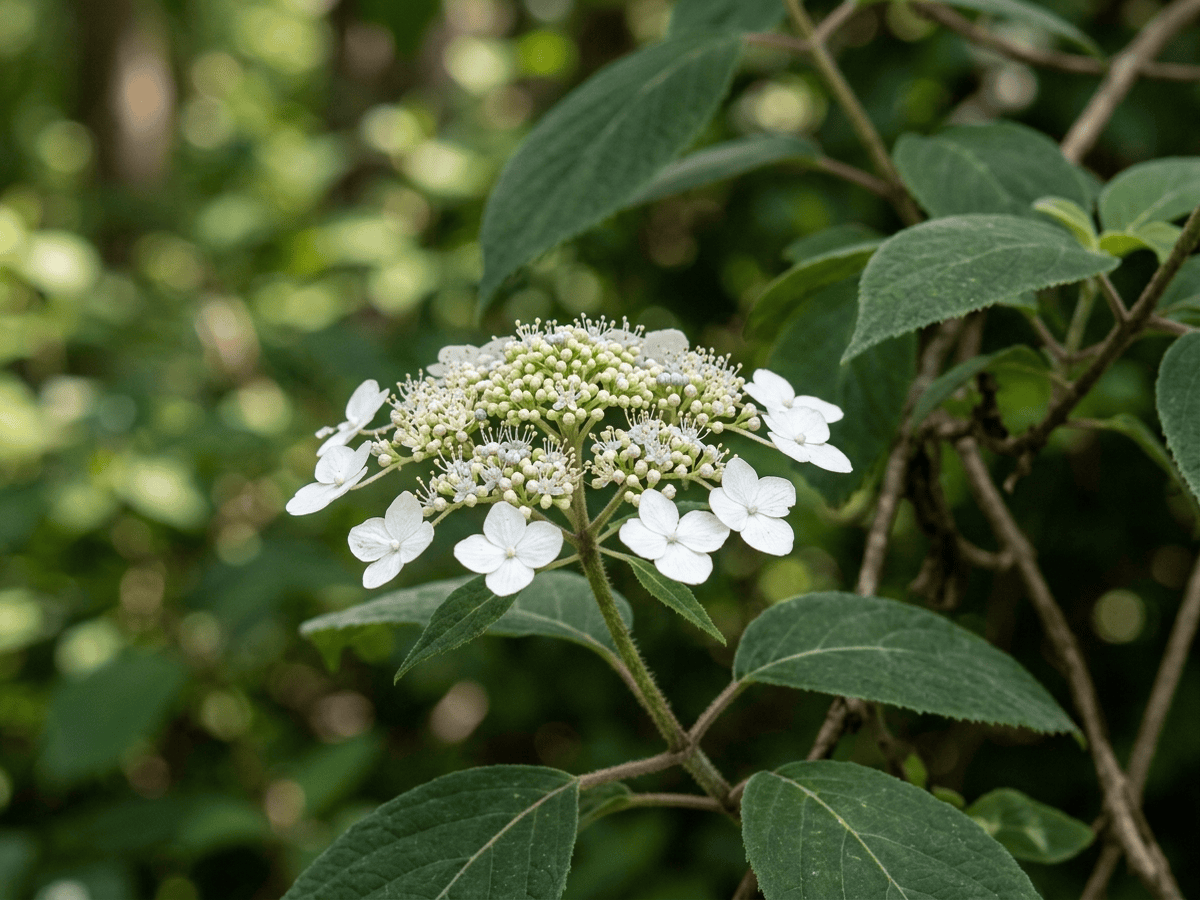
Bracted Hydrangea is a Japanese species distinguished by silky silvery hairs on leaves and young stems and by unique ball-shaped flower buds enclosed in showy bracts that unfurl into flat lacecap flowers of blue, lavender, or pink in late summer. Growing 3 to 5 feet tall, it is the latest-blooming hydrangea species, providing August color in American shade gardens when other hydrangeas are past peak.
- Cold-hardy
- Shade-tolerant
- Pollinator-friendly
How to care for Hydrangea involucrata
Watering
- Springevery 3 days
- Summerevery 2 days
- Fallevery 5 days
- Winterevery 10 days
Soil · Rich & loamy
- Top dressingBark mulch15%
- Main mixRich loam + compost 3:170%
- DrainageGravel15%
Use fully finished compost — fresh compost burns roots.
FERTILIZER
Balanced Feed 14-14-14
An even feed covers all three needs at once, keeping leaves, roots and blooms moving together with nothing pushed out of balance.
- Nitrogen · Leaves
- Phosphorus · Roots + Blooms
- Potassium · Strength
- Springevery 30 days
- Summerevery 45 days
At a Glance
- NativeEast Asia
- Height3–5 ft (0.9–1.5 m)
- Spread3–5 ft (0.9–1.5 m)
- Flower colorPink, Purple, White, Blue
- Foliage colorGreen
- SoilLoamy, Moisture-retentive, Acidic
- LocationsYard
Bloom time
BLOOM CYCLE
Peak bloom
Aug–Sep
Bracted ball buds open to lacecap flowers August to September
Toxicity
Humans Moderate · Pets Moderate
cyanogenic glycosides (hydrangin)
Moderate
- All
- Ingestion
EXPOSURE Eating any part of the plant.
EFFECT Nausea, vomiting, and dizziness.
NOTE Documented concern for humans: Nausea, vomiting, and dizziness.
Moderate
- Leaf
- Flower
- Bud
- Ingestion
EXPOSURE Eating leaves, flowers, and bud.
EFFECT Vomiting, diarrhea, and lethargy.
NOTE ASPCA lists Hydrangea as toxic to dogs, cats, and horses.
Moderate
- Leaf
- Flower
- Bud
- Ingestion
EXPOSURE Eating leaves, flowers, and bud.
EFFECT Vomiting, diarrhea, and lethargy.
NOTE ASPCA lists Hydrangea as toxic to dogs, cats, and horses.
Educational information, not medical or veterinary advice. If exposure is suspected, contact a doctor or veterinarian.
DISTRIBUTION


- Native
- East Asia
History

Hydrangea involucrata grows wild in mountain forests of central and southern Japan, extending to Taiwan. The German physician-botanist Philipp Franz von Siebold, posted at the Dutch trading station in Nagasaki from 1823, collected specimens that he described with Joseph Gerhard Zuccarini in 1829. Japanese gardeners had already cultivated the species, admiring the distinctive rounded green bracts that enclose each developing inflorescence like a small purse.
It reached European gardens through Siebold's Leiden nursery in the 1860s but remained scarce. The variegated double-flowered cultivar 'Yokudanka' has been grown in Japan since the 19th century, and 'Hortensis' offers pink pompom flowers. It is hardier than H. macrophylla but slower growing, suited to shaded woodland gardens. Native to Japan and Taiwan, introduced to American horticulture in the 20th century through Japanese plant exchanges. Among the last hydrangeas to bloom each year.
Symbolism & meaning
What It Symbolizes
Hydrangea involucrata carries late grace, blooming as summer winds down and most other hydrangeas have already given their show. Its bracts unfurl slowly, revealing delicate lacecap flowers tucked inside like a hidden treasure waiting to be discovered. It is often read as a flower of patient revelation, beauty arriving after the season's first wave has passed, gifts that ask the visitor to come back later in the year.
- Late grace — blooms when summer winds down
- Hidden treasure — bracts unfurl to reveal lacecap flowers
Where the Name Comes From
'involucrata' from Latin 'involucrum' meaning a wrapping, for the bract-enclosed flower buds.
Uses & Fun Facts
- Late-summer lacecap flowers extend hydrangea season
- Fertile lacecap florets attract bees and small pollinators
- Collector Japanese hydrangea for shade borders
Related plants
More Hydrangea plants
 Chinese HydrangeaHydrangea anomala
 Wild HydrangeaHydrangea arborescens
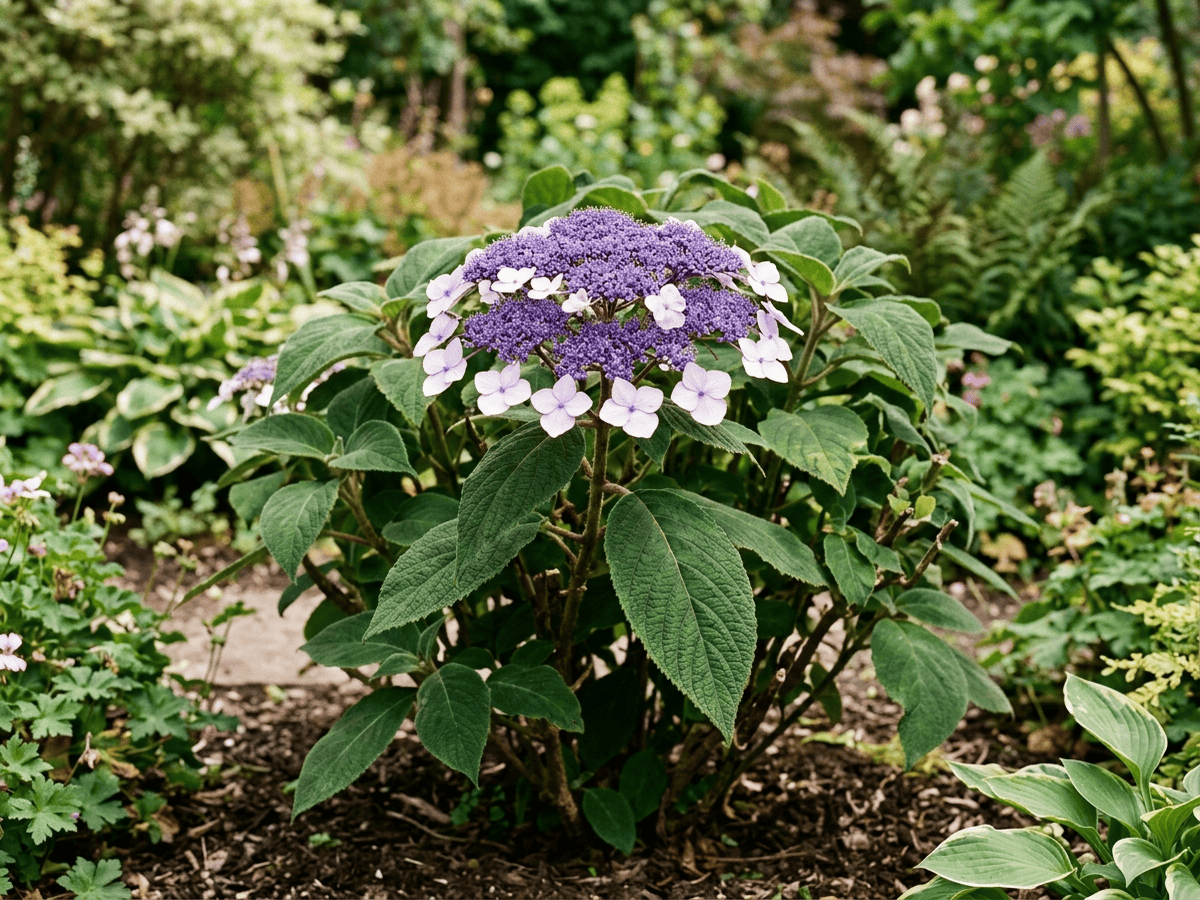 Rough-Leaved HydrangeaHydrangea aspera
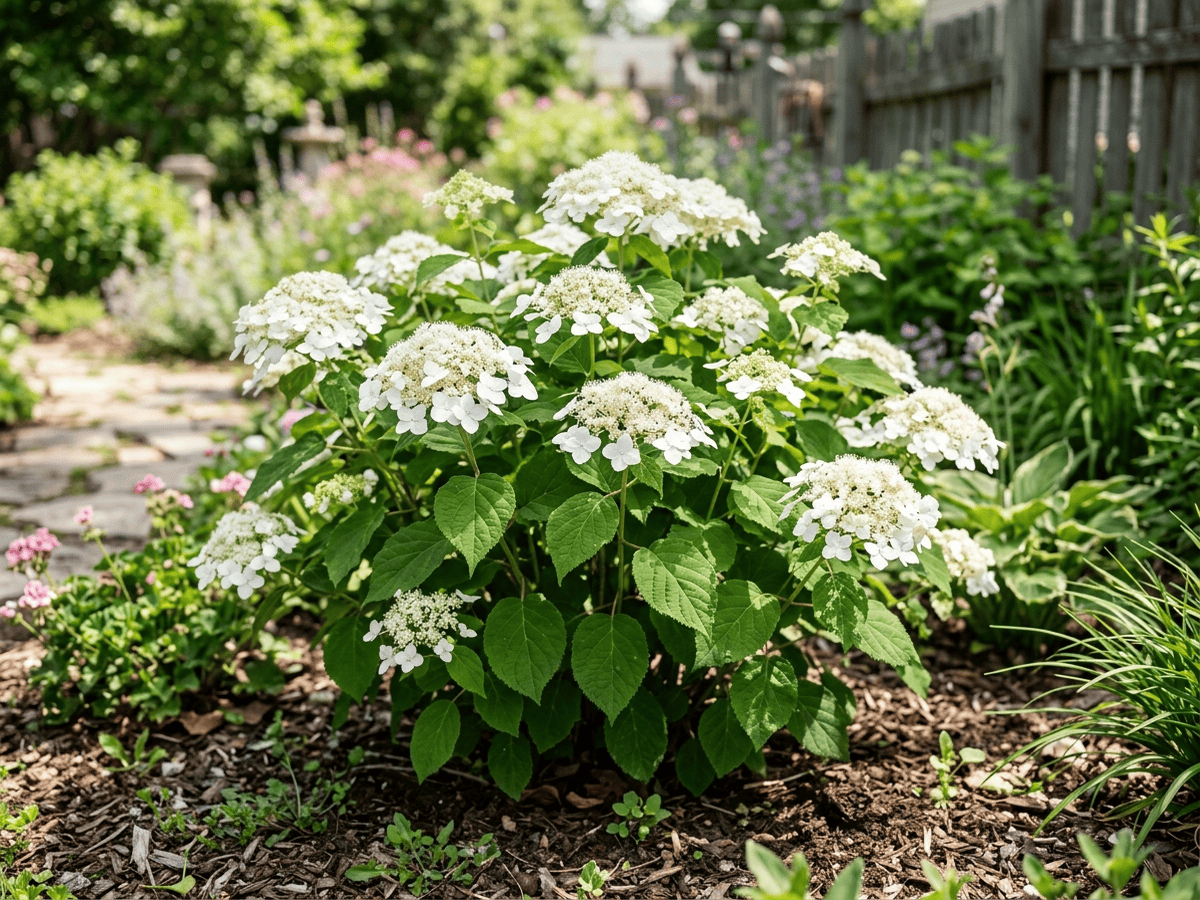 Himalayan HydrangeaHydrangea heteromalla
Plants with similar care
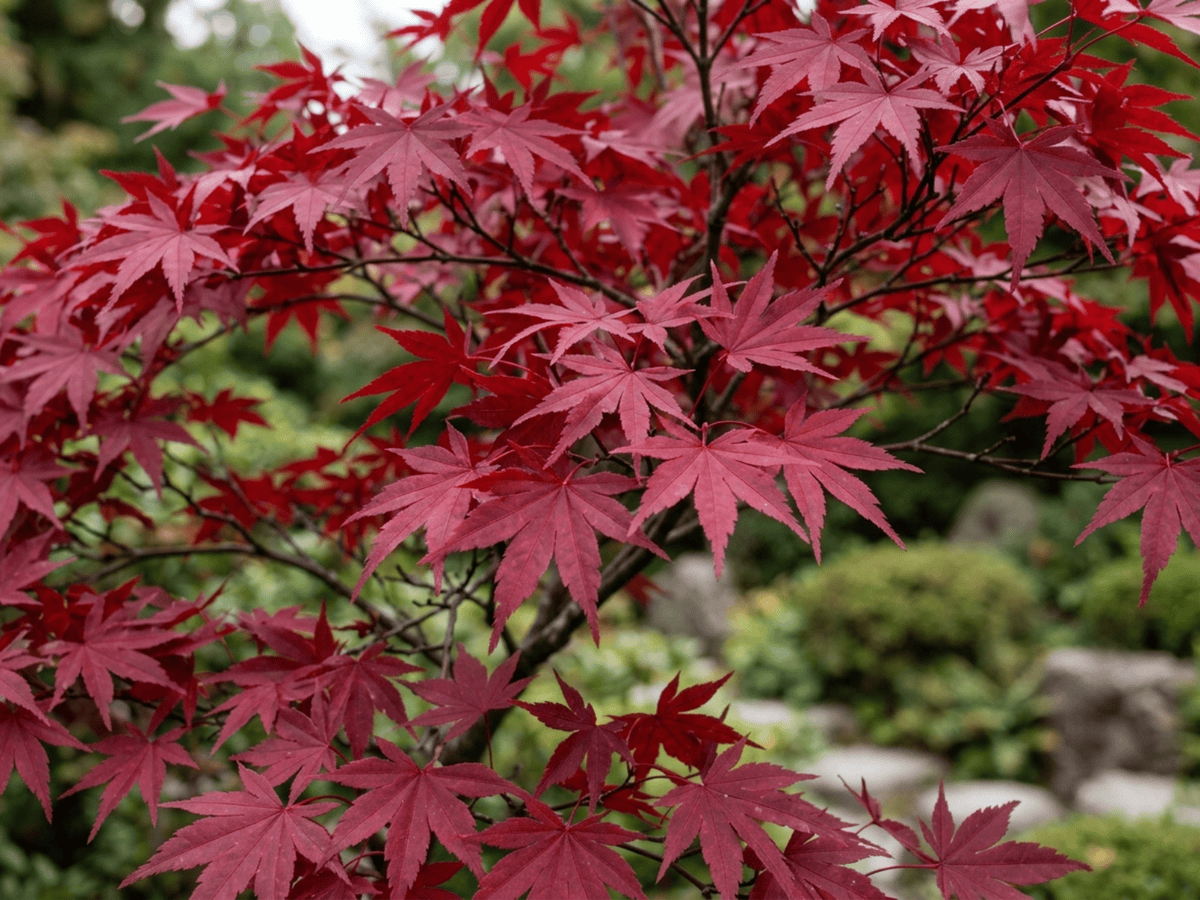 Japanese MapleAcer palmatum
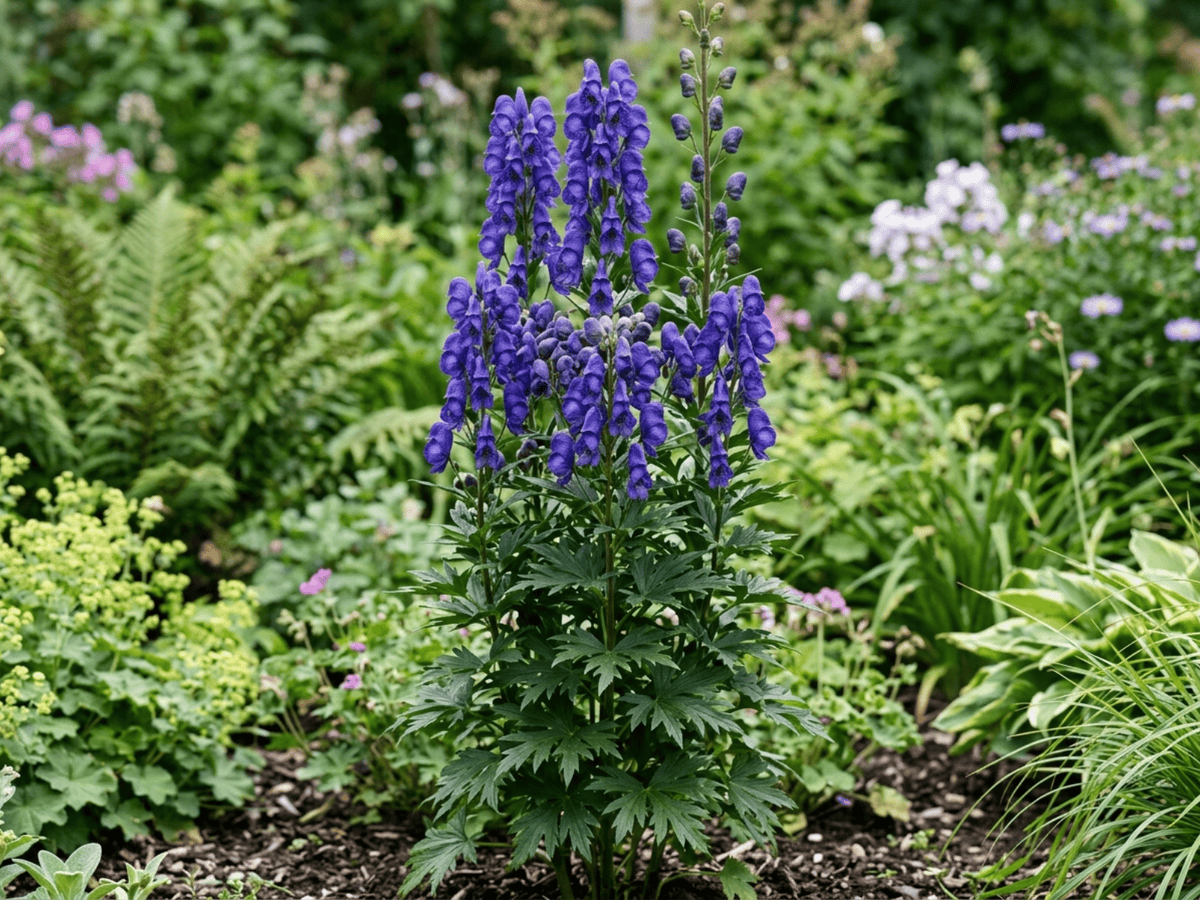 Azure MonkshoodAconitum carmichaelii
 Florida HobblebushAgarista populifolia
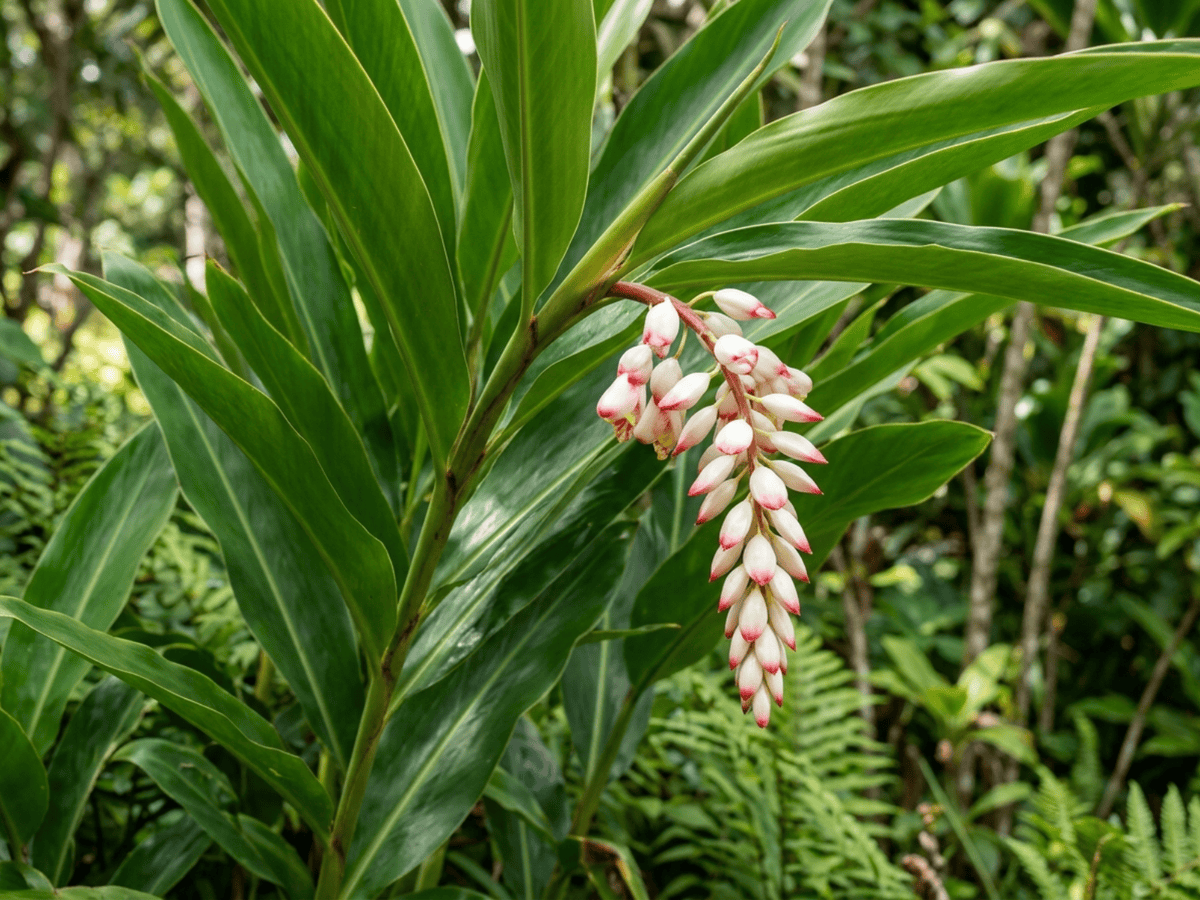 Shell GingerAlpinia zerumbet
Frequently asked questions
How often should I water Hydrangea involucrata?
In summer, water about every 2 days; in winter, about every 10 days. Adjust for heat, pot size and drainage.
How much light does Hydrangea involucrata need?
Part shade: 2–4 hrs direct. Watch the leaves — scorching or stretching means the light needs adjusting.
Is Hydrangea involucrata toxic to cats or dogs?
Pets Moderate (Dogs Moderate · Cats Moderate) Educational information, not medical or veterinary advice. If exposure is suspected, contact a doctor or veterinarian.
Is Hydrangea involucrata easy to grow?
It is moderately demanding: a good choice once you have a little experience.
When does Hydrangea involucrata bloom?
It typically blooms Aug–Sep in the Northern Hemisphere.
YardMate
Identify any plant in seconds
Snap a photo — YardMate names the plant, diagnoses problems, and reminds you when to water.
Download on the App Store