 YardMate



Common Duckweed
Lemna minor
Easy · Beginner friendlyAbout Common Duckweed
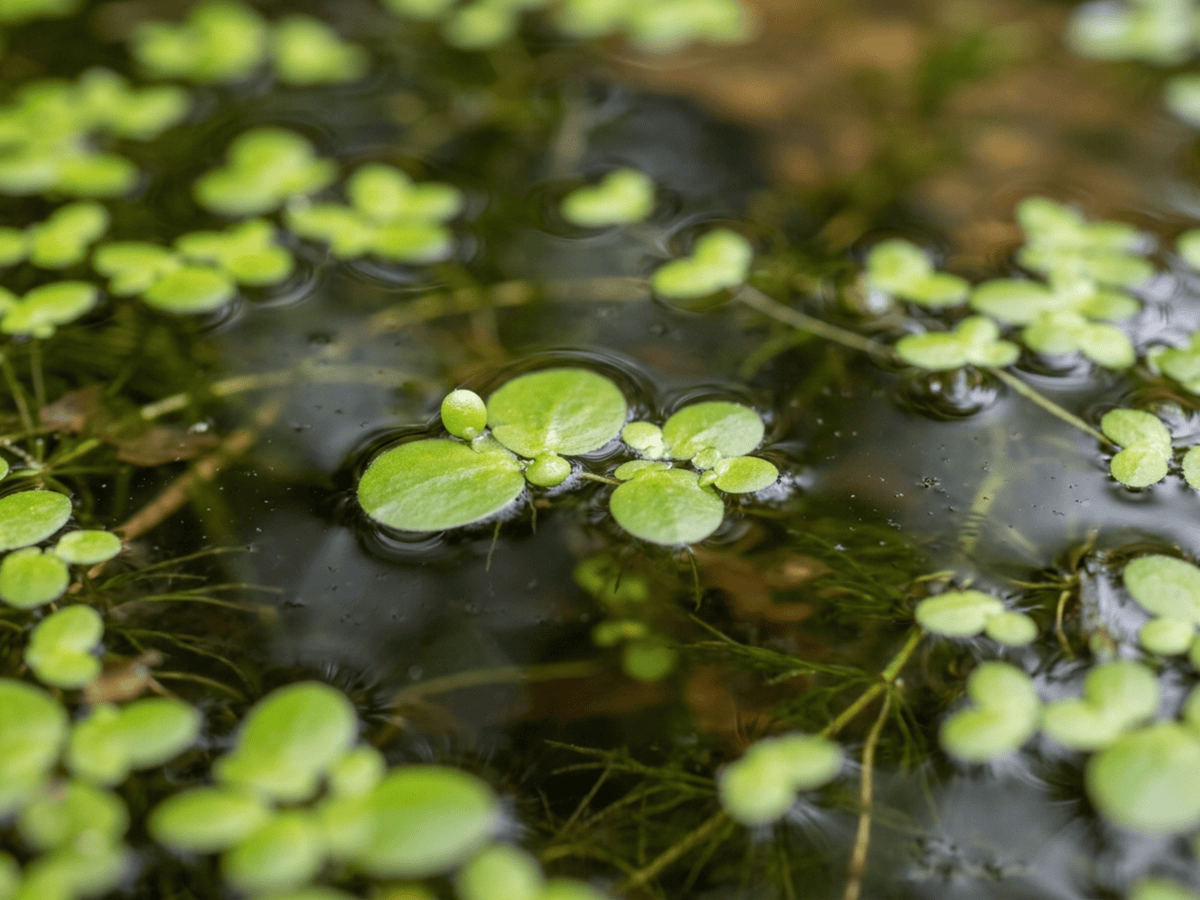
Lemna minor, the common duckweed, is one of the smallest flowering plants in the world — each individual consists of a single, flat, oval frond just 2–5 mm across with a single tiny root dangling below. Native to temperate and tropical regions worldwide, it floats on the surface of still or slow-moving freshwater, reproducing primarily by budding so rapidly that it can double its population in just two days under optimal conditions. A single frond can theoretically produce a mass equal to Earth's weight in a few months of unchecked growth. Despite its diminutive size, it has enormous ecological and economic significance — it is a primary food source for ducks and waterfowl (hence the name), a highly efficient wastewater treatment organism, and a promising source of sustainable animal feed and biofuel. In ponds, dense duckweed cover blocks light and can deplete oxygen, making it problematic in unmanaged water bodies.
- Fast-growing
- Edible
- Low-maintenance
How to care for Common Duckweed
Watering
- Springevery 1 days
- Summerevery 1 days
- Fallevery 1 days
- Winterevery 1 days
Soil · Bog-wet
- WaterStanding water above soil20%
- SoilHeavy pond soil80%
No drainage layer — keep water standing above the soil.
FERTILIZER
This plant needs little to no feeding.
At a Glance
- Height0.5–1 ft (0.2–0.3 m)
- Spread1–3 ft (0.3–0.9 m)
- Foliage colorGreen
- SoilMoisture-retentive
- LocationsYard
Bloom time
BLOOM CYCLE
Peak bloom
Jun–Aug
Flowers are microscopic and extremely rare; reproduction is almost entirely vegetative
Fragrance
NO FRAGRANCE
No notable fragrance.
Toxicity
No toxicity has been reported for this plant. Still, it is wise to keep pets from chewing on any houseplant.
Educational information, not medical or veterinary advice. If exposure is suspected, contact a doctor or veterinarian.
DISTRIBUTION

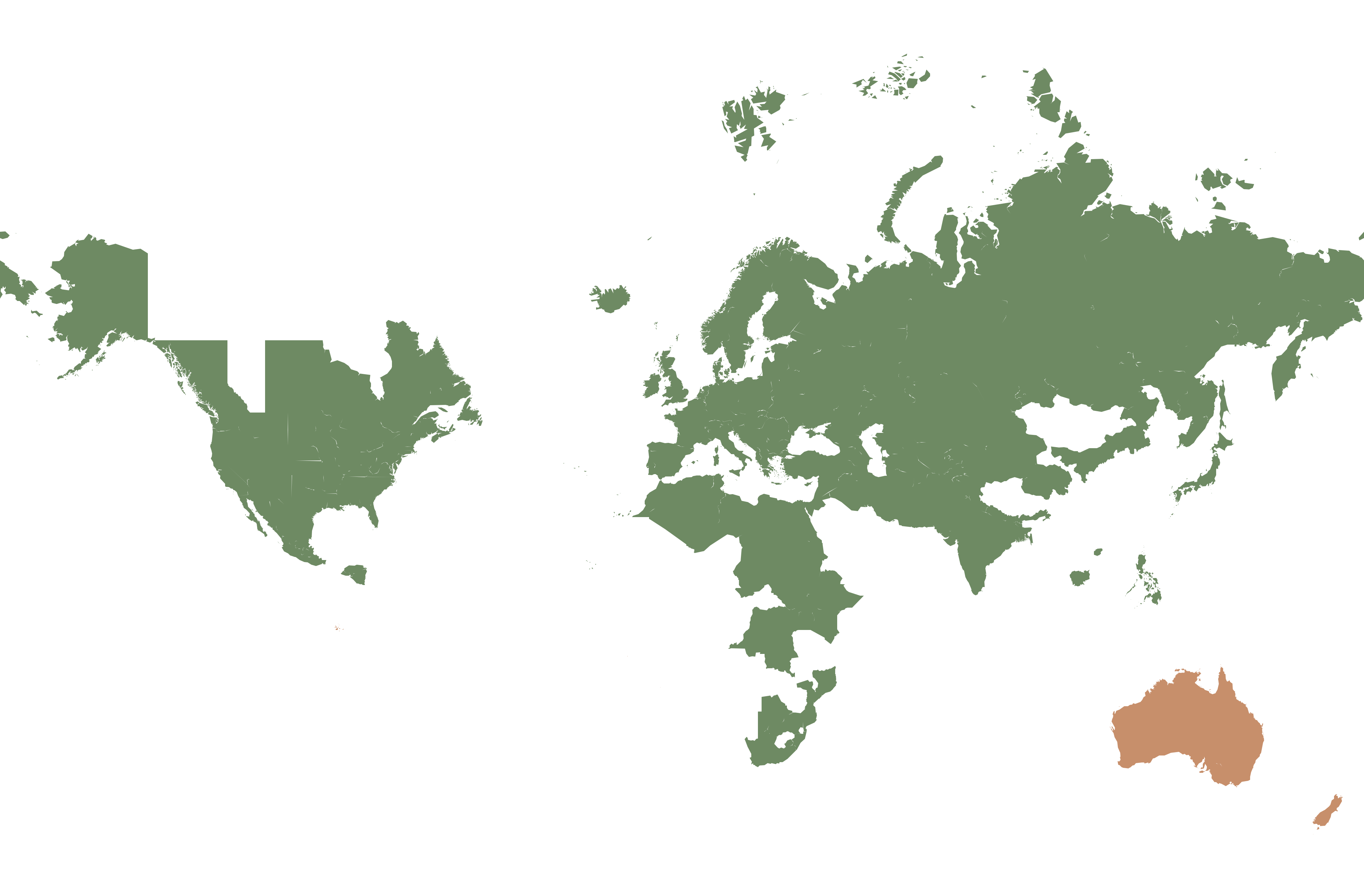
- Native
- Introduced
History
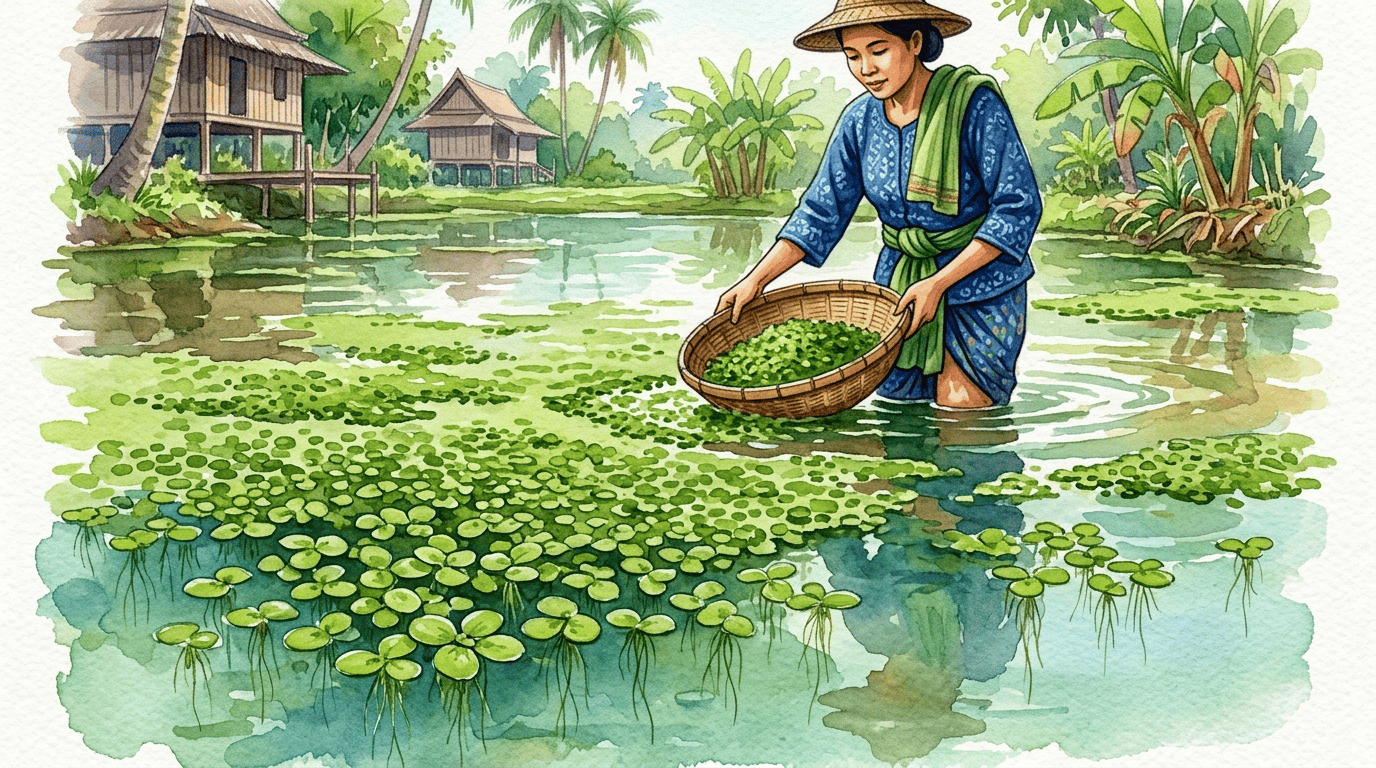
Lemna minor is a tiny free-floating aquatic flowering plant in the Araceae family (in older classifications the Lemnaceae), distributed nearly worldwide in still freshwater — ponds, canals, ditches, and slow marshes. Individual plants consist of a single 2-5 mm green oval thalloid leaf (sometimes paired with 1-3 daughter plants still attached) and a single thread-like root hanging below. It reproduces mostly vegetatively by budding, with exponential growth that can double populations every 1-2 days in warm nutrient-rich conditions — making it one of the fastest-reproducing flowering plants known and a staple of plant-physiology laboratory research. Duckweeds (Lemna, Spirodela, Wolffia, Landoltia) have multiple emerging practical applications: as protein-rich animal feed (chicken, fish, pig), as "water broccoli" aquaculture for human food in parts of Southeast Asia (particularly Thailand), as tertiary wastewater treatment (absorbing dissolved nitrogen and phosphorus, particularly at sewage lagoons), and as bioenergy feedstock.
The genus Wolffia includes the world's smallest flowering plant, W. globosa (about 0.6 mm). Duckweeds are an important food for waterfowl (hence the common name) and their dense surface mats can cause water-quality problems by blocking light and reducing dissolved oxygen in excess. Duckweed has been part of human culture for centuries — in parts of Southeast Asia, species of Lemna and its relative Wolffia (the absolute smallest flowering plant) are eaten as a vegetable rich in protein.
Modern research has identified duckweed as a potential game-changer in sustainable food production — it contains up to 45 percent protein by dry weight, grows faster than any other flowering plant, and can be cultivated on wastewater, simultaneously purifying the water and producing biomass. NASA studied duckweed for potential use in space life support systems. The plant also holds promise as a biofuel feedstock, with starch content that can be fermented into ethanol more efficiently than corn.
Symbolism & meaning
What It Symbolizes
Common Duckweed is simplicity reduced to a single floating leaf, the most minimal flowering plant yet devised by evolution. Beneath its modesty lies extraordinary potential — doubling its biomass in days, feeding ducks and future sustainable proteins alike. In green pinpricks across a quiet pond, an entire philosophy of less-is-more drifts past.
- Simplicity — The most minimal flowering plant represents elegance in reduction
- Potential — Tiny size belies enormous reproductive and nutritional capacity
Where the Name Comes From
Lemna from Greek 'limne' (lake or marsh). Minor is Latin for 'smaller,' distinguishing it from larger duckweed species.
Uses & Fun Facts
- Floating biomass treats wastewater and reduces nutrient pollution
- High-protein fronds explored as livestock feed and biofuel
- Tiny green carpet shades aquarium and pond water surfaces
Related plants
Plants with similar care
 Chinese AbeliaAbelia chinensis
 Fragrant AbeliaAbelia mosanensis
 Large-Flowered AbeliaAbelia uniflora
 Glossy AbeliaAbelia x grandiflora
Frequently asked questions
How often should I water Common Duckweed?
In summer, water about every 1 days; in winter, about every 1 days. Adjust for heat, pot size and drainage.
How much light does Common Duckweed need?
Full sun: 6+ hrs direct. Watch the leaves — scorching or stretching means the light needs adjusting.
Is Common Duckweed toxic to cats or dogs?
No toxicity has been reported for this plant. Still, it is wise to keep pets from chewing on any houseplant. Educational information, not medical or veterinary advice. If exposure is suspected, contact a doctor or veterinarian.
Is Common Duckweed easy to grow?
Yes — it is considered an easy, beginner-friendly plant.
When does Common Duckweed bloom?
It typically blooms Jun–Aug in the Northern Hemisphere.
YardMate
Identify any plant in seconds
Snap a photo — YardMate names the plant, diagnoses problems, and reminds you when to water.
Download on the App Store