 YardMate


Japanese Honeysuckle
Lonicera japonica
Easy · Beginner friendlyAbout Japanese Honeysuckle
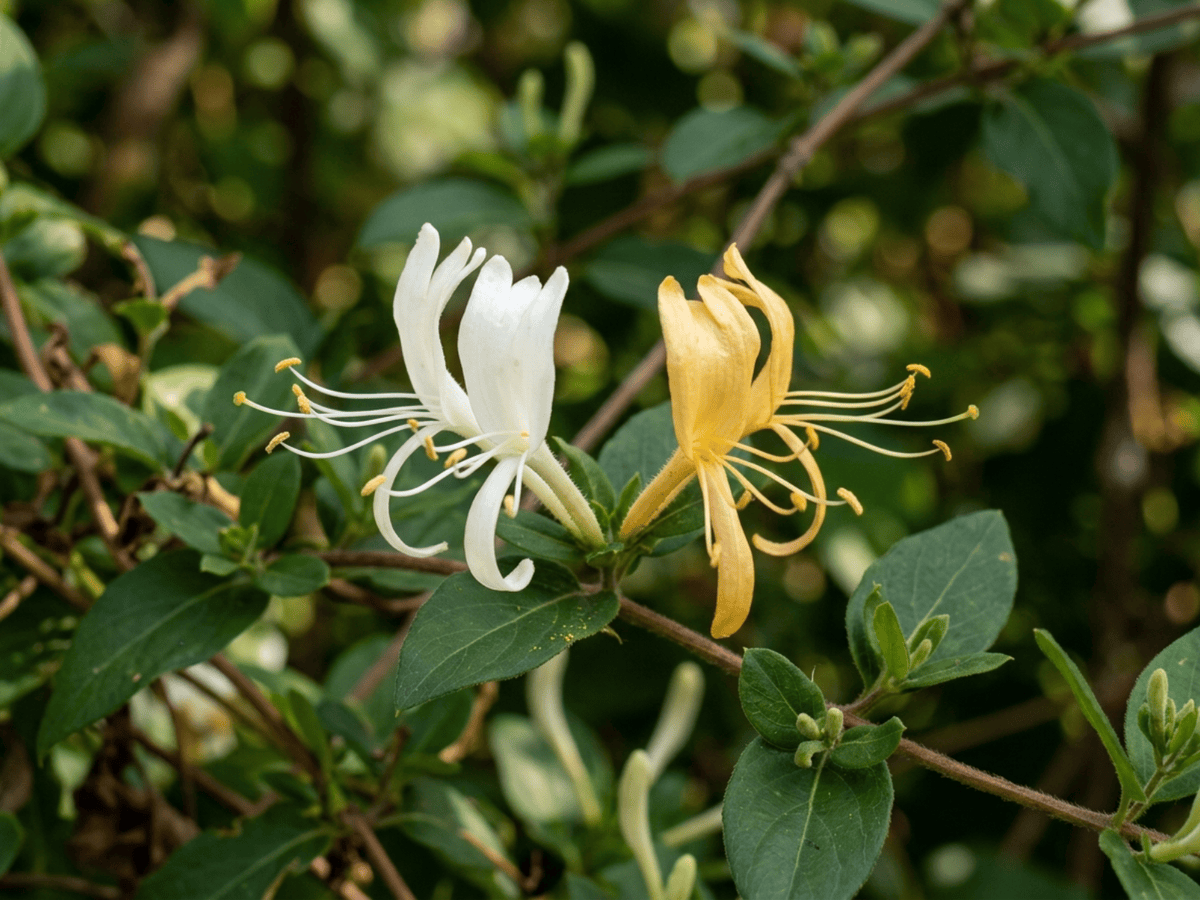
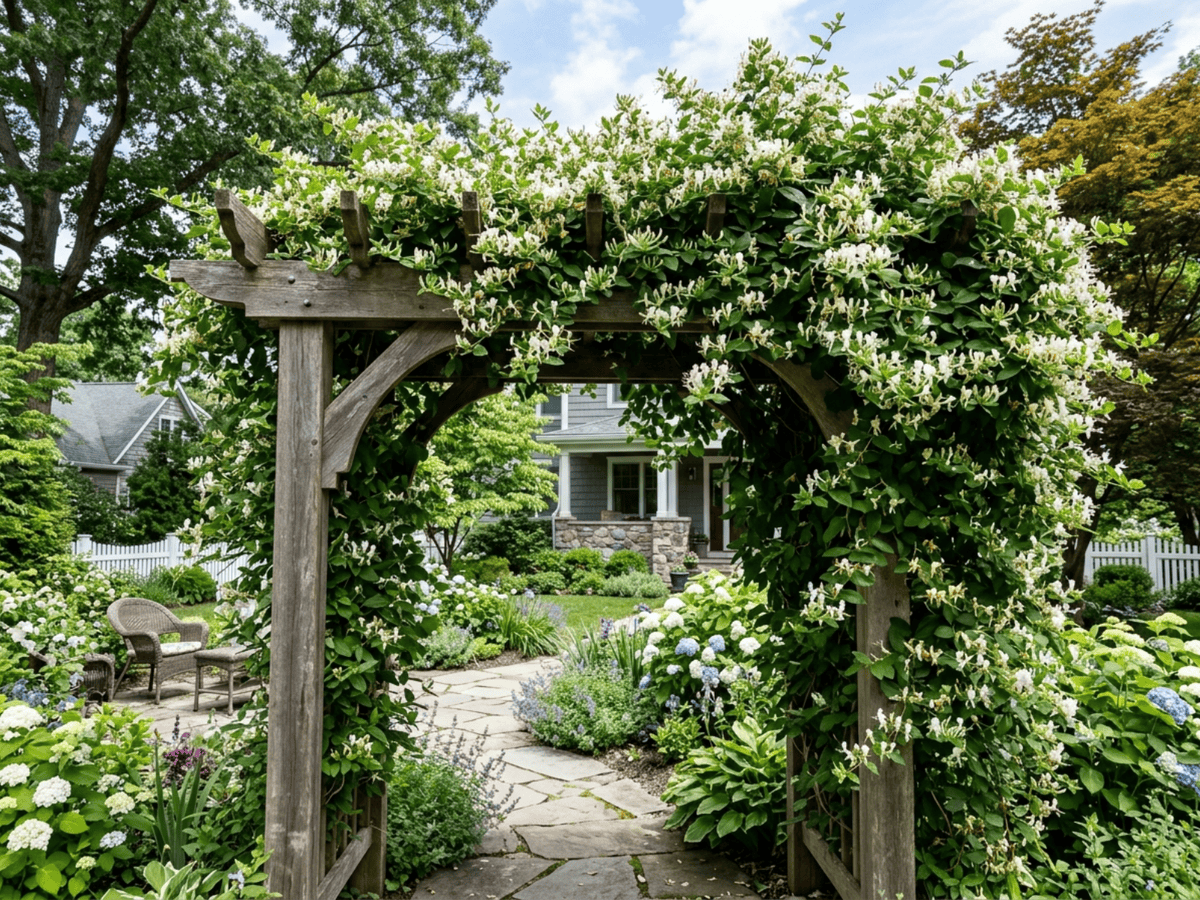
Lonicera japonica, known as Japanese honeysuckle, is a vigorous semi-evergreen to evergreen climbing vine native to eastern Asia. It is beloved for its intensely fragrant, tubular flowers that open white and gradually turn golden yellow, filling the air with one of the sweetest natural perfumes. The flowers appear from late spring through fall, providing an extended season of fragrance and nectar for hummingbirds and butterflies. However, this beauty comes with a dark side — Japanese honeysuckle is one of the most destructive invasive plants in the eastern United States, smothering native vegetation with its dense, twining growth. It can grow 5 to 10 meters per season, climbing trees and forming impenetrable thickets. The small black berries are mildly toxic. Despite its invasive nature, the flower is deeply embedded in Asian traditional medicine, where it is called 'jin yin hua' and used as an anti-inflammatory and fever reducer. Non-invasive cultivars like 'Purpurea' are available for garden use.
- Fragrant
- Climbing
- Evergreen
- Pollinator-friendly
How to care for Japanese Honeysuckle
Watering
- Springevery 7 days
- Summerevery 5 days
- Fallevery 14 days
- Winterevery 30 days
Soil · Well-draining
- Top dressingPine bark mulch10%
- Main mixPotting soil + perlite 2:170%
- DrainageLECA / gravel20%
Never skip the drainage layer — standing water is the top cause of root rot.
FERTILIZER
- Springevery 60 days
At a Glance
- NativeEast Asia
- Height15–30 ft (4.6–9.1 m)
- Spread6–10 ft (1.8–3 m)
- Flower colorWhite, Yellow, Pink
- Foliage colorGreen
- SoilLoamy, Well-drained
- LocationsYard
Bloom time
BLOOM CYCLE
Peak bloom
Mar–Nov
White-to-gold flowers spring through fall; prune hard in winter to control spread
Fragrance
STRONG FRAGRANCE
Intensely sweet, iconic summer-evening fragrance.
Toxicity
Humans Slight · Pets Slight
saponins and carotenoids
Slight
- Fruit
- Ingestion
EXPOSURE Eating fruit.
EFFECT Berries may cause mild gastrointestinal upset and flowers traditionally consumed as medicinal tea.
NOTE Documented concern for humans: Berries may cause mild gastrointestinal upset and flowers traditionally consumed as medicinal tea.
Slight
- Fruit
- Ingestion
EXPOSURE Eating fruit.
EFFECT Mild GI upset from berries.
NOTE Not specifically listed by ASPCA. Some Lonicera species are more toxic than others; berries are generally mildly toxic.
Slight
- Fruit
- Ingestion
EXPOSURE Eating fruit.
EFFECT Mild GI upset from berries.
NOTE Not specifically listed by ASPCA. Some Lonicera species are more toxic than others; berries are generally mildly toxic.
Educational information, not medical or veterinary advice. If exposure is suspected, contact a doctor or veterinarian.
DISTRIBUTION

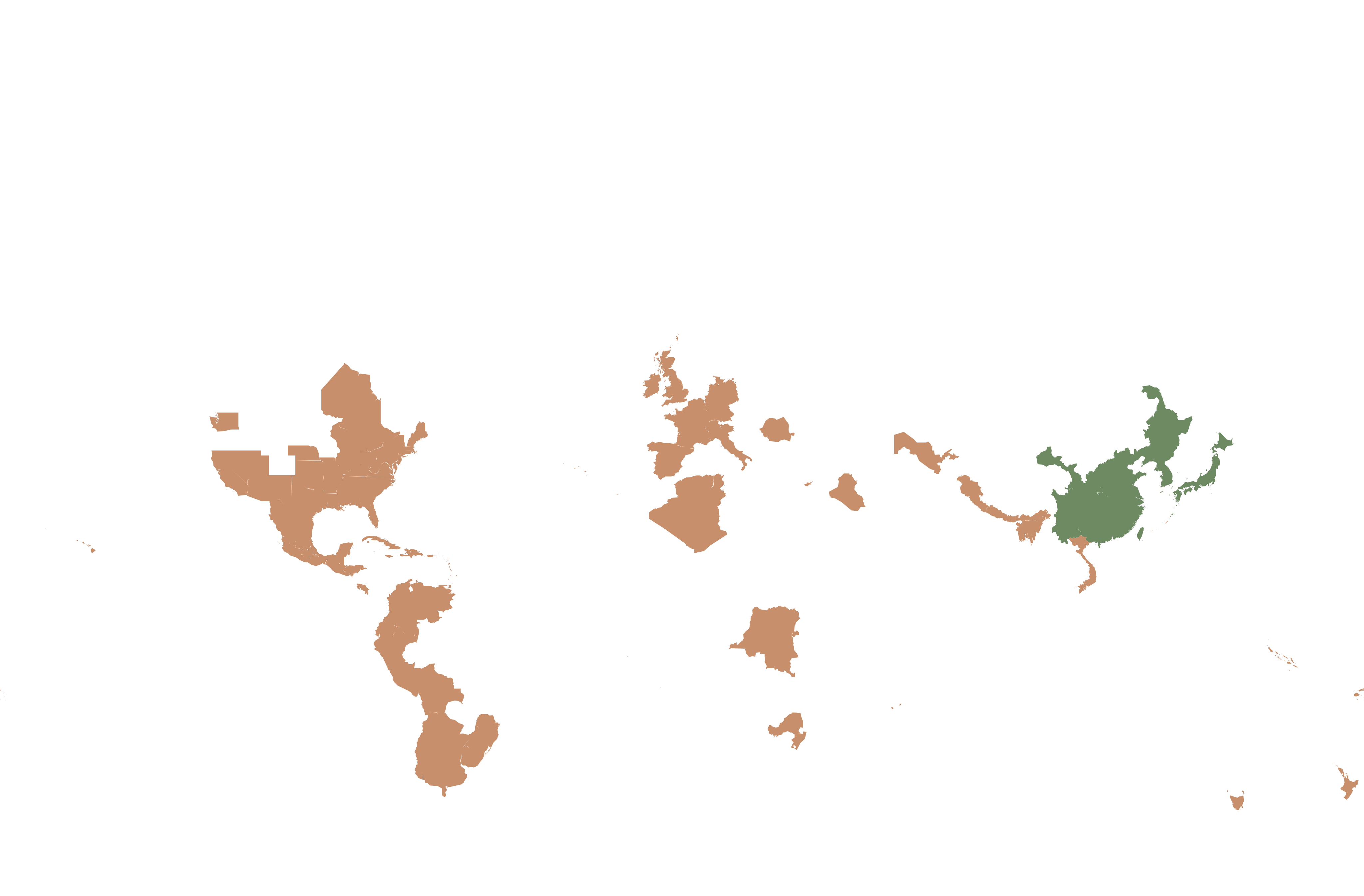
- Native
- Introduced
- East Asia
History
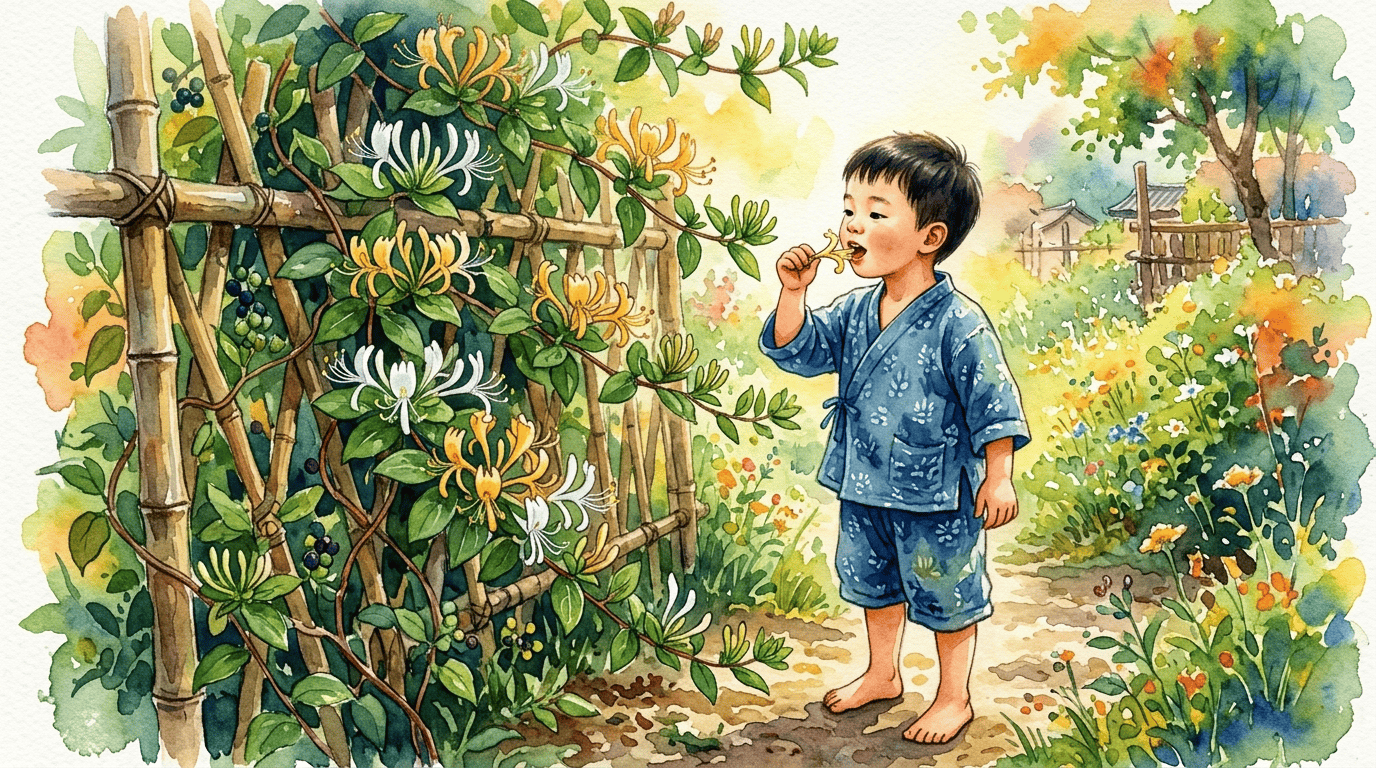
Lonicera japonica is native to China, Korea, Japan, and Taiwan, where it grows as a vigorous vine along forest edges and disturbed ground. Its white flowers age to yellow, filling summer air with perfume and giving children sweet drops of nectar. Introduced to the United States as an ornamental on Long Island in 1806, it was later promoted for erosion control, wildlife food, and living hedges.
That well-intended enthusiasm became an ecological mistake. Japanese honeysuckle escaped into pastures, roadsides, and woodlands across more than 30 states, smothering native understory plants and pulling down young trees. In Chinese medicine the flowers, known as gold-and-silver flower because fresh and aged blooms appear together, have been used for fever and infection for many centuries. The vine is therefore both beloved and damaging: fragrant medicine in one cultural frame, invasive blanket in another.
Symbolism & meaning
What It Symbolizes
Japanese honeysuckle is devotion clinging — its persistent twining growth wraps fences and trellises with the kind of unwavering grip that has made it both a beloved garden vine and a notorious invader of American woodlands. Yet its sweet evening fragrance carries another meaning entirely: sweet memories, the scent of porches and summer dusk that whole generations of Southerners associate with home.
- Devotion — The vine's persistent, clinging growth represents unwavering love
- Sweet Memories — Its intoxicating fragrance evokes nostalgic summer evenings
Where the Name Comes From
'Lonicera' honors Adam Lonicer, a 16th-century German physician and botanist. 'Japonica' indicates its Japanese origin. The common name 'honeysuckle' comes from the practice of sucking sweet nectar from the flower base.
Uses & Fun Facts
- White-and-yellow flowers release intense honeysuckle perfume on summer evenings
- Flower buds Jin Yin Hua used in Chinese medicine for fever
- Tubular blooms attract hawk moths and hummingbirds at dusk
Related plants
More Lonicera plants
 Common HoneysuckleLonicera periclymenum
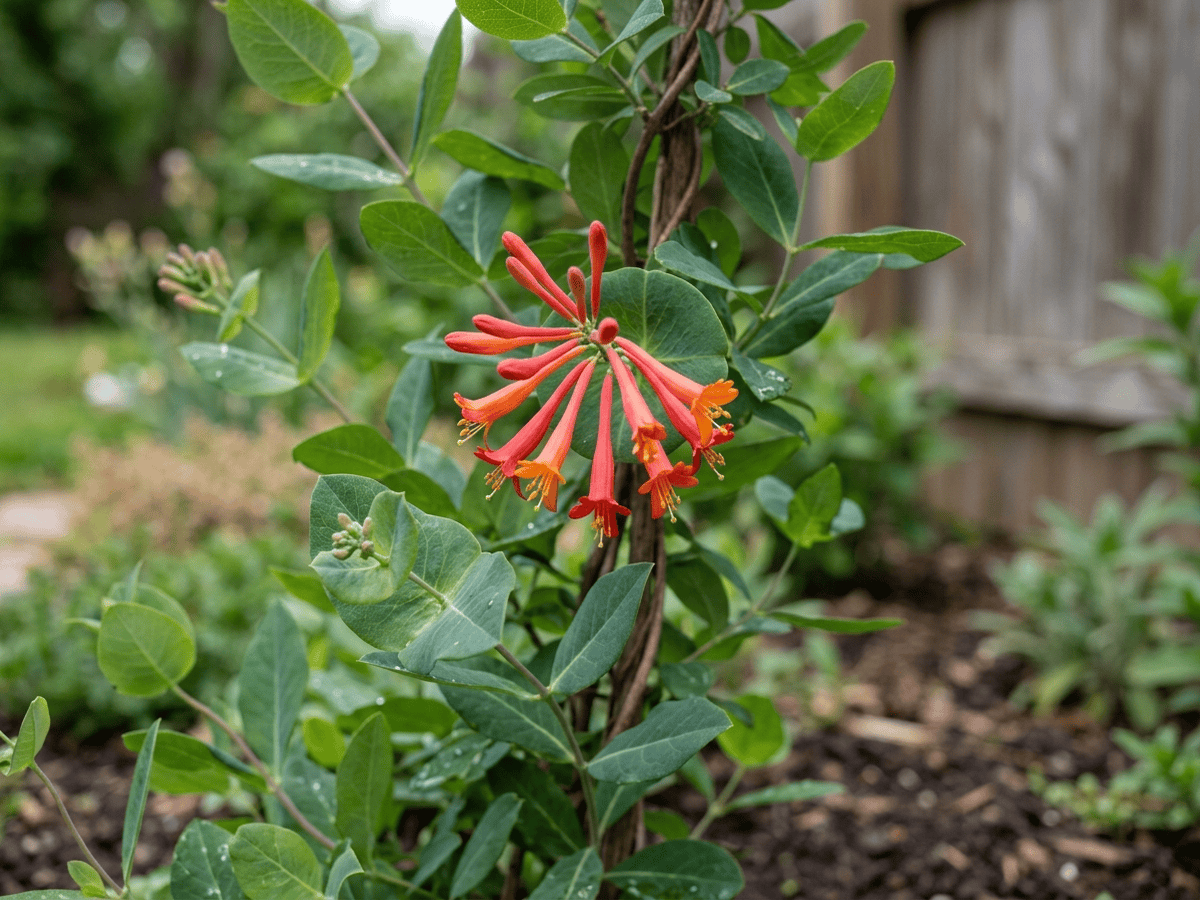 Coral HoneysuckleLonicera sempervirens
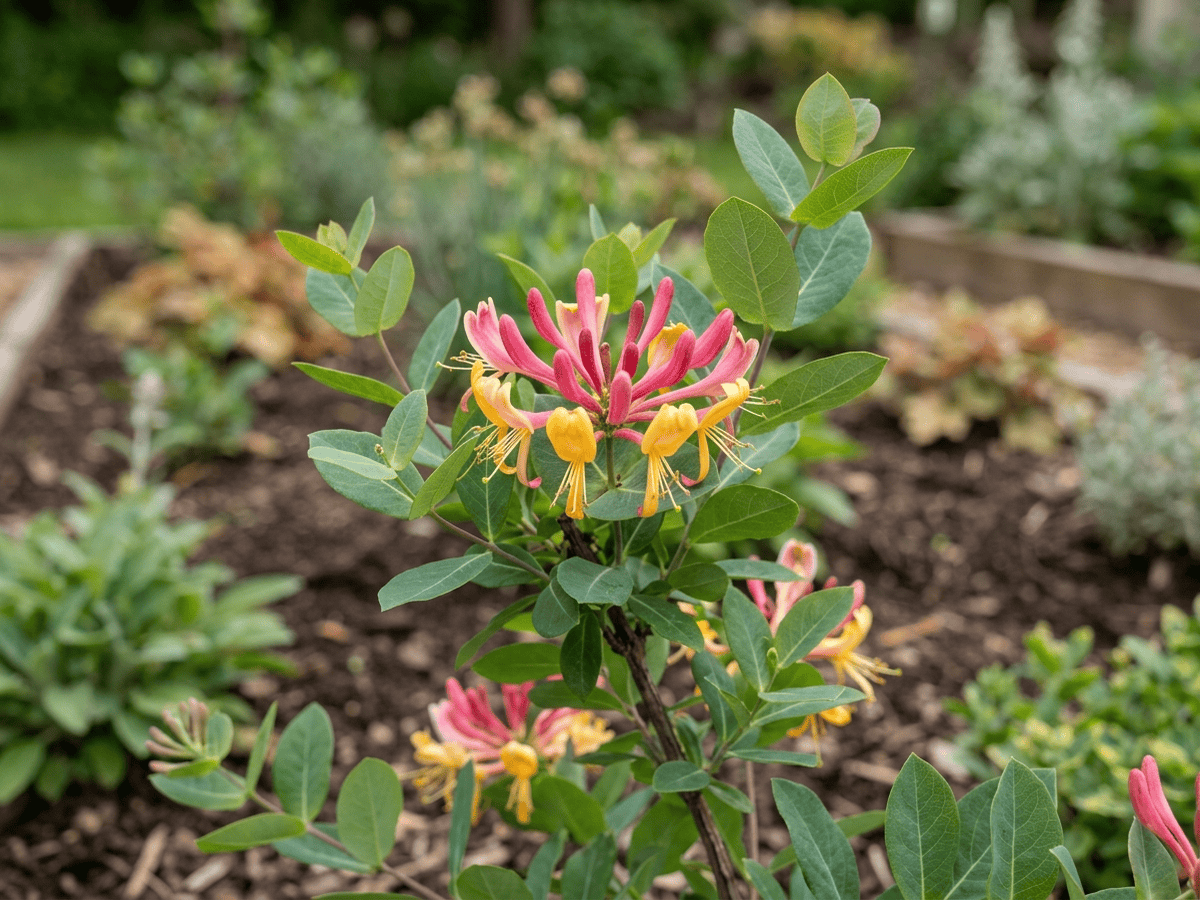 HoneysuckleLonicera x heckrottii
Plants with similar care
 Chinese AbeliaAbelia chinensis
 Fragrant AbeliaAbelia mosanensis
 Large-Flowered AbeliaAbelia uniflora
 Glossy AbeliaAbelia x grandiflora
Frequently asked questions
How often should I water Japanese Honeysuckle?
In summer, water about every 5 days; in winter, about every 30 days. Adjust for heat, pot size and drainage.
How much light does Japanese Honeysuckle need?
Full sun: 6+ hrs direct. Watch the leaves — scorching or stretching means the light needs adjusting.
Is Japanese Honeysuckle toxic to cats or dogs?
Pets Slight (Dogs Slight · Cats Slight) Educational information, not medical or veterinary advice. If exposure is suspected, contact a doctor or veterinarian.
Is Japanese Honeysuckle easy to grow?
Yes — it is considered an easy, beginner-friendly plant.
When does Japanese Honeysuckle bloom?
It typically blooms Mar–Nov in the Northern Hemisphere.
YardMate
Identify any plant in seconds
Snap a photo — YardMate names the plant, diagnoses problems, and reminds you when to water.
Download on the App Store