 YardMate

Honeysuckle
Lonicera x heckrottii
Easy · Beginner friendlyAbout Honeysuckle
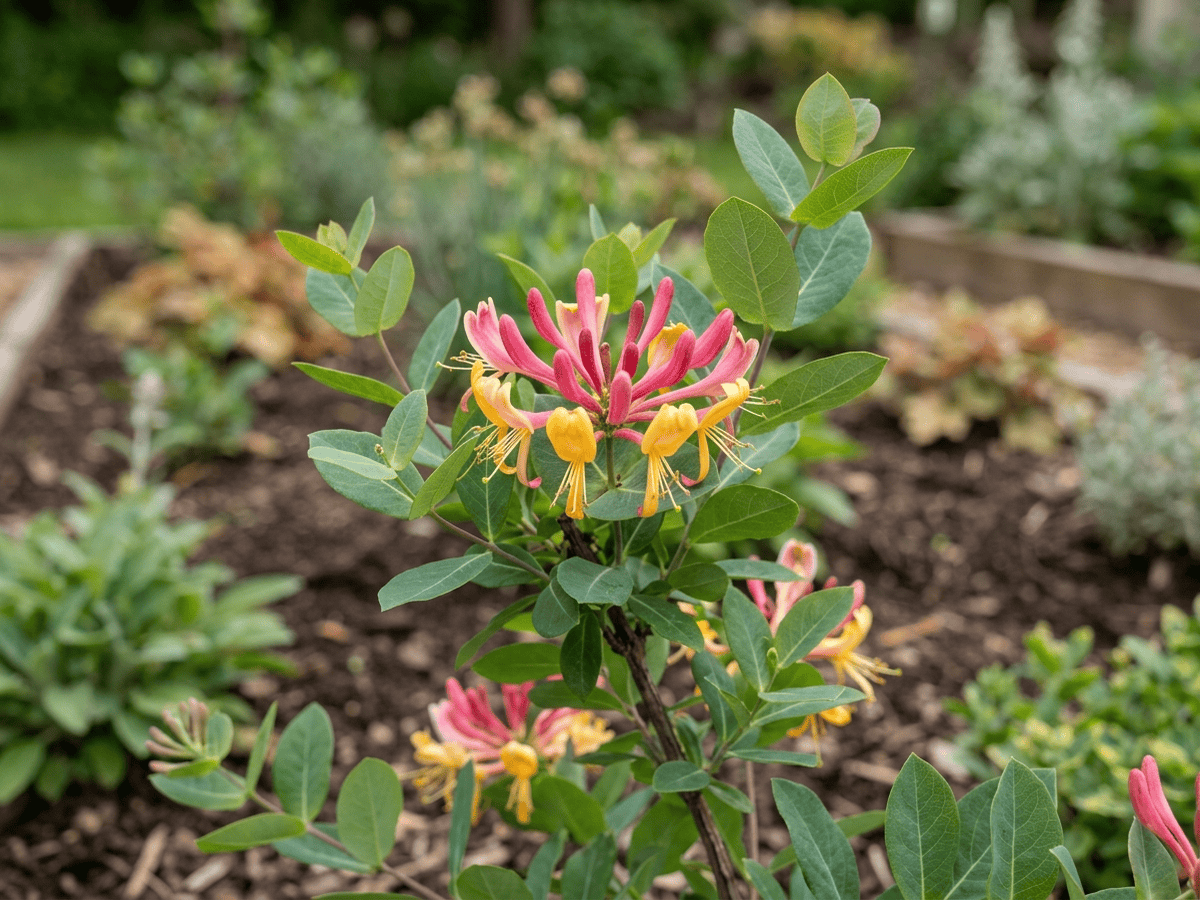
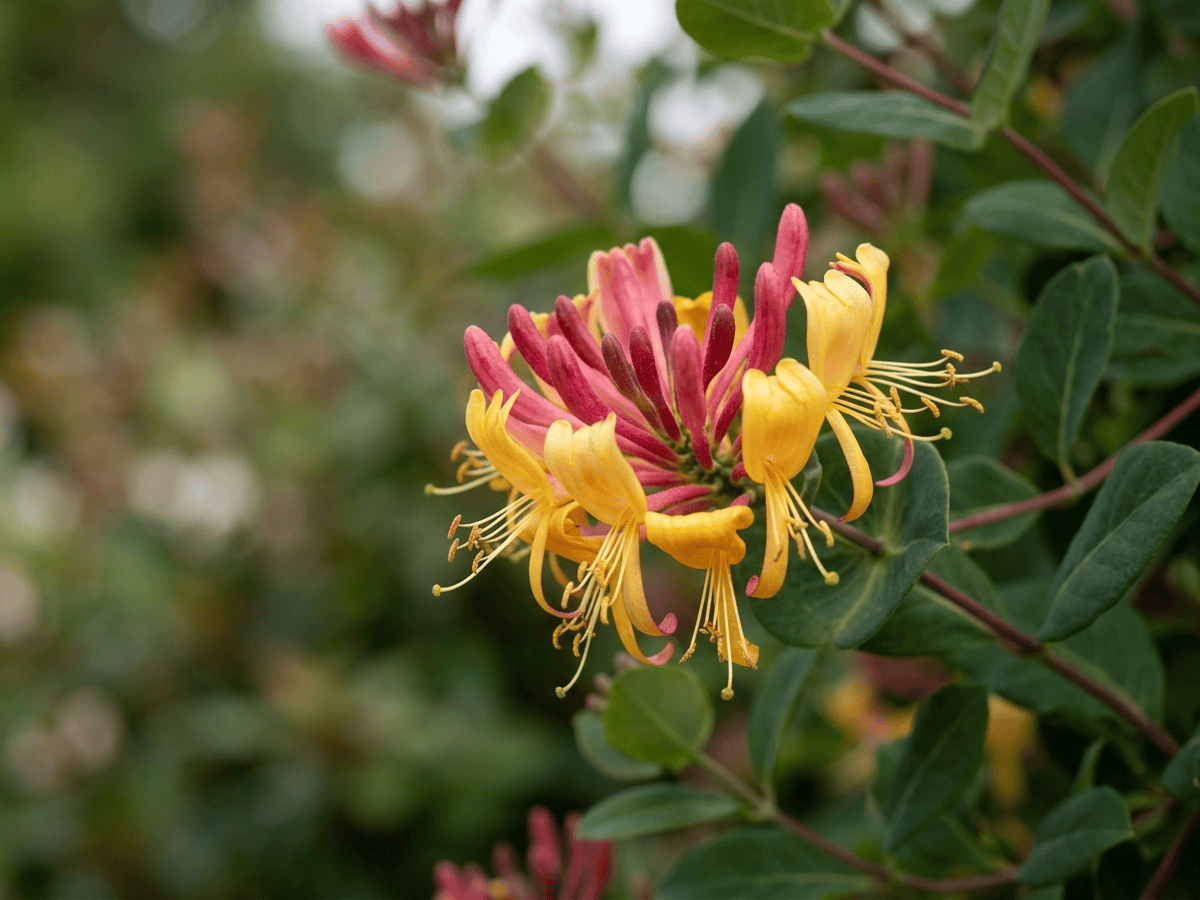
Goldflame Honeysuckle is a hybrid deciduous climber reaching 10-15 feet with spectacular clusters of tubular flowers in a striking combination of rosy-pink on the outside and yellow-orange inside. Blooms continuously from early summer until frost, drawing hummingbirds and butterflies. A popular US garden hybrid often sold as 'Gold Flame', it is more compact and mannerly than many other honeysuckles.
- Fragrant
- Climbing
- Long-blooming
- Pollinator-friendly
How to care for Honeysuckle
Watering
- Springevery 7 days
- Summerevery 5 days
- Fallevery 10 days
- Winterevery 21 days
Soil · Well-draining
- Top dressingPine bark mulch10%
- Main mixPotting soil + perlite 2:170%
- DrainageLECA / gravel20%
Never skip the drainage layer — standing water is the top cause of root rot.
FERTILIZER
Balanced Feed 14-14-14
An even feed covers all three needs at once, keeping leaves, roots and blooms moving together with nothing pushed out of balance.
- Nitrogen · Leaves
- Phosphorus · Roots + Blooms
- Potassium · Strength
- Springevery 30 days
- Summerevery 45 days
At a Glance
- Height10–20 ft (3–6.1 m)
- Spread4–8 ft (1.2–2.4 m)
- Flower colorPink, Yellow, Coral, Red
- Foliage colorBlue-green, Green
- Fruit colorRed
- SoilLoamy, Well-drained, Neutral
- LocationsYard
Bloom time
BLOOM CYCLE
Peak bloom
Jun–Oct
Pink and yellow tubular flowers June to October
Fragrance
MODERATE FRAGRANCE
The flowers have a sweet vanilla-honey fragrance.
Toxicity
Humans Slight · Pets Slight
saponins
Slight
- Fruit
- Ingestion
EXPOSURE Eating fruit.
EFFECT Mild GI upset.
NOTE Documented concern for humans: Mild GI upset.
Slight
- Fruit
- Ingestion
EXPOSURE Eating fruit.
EFFECT Mild GI upset.
NOTE Not on ASPCA toxic list.
Slight
- Fruit
- Ingestion
EXPOSURE Eating fruit.
EFFECT Mild GI upset.
NOTE Not on ASPCA toxic list.
Educational information, not medical or veterinary advice. If exposure is suspected, contact a doctor or veterinarian.
History
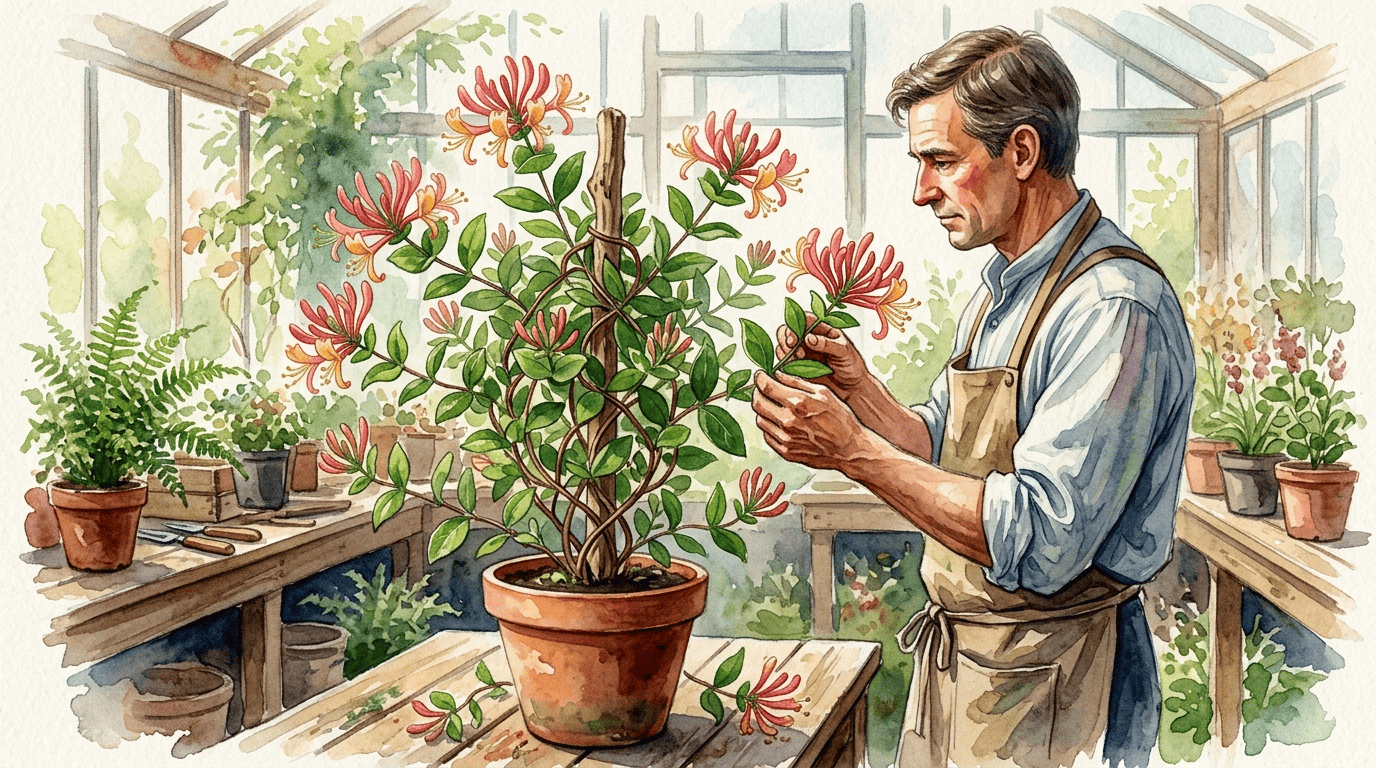
Lonicera x heckrottii is a horticultural hybrid of uncertain exact parentage, thought to involve the American L. sempervirens and the European-American hybrid L. x americana (itself a cross of L. caprifolium and L. etrusca). The name commemorates the German-American horticulturist Heckrott and the cross is documented as being in cultivation by 1895. The 3-5 meter semi-woody twining vine combines the best traits of its putative parents: the bright coral-pink-and-gold two-tone tubular flowers are held in whorls at the branch tips from May through September, re-blooming on and off after the initial flush; the flowers carry a sweet vanilla-honey fragrance (absent in pure L. sempervirens); and the vine is compact and non-invasive, unlike the weedy Japanese honeysuckle.
The cultivar 'Gold Flame' (also spelled 'Goldflame') is the most widely grown form, and 'Mardi Gras' is an improved selection. It received the RHS Award of Garden Merit.
Hardy to zone 5. Raised by American nurseryman Louis Heckrott around 1895 as a hybrid between L. Became a defining American garden vine of the 20th century, widely marketed as Goldflame Honeysuckle for its two-tone blossoms. Remains one of the most popular flowering vines in US nurseries.
Symbolism & meaning
What It Symbolizes
Honeysuckle carries passion through its fiery two-tone blooms of coral and gold, evoking the romance long associated with it fragrant climbing tribe. It also makes visible generosity, flowering continuously through the entire summer rather than offering a single brief flush. It is often read as a flower of sustained ardor, a vine whose meaning is that real passion is not a flash but a long, steady, scented unfolding from June to frost.
- Passion — fiery two-tone blooms evoke romance
- Generosity — flowers continuously all summer
Where the Name Comes From
The name Honeysuckle describes its tubular, nectar-rich flowers. Named for American horticulturist Louis Heckrott who raised the hybrid.
Uses & Fun Facts
- Tubular flowers carry classic Honeysuckle perfume
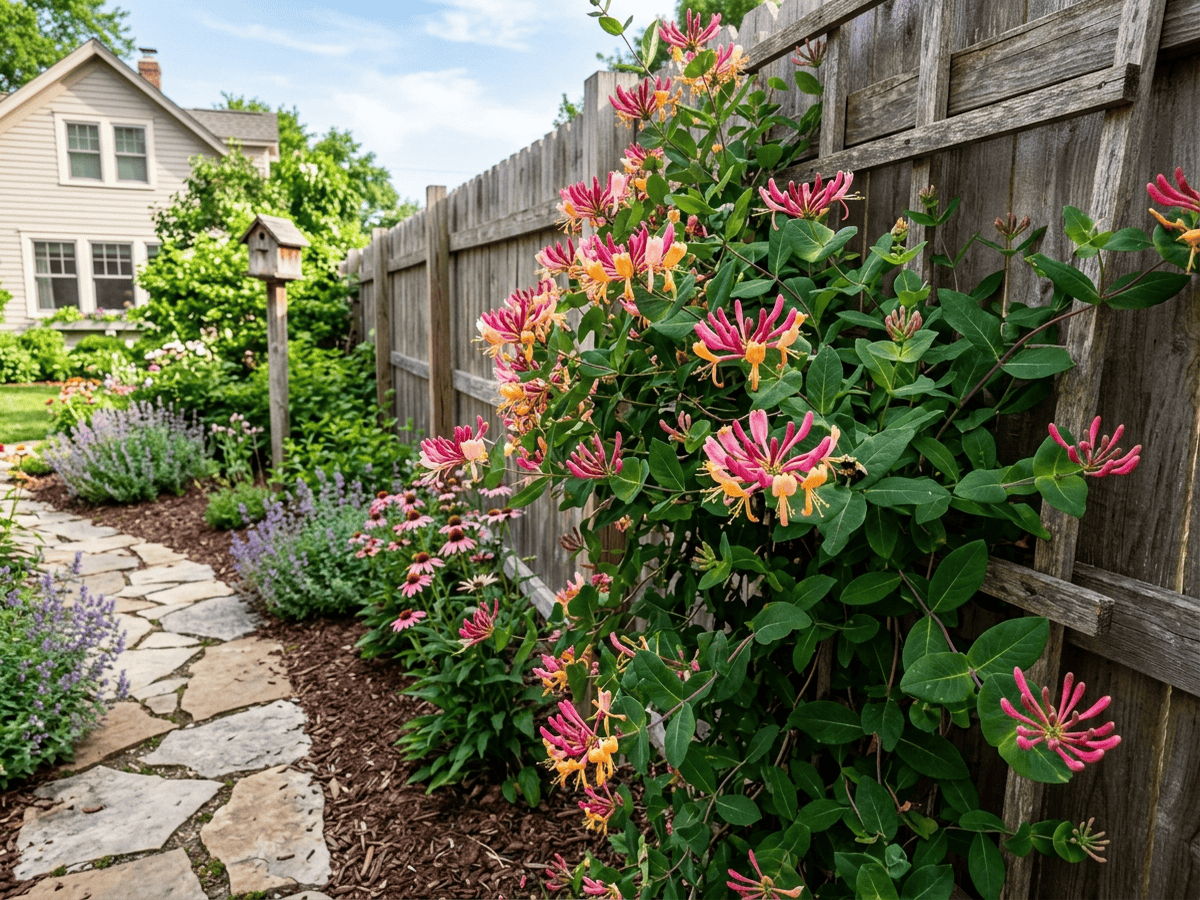
- Twining vine covers arbors, trellises, and fences
- Pink-and-yellow blooms draw hummingbirds and butterflies
Related plants
More Lonicera plants
 Japanese HoneysuckleLonicera japonica
 Common HoneysuckleLonicera periclymenum
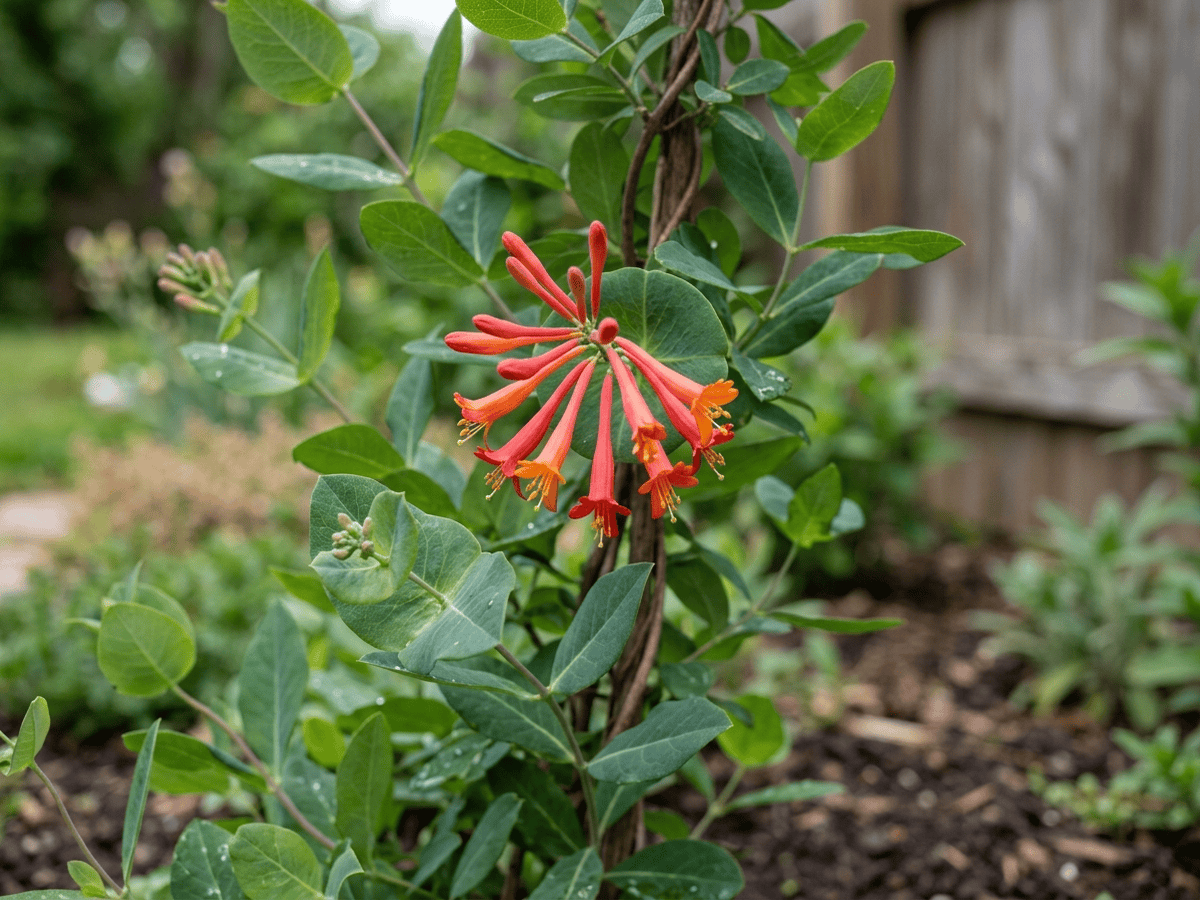 Coral HoneysuckleLonicera sempervirens
Plants with similar care
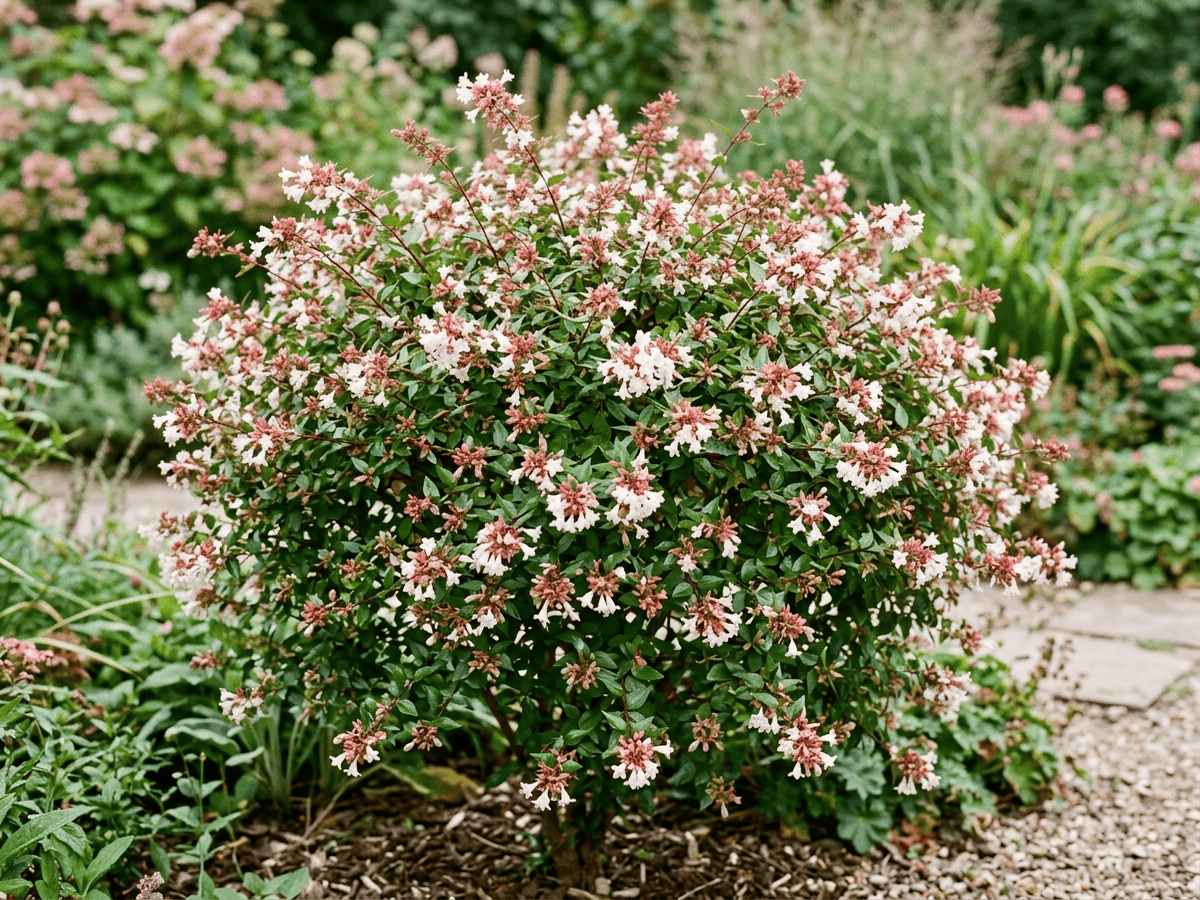 Chinese AbeliaAbelia chinensis
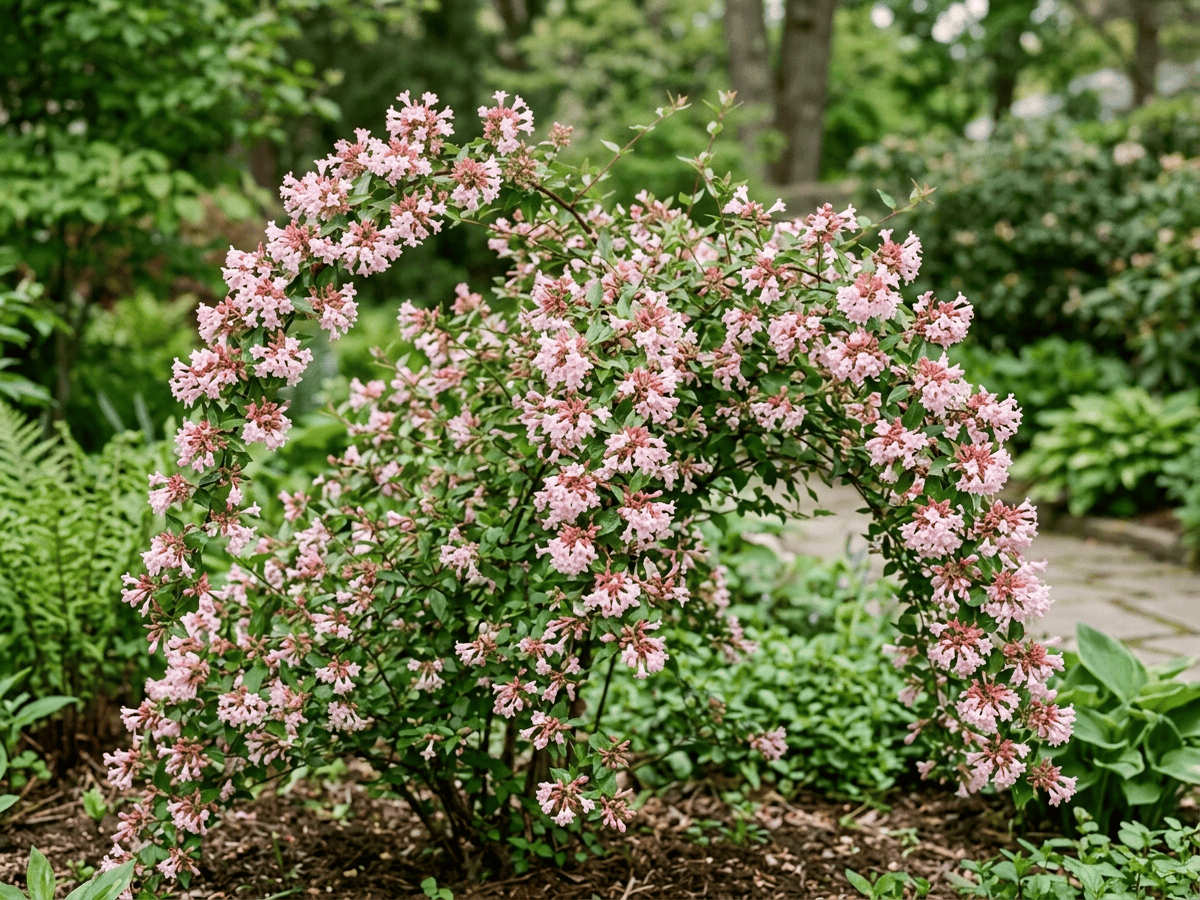 Fragrant AbeliaAbelia mosanensis
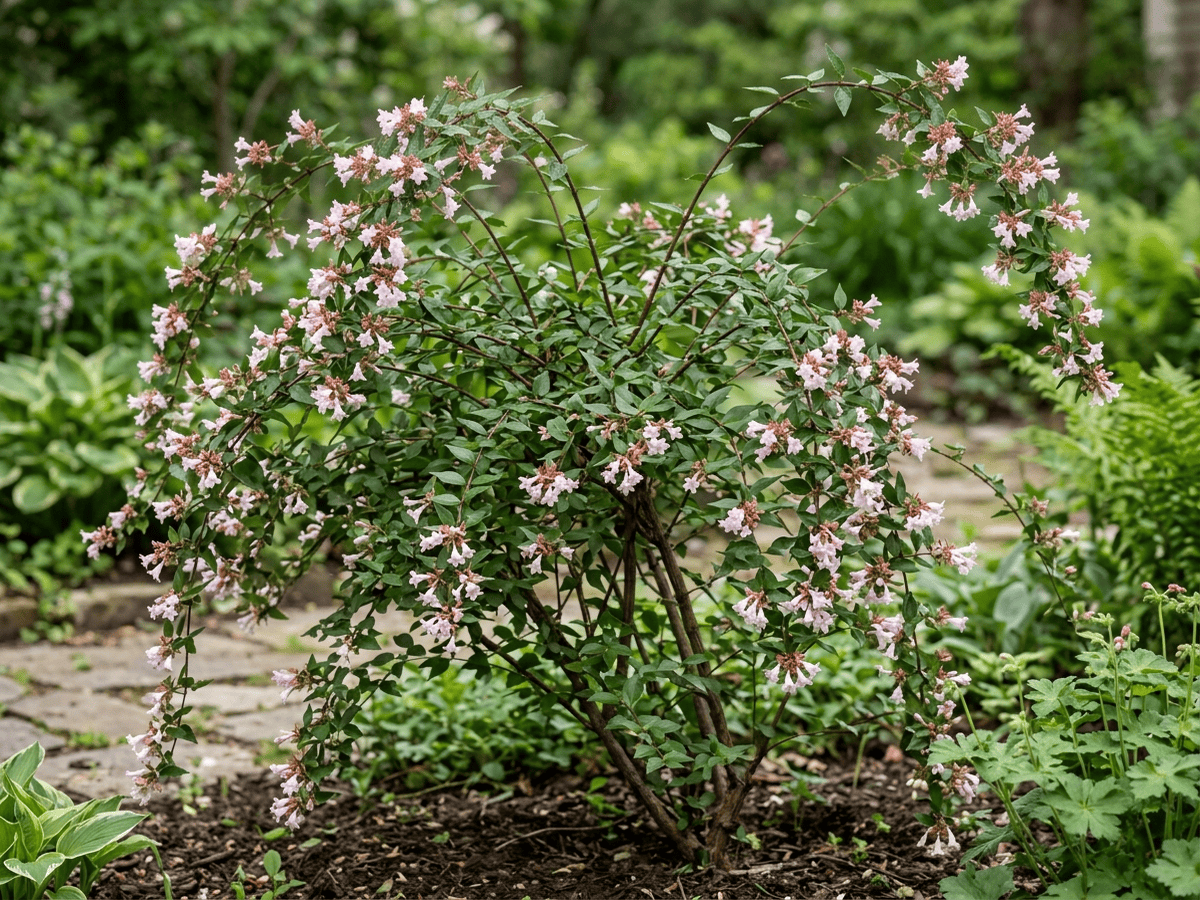 Large-Flowered AbeliaAbelia uniflora
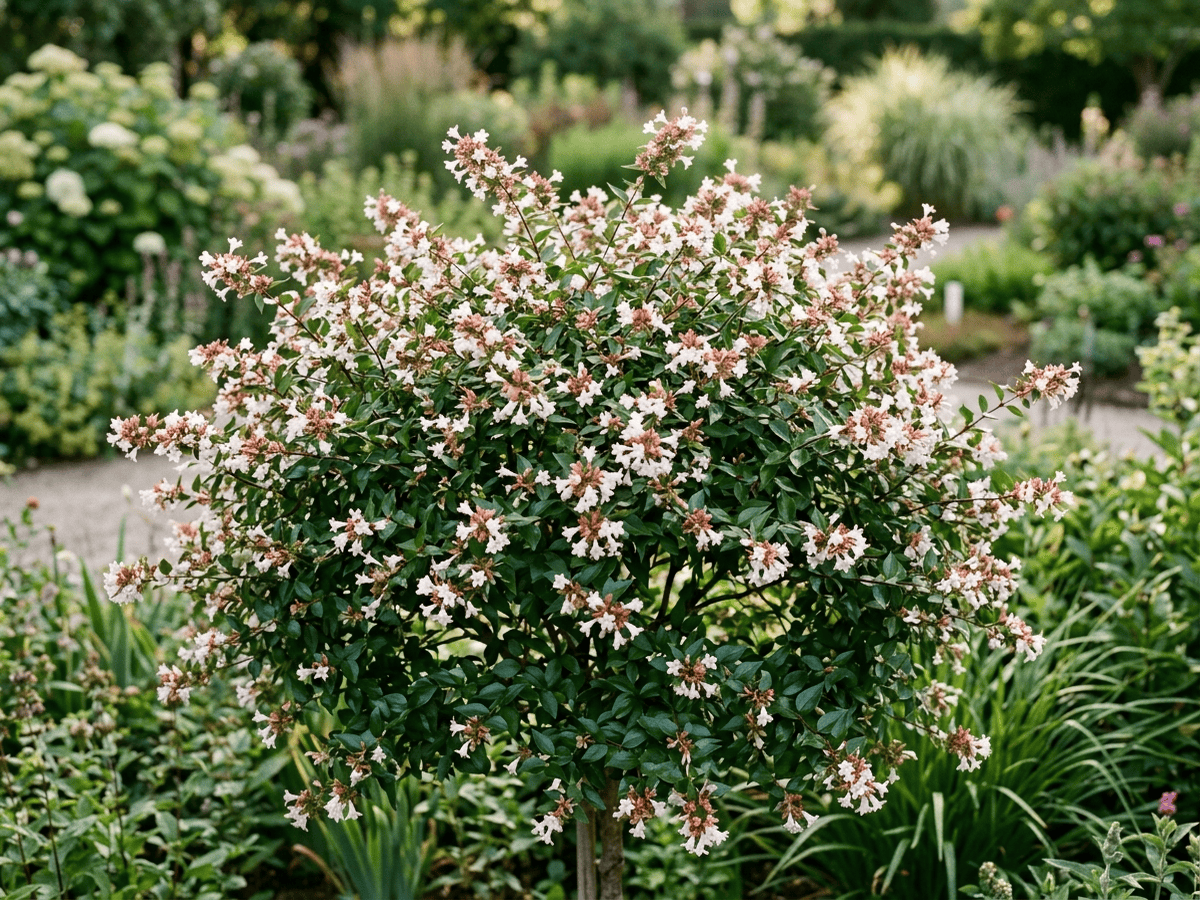 Glossy AbeliaAbelia x grandiflora
Frequently asked questions
How often should I water Honeysuckle?
In summer, water about every 5 days; in winter, about every 21 days. Adjust for heat, pot size and drainage.
How much light does Honeysuckle need?
Full sun: 6+ hrs direct. Watch the leaves — scorching or stretching means the light needs adjusting.
Is Honeysuckle toxic to cats or dogs?
Pets Slight (Dogs Slight · Cats Slight) Educational information, not medical or veterinary advice. If exposure is suspected, contact a doctor or veterinarian.
Is Honeysuckle easy to grow?
Yes — it is considered an easy, beginner-friendly plant.
When does Honeysuckle bloom?
It typically blooms Jun–Oct in the Northern Hemisphere.
YardMate
Identify any plant in seconds
Snap a photo — YardMate names the plant, diagnoses problems, and reminds you when to water.
Download on the App Store